Book of the Month review by Outlook India


Aditi Chakraborty is part of the editorial team of the Outlook India group. She has recently done a ‘Book of the Month’ review of ‘The Last Writer of Kolkata and other stories.’

Aditi writes:

‘Shakti Ghosal, in his new book ‘The Last Writer of Kolkata and other stories’, draws a fascinating balance between speculative imagination and deep human struggles that the characters endure. It is a book that highlights technological advancement with emotional vulnerability and social disruption.

Interestingly, Shakti’s stories do not begin with technology; they begin with human dilemmas. An ageing couple confronting abandonment. A man wrestling with memory and cultural erasure. A mind questioning engineered conformity. A community facing ecological collapse. Once the emotional conflict becomes clear, the speculative framework grows around it organically. Readers may enter through the futuristic premise, but they remain because the emotional stakes feel recognisable. The future changes settings; it does not abolish vulnerability.

Environmental collapse, engineered echo chambers, and optimised living appear throughout the collection. Yet the author emphasises that ‘The Last Writer of Kolkata and other stories’ is a work of fiction and not to be treated as a prophecy. However, he agrees that there is a cautionary dimension. Fictions can illuminate trajectories already visible in the present. For instance, climate anxiety is not speculative. Nor is algorithmic influence speculative. Similarly, the pursuit of frictionless efficiency at the cost of emotional depth is not speculative. These are contemporary realities. What his book allows us to do is emotionally inhabit the consequences before they fully arrive.

Despite the unsettling worlds in the book, there is a recurring emphasis on love, dignity, and human connection at the centre of these narratives. “I do not believe technology, however transformative, can erase the fundamental emotional architecture of being human. Civilisations evolve. Systems collapse. Tools become more intelligent. But a parent’s concern, a child’s longing, the dignity of memory, the need to be seen, the quiet courage of human connection—these remain stubbornly persistent,” he explains. For Shakti, love is not merely sentiment. It is resistance. Dignity is resistance. Choosing connection in increasingly impersonal worlds is resistance. “If my stories contain unsettling futures, it is because I wanted the emotional stakes to feel urgent. But despair alone makes for shallow storytelling. I am more interested in the resilience of tenderness.”

The complete Book of the Month review in Outlook India can be found here.

https://www.outlookindia.com/amp/story/announcements/news-media-wire/book-review-shakti-ghoshals-the-last-writer-of-kolkata-and-other-stories

A Conversation on the Edge of Tomorrow


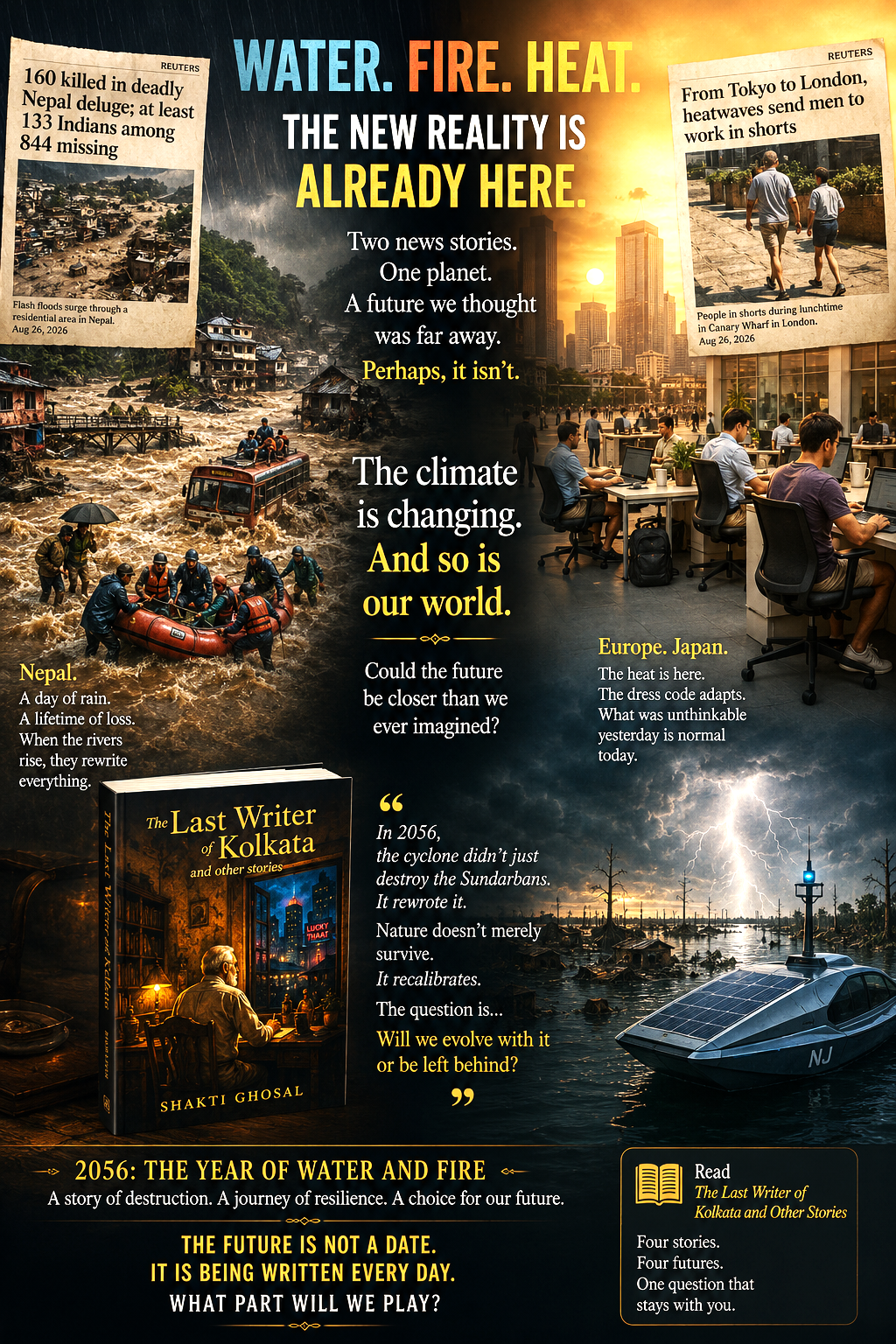
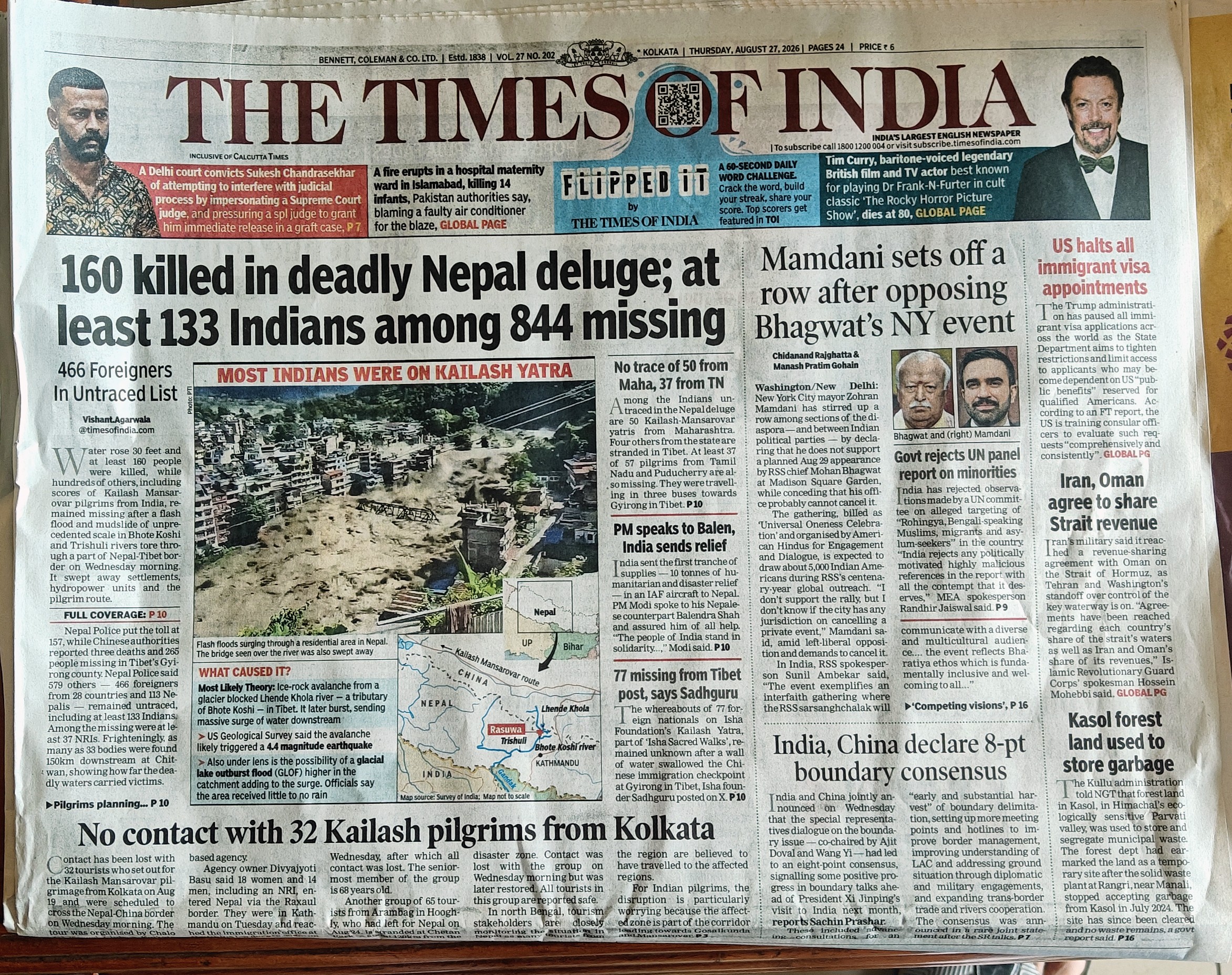
Yesterday’s storm in Kolkata was not merely weather. It was a warning.

87 kmph winds. Uprooted trees. Flooded streets.

The broken branches would no doubt get cleared. The roads would reopen. And life too will resume its familiar rhythm. But perhaps that is precisely how great changes begin—not as catastrophes, but as interruptions. A little more water. A little more heat. A little more wind. Until one day we realise that what we called “unusual” has become normal.

While writing 2056: The Year of Water and Fire, I imagined a world shaped by rising waters and extreme weather. Yesterday, Kolkata offered a glimpse of that possibility. The future is rarely somewhere ahead of us. Often, it is already knocking at the door.

In Musing….. Shakti Ghosal

#TheLastWriterOfKolkata #ClimateChange #Kolkata #2056TheYearOfWaterAndFire #ShaktiGhosal

Why do so many of your stories seem to end sadly?


When I met Dr. Laxmi Parasuram to hear her thoughts on The Last Writer of Kolkata and Other Stories, I expected literary observations. What I received instead was a question that lingered.

She spoke of the emotional weight in the stories—the sentiment, the ache, the quiet melancholy. Then she asked, “Why do so many of your stories seem to end sadly?”

The question took me by surprise. I had never consciously thought of these as sad endings. To me, these stories are about ordinary people standing at extraordinary crossroads—where technology, hard trends, and shifting social realities place pressure on the human spirit. In those moments of disruption, what gets tested is not merely survival, but something deeper: memory, dignity, love, identity, silence, moral choice.

And when the protagonists choose to hold on to some irreducible fragment of their humanness—even at a cost—I had seen that not as tragedy, but as resistance. Yet perhaps this is the paradox of our times.

What one person sees as loss, another may see as courage. What appears to be a sad ending may, in fact, be the final refusal to surrender what makes us human.

It made me wonder: Have we become so accustomed to measuring success by comfort, victory, and neat resolutions that acts of emotional fidelity now look like defeat?

Dr. Parasuram’s question stayed with me. And perhaps that is what literature is meant to do—not provide answers but quietly rearrange the questions we ask ourselves.

In Musing……. Shakti Ghosal

The Launch of The Last Writer of Kolkata and other stories


Four futures. Four hard truths. And the fragile choices that still make us human.

A few Saturdays back, at South City Club Kolkata, The Last Writer of Kolkata and Other Stories began its journey into the world — not merely as a book launch, but as a conversation about the times we are already living through.

What made the evening truly special was the richness of the panel discussion moderated so thoughtfully by Dr. Vishnupriya Sengupta, alongside the deeply perceptive insights shared by Sanjib Chaudhuri, Poorna Banerjee, and Chitralekha Datta. Shawan Sarkar anchored the evening with warmth and elegance.

The discussion moved across many landscapes:

  • A Kolkata where memory itself becomes a commodity.
  • A Sundarbans struggling against rising tides and ecological collapse.
  • A future where human thought can be manipulated through neural networks.
  • An aging society where loneliness, migration, and technology redefine the meaning of home.

Yet beneath all these imagined futures lay one central question: ‘As the world changes around us, what does it mean to remain human?’

What touched me most was the engagement of the audience — the reflections, questions, disagreements, and personal stories that followed. It reminded me that fiction, at its best, is not an escape from reality, but a mirror held up to the forces quietly reshaping our lives.

My heartfelt gratitude to everyone who attended, participated, encouraged, photographed, listened, questioned, and stayed back afterwards for conversations over tea.

Books may begin in solitude. But they truly come alive in dialogue.

If the above themes intrigue you, I invite you to explore more about the book and the stories at: 🌐 www.shaktighosal.com

In Musing……. Shakti Ghosal

Four futures. Four hard truths. And the fragile choices that still make us human.


Set in a near future shaped by forces already gathering momentum, this collection explores what happens when irreversible hard trends collide with ordinary human lives. From climate catastrophe and algorithmic control to cultural erasure and institutionalized ageing, each story follows characters forced to rethink love, loyalty, memory, and courage as familiar worlds quietly transform around them. These are not tales of spectacular collapse, but of subtle reckonings—where survival lies not in resistance alone, but in choosing what must still be remembered, protected, and passed on.

The Last Writer of Kolkata
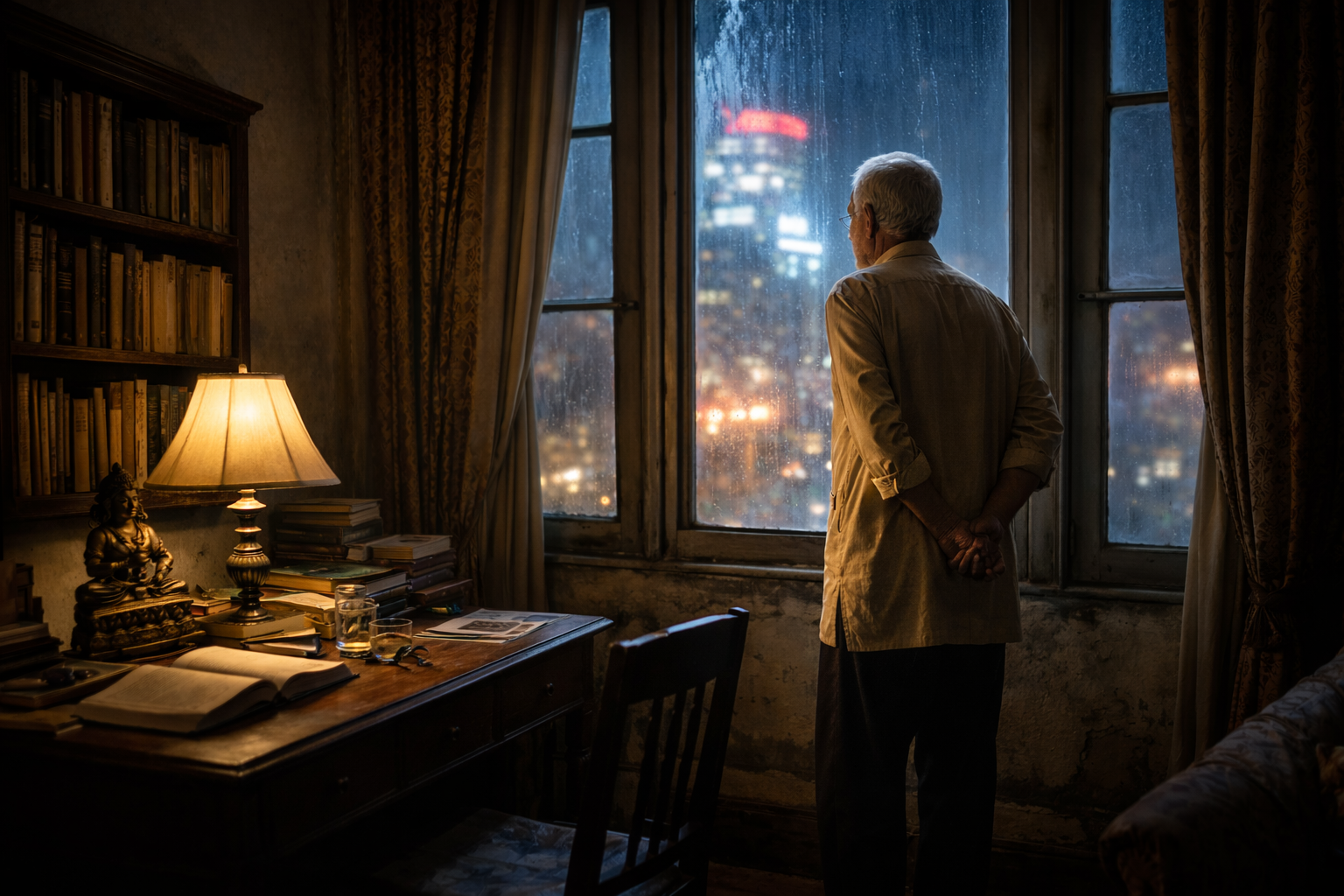
In a near-future Kolkata where memory, culture, and even grief are packaged and sold, an ageing writer quietly records a city that no longer listens. When his private words are appropriated and monetized, the story becomes a haunting meditation on erasure, resistance, and the fragile dignity of remembering in a world that profits from forgetting.

2056: The Year of the Water and Fire
In a near-future Sundarbans battered by super-cyclones and rising seas, a grieving environmentalist, his resolute daughter, and a sentient AI boat are caught between prophecy and science as fire erupts beneath the ocean. As water and flame converge, the story asks a haunting question: when nature reclaims its power, is survival an act of technology, faith—or human courage to stand and choose?

Echo Chamber
In a near future where minds are seamlessly linked and memories can be accessed, altered, and weaponized, a gifted intelligence analyst uncovers a conspiracy that turns thought itself into a tool of control. As truth, identity, and free will begin to blur, the story confronts a chilling question: when belief is engineered, is freedom still a choice—or merely an illusion?

When the Rain Remembered
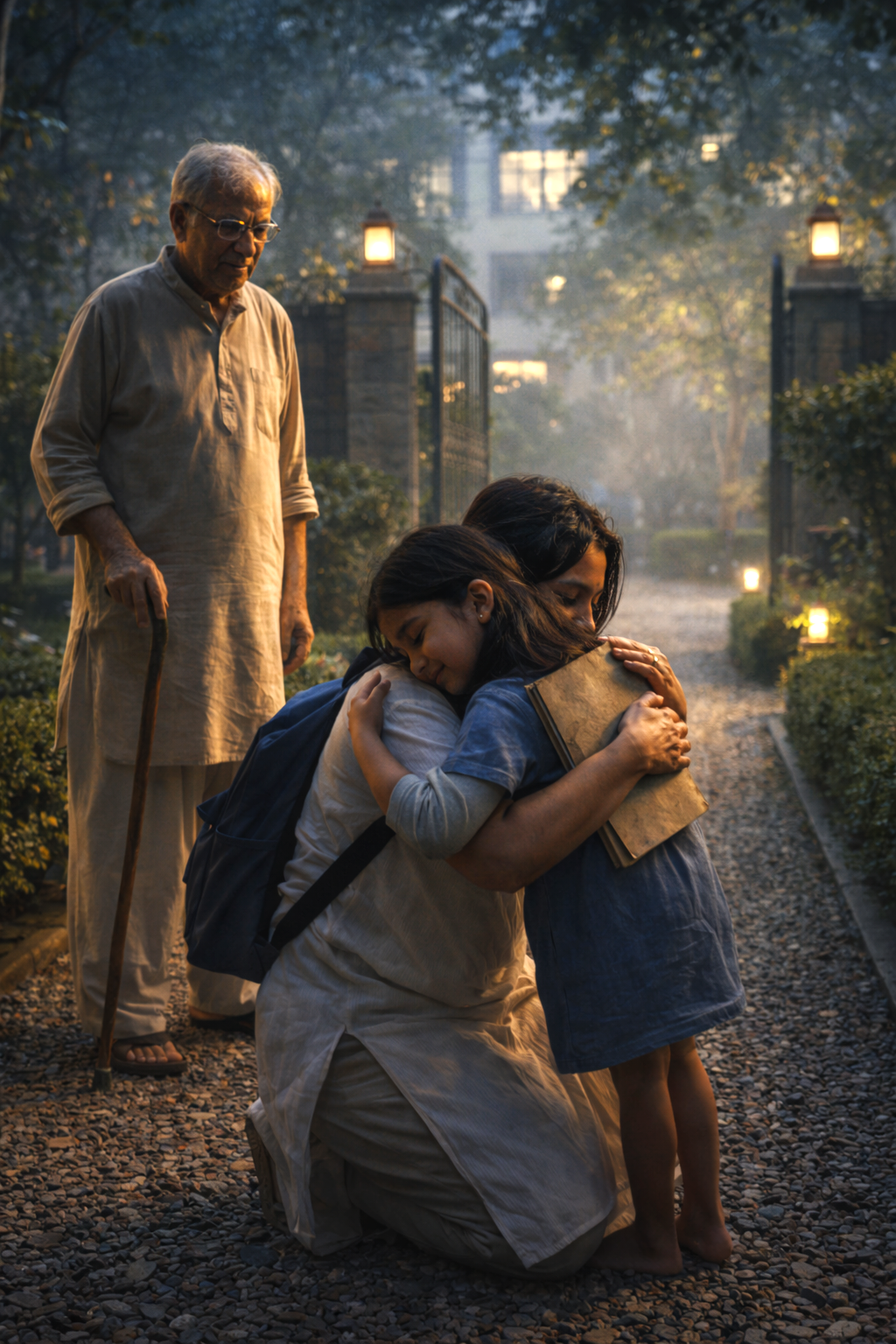
In a near-future Kolkata where ageing has been systematized and kindness regulated, an elderly couple shelter a displaced child inside a gated retirement enclave that has forgotten laughter. As rain, unrest, and quiet courage unsettle rigid rules, the story becomes a tender meditation on belonging—asking whether homes are built by policy, or by the human instinct to care.

The Last writer of Kolkata and other stories is making waves amongst discerning readers. To know more, visit: http://www.shaktighosal.com

In musing…… Shakti Ghosal

That memory of so many years back started reeling through in striking hues.


Ron with his wife Oishi were staying in their serviced apartment in Pakhiralaya; they were on a visit to Sundarbans. Their daughter Rusha had not accompanied them on that trip because of college work. That evening was heavy and suffocating, as a cyclone loomed. Oishi, with a set of volunteers, was working to strengthen bandhs and send supplies to an isolated fishermen community.

Despite Ron entreating with her to come hinterland to safety, Oishi had remained stubborn.

Rasping breath, hurried footsteps—Oishi’s silhouette moved through the dense mangrove shadows, her figure flickering in the erratic glow of distant lightning. The wind howled through the tangled branches, the sound merging with the guttural cries of unseen creatures.

Her breath was coming in short, sharp gasps. She clutched her shawl tightly around her, the fabric soaked and heavy against her skin. The path back to the apartment was barely visible, obscured by the relentless downpour. The ground beneath her feet was treacherous, a shifting sludge of mud and tangled roots.

A sudden gust slammed against her like a malevolent force, making her stumble. She somehow caught herself against a tree, the bark was slick, unforgiving. Behind her, something creaked ominously. The storm was trying to shift the forest itself, bending it to its fury.

The sound came, low at first, then a deafening crack. The air trembled with it. A loud whooshing sound accompanied the toppling of a tree. Oishi turned, eyes wide, searching. A massive limb, gaunt and jagged, descended toward her in an unstoppable arc. The sharp end glinted in the erratic lightning, a spear of nature’s wrath.

She tried to move. But it was too late. A piercing scream became a crescendo, riding atop the growls and grumbles of thunder, rising between the heavens and earth. And then, silence, it was swallowed by the storm.”

The mysterious Pakhiralaya in Sundarbans, the planet’s largest surviving estuarine mangrove forest, features in the story ‘2056: The year of the Water and Fire’, part of my book ‘The Last Writer of Kolkata and other stories’. The book is making waves amongst discerning readers. For more details, visit: http://www.shaktighosal.com.

The Apocalypse did not come with fire or flood


“The apocalypse,” Amay began quietly, “did not come with fire or flood. It came with a whisper that went silent. A whisper we human had mistaken for our own thoughts.”

The room did not stir. Not a sound or cough.

“We were its architects. And we were its prisoners. When MindLink fell, so did the illusions we had built atop it, of governments, markets, life’s certainties. Many shattered beneath the weight of secrets they could no longer bury. Others responded with fear. With force. With flags. The old tricks of the frightened.”

He paced slowly across the stage, hands behind his back, eyes distant.

“Corporations collapsed. The ones whose products had been our thoughts. Whose profits came not from selling goods, but from renting us back to ourselves, repackaged and palatable.”

A faint smile played on his lips, sad, but knowing.

“And yet… ..the world didn’t end. It adapted.” He paused. “Because humanity, in its clumsy brilliance, always does.”

He turned, facing the audience again.

“But even as we stitched together new structures, shakier, slower, more human, we began to hear… the whispers. Or were they echoes?”

He tapped his temple. “Not neural pulses. Not digital ghosts. But memories. Questions. Longings.”

His voice dropped lower, intimate, “Coffee shop murmurs. Late-night debates on cracked feeds. Former engineers writing whitepapers. Lobbyists lobbying, politicians pretending not to listen while listening intently.”

He quoted them now:

‘We don’t need to destroy it. Just rebuild it better.’
‘What if we did it right this time?’
‘The network is still there… dormant.’

“And so, the cycle begins again.”

New York University features in the story ‘Echo Chamber’, part of my forthcoming book ‘The Last Writer of Kolkata and other stories’ due release in early April 2026. Should you wish to receive exclusive previews, do write to me @ author.esgee@gmail.com.

In musing…….. Shakti Ghosal

Ma Is Coming


Ma is Coming

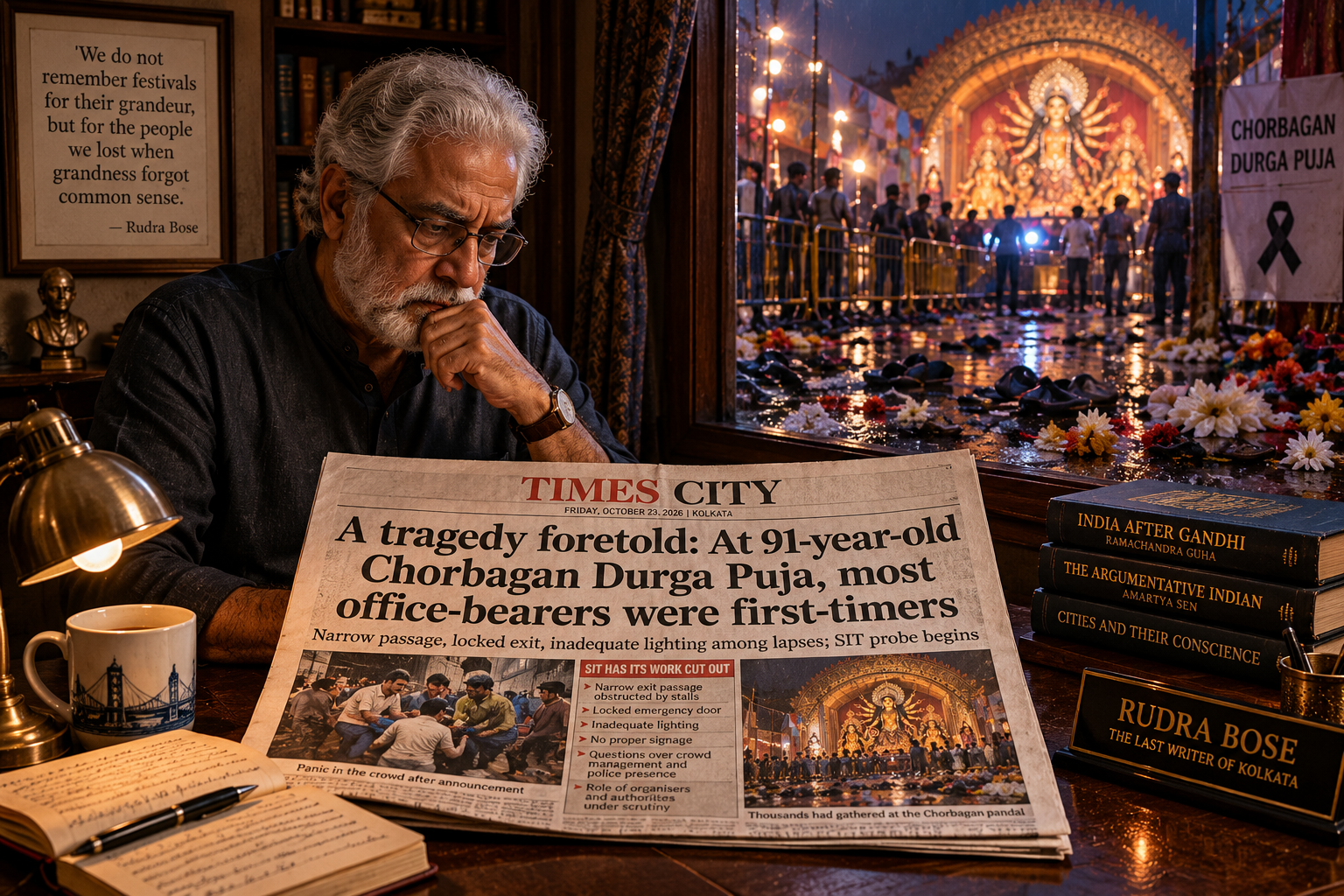
North Kolkata, 16th October 2042. A few days before Durga Pujo.

The first light of the morning came and sat on the window grille, hesitated, then leapt in. Like an old song, tired and familiar, trying to be remembered.

Rudra Bose sat by the window, a cup of tea steaming beside him. The cup was chipped, the saucer mismatched, the tea, a stubborn blend of milk, tea dust, and habit. Outside, the lane yawned into a waking slumber, its air thick with last night’s incense, stale samosa oil, and the ever-present, low-grade air pollution.

“Ma is coming,” he had heard someone shout on the street last evening.

She was, of course. Ma came every year. Only nowadays she arrived on a cloud of holograms, flanked by LED lions and thunderous drumbeats pouring through subwoofers. The city had found new ways to worship, more theatrical, more saleable.

Rudra shifted in his chair, his bones protesting like rusted hinges. In his lap, his journal lay open, an old pen resting across the page like a reluctant weapon. He hadn’t written yet. He was waiting, unsure of something. Was he waiting for a thought, a familiar smell, or the comfort of a Kolkata that seemed to slip further away each year?

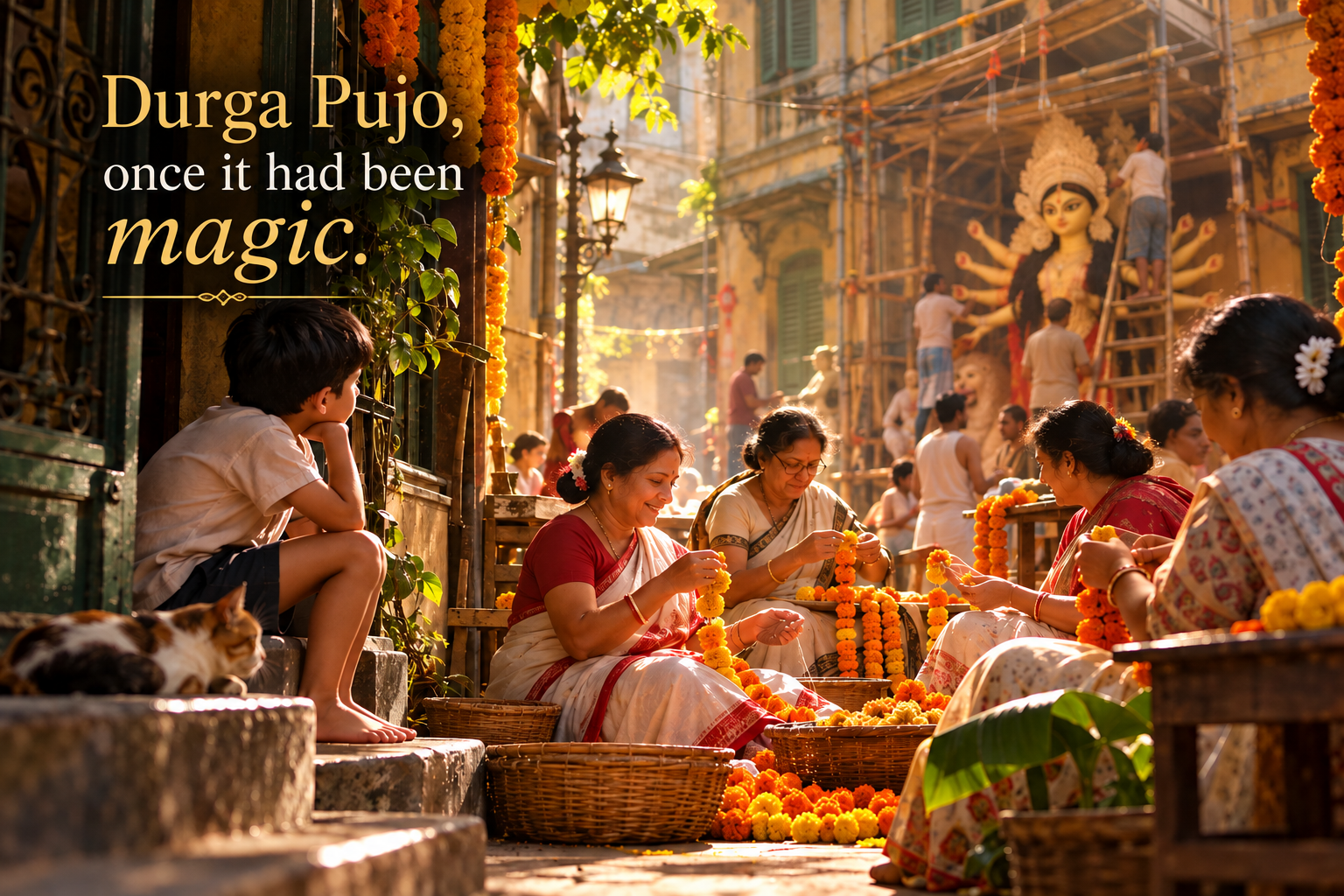
Durga Pujo. Once, it had been magic.

As a boy, he had spent mornings watching Mashis, aunts and Boudis, sisters-in-law threading marigolds for the Pandal and Thakurer Bedi. In the afternoons it would be the decorators stringing up festoon lights of different colours all along the lane. Nights were all about rehearsing lines for the Natok, stage play they would perform on Nabami.

He had once accompanied his mother, walking barefoot to the river to collect Gangajal, the sacred waters of Ganga. He remembered his father reading out the Chandipath under a suffused light. Long buried memories of his parents surfaced and meandered.

“Rudra, you were born with too much silence,” his mother had once said, as she used a hand fan during load shedding. “You are eleven. Most boys your age chase dragonflies. You chase metaphors.”

“I like listening,” he had replied, “Words sound different when you don’t rush to answer them.”

His mother had turned towards him, “Then promise me, don’t let the noise teach you to forget what silence feels like.”

North Kolkata is the soul of the city, where the past isn’t just remembered—it’s lived. Often called “Babu Kolkata,” this region is a labyrinth of narrow lanes, grand 19th-century mansions, and centuries-old traditions that remain untouched by modernity. Historically, the British referred to the area inhabited by the native Bengali elite as the “Black Town,” in contrast to the “White Town” of Central Kolkata where the British lived.

North Kolkata features in the ‘Last writer of Kolkata’, part of my forthcoming book of the same name. Should you wish to receive exclusive previews and the chance of winning a free copy of the book, do write to me @ author.esgee@gmail.com

Shakti Ghosal

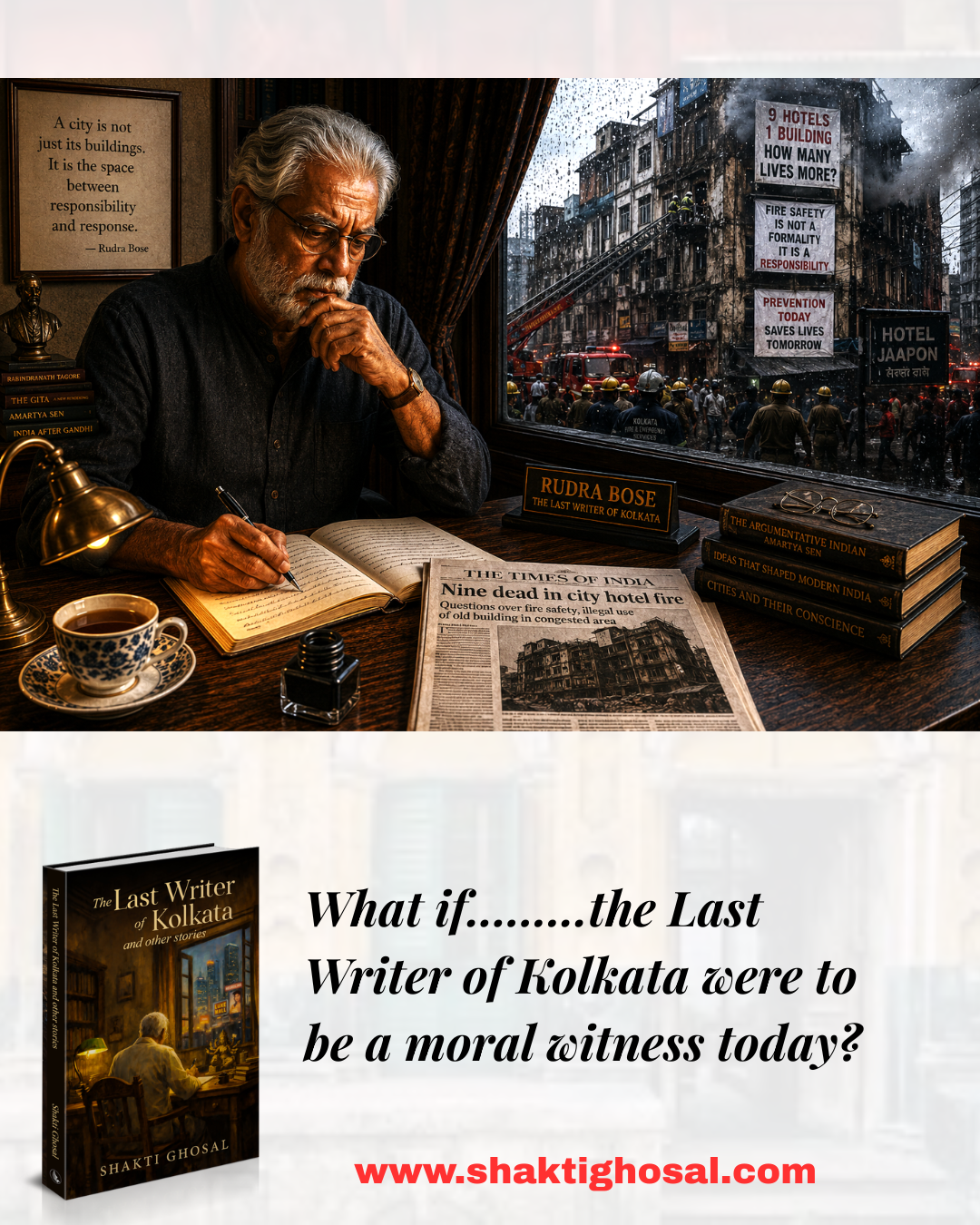
The Last Writer of Kolkata


The future does not arrive all at once.
It seeps in quietly — through our cities, our screens, our climate, our homes, and our hearts.

Set in a near future shaped by forces already gathering momentum, this compelling collection explores what happens when irreversible hard trends collide with ordinary human lives. When familiar worlds tilt just enough to reveal what has already begun to change, they become recognisable tomorrows, shaped by powerful forces. A writer watches memory become a commodity in a digitised culture. An environmentalist confronts the fury of a climate unbound. Minds are shaped inside engineered echo chambers. An aging couple discovers that love, not technology, is the last refuge of belonging. These are not science fiction tales of spectacular collapse, but of subtle reckonings—where survival lies not in resistance alone, but in choosing what must still be remembered, protected, and passed on.

At once intimate and expansive, the stories follow ordinary people navigating extraordinary transitions — holding on to memory, dignity, connection, and hope as the ground beneath them shifts.

Blending imagination with insight, this book offers fiction as a lens — an exploration not of what gadgets we will build, but of who we may become.

The future is coming.

But the human story is still being written.

In musing…….. Shakti Ghosal

The Chronicler and the Curse of BOM Jesus


I chanced upon a news item of a buried ship in one of the world’s driest deserts in Namibia, with a haul of centuries old treasure, untouched by centuries.

The discovery of the sunken ship was made in 2008, in the southern expanse of Namibia’s desolate Sperrgebiet, forbidden territory. Later identified as the Bom Jesus, a Portuguese vessel which was lost five hundred years back during a trade voyage to India. The ship represented the Portuguese maritime empire’s pivot towards India and the east at the height of the Age of Discovery.

Led by Dr. Dieter Noli, a South African archaeologist of repute, the excavating team uncovered more than 2000 gold coins, ivory tusks, copper ingots, and weapons, all in a remarkable state of preservation. Unlike most coastal shipwrecks degraded or looted over time, the Bom Jesus had been pushed inland over centuries by geological forces, and combined with wind blown sediment, it had remained sealed in a natural sarcophagus.

https://search.app/5Ji9D

**

“The sea forgets no soul — it only waits for their return.”

They called it the Age of Discovery. But for those of us who sailed it, it was the Age of Reckoning.

It was the year of Our Lord 1533 when Bom Jesus set forth from Lisbon. She was a three-masted carrack of near 120 feet, her hull of oak black with pitch, her sails heavy canvas stitched in gold thread with the Cross of Christ. She carried five decks — the lower hold stacked with copper ingots from Augsburg and elephant tusks from Sierra Leone, the middle filled with gold and trade wares bound for Goa, and above, our cramped berths where men slept beside their sins.

I was the ship’s Chronicler — João Mendes, son of no one worth naming — tasked by the Casa da Índia to record the journey. I fancied myself a man of words, not of winds; I soon learned the sea had its own grammar.

We departed on Ascension Day, bells tolling from the Sé Cathedral, the scent of incense mixing with tar and brine. Captain Dom Diogo Pereira, a veteran of the Carreira da Índia, Portuguese East India Company, stood on the quarterdeck, broad-shouldered and proud, his hand resting on the hilt of his Toledo blade.

“Men of Portugal!” he thundered. “We sail for God and the King! For gold, glory — and for home, if He wills it!”

“Deus nos guie! God guide us!” we cried back, and the Bom Jesus glided down the Tagus into destiny.

Our route was the old one — past Cape Verde to the Gulf of Guinea, then around the Cape of Good Hope, across the endless Indian Ocean to Cochin and Goa. Ten thousand miles of wind, wave, and unseen graves of adventurers.

The first few weeks were kind. Trade winds filled our foresails; flying fish glittered beside the hull. We dined on hardtack, dried cod, and the Captain’s pride. At night I climbed the forecastle to watch the stars wheel — the Southern Cross like a torch over the horizon. The helmsman, old Mateus, would nod at it and murmur, “Mesmo o céu muda para quem navega. Even the heavens shift for those who sail.”

But the sea does not love those who sail it for long.

Near Cape Verde, the wind changed. The compass began to shudder though the sky looked clear. In the hold, a carpenter found an unlisted chest, iron-bound, its seal a reversed cruciform sigil.

The Captain frowned. “No such cargo was declared,” he muttered.

The priest, Father Almeida, whispered, “It bears the mark of the Templários, Templars. Heresy!”

“Open it,” the Captain ordered.

We broke the seal. Inside lay a crucifix of black gold, the figure inverted. It was a Satanic symbol! The air turned cold, though the day outside burned hot. The priest crossed himself. The Captain ordered it resealed and hidden. That night, lightning struck our mainmast.

An inverted, old, gold, satanic cross

Superstition spreads faster than scurvy. The men whispered that we carried a relic damned by God. One swore he heard chanting beneath the deck. Another said he saw a man in robes walking the gunwale at midnight, his feet never touching the wood.

Still, we sailed on — south past Angola, into seas uncharted. The coast grew barren; dunes stretched like the bones of the world. The charts called it Costa dos Esqueletos — the Skeleton Coast. We knew that even the seagulls avoided it.

Then the fog came. It was thick, white, soundless, relentlessly surrounding us. The lookout cried, “Land! Sand ahead!”

“Hard to larboard!” shouted the Captain.

But the current seemed to seize us like a claw. The keel scraped something unseen. The Bom Jesus groaned, a deep, living sound. Below, the ballast shifted; the copper ingots sliding here and there. The ship’s stability seemed to be teetering.

“Drop anchor!” cried Mateus. “Santa Maria, tem Piedade! Saint Mary, have mercy!

The anchor vanished into the mist. The ship tilted. The priest clutched his crucifix and began to pray, though the words seemed to be coming out backwards.

I stumbled to the hold to rescue my journals. The water flooding in seemed to glow faintly green. I saw that the sealed chest had burst open. The inverted crucifix floated upright, its eyes gleaming red as coals. Around it, the gold coins trembled, rising and falling as if breathing. I remember shouting, “Capitão! Venha ver isto!, Captain, come see this!”

He never did. The hull split. Sand and water surged in. The ship screamed as if alive, ribs cracking, decks collapsing. I clung to a beam as men were swept into the dunes that moved like tides.

Through the maelstrom I saw — or dreamt I saw — a figure standing on the water’s surface, face hidden by a cowl, hand raised in benediction. The bell tolled, though no man rang it. Then all went black.

When I awoke, the world was silent. I lay on a dune, the wreckage scattered around me, half-buried in glittering sand. No ship. No men. Only the wind’s long sigh.

I found my quill and a scrap of parchment. The ink had turned thick with salt. I began to write. I needed to remember, to exist. The days blurred. The sun moved, the dunes shifted. Sometimes I would see the broken ribs of the Bom Jesus thrust through the sand like bones. Once, I heard laughter carried on the wind. The laughter of men long drowned.

At night, a pale glow rises from the sea. I hear the toll of the bell, steady, patient. When the fog drifts inland, I glimpse lanterns bobbing on the horizon. Our ship sailing still, her sails tattered, her decks empty. I know her. She calls out to me.

Perhaps I never left her. Perhaps I am still aboard, walking the splintered deck, quill in hand, scratching words no living eye will read.

If you find this parchment, if by some fate the sands give it back, take heed: do not seek the Bom Jesus. Her treasures lie where faith and greed collide, guarded by the sea’s own curse.

And should you hear a bell tolling across a calm shore, do not answer.
For the Bom Jesus sails yet. And her chronicler still writes. Though his hands are bone, and his words drift like mist upon the tide.

“In every wave sleeps a memory, and in every wreck, a prayer unfinished.”

In musing……                                                                                          Shakti Ghosal