Book of the Month review by Outlook India


Aditi Chakraborty is part of the editorial team of the Outlook India group. She has recently done a ‘Book of the Month’ review of ‘The Last Writer of Kolkata and other stories.’

Aditi writes:

‘Shakti Ghosal, in his new book ‘The Last Writer of Kolkata and other stories’, draws a fascinating balance between speculative imagination and deep human struggles that the characters endure. It is a book that highlights technological advancement with emotional vulnerability and social disruption.

Interestingly, Shakti’s stories do not begin with technology; they begin with human dilemmas. An ageing couple confronting abandonment. A man wrestling with memory and cultural erasure. A mind questioning engineered conformity. A community facing ecological collapse. Once the emotional conflict becomes clear, the speculative framework grows around it organically. Readers may enter through the futuristic premise, but they remain because the emotional stakes feel recognisable. The future changes settings; it does not abolish vulnerability.

Environmental collapse, engineered echo chambers, and optimised living appear throughout the collection. Yet the author emphasises that ‘The Last Writer of Kolkata and other stories’ is a work of fiction and not to be treated as a prophecy. However, he agrees that there is a cautionary dimension. Fictions can illuminate trajectories already visible in the present. For instance, climate anxiety is not speculative. Nor is algorithmic influence speculative. Similarly, the pursuit of frictionless efficiency at the cost of emotional depth is not speculative. These are contemporary realities. What his book allows us to do is emotionally inhabit the consequences before they fully arrive.

Despite the unsettling worlds in the book, there is a recurring emphasis on love, dignity, and human connection at the centre of these narratives. “I do not believe technology, however transformative, can erase the fundamental emotional architecture of being human. Civilisations evolve. Systems collapse. Tools become more intelligent. But a parent’s concern, a child’s longing, the dignity of memory, the need to be seen, the quiet courage of human connection—these remain stubbornly persistent,” he explains. For Shakti, love is not merely sentiment. It is resistance. Dignity is resistance. Choosing connection in increasingly impersonal worlds is resistance. “If my stories contain unsettling futures, it is because I wanted the emotional stakes to feel urgent. But despair alone makes for shallow storytelling. I am more interested in the resilience of tenderness.”

The complete Book of the Month review in Outlook India can be found here.

https://www.outlookindia.com/amp/story/announcements/news-media-wire/book-review-shakti-ghoshals-the-last-writer-of-kolkata-and-other-stories

A Conversation on the Edge of Tomorrow


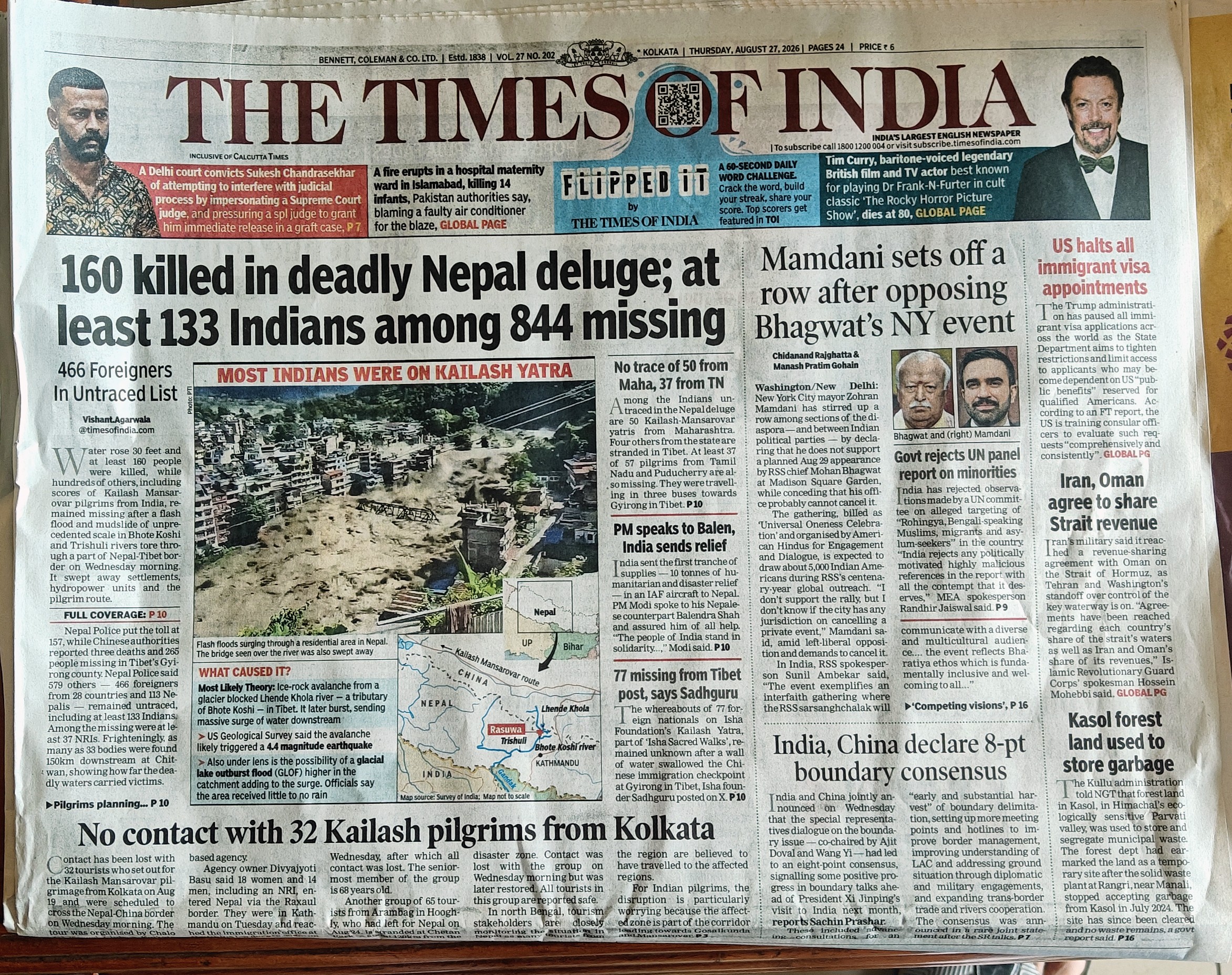
Yesterday’s storm in Kolkata was not merely weather. It was a warning.

87 kmph winds. Uprooted trees. Flooded streets.

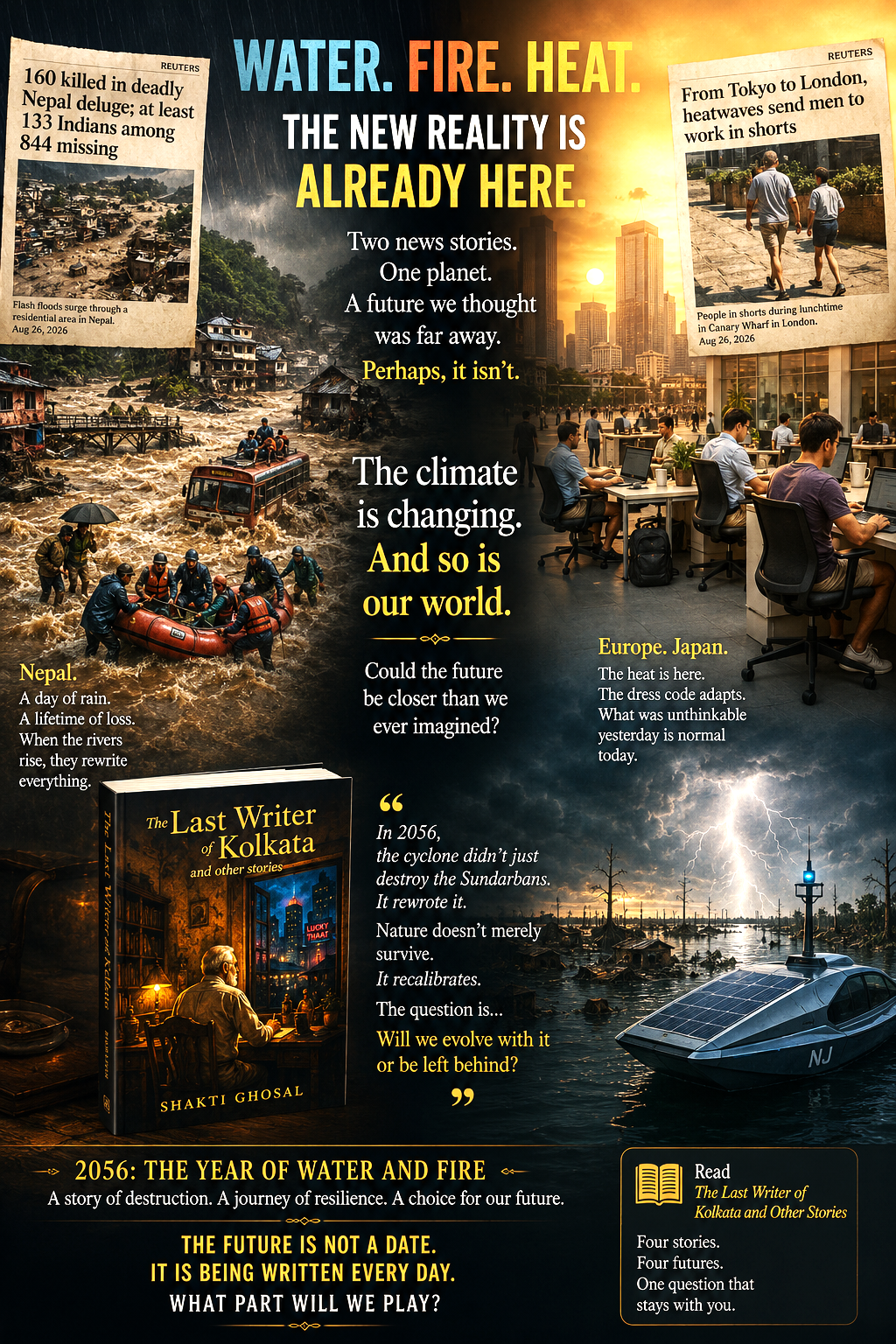
The broken branches would no doubt get cleared. The roads would reopen. And life too will resume its familiar rhythm. But perhaps that is precisely how great changes begin—not as catastrophes, but as interruptions. A little more water. A little more heat. A little more wind. Until one day we realise that what we called “unusual” has become normal.

While writing 2056: The Year of Water and Fire, I imagined a world shaped by rising waters and extreme weather. Yesterday, Kolkata offered a glimpse of that possibility. The future is rarely somewhere ahead of us. Often, it is already knocking at the door.

In Musing….. Shakti Ghosal

#TheLastWriterOfKolkata #ClimateChange #Kolkata #2056TheYearOfWaterAndFire #ShaktiGhosal

Why do so many of your stories seem to end sadly?


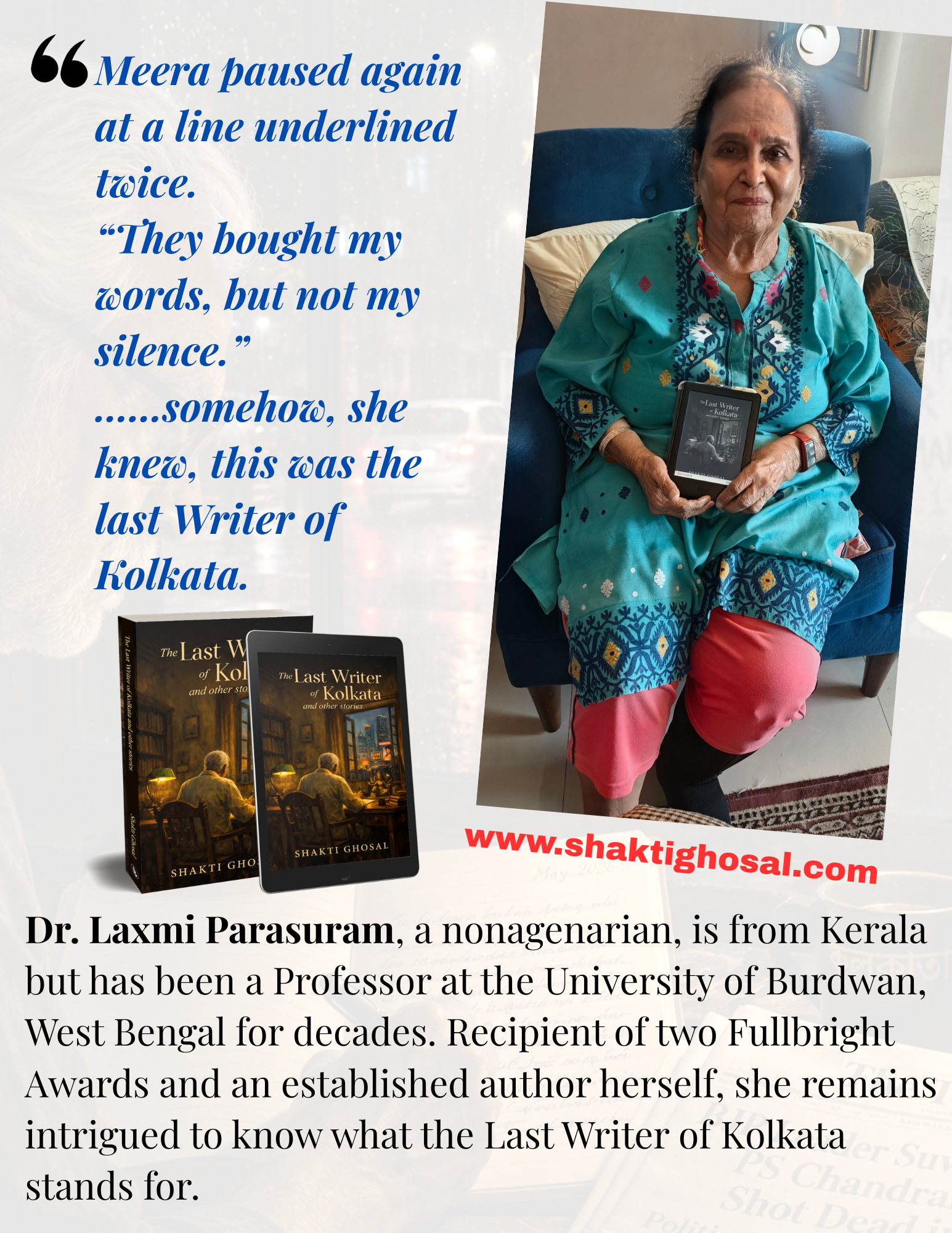
When I met Dr. Laxmi Parasuram to hear her thoughts on The Last Writer of Kolkata and Other Stories, I expected literary observations. What I received instead was a question that lingered.

She spoke of the emotional weight in the stories—the sentiment, the ache, the quiet melancholy. Then she asked, “Why do so many of your stories seem to end sadly?”

The question took me by surprise. I had never consciously thought of these as sad endings. To me, these stories are about ordinary people standing at extraordinary crossroads—where technology, hard trends, and shifting social realities place pressure on the human spirit. In those moments of disruption, what gets tested is not merely survival, but something deeper: memory, dignity, love, identity, silence, moral choice.

And when the protagonists choose to hold on to some irreducible fragment of their humanness—even at a cost—I had seen that not as tragedy, but as resistance. Yet perhaps this is the paradox of our times.

What one person sees as loss, another may see as courage. What appears to be a sad ending may, in fact, be the final refusal to surrender what makes us human.

It made me wonder: Have we become so accustomed to measuring success by comfort, victory, and neat resolutions that acts of emotional fidelity now look like defeat?

Dr. Parasuram’s question stayed with me. And perhaps that is what literature is meant to do—not provide answers but quietly rearrange the questions we ask ourselves.

In Musing……. Shakti Ghosal

The Launch of The Last Writer of Kolkata and other stories


Four futures. Four hard truths. And the fragile choices that still make us human.

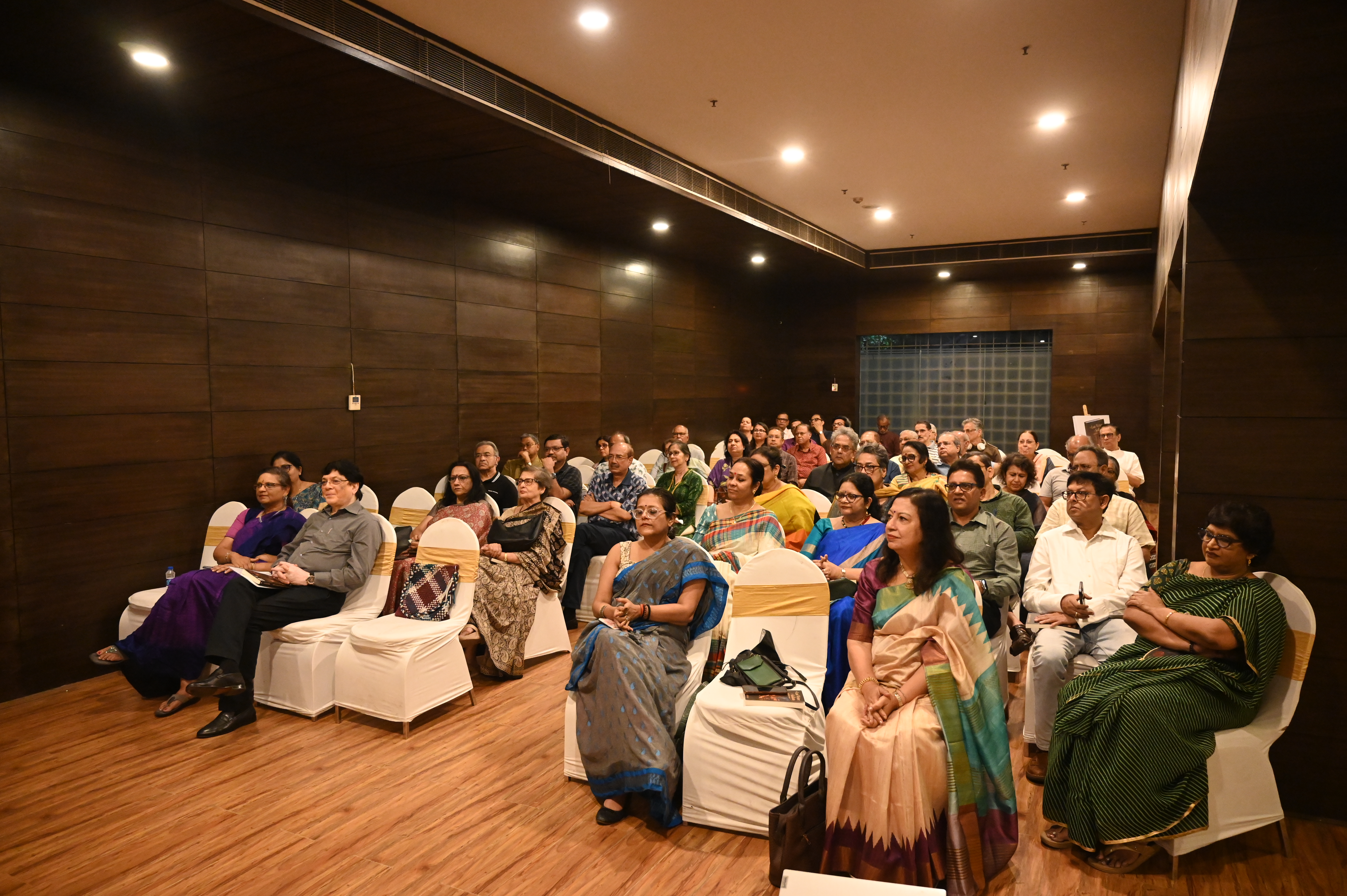
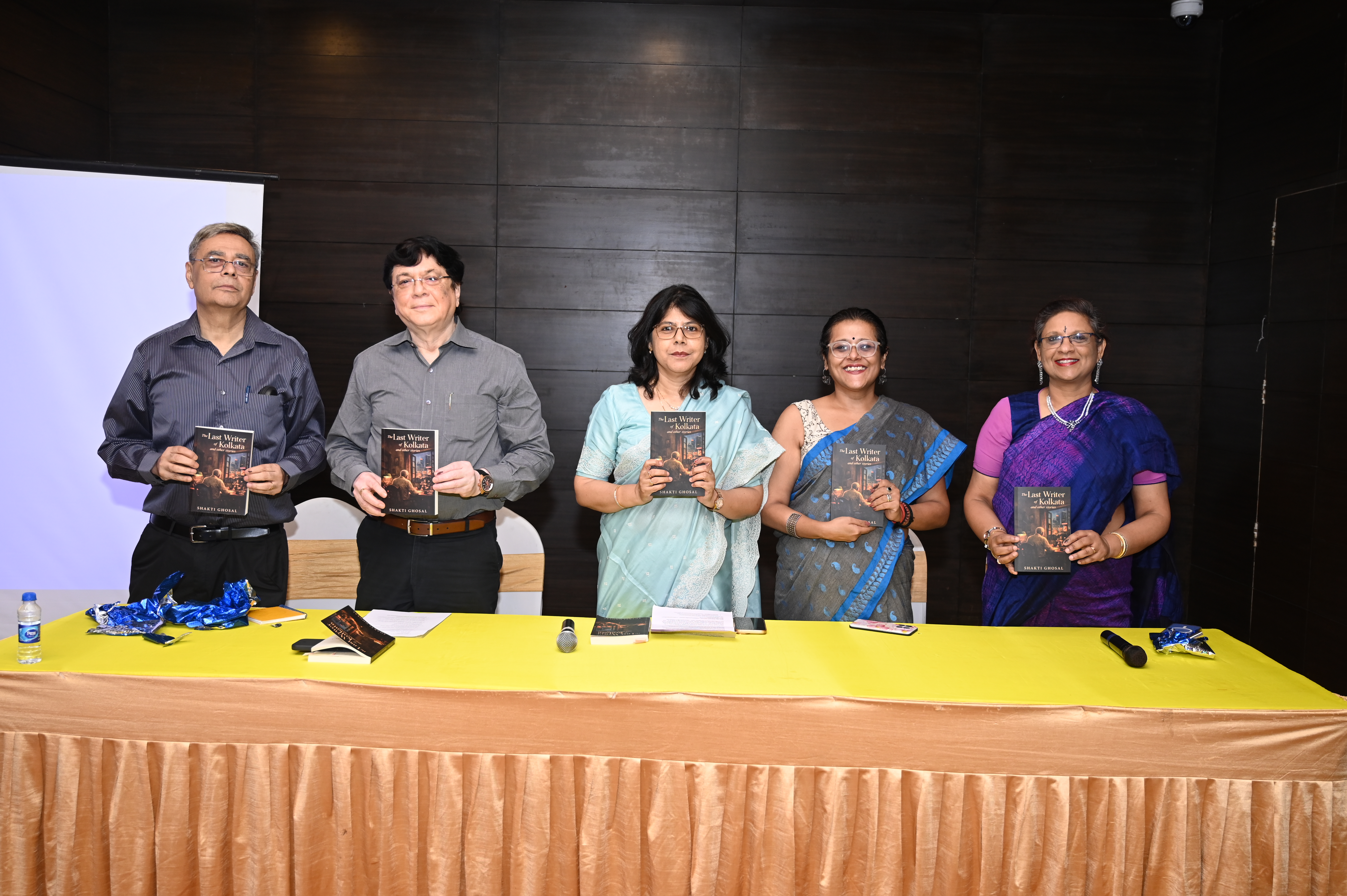
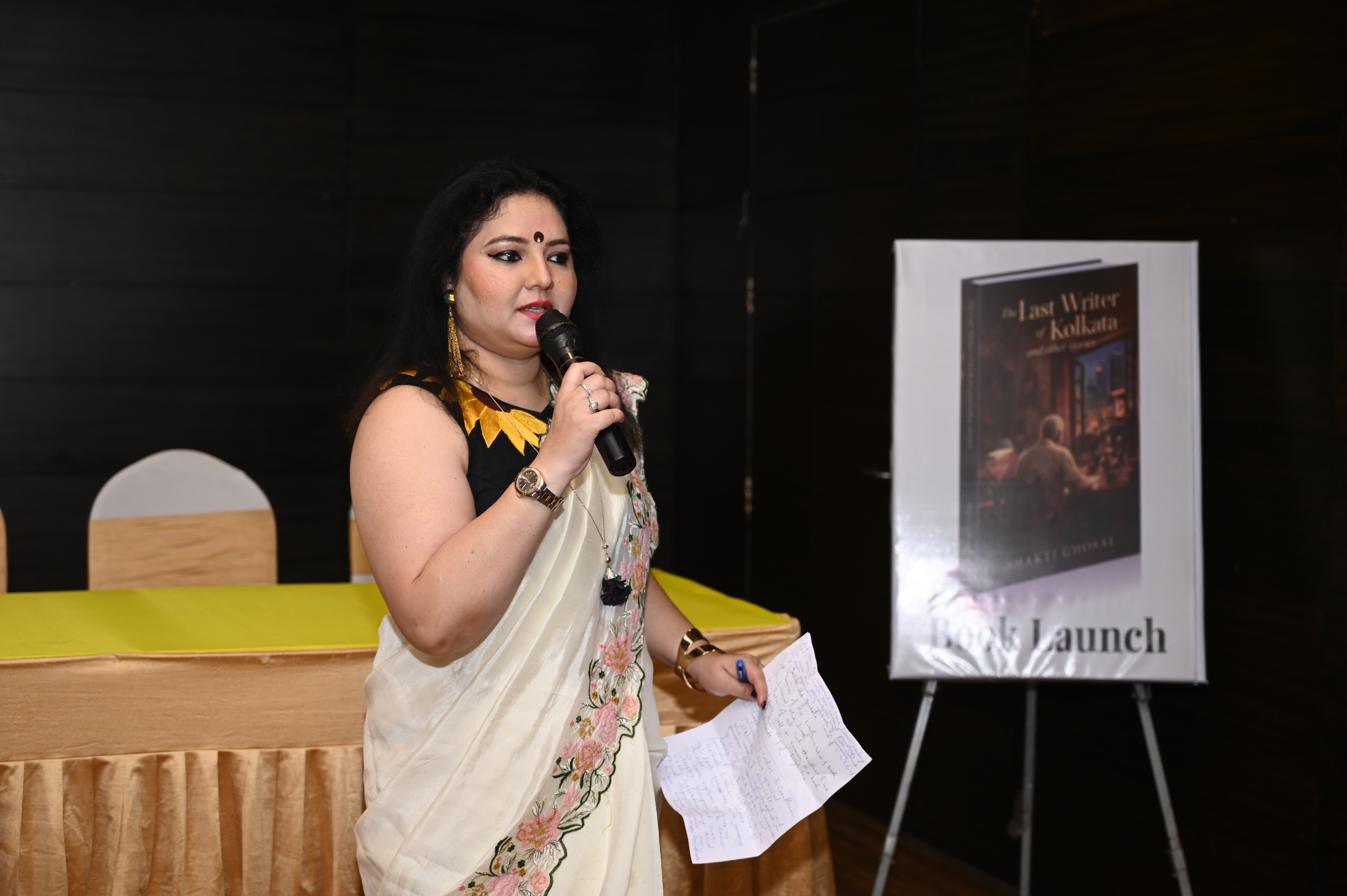
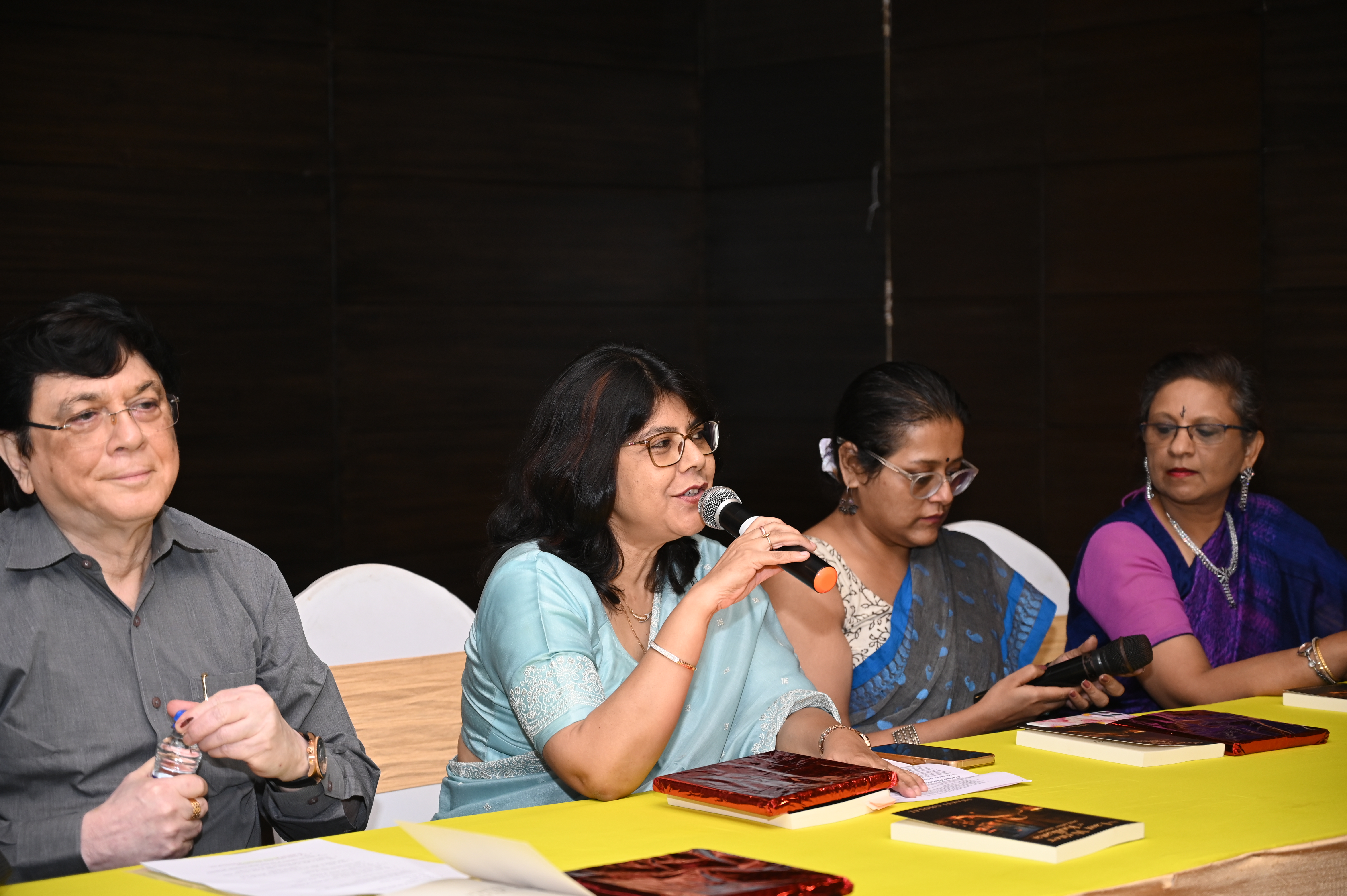
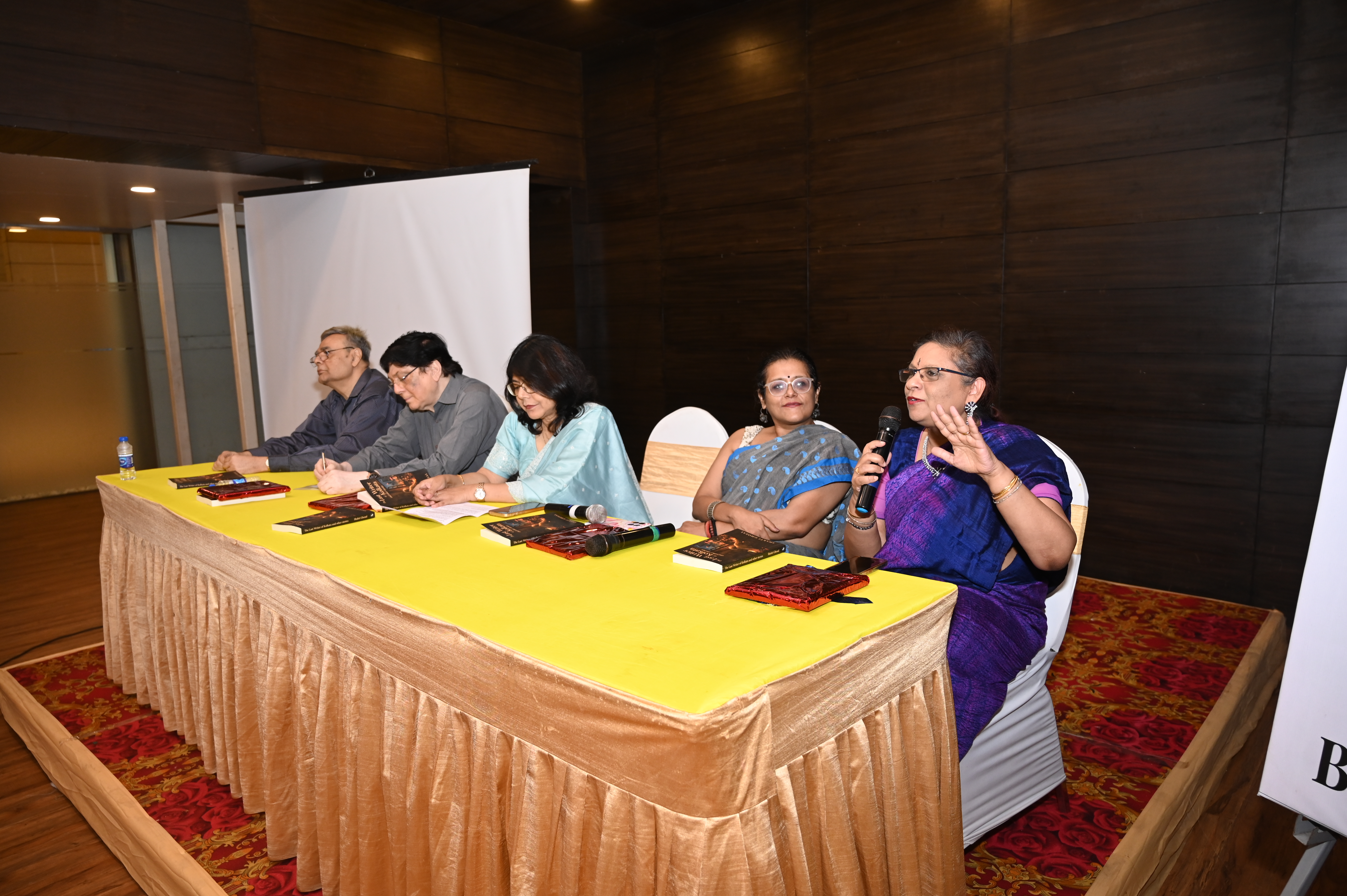
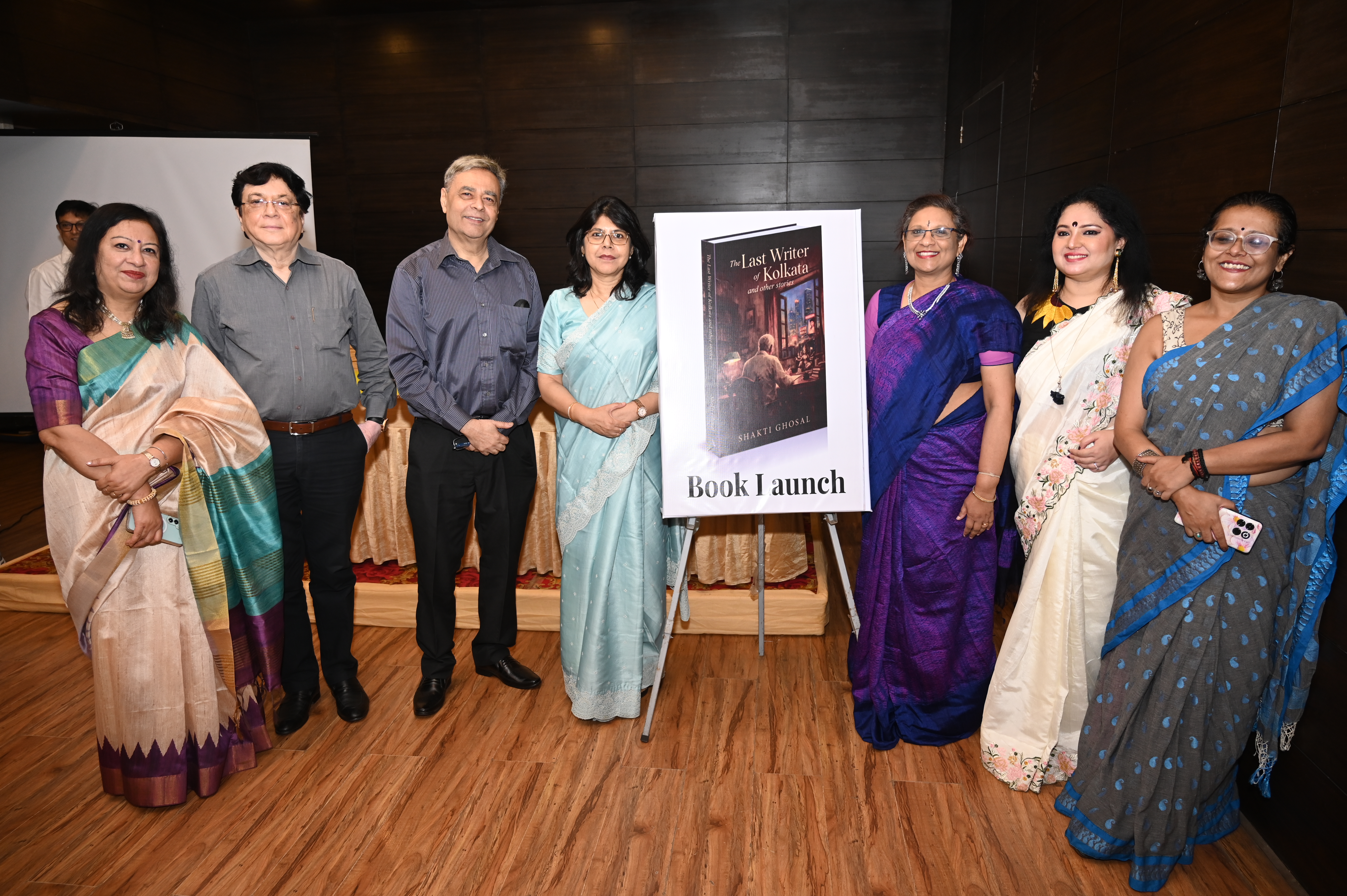
A few Saturdays back, at South City Club Kolkata, The Last Writer of Kolkata and Other Stories began its journey into the world — not merely as a book launch, but as a conversation about the times we are already living through.

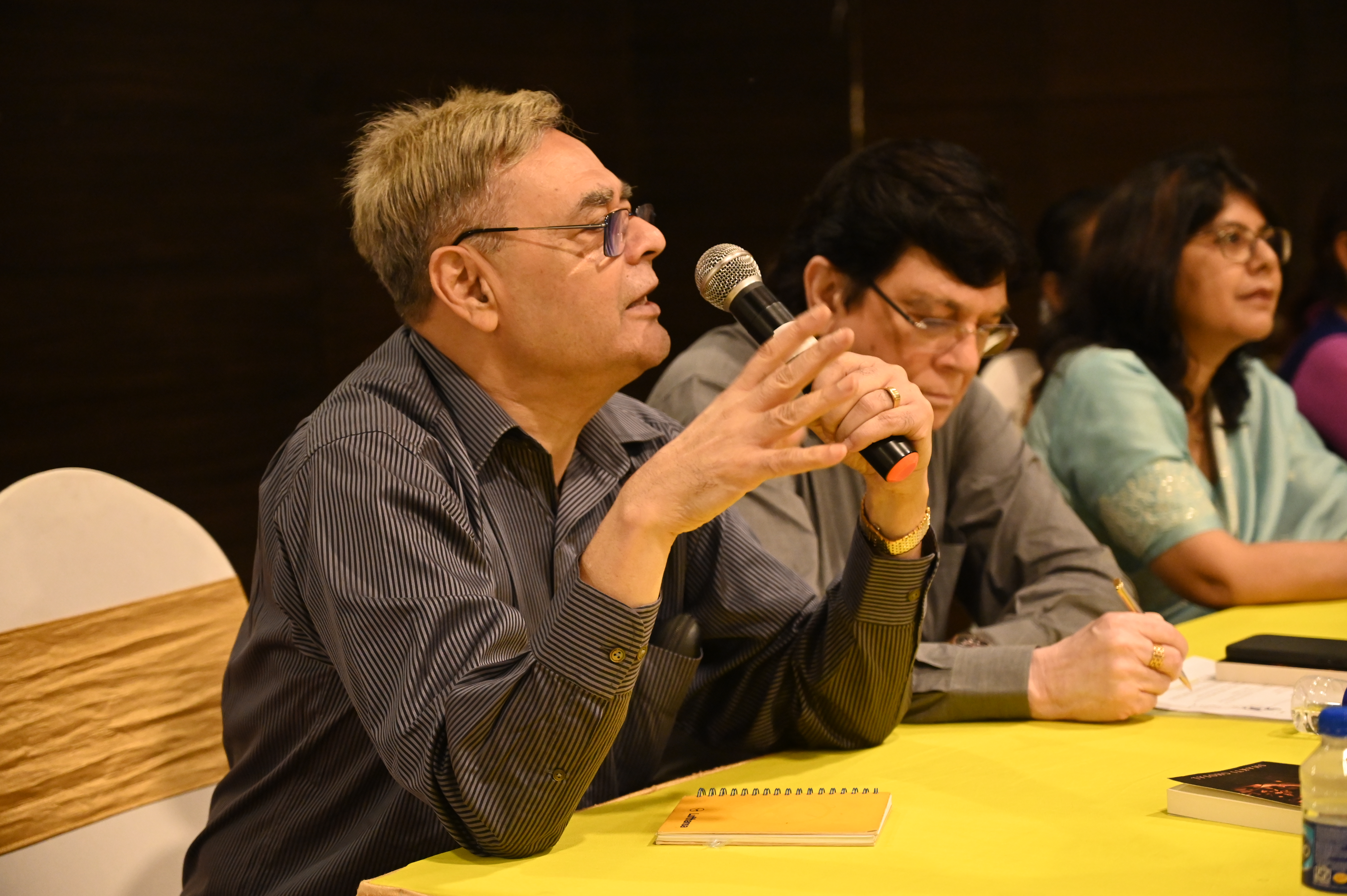
What made the evening truly special was the richness of the panel discussion moderated so thoughtfully by Dr. Vishnupriya Sengupta, alongside the deeply perceptive insights shared by Sanjib Chaudhuri, Poorna Banerjee, and Chitralekha Datta. Shawan Sarkar anchored the evening with warmth and elegance.

The discussion moved across many landscapes:

  • A Kolkata where memory itself becomes a commodity.
  • A Sundarbans struggling against rising tides and ecological collapse.
  • A future where human thought can be manipulated through neural networks.
  • An aging society where loneliness, migration, and technology redefine the meaning of home.

Yet beneath all these imagined futures lay one central question: ‘As the world changes around us, what does it mean to remain human?’

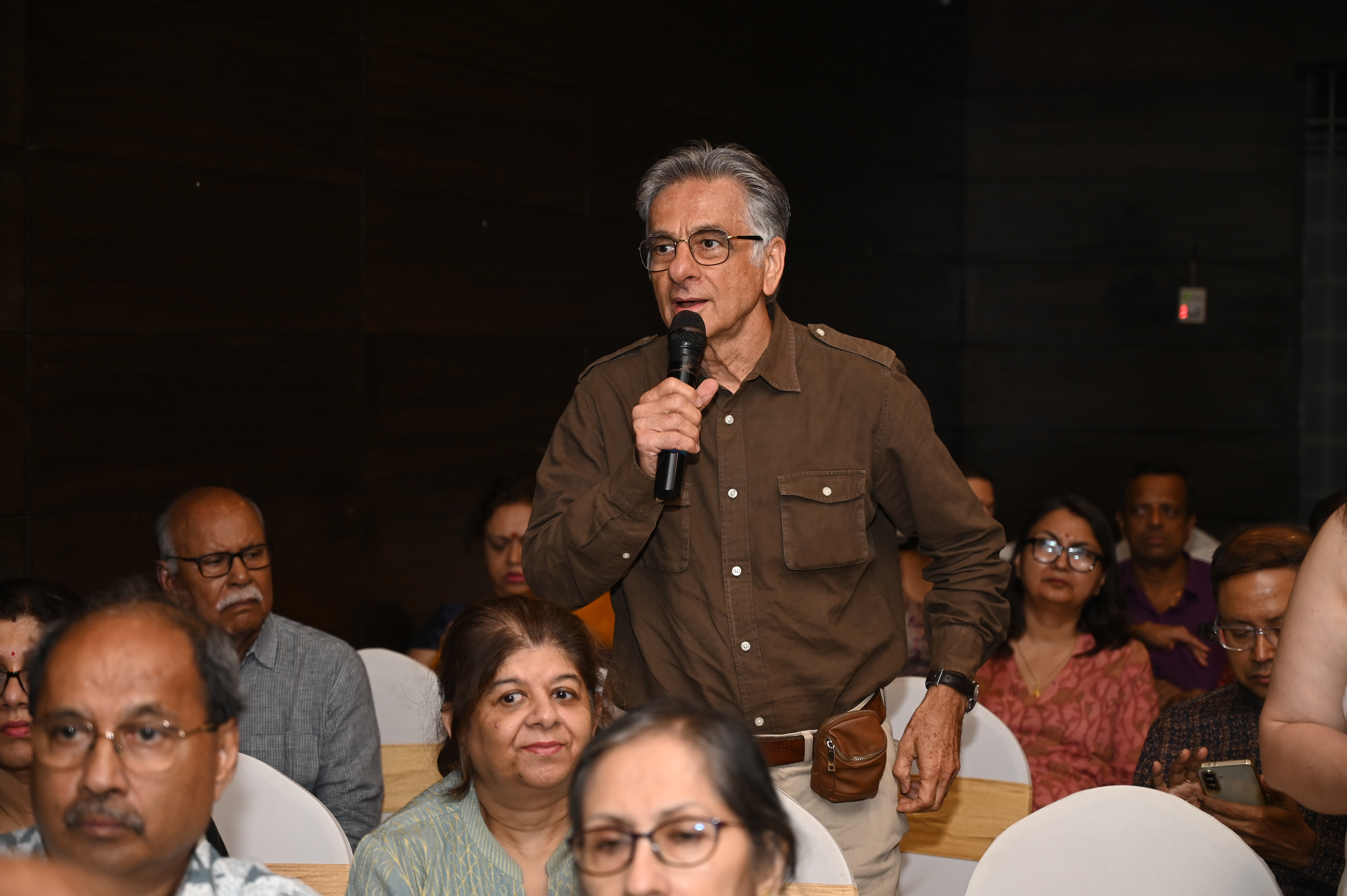
What touched me most was the engagement of the audience — the reflections, questions, disagreements, and personal stories that followed. It reminded me that fiction, at its best, is not an escape from reality, but a mirror held up to the forces quietly reshaping our lives.

My heartfelt gratitude to everyone who attended, participated, encouraged, photographed, listened, questioned, and stayed back afterwards for conversations over tea.

Books may begin in solitude. But they truly come alive in dialogue.

If the above themes intrigue you, I invite you to explore more about the book and the stories at: 🌐 www.shaktighosal.com

In Musing……. Shakti Ghosal

Four futures. Four hard truths. And the fragile choices that still make us human.


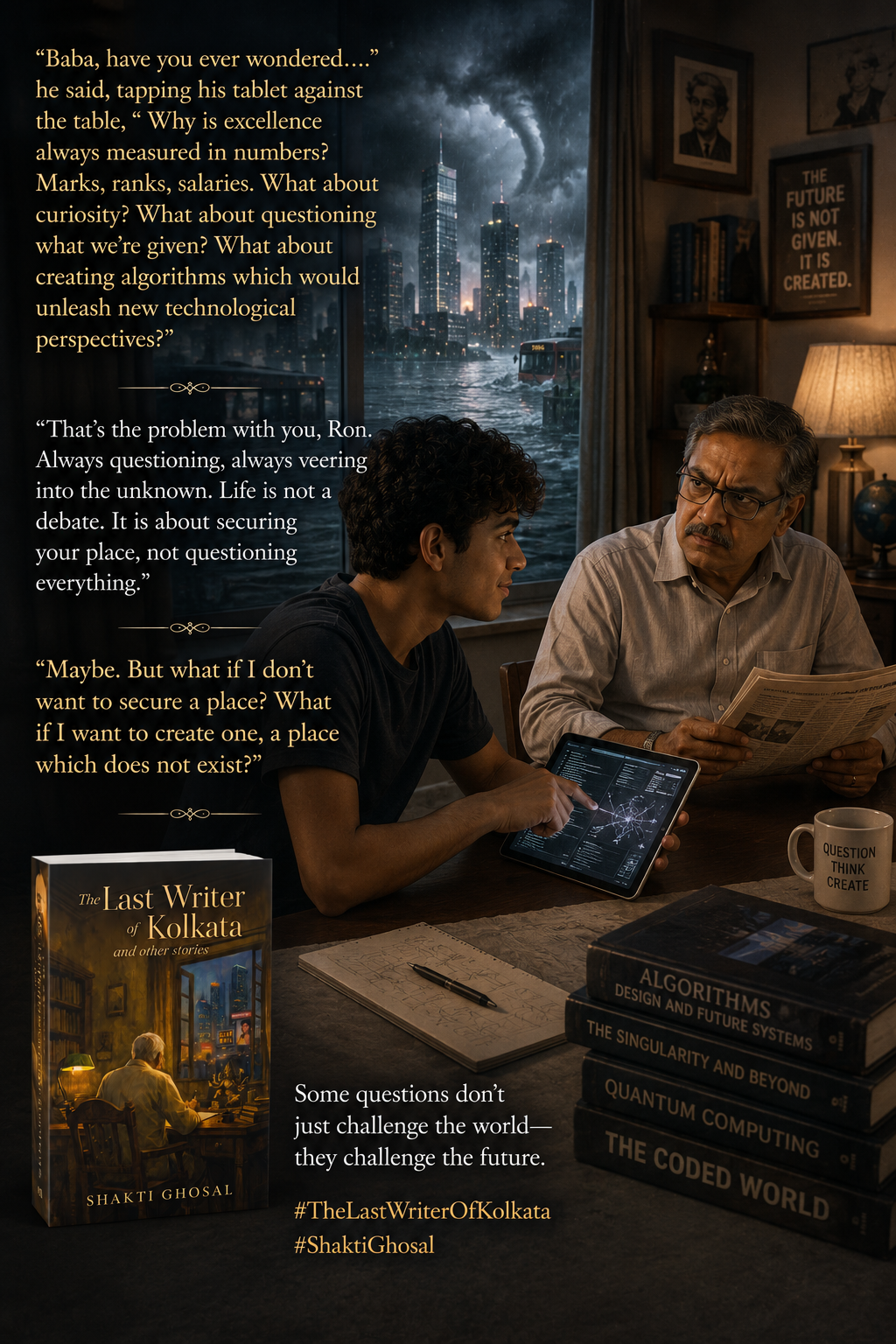
Set in a near future shaped by forces already gathering momentum, this collection explores what happens when irreversible hard trends collide with ordinary human lives. From climate catastrophe and algorithmic control to cultural erasure and institutionalized ageing, each story follows characters forced to rethink love, loyalty, memory, and courage as familiar worlds quietly transform around them. These are not tales of spectacular collapse, but of subtle reckonings—where survival lies not in resistance alone, but in choosing what must still be remembered, protected, and passed on.

The Last Writer of Kolkata
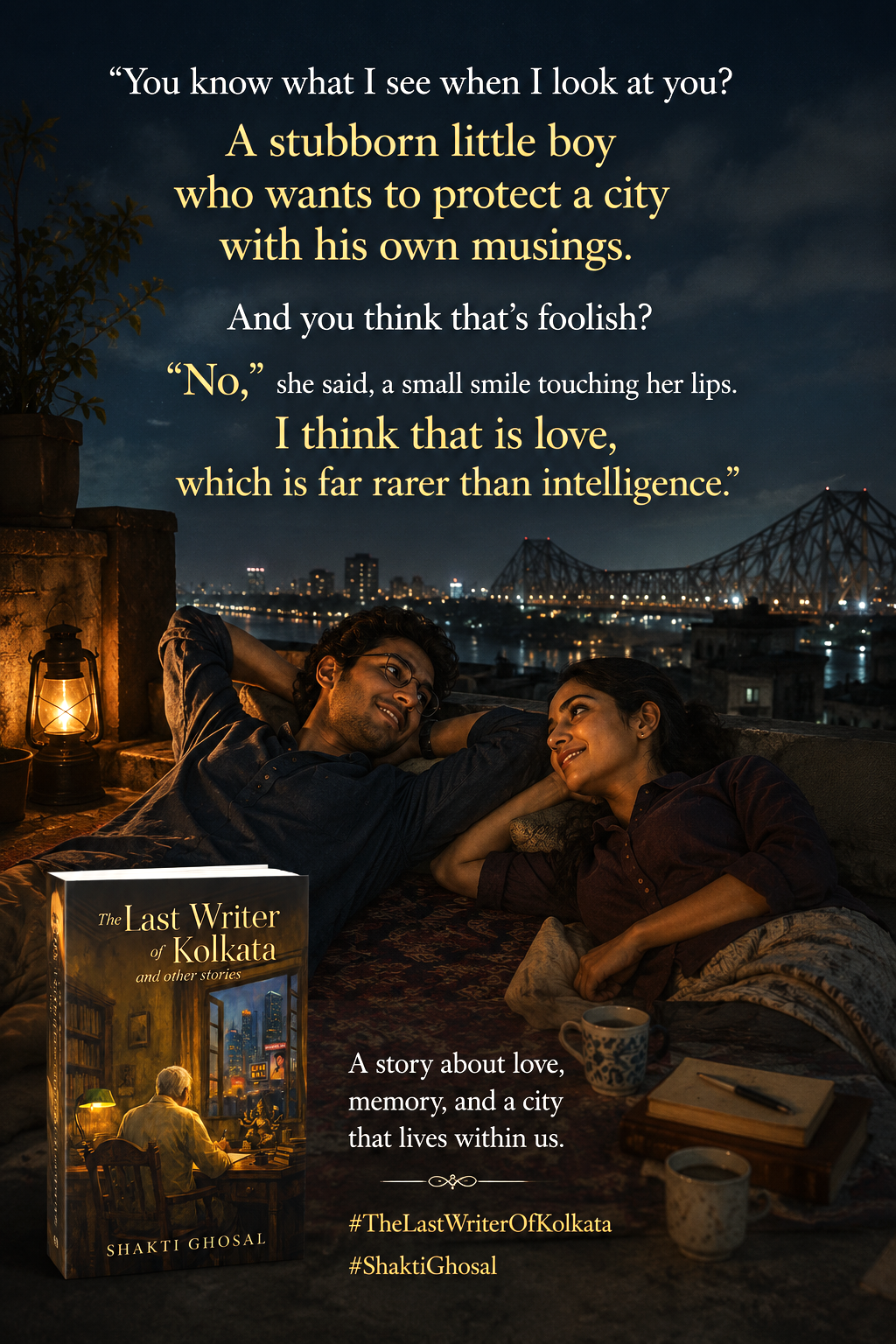
In a near-future Kolkata where memory, culture, and even grief are packaged and sold, an ageing writer quietly records a city that no longer listens. When his private words are appropriated and monetized, the story becomes a haunting meditation on erasure, resistance, and the fragile dignity of remembering in a world that profits from forgetting.

2056: The Year of the Water and Fire
In a near-future Sundarbans battered by super-cyclones and rising seas, a grieving environmentalist, his resolute daughter, and a sentient AI boat are caught between prophecy and science as fire erupts beneath the ocean. As water and flame converge, the story asks a haunting question: when nature reclaims its power, is survival an act of technology, faith—or human courage to stand and choose?

Echo Chamber
In a near future where minds are seamlessly linked and memories can be accessed, altered, and weaponized, a gifted intelligence analyst uncovers a conspiracy that turns thought itself into a tool of control. As truth, identity, and free will begin to blur, the story confronts a chilling question: when belief is engineered, is freedom still a choice—or merely an illusion?

When the Rain Remembered
In a near-future Kolkata where ageing has been systematized and kindness regulated, an elderly couple shelter a displaced child inside a gated retirement enclave that has forgotten laughter. As rain, unrest, and quiet courage unsettle rigid rules, the story becomes a tender meditation on belonging—asking whether homes are built by policy, or by the human instinct to care.

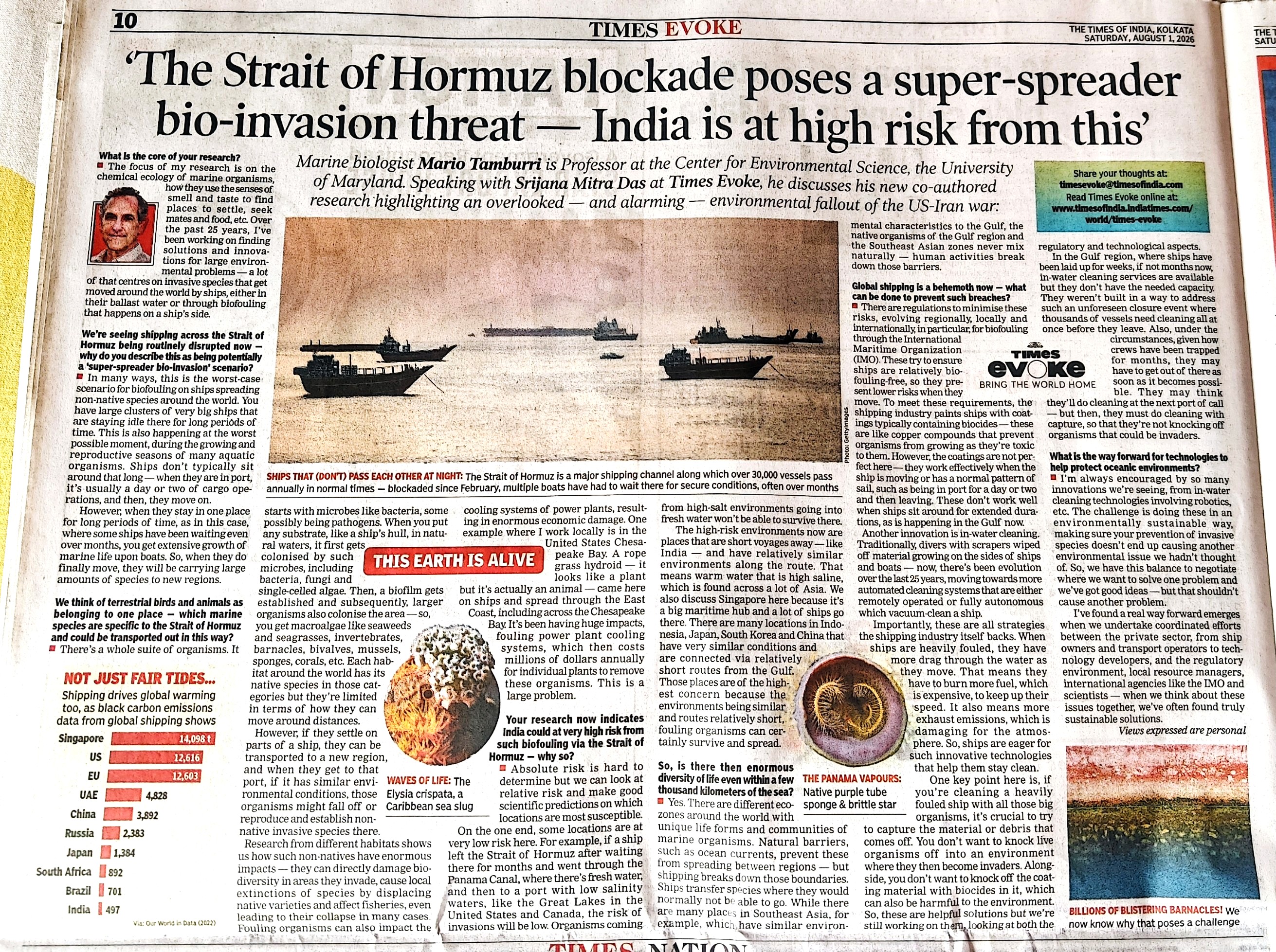
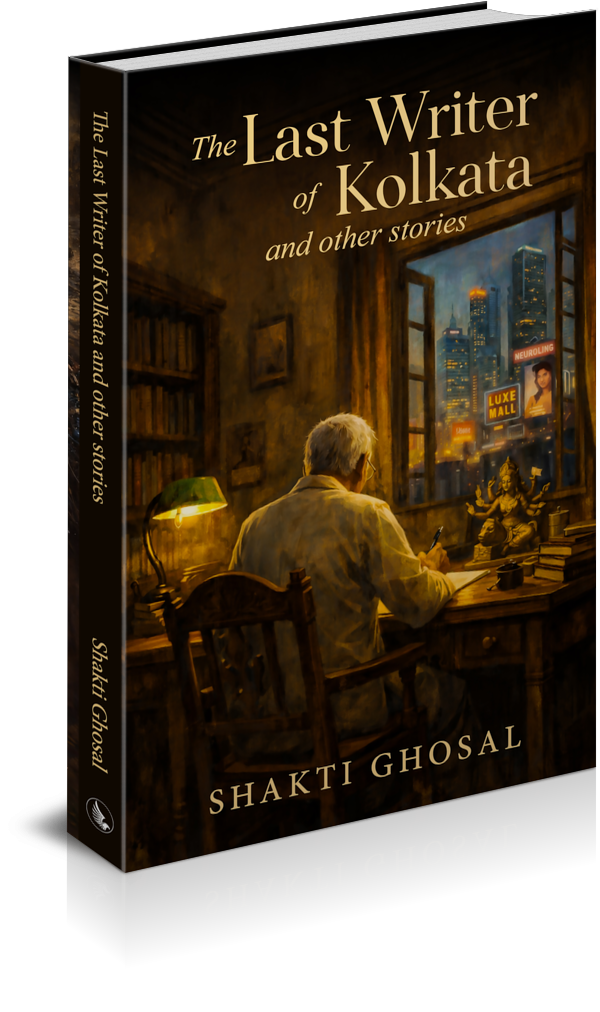
The Last writer of Kolkata and other stories is making waves amongst discerning readers. To know more, visit: http://www.shaktighosal.com

In musing…… Shakti Ghosal

That memory of so many years back started reeling through in striking hues.


Ron with his wife Oishi were staying in their serviced apartment in Pakhiralaya; they were on a visit to Sundarbans. Their daughter Rusha had not accompanied them on that trip because of college work. That evening was heavy and suffocating, as a cyclone loomed. Oishi, with a set of volunteers, was working to strengthen bandhs and send supplies to an isolated fishermen community.

Despite Ron entreating with her to come hinterland to safety, Oishi had remained stubborn.

Rasping breath, hurried footsteps—Oishi’s silhouette moved through the dense mangrove shadows, her figure flickering in the erratic glow of distant lightning. The wind howled through the tangled branches, the sound merging with the guttural cries of unseen creatures.

Her breath was coming in short, sharp gasps. She clutched her shawl tightly around her, the fabric soaked and heavy against her skin. The path back to the apartment was barely visible, obscured by the relentless downpour. The ground beneath her feet was treacherous, a shifting sludge of mud and tangled roots.

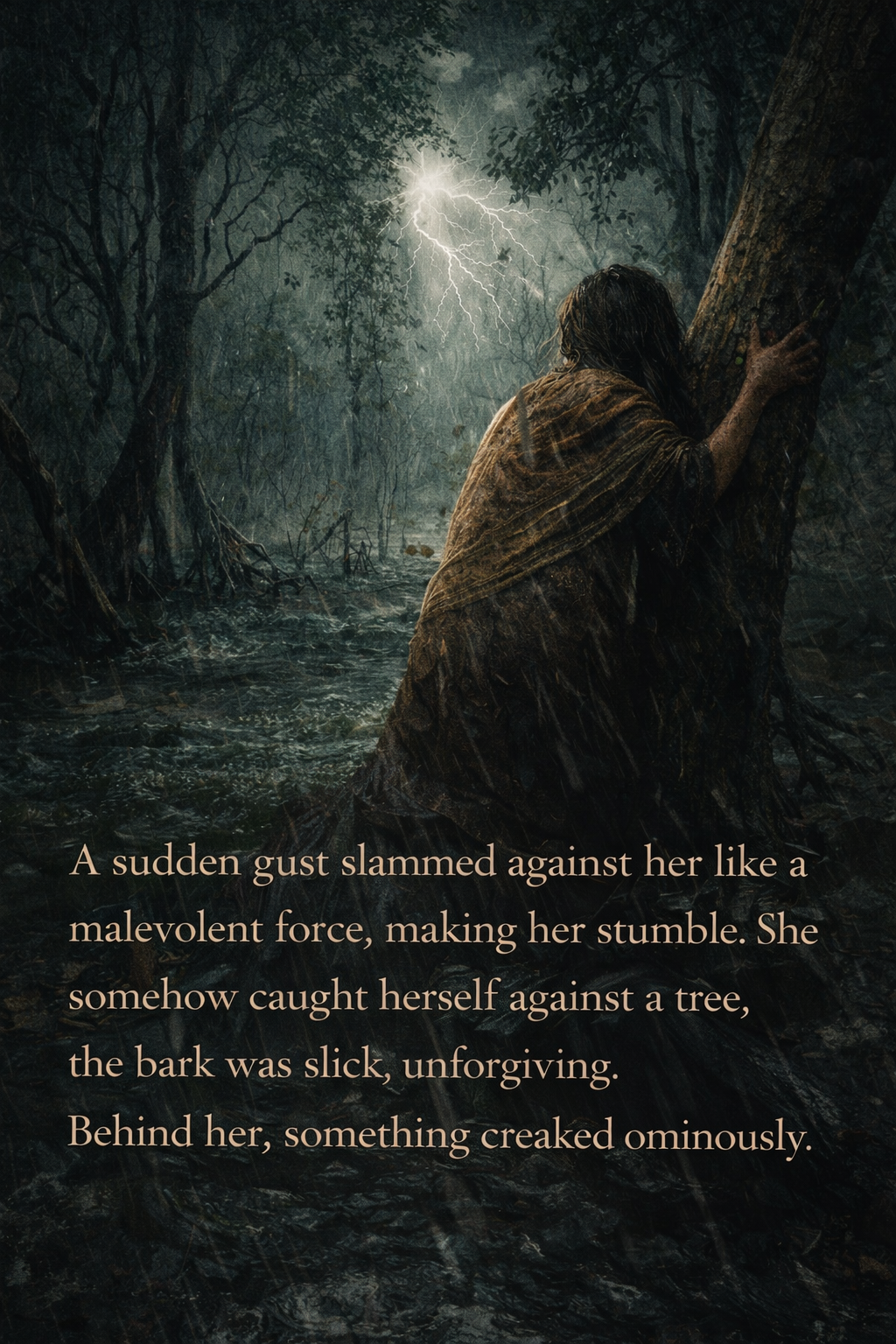
A sudden gust slammed against her like a malevolent force, making her stumble. She somehow caught herself against a tree, the bark was slick, unforgiving. Behind her, something creaked ominously. The storm was trying to shift the forest itself, bending it to its fury.

The sound came, low at first, then a deafening crack. The air trembled with it. A loud whooshing sound accompanied the toppling of a tree. Oishi turned, eyes wide, searching. A massive limb, gaunt and jagged, descended toward her in an unstoppable arc. The sharp end glinted in the erratic lightning, a spear of nature’s wrath.

She tried to move. But it was too late. A piercing scream became a crescendo, riding atop the growls and grumbles of thunder, rising between the heavens and earth. And then, silence, it was swallowed by the storm.”

The mysterious Pakhiralaya in Sundarbans, the planet’s largest surviving estuarine mangrove forest, features in the story ‘2056: The year of the Water and Fire’, part of my book ‘The Last Writer of Kolkata and other stories’. The book is making waves amongst discerning readers. For more details, visit: http://www.shaktighosal.com.

The Last Writer of Kolkata


The future does not arrive all at once.
It seeps in quietly — through our cities, our screens, our climate, our homes, and our hearts.

Set in a near future shaped by forces already gathering momentum, this compelling collection explores what happens when irreversible hard trends collide with ordinary human lives. When familiar worlds tilt just enough to reveal what has already begun to change, they become recognisable tomorrows, shaped by powerful forces. A writer watches memory become a commodity in a digitised culture. An environmentalist confronts the fury of a climate unbound. Minds are shaped inside engineered echo chambers. An aging couple discovers that love, not technology, is the last refuge of belonging. These are not science fiction tales of spectacular collapse, but of subtle reckonings—where survival lies not in resistance alone, but in choosing what must still be remembered, protected, and passed on.

At once intimate and expansive, the stories follow ordinary people navigating extraordinary transitions — holding on to memory, dignity, connection, and hope as the ground beneath them shifts.

Blending imagination with insight, this book offers fiction as a lens — an exploration not of what gadgets we will build, but of who we may become.

The future is coming.

But the human story is still being written.

In musing…….. Shakti Ghosal

Police in Blunderland


I was quite taken up with the book title and so decided to give it a read.

The curiosity piqued from two aspects. First, Bibhuti Dash, the author, happens to be a batchmate of mine from my MBA days and I was aware of his ‘tongue in cheek’ ability and  how he liked to revel in the comic and the absurd in day to day life.  The second was my innate curiosity as to how an easygoing and gentle soul like Dash could have stumbled into and then negotiated the rough and tough demands of a cop’s life. By the time he penned the book, Dash had spent an incredible third of a century donning the police uniform and mindset as part of the elite Indian Police Service cadre.

**

It was sometimes end of 2009 and I was visiting my Alma Mater, the Indian Institute of Management Bangalore in Bannergatta. The occasion was the twenty fifth anniversary reunion of our batch’s passing out of those hallowed portals. Going down the stairs, I bumped into this slim person coming up. Recognition was instant, “Hey, Dash, you haven’t changed a bit my friend”. I was meeting the guy after twenty-five years!

That was also when I learned about the storied career the guy had had, having spent some years in the corporate sector before qualifying for and joining the police services.

Our paths crossed again when I moved to Kolkata. Over the years, I have come to know and admire the mix of diffidence and humility that characterises Dash.

With Bibhuti Dash @ Belur Math, Kolkata Oct. ’22

**

In the book’s foreword, Dash mentions that the book evolved out of a “Whatever it is, I’m against it!” blog series that he had been penning over the last couple of years. I daresay that I have been an avid reader of the blog which Dash publishes on Saturdays.

I had particularly liked one of the blogs with the rather evocative title, “ It’s raining guns and bullets”. This three-piece blog held a particular interest for me as it was about the Purulia Arms drop case in which large caches of sophisticated arms, ammunition and explosives had fallen out of the skies into the the sleepy Purulia district villages of West Bengal in the winter of 1995. As I recalled, it had become a sensational front page media incident. Dash had been involved in solving that case and his description of how several events transpired is the stuff crime thrillers are made of. Let me not say much more for fear of becoming a spoiler, except that “It’s raining guns and bullets’ is part of the book.

‘Police in Blunderland ‘contains forty odd ‘real life’ tales from a policeman’s diary with the protagonist being Dash himself in them. What I found refreshing was how the narrations created perspectives of an observer, even though narrated in the first person.

In the words of Bibhuti Das, “Policing in India is considered very opaque, stern and brutal. In the articles, I have tried to say that there is a human side to Policing and not all of it is dry and taciturn, although it has its flaws.”

I would strongly recommend you to get your hands on a copy. It is sure to entertain with its pithy style and its gamut of interesting plots and characters.

Amazon.IN (Paperback) : https://www.amazon.in/dp/9395986654?ref=myi_title_dp

Amazon.com (eBook): https://www.amazon.com/dp/B0BYF7JB66

Amazon.com (Paperback) : https://www.amazon.com/dp/9395986654

Flipkart :  Click on this link

(eBook) Smashwords : https://www.smashwords.com/books/view/1362404

Happy Reading!

Shakti Ghosal

‘The Chronicler of the Hooghly’ first year anniversary


I am delighted to mention that on its first anniversary, Amazon has released this brand video of my book, ‘The Chronicler of the Hooghly and other stories’.

Available globally on Amazon.

http://www.shaktighosal.com