When Fiction meets Foresight


A BCG Henderson Institute report

When Fiction Meets Foresight: A Reflection on The Last Writer of Kolkata and Other Stories based on the BCG Henderson Institute report.

Author – A BCG Consultant ( name kept confidential)

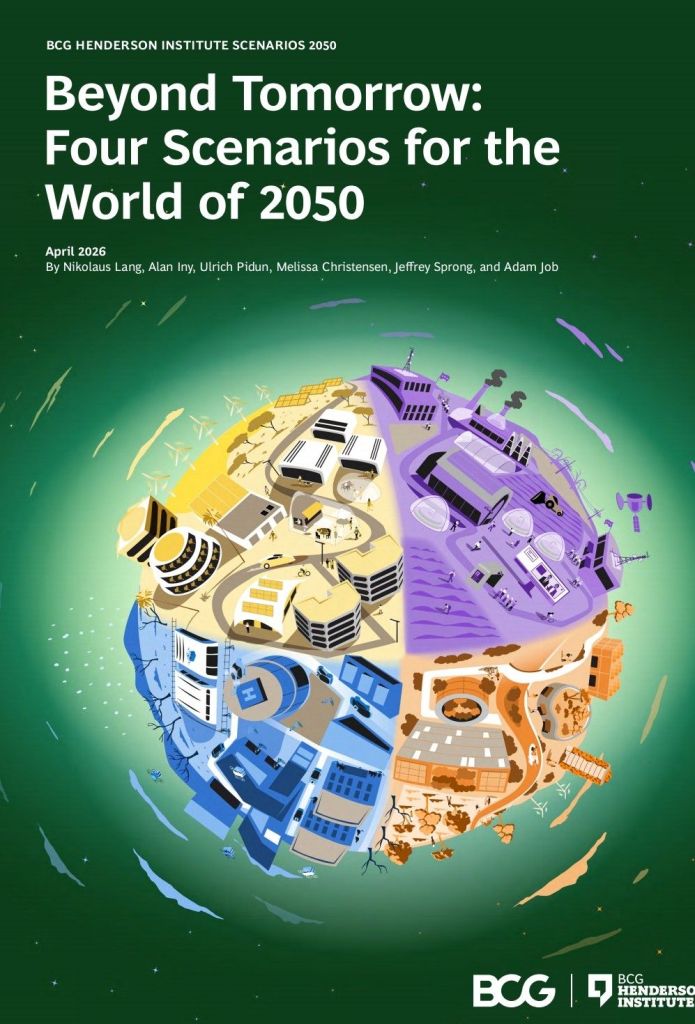
Reading the ‘Last Writer of Kolkata and other stories’ in the context of BCG Henderson Institute’s Beyond Tomorrow: Four Scenarios for the World of 2050  produces an unexpected sensation. I can confirm that the report is the product of rigorous analysis of megatrends, historical data and expert interviews. Shakti Ghosal’s book is speculative fiction. Yet both seem to be looking at the same horizon.

The BCG report reminds us that “the decisions leaders make over the next 5 years will shape the next 25.” It does not attempt to predict the future. Instead, it explores plausible futures emerging from forces already visible today. The four stories in this collection do something remarkably similar.

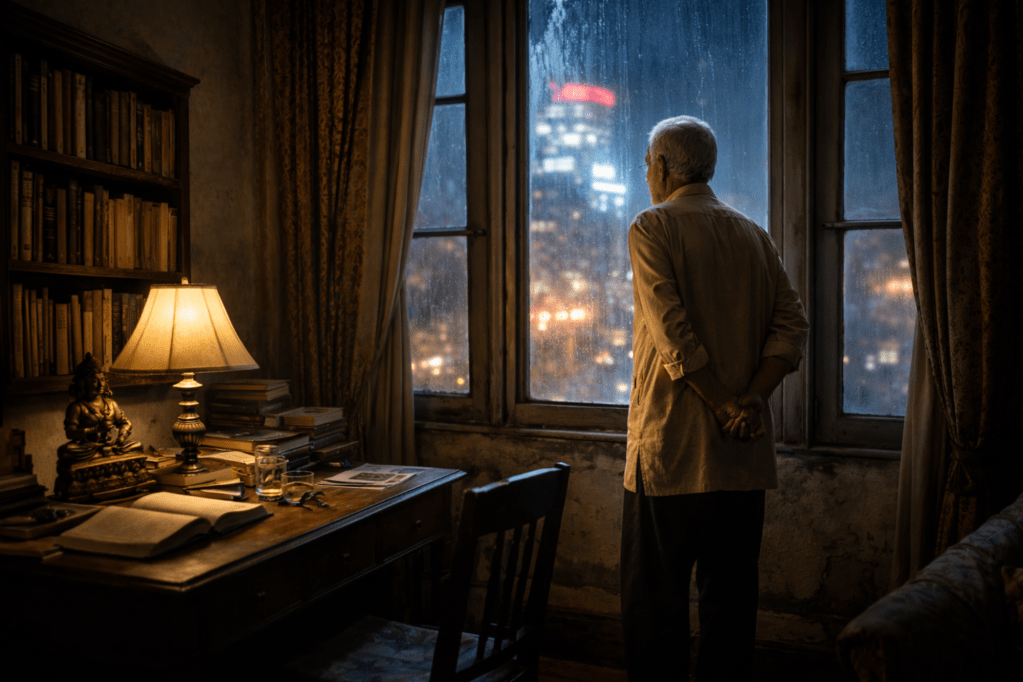
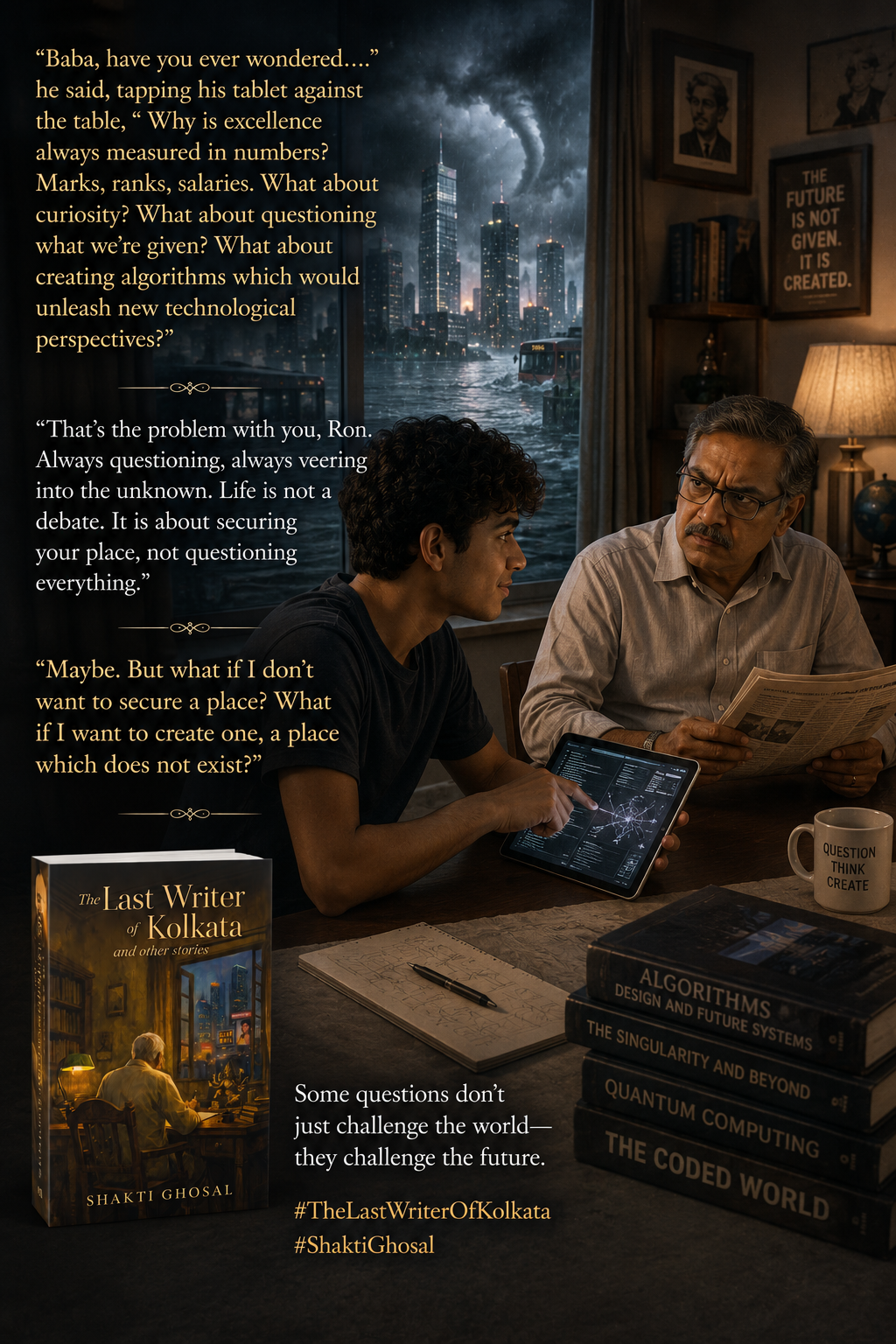
Consider The Last Writer of Kolkata. BCG’s “AI Abundance” scenario describes a world where AI transforms work, creativity and identity, leaving people searching for “meaning and identity beyond employment.” The ageing writer Rudra Bose inhabits a future shaped by a similar question. If machines can write, create and remember, what remains uniquely human? The story is not really about technology. It is about dignity, relevance and the stubborn human need to leave behind a voice that matters.

The Last Writer of Kolkata

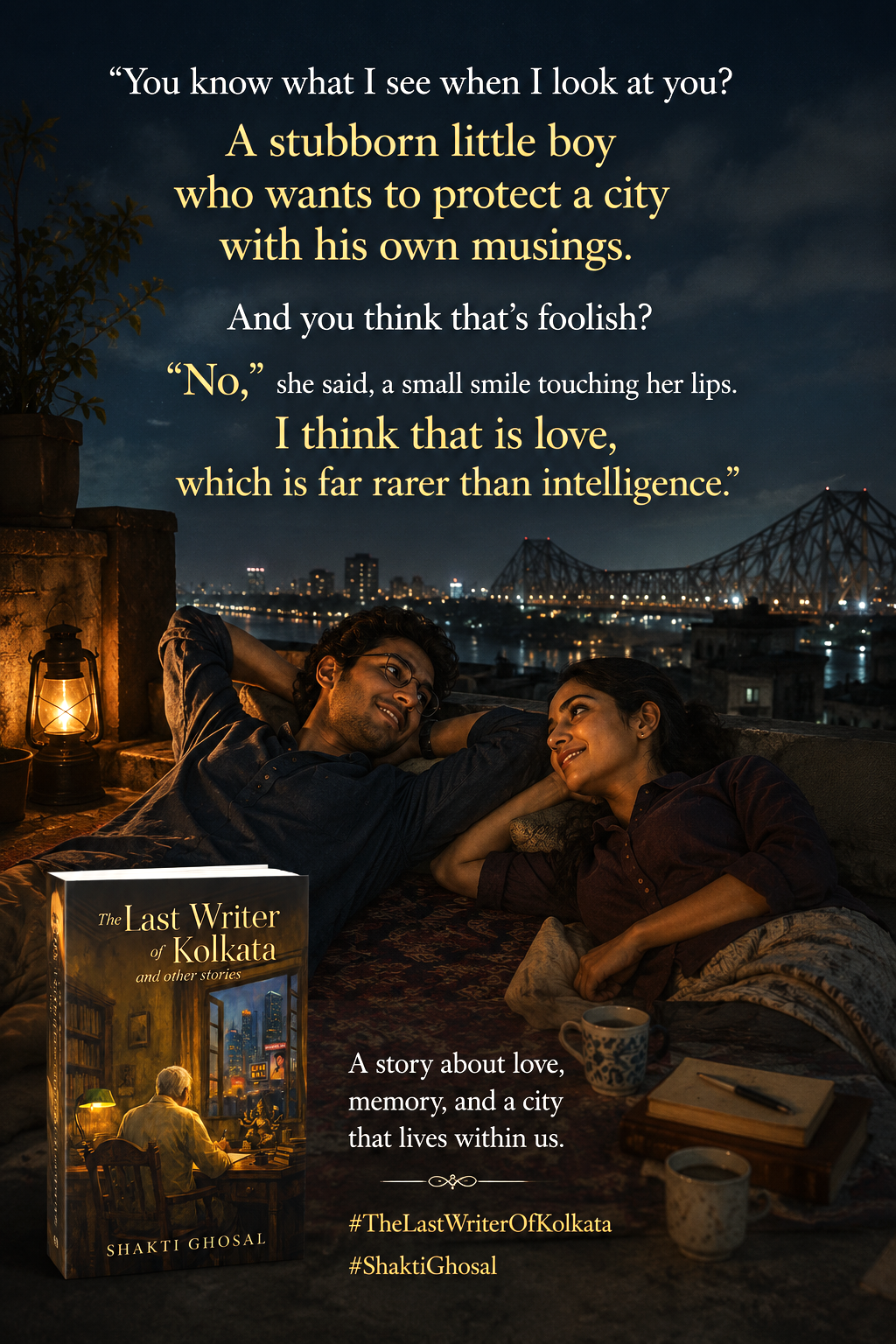
In Echo Chamber, technology enters an even more intimate space—memory itself. The BCG report warns that future societies may trade elements of personal freedom for stability, efficiency and social cohesion. The story asks a disturbing question: If our memories can be edited, curated or manipulated, what becomes of our identity? Memory, after all, is not merely a record of our lives. It is our life.

Echo Chamber

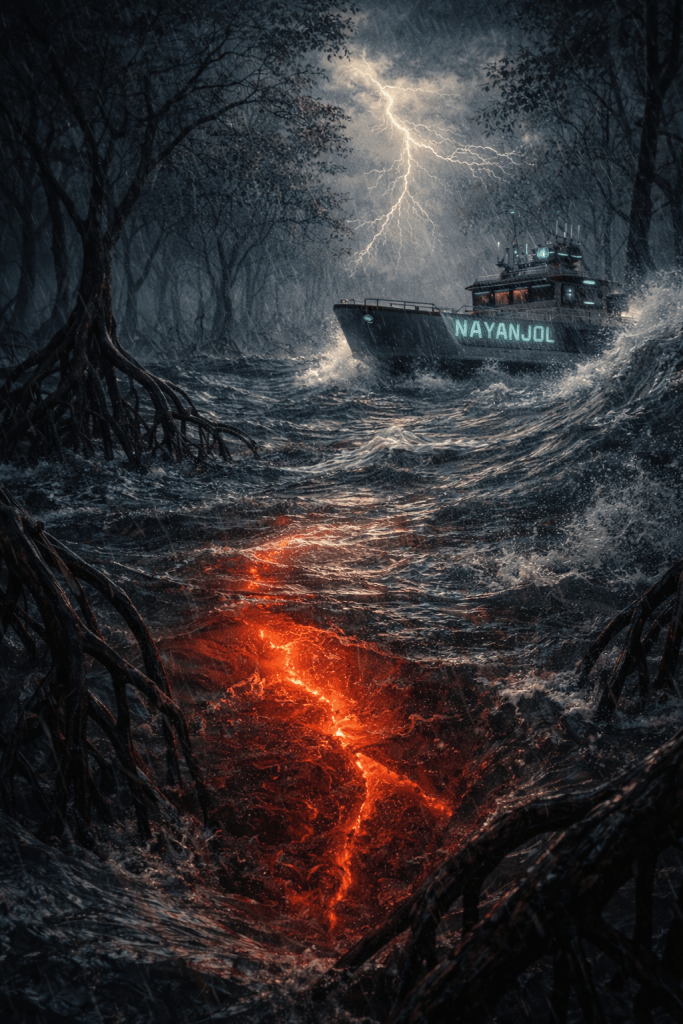
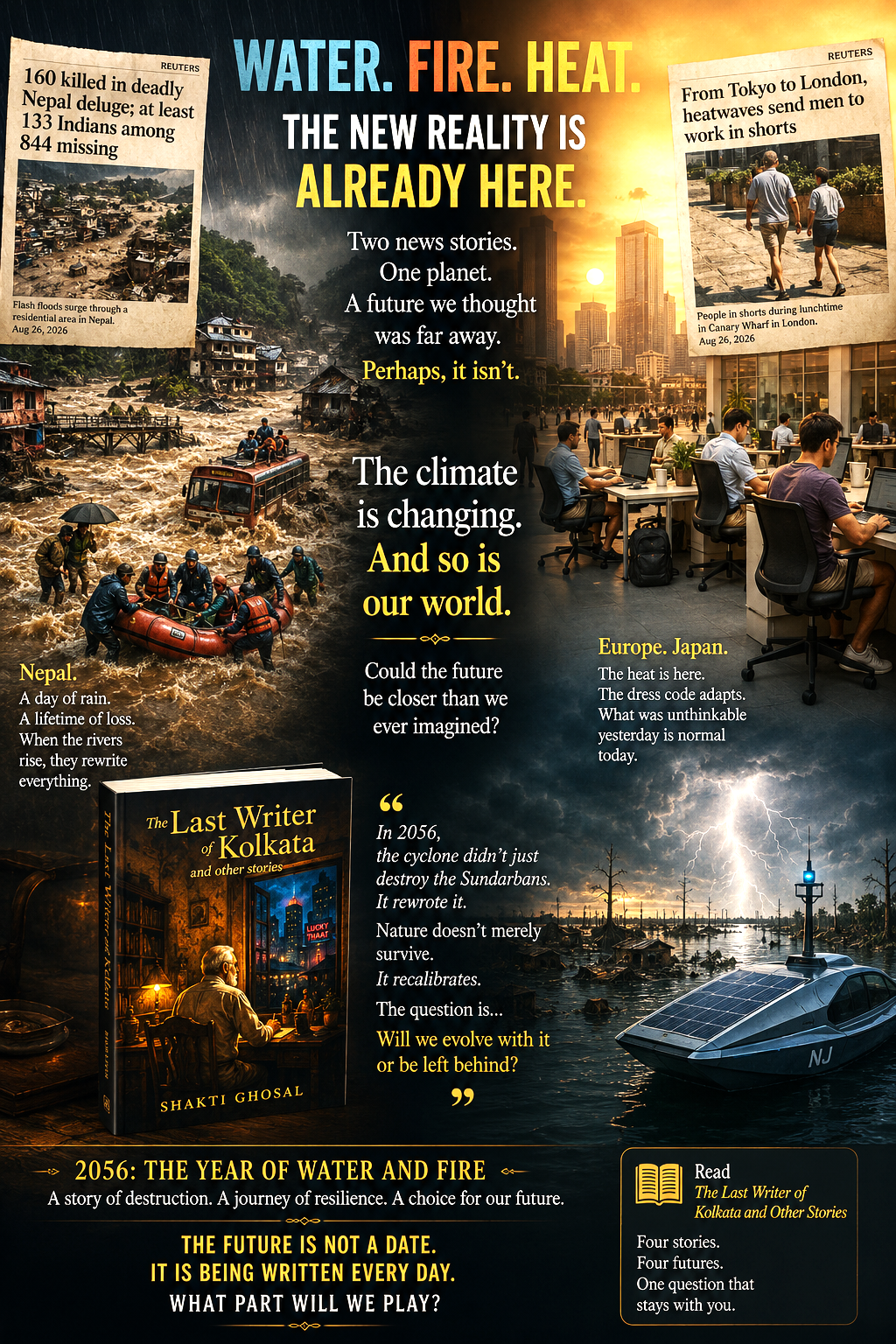
The environmental anxieties running through 2056: The Year of Water and Fire find an echo in BCG’s climate scenarios. The report speaks of a world facing “stress on food and water systems” and increasingly extreme weather. The story translates those trends into human experience. Climate change is no longer a scientific projection; it becomes a force that shapes survival, migration and moral choices.

2056 The year of the Water and Fire

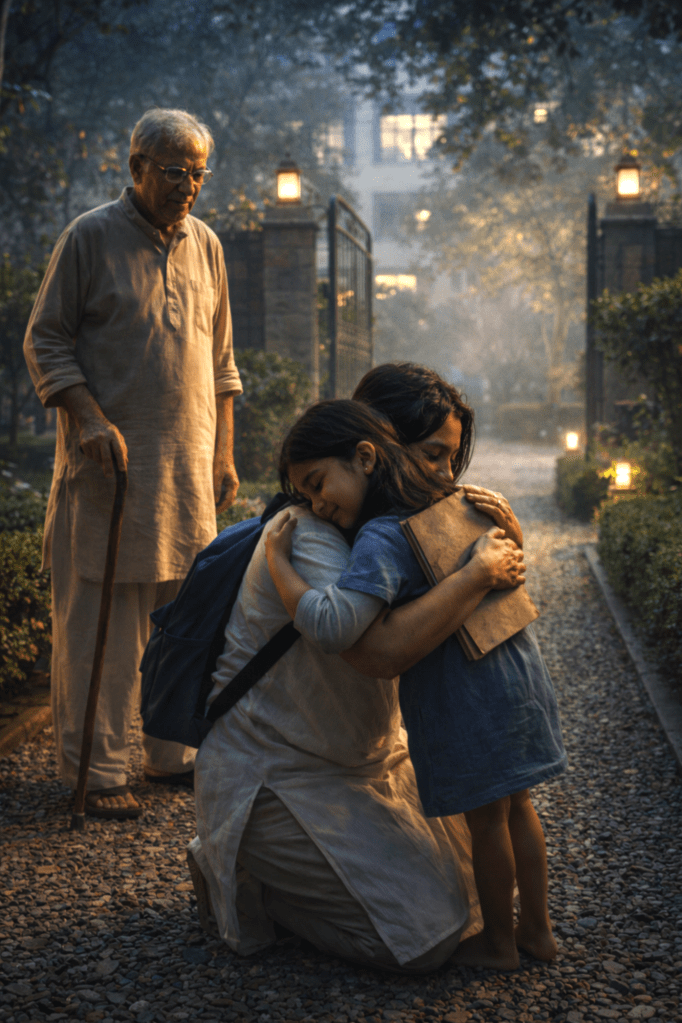
Perhaps the most poignant parallel emerges in When the Rain Remembered. BCG highlights ageing populations, declining fertility and shifting demographics as defining features of the coming decades. Ghosal imagines the emotional consequences of those trends. The story asks what happens when societies grow older, families become smaller, and loneliness becomes a public condition rather than a private feeling.

When the Rain Remembered’

What makes this collection noteworthy is that it does not offer technological optimism or dystopian despair. Instead, it explores the fragile space in between. Like the BCG report, it understands that the future is not a destination but a series of choices.

The greatest compliment one can pay The Last Writer of Kolkata and Other Stories is this: the book does not feel like fiction written about tomorrow. It feels like tomorrow trying to speak to us today.

Reference  

1)bcg-scenarios-2050-apr-2026-web.pdf

2) http://www.shaktighosal.com

Book of the Month review by Outlook India


Aditi Chakraborty is part of the editorial team of the Outlook India group. She has recently done a ‘Book of the Month’ review of ‘The Last Writer of Kolkata and other stories.’

Aditi writes:

‘Shakti Ghosal, in his new book ‘The Last Writer of Kolkata and other stories’, draws a fascinating balance between speculative imagination and deep human struggles that the characters endure. It is a book that highlights technological advancement with emotional vulnerability and social disruption.

Interestingly, Shakti’s stories do not begin with technology; they begin with human dilemmas. An ageing couple confronting abandonment. A man wrestling with memory and cultural erasure. A mind questioning engineered conformity. A community facing ecological collapse. Once the emotional conflict becomes clear, the speculative framework grows around it organically. Readers may enter through the futuristic premise, but they remain because the emotional stakes feel recognisable. The future changes settings; it does not abolish vulnerability.

Environmental collapse, engineered echo chambers, and optimised living appear throughout the collection. Yet the author emphasises that ‘The Last Writer of Kolkata and other stories’ is a work of fiction and not to be treated as a prophecy. However, he agrees that there is a cautionary dimension. Fictions can illuminate trajectories already visible in the present. For instance, climate anxiety is not speculative. Nor is algorithmic influence speculative. Similarly, the pursuit of frictionless efficiency at the cost of emotional depth is not speculative. These are contemporary realities. What his book allows us to do is emotionally inhabit the consequences before they fully arrive.

Despite the unsettling worlds in the book, there is a recurring emphasis on love, dignity, and human connection at the centre of these narratives. “I do not believe technology, however transformative, can erase the fundamental emotional architecture of being human. Civilisations evolve. Systems collapse. Tools become more intelligent. But a parent’s concern, a child’s longing, the dignity of memory, the need to be seen, the quiet courage of human connection—these remain stubbornly persistent,” he explains. For Shakti, love is not merely sentiment. It is resistance. Dignity is resistance. Choosing connection in increasingly impersonal worlds is resistance. “If my stories contain unsettling futures, it is because I wanted the emotional stakes to feel urgent. But despair alone makes for shallow storytelling. I am more interested in the resilience of tenderness.”

The complete Book of the Month review in Outlook India can be found here.

https://www.outlookindia.com/amp/story/announcements/news-media-wire/book-review-shakti-ghoshals-the-last-writer-of-kolkata-and-other-stories

A Conversation on the Edge of Tomorrow


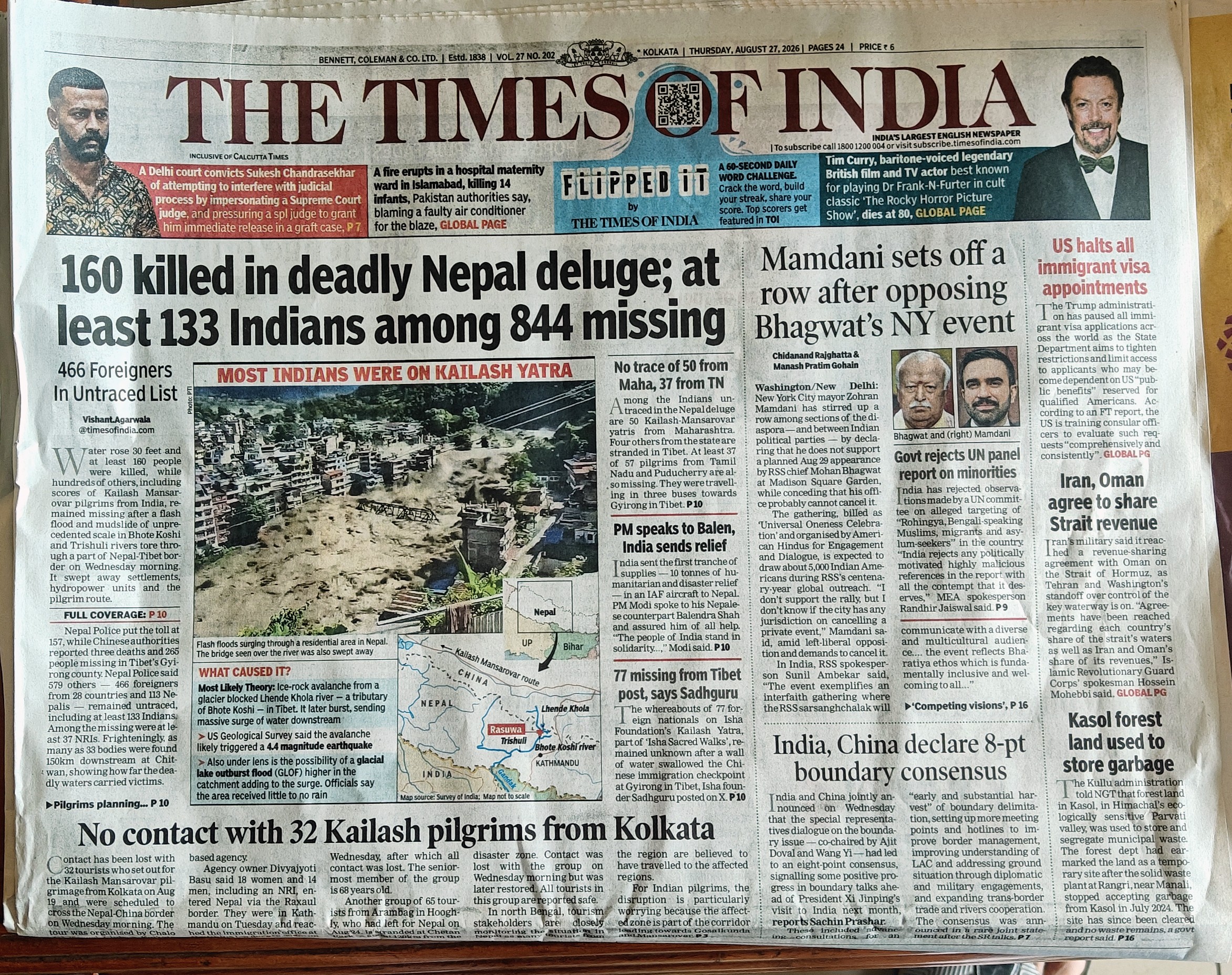
Yesterday’s storm in Kolkata was not merely weather. It was a warning.

87 kmph winds. Uprooted trees. Flooded streets.

The broken branches would no doubt get cleared. The roads would reopen. And life too will resume its familiar rhythm. But perhaps that is precisely how great changes begin—not as catastrophes, but as interruptions. A little more water. A little more heat. A little more wind. Until one day we realise that what we called “unusual” has become normal.

While writing 2056: The Year of Water and Fire, I imagined a world shaped by rising waters and extreme weather. Yesterday, Kolkata offered a glimpse of that possibility. The future is rarely somewhere ahead of us. Often, it is already knocking at the door.

In Musing….. Shakti Ghosal

#TheLastWriterOfKolkata #ClimateChange #Kolkata #2056TheYearOfWaterAndFire #ShaktiGhosal