
When Leaders Rise, do they lose sight of those below?


I happened to read a thought provoking piece on Friedrich Nietzsche and a quote of his in Times of India. It led me to ponder on the Leadership in the Political and Organisational arenas we see today…..

“The higher we soar, the smaller we appear to those who cannot fly.”

Friedrich Nietzsche wrote these words in 1881. They were never meant to suggest that those who rise are superior to those who remain on the ground. Nietzsche was speaking about perspective—the strange way in which distance changes how we see one another.

But I wonder whether there is another, more uncomfortable lesson hidden in those words for leadership.

Whether in politics or in organisations, leaders often begin their journey with the trust, hopes and aspirations of the very people they lead. Success follows. Power increases. The circle around them becomes smaller, more selective and increasingly insulated.

And something subtle begins to happen.

The leader starts seeing the world from a higher altitude. The people below start seeing a leader who is increasingly distant. This is where the slow deterioration of faith begins.

A view from above

Employees who once felt heard begin to feel ignored. Citizens who once believed begin to question. Honest feedback gets replaced by carefully filtered information. Dissent is interpreted as disloyalty. The leader hears more applause and less truth. Ironically, the higher the leader rises, the greater becomes the need to remain connected to the ground.

Leadership is not merely about vision, achievement or the ability to soar. It is about ensuring that people can still see you, trust you and speak to you when you are up there.

The danger is not success. The danger is success without humility.

Political leaders need to remember that electoral victory is not a permanent certificate of public trust. Corporate leaders need to remember that business success does not automatically translate into employee loyalty. Both are temporary mandates, renewed every day through credibility, fairness and connection.

Perhaps the real test of leadership is therefore not how high we can rise, but how many people we can take with us—and whether, while rising, we remain capable of listening to those who are still on the ground.

Leaders must deliberately create spaces where uncomfortable truths can travel upwards. They must reward candour rather than compliance, dissent rather than sycophancy, and substance rather than applause.

Because once people stop believing that their leader understands them, they may continue to obey.But they stop believing. And when belief disappears, authority may survive for a while.

Leadership does not.

The challenge before every leader, therefore, is simple but profound: **Rise. Achieve. Soar. But never become so distant that the people who helped you rise can no longer reach you.**

In musing…….               Shakti Ghosal


What if…


……societies change not because they have become wiser but because they become preoccupied with different anxieties.

August 2026

Nineteen years.  That is long enough for a child to become an adult. It is also long enough for governments to rise and fall. Long enough for a city to forget the sound of its own anger.

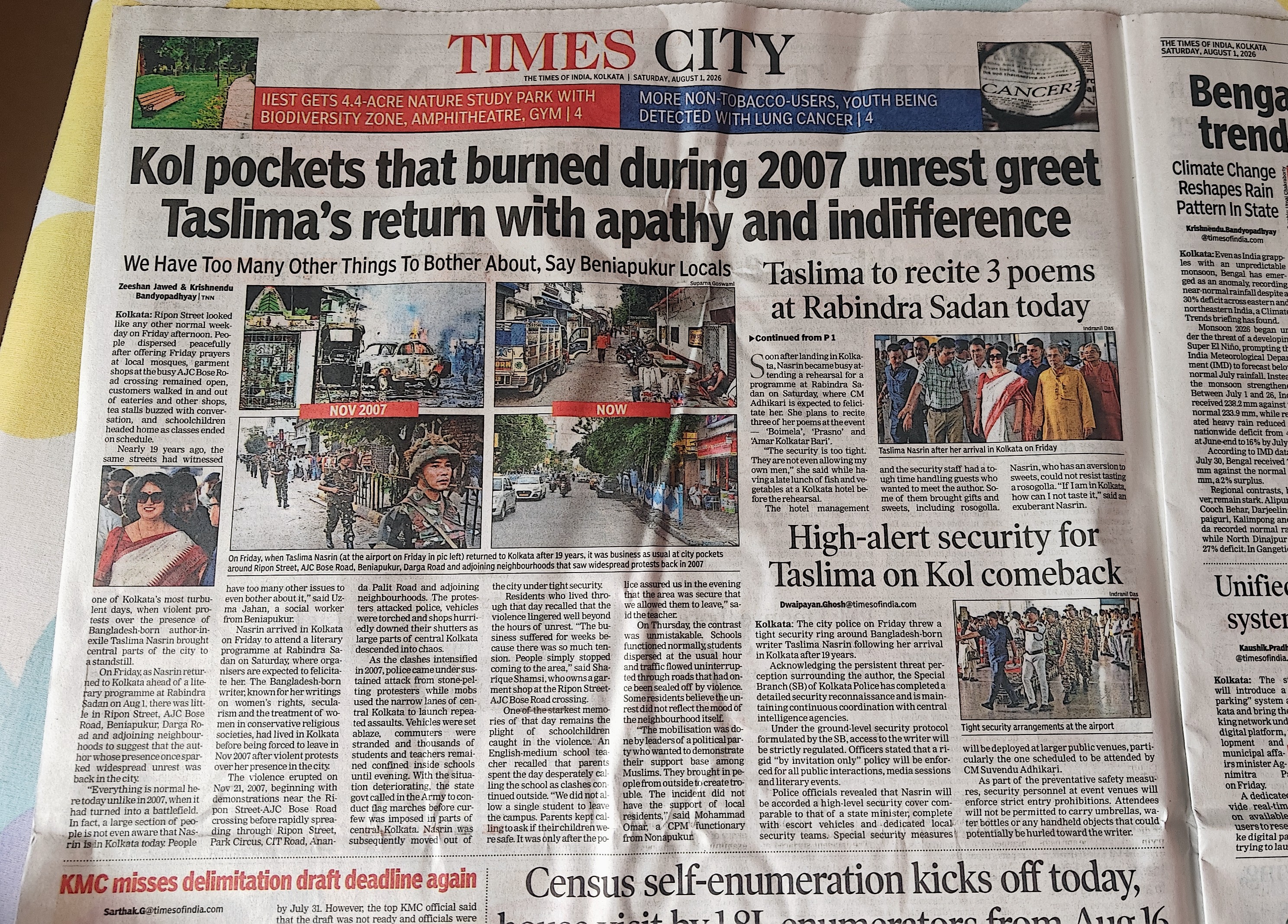
The other day, the newspaper told me that Taslima Nasrin has returned to Kolkata after nineteen years. The same city that once burned over her presence now seems to have greeted her mostly with routine, security cordons and a curious indifference.

Talima Nasrin report in the Newspaper

It made me wonder. What has really changed? Did we become more tolerant? Did we finally learn that books and what is written within need not be answered with barricades? Or have we simply acquired newer fears that leave us with less energy for old ones?

Perhaps every generation chooses its own battles. Yesterday it was identity. Today it is jobs, examinations, inflation, technology, security and an uncertain future. The loudest outrage of one decade quietly becomes yesterday’s headline.

As I folded the newspaper, I realised that a mature society is not one where everyone agrees. It is one where disagreement no longer needs to be escorted by violence. If Kolkata has truly changed, the victory does not belong to any government, any ideology or any writer.It belongs to the simple belief that ideas should be answered by better ideas, not by frightened crowds.

That is how civilisation grows—almost unnoticed, one quieter street at a time.

Rudra Bose, The Last Writer of Kolkata

Has Gen Z Become Less Intelligent—Or Are We Measuring Intelligence the Wrong Way?


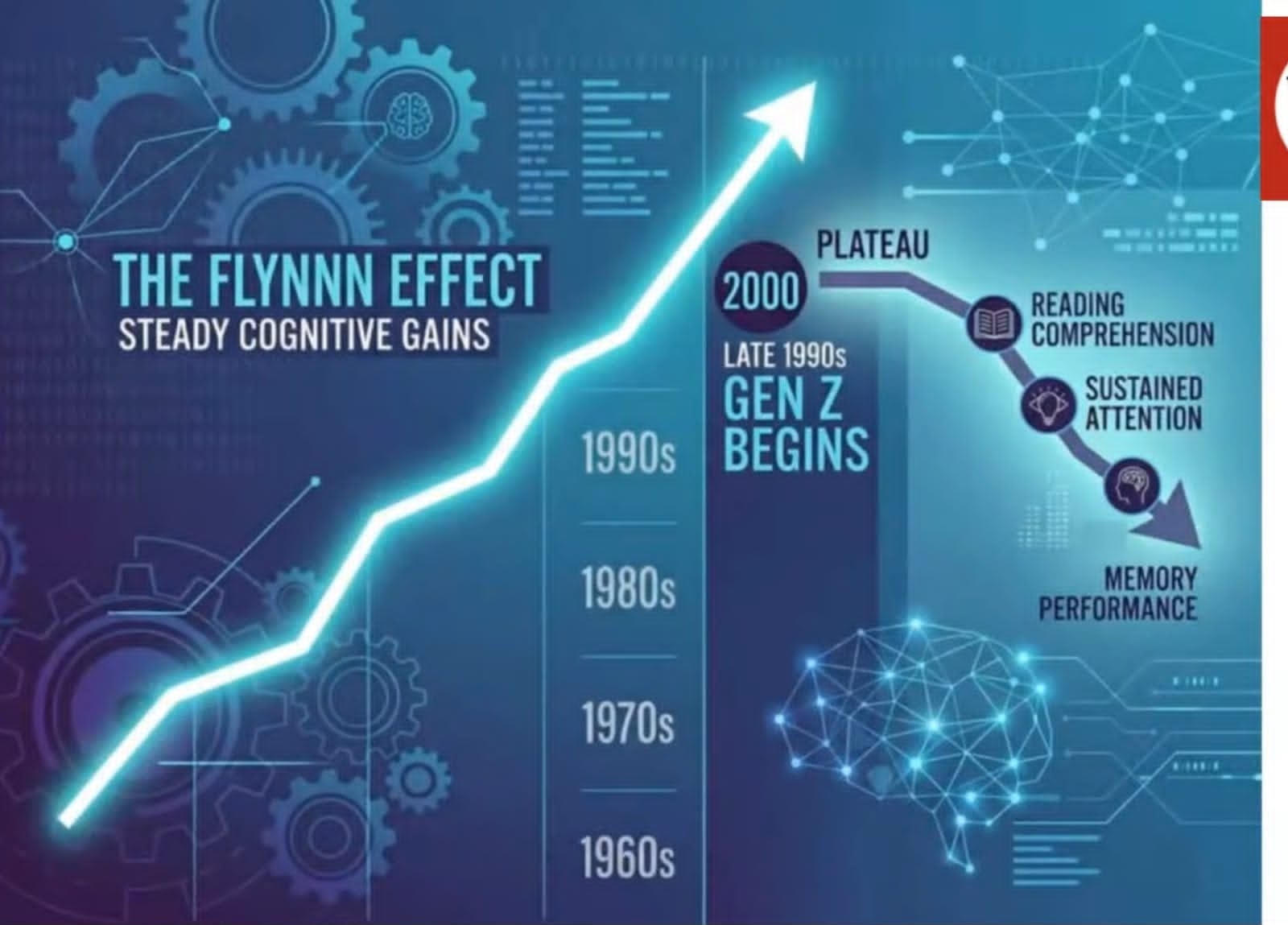
The recent discussion surrounding the reversal of the Flynn Effect has generated understandable concern. For nearly a century, psychologists observed a remarkable trend: each successive generation appeared to outperform its predecessor on IQ tests. Better nutrition, improved healthcare, expanded education and increasingly complex environments seemed to produce steadily rising cognitive performance.

Now, according to research presented by Dr. Horvath before a Senate Committee in January 2026, that trend appears to have reversed. Generation Z is reportedly the first generation in modern history to register a decline in average IQ compared to those who came before it. Researchers have also noted reductions in reading comprehension, sustained attention and memory performance.

If these findings are robust, they deserve serious attention.

But before concluding that an entire generation has become “less intelligent,” perhaps we should ask a more fundamental question.

What exactly are we measuring?

An IQ test is not a thermometer that measures intelligence in the way a thermometer measures temperature. It evaluates performance across selected cognitive domains—logical reasoning, pattern recognition, verbal comprehension, working memory, processing speed and spatial reasoning. These were chosen because they were believed to predict learning ability, productivity and success in an industrial and later knowledge-based economy.

That assumption itself deserves scrutiny.

Every civilisation defines competence according to the challenges it faces. The skills that made an exceptional engineer in the 1970s (That was my generation!) are not identical to those required of an AI architect today. The competencies that distinguished an outstanding accountant thirty years ago are very different from those needed in an age where algorithms perform much of the routine analytical work.

Perhaps intelligence itself has not declined as much as it has changed its centre of gravity.

Today’s young adults navigate digital ecosystems with remarkable ease. They process multiple streams of information simultaneously, learn unfamiliar software intuitively and adapt rapidly to technological change. These abilities are not trivial. Yet traditional IQ tests may capture only a small part of this emerging cognitive landscape.

This is not an argument for dismissing the reported decline. Reading comprehension, sustained attention and memory remain foundational human capabilities. Civilisations are built upon the ability to think deeply, read patiently, remember accurately and reason independently. If these capacities are genuinely weakening, the consequences could be profound.

But neither should we confuse what is measurable with what is meaningful.

Throughout history, societies have periodically redefined excellence. Education evolved. Work evolved. Technology evolved. It would be surprising if our understanding of intelligence remained frozen in time.

The reversal of the Flynn Effect may therefore be asking us two questions instead of one.

The first is whether some essential cognitive abilities are indeed declining.

The second—and perhaps the more important one—is whether the very framework through which we define and measure human intelligence is keeping pace with a world that is changing faster than at any previous point in history.

The future may not belong to those with the highest IQ as traditionally measured. It may belong to those who combine analytical thinking with creativity, adaptability, emotional intelligence, ethical judgment and the wisdom to know when technology should assist the human mind—and when it should never replace it.

In musing……. Shakti Ghosal

What if…


……when a generation no longer asks for privilege, but for credibility.

July 2026

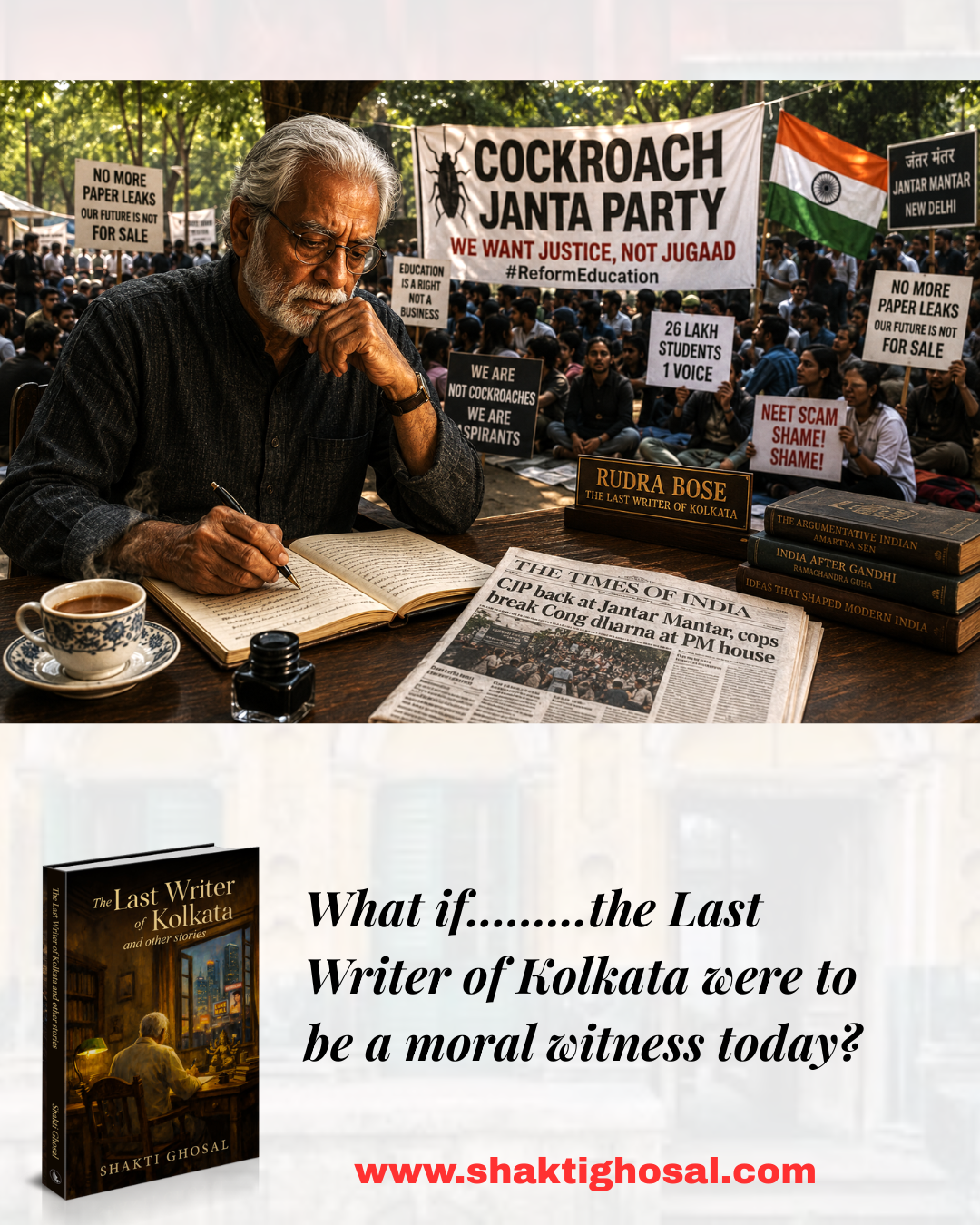
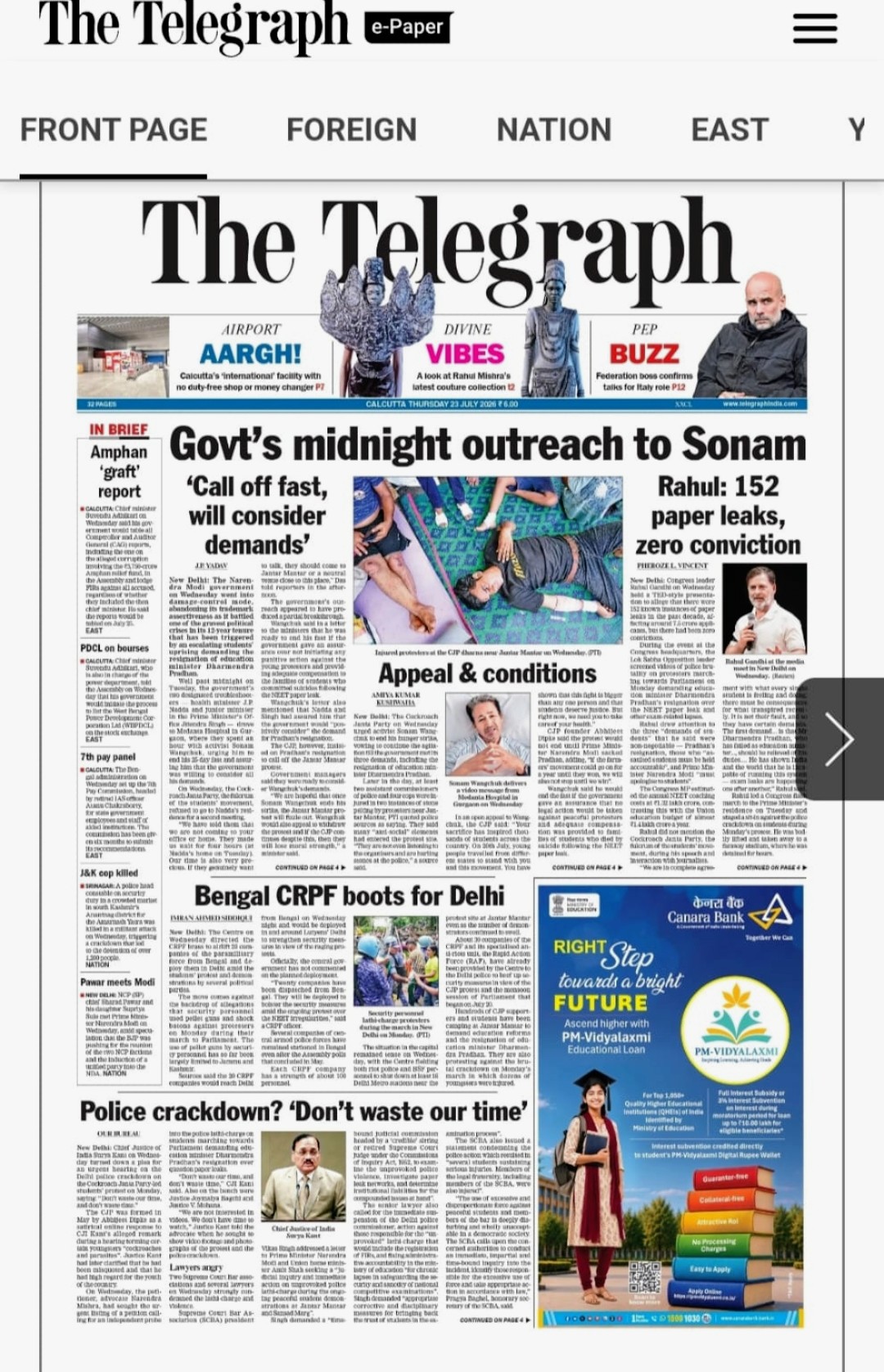
A few mornings back I learnt that an entire movement has chosen to call itself the ‘Cockroach Janta Party’. I smiled. Not because the name is amusing. But because history has always had an odd habit of allowing the insulted to reclaim the insult. (I recall many years back, the Chai-wallah epithet had provided a positive momentum to Prime Minister Modi’s persona)

There was a time when young people marched carrying flags. Today they march carrying memes. Yesterday’s slogans have become today’s hashtags.

Yet beneath the humour, I hear something painfully familiar. It is not anger; it is disappointment.

Every generation believes the next examination will open the next door. When that examination itself becomes the subject of doubt, it is not merely a paper that leaks. Trust does.

The young are often accused of being impatient. Perhaps they are. But there are few things more dangerous than asking an entire generation to wait while uncertainty becomes a way of life.

Governments may negotiate. Oppositions may protest. Television studios will certainly debate. But none of them can afford to overlook the quiet question echoing through millions of homes, ‘If merit itself begins to look negotiable, what exactly are young people expected to believe in?’

As I folded the newspaper, I realised that the greatest examination before our nation is no longer the one written by students. It is the one our institutions are writing every day. And unlike the students, they will not be judged by the answers they give. They will be judged by the trust they restore.

Rudra Bose,
The Last Writer of Kolkata

#WhatIfWithRudraBose #RudraBose #TheLastWriterOfKolkata #ShaktiGhosal #PoliticsAndSociety #Democracy #Justice #HumanNature #ReflectiveWriting #WritersOfInstagram