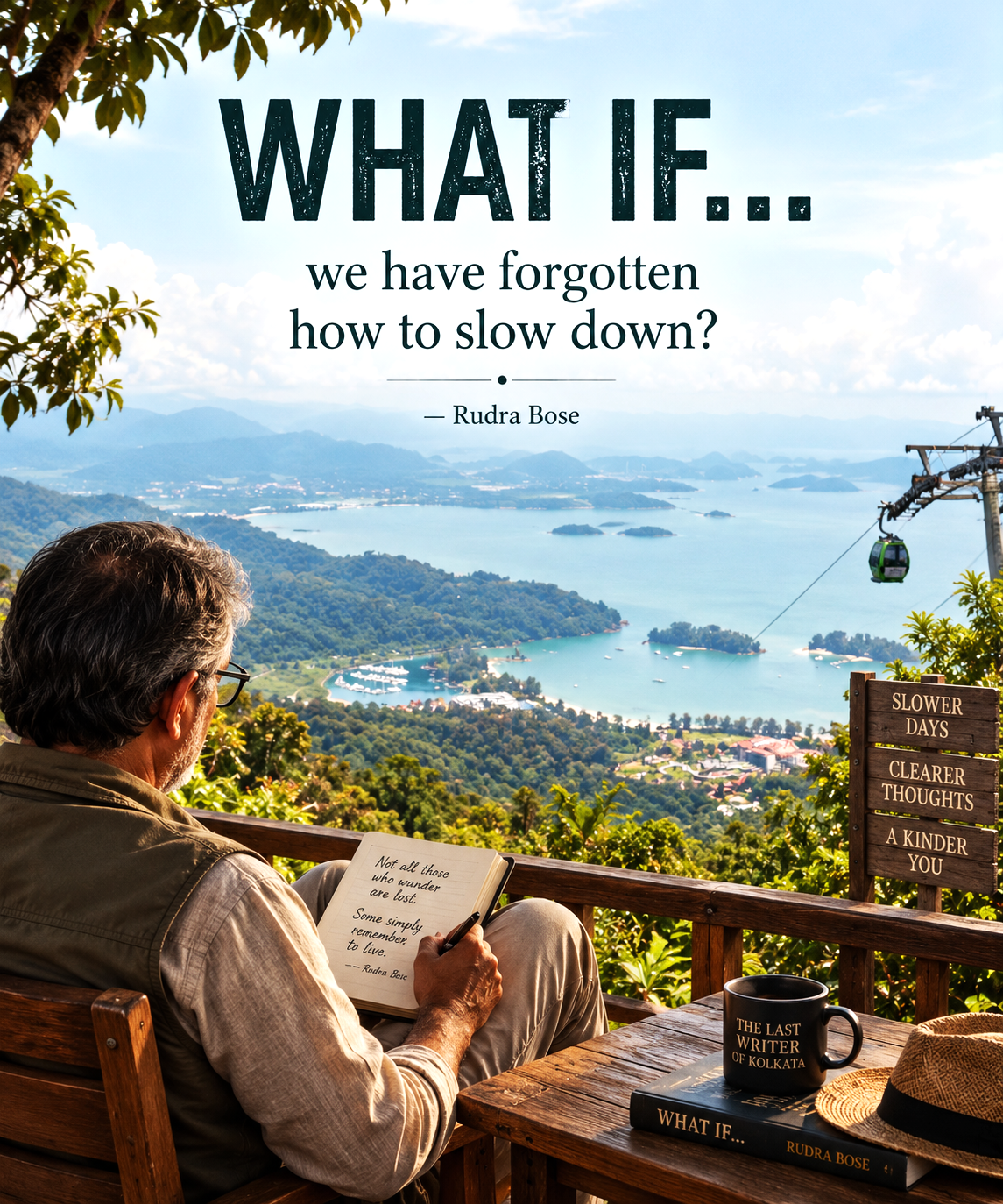
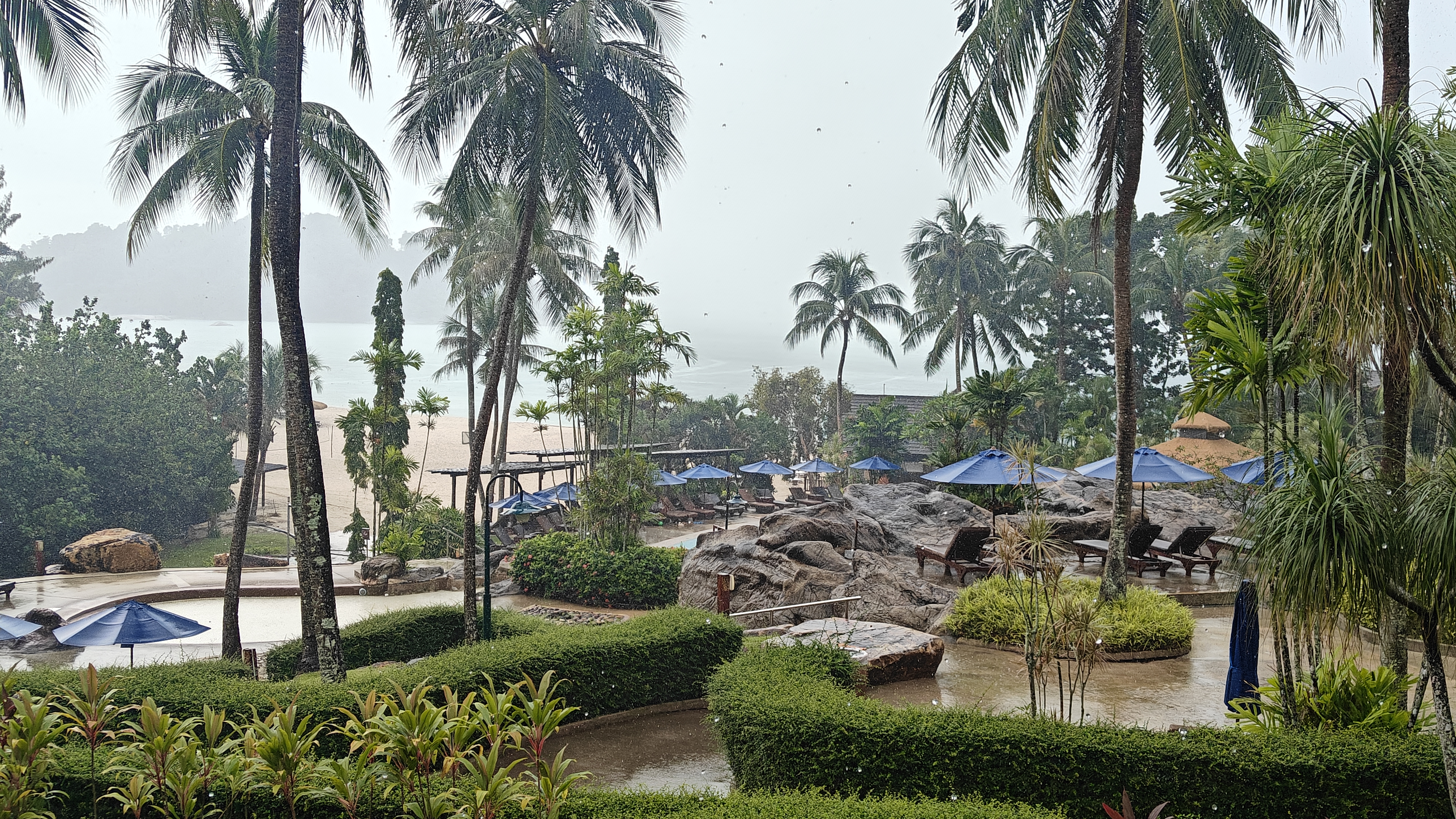
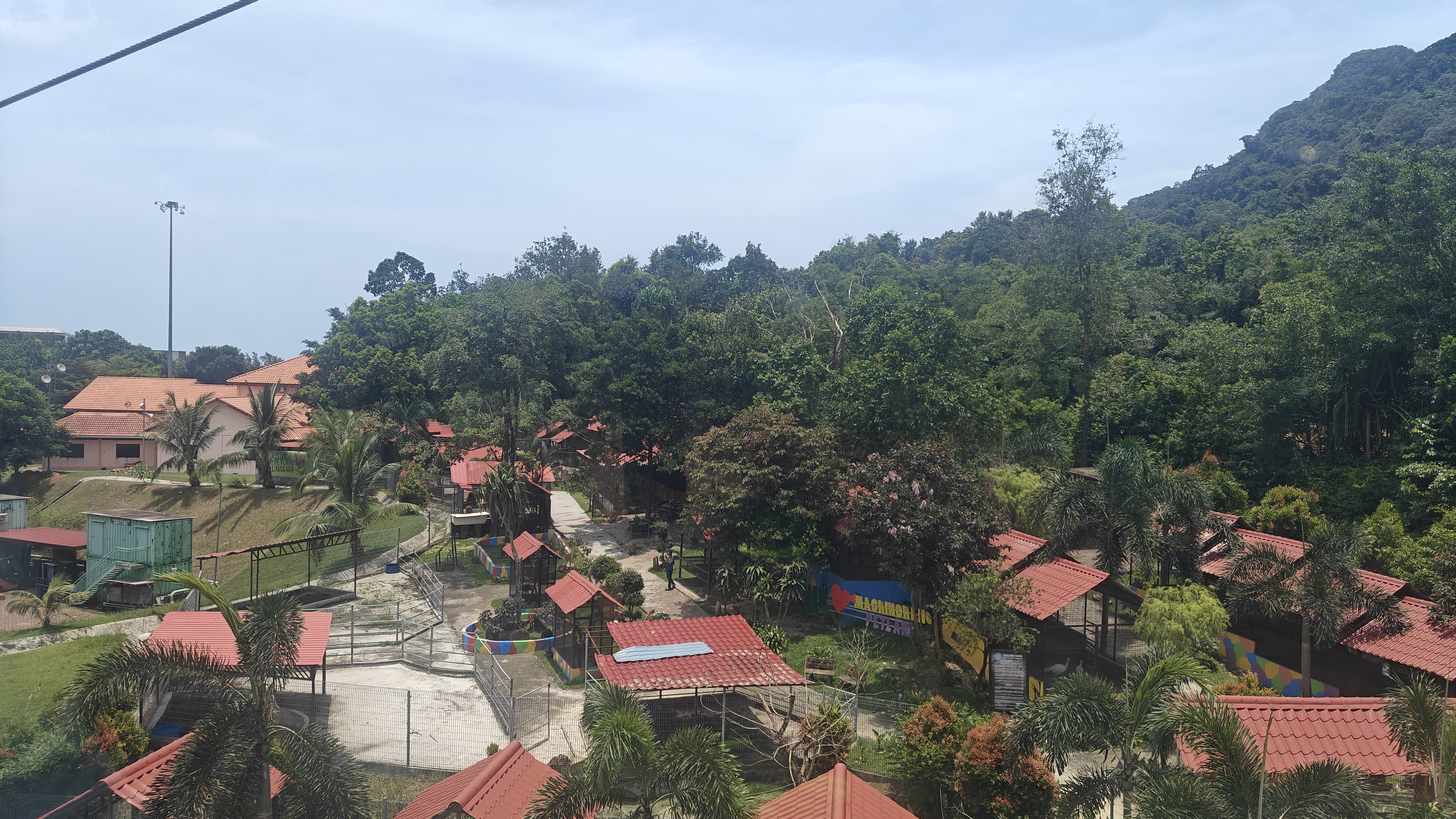
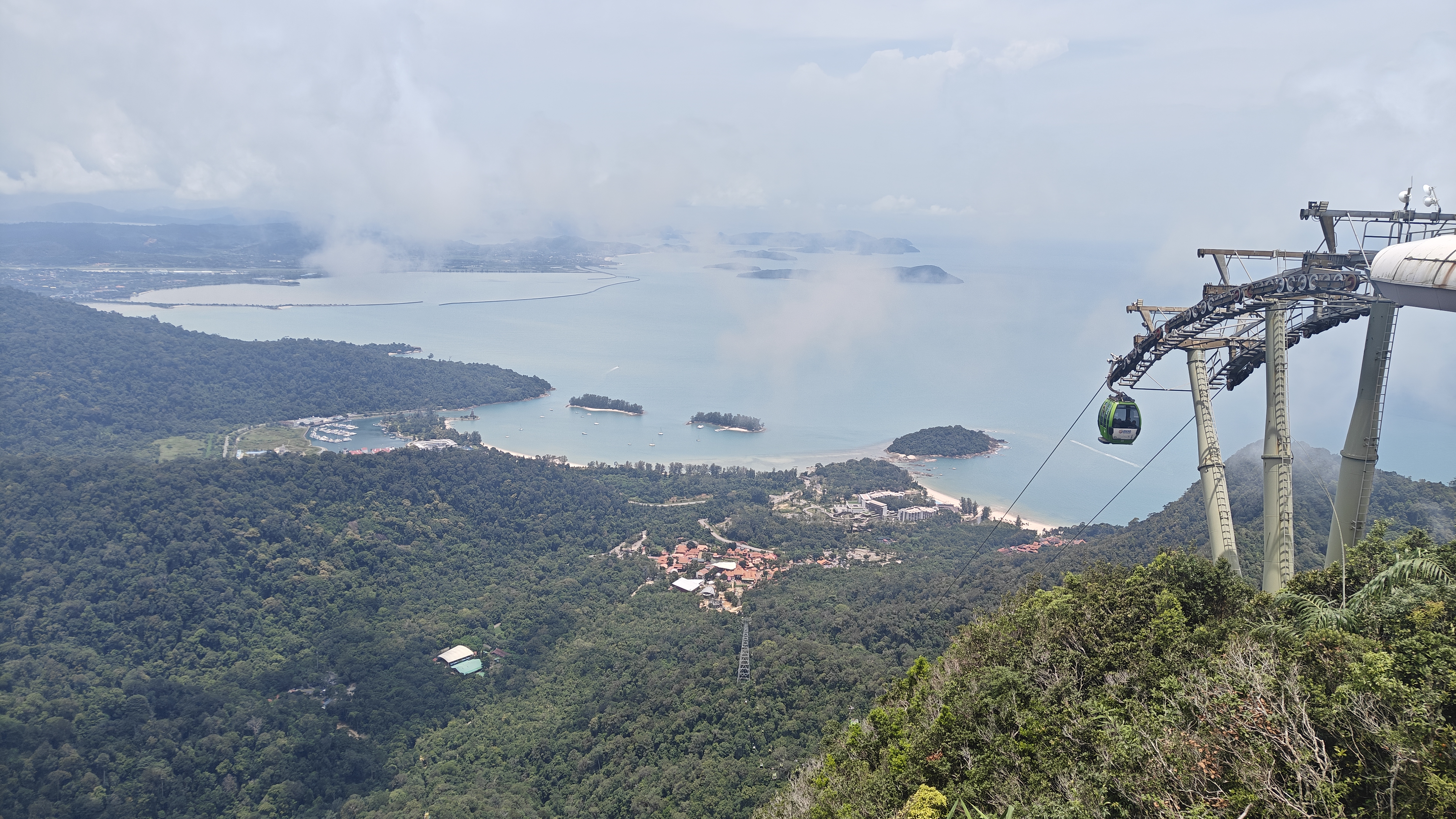
I came to Langkawi expecting to see another beautiful place. I found that the sea was beautiful. So was the Rainforest, so were the beaches.
The white beaches beckonThe Rainforest chalets
But after a while, I stopped looking at the beauty and began noticing something else.
The pace. The trees did not seem to be in a hurry to grow. The waves did not seem anxious about reaching the shore. The clouds moved without consulting a clock. Even the boats seemed to understand that there was nowhere more important to be.
And as I watched, I wondered when we had forgotten this simple rhythm. We hurry to work. Hurry to meetings. Hurry to finish. Hurry to achieve. And then, having spent years rushing towards the future, we discover that the present has quietly passed us by.
Perhaps the problem is not that we don’t have enough time. Perhaps we have forgotten how to inhabit the time we have. Standing by the sea, I found myself asking: What if slowing down is not falling behind? What if it is actually a way of moving forward—with greater awareness of where we are going?
Perhaps we don’t always need another destination. Sometimes we simply need to stop long enough to notice the journey.
….notice the journey
I closed my notebook and watched the waves return to the shore. They had been doing it for thousands of years. Unhurried. Unconcerned. And somehow, always on time.
I came across a story recently. I do not know whether it is true.
Perhaps it is. Perhaps it has gathered a little fiction around a kernel of truth. And perhaps, like many stories that move between people, it has become less concerned with historical accuracy than with a truth of another kind—the truth of the human heart.
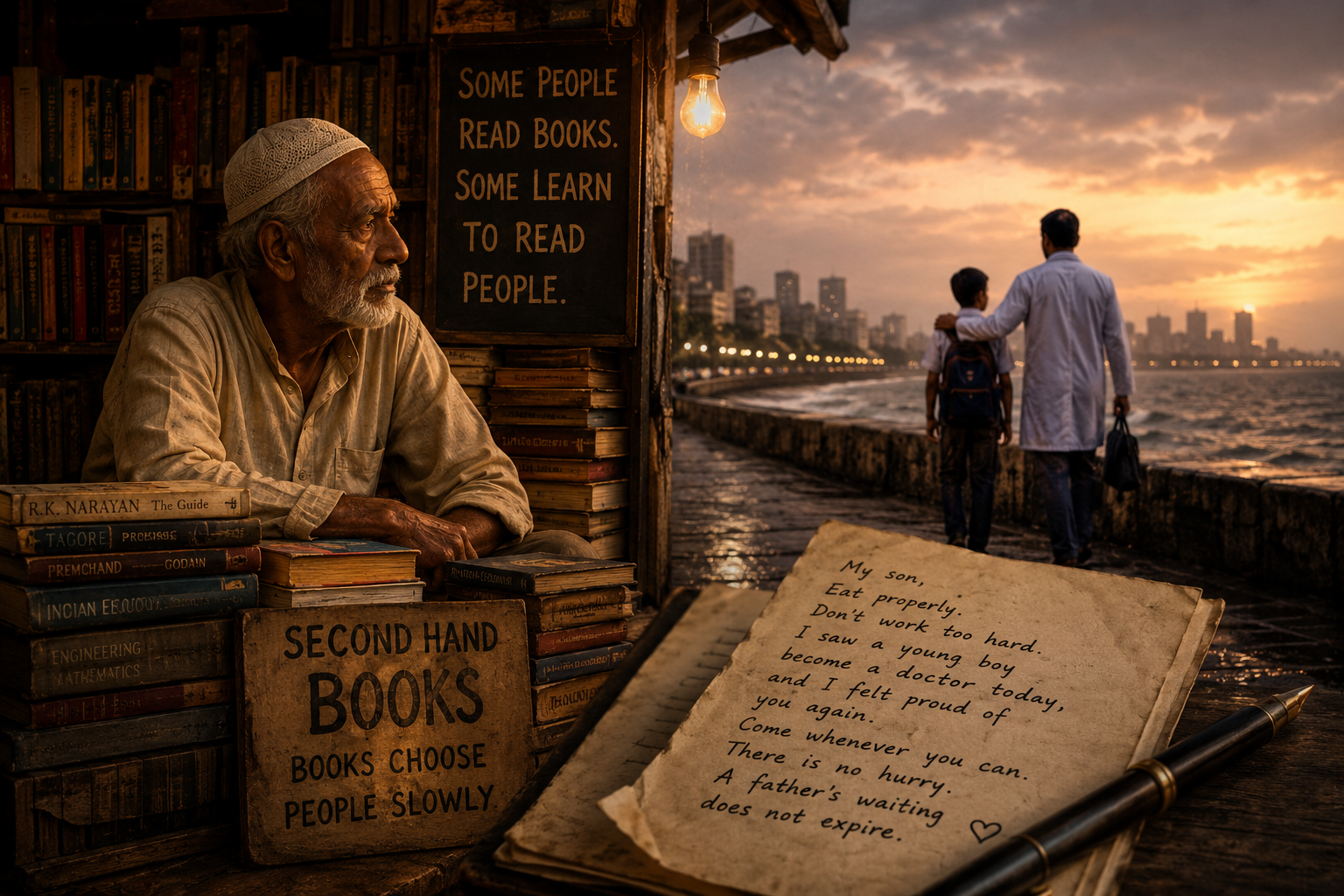
It was about an old man called Salim who sold second-hand books outside Churchgate Station in Mumbai. There was something almost unbearably poignant about him. He had spent his life surrounded by books. And he could not read, not a single word. He had never had the opportunity to go to school. Poverty had closed that door before he was old enough to understand what education meant. Yet he knew his books. He could locate them by the colour of their covers, their size, their position on the shelf. He remembered who had bought them and, sometimes, why. When someone expressed surprise that a man surrounded by thousands of books could not read, he apparently said: “Some people read books. Some learn to read people.”
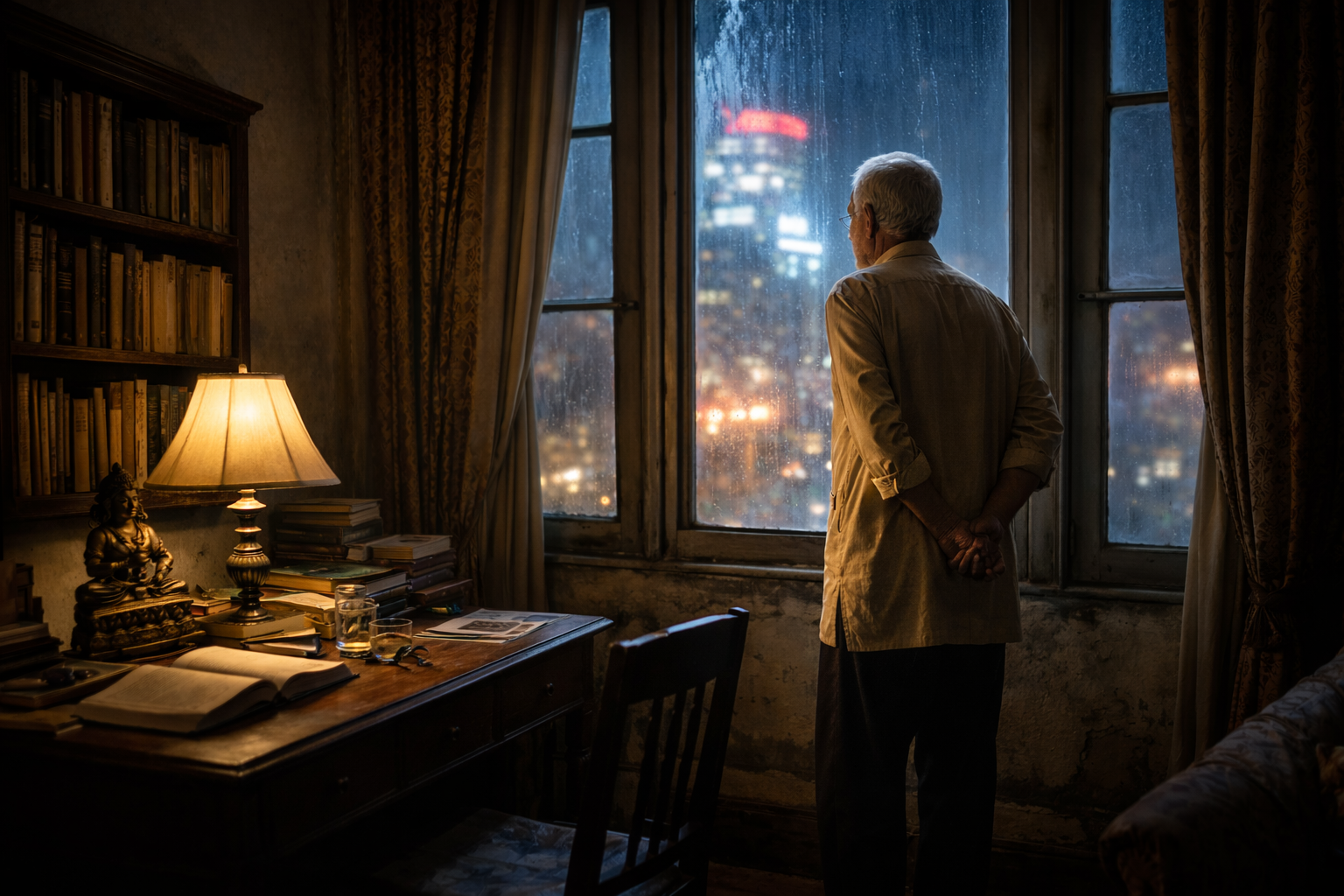
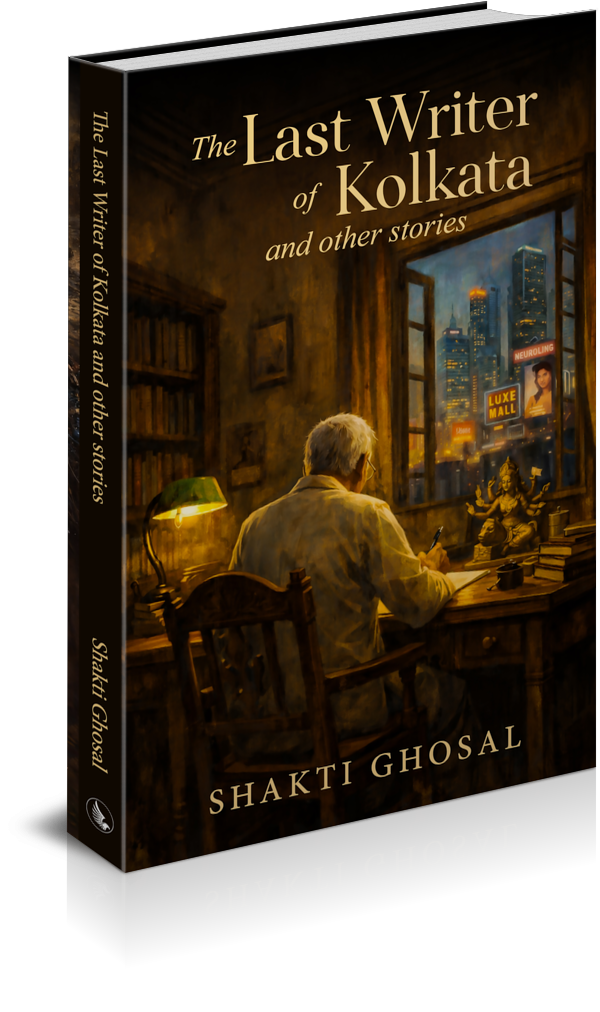
Whether Salim ever existed is, for me, almost beside the point. Because I was reminded of two stories I wrote in The Last Writer of Kolkata. The first is about an ageing writer whose memories—and the culture embedded within them—become something that others wish to digitise, package and sell.
The second, When the Rain Remembered, is about an old couple, Pradyut and Jaya, who shelter a displaced child called Rai in a retirement enclave where everything has been reduced to rules, protocols and algorithms.
At first glance, these stories might appear to have little in common. But perhaps they do. All three stories are really about what it means to remember. And what it means to care.
The old writer in Kolkata possesses something that technology cannot quite capture—the texture of memory, the fragrance of a city, the small details that make a life one’s own. Pradyut and Jaya discover that a home is not a place governed by regulations. It is created when someone decides that another human being matters. And the story about Salim? He could not read the books he sold.But he understood something that many of us, despite all our education, sometimes forget. A book is only paper and ink until it touches a human life.
Salim had a son. He had worked and sacrificed so that his son could study, become a doctor and eventually build a life abroad. He had given his child what he himself had been denied. And then, as happens so often in life, distance entered quietly. Not through anger, not through rejection but simply through life. Work became demanding. Calls became less frequent. Visits were postponed. There was always a tomorrow. Until, one day, there wasn’t.
The story says that after Salim died, his son discovered letters his father had dictated over the years but never sent. One sentence stayed with me: “A father’s waiting does not expire.”
Perhaps that is what touched my heart. Because parents seldom announce their loneliness. They say, “I am fine.” They say, “Don’t worry about me.” They say, “Come whenever you can.” And children, believing there will always be another opportunity, postpone the visit, the call, the embrace. Until time makes the decision for them.
Yet there is another part of Salim’s story that moved me even more.
He did not allow his deprivation to become bitterness.
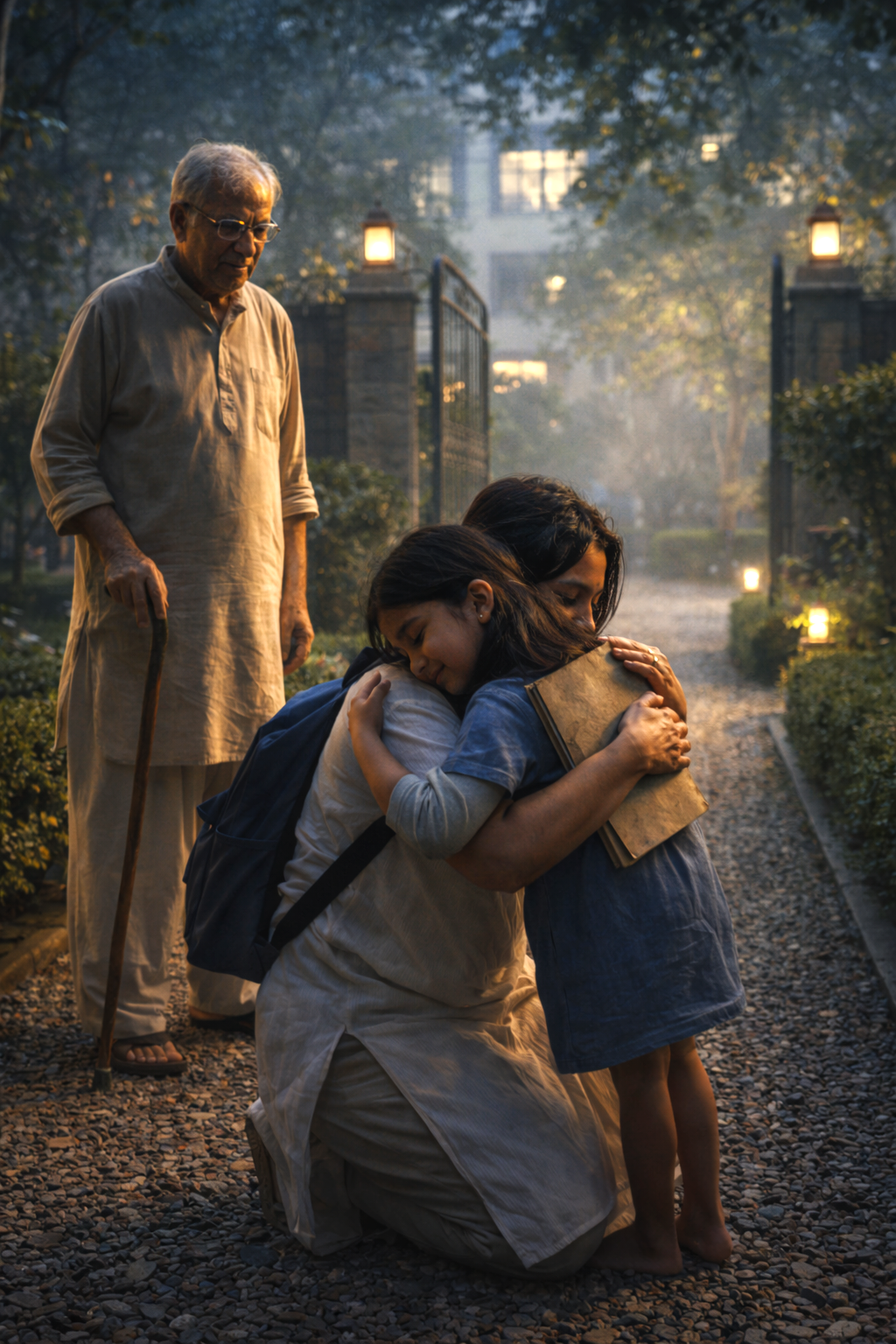
He began giving books to children who, like him, might otherwise never have had access to education. His pain became someone else’s opportunity. His emptiness became someone else’s doorway. And suddenly I found myself thinking again of When the Rain Remembered. Pradyut and Jaya did not change the world. They simply opened a door. They gave shelter to a child whom a system had no place for.
But sometimes that is how humanity survives. Not through grand gestures. But through small acts of defiance against indifference. A door opened. A book given away. A child protected. A lonely person remembered. A hand held. A call made before it is too late.
And then I thought of The Last Writer of Kolkata. What survives us? It is not necessarily our possessions. Not even necessarily our achievements. Perhaps it is the memory we leave in another human being. The writer Rudra Bose leaves behind memories. Pradyut and Jaya leave behind a sense of belonging. Salim leaves behind children who can read the books he never could. And perhaps that is the irony at the heart of his story. The illiterate bookseller who understood literature better than many who have read thousands of books. Because he understood that the ultimate purpose of a book is not to be read. It is to change something in us.
And perhaps the ultimate purpose of a life is not to be remembered by everyone. It is to have mattered deeply to someone. There is something else I find profoundly moving about the idea of Salim’s unsent letters. We spend much of our lives writing things down. Be it as Emails, messages, posts, documents and even books. But the most important things we write are often never written on paper at all.
We write them in the lives of our children. In the confidence of a student. In the memory of a friend. In the courage of someone we encouraged. In the kindness we showed a stranger. These are the things that remain when the writer is gone. Perhaps, in the end, every life is a book. Some are beautifully bound, others torn and weathered. Some have pages missing, some are never published. And some, like Salim’s, may never have been able to read their own pages.
But that does not mean they were unwritten. For our lives are constantly writing themselves into the lives of others. And perhaps that is what The Last Writer of Kolkata, When the Rain Remembered, and this haunting story of a bookseller are really trying to tell : We may forget the words. We may forget the books. We may even forget the people who taught us the words. But we rarely forget how someone made us feel when we were in need of being understood.
……societies change not because they have become wiser but because they become preoccupied with different anxieties.
August 2026
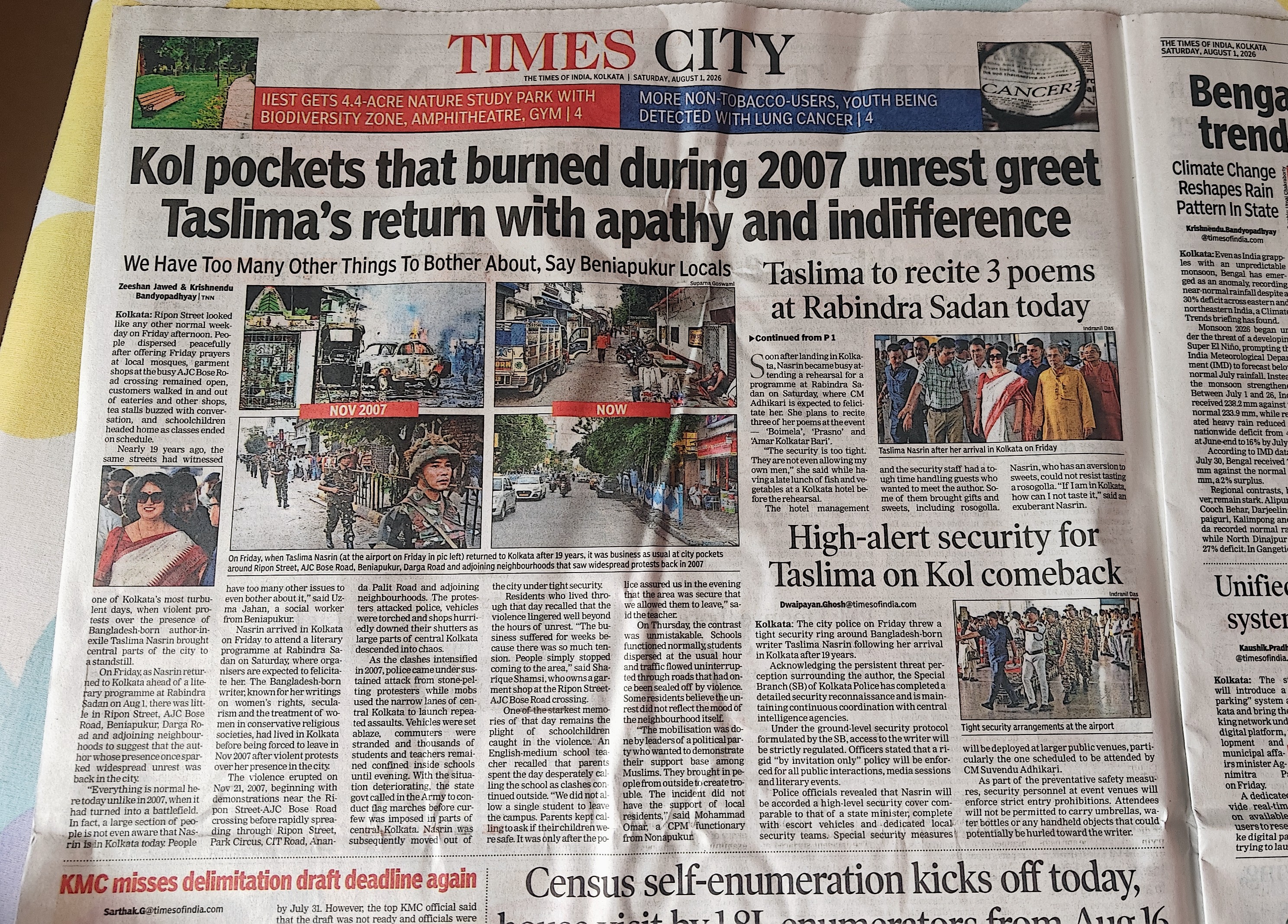
Nineteen years. That is long enough for a child to become an adult. It is also long enough for governments to rise and fall. Long enough for a city to forget the sound of its own anger.
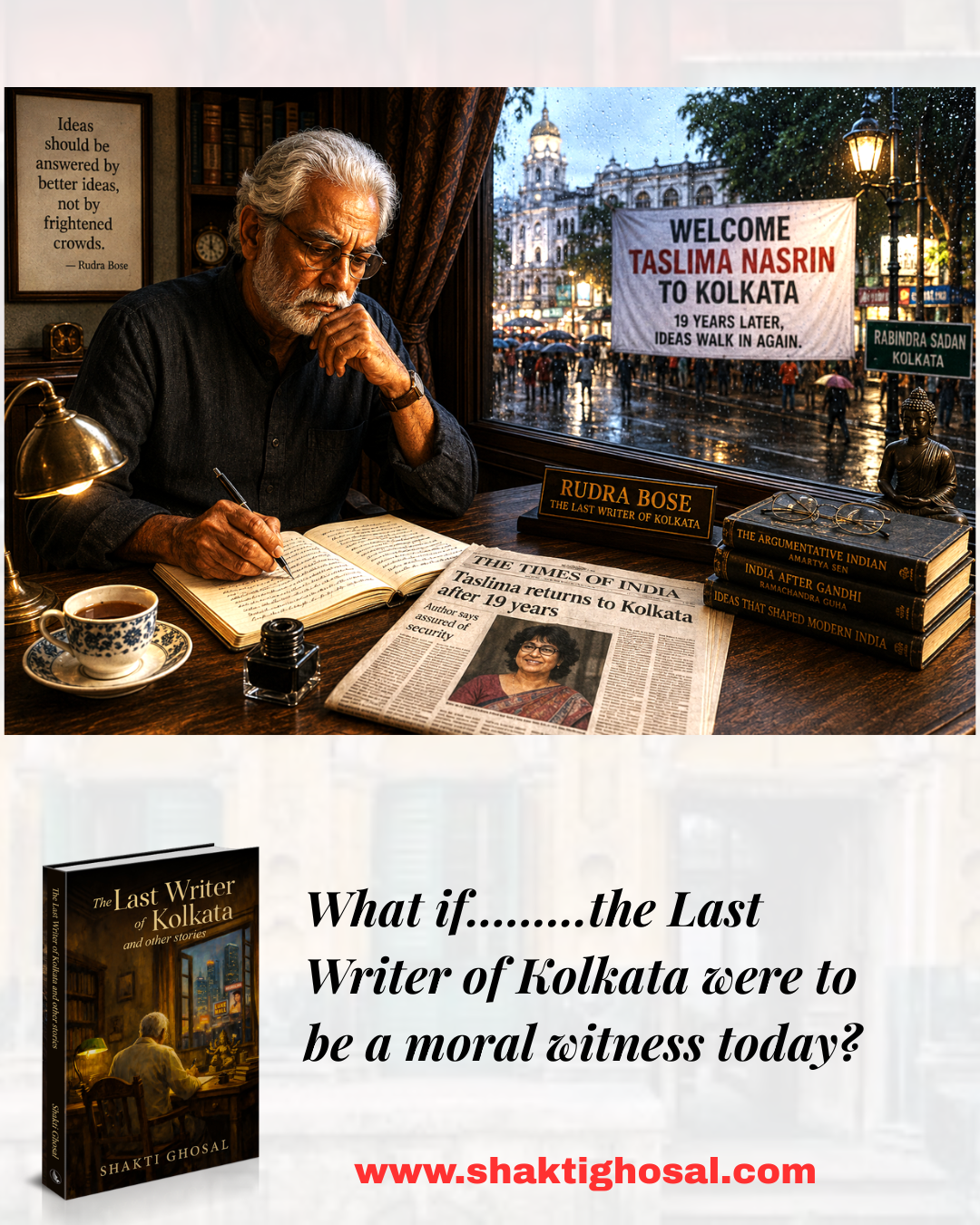
The other day, the newspaper told me that Taslima Nasrin has returned to Kolkata after nineteen years. The same city that once burned over her presence now seems to have greeted her mostly with routine, security cordons and a curious indifference.
Talima Nasrin report in the Newspaper
It made me wonder. What has really changed? Did we become more tolerant? Did we finally learn that books and what is written within need not be answered with barricades? Or have we simply acquired newer fears that leave us with less energy for old ones?
Perhaps every generation chooses its own battles. Yesterday it was identity. Today it is jobs, examinations, inflation, technology, security and an uncertain future. The loudest outrage of one decade quietly becomes yesterday’s headline.
As I folded the newspaper, I realised that a mature society is not one where everyone agrees. It is one where disagreement no longer needs to be escorted by violence. If Kolkata has truly changed, the victory does not belong to any government, any ideology or any writer.It belongs to the simple belief that ideas should be answered by better ideas, not by frightened crowds.
That is how civilisation grows—almost unnoticed, one quieter street at a time.
……when a generation no longer asks for privilege, but for credibility.
July 2026
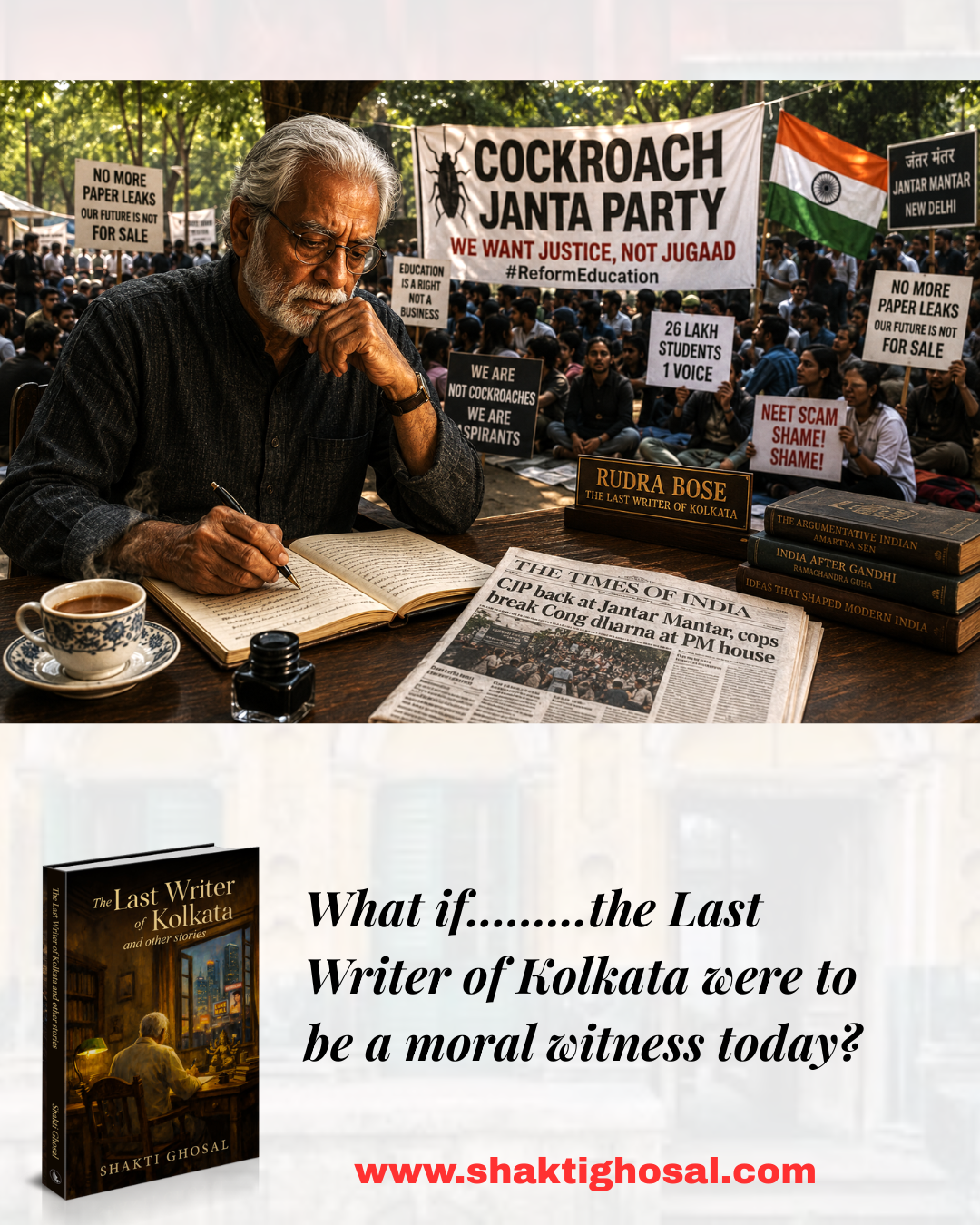
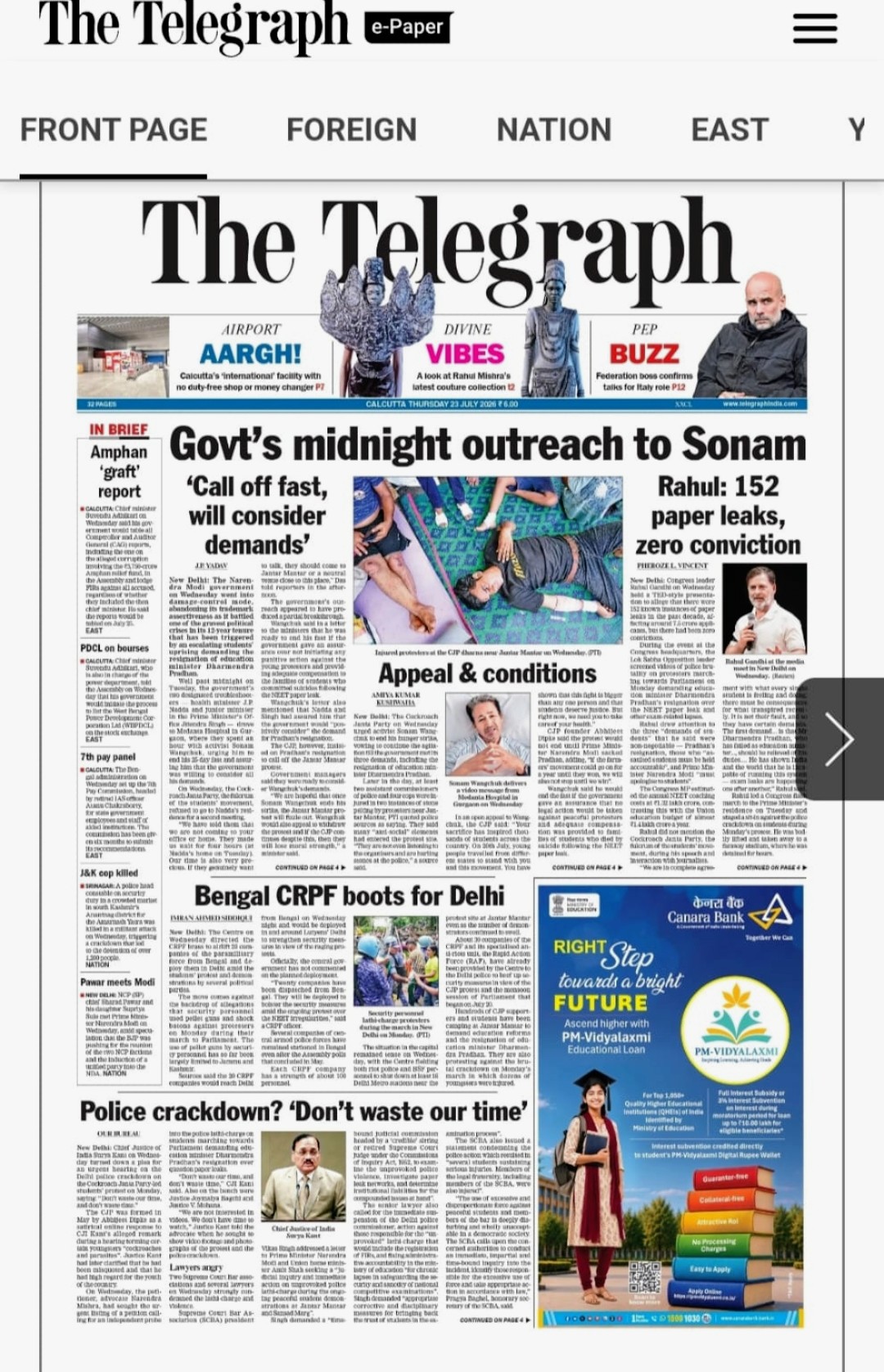
A few mornings back I learnt that an entire movement has chosen to call itself the ‘Cockroach Janta Party’. I smiled. Not because the name is amusing. But because history has always had an odd habit of allowing the insulted to reclaim the insult. (I recall many years back, the Chai-wallah epithet had provided a positive momentum to Prime Minister Modi’s persona)
There was a time when young people marched carrying flags. Today they march carrying memes. Yesterday’s slogans have become today’s hashtags.
Yet beneath the humour, I hear something painfully familiar. It is not anger; it is disappointment.
Every generation believes the next examination will open the next door. When that examination itself becomes the subject of doubt, it is not merely a paper that leaks. Trust does.
The young are often accused of being impatient. Perhaps they are. But there are few things more dangerous than asking an entire generation to wait while uncertainty becomes a way of life.
Governments may negotiate. Oppositions may protest. Television studios will certainly debate. But none of them can afford to overlook the quiet question echoing through millions of homes, ‘If merit itself begins to look negotiable, what exactly are young people expected to believe in?’
As I folded the newspaper, I realised that the greatest examination before our nation is no longer the one written by students. It is the one our institutions are writing every day. And unlike the students, they will not be judged by the answers they give. They will be judged by the trust they restore.
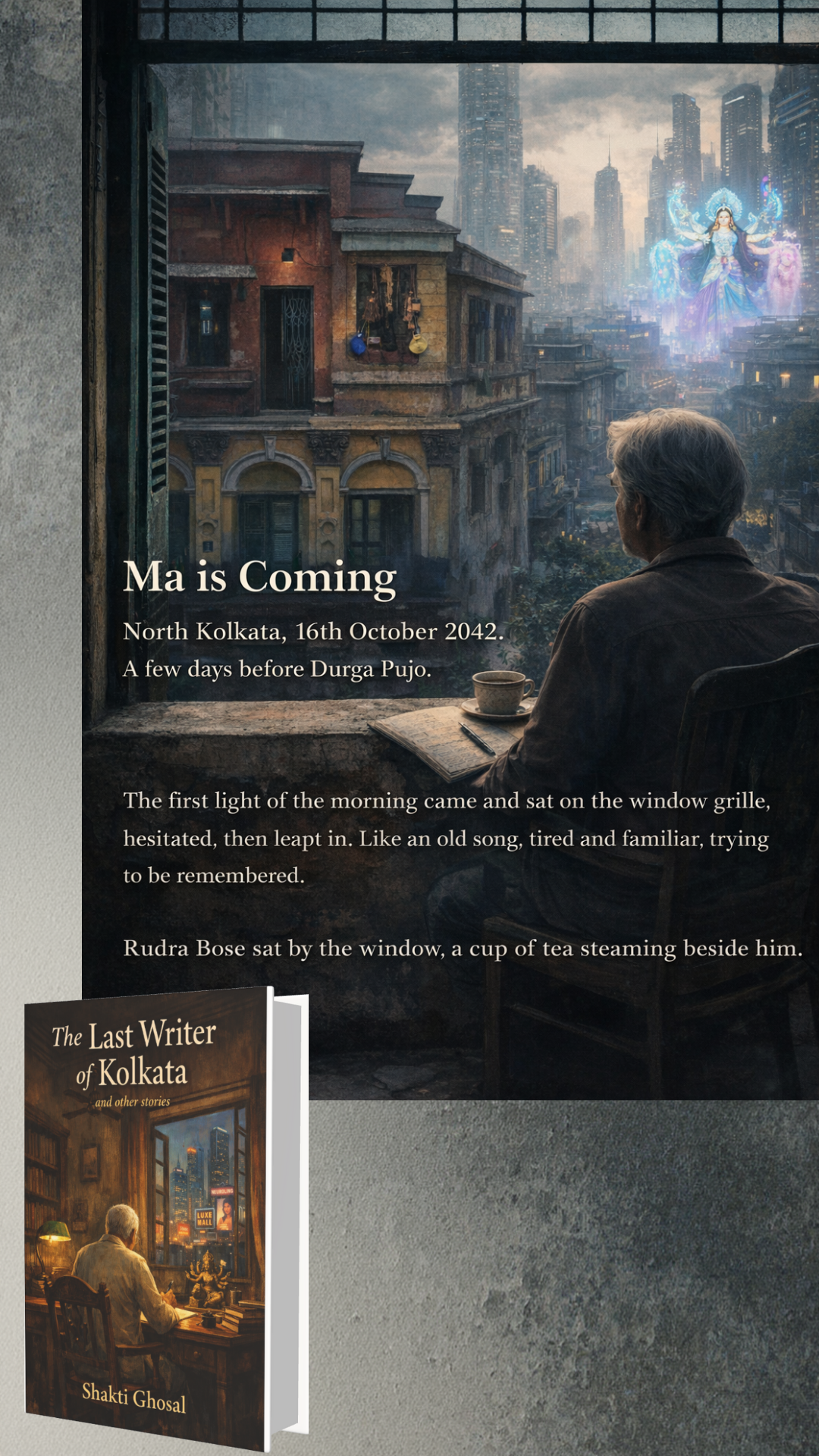
North Kolkata, 16th October 2042. A few days before Durga Pujo.
The first light of the morning came and sat on the window grille, hesitated, then leapt in. Like an old song, tired and familiar, trying to be remembered.
Rudra Bose sat by the window, a cup of tea steaming beside him. The cup was chipped, the saucer mismatched, the tea, a stubborn blend of milk, tea dust, and habit. Outside, the lane yawned into a waking slumber, its air thick with last night’s incense, stale samosa oil, and the ever-present, low-grade air pollution.
“Ma is coming,” he had heard someone shout on the street last evening.
She was, of course. Ma came every year. Only nowadays she arrived on a cloud of holograms, flanked by LED lions and thunderous drumbeats pouring through subwoofers. The city had found new ways to worship, more theatrical, more saleable.
Rudra shifted in his chair, his bones protesting like rusted hinges. In his lap, his journal lay open, an old pen resting across the page like a reluctant weapon. He hadn’t written yet. He was waiting, unsure of something. Was he waiting for a thought, a familiar smell, or the comfort of a Kolkata that seemed to slip further away each year?
Durga Pujo. Once, it had been magic.
As a boy, he had spent mornings watching Mashis, aunts and Boudis, sisters-in-law threading marigolds for the Pandal and Thakurer Bedi. In the afternoons it would be the decorators stringing up festoon lights of different colours all along the lane. Nights were all about rehearsing lines for the Natok, stage play they would perform on Nabami.
He had once accompanied his mother, walking barefoot to the river to collect Gangajal, the sacred waters of Ganga. He remembered his father reading out the Chandipath under a suffused light. Long buried memories of his parents surfaced and meandered.
“Rudra, you were born with too much silence,” his mother had once said, as she used a hand fan during load shedding. “You are eleven. Most boys your age chase dragonflies. You chase metaphors.”
“I like listening,” he had replied, “Words sound different when you don’t rush to answer them.”
His mother had turned towards him, “Then promise me, don’t let the noise teach you to forget what silence feels like.”
North Kolkata is the soul of the city, where the past isn’t just remembered—it’s lived. Often called “Babu Kolkata,” this region is a labyrinth of narrow lanes, grand 19th-century mansions, and centuries-old traditions that remain untouched by modernity. Historically, the British referred to the area inhabited by the native Bengali elite as the “Black Town,” in contrast to the “White Town” of Central Kolkata where the British lived.
North Kolkata features in the ‘Last writer of Kolkata’, part of my forthcoming book of the same name. Should you wish to receive exclusive previews and the chance of winning a free copy of the book, do write to me @ author.esgee@gmail.com
The future does not arrive all at once. It seeps in quietly — through our cities, our screens, our climate, our homes, and our hearts.
Set in a near future shaped by forces already gathering momentum, this compelling collection explores what happens when irreversible hard trends collide with ordinary human lives. When familiar worlds tilt just enough to reveal what has already begun to change, they become recognisable tomorrows, shaped by powerful forces. A writer watches memory become a commodity in a digitised culture. An environmentalist confronts the fury of a climate unbound. Minds are shaped inside engineered echo chambers. An aging couple discovers that love, not technology, is the last refuge of belonging. These are not science fiction tales of spectacular collapse, but of subtle reckonings—where survival lies not in resistance alone, but in choosing what must still be remembered, protected, and passed on.
At once intimate and expansive, the stories follow ordinary people navigating extraordinary transitions — holding on to memory, dignity, connection, and hope as the ground beneath them shifts.
Blending imagination with insight, this book offers fiction as a lens — an exploration not of what gadgets we will build, but of who we may become.