What if…


…. we do not really know the people who live beside us?

August 2026

When I was a child, every neighbourhood had an unofficial security system. It was called knowing one another. Your mother knew who lived next door. The grocer knew whose son had returned from college. The postman knew which house had a new baby. The stranger was noticed because everyone else was familiar.

Today we have CCTV cameras, biometric gates, visitor apps, facial recognition and digital identities. Yet we often do not know the person who shares the lift with us.

The newspapers tell us that a young man, described by neighbours as polite and ordinary, is now accused of living a different life of a terrorist behind an ordinary face. If the allegations are proven true, it is a chilling reminder that the greatest disguises are no longer masks. They are routines. Terrorism succeeds long before any explosion. It succeeds the day suspicion replaces trust, when every unfamiliar face begins to look dangerous, and every ordinary neighbour becomes a question mark.

That is precisely why a civilised society must refuse both complacency and paranoia. Security agencies must remain vigilant. Citizens must remain alert. But neither should surrender the humanity that allows communities to exist.

As I folded the newspaper, I wondered whether the greatest security failure of our times is not merely that dangerous people can hide among ordinary citizens. It is that modern life has quietly taught ordinary citizens to live among one another without ever truly knowing those around us. Perhaps the strongest wall against terror is not built of concrete or surveillance. Perhaps it begins when a society rediscovers the forgotten art of being a community.

Rudra Bose, The Last Writer of Kolkata

#thelastwriterofkolkata, #rudrabose, #shaktighosal, #communitylife
What if…


……when a generation no longer asks for privilege, but for credibility.

July 2026

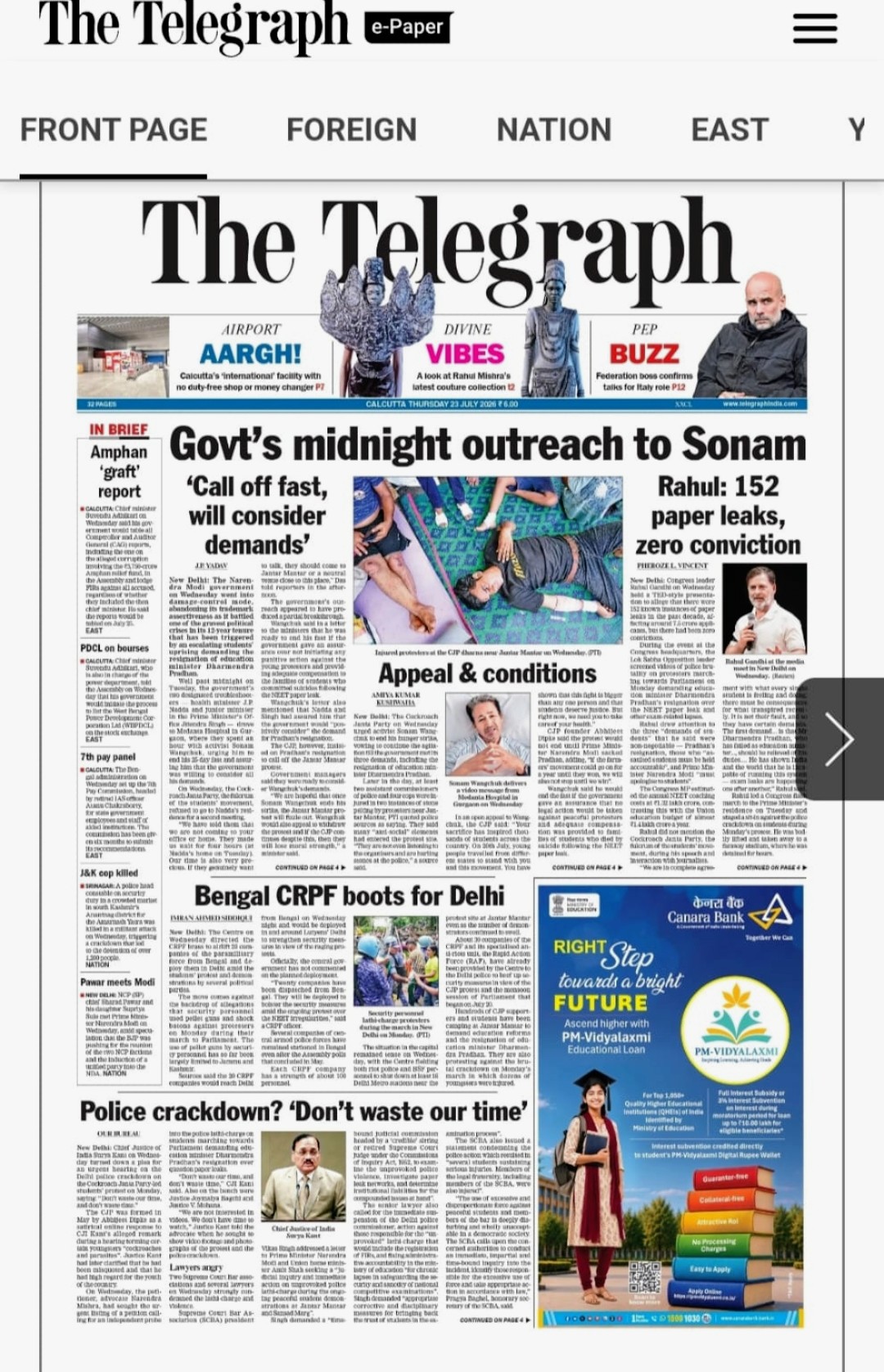
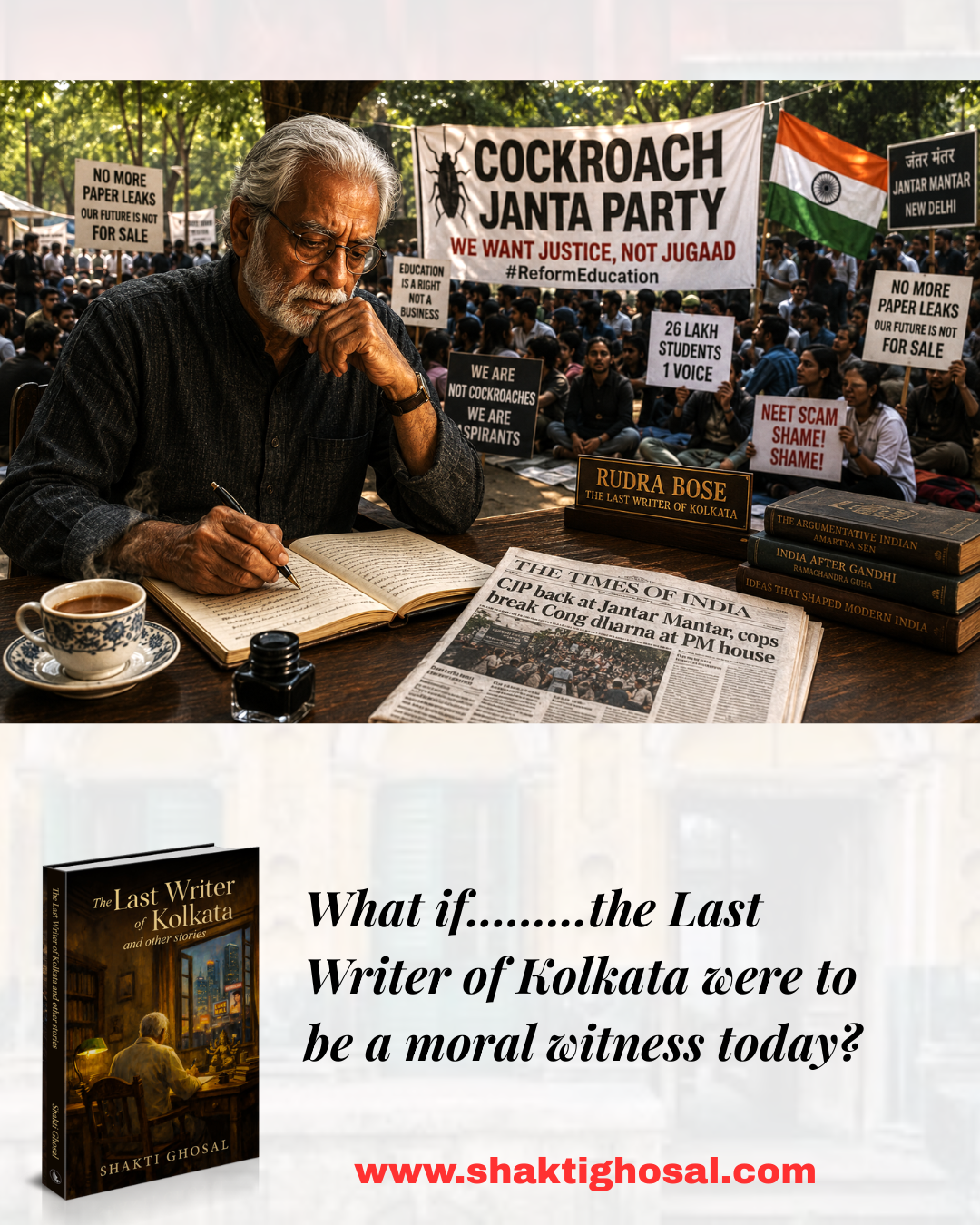
A few mornings back I learnt that an entire movement has chosen to call itself the ‘Cockroach Janta Party’. I smiled. Not because the name is amusing. But because history has always had an odd habit of allowing the insulted to reclaim the insult. (I recall many years back, the Chai-wallah epithet had provided a positive momentum to Prime Minister Modi’s persona)

There was a time when young people marched carrying flags. Today they march carrying memes. Yesterday’s slogans have become today’s hashtags.

Yet beneath the humour, I hear something painfully familiar. It is not anger; it is disappointment.

Every generation believes the next examination will open the next door. When that examination itself becomes the subject of doubt, it is not merely a paper that leaks. Trust does.

The young are often accused of being impatient. Perhaps they are. But there are few things more dangerous than asking an entire generation to wait while uncertainty becomes a way of life.

Governments may negotiate. Oppositions may protest. Television studios will certainly debate. But none of them can afford to overlook the quiet question echoing through millions of homes, ‘If merit itself begins to look negotiable, what exactly are young people expected to believe in?’

As I folded the newspaper, I realised that the greatest examination before our nation is no longer the one written by students. It is the one our institutions are writing every day. And unlike the students, they will not be judged by the answers they give. They will be judged by the trust they restore.

Rudra Bose,
The Last Writer of Kolkata

#WhatIfWithRudraBose #RudraBose #TheLastWriterOfKolkata #ShaktiGhosal #PoliticsAndSociety #Democracy #Justice #HumanNature #ReflectiveWriting #WritersOfInstagram