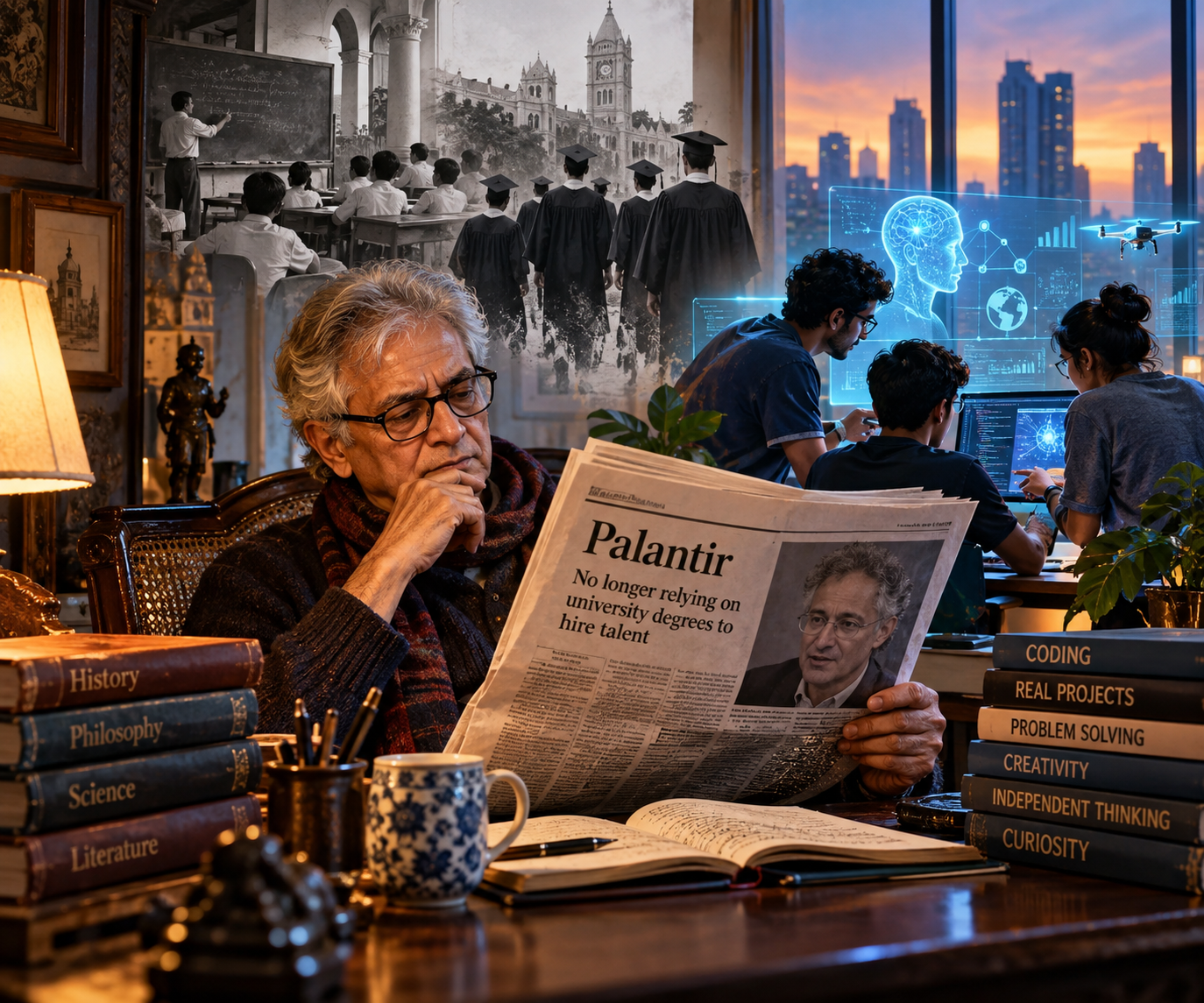
I came across a post recently about Palantir that made me pause.
It quoted its CEO, Alex Karp, as saying that the company is no longer relying entirely on traditional university degrees to identify talent. Instead, young people are being given the opportunity to work on real problems, demonstrate what they can do, and learn by doing.
The post made a provocative observation: “The university had centuries to shape the best minds. Entrepreneurs will do it in a decade.” That stayed with me.. Because it raises a much more uncomfortable question: Have our educational institutions slowly forgotten what education is supposed to accomplish?
We teach children what to think. We rarely teach them how to think. We reward the right answer more than the difficult question. We celebrate memory more than curiosity. We measure achievement through certificates rather than through the ability to see what others cannot. And then we wonder why so many highly educated people struggle to imagine a different future.
I realised that companies like Palantir are beginning to look beyond degrees. Young people are being given real problems to solve instead of certificates to prove that they are ready to solve them. It reminded me of something we seem to have forgotten. Perhaps education was never meant to manufacture employable people. Perhaps it was meant to create unmanageable minds. Minds that question. Minds that doubt. Minds that refuse to accept “this is how it has always been done.”
Perhaps the real crisis is not that AI will replace education. Perhaps it is that AI will expose how little education was actually about thinking.
As I closed the newspaper, the thought came to me. What if the future doesn’t need better educated children…… but freer minds?
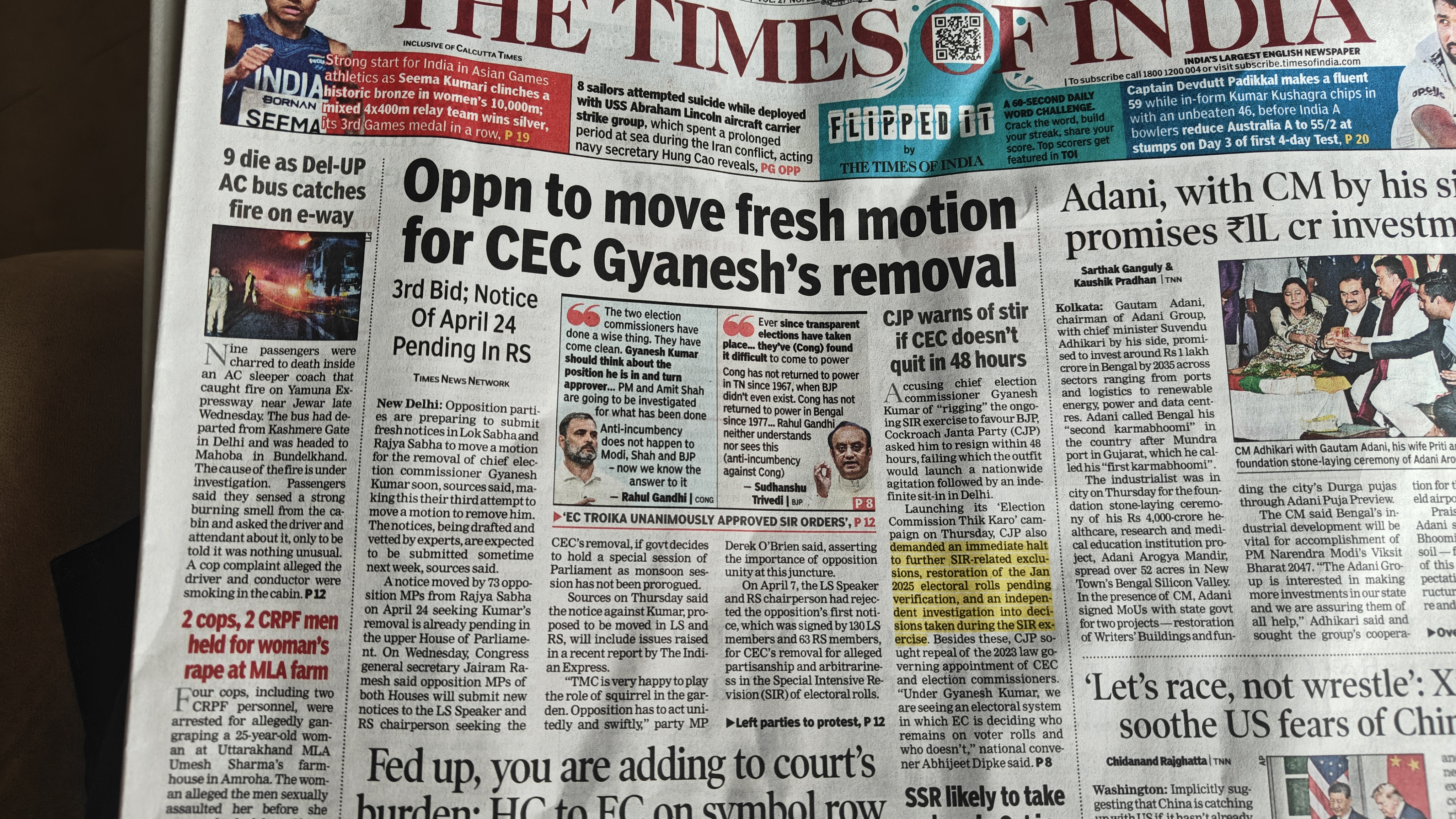
This morning I opened the newspaper to find that democracy had acquired a new battlefield.
Not Parliament. Not the streets. It was about the voter list.
There were allegations, counter-allegations, objections, explanations and demands for resignation. The Election Commission said decisions were unanimous. Others said two Commissioners had repeatedly raised objections. I wondered what happens when the referee becomes part of the argument.
Newspaper report on the ongoing controversy.
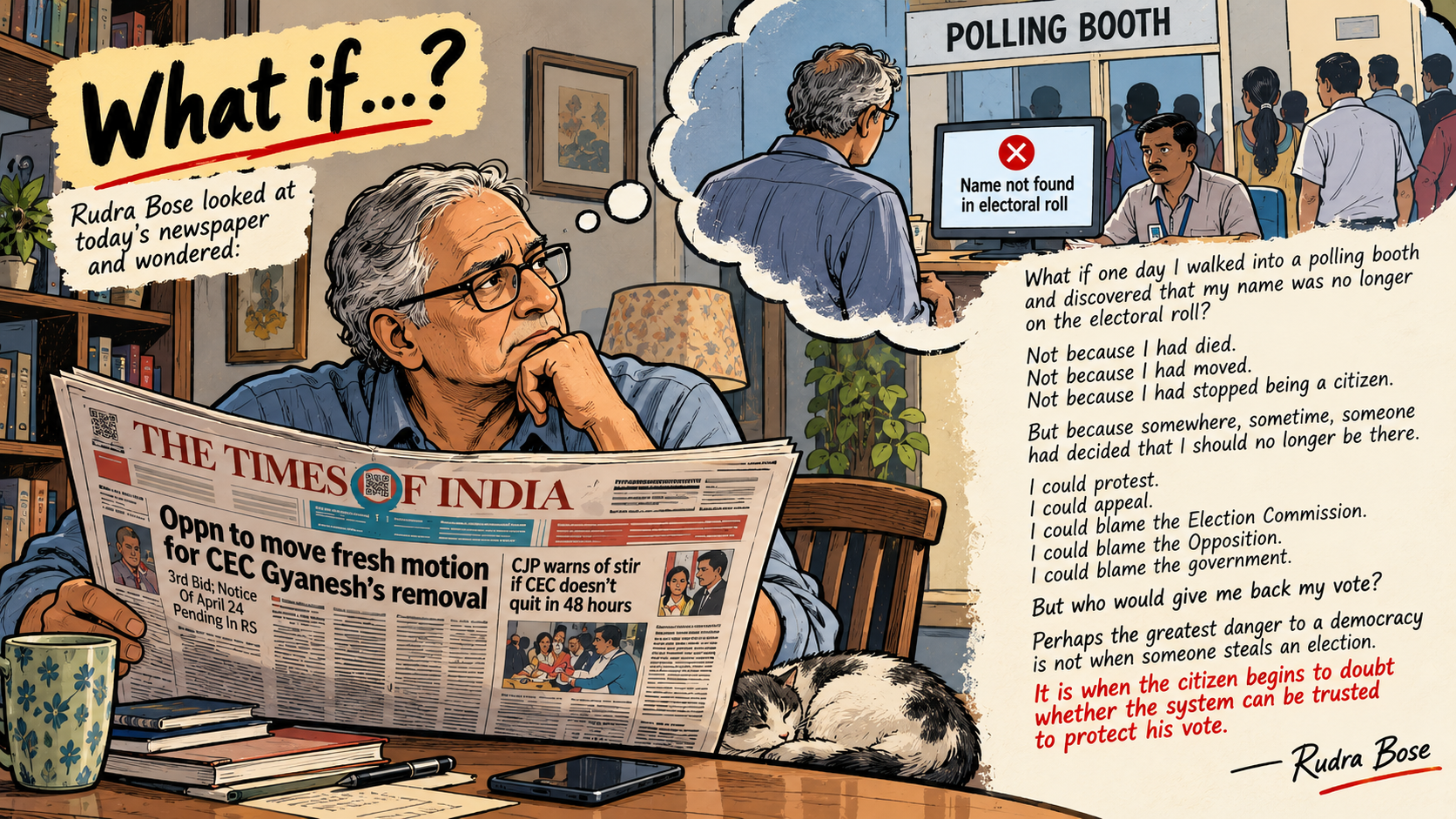
Then I imagined something more frightening. What if, one morning, I walked into a polling booth and discovered that my name was no longer there?
Not because I had died. Not because I had moved. Not because I had stopped being a citizen. But because somewhere inside a database, a decision had been made.
And suddenly I realised: Democracy does not merely depend on the right to vote. It depends on the quiet certainty that when you arrive to exercise that right, your name will still be there.
Perhaps that is the real test of an election. Not who wins or loses. But whether the citizen still trusts the hand that counts his vote.
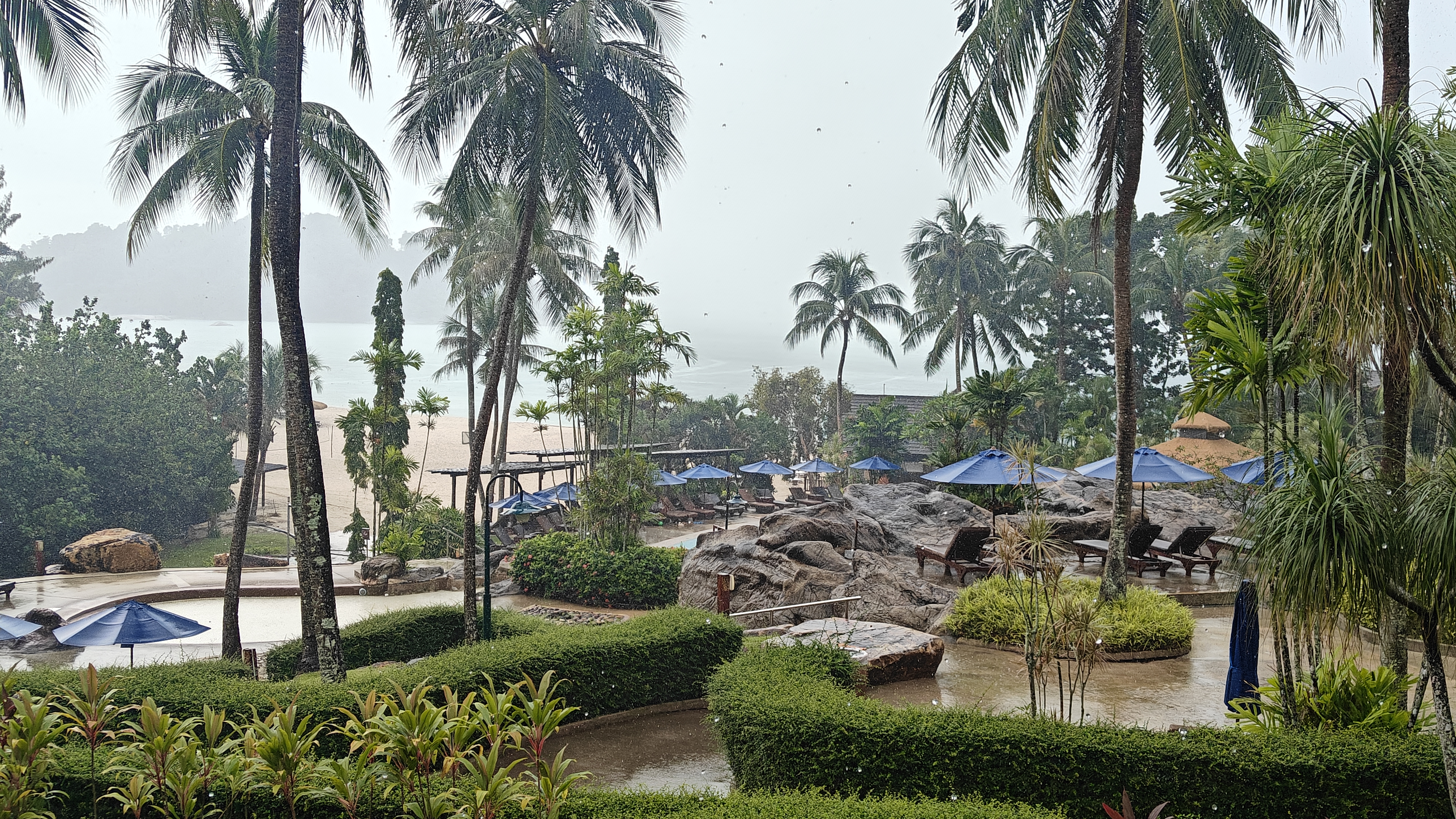
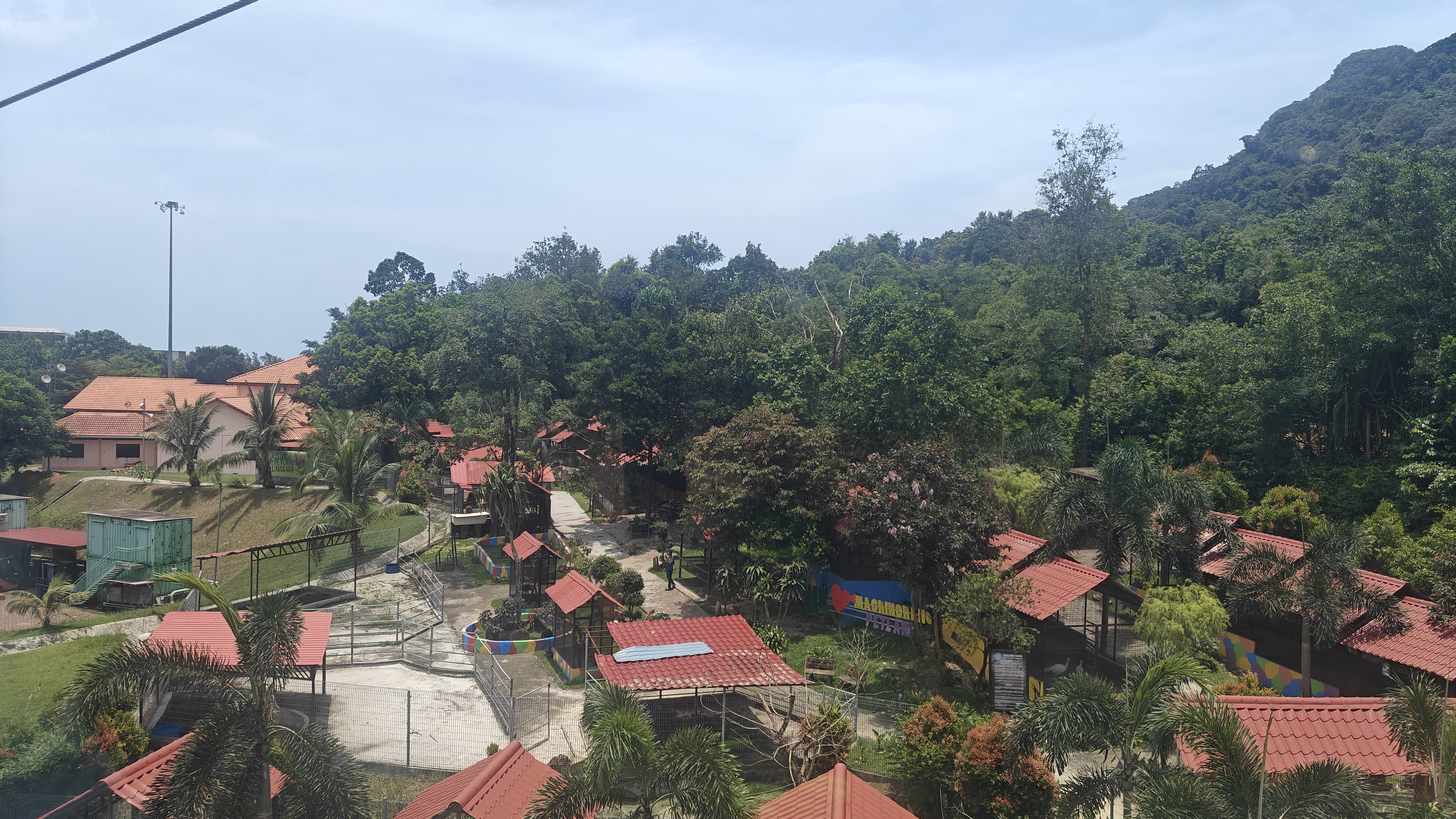
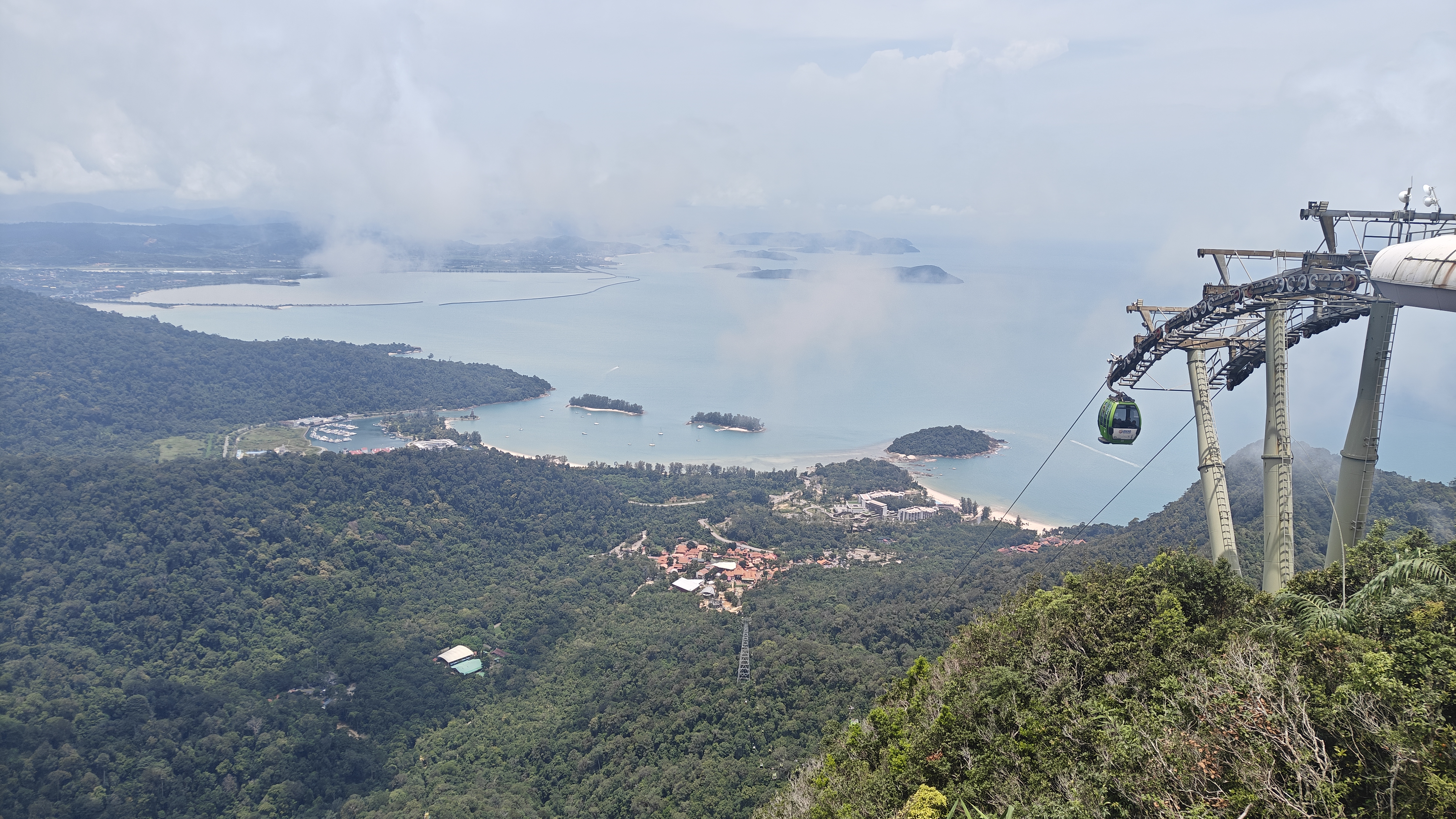
I came to Langkawi expecting to see another beautiful place. I found that the sea was beautiful. So was the Rainforest, so were the beaches.
The white beaches beckonThe Rainforest chalets
But after a while, I stopped looking at the beauty and began noticing something else.
The pace. The trees did not seem to be in a hurry to grow. The waves did not seem anxious about reaching the shore. The clouds moved without consulting a clock. Even the boats seemed to understand that there was nowhere more important to be.
And as I watched, I wondered when we had forgotten this simple rhythm. We hurry to work. Hurry to meetings. Hurry to finish. Hurry to achieve. And then, having spent years rushing towards the future, we discover that the present has quietly passed us by.
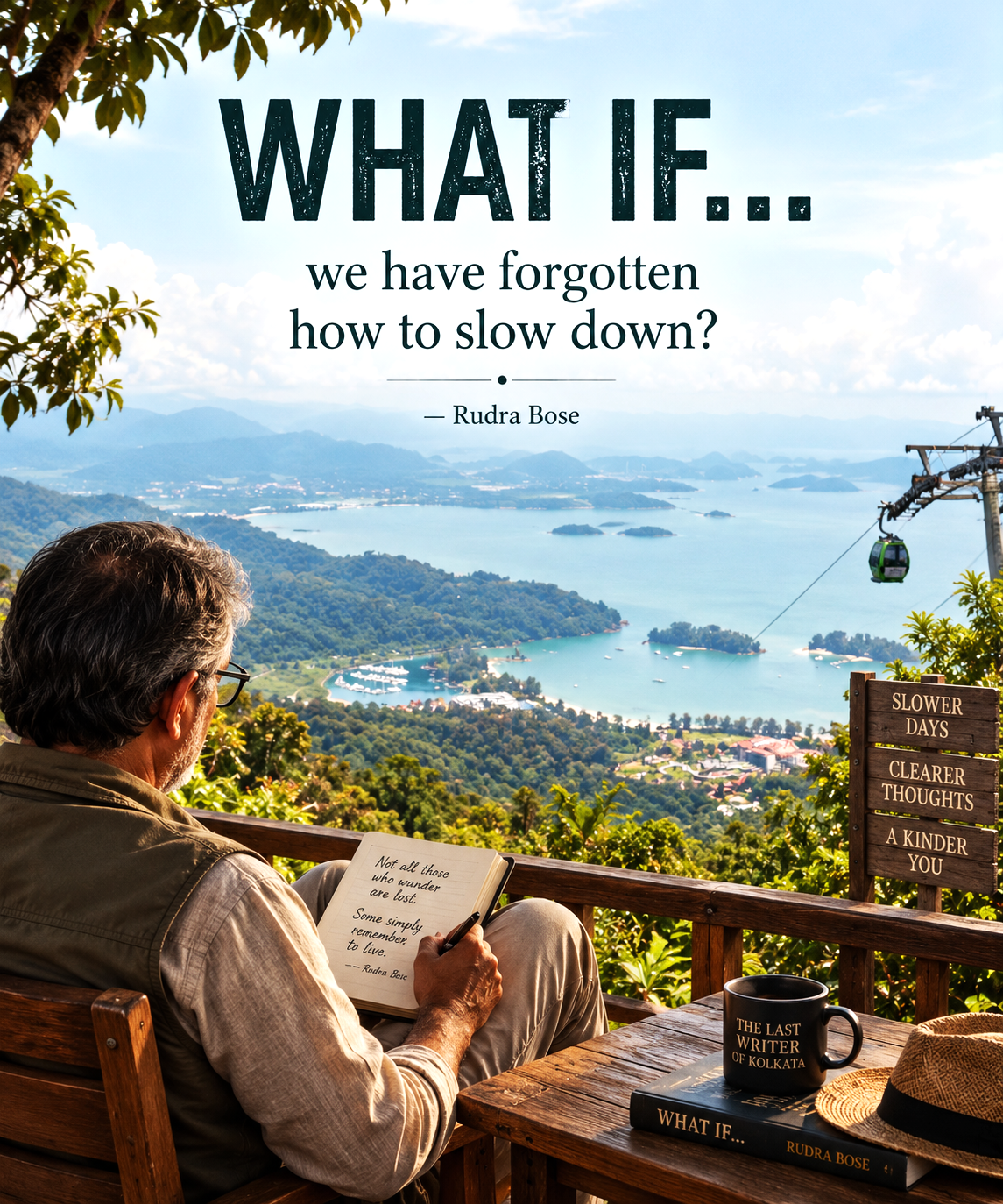
Perhaps the problem is not that we don’t have enough time. Perhaps we have forgotten how to inhabit the time we have. Standing by the sea, I found myself asking: What if slowing down is not falling behind? What if it is actually a way of moving forward—with greater awareness of where we are going?
Perhaps we don’t always need another destination. Sometimes we simply need to stop long enough to notice the journey.
….notice the journey
I closed my notebook and watched the waves return to the shore. They had been doing it for thousands of years. Unhurried. Unconcerned. And somehow, always on time.
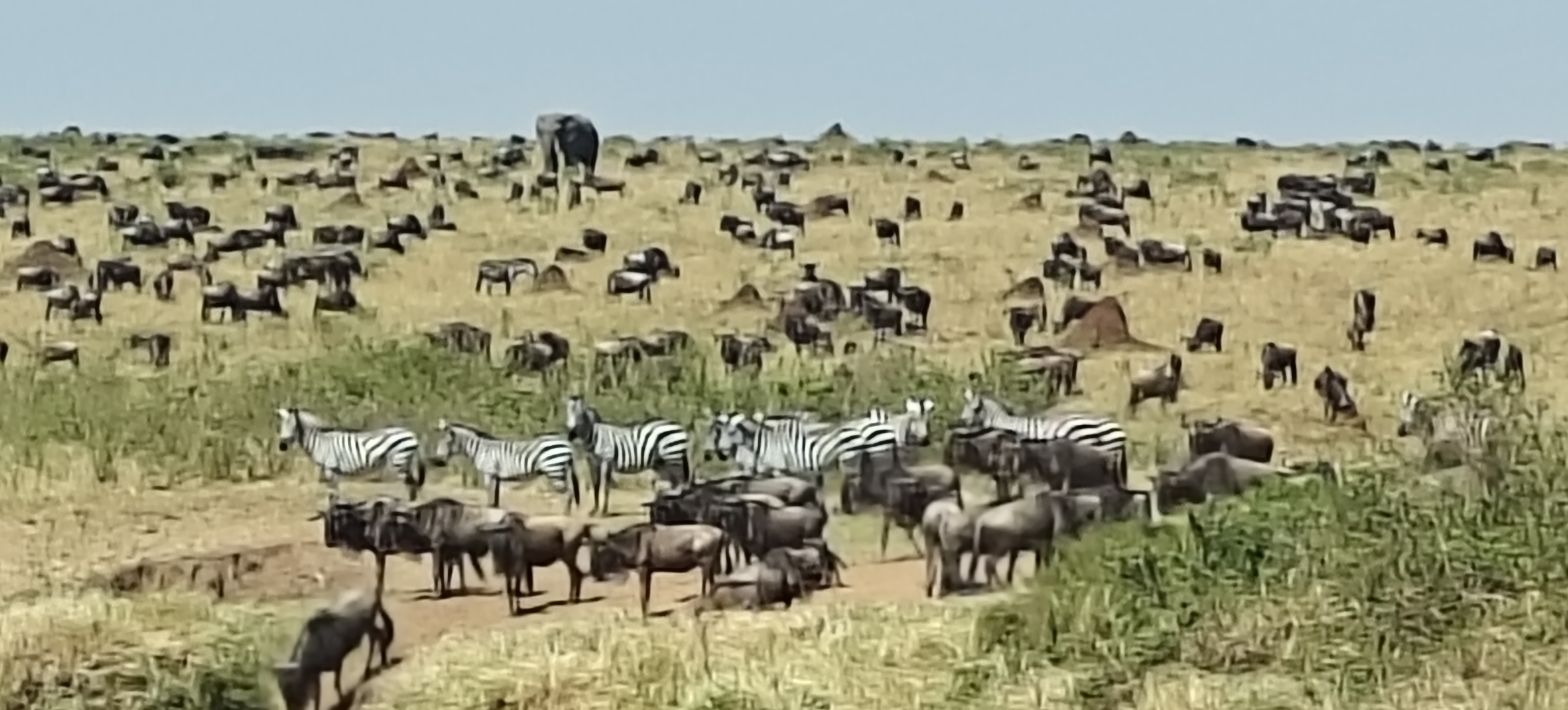
I spent the morning watching the animals move across the Kenyan savannah. There were wildebeest everywhere. Zebras moved among them almost casually. An elephant and its cub stood beneath a tree. In the distance, the landscape seemed to stretch endlessly, without walls, roads or buildings to interrupt it. For a while, I simply watched.
A space with no boundaries
There was something strangely humbling about seeing so many creatures occupy the same landscape without any apparent need to possess it. They did not own the land. They did not draw boundaries across it. They did not put up signs announcing that a particular piece of earth belonged to them. They simply lived there.
The Savannah co-existence
And then a thought occurred to me. What if we have misunderstood our place in the world?
For centuries, we have measured human progress by our ability to control nature. We cut down forests and called it development. We dammed rivers and called it progress. We covered open land with concrete and called it urbanisation. We moved mountains, redirected water, altered landscapes and exterminated species after species, making them disappear. And while doing so, we often congratulated ourselves on our ingenuity and intelligence.
The great migration through Mara
But somewhere along the way, we perhaps began to confuse our ability to control something with the right to own it. The savannah seemed to offer me a different philosophy. The animals did not appear to be conquering the land. They were part of it. The elephant did not need to dominate the tree beneath which it stood. The zebra did not need to fence off its patch of grass. The wildebeest did not need a title deed to the earth beneath its feet. They belonged to the landscape without claiming it. Perhaps that is what we have forgotten. We speak endlessly about what we will leave behind. Be it buildings, businesses, fortunes, roads or institutions. We would strive to leave our names on plaques and our photographs on walls. But perhaps there is another kind of legacy…….
The Zebra did not need to fence off its grass….
What we choose not to destroy. The forest we would leave standing. The river and the waterbody we would allow to remain clean. The animal(s) whose habitat we would protect. The open space we chose not to convert into concrete. The silence we did not fill.
The silence we did not fill….
Standing there in Kenya, I began to wonder whether civilisation should really be measured by how much of nature we can bend to our will. Or how much of nature we chose to leave as it is. Perhaps the more difficult measure is how much power we possess—and how much restraint we exercise. Because restraint requires something that conquest does not. It requires us to recognise that we are not the center of everything. The realisation that the earth existed before us, the wild existed before our cities, our borders and our ambitions. And, if we are wise enough, much of it will continue to exist after we are gone.
Will this exist after we are gone?
Perhaps we are not the owners of this world after all. Perhaps we are merely its temporary custodians. We arrived without asking permission. We will leave without taking anything with us. Between those two moments lies the brief privilege of being of who we are and our presence here.
We remain privileged to have been here…….
And so I find myself asking a different question. Not simply, what will we build while we are here? But, what will remain because we were here? I closed my notebook. The animals continued moving across the savannah. They had not heard my question. Perhaps they did not need to. They seemed to know the answer already.
….. a city allows danger to become normal until tragedy makes it visible.
August 2026
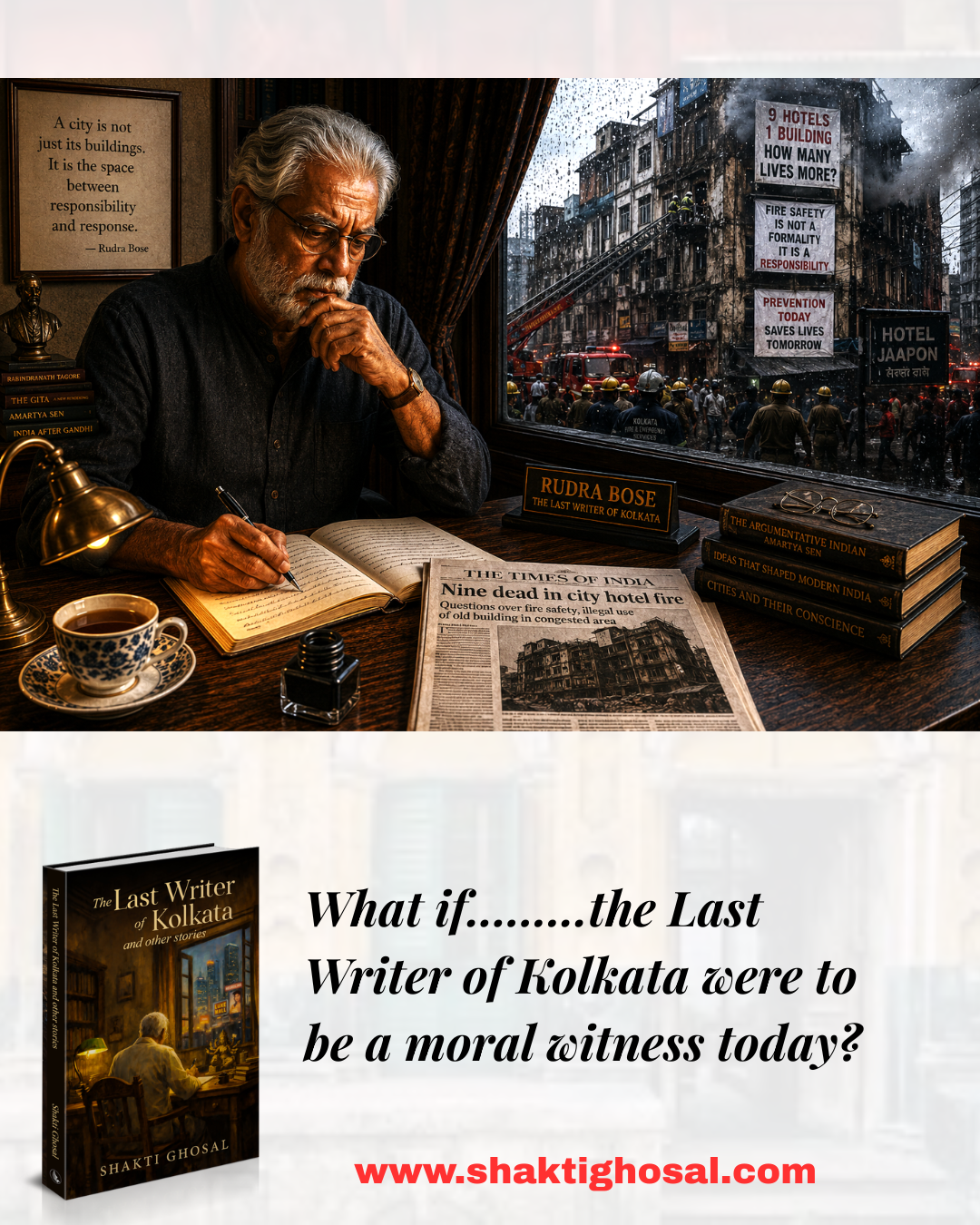
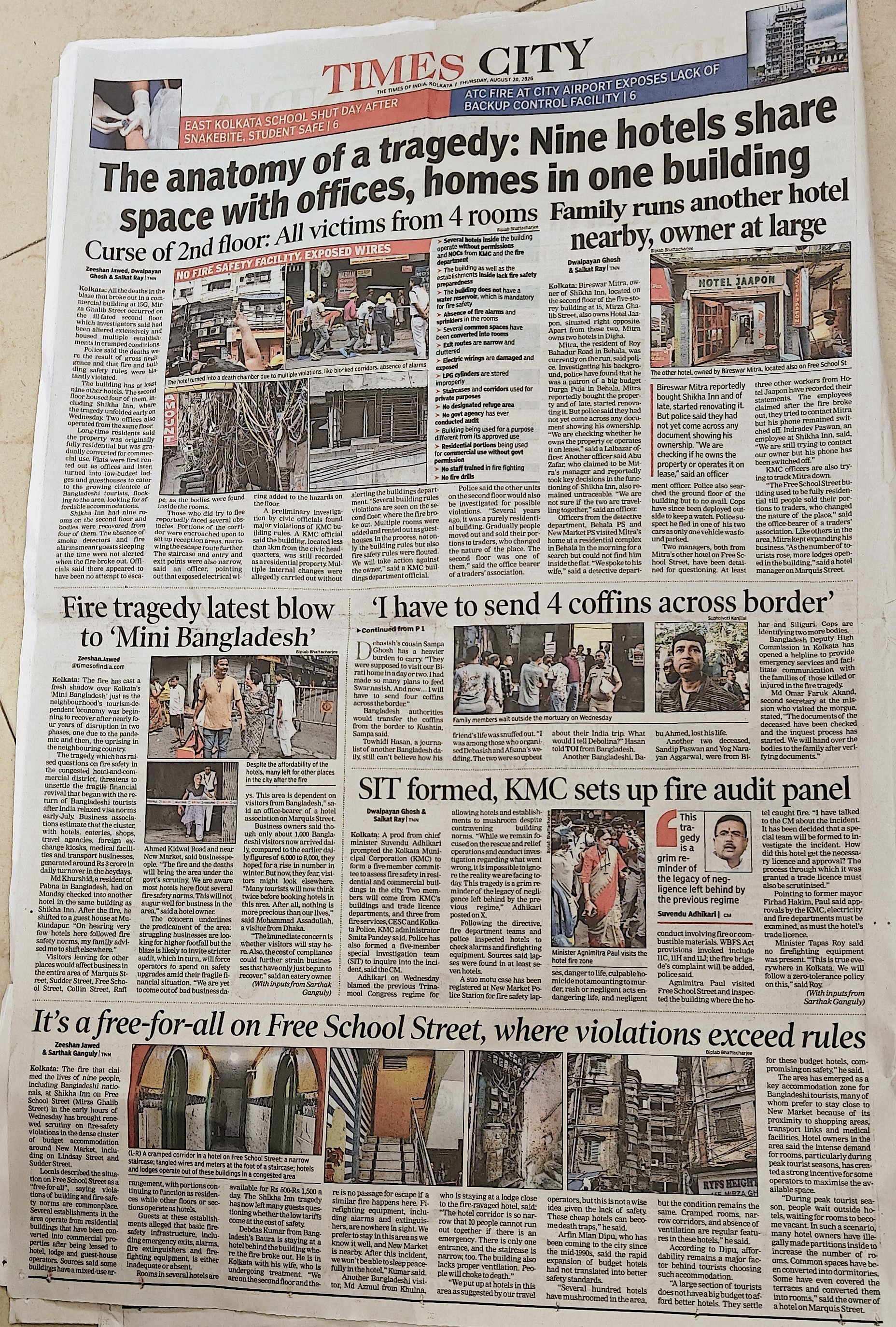
The fire in the Free School street building which housed hotels, offices and homes may have started with a short circuit. But tragedies of this magnitude are rarely caused by a single spark. Nine people died in a building where hotels, offices and homes had somehow learnt to coexist within a maze of cramped spaces, narrow passages and questions about fire safety.
Times Of India report
I kept wondering: who allowed this to become normal? Perhaps that is the more uncomfortable question. A city does not become unsafe in one day. It becomes unsafe one ignored violation at a time. One certificate not checked. One inspection postponed. One illegal alteration overlooked. One warning that nobody thought was urgent. And then, one night, the building catches fire.
We will now demand accountability. There will be investigations, committees, audits and perhaps arrests. All these are surely necessary. But does governance have to begin only after people die? The real test of a city is not how efficiently it rescues people from a burning building. It is whether it had the courage to prevent that building from becoming a death trap in the first place.
As I folded the newspaper, I wondered whether we have become too accustomed to calling preventable tragedies accidents. Perhaps the most important responsibility of governance is not to manage disasters better. It is to make fewer disasters possible.
……societies change not because they have become wiser but because they become preoccupied with different anxieties.
August 2026
Nineteen years. That is long enough for a child to become an adult. It is also long enough for governments to rise and fall. Long enough for a city to forget the sound of its own anger.
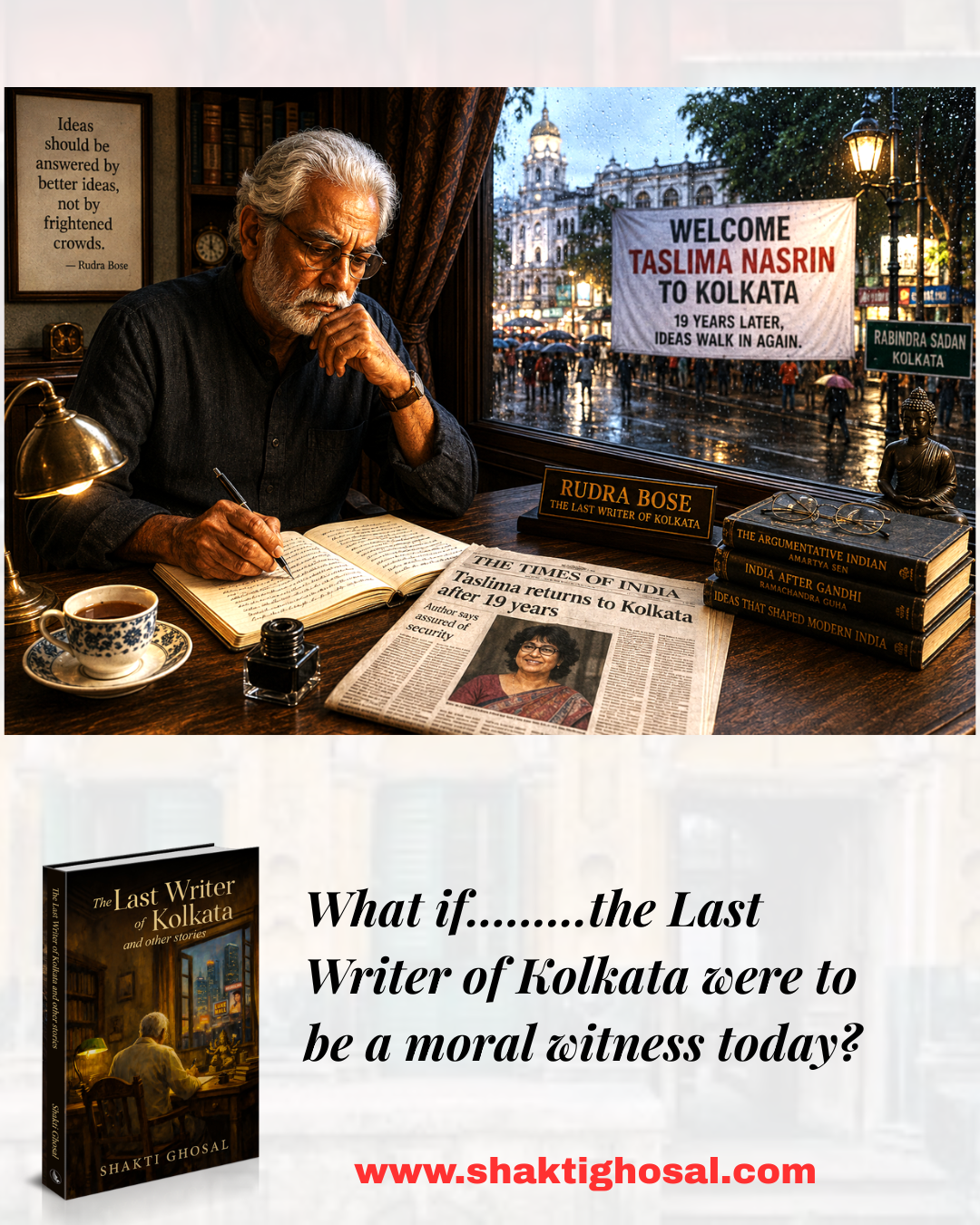
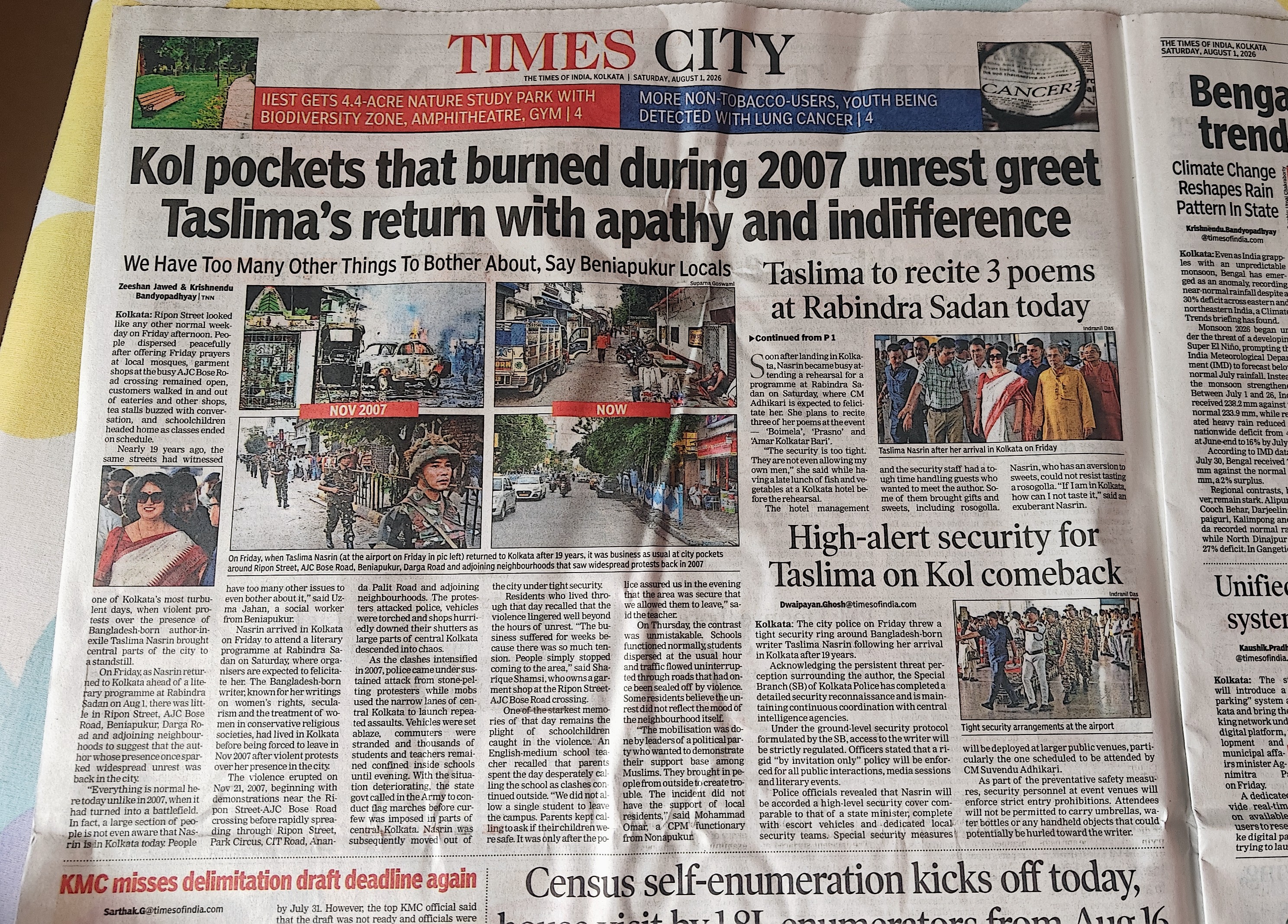
The other day, the newspaper told me that Taslima Nasrin has returned to Kolkata after nineteen years. The same city that once burned over her presence now seems to have greeted her mostly with routine, security cordons and a curious indifference.
Talima Nasrin report in the Newspaper
It made me wonder. What has really changed? Did we become more tolerant? Did we finally learn that books and what is written within need not be answered with barricades? Or have we simply acquired newer fears that leave us with less energy for old ones?
Perhaps every generation chooses its own battles. Yesterday it was identity. Today it is jobs, examinations, inflation, technology, security and an uncertain future. The loudest outrage of one decade quietly becomes yesterday’s headline.
As I folded the newspaper, I realised that a mature society is not one where everyone agrees. It is one where disagreement no longer needs to be escorted by violence. If Kolkata has truly changed, the victory does not belong to any government, any ideology or any writer.It belongs to the simple belief that ideas should be answered by better ideas, not by frightened crowds.
That is how civilisation grows—almost unnoticed, one quieter street at a time.