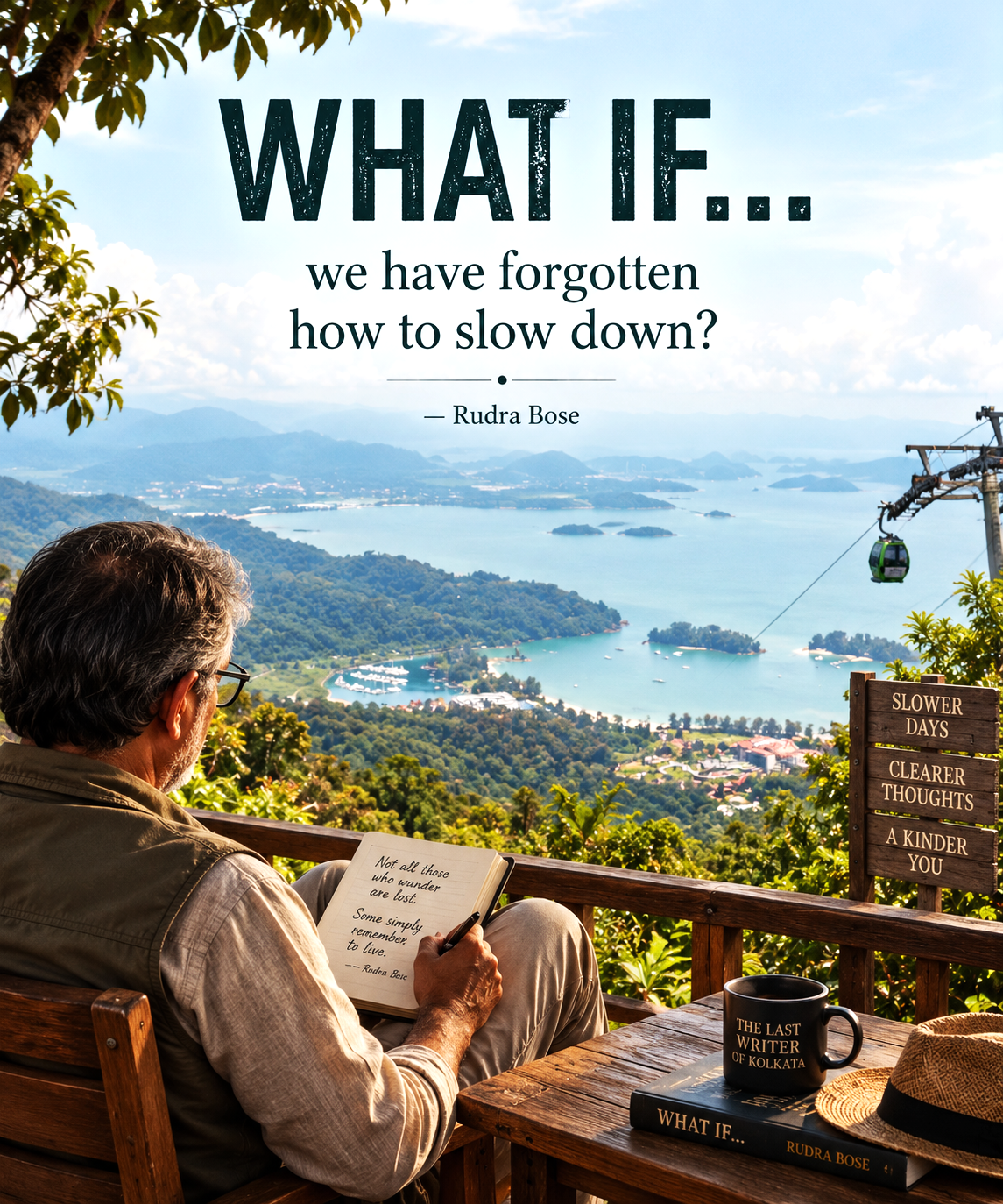
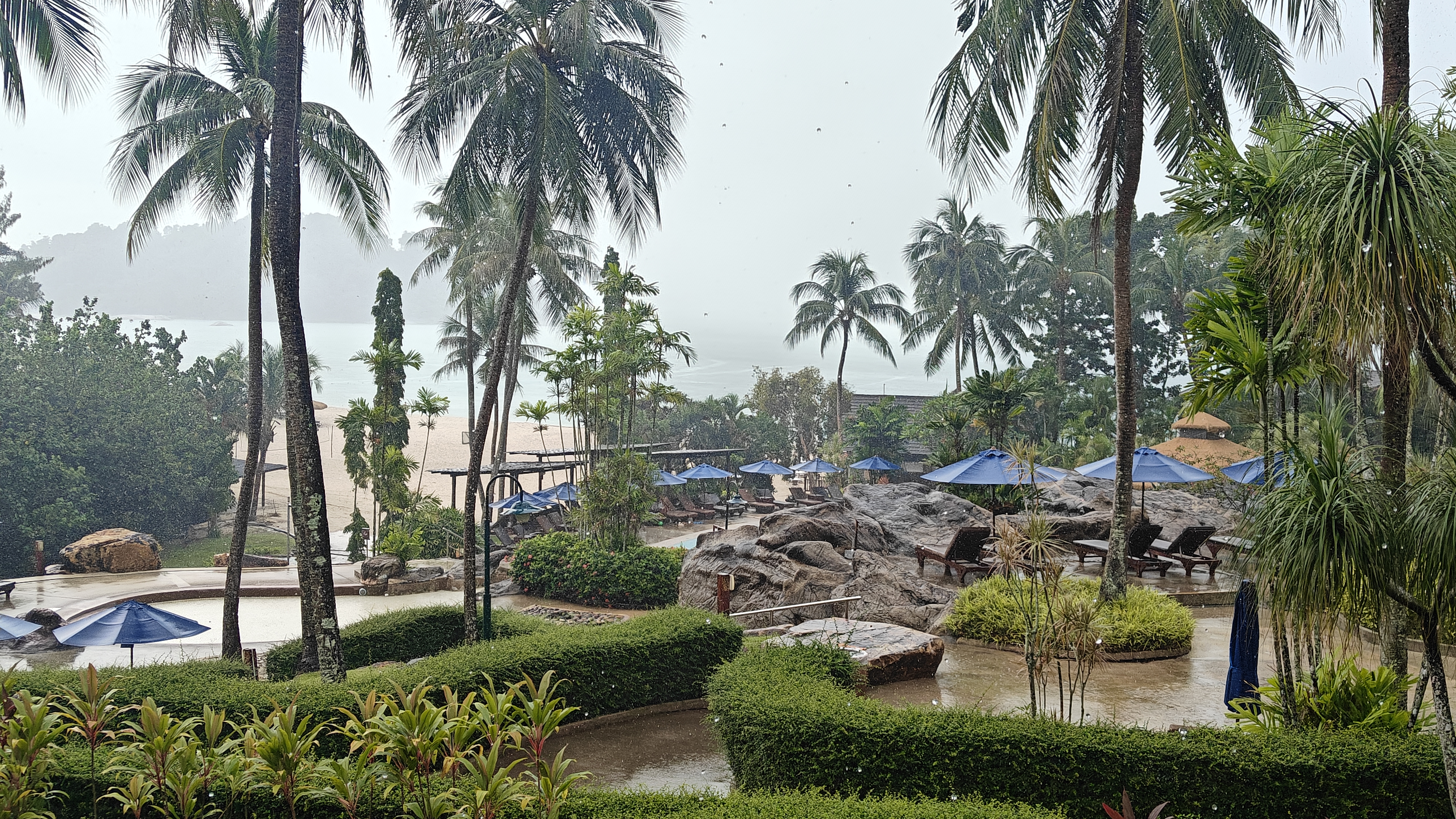
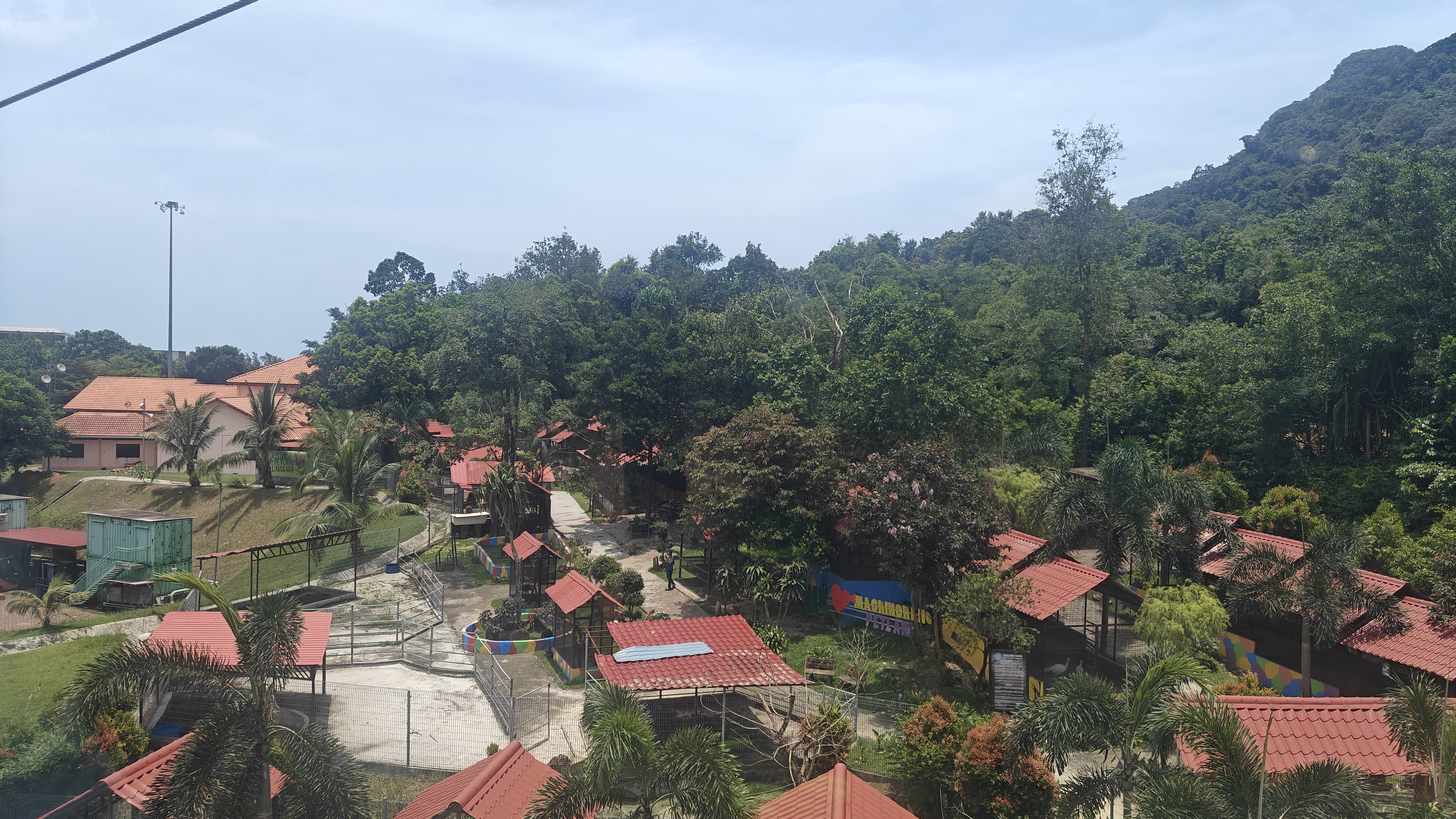
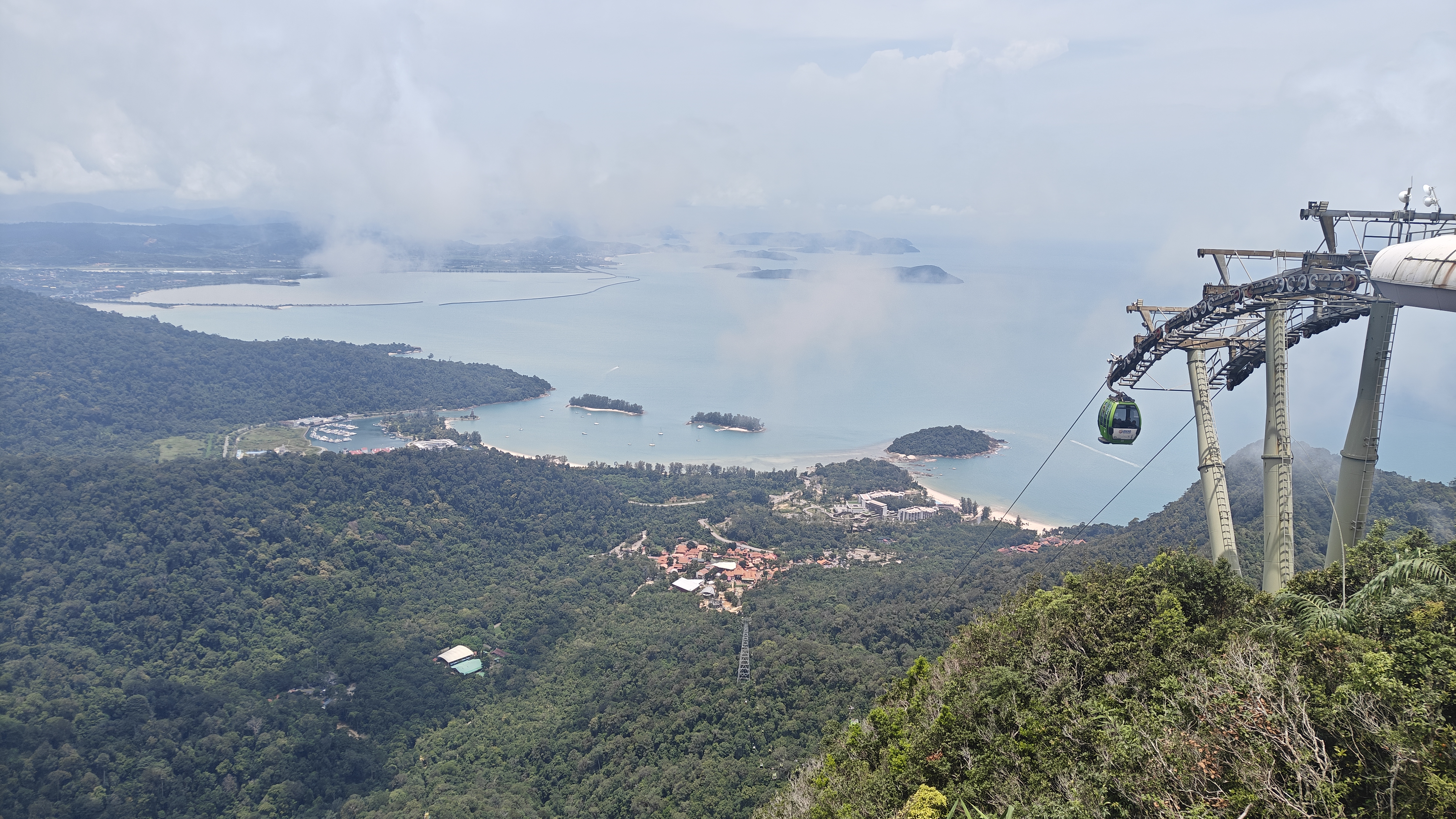
I came to Langkawi expecting to see another beautiful place. I found that the sea was beautiful. So was the Rainforest, so were the beaches.
The white beaches beckonThe Rainforest chalets
But after a while, I stopped looking at the beauty and began noticing something else.
The pace. The trees did not seem to be in a hurry to grow. The waves did not seem anxious about reaching the shore. The clouds moved without consulting a clock. Even the boats seemed to understand that there was nowhere more important to be.
And as I watched, I wondered when we had forgotten this simple rhythm. We hurry to work. Hurry to meetings. Hurry to finish. Hurry to achieve. And then, having spent years rushing towards the future, we discover that the present has quietly passed us by.
Perhaps the problem is not that we don’t have enough time. Perhaps we have forgotten how to inhabit the time we have. Standing by the sea, I found myself asking: What if slowing down is not falling behind? What if it is actually a way of moving forward—with greater awareness of where we are going?
Perhaps we don’t always need another destination. Sometimes we simply need to stop long enough to notice the journey.
….notice the journey
I closed my notebook and watched the waves return to the shore. They had been doing it for thousands of years. Unhurried. Unconcerned. And somehow, always on time.
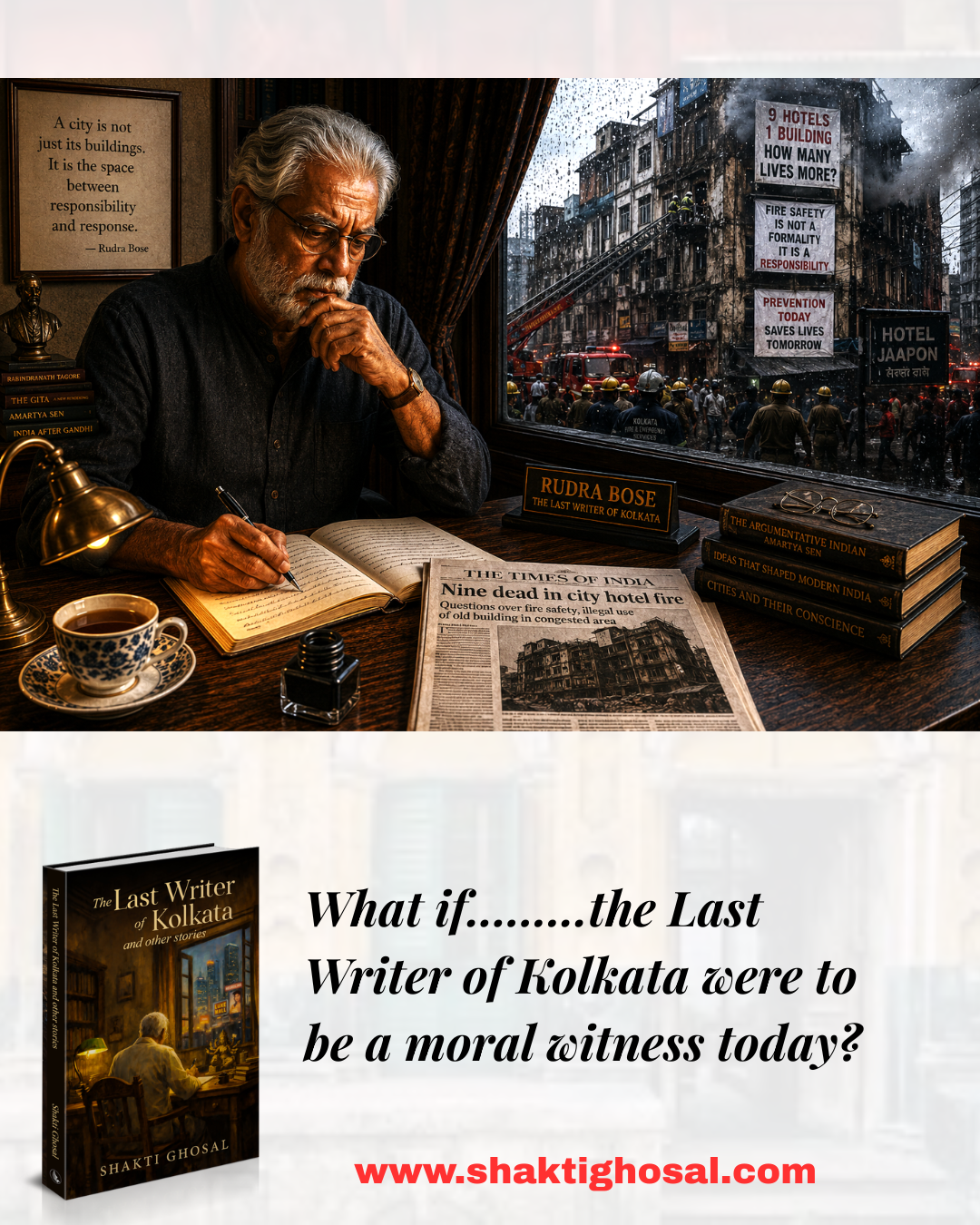
….. a city allows danger to become normal until tragedy makes it visible.
August 2026
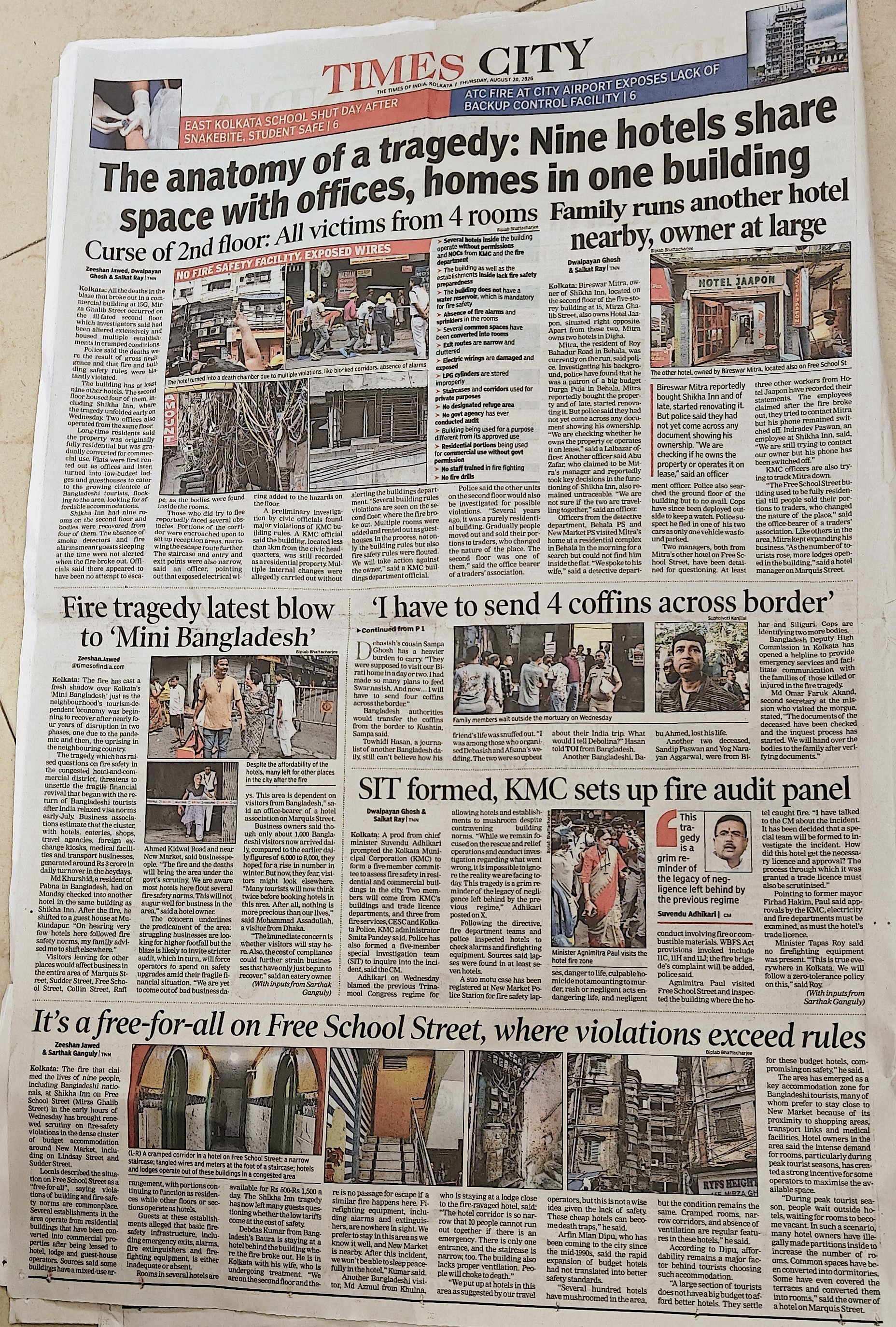
The fire in the Free School street building which housed hotels, offices and homes may have started with a short circuit. But tragedies of this magnitude are rarely caused by a single spark. Nine people died in a building where hotels, offices and homes had somehow learnt to coexist within a maze of cramped spaces, narrow passages and questions about fire safety.
Times Of India report
I kept wondering: who allowed this to become normal? Perhaps that is the more uncomfortable question. A city does not become unsafe in one day. It becomes unsafe one ignored violation at a time. One certificate not checked. One inspection postponed. One illegal alteration overlooked. One warning that nobody thought was urgent. And then, one night, the building catches fire.
We will now demand accountability. There will be investigations, committees, audits and perhaps arrests. All these are surely necessary. But does governance have to begin only after people die? The real test of a city is not how efficiently it rescues people from a burning building. It is whether it had the courage to prevent that building from becoming a death trap in the first place.
As I folded the newspaper, I wondered whether we have become too accustomed to calling preventable tragedies accidents. Perhaps the most important responsibility of governance is not to manage disasters better. It is to make fewer disasters possible.
……societies change not because they have become wiser but because they become preoccupied with different anxieties.
August 2026
Nineteen years. That is long enough for a child to become an adult. It is also long enough for governments to rise and fall. Long enough for a city to forget the sound of its own anger.
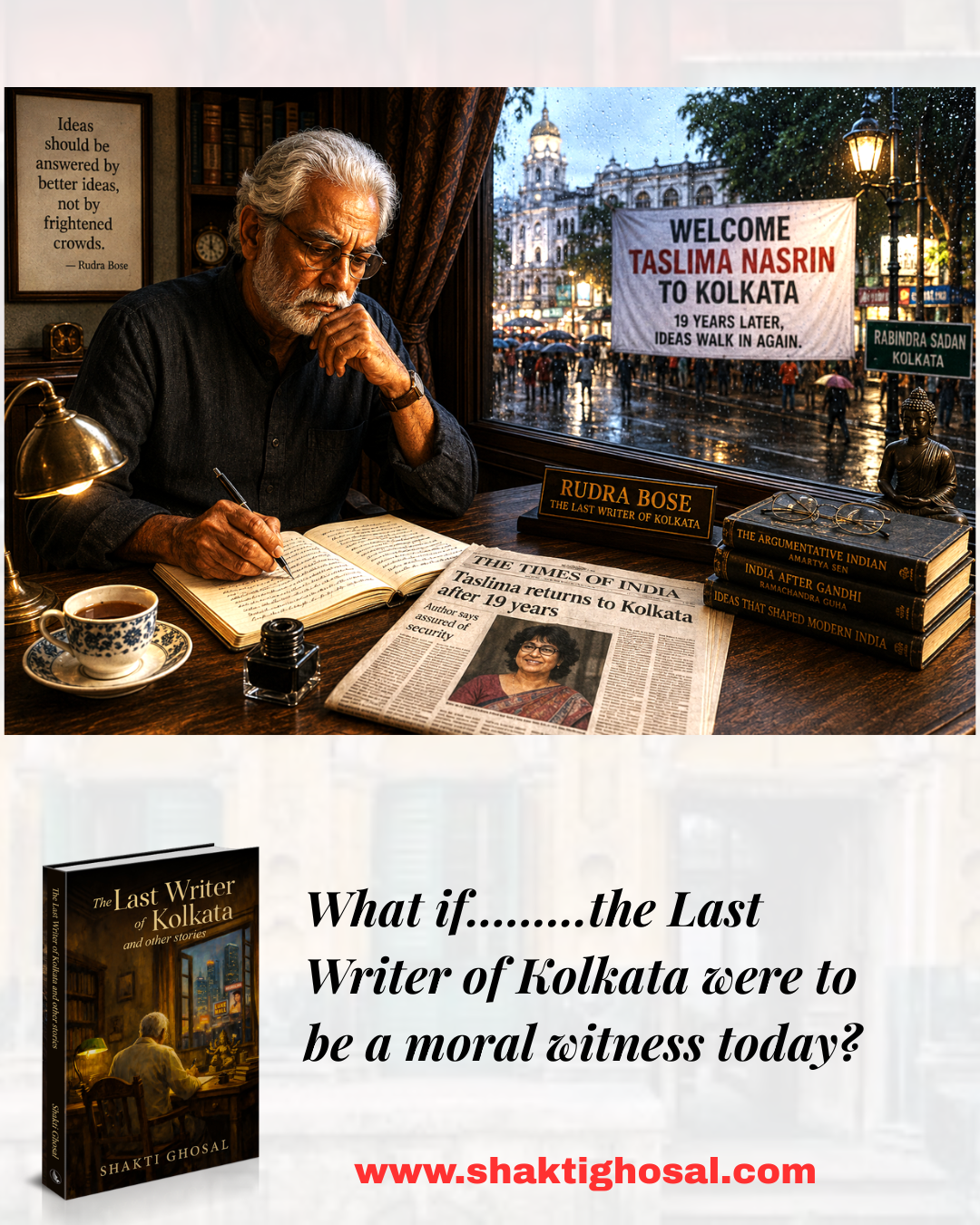
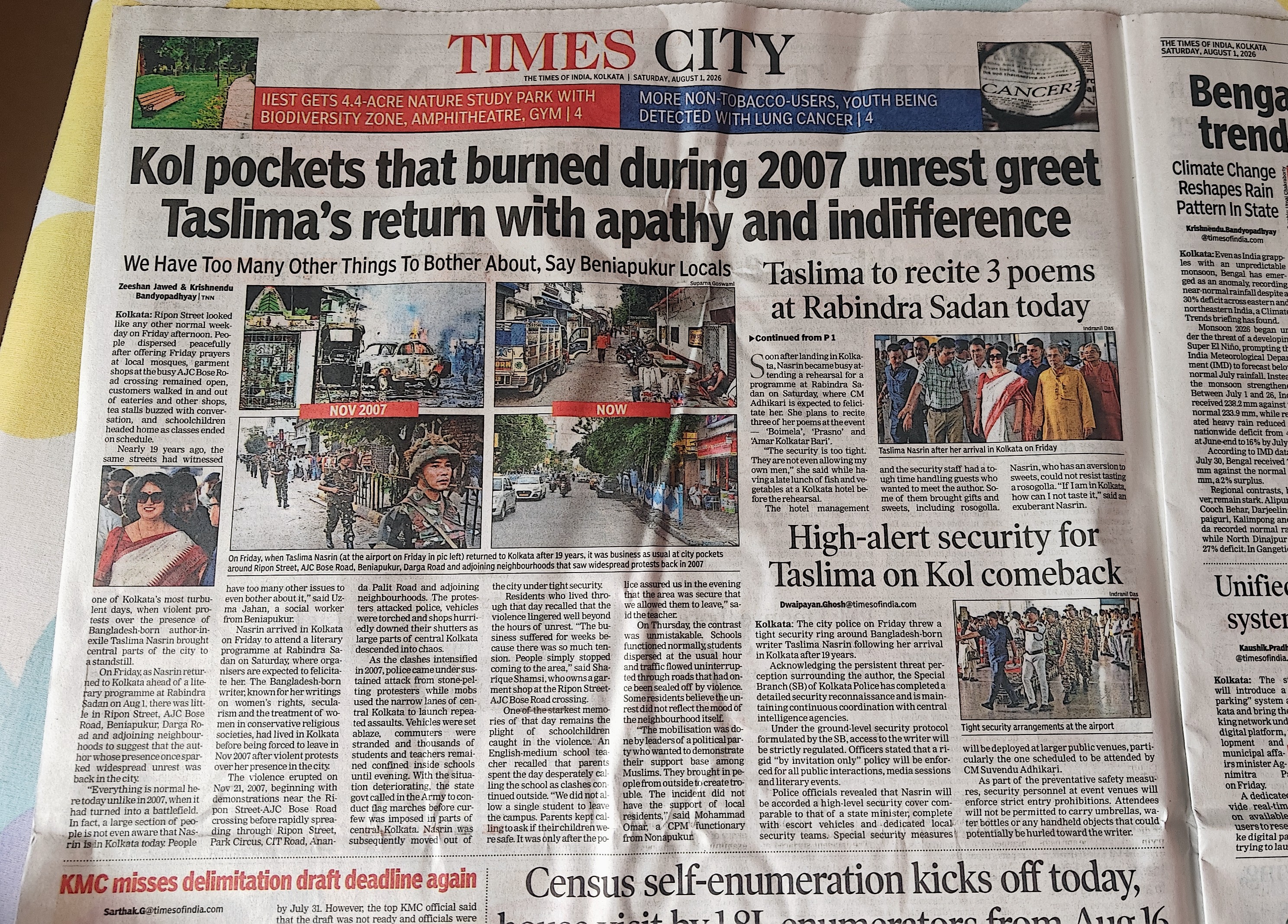
The other day, the newspaper told me that Taslima Nasrin has returned to Kolkata after nineteen years. The same city that once burned over her presence now seems to have greeted her mostly with routine, security cordons and a curious indifference.
Talima Nasrin report in the Newspaper
It made me wonder. What has really changed? Did we become more tolerant? Did we finally learn that books and what is written within need not be answered with barricades? Or have we simply acquired newer fears that leave us with less energy for old ones?
Perhaps every generation chooses its own battles. Yesterday it was identity. Today it is jobs, examinations, inflation, technology, security and an uncertain future. The loudest outrage of one decade quietly becomes yesterday’s headline.
As I folded the newspaper, I realised that a mature society is not one where everyone agrees. It is one where disagreement no longer needs to be escorted by violence. If Kolkata has truly changed, the victory does not belong to any government, any ideology or any writer.It belongs to the simple belief that ideas should be answered by better ideas, not by frightened crowds.
That is how civilisation grows—almost unnoticed, one quieter street at a time.
…. we do not really know the people who live beside us?
August 2026
When I was a child, every neighbourhood had an unofficial security system. It was called knowing one another. Your mother knew who lived next door. The grocer knew whose son had returned from college. The postman knew which house had a new baby. The stranger was noticed because everyone else was familiar.
Today we have CCTV cameras, biometric gates, visitor apps, facial recognition and digital identities. Yet we often do not know the person who shares the lift with us.
The newspapers tell us that a young man, described by neighbours as polite and ordinary, is now accused of living a different life of a terrorist behind an ordinary face. If the allegations are proven true, it is a chilling reminder that the greatest disguises are no longer masks. They are routines. Terrorism succeeds long before any explosion. It succeeds the day suspicion replaces trust, when every unfamiliar face begins to look dangerous, and every ordinary neighbour becomes a question mark.
That is precisely why a civilised society must refuse both complacency and paranoia. Security agencies must remain vigilant. Citizens must remain alert. But neither should surrender the humanity that allows communities to exist.
As I folded the newspaper, I wondered whether the greatest security failure of our times is not merely that dangerous people can hide among ordinary citizens. It is that modern life has quietly taught ordinary citizens to live among one another without ever truly knowing those around us. Perhaps the strongest wall against terror is not built of concrete or surveillance. Perhaps it begins when a society rediscovers the forgotten art of being a community.
……when a generation no longer asks for privilege, but for credibility.
July 2026
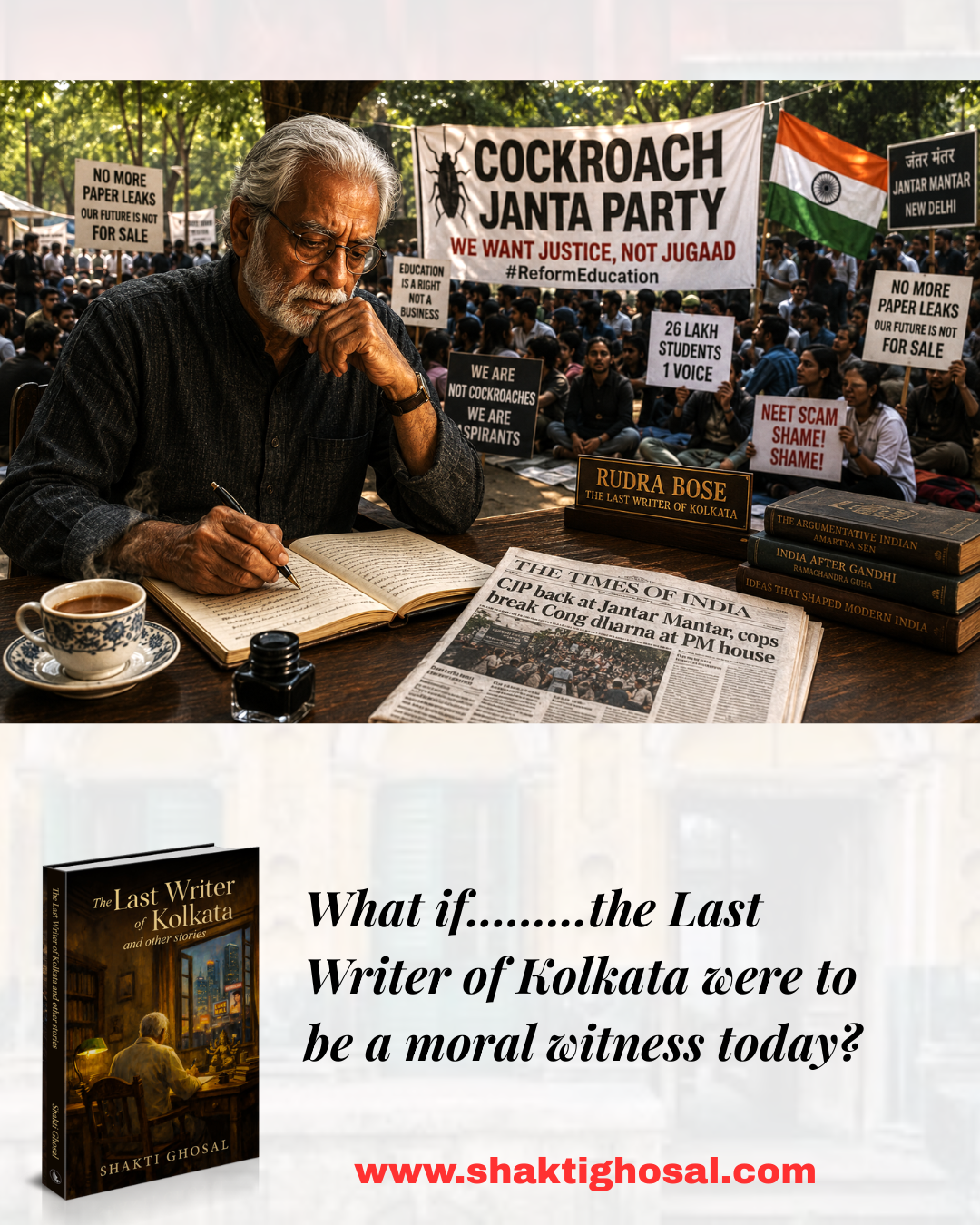
A few mornings back I learnt that an entire movement has chosen to call itself the ‘Cockroach Janta Party’. I smiled. Not because the name is amusing. But because history has always had an odd habit of allowing the insulted to reclaim the insult. (I recall many years back, the Chai-wallah epithet had provided a positive momentum to Prime Minister Modi’s persona)
There was a time when young people marched carrying flags. Today they march carrying memes. Yesterday’s slogans have become today’s hashtags.
Yet beneath the humour, I hear something painfully familiar. It is not anger; it is disappointment.
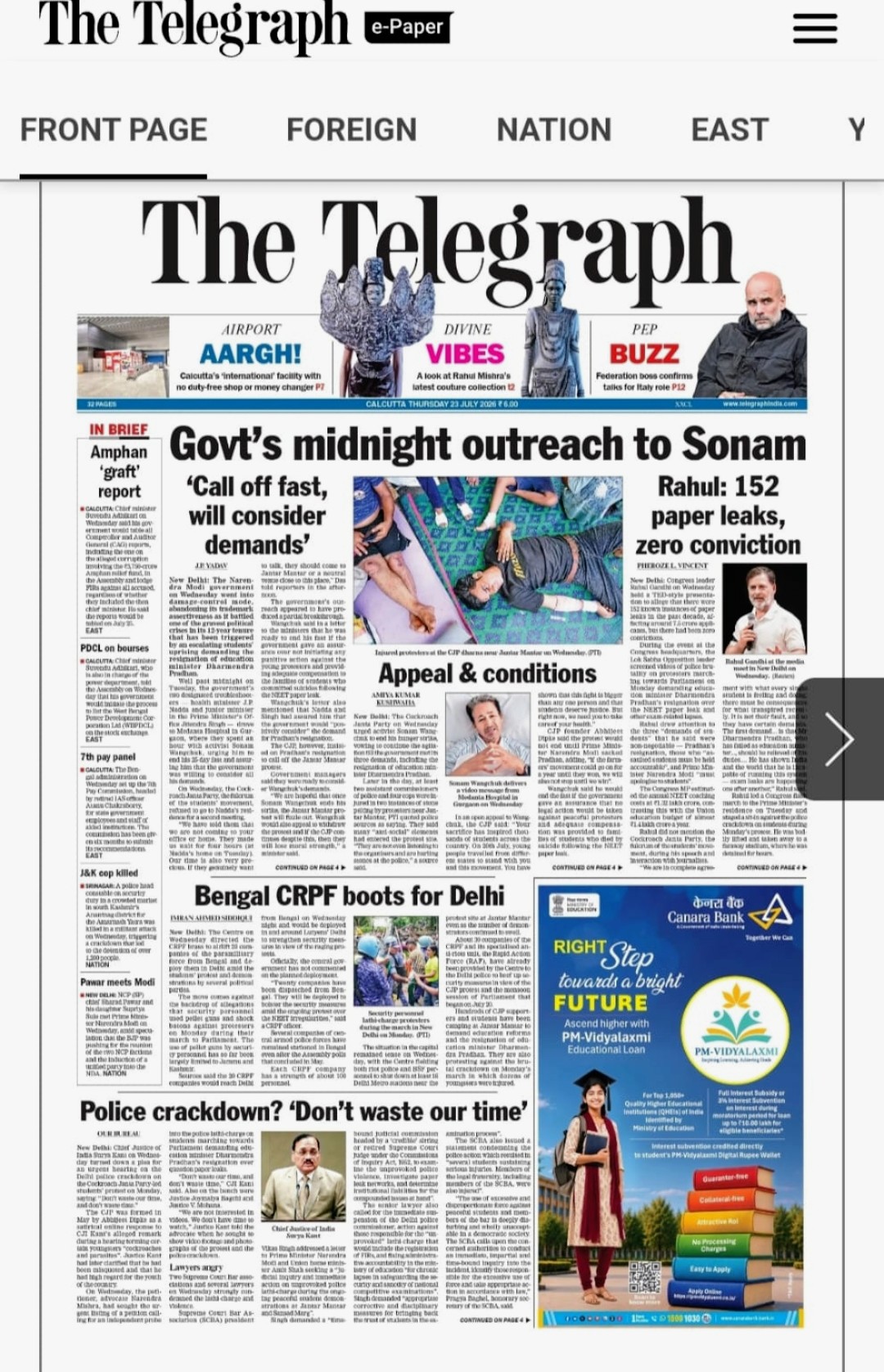
Every generation believes the next examination will open the next door. When that examination itself becomes the subject of doubt, it is not merely a paper that leaks. Trust does.
The young are often accused of being impatient. Perhaps they are. But there are few things more dangerous than asking an entire generation to wait while uncertainty becomes a way of life.
Governments may negotiate. Oppositions may protest. Television studios will certainly debate. But none of them can afford to overlook the quiet question echoing through millions of homes, ‘If merit itself begins to look negotiable, what exactly are young people expected to believe in?’
As I folded the newspaper, I realised that the greatest examination before our nation is no longer the one written by students. It is the one our institutions are writing every day. And unlike the students, they will not be judged by the answers they give. They will be judged by the trust they restore.
I recall a conversation from many years back. During an overseas visit, I was having coffee with a colleague and I found him looking frustrated and confused.
He pushed aside his tray and said, “I don’t get it. We’ve analysed the issue of increasing our business share from this market from every angle. We’ve got the data, the reports, the projections. Yet we seem to be still stuck.”
“Maybe that’s the problem,” I replied.
He looked at me, uncertainty writ on his face, “How can having more data be the problem?”
“Because sometimes,” I said, “we can become so busy looking for the right answer that we stop looking for other possibilities.”
He smiled politely—the kind of smile people give when they think you have said something impractical, “So what’s the alternative? Ignore the facts?”
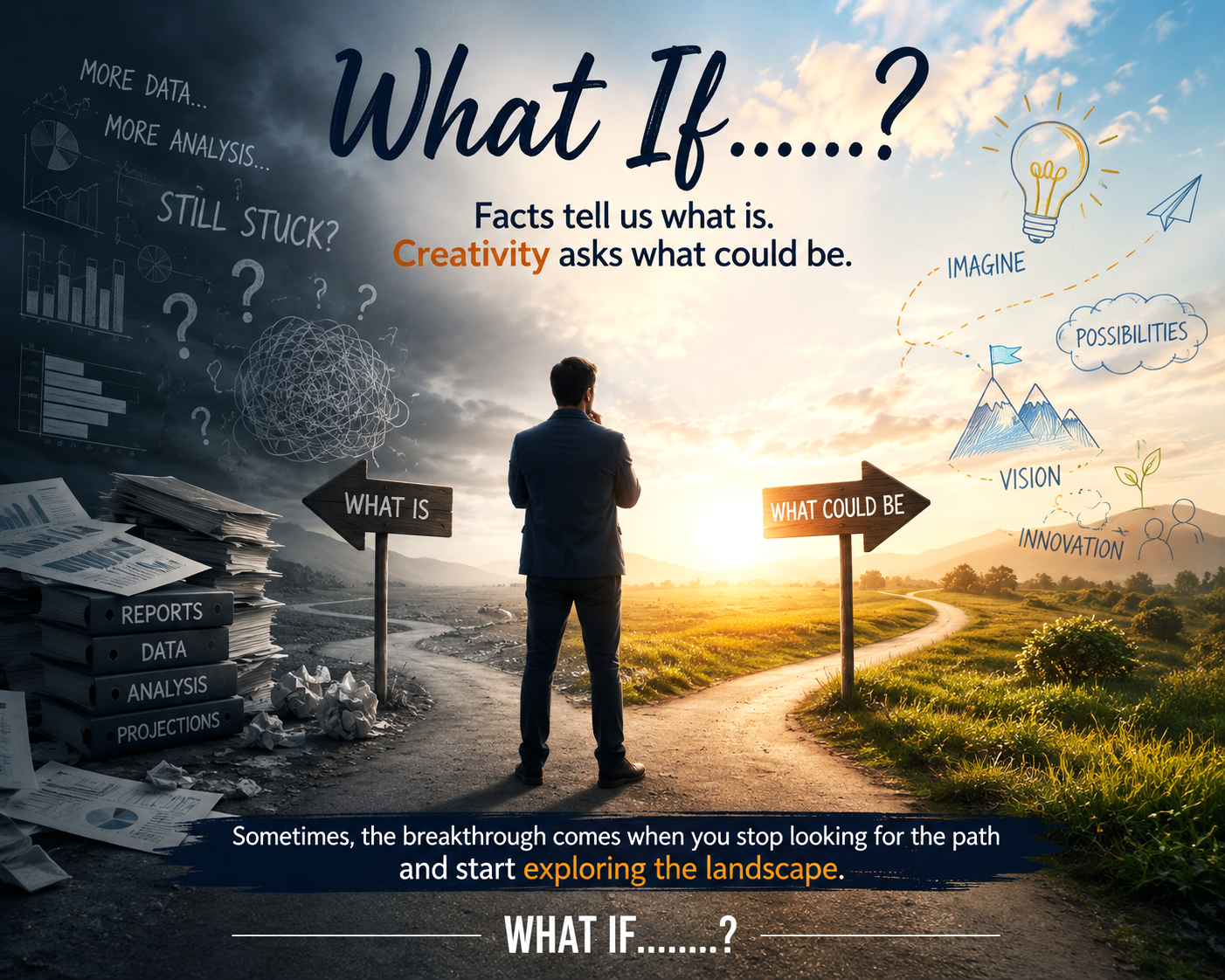
“Not at all. Facts matter. But facts tell us what is. Creativity asks what could be.” That seemed to catch his attention. I related a story.
“In the 1970s, a scientist at 3M was trying to create a super-strong adhesive. The adhesive was weak. By conventional standards, the experiment was a disappointment. It seemed a failure. That’s exactly how most people saw it. But years later, someone else looked at the same ‘failed’ adhesive and saw a different possibility. The result was the Post-it Note.”
My colleague laughed, “So one of the world’s most successful office products began as a mistake?”
“Or perhaps,” I said, “it began as a possibility that nobody had noticed yet.”
For a moment, neither of us spoke. Then he said something interesting.
“You know, in our meetings we’re always asking, ‘Will this work?’ Maybe we should first ask, ‘What else could this become?'”
Now we were getting somewhere. The truth is that most organisations reward certainty. We admire people who have answers. We celebrate expertise. We fill spreadsheets, analyse trends and minimise risks. All these are important. But the future is rarely created by these certain aspects alone. It is often created by someone willing to explore a possibility that doesn’t yet fit neatly into a presentation slide.
The more we talked, the more I realised that creativity is not about being artistic. It is not about painting, music or design. Possibilities which flow out of a creative mindset is the courage to see beyond the obvious. It is the willingness to ask a different question. It is the ability to sit with uncertainty long enough for a new idea to emerge.
Before we left, my colleague said, “Maybe we’ve been trying too hard to find the right path.”
“Perhaps,” I replied. “Sometimes the breakthrough comes when you stop looking for the path and start exploring the landscape.”
A few days later he called, “We’ve found a completely different solution. We stopped trying to prove what was possible and started imagining it. Imagining the end goal, without getting enmeshed with how to make that happen, allowed new possibilities to show up.”
That conversation stayed with me. Because in a world overflowing with information, knowledge is no longer the rarest resource. Possibility is. And every great innovation, every breakthrough and every new beginning starts with a simple question: