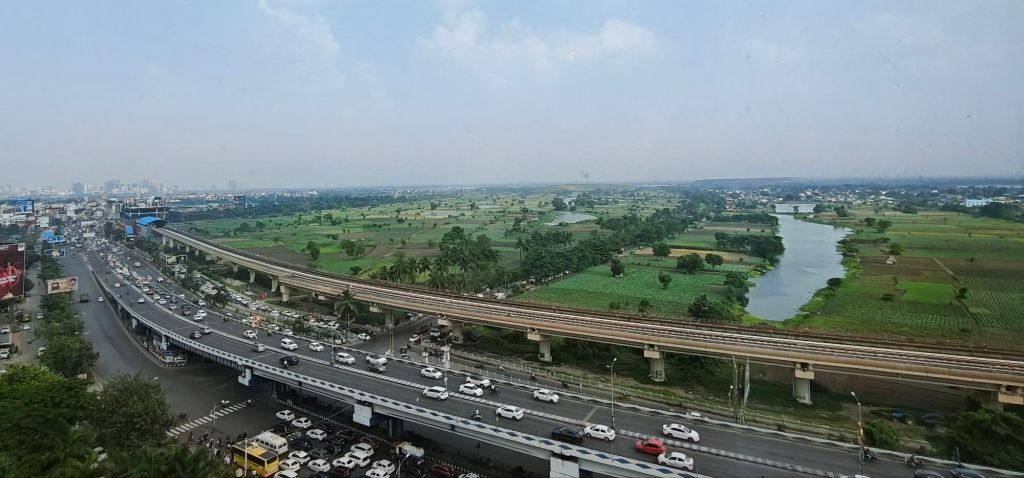
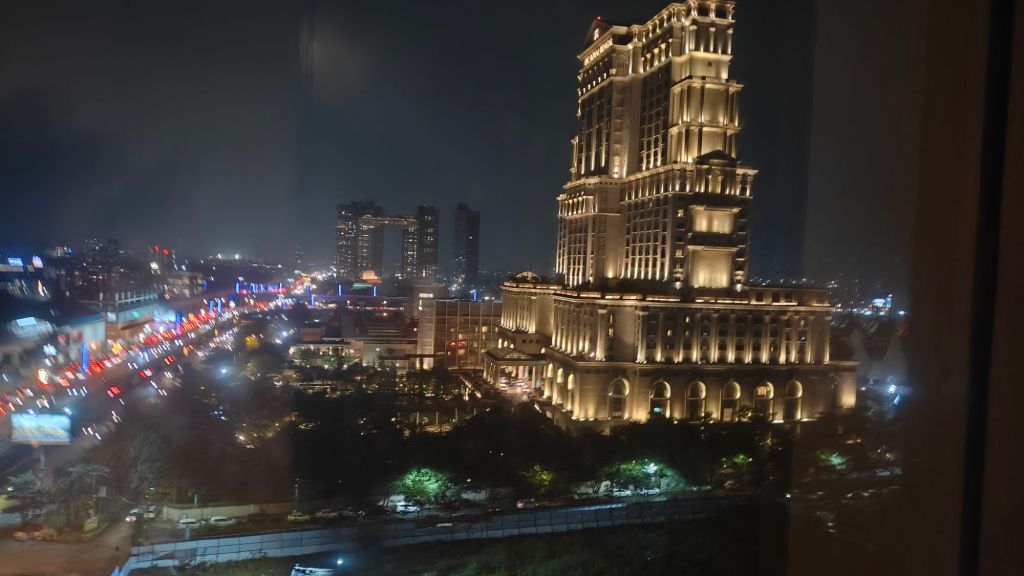
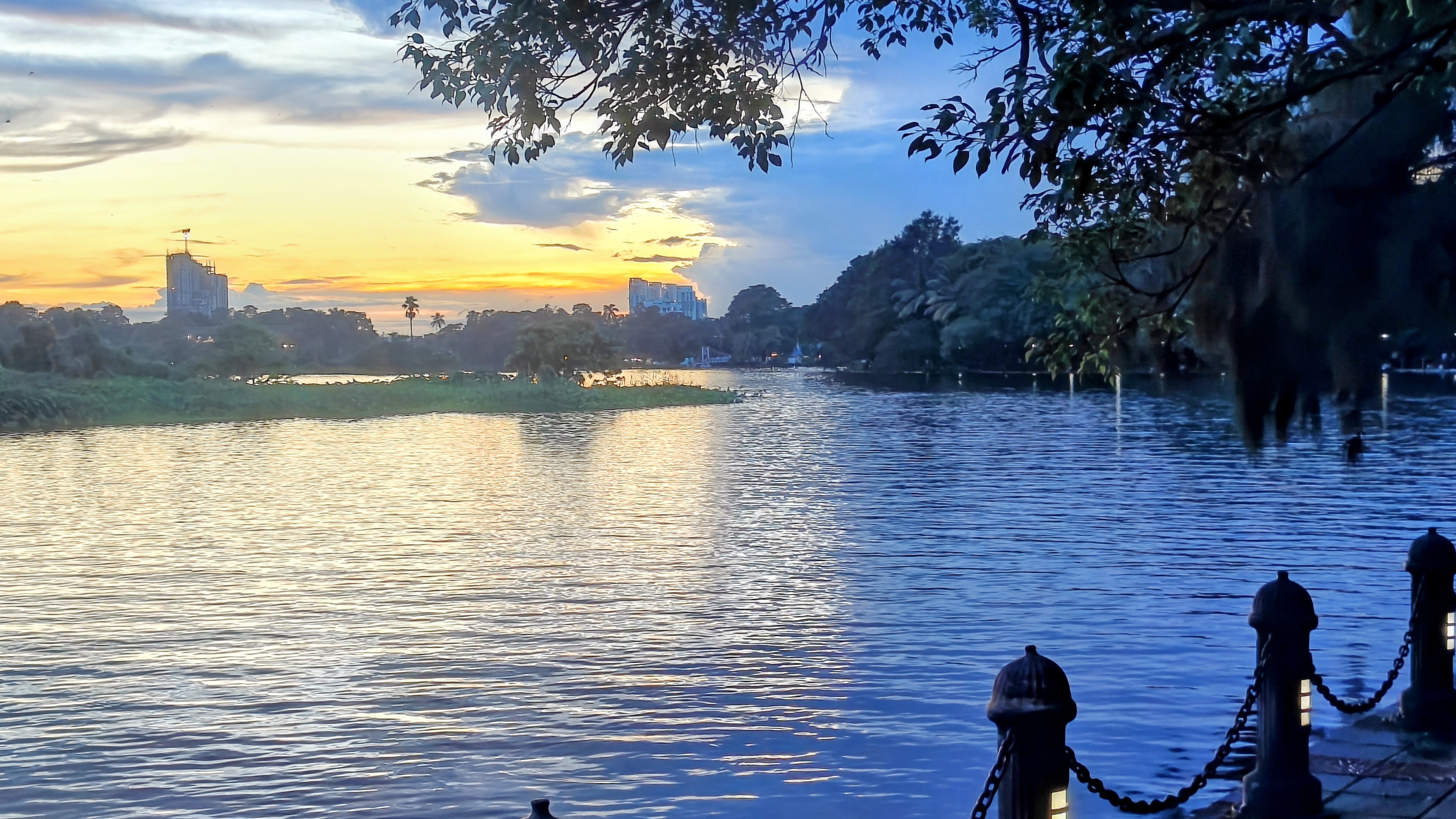
From the tenth floor of a hotel room, Kolkata offers an interesting perspective.
Below me, traffic rushes towards destinations I can only guess at. The Metro glides above the road. Beyond the concrete, patches of green survive, almost defiantly, against the advancing city.
At night, the landscape transforms. Buildings light up, roads become rivers of red and white, and the city acquires a certain grandeur.
Kolkata oh!
Yet I find myself wondering about the Kolkata that lies beyond these views.
The person hurrying to work. The family waiting for someone to return. The lives unfolding behind those illuminated windows.
A city is never merely what we see. It is everything that remains unseen.
Perhaps that is why I continue to observe, to question and to write.
Every window offers a view. Every view conceals a thousand stories.
And somewhere among them, there may be another story waiting for Rudra Bose. Shakti Ghosal
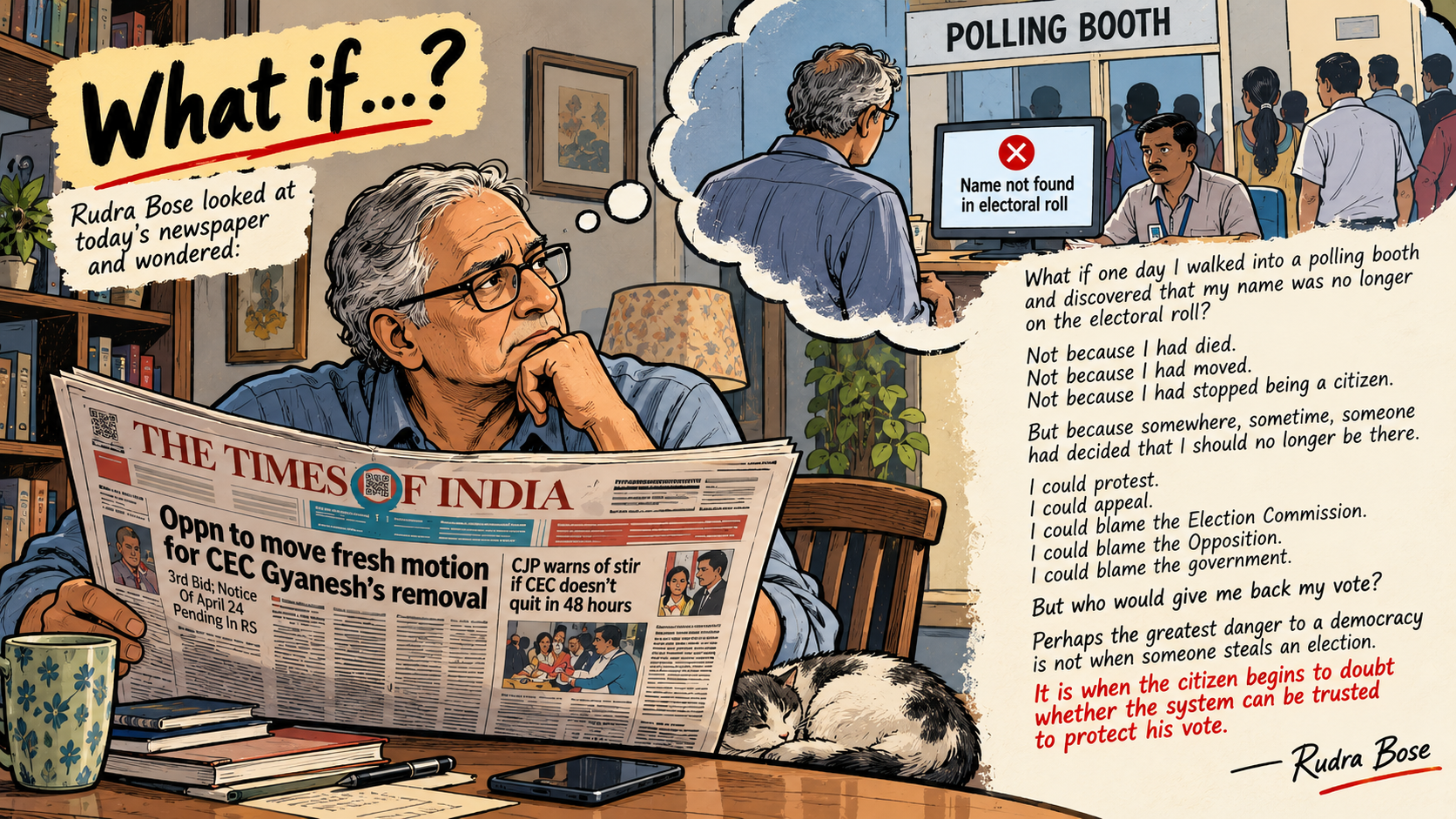
This morning I opened the newspaper to find that democracy had acquired a new battlefield.
Not Parliament. Not the streets. It was about the voter list.
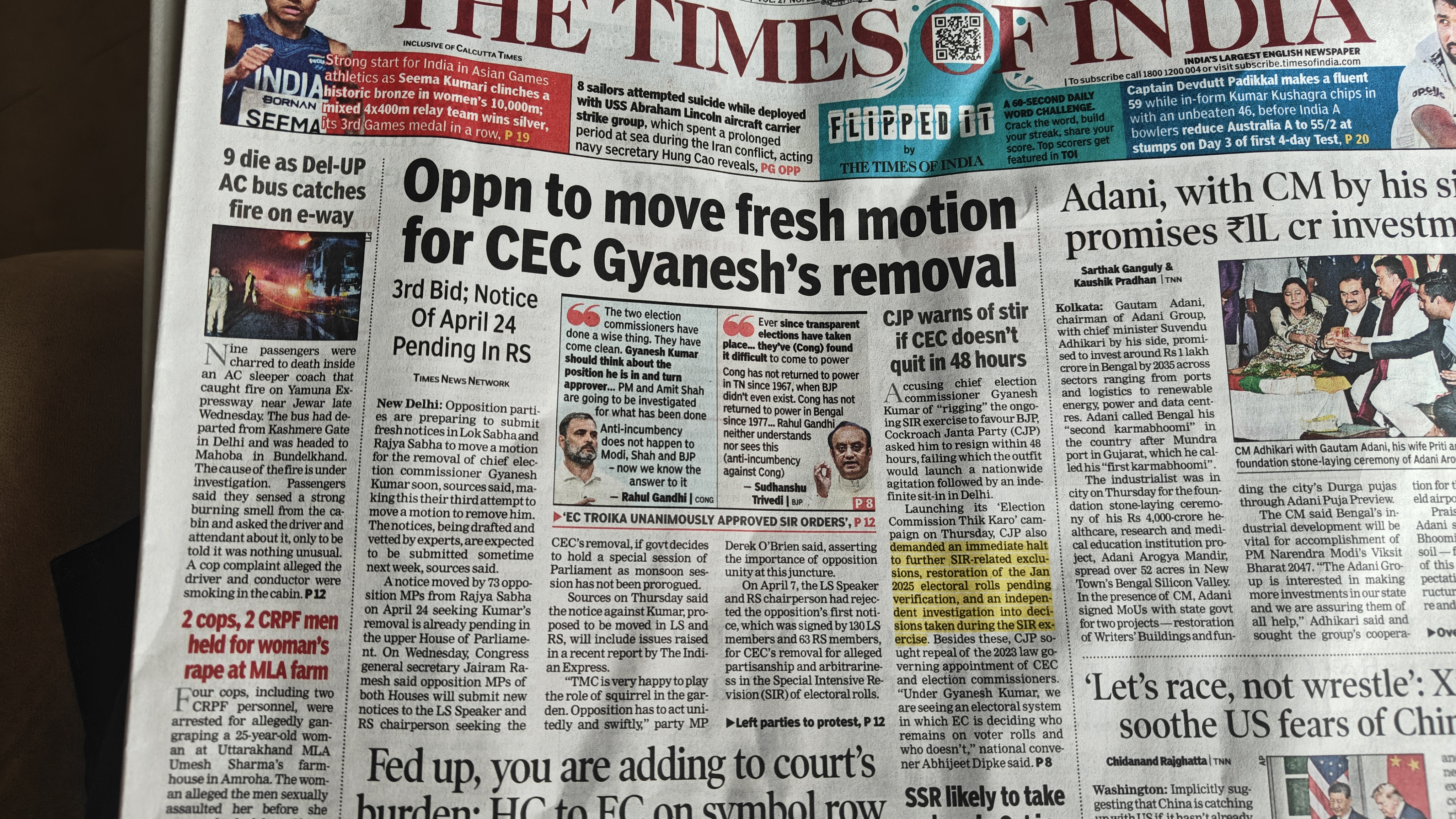
There were allegations, counter-allegations, objections, explanations and demands for resignation. The Election Commission said decisions were unanimous. Others said two Commissioners had repeatedly raised objections. I wondered what happens when the referee becomes part of the argument.
Newspaper report on the ongoing controversy.
Then I imagined something more frightening. What if, one morning, I walked into a polling booth and discovered that my name was no longer there?
Not because I had died. Not because I had moved. Not because I had stopped being a citizen. But because somewhere inside a database, a decision had been made.
And suddenly I realised: Democracy does not merely depend on the right to vote. It depends on the quiet certainty that when you arrive to exercise that right, your name will still be there.
Perhaps that is the real test of an election. Not who wins or loses. But whether the citizen still trusts the hand that counts his vote.
There are moments when a familiar place suddenly reveals a secret.
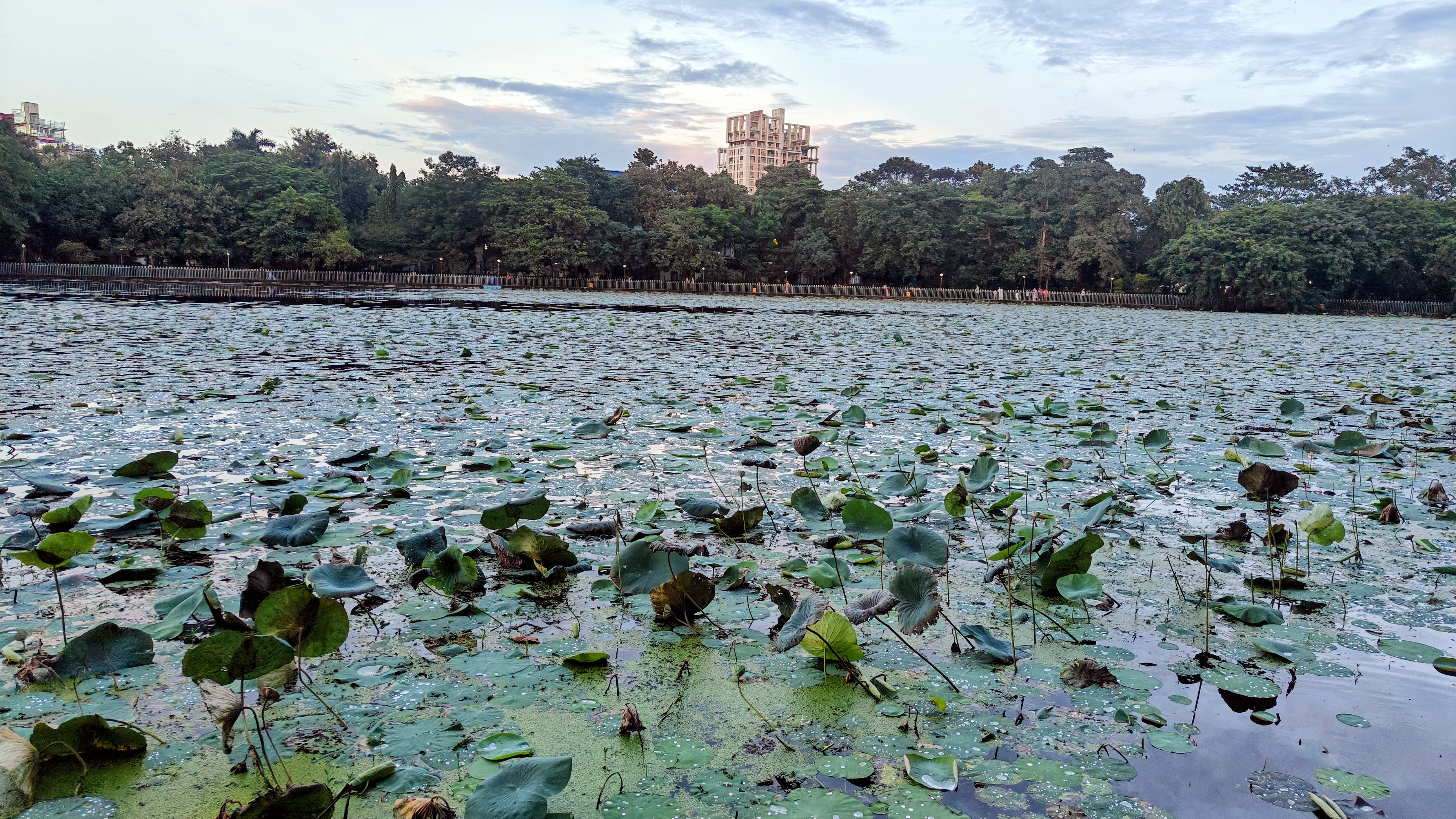
Two evenings ago, we went to Rabindra Sarobar for our usual evening walk. The main lake was as familiar as ever. But somewhere beyond it, we discovered a smaller water body that we had somehow never noticed quite like this before.
It was almost entirely covered with water lilies, hyacinths and lotus plants. There was nothing manicured about it. Nothing curated for the eye.It was nature in its slightly unruly form.And perhaps that was precisely its charm.
The evening light had begun to soften everything. The water reflected the fading sky. The floating leaves formed patterns that seemed almost deliberate. The dense vegetation created the feeling of a little ecosystem existing quietly within the city.
The floating leaves and the patterns
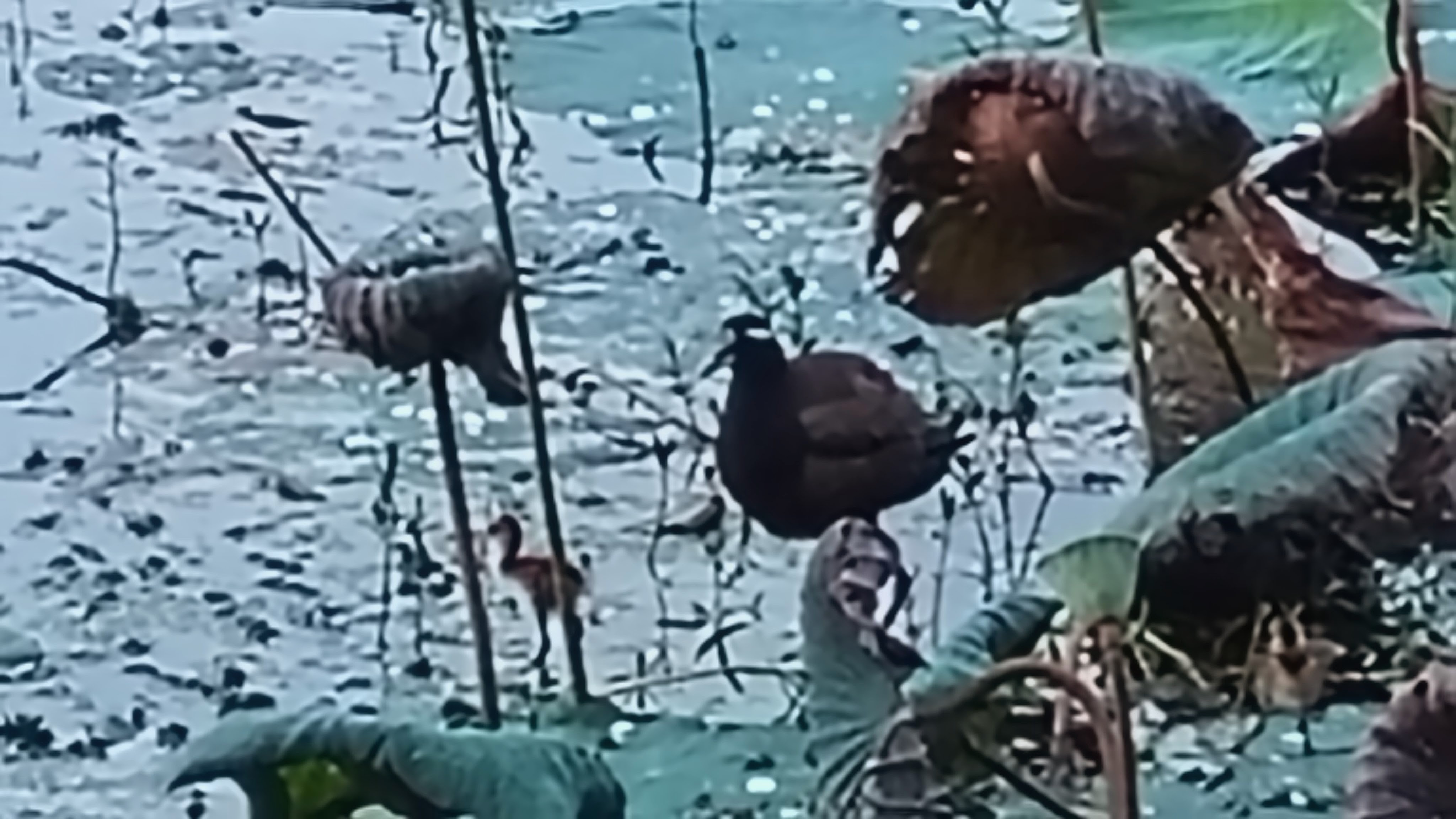
We stopped. And then we saw them. A Bronze-winged Jacana and her tiny chick. The mother moved across the floating vegetation with remarkable ease. The chick followed, scurrying awkwardly behind her, disappearing momentarily among the leaves and then emerging again.
The Jacan Bird and its chick
We watched. And suddenly, Rabindra Sarobar transported us back to Amboseli.
Only a month earlier, while visiting Amboseli National Park in Kenya, we had encountered a Jacana there. The bird is often called the Jesus bird, because its extraordinarily long toes allow it to distribute its weight across floating vegetation, giving it the almost mystical appearance of walking on water.
We had marveled at it then. And now, thousands of kilometers away, we were watching the same extraordinary act again. There was something deeply humbling about that coincidence. Two completely different worlds. One a vast African wilderness. The other a lake tucked into an urban landscape in Kolkata. Yet the same bird. The same instinct. The same choreography of mother and child.
Nature has a way of reminding us that the boundaries we draw on maps mean very little to life itself. The Jacana did not care whether it was Amboseli or Rabindra Sarobar. It simply walked. The mother walked. The chick followed. The water moved beneath them.
The evening slowly disappeared. And we stood there, watching. Perhaps that is the real luxury of growing older—not necessarily having more time, but learning to notice the time we have. To pause beside a lake. To watch a tiny bird crossing floating leaves. To recognise that what appears ordinary may, on closer observation, contain an entire universe.
We are constantly surrounded by such moments. But most of them pass unnoticed because we are moving too fast. Perhaps life does not demand that we always do more. Perhaps, occasionally, it asks something much simpler of us.
Stand still. Look closely. And allow yourself to be astonished.
Because one can never cease to wonder at the marvels of life— if only one is prepared to stand and stare.
Carl Bernstein and Nora Ephron were the ultimate US media couple in the seventies.
He was the celebrated Washington Post investigative journalist who, with Bob Woodward, helped unravel Watergate and bring down a presidency. She was the sharp, witty writer who would eventually become one of Hollywood’s most distinctive voices.
Then came the irony. Bernstein, a man famous for uncovering other people’s secrets, had a secret of his own. Ephron discovered his affair while pregnant with their second child.
Years later in 1993 , something extraordinary happened. Nora Ephron made Sleepless in Seattle.
At its heart, the film is almost absurdly simple. A widower in Seattle. A lonely journalist in Baltimore. A radio confession overheard by millions. Two people who have never met, yet somehow begin to feel that they are meant for each other. The audience knows what the characters don’t. They belong together. And that creates the delicious torture of the film.
You keep waiting for Tom Hanks and Meg Ryan to meet. They don’t. Not at the airport. Not on the phone. Not through the countless near-misses.
They finally meet only in the closing moments, on the observation deck of the Empire State Building — after the audience has spent nearly the entire film longing for a meeting that the protagonists themselves cannot quite make happen. The film deliberately draws on An Affair to Remember, whose romantic mythology is woven into its story.
And perhaps that is why Sleepless in Seattle feels more poignant than the average romantic comedy. It is not really about falling in love. It is about longing for the possibility of love. About believing that somewhere, somehow, there may still be a person who will understand you.
I sometimes wonder whether, after what happened with Bernstein, some part of Ephron understood that longing differently. Not necessarily autobiographically. Not as confession. But perhaps emotionally. She had experienced the collapse of a relationship she had believed in. And now she was creating a story in which two people, separated by geography, circumstance and fear, somehow find their way towards each other.
The irony is almost too perfect. Bernstein’s betrayal had given Ephron a story about a marriage ending. Sleepless in Seattle gave the world a story about the possibility of love beginning. Because sometimes the most moving love stories are not about the people who are together. They are about the people who are still searching.
And sometimes, the writer who has known heartbreak is the one who knows exactly how much the audience wants to believe in a happy ending.
In musing……. Shakti Ghosal
P.S. ‘Sleepless in Seattle’ is now playing on Netflix but leaving on 30th September 2026. I watched it last night.
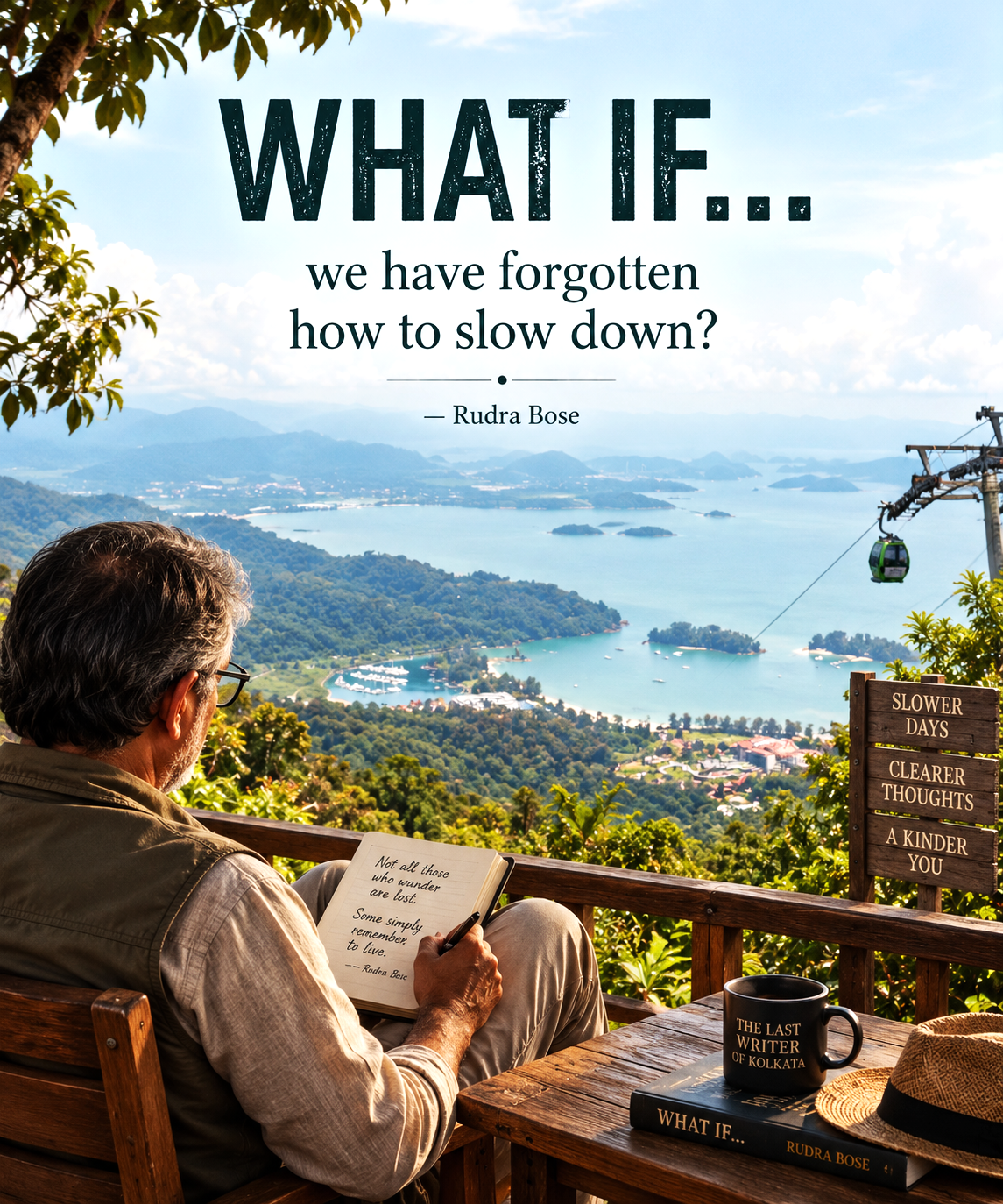
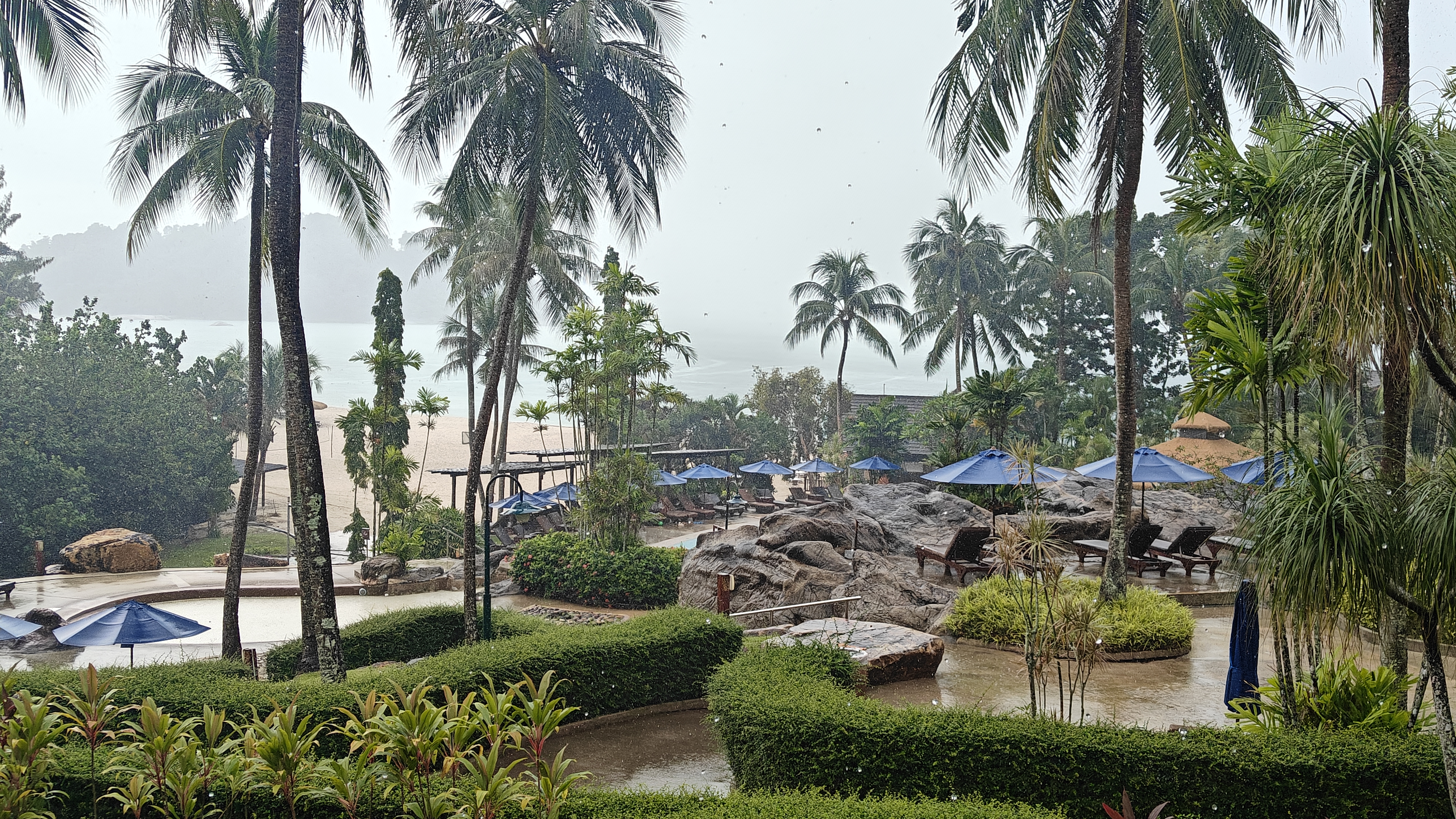
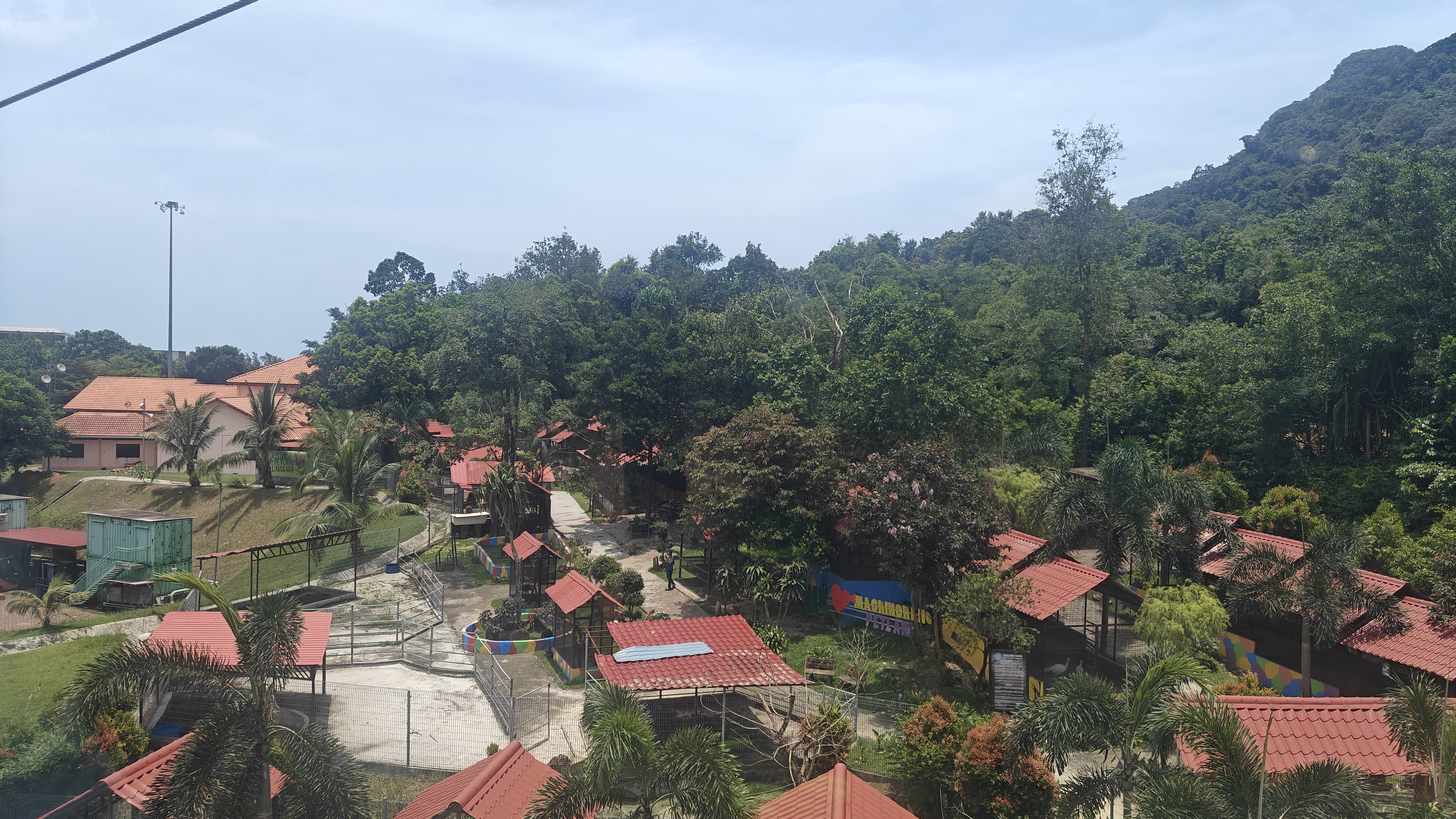
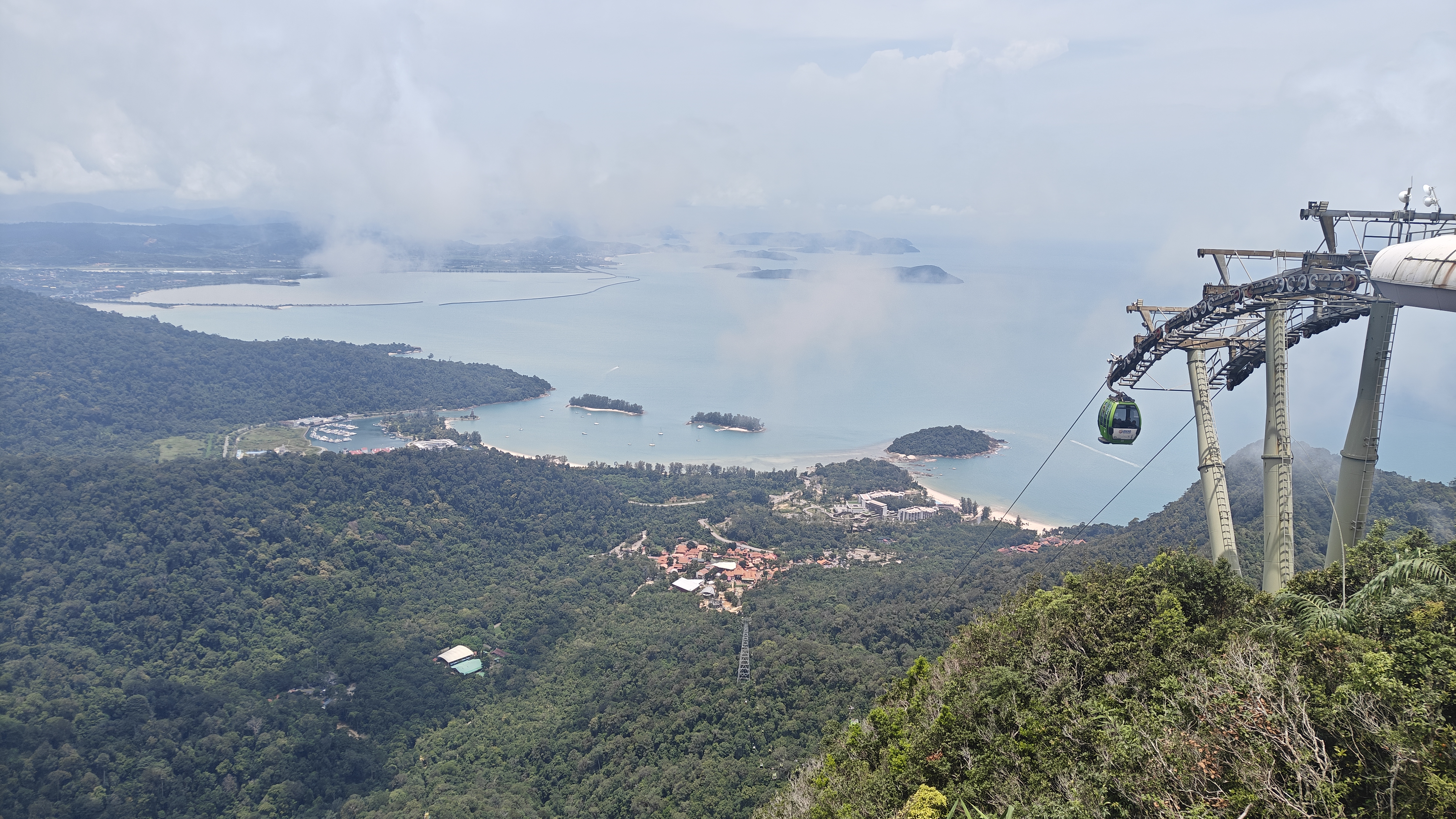
I came to Langkawi expecting to see another beautiful place. I found that the sea was beautiful. So was the Rainforest, so were the beaches.
The white beaches beckonThe Rainforest chalets
But after a while, I stopped looking at the beauty and began noticing something else.
The pace. The trees did not seem to be in a hurry to grow. The waves did not seem anxious about reaching the shore. The clouds moved without consulting a clock. Even the boats seemed to understand that there was nowhere more important to be.
And as I watched, I wondered when we had forgotten this simple rhythm. We hurry to work. Hurry to meetings. Hurry to finish. Hurry to achieve. And then, having spent years rushing towards the future, we discover that the present has quietly passed us by.
Perhaps the problem is not that we don’t have enough time. Perhaps we have forgotten how to inhabit the time we have. Standing by the sea, I found myself asking: What if slowing down is not falling behind? What if it is actually a way of moving forward—with greater awareness of where we are going?
Perhaps we don’t always need another destination. Sometimes we simply need to stop long enough to notice the journey.
….notice the journey
I closed my notebook and watched the waves return to the shore. They had been doing it for thousands of years. Unhurried. Unconcerned. And somehow, always on time.
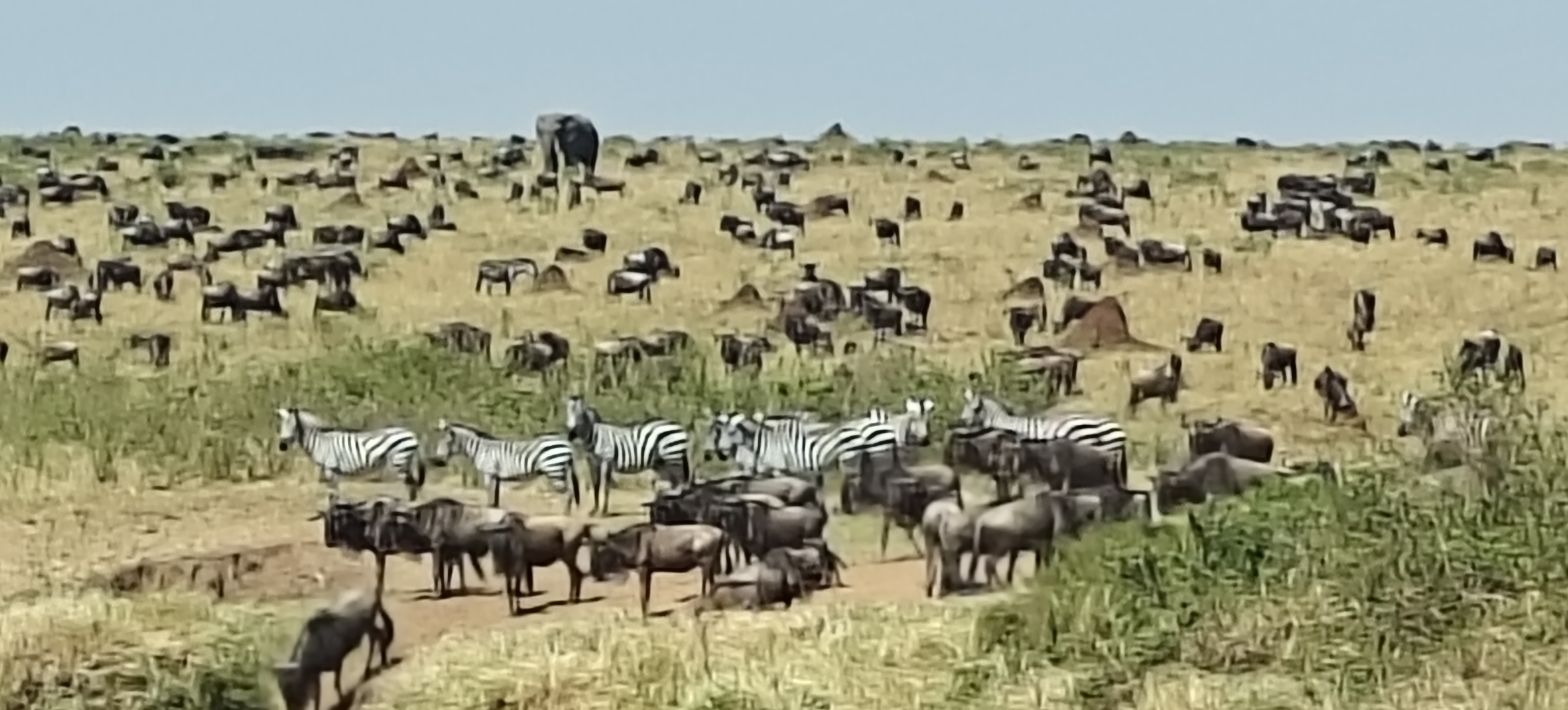
I spent the morning watching the animals move across the Kenyan savannah. There were wildebeest everywhere. Zebras moved among them almost casually. An elephant and its cub stood beneath a tree. In the distance, the landscape seemed to stretch endlessly, without walls, roads or buildings to interrupt it. For a while, I simply watched.
A space with no boundaries
There was something strangely humbling about seeing so many creatures occupy the same landscape without any apparent need to possess it. They did not own the land. They did not draw boundaries across it. They did not put up signs announcing that a particular piece of earth belonged to them. They simply lived there.
The Savannah co-existence
And then a thought occurred to me. What if we have misunderstood our place in the world?
For centuries, we have measured human progress by our ability to control nature. We cut down forests and called it development. We dammed rivers and called it progress. We covered open land with concrete and called it urbanisation. We moved mountains, redirected water, altered landscapes and exterminated species after species, making them disappear. And while doing so, we often congratulated ourselves on our ingenuity and intelligence.
The great migration through Mara
But somewhere along the way, we perhaps began to confuse our ability to control something with the right to own it. The savannah seemed to offer me a different philosophy. The animals did not appear to be conquering the land. They were part of it. The elephant did not need to dominate the tree beneath which it stood. The zebra did not need to fence off its patch of grass. The wildebeest did not need a title deed to the earth beneath its feet. They belonged to the landscape without claiming it. Perhaps that is what we have forgotten. We speak endlessly about what we will leave behind. Be it buildings, businesses, fortunes, roads or institutions. We would strive to leave our names on plaques and our photographs on walls. But perhaps there is another kind of legacy…….
The Zebra did not need to fence off its grass….
What we choose not to destroy. The forest we would leave standing. The river and the waterbody we would allow to remain clean. The animal(s) whose habitat we would protect. The open space we chose not to convert into concrete. The silence we did not fill.
The silence we did not fill….
Standing there in Kenya, I began to wonder whether civilisation should really be measured by how much of nature we can bend to our will. Or how much of nature we chose to leave as it is. Perhaps the more difficult measure is how much power we possess—and how much restraint we exercise. Because restraint requires something that conquest does not. It requires us to recognise that we are not the center of everything. The realisation that the earth existed before us, the wild existed before our cities, our borders and our ambitions. And, if we are wise enough, much of it will continue to exist after we are gone.
Will this exist after we are gone?
Perhaps we are not the owners of this world after all. Perhaps we are merely its temporary custodians. We arrived without asking permission. We will leave without taking anything with us. Between those two moments lies the brief privilege of being of who we are and our presence here.
We remain privileged to have been here…….
And so I find myself asking a different question. Not simply, what will we build while we are here? But, what will remain because we were here? I closed my notebook. The animals continued moving across the savannah. They had not heard my question. Perhaps they did not need to. They seemed to know the answer already.
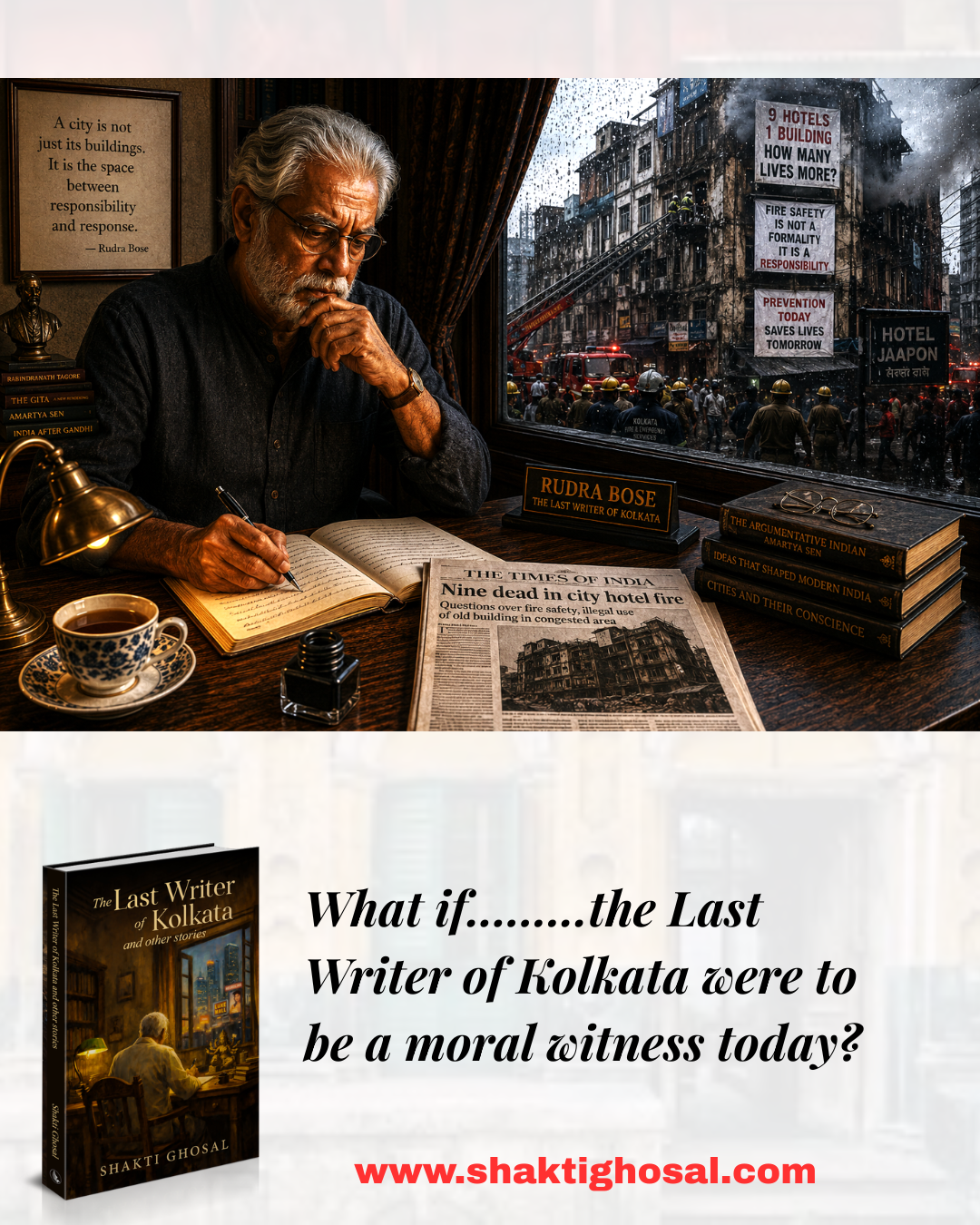
….. a city allows danger to become normal until tragedy makes it visible.
August 2026
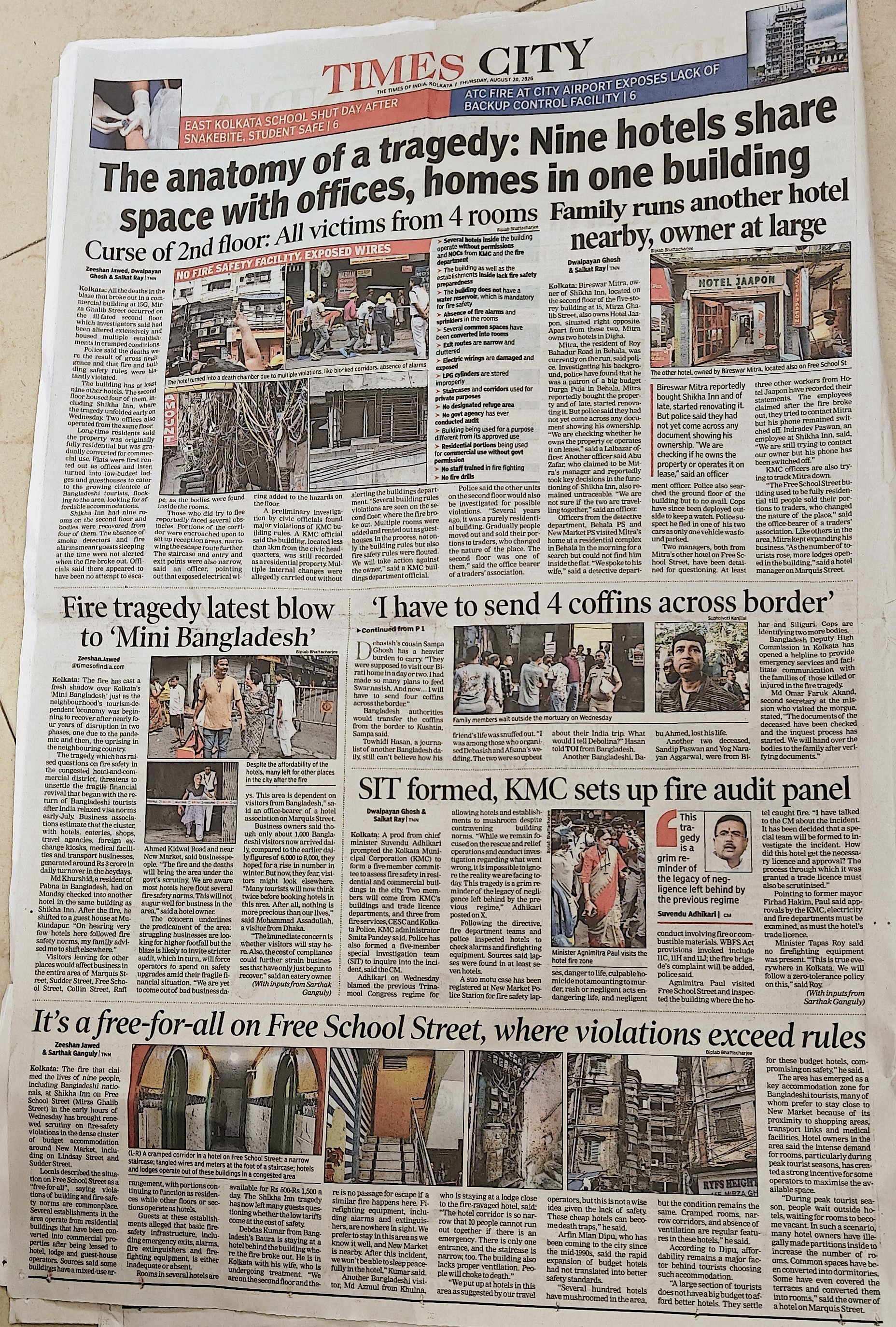
The fire in the Free School street building which housed hotels, offices and homes may have started with a short circuit. But tragedies of this magnitude are rarely caused by a single spark. Nine people died in a building where hotels, offices and homes had somehow learnt to coexist within a maze of cramped spaces, narrow passages and questions about fire safety.
Times Of India report
I kept wondering: who allowed this to become normal? Perhaps that is the more uncomfortable question. A city does not become unsafe in one day. It becomes unsafe one ignored violation at a time. One certificate not checked. One inspection postponed. One illegal alteration overlooked. One warning that nobody thought was urgent. And then, one night, the building catches fire.
We will now demand accountability. There will be investigations, committees, audits and perhaps arrests. All these are surely necessary. But does governance have to begin only after people die? The real test of a city is not how efficiently it rescues people from a burning building. It is whether it had the courage to prevent that building from becoming a death trap in the first place.
As I folded the newspaper, I wondered whether we have become too accustomed to calling preventable tragedies accidents. Perhaps the most important responsibility of governance is not to manage disasters better. It is to make fewer disasters possible.
…. we do not really know the people who live beside us?
August 2026
When I was a child, every neighbourhood had an unofficial security system. It was called knowing one another. Your mother knew who lived next door. The grocer knew whose son had returned from college. The postman knew which house had a new baby. The stranger was noticed because everyone else was familiar.
Today we have CCTV cameras, biometric gates, visitor apps, facial recognition and digital identities. Yet we often do not know the person who shares the lift with us.
The newspapers tell us that a young man, described by neighbours as polite and ordinary, is now accused of living a different life of a terrorist behind an ordinary face. If the allegations are proven true, it is a chilling reminder that the greatest disguises are no longer masks. They are routines. Terrorism succeeds long before any explosion. It succeeds the day suspicion replaces trust, when every unfamiliar face begins to look dangerous, and every ordinary neighbour becomes a question mark.
That is precisely why a civilised society must refuse both complacency and paranoia. Security agencies must remain vigilant. Citizens must remain alert. But neither should surrender the humanity that allows communities to exist.
As I folded the newspaper, I wondered whether the greatest security failure of our times is not merely that dangerous people can hide among ordinary citizens. It is that modern life has quietly taught ordinary citizens to live among one another without ever truly knowing those around us. Perhaps the strongest wall against terror is not built of concrete or surveillance. Perhaps it begins when a society rediscovers the forgotten art of being a community.
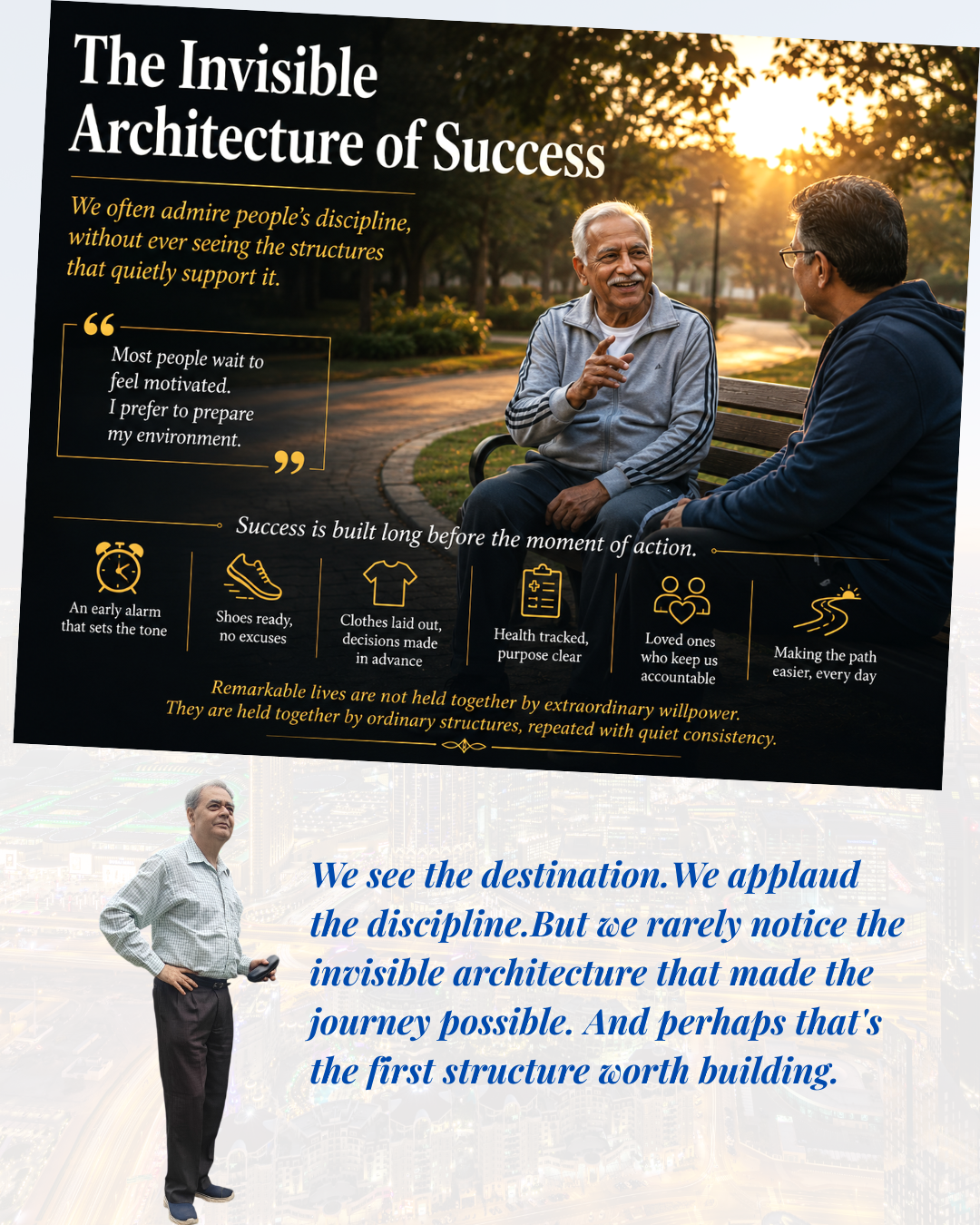
We often admire people’s discipline, without ever seeing the structures that quietly support it.
Some months back, during my morning walks, I started noticing an elderly gentleman doing his exercises in the central garden of our residential complex.
He was there every day, almost at the same time and doing the same routine. For many mornings, I simply admired his discipline from a distance but one day, curiosity got the better of me. I wished him ‘Good Morning’ and soon we were sitting on a nearby bench, I remarked, “I see that you have incredible willpower.”
At that, he laughed, “That’s what everyone thinks. But it isn’t really true. Not really.”
As I looked at him, puzzled, he pointed towards his wristwatch, “My alarm rings at five-thirty.”
“So does mine,” I smiled.
He continued, “My walking shoes are beside the bed every night. My exercise clothes are laid out before I go to sleep. My doctor expects to see my blood sugar readings every month. And my granddaughter has made me promise that I’ll be healthy enough to dance at her wedding.”
He paused, “Now tell me… where exactly does willpower come into the story?”
For a few moments, I didn’t have an answer. I seemed to have mistaken discipline for determination. What I was really seeing was structure.
As we got up to walk back to our respective towers, he said something that has stayed with me ever since, “Most people wait to feel motivated. I prefer to prepare my environment.”
That single sentence shifted my perspective. How often do we rely on willpower alone? We promise ourselves we’ll read more, exercise regularly, spend less time on our phones, learn a new skill. In my case, it is even, write that book. In your case, it might be to start that business.
Then, when our enthusiasm fades, we conclude that we lack discipline. Perhaps the problem isn’t our commitment. Perhaps, it’s our architecture. It became increasingly clear to me that our lives are already full of structures. Some quietly support the future we want. Others quietly support the habits we’re trying to leave behind.
Success is rarely built on one heroic act of determination. More often, it is built on dozens of small decisions made long before the moment of action arrives.
Before we parted, I thanked the gentleman for the conversation. He smiled and said, “People spend too much time trying to become stronger. They spend too little time making the path easier.”
As I walked home, I realised that remarkable lives are not held together by extraordinary willpower. They are held together by ordinary structures, repeated with quiet consistency. Perhaps that explains why success often looks effortless from a distance.
We see the destination.We applaud the discipline.But we rarely notice the invisible architecture that made the journey possible. And perhaps that’s the first structure worth building.
……when a generation no longer asks for privilege, but for credibility.
July 2026
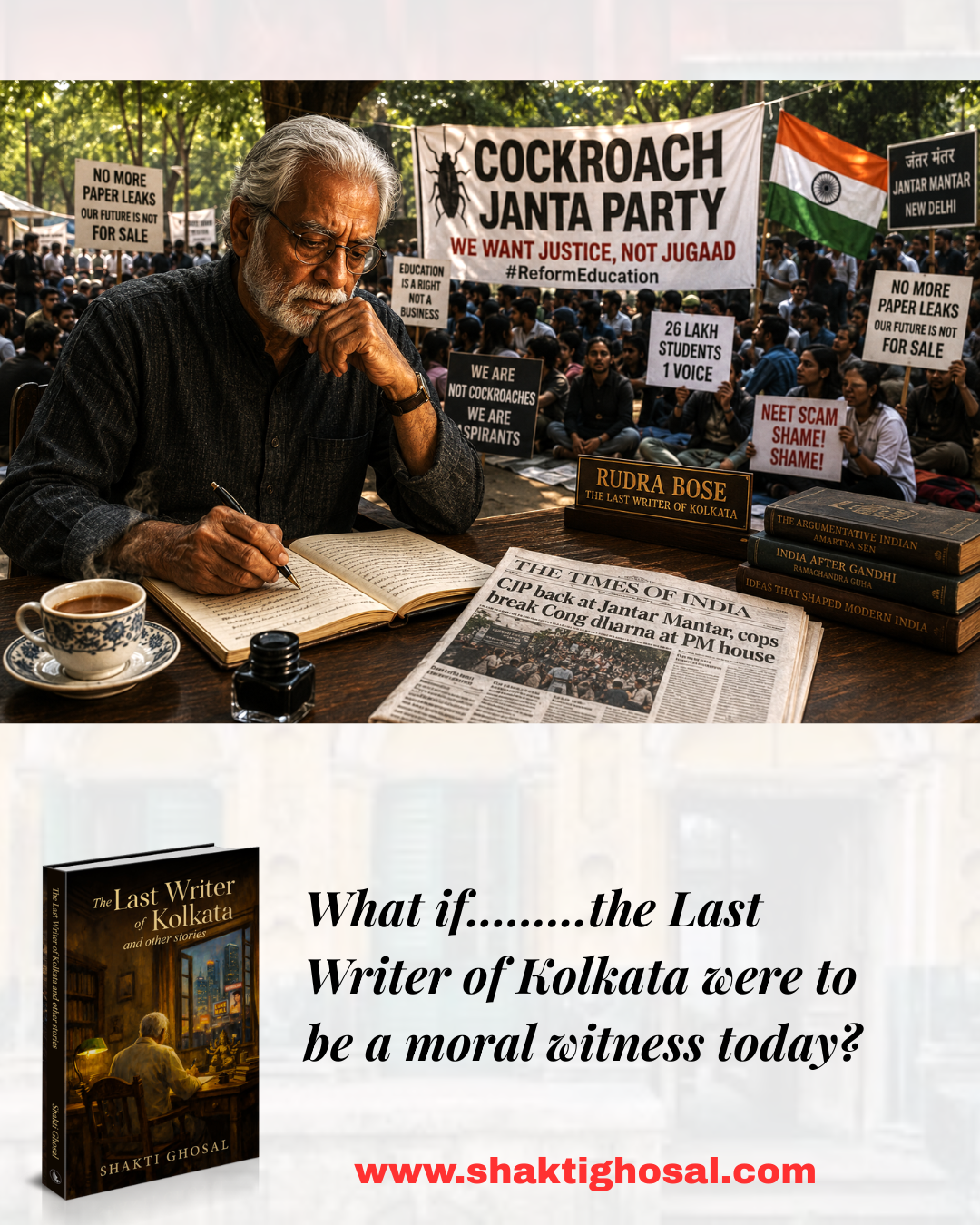
A few mornings back I learnt that an entire movement has chosen to call itself the ‘Cockroach Janta Party’. I smiled. Not because the name is amusing. But because history has always had an odd habit of allowing the insulted to reclaim the insult. (I recall many years back, the Chai-wallah epithet had provided a positive momentum to Prime Minister Modi’s persona)
There was a time when young people marched carrying flags. Today they march carrying memes. Yesterday’s slogans have become today’s hashtags.
Yet beneath the humour, I hear something painfully familiar. It is not anger; it is disappointment.
Every generation believes the next examination will open the next door. When that examination itself becomes the subject of doubt, it is not merely a paper that leaks. Trust does.
The young are often accused of being impatient. Perhaps they are. But there are few things more dangerous than asking an entire generation to wait while uncertainty becomes a way of life.
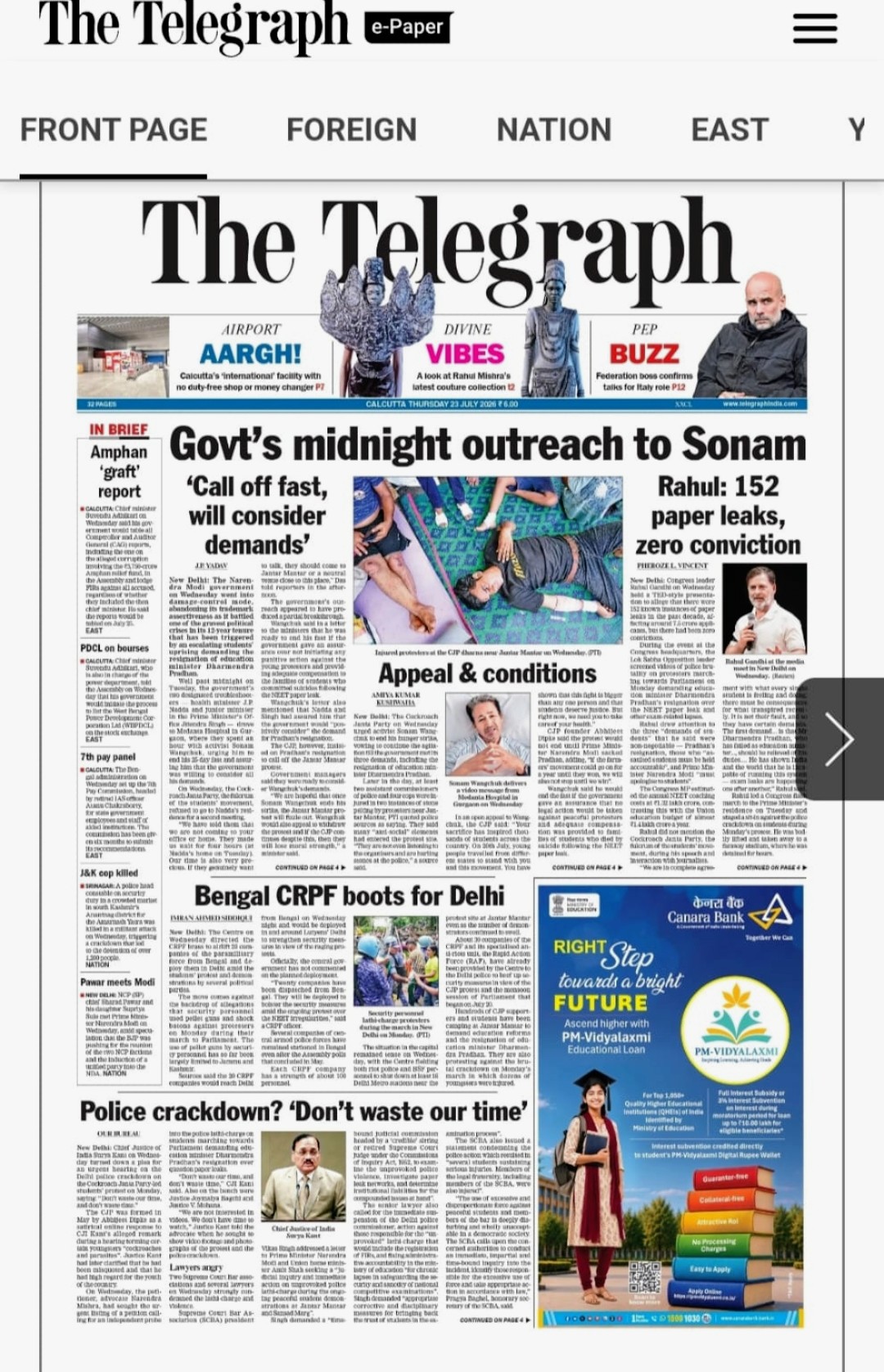
Governments may negotiate. Oppositions may protest. Television studios will certainly debate. But none of them can afford to overlook the quiet question echoing through millions of homes, ‘If merit itself begins to look negotiable, what exactly are young people expected to believe in?’
As I folded the newspaper, I realised that the greatest examination before our nation is no longer the one written by students. It is the one our institutions are writing every day. And unlike the students, they will not be judged by the answers they give. They will be judged by the trust they restore.