

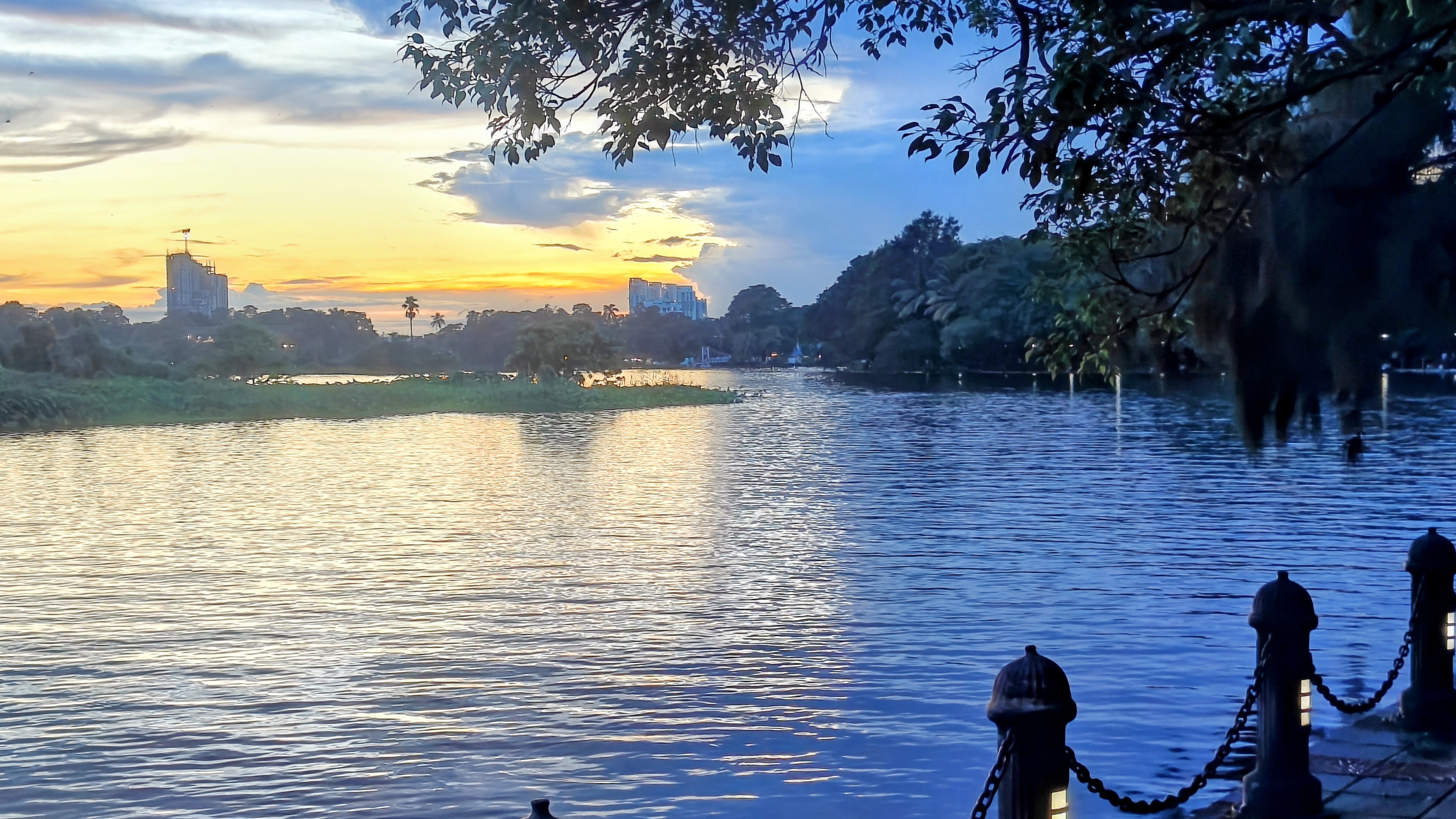
There are moments when a familiar place suddenly reveals a secret.
Two evenings ago, we went to Rabindra Sarobar for our usual evening walk. The main lake was as familiar as ever. But somewhere beyond it, we discovered a smaller water body that we had somehow never noticed quite like this before.
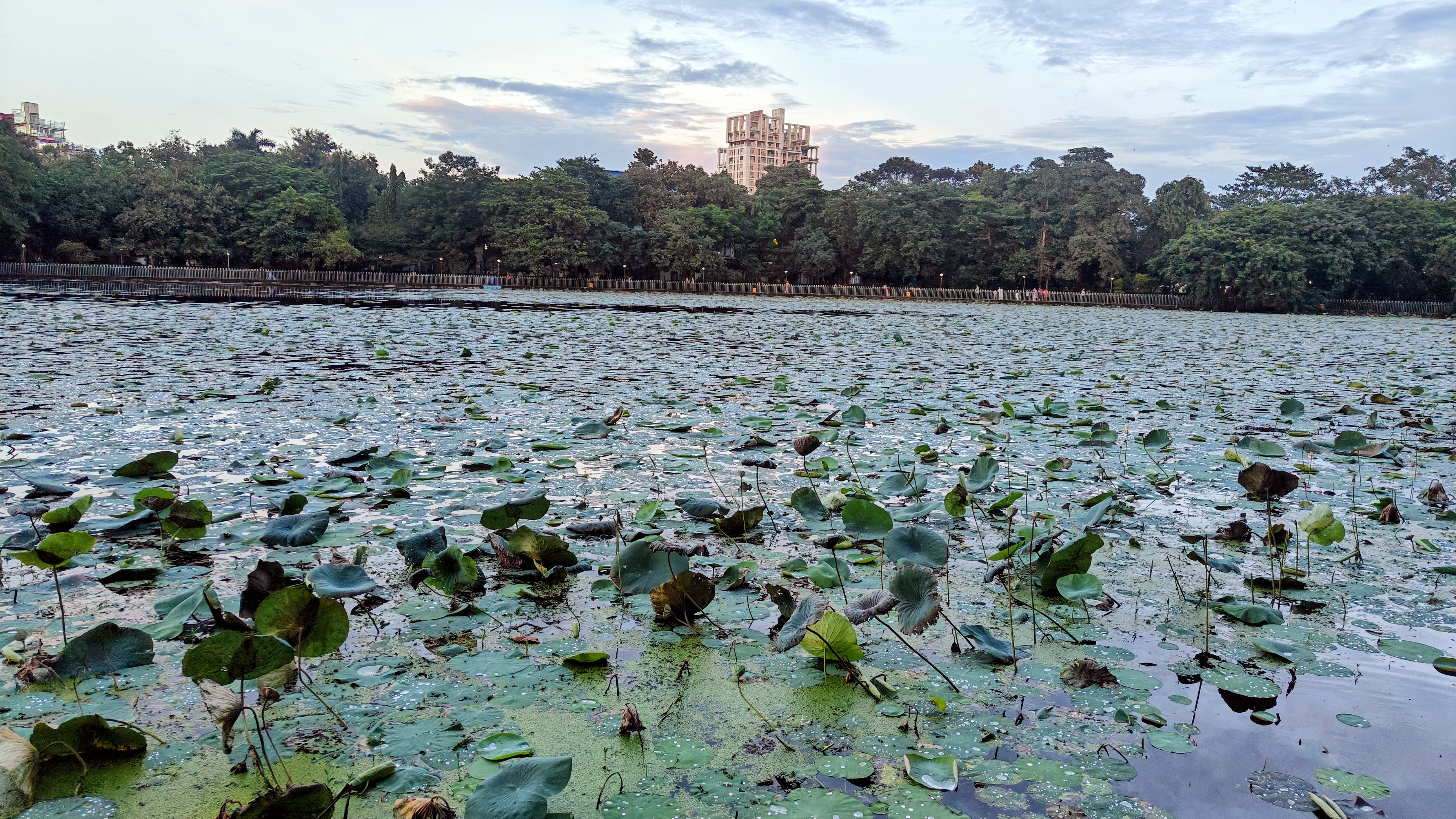
It was almost entirely covered with water lilies, hyacinths and lotus plants. There was nothing manicured about it. Nothing curated for the eye.It was nature in its slightly unruly form.And perhaps that was precisely its charm.
The evening light had begun to soften everything. The water reflected the fading sky. The floating leaves formed patterns that seemed almost deliberate. The dense vegetation created the feeling of a little ecosystem existing quietly within the city.
We stopped. And then we saw them. A Bronze-winged Jacana and her tiny chick. The mother moved across the floating vegetation with remarkable ease. The chick followed, scurrying awkwardly behind her, disappearing momentarily among the leaves and then emerging again.
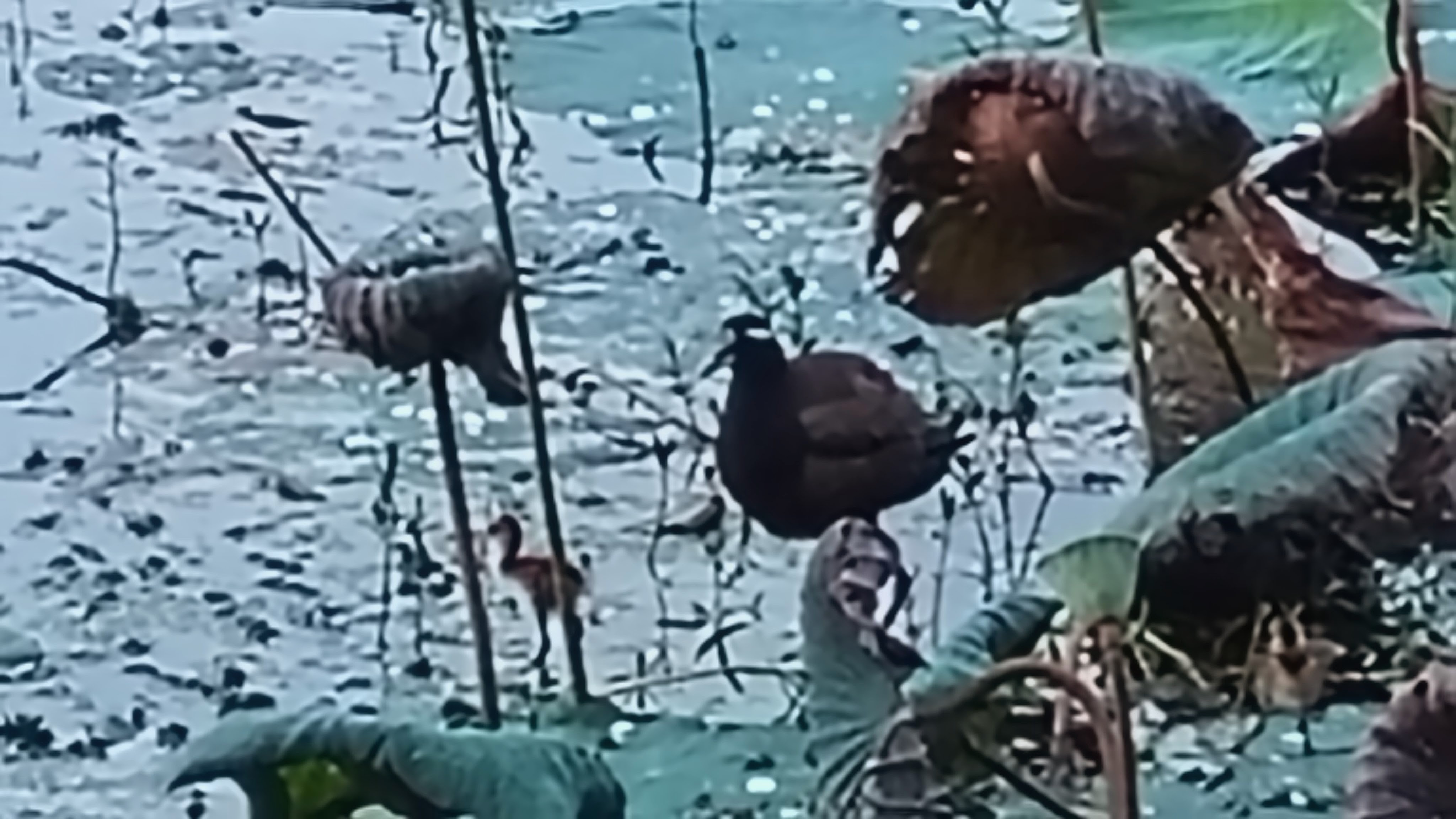
We watched. And suddenly, Rabindra Sarobar transported us back to Amboseli.
Only a month earlier, while visiting Amboseli National Park in Kenya, we had encountered a Jacana there. The bird is often called the Jesus bird, because its extraordinarily long toes allow it to distribute its weight across floating vegetation, giving it the almost mystical appearance of walking on water.
We had marveled at it then. And now, thousands of kilometers away, we were watching the same extraordinary act again. There was something deeply humbling about that coincidence. Two completely different worlds. One a vast African wilderness. The other a lake tucked into an urban landscape in Kolkata. Yet the same bird. The same instinct. The same choreography of mother and child.
Nature has a way of reminding us that the boundaries we draw on maps mean very little to life itself. The Jacana did not care whether it was Amboseli or Rabindra Sarobar. It simply walked. The mother walked. The chick followed.
The water moved beneath them.
The evening slowly disappeared. And we stood there, watching. Perhaps that is the real luxury of growing older—not necessarily having more time, but learning to notice the time we have. To pause beside a lake. To watch a tiny bird crossing floating leaves. To recognise that what appears ordinary may, on closer observation, contain an entire universe.
We are constantly surrounded by such moments. But most of them pass unnoticed because we are moving too fast. Perhaps life does not demand that we always do more. Perhaps, occasionally, it asks something much simpler of us.
Stand still.
Look closely.
And allow yourself to be astonished.
Because one can never cease to wonder at the marvels of life— if only one is prepared to stand and stare.
In musing….. Shakti Ghosal

