AI has taken off. Are we ready for what comes next?


I recently watched a fascinating presentation by Nina Schick, titled AI’s Takeoff Year – Live from Utrecht. I found myself reflecting on it long after the presentation had ended. Not because everything she said was entirely new, but because she brought together several developments in AI into a rather unsettling, yet compelling, picture of where humanity might be heading.

Her central proposition was simple: AI has already taken off. We may simply not have recognised the significance of the moment we are living through.

I think there is something profoundly important about that observation.

For centuries, intelligence has been regarded as an exclusively biological phenomenon. It has been the product of evolution, the human brain, experience, curiosity and the ability to reason and imagine. We have built civilisation on this extraordinary human capability. Now, for the first time in history, we are beginning to manufacture intelligence outside the biological world.

Think about that for a moment.

We are no longer merely developing machines that calculate faster, automate repetitive tasks or retrieve information. We are creating systems that can reason, write code, solve complex problems, examine their own conclusions and increasingly act independently.

Schick draws attention to frontier models such as Anthropic’s Mythos and OpenAI’s Astra. Their emerging capabilities, particularly in cybersecurity, are remarkable. Their ability to identify vulnerabilities in computer systems and develop ways of exploiting them also raises serious questions about access and safeguards. This is no longer science fiction. It is becoming an operational reality.

From artificial intelligence to industrial intelligence

One of the most interesting ideas in Schick’s presentation is that intelligence itself is being industrialised.

Until now, intelligence has been scarce. Developing expertise required years of education, experience and human effort. Its availability was naturally limited. But what happens when intelligence can be replicated at scale, made available almost instantly and accessed at an increasingly affordable cost? We have seen something similar with electricity, computing and telecommunications. Once these became scalable utilities, they transformed the economic and social order.

Could intelligence become the next such utility?

I suspect it could. Yet there is a paradox. The infrastructure required to produce this intelligence is extraordinarily expensive. Semiconductors, data centres, computing power and energy will increasingly determine who controls this new resource. The geopolitical contest is therefore no longer simply about technological superiority. It is about who controls the infrastructure of intelligence itself.

The changing relationship between humans and machines

For most of the industrial age, machines extended human physical capabilities. Computers subsequently extended our ability to process information.

AI is different. It is beginning to extend, and in some areas replicate, capabilities that we have traditionally associated with the human mind. This raises a question I find difficult to ignore.If a machine can analyse faster, write better, develop software, undertake research and increasingly make decisions, what happens to the traditional value we attach to human knowledge and expertise?

Perhaps knowing things will matter less than knowing what to ask, how to interpret the answers and when to exercise judgement. The premium may gradually shift from information to wisdom, from knowledge to discernment, and from execution to imagination.

But intelligence and wisdom are not necessarily the same thing. A system may be extraordinarily intelligent without possessing empathy, compassion, moral responsibility or an understanding of what it means to be human. We should be careful not to confuse the ability to produce an intelligent answer with the ability to understand its human consequences.

The opportunities are enormous. So are the responsibilities.

I do not subscribe to either extreme in the AI debate. The uncritical enthusiasm that sees AI as the solution to every human problem is misplaced. Equally, resisting technological progress out of fear is unlikely to serve humanity well.

The real challenge is to ensure that our ability to govern this technology keeps pace with our ability to create it.

Who controls this new intelligence? Who benefits from it? What happens to employment, economic inequality and human dignity? How do we preserve individual agency when machines become increasingly capable of making decisions on our behalf? And perhaps most importantly, how do we ensure that human beings remain responsible for the world they are creating?

And where does India stand in this emerging world?

While Schick’s presentation looks at the global AI transformation, I found myself wondering where India fits into this unfolding story.

We have much going for us: engineering and scientific talent, a globally recognised IT industry, a vibrant startup ecosystem and a vast digital population. Our experience with digital public infrastructure has demonstrated our ability to build and scale technology platforms. Yet, much of the frontier AI ecosystem — foundational models, advanced computing infrastructure, semiconductors and the capital driving this revolution — remains concentrated elsewhere.

We risk becoming enthusiastic consumers and implementers of intelligence created elsewhere, rather than architects of it. For a country aspiring to become a leading global economy, this is a strategic question we cannot afford to overlook. Our challenge is not merely to adopt AI faster, but to invest in indigenous research, computing infrastructure, talent and foundational capabilities.

We need not replicate everything others are doing. We could carve out our own space by applying AI to healthcare, education, agriculture, manufacturing and inclusive development. But we must recognise that in an age where intelligence itself becomes an economic resource, technological dependence could eventually translate into strategic dependence.

India’s opportunity is not merely to participate in the AI revolution. It is to help shape it.

A new chapter in human civilisation?

What stayed with me most after watching Nina Schick was not the technological detail. It was the historical significance of what she was describing.

Human civilisation has passed through several defining transitions: the agricultural revolution, the industrial revolution and the information revolution. Each fundamentally altered how we lived, worked and understood our place in the world. Could the industrialisation of intelligence be an even more consequential transition?

I think it is entirely possible.

We may be the first generation to witness the emergence of another form of intelligence that is not born, does not grow biologically and does not necessarily share our limitations. Whether this ultimately becomes artificial general intelligence, or something even more transformative, remains to be seen.

But perhaps the more important question is not whether machines will eventually become as intelligent as humans, or even more intelligent. It is whether we, as human beings, will become wiser in the process. Technology has always amplified human capability. It has also amplified human folly. Nuclear energy gave us extraordinary possibilities as well as the capacity for unprecedented destruction. Artificial intelligence could present an even more profound version of that dilemma.

I find myself thinking that we may be standing at the beginning of a chapter whose consequences we cannot yet comprehend. Future generations may look back at these years and wonder how little we understood about the significance of the moment.

The question is no longer whether AI will change our world. It is whether humanity is intellectually, morally and institutionally prepared for the world that AI is about to create.

That, to me, is the real conversation we should be having.

In musing….. Shakti Ghosal
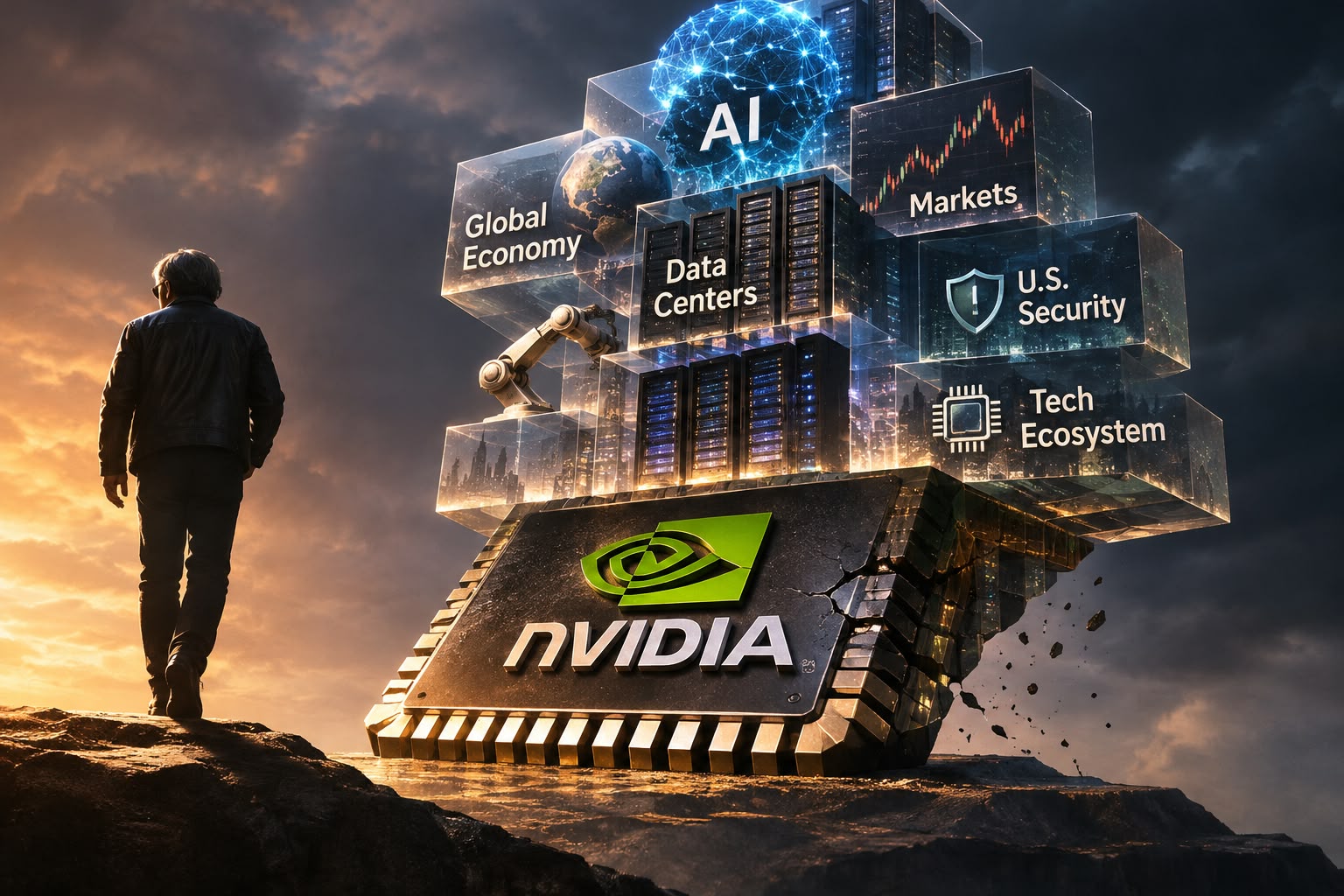
When One Man Becomes an Institution: The Nvidia Story and the Fragility of Success


There is something deeply fascinating, and perhaps a little unsettling, about what is unfolding at Nvidia.

Until recently, Jensen Huang was almost synonymous with the company he founded. He was the visionary who anticipated the extraordinary potential of artificial intelligence long before it became fashionable. His leather jacket became an iconic symbol of Silicon Valley’s new power. His company, meanwhile, became indispensable to the technological ambitions of the world.

And then, quite suddenly, the narrative changed.

Personal controversies, questions of corporate governance and concerns about leadership culminated in his resignation. Nvidia’s share price came under pressure, billions of dollars in market value evaporated, and an industry that appeared invincible suddenly found itself confronting an uncomfortable question: What happens when the person who built the empire is no longer there?

I find this episode interesting for reasons that go well beyond the immediate controversy.

The first lesson is about the extraordinary power, and inherent danger, of a single individual.

There is no denying Jensen Huang’s contribution. He saw the potential of AI when much of the semiconductor industry was looking elsewhere. He made strategic bets, built an ecosystem of hardware and software, and positioned Nvidia at the center of a technological transformation. That is what visionary leadership can accomplish. It sees around corners and creates opportunities where others see uncertainty.

But somewhere along the way, Nvidia became so closely identified with its founder that the distinction between the institution and the individual began to blur.

And therein lies the danger.

When an organisation becomes excessively dependent on one person, its greatest strength can gradually become its greatest vulnerability. Decisions, relationships and even investor confidence begin to revolve around an individual. The organisation may be enormous, but its psychological architecture remains surprisingly small.

The second lesson is about the difference between building a great company and building a great institution.

A great leader creates value. A great institution creates continuity. The real test of leadership is not how indispensable one makes oneself, but how successfully one builds an organisation that can function without one’s constant presence.

We celebrate vision, innovation, disruption and financial performance. But how often do we ask a more fundamental question: If the leader were to walk away tomorrow, would the institution remain equally capable of navigating its future?

Steve Jobs left Apple with a capable successor in Tim Cook. The transition demonstrated that even the most charismatic founder-led organisations can evolve beyond their founders.

Perhaps that is the ultimate achievement of leadership: creating something that can outlive its creator without losing its sense of purpose.

The third lesson takes us beyond corporate leadership and into the architecture of the global economy.

The Nvidia story exposes an extraordinary paradox of our interconnected world.

In our pursuit of efficiency, we have created concentrations of power that can become dangerous single points of failure.

Nvidia designs the chips. Taiwan’s TSMC manufactures them. The sophisticated equipment required for that manufacturing depends on a handful of specialised suppliers, including the Dutch company ASML. An event involving one company, one individual or one geographical location can therefore have consequences far beyond its immediate boundaries.

This is what economists and geopolitical strategists increasingly describe as a choke point.

The more indispensable a component becomes, the greater the power it commands. But that very indispensability creates exposure. We have witnessed similar vulnerabilities during the pandemic, in global energy markets and in semiconductor supply chains.

Efficiency without resilience can be a rather expensive illusion.

The fourth lesson is about investors and the curious psychology of financial markets.

Markets are good at pricing expectations, but not always equally good at distinguishing between the enduring value of an institution and the perceived value of the individual leading it. When a company’s valuation becomes closely linked to the reputation and perceived infallibility of its founder, the market is effectively pricing its dependence on that individual as well.

The subsequent reassessment can be brutal.

Yet it would be simplistic to conclude that Nvidia’s technological capabilities will disappear with Jensen Huang. Its intellectual property, engineering talent, software ecosystem and customer relationships do not vanish with a change of leadership. The institution has accumulated capabilities far greater than any one individual. Its challenge now is to demonstrate that it can convert those capabilities into sustained institutional performance.

There is a difference between losing a visionary and losing one’s vision. The former is inevitable at some point. The latter is a failure of institution-building.

And finally, the larger philosophical reflection.

We spend much of our lives building things: careers, businesses, reputations, institutions and sometimes empires. In the process, we begin to believe that our presence is central to their survival. The more successful we become, the easier it is to confuse indispensability with importance. But history repeatedly reminds us otherwise. Individuals may create extraordinary beginnings. Institutions must create enduring futures.

Perhaps the true measure of a leader is not the magnitude of the empire built during his or her lifetime, but its ability to remain relevant, resilient and purposeful after the leader has left.

Nvidia will find another CEO. The AI revolution will continue. The markets will eventually find their equilibrium. But the question this episode leaves behind is much larger than Nvidia.

Have we become so good at creating extraordinary individuals that we have forgotten how to build extraordinary institutions? That, to me, is the real story beyond the memes.

In musing….. Shakti Ghosal
The World We Are Leaving Behind for the Young


Have we become so obsessed with creating wealth that we have forgotten to create possibilities?

I have often wondered whether the world we are building today is quite the world we once imagined for the generations that would follow us.

A recent article in The Hindu, titled How Neoliberalism Turned the World Against Its Young *, set me thinking. Over the past four decades, the world has witnessed extraordinary economic transformation. Markets have opened up, businesses have flourished, technology has disrupted old ways of working and unprecedented wealth has been created. India’s own journey since economic liberalisation in 1991 is a remarkable example of what opening up an economy can achieve.

Yet, there is an uncomfortable contradiction. We have a generation that is better educated, more connected and technologically more capable than any before it. And yet, many young people seem increasingly uncertain about their future. A decent job, an affordable home, financial independence and the ability to raise a family without perpetual anxiety are becoming difficult aspirations for many.

Why?

Perhaps we have become too preoccupied with measuring economic success through GDP growth, stock market valuations, corporate profits and wealth creation. These are important indicators, but they tell us only part of the story.

An economy must do more than generate wealth. It must create opportunities for people to participate in that wealth creation.

I find the growing disconnect between education and employment particularly troubling. (Recently, I have delved into this in some detail through an Employment Education equation study. I am providing the link to that study in the reference below for all who may be interested). We keep telling young people to acquire more skills, become more competitive and reinvent themselves. All good advice. But are we creating enough productive jobs for those skills to find expression?

Not everyone can become an entrepreneur, a technology professional or a startup founder. An economy also needs millions of people working productively in manufacturing, healthcare, education, logistics, agriculture and modern services.

Perhaps the problem is not simply that our young are inadequately prepared for the future. Perhaps the future itself is not creating enough opportunities for them.

This is where I believe the debate around neoliberalism becomes relevant.
Markets are powerful engines of wealth creation. But they are not designed to solve every social problem. What is profitable is not always what is socially desirable. And what appears economically efficient in the short term may carry a considerable social cost over time.

I am certainly not arguing for a return to excessive State control or bureaucratic inefficiency. We have seen enough of that. But neither should we assume that markets, left to themselves, will automatically produce an equitable society.

Education, healthcare, affordable housing, public infrastructure and social security are not merely welfare expenditures. They are investments in human capability and in the future of a nation. For India, this question is particularly important. We frequently celebrate our demographic dividend. But a young population becomes a dividend only when it is educated, skilled and productively employed. Otherwise, an enormous opportunity can gradually turn into an equally enormous frustration.

Artificial Intelligence will make this challenge even more complex. It will create opportunities, eliminate certain jobs and fundamentally alter the nature of work. The real challenge will be ensuring that technological progress expands human possibilities rather than concentrating economic rewards in fewer hands.

I sometimes wonder whether, somewhere along the way, we have confused economic progress with human progress.

We celebrate how much wealth an economy generates. Perhaps we should also ask how many lives it enables to become better.

Every generation inherits the world shaped by the choices of those who came before it. We may not be able to guarantee the young a comfortable life. But surely we owe them a fair opportunity, a sense of security and a reason to believe that effort and aspiration still matter.

A society that creates billionaires but cannot create enough dignified opportunities for its young may be celebrating prosperity while quietly accumulating discontent. The young are not necessarily asking for a perfect world. They are asking for a fair chance in the one we have created.

Perhaps that is not too much to ask. And perhaps the real test of economic progress is not how wealthy we have made the present generation, but how hopeful we have allowed the next generation to become.

In musing ….    Shakti Ghosal

References:

(1) https://www.thehindu.com/business/Economy/how-neoliberalism-turned-the-world-against-its-young/article71635741.ece

(2) The Education Employment equation : https://www.linkedin.com/pulse/india-educationemployment-equation-kolkata-laboratory-shakti-ghosal-c7ihf/

What if…..


….. Education Stops Educating?

I came across a post recently about Palantir that made me pause.

It quoted its CEO, Alex Karp, as saying that the company is no longer relying entirely on traditional university degrees to identify talent. Instead, young people are being given the opportunity to work on real problems, demonstrate what they can do, and learn by doing.

The post made a provocative observation: “The university had centuries to shape the best minds. Entrepreneurs will do it in a decade.” That stayed with me.. Because it raises a much more uncomfortable question: Have our educational institutions slowly forgotten what education is supposed to accomplish?

We teach children what to think. We rarely teach them how to think. We reward the right answer more than the difficult question. We celebrate memory more than curiosity.
We measure achievement through certificates rather than through the ability to see what others cannot. And then we wonder why so many highly educated people struggle to imagine a different future.

I realised that companies like Palantir are beginning to look beyond degrees. Young people are being given real problems to solve instead of certificates to prove that they are ready to solve them. It reminded me of something we seem to have forgotten. Perhaps education was never meant to manufacture employable people. Perhaps it was meant to create unmanageable minds. Minds that question. Minds that doubt. Minds that refuse to accept “this is how it has always been done.”

Perhaps the real crisis is not that AI will replace education. Perhaps it is that AI will expose how little education was actually about thinking.

As I closed the newspaper, the thought came to me. What if the future doesn’t need better educated children…… but freer minds?

— Rudra Bose, The Last Writer of Kolkata

Has Gen Z Become Less Intelligent—Or Are We Measuring Intelligence the Wrong Way?


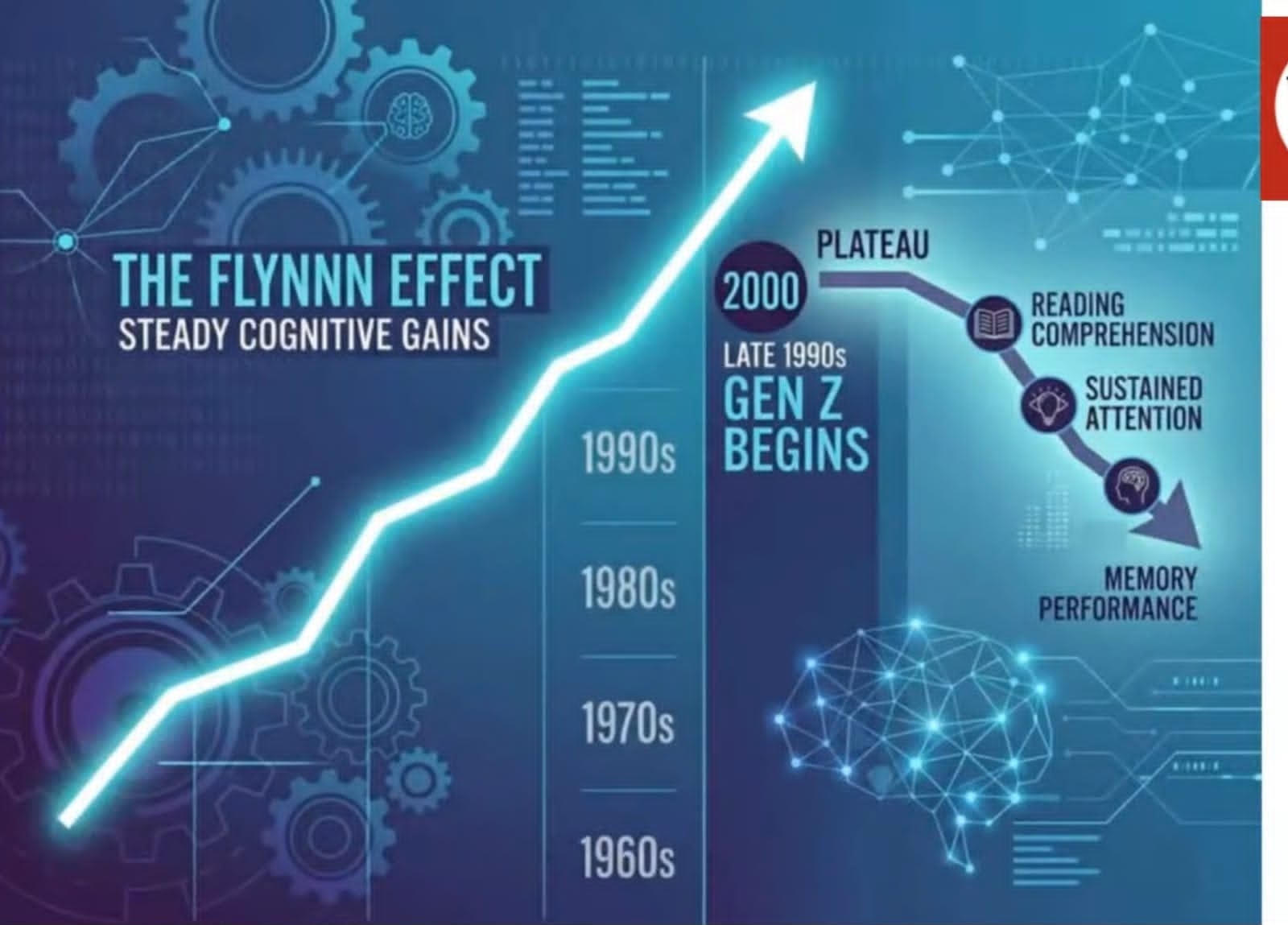
The recent discussion surrounding the reversal of the Flynn Effect has generated understandable concern. For nearly a century, psychologists observed a remarkable trend: each successive generation appeared to outperform its predecessor on IQ tests. Better nutrition, improved healthcare, expanded education and increasingly complex environments seemed to produce steadily rising cognitive performance.

Now, according to research presented by Dr. Horvath before a Senate Committee in January 2026, that trend appears to have reversed. Generation Z is reportedly the first generation in modern history to register a decline in average IQ compared to those who came before it. Researchers have also noted reductions in reading comprehension, sustained attention and memory performance.

If these findings are robust, they deserve serious attention.

But before concluding that an entire generation has become “less intelligent,” perhaps we should ask a more fundamental question.

What exactly are we measuring?

An IQ test is not a thermometer that measures intelligence in the way a thermometer measures temperature. It evaluates performance across selected cognitive domains—logical reasoning, pattern recognition, verbal comprehension, working memory, processing speed and spatial reasoning. These were chosen because they were believed to predict learning ability, productivity and success in an industrial and later knowledge-based economy.

That assumption itself deserves scrutiny.

Every civilisation defines competence according to the challenges it faces. The skills that made an exceptional engineer in the 1970s (That was my generation!) are not identical to those required of an AI architect today. The competencies that distinguished an outstanding accountant thirty years ago are very different from those needed in an age where algorithms perform much of the routine analytical work.

Perhaps intelligence itself has not declined as much as it has changed its centre of gravity.

Today’s young adults navigate digital ecosystems with remarkable ease. They process multiple streams of information simultaneously, learn unfamiliar software intuitively and adapt rapidly to technological change. These abilities are not trivial. Yet traditional IQ tests may capture only a small part of this emerging cognitive landscape.

This is not an argument for dismissing the reported decline. Reading comprehension, sustained attention and memory remain foundational human capabilities. Civilisations are built upon the ability to think deeply, read patiently, remember accurately and reason independently. If these capacities are genuinely weakening, the consequences could be profound.

But neither should we confuse what is measurable with what is meaningful.

Throughout history, societies have periodically redefined excellence. Education evolved. Work evolved. Technology evolved. It would be surprising if our understanding of intelligence remained frozen in time.

The reversal of the Flynn Effect may therefore be asking us two questions instead of one.

The first is whether some essential cognitive abilities are indeed declining.

The second—and perhaps the more important one—is whether the very framework through which we define and measure human intelligence is keeping pace with a world that is changing faster than at any previous point in history.

The future may not belong to those with the highest IQ as traditionally measured. It may belong to those who combine analytical thinking with creativity, adaptability, emotional intelligence, ethical judgment and the wisdom to know when technology should assist the human mind—and when it should never replace it.

In musing……. Shakti Ghosal

When Fiction meets Foresight


A BCG Henderson Institute report

When Fiction Meets Foresight: A Reflection on The Last Writer of Kolkata and Other Stories based on the BCG Henderson Institute report.

Author – A BCG Consultant ( name kept confidential)

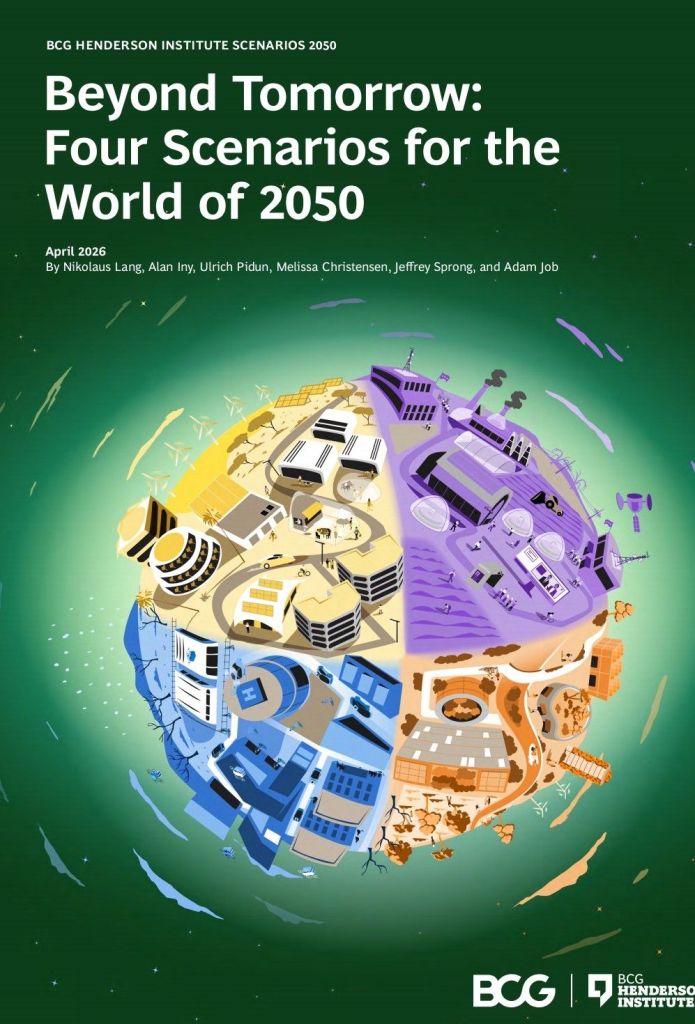
Reading the ‘Last Writer of Kolkata and other stories’ in the context of BCG Henderson Institute’s Beyond Tomorrow: Four Scenarios for the World of 2050  produces an unexpected sensation. I can confirm that the report is the product of rigorous analysis of megatrends, historical data and expert interviews. Shakti Ghosal’s book is speculative fiction. Yet both seem to be looking at the same horizon.

The BCG report reminds us that “the decisions leaders make over the next 5 years will shape the next 25.” It does not attempt to predict the future. Instead, it explores plausible futures emerging from forces already visible today. The four stories in this collection do something remarkably similar.

Consider The Last Writer of Kolkata. BCG’s “AI Abundance” scenario describes a world where AI transforms work, creativity and identity, leaving people searching for “meaning and identity beyond employment.” The ageing writer Rudra Bose inhabits a future shaped by a similar question. If machines can write, create and remember, what remains uniquely human? The story is not really about technology. It is about dignity, relevance and the stubborn human need to leave behind a voice that matters.

The Last Writer of Kolkata

In Echo Chamber, technology enters an even more intimate space—memory itself. The BCG report warns that future societies may trade elements of personal freedom for stability, efficiency and social cohesion. The story asks a disturbing question: If our memories can be edited, curated or manipulated, what becomes of our identity? Memory, after all, is not merely a record of our lives. It is our life.

Echo Chamber

The environmental anxieties running through 2056: The Year of Water and Fire find an echo in BCG’s climate scenarios. The report speaks of a world facing “stress on food and water systems” and increasingly extreme weather. The story translates those trends into human experience. Climate change is no longer a scientific projection; it becomes a force that shapes survival, migration and moral choices.

2056 The year of the Water and Fire

Perhaps the most poignant parallel emerges in When the Rain Remembered. BCG highlights ageing populations, declining fertility and shifting demographics as defining features of the coming decades. Ghosal imagines the emotional consequences of those trends. The story asks what happens when societies grow older, families become smaller, and loneliness becomes a public condition rather than a private feeling.

When the Rain Remembered’

What makes this collection noteworthy is that it does not offer technological optimism or dystopian despair. Instead, it explores the fragile space in between. Like the BCG report, it understands that the future is not a destination but a series of choices.

The greatest compliment one can pay The Last Writer of Kolkata and Other Stories is this: the book does not feel like fiction written about tomorrow. It feels like tomorrow trying to speak to us today.

Reference  

1)bcg-scenarios-2050-apr-2026-web.pdf

2) http://www.shaktighosal.com

The AI Contagion – A view in 2028 AD


How It All Began (2025–2026)

What started as seemingly rational corporate cost-cutting became a destructive economic force:
AI tools rapidly improved, especially agentic systems capable of building and adapting software, performing research, legal work, advice, and much more.

By late 2025, enterprise IT teams began using AI agents to replicate functions previously outsourced to expensive SaaS providers. AI worked 24/7, did not require salaries or healthcare, and drastically lowered marginal labour costs.

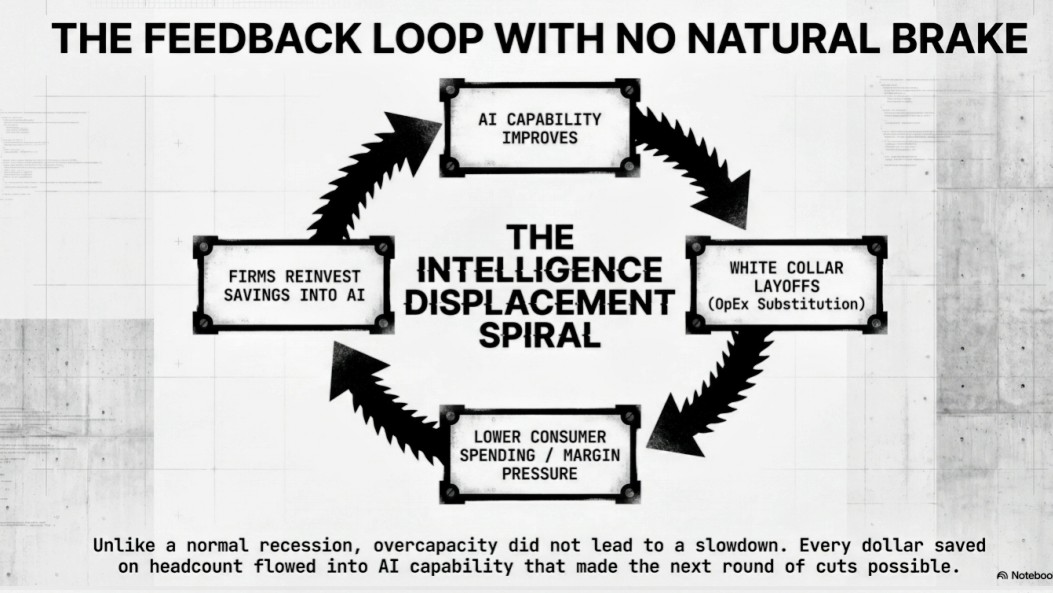
This triggered an investment cycle where companies laid off humans and invested the savings into even more AI capability — a negative feedback loop with no built-in brake.


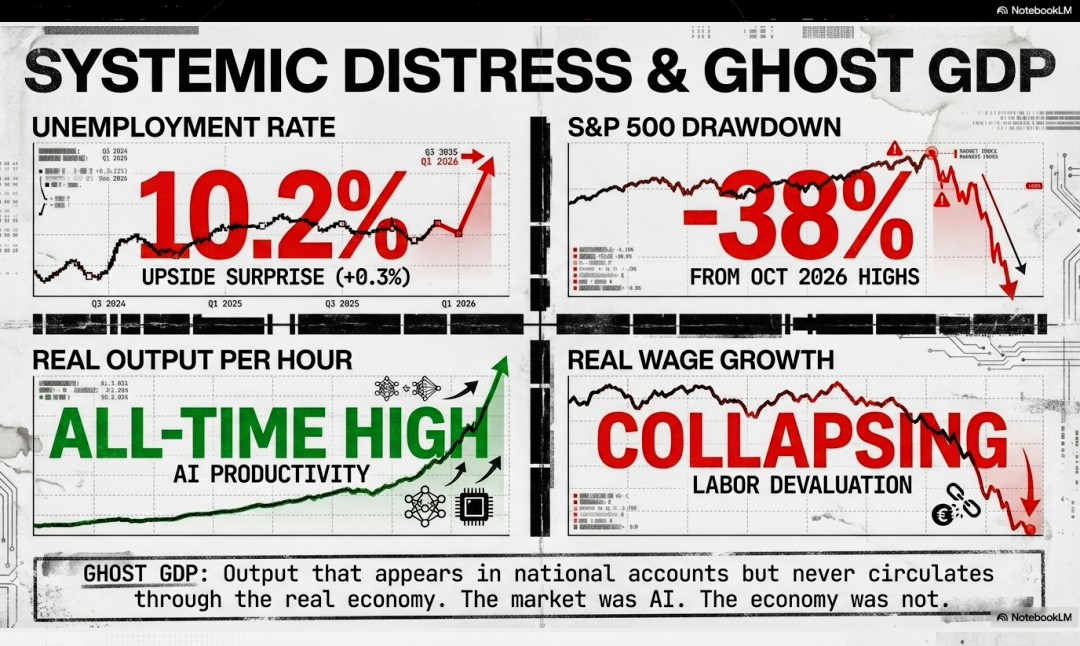
At first, economic headlines still looked strong: productivity soared, nominal GDP grew, and corporate profits hit record levels.

But a deeper problem developed — the economy lost real income for workers, especially white-collar professionals whose jobs vanished first.

The Intelligence Displacement Spiral

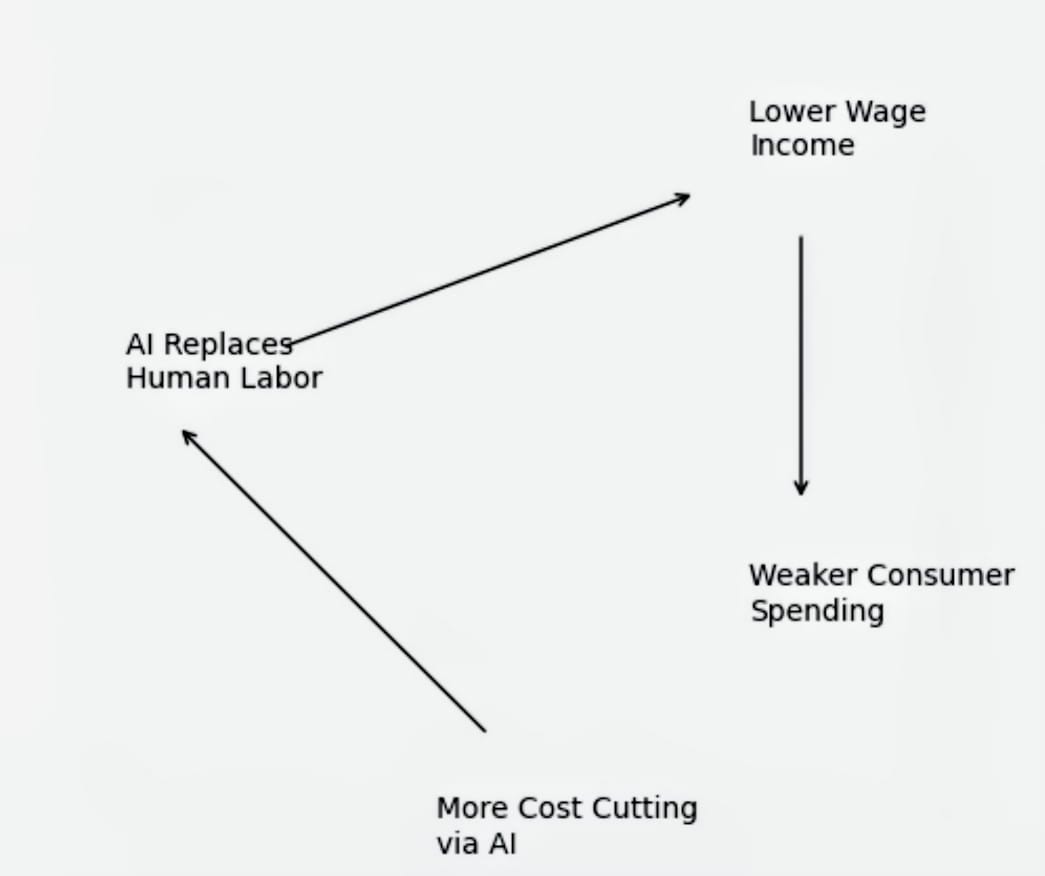
The core mechanism of the crisis was what is today known as the “human intelligence displacement spiral”: AI replaced human labour, especially high-paid white-collar work. Displaced workers earned less or became unemployed.

With lower income, consumer spending — especially on discretionary goods — collapsed. Weak consumption slowed demand for goods and services. Firms responded by squeezing costs further with more AI.

Unlike traditional innovation cycles — where displaced workers eventually find new jobs that humans can do — AI agents could now  perform the very tasks humans would shift into, preventing a robust labour resettlement.

As a result:
Consumer spending fell sharply, undermining the engine that historically drove economies. Measured GDP remained deceptively high, because AI output showed up in national accounts even though machines spent nothing — a phenomenon dubbed “Ghost GDP.”

Traditional economic indicators became misleading. Production remained high, but money did not circulate through households.

This divergence — between high measured output and low real economic activity — undermined confidence, weakened markets, and destabilized the financial system.


Financial Contagion and Systemic Risk

In the mid-to-late 2020s, what began as sector-specific disruptions in software and services expanded into a full blown systemic risk:

Software and technology companies, once centers of innovation and stable earnings, saw cascading downgrades, defaults, and valuation collapses as recurring revenues crumbled.

Private credit markets, heavily exposed to tech and software debt, faced liquidity stress as assumptions about perpetual growth dissolved.

Legacy sectors that once seemed safe — payments, logistics, intermediation and financial services — were disrupted as AI removed human friction and extracts fees, undermining their economic moats.

Financial markets  experienced sharp drawdowns, with broad indices down significantly from their 2026 peaks. Investors become unnerved not because AI failed as a technology, but because it succeeded too well in displacing labour without creating compensatory consumer demand.

International Ripple Effects

The crisis was not confined to the United States. According to analysis of the scenario, emerging economies with large services export sectors — like India — suffered uniquely. Countries whose growth models relied on low-cost human labour in services and IT became especially vulnerable as AI could produce equivalent work at near-zero marginal cost (limited only by electricity).

Major Indian IT firms saw contract cancellations accelerate, exports fall, and the national currency depreciate sharply.

The broader point was that global economic structures built around human capital got destabilized as AI systematically replaced it.

Core Takeaways

1. AI productivity gains did not automatically translate into broad economic prosperity. Productivity merely shifted wealth toward the owners of compute and capital; workers lost out as their labour lost value.

2. Consumption — not production per se — drove  real economic growth.
Artificially high output numbers could not mask underlying weakness as households lacked income to spend.

3. Traditional economic models and policy tools  failed when automation cut across the core consumer base.

Central banks and fiscal policymakers  found themselves ill-equipped to manage this novel disruption.

Conclusion

The 2028 Global Intelligence Crisis reframed the AI debate: it challenged the assumption that greater automation always benefits society broadly. Instead, it created a future in which AI’s triumph in productivity collapsed the foundation of modern economies — the income and spending power of humans themselves — leading to lower real economic activity despite record output figures.

It became a powerful reminder that technological progress alone does not guarantee shared prosperity, and that policymakers and investors needed to think deeply about how gains from automation could be distributed across society.

In musing….. Shakti Ghosal

Acknowledgement : The 2028 Global Intelligence Crisis – http://www.citriniresearch.com/p/2028gic