
When Fiction meets Foresight


A BCG Henderson Institute report

When Fiction Meets Foresight: A Reflection on The Last Writer of Kolkata and Other Stories based on the BCG Henderson Institute report.

Author – A BCG Consultant ( name kept confidential)

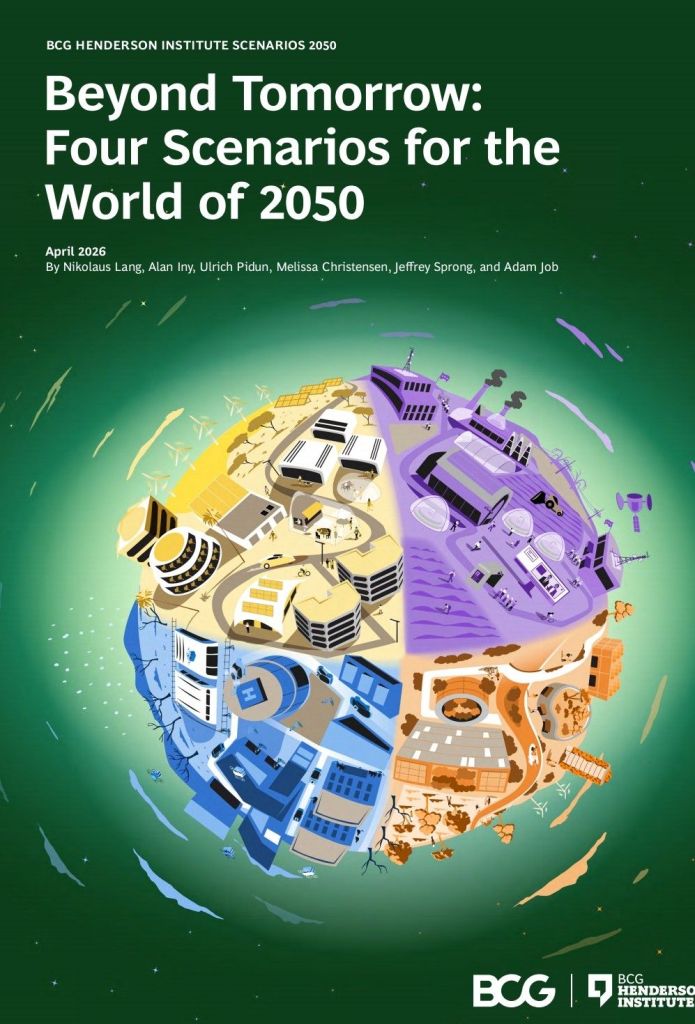
Reading the ‘Last Writer of Kolkata and other stories’ in the context of BCG Henderson Institute’s Beyond Tomorrow: Four Scenarios for the World of 2050  produces an unexpected sensation. I can confirm that the report is the product of rigorous analysis of megatrends, historical data and expert interviews. Shakti Ghosal’s book is speculative fiction. Yet both seem to be looking at the same horizon.

The BCG report reminds us that “the decisions leaders make over the next 5 years will shape the next 25.” It does not attempt to predict the future. Instead, it explores plausible futures emerging from forces already visible today. The four stories in this collection do something remarkably similar.

Consider The Last Writer of Kolkata. BCG’s “AI Abundance” scenario describes a world where AI transforms work, creativity and identity, leaving people searching for “meaning and identity beyond employment.” The ageing writer Rudra Bose inhabits a future shaped by a similar question. If machines can write, create and remember, what remains uniquely human? The story is not really about technology. It is about dignity, relevance and the stubborn human need to leave behind a voice that matters.

The Last Writer of Kolkata

In Echo Chamber, technology enters an even more intimate space—memory itself. The BCG report warns that future societies may trade elements of personal freedom for stability, efficiency and social cohesion. The story asks a disturbing question: If our memories can be edited, curated or manipulated, what becomes of our identity? Memory, after all, is not merely a record of our lives. It is our life.

Echo Chamber

The environmental anxieties running through 2056: The Year of Water and Fire find an echo in BCG’s climate scenarios. The report speaks of a world facing “stress on food and water systems” and increasingly extreme weather. The story translates those trends into human experience. Climate change is no longer a scientific projection; it becomes a force that shapes survival, migration and moral choices.

2056 The year of the Water and Fire

Perhaps the most poignant parallel emerges in When the Rain Remembered. BCG highlights ageing populations, declining fertility and shifting demographics as defining features of the coming decades. Ghosal imagines the emotional consequences of those trends. The story asks what happens when societies grow older, families become smaller, and loneliness becomes a public condition rather than a private feeling.

When the Rain Remembered’

What makes this collection noteworthy is that it does not offer technological optimism or dystopian despair. Instead, it explores the fragile space in between. Like the BCG report, it understands that the future is not a destination but a series of choices.

The greatest compliment one can pay The Last Writer of Kolkata and Other Stories is this: the book does not feel like fiction written about tomorrow. It feels like tomorrow trying to speak to us today.

Reference  

1)bcg-scenarios-2050-apr-2026-web.pdf

2) http://www.shaktighosal.com

How to improve Power Listening in today’s Disruptive World


Introduction

In today’s dynamic and disruptive world, where change is the only constant, the ability to listen deeply and effectively—what we call ‘Power Listening’—has become an essential leadership and personal development skill. To many of us, Listening occurs as a passive process. No one notices when we tune off, we also retain the luxury of judging what we are hearing. This is also why Listening is a complex and demanding skill that needs conscious effort and self-awareness. I have always found it difficult to listen to what is being said with no intention, no judgment, no right or wrong.

In a landscape characterized by rapid technological advancements, shifting economic paradigms, and evolving workplace dynamics, power listening enables leaders, professionals, and individuals to navigate complexities with greater clarity, empathy, and strategic foresight.

According to Zenger and Folkman (2016) in their Harvard Business Review article What Great Listeners Actually Do, great listening goes beyond simply being silent while others speak. It involves active engagement, thoughtful questioning, and creating a safe space for open dialogue. Similarly, in The Power of Listening in Leadership (Forbes, 2021), Kevin Kruse emphasizes that effective listening strengthens leadership presence and fosters trust in professional relationships.

Understanding the Challenges of Listening

Despite its fundamental role in communication, listening is often overshadowed by speaking. Many assume they are good listeners, yet, as I have realized through personal introspection, listening is fraught with unconscious biases, preconceptions, and cognitive distractions. Each individual listens for different reasons and in unique ways, influenced by past experiences, emotions, and personal filters.

Reflecting on my own listening tendencies, I recognize that my ability to listen deeply is not always consistent. My engagement in a conversation depends largely on three factors: (1) my genuine interest and curiosity in the subject matter, (2) the perceived relevance and importance of the topic to me, and (3) the significance of the speaker in my personal and professional life. In the absence of these factors, I have observed a decline in my listening quality, often succumbing to perceptual blocks such as impatience, judgment, and the urge to prepare my response rather than truly absorbing the speaker’s message.

The Value of Power Listening

Power listening goes beyond hearing words—it involves deep engagement, empathy, and a conscious effort to understand the speaker’s perspective. I have personally found that when practiced effectively, power listening yields several benefits:

  1. Building Trust and Confidence: A powerful listener enhances the self-worth of others, creating an environment of psychological safety where individuals feel valued and heard.
  2. Enhancing Leadership Effectiveness: Leaders who listen powerfully cultivate stronger relationships, inspire loyalty, and encourage collaboration. Employees and stakeholders gravitate towards those who make them feel understood.
  3. Facilitating Problem-Solving and Innovation: Power listening fosters a collaborative and open atmosphere, enabling teams to engage in meaningful dialogue and address complex challenges effectively.
  4. Encouraging a Growth Mindset: When leaders listen without judgment, they instill confidence in others, encouraging a culture of learning, experimentation, and continuous improvement.

A Plan to Enhance Power Listening Skills

One might ask the question, ‘So what kind of a plan one needs to become a power listener?’ My plan included the following steps:

  1. Develop Self-Awareness: I continuously assessed my natural listening tendencies, acknowledged biases, and consciously worked to overcome them.
  2. Identify Communication Gaps: By reflecting on daily interactions, I could recognize patterns where my listening faltered and I needed to refocus back.
  3. Practice Active Listening: I needed to implement the following techniques in my conversations:
    1. Attentiveness: Focus on the speaker’s words, emotions, and underlying intent.
    1. Empathy: Place myself in the speaker’s position, avoiding premature judgment.
    1. Validation: Reflect back to the speaker meaningful insights to acknowledge and appreciate the speaker’s perspective.
    1. Mental Clarity: Train myself to resist formulating responses while listening.
    1. Patience: Allow space for the speaker to elaborate without interruption.
    1. Encouragement: Reinforce the speaker’s strengths and motivate action.

The Emotional Impact of Being Heard

Listening is not just a transactional activity—it is deeply emotional and relational. When I am truly listened to, I experience a profound sense of connection, self-worth, and trust. The act of being heard or having ‘being gotten’ fulfills an intrinsic human need, fostering intimacy and mutual respect. Philosophers have long argued that being listened to is one of the most powerful affirmations of one’s existence. It provides the confidence to articulate thoughts, process challenges, and move forward with clarity and purpose.

Conclusion

In an era where distractions are rampant and attention spans are shrinking, power listening stands as a critical skill that differentiates effective leaders and impactful professionals. It is a skill that must be cultivated with intentionality, self-reflection, and consistent practice. By refining our listening abilities, we could aspire to become a more empathetic, perceptive, and influential leader—one who not only hears but truly understands and empowers others. In doing so, one would contribute to a more engaged, collaborative, and resilient world.

In Learning……                                                   Shakti Ghosal

References

  • Zenger, J., & Folkman, J. (2016). What Great Listeners Actually Do. Harvard Business Review. Retrieved from https://hbr.org
  • Kruse, K. (2021). The Power of Listening in Leadership. Forbes. Retrieved from https://www.forbes.com

#powerlistening, #leadershipeffectiveness, #disruptiveworld, #Zengerandfolkman,#Kruse, #Innovation,#growthmindset,#selfawareness, #communicationgaps, #activelistening,#empathy