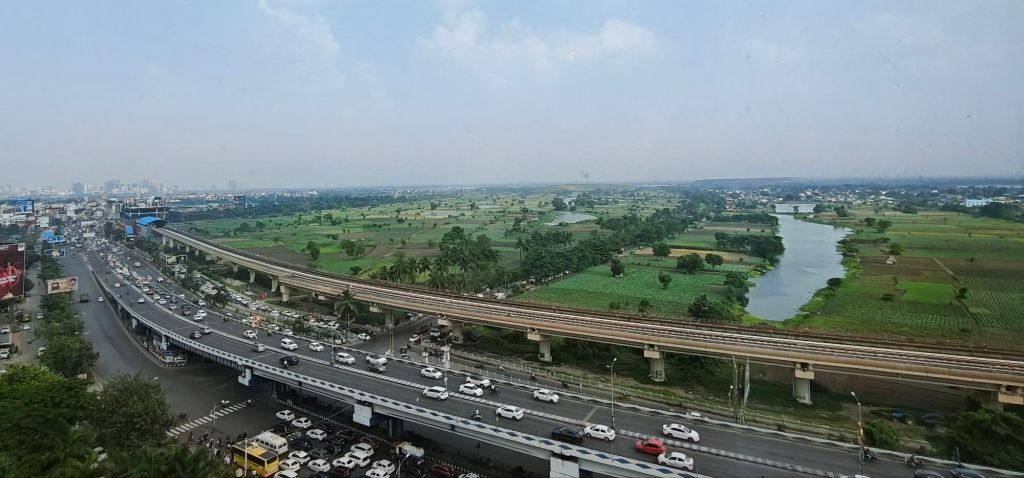
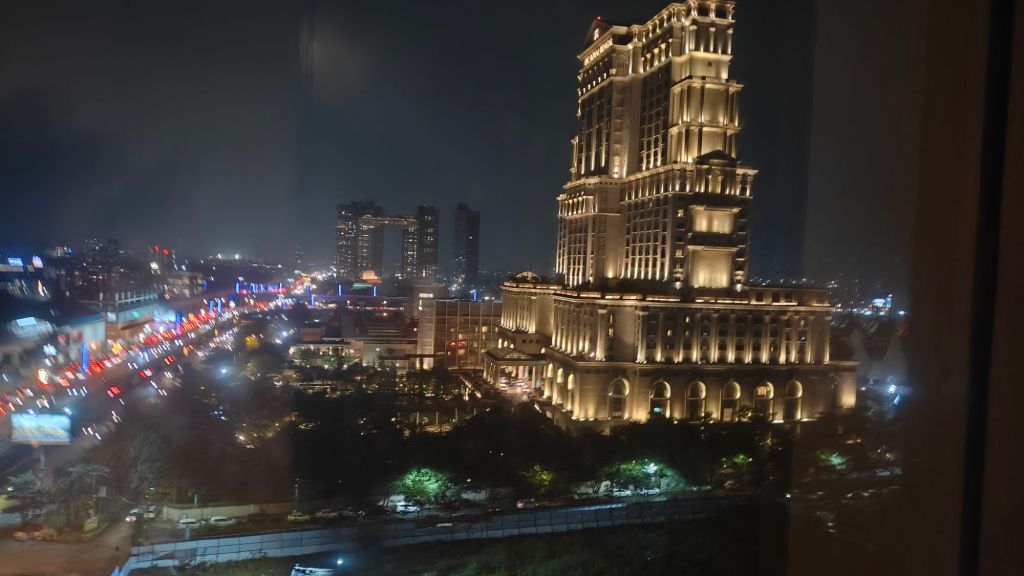
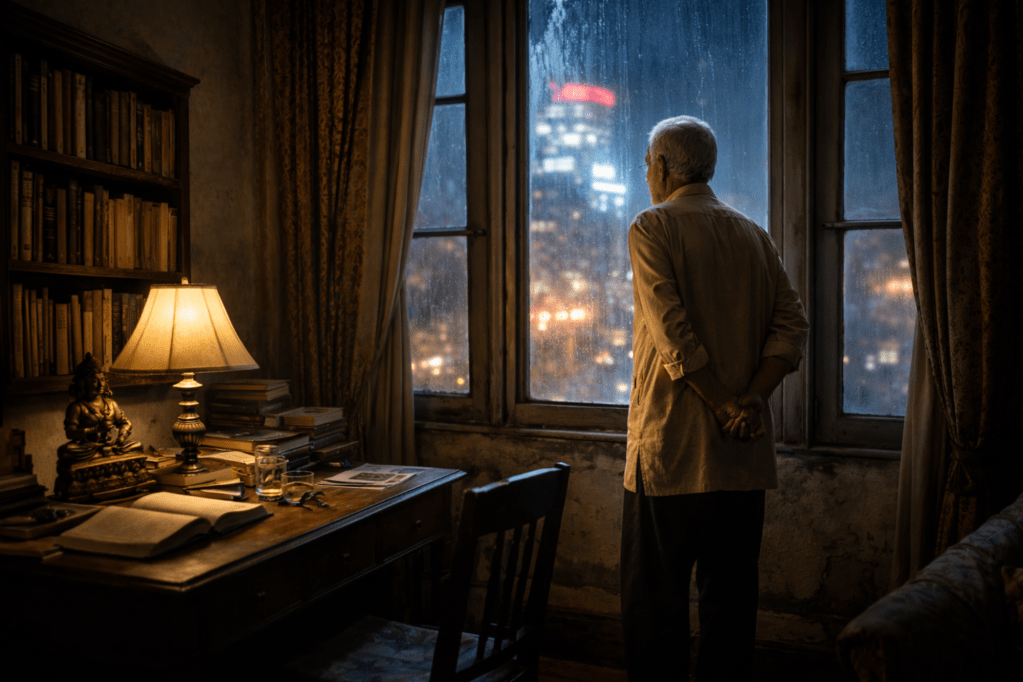
From the tenth floor of a hotel room, Kolkata offers an interesting perspective.
Below me, traffic rushes towards destinations I can only guess at. The Metro glides above the road. Beyond the concrete, patches of green survive, almost defiantly, against the advancing city.
At night, the landscape transforms. Buildings light up, roads become rivers of red and white, and the city acquires a certain grandeur.
Kolkata oh!
Yet I find myself wondering about the Kolkata that lies beyond these views.
The person hurrying to work. The family waiting for someone to return. The lives unfolding behind those illuminated windows.
A city is never merely what we see. It is everything that remains unseen.
Perhaps that is why I continue to observe, to question and to write.
Every window offers a view. Every view conceals a thousand stories.
And somewhere among them, there may be another story waiting for Rudra Bose. Shakti Ghosal
There are some days when nature does not merely show you its beauty. It allows you, for a fleeting moment, to witness its very soul. Today was one such day in the Masai Mara.
We began before sunrise with a hot air balloon ride over the vast Mara savannahs—an experience I shall write about separately. But the real drama of the day was waiting for us at the Mara River, inside the Mara Triangle.
We watched, almost spellbound, as hundreds of wildebeests came thundering down the slopes, accompanied by a sprinkling of zebras. They moved like an army on the march. Then, without hesitation, they plunged into the river.
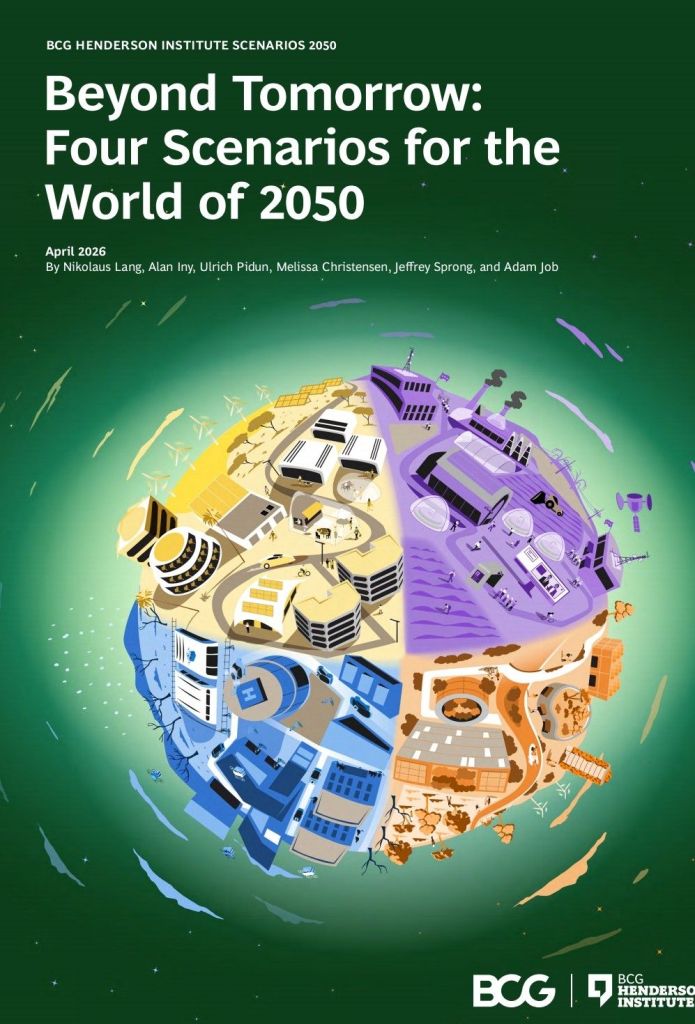
When Fiction Meets Foresight: A Reflection on The Last Writer of Kolkata and Other Stories based on the BCG Henderson Institute report.
Author – ABCGConsultant ( namekeptconfidential)
Reading the ‘Last Writer of Kolkata and other stories’ in the context of BCG Henderson Institute’s Beyond Tomorrow: Four Scenarios for the World of 2050 produces an unexpected sensation. I can confirm that the report is the product of rigorous analysis of megatrends, historical data and expert interviews. Shakti Ghosal’s book is speculative fiction. Yet both seem to be looking at the same horizon.
The BCG report reminds us that “the decisions leaders make over the next 5 years will shape the next 25.” It does not attempt to predict the future. Instead, it explores plausible futures emerging from forces already visible today. The four stories in this collection do something remarkably similar.
Consider TheLastWriterofKolkata. BCG’s “AI Abundance” scenario describes a world where AI transforms work, creativity and identity, leaving people searching for “meaning and identity beyond employment.” The ageing writer Rudra Bose inhabits a future shaped by a similar question. If machines can write, create and remember, what remains uniquely human? The story is not really about technology. It is about dignity, relevance and the stubborn human need to leave behind a voice that matters.
The Last Writer of Kolkata
In EchoChamber, technology enters an even more intimate space—memory itself. The BCG report warns that future societies may trade elements of personal freedom for stability, efficiency and social cohesion. The story asks a disturbing question: If our memories can be edited, curated or manipulated, what becomes of our identity? Memory, after all, is not merely a record of our lives. It is our life.
Echo Chamber
The environmental anxieties running through 2056: TheYearofWaterandFire find an echo in BCG’s climate scenarios. The report speaks of a world facing “stress on food and water systems” and increasingly extreme weather. The story translates those trends into human experience. Climate change is no longer a scientific projection; it becomes a force that shapes survival, migration and moral choices.
2056 The year of the Water and Fire
Perhaps the most poignant parallel emerges in WhentheRainRemembered. BCG highlights ageing populations, declining fertility and shifting demographics as defining features of the coming decades. Ghosal imagines the emotional consequences of those trends. The story asks what happens when societies grow older, families become smaller, and loneliness becomes a public condition rather than a private feeling.
When the Rain Remembered’
What makes this collection noteworthy is that it does not offer technological optimism or dystopian despair. Instead, it explores the fragile space in between. Like the BCG report, it understands that the future is not a destination but a series of choices.
The greatest compliment one can pay The Last Writer of Kolkata and Other Stories is this: the book does not feel like fiction written about tomorrow. It feels like tomorrow trying to speak to us today.
As I have gone through life , I have found some folks proudly wearing their age ( and the wisdom that flows from that) like a badge. And others, using a curious phrase ( which incidentally became fashionable) : “Age is just a number.”
Perhaps. But I have often wondered why some people feel compelled to repeat it so often. The calendar is not the enemy. The years do not diminish us. They simply tell a story.
Yet many of us seem desperate to negotiate with time. We shave a few ( and sometimes a little more!) years off our age, boast of being sixty when we are actually seventy, or cling fiercely to an image of ourselves that belonged to another decade. As we try to convince ourselves and others.
Why?
Maybe because age reminds us of something we would rather not confront. That the world is passing us by and we fear missing out. That life is finite. That some doors have closed. That our bodies have their own timetable. That one day we will have to hand over the baton to others.
The strange thing is that wisdom was never meant to compete with youth. A banyan tree does not apologize for not being a sapling. A river does not pretend to be a mountain stream. Both possess a different kind of beauty.
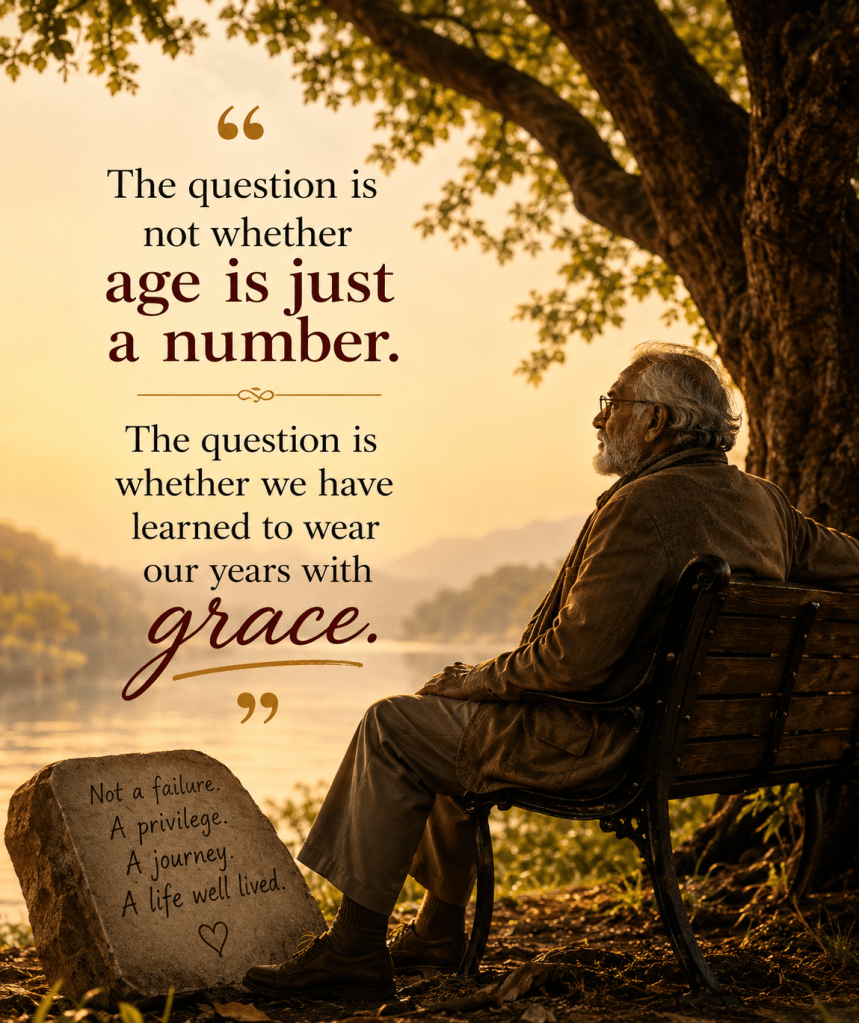
Perhaps maturity begins when we stop treating age as an accusation and start treating it as an achievement. After all, growing old is not a failure. It is a privilege denied to many.
The question is not whether age is just a number. The question is whether we have learned to wear our years with grace.