

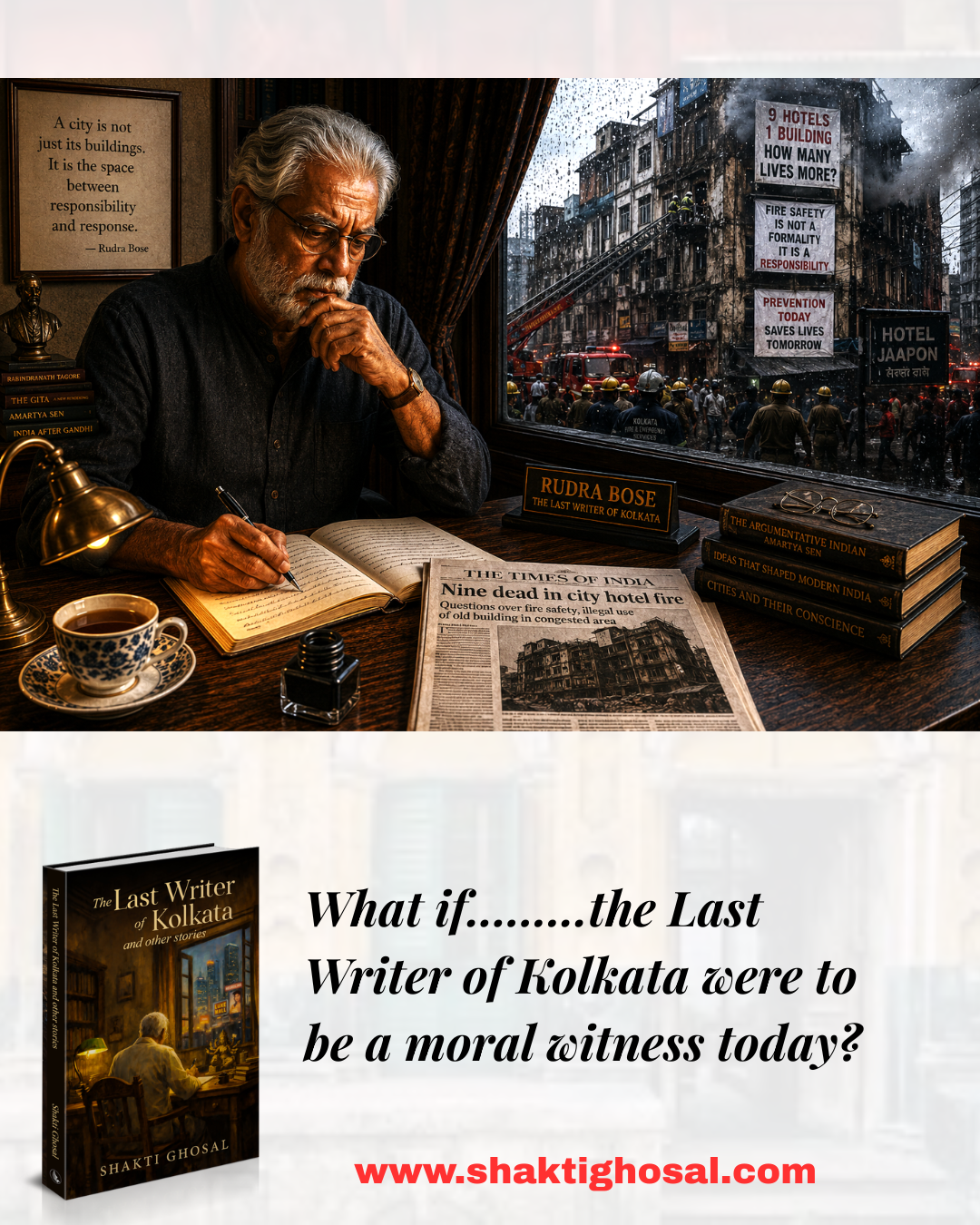
….. a city allows danger to become normal until tragedy makes it visible.
August 2026
The fire in the Free School street building which housed hotels, offices and homes may have started with a short circuit. But tragedies of this magnitude are rarely caused by a single spark. Nine people died in a building where hotels, offices and homes had somehow learnt to coexist within a maze of cramped spaces, narrow passages and questions about fire safety.
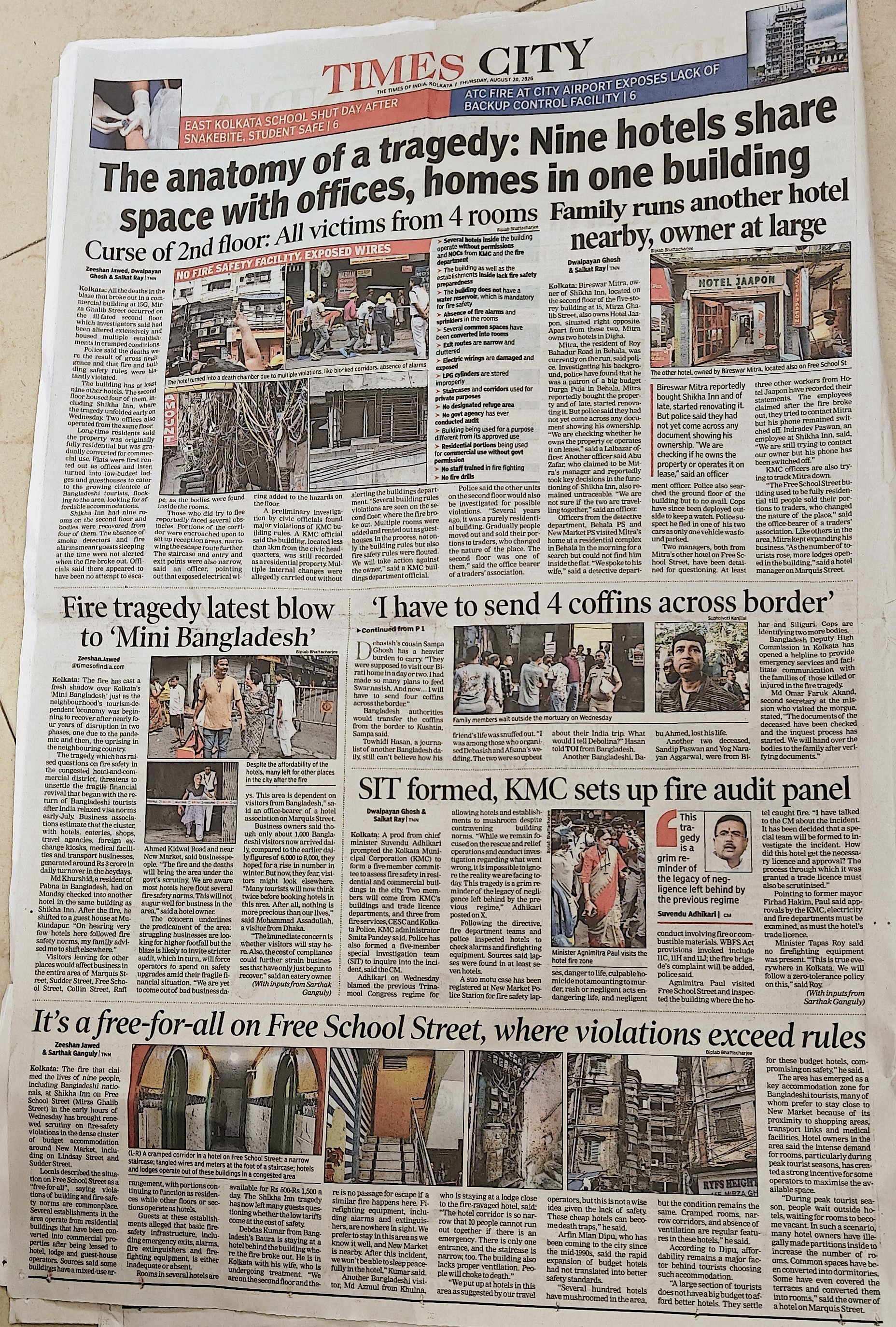
I kept wondering: who allowed this to become normal? Perhaps that is the more uncomfortable question. A city does not become unsafe in one day. It becomes unsafe one ignored violation at a time. One certificate not checked. One inspection postponed. One illegal alteration overlooked. One warning that nobody thought was urgent. And then, one night, the building catches fire.
We will now demand accountability. There will be investigations, committees, audits and perhaps arrests. All these are surely necessary. But does governance have to begin only after people die? The real test of a city is not how efficiently it rescues people from a burning building. It is whether it had the courage to prevent that building from becoming a death trap in the first place.
As I folded the newspaper, I wondered whether we have become too accustomed to calling preventable tragedies accidents. Perhaps the most important responsibility of governance is not to manage disasters better. It is to make fewer disasters possible.
— Rudra Bose, The Last Writer of Kolkata

