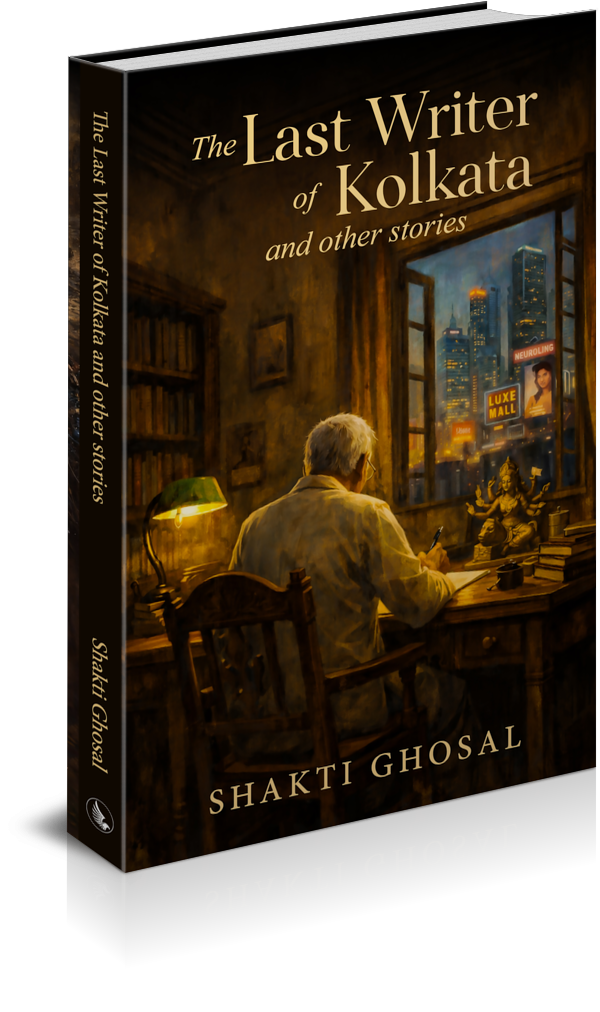
Set in a near future shaped by forces already gathering momentum, this collection explores what happens when irreversible hard trends collide with ordinary human lives. From climate catastrophe and algorithmic control to cultural erasure and institutionalized ageing, each story follows characters forced to rethink love, loyalty, memory, and courage as familiar worlds quietly transform around them. These are not tales of spectacular collapse, but of subtle reckonings—where survival lies not in resistance alone, but in choosing what must still be remembered, protected, and passed on.
The Last Writer of Kolkata
In a near-future Kolkata where memory, culture, and even grief are packaged and sold, an ageing writer quietly records a city that no longer listens. When his private words are appropriated and monetized, the story becomes a haunting meditation on erasure, resistance, and the fragile dignity of remembering in a world that profits from forgetting.
2056: The Year of the Water and Fire
In a near-future Sundarbans battered by super-cyclones and rising seas, a grieving environmentalist, his resolute daughter, and a sentient AI boat are caught between prophecy and science as fire erupts beneath the ocean. As water and flame converge, the story asks a haunting question: when nature reclaims its power, is survival an act of technology, faith—or human courage to stand and choose?
Echo Chamber
In a near future where minds are seamlessly linked and memories can be accessed, altered, and weaponized, a gifted intelligence analyst uncovers a conspiracy that turns thought itself into a tool of control. As truth, identity, and free will begin to blur, the story confronts a chilling question: when belief is engineered, is freedom still a choice—or merely an illusion?
When the Rain Remembered
In a near-future Kolkata where ageing has been systematized and kindness regulated, an elderly couple shelter a displaced child inside a gated retirement enclave that has forgotten laughter. As rain, unrest, and quiet courage unsettle rigid rules, the story becomes a tender meditation on belonging—asking whether homes are built by policy, or by the human instinct to care.
The Last writer of Kolkata and other stories is making waves amongst discerning readers. To know more, visit: http://www.shaktighosal.com
In musing…… Shakti Ghosal