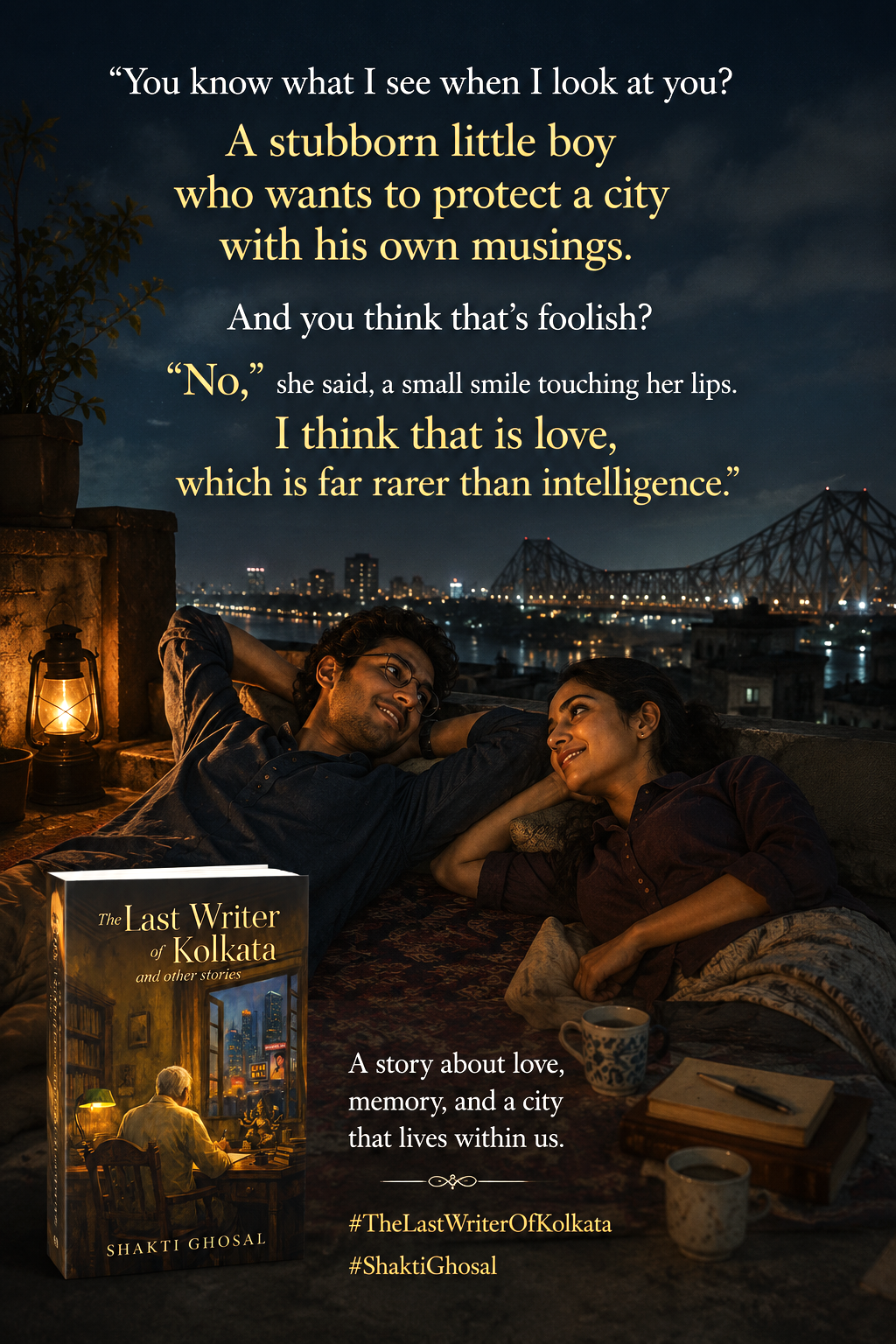
The first light of the morning came and sat on the window grille, hesitated, then leapt in. Like an old song, tired and familiar, trying to be remembered.
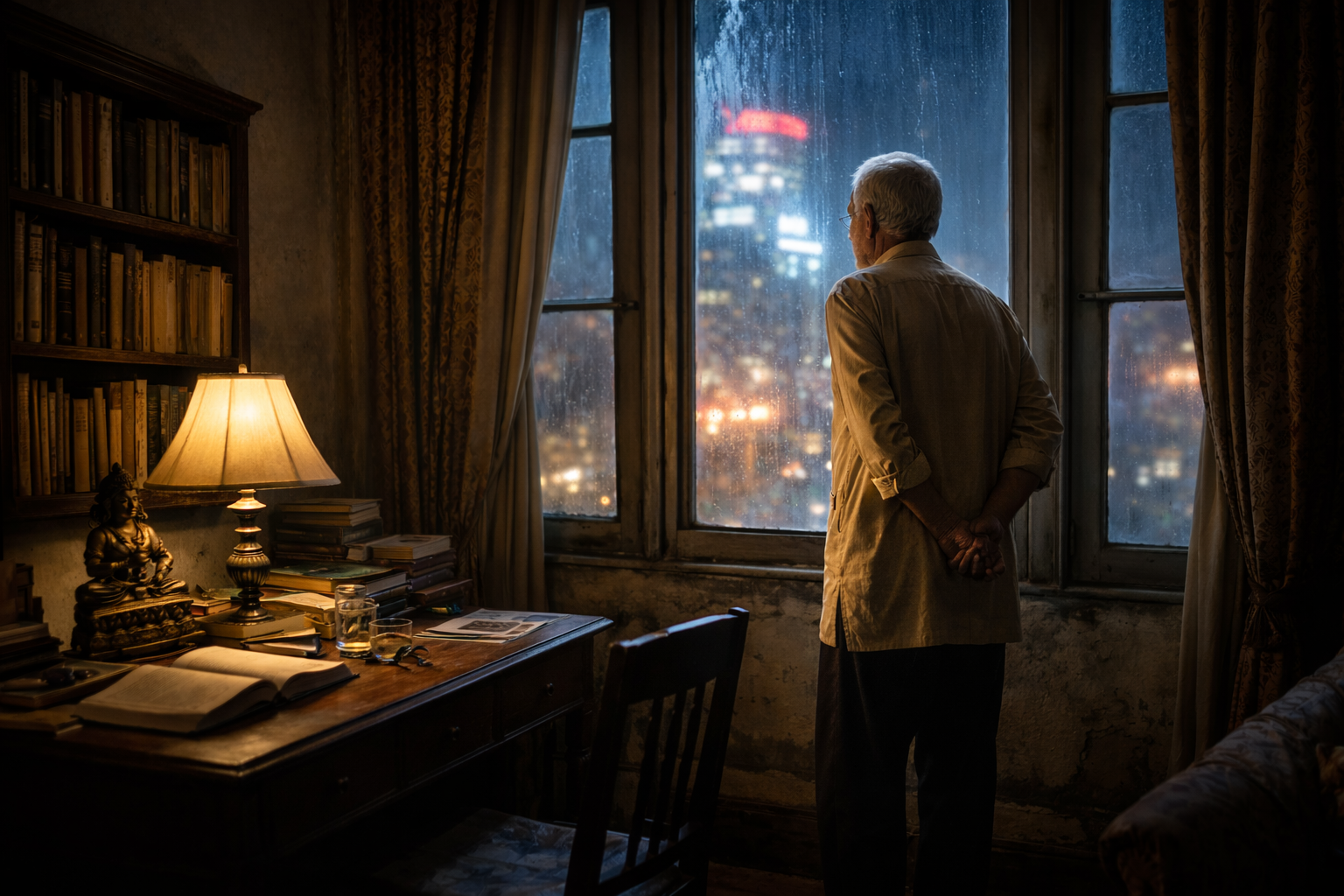
Rudra Bose sat by the window, a cup of tea steaming beside him. The cup was chipped, the saucer mismatched, the tea, a stubborn blend of milk, tea dust, and habit.
Outside, the lane yawned into a waking slumber, its air thick with last night’s incense, stale samosa oil, and the ever-present, low-grade emissions.
“Ma is coming,” he had heard someone shout on the street last evening……
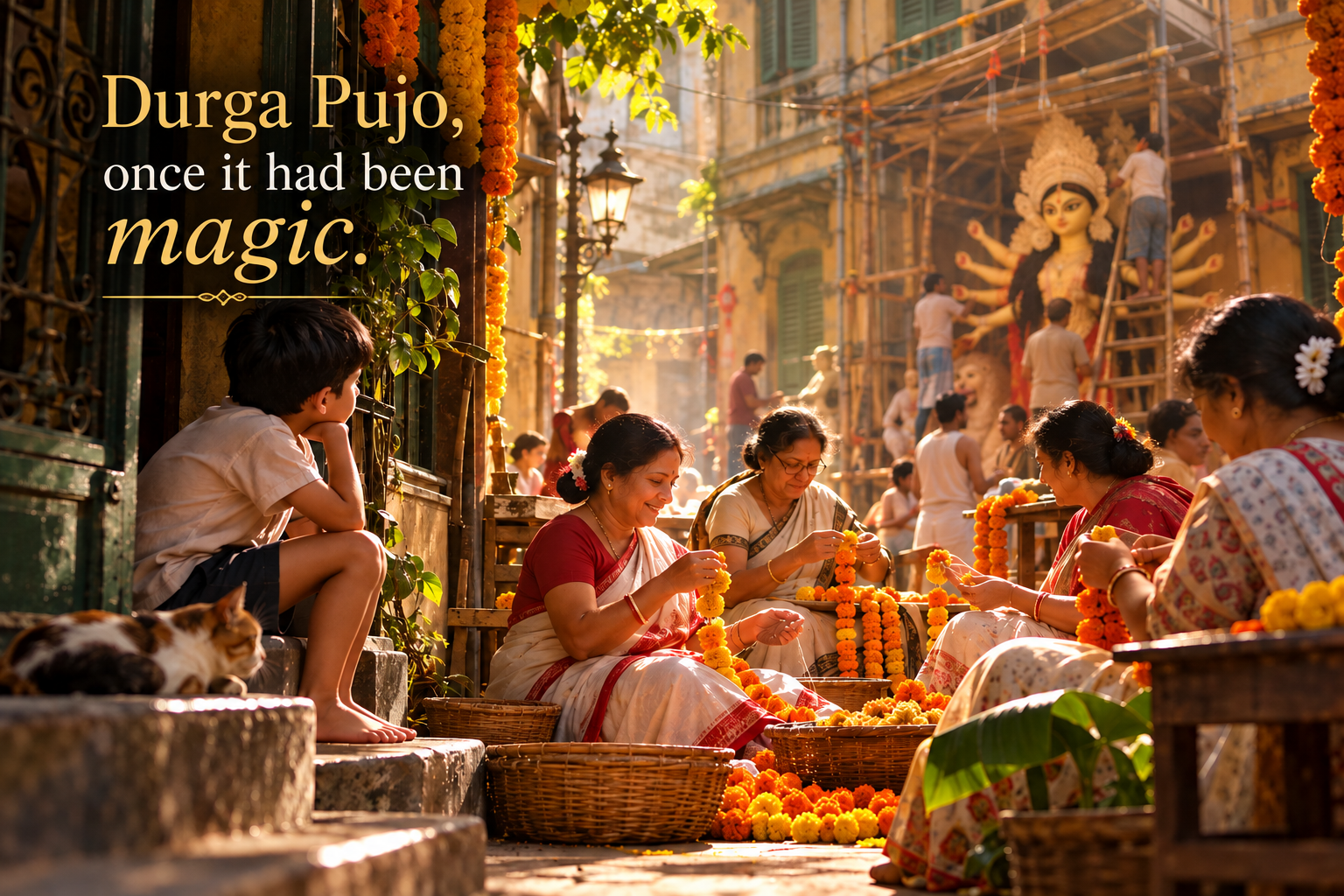
Durga Pujo. Once, it had been magic.
As a boy, he had spent mornings watching Mashis, aunts and Boudis, sisters-in-law, threading marigolds for the Pandal and Thakurer Bedi.
— An excerpt from The Last Writer of Kolkata and Other Stories
What does Durga Pujo mean to you?
Is it the Goddess, the neighbourhood, the people we grew up with—or a Kolkata that lives on in our memories, even as the city changes around us?
This Mahalaya, I invite you to step into Rudra Bose’s world: a future Kolkata where technology has transformed the city, but the longing for what has been lost remains deeply human.
I came across a story recently. I do not know whether it is true.
Perhaps it is. Perhaps it has gathered a little fiction around a kernel of truth. And perhaps, like many stories that move between people, it has become less concerned with historical accuracy than with a truth of another kind—the truth of the human heart.
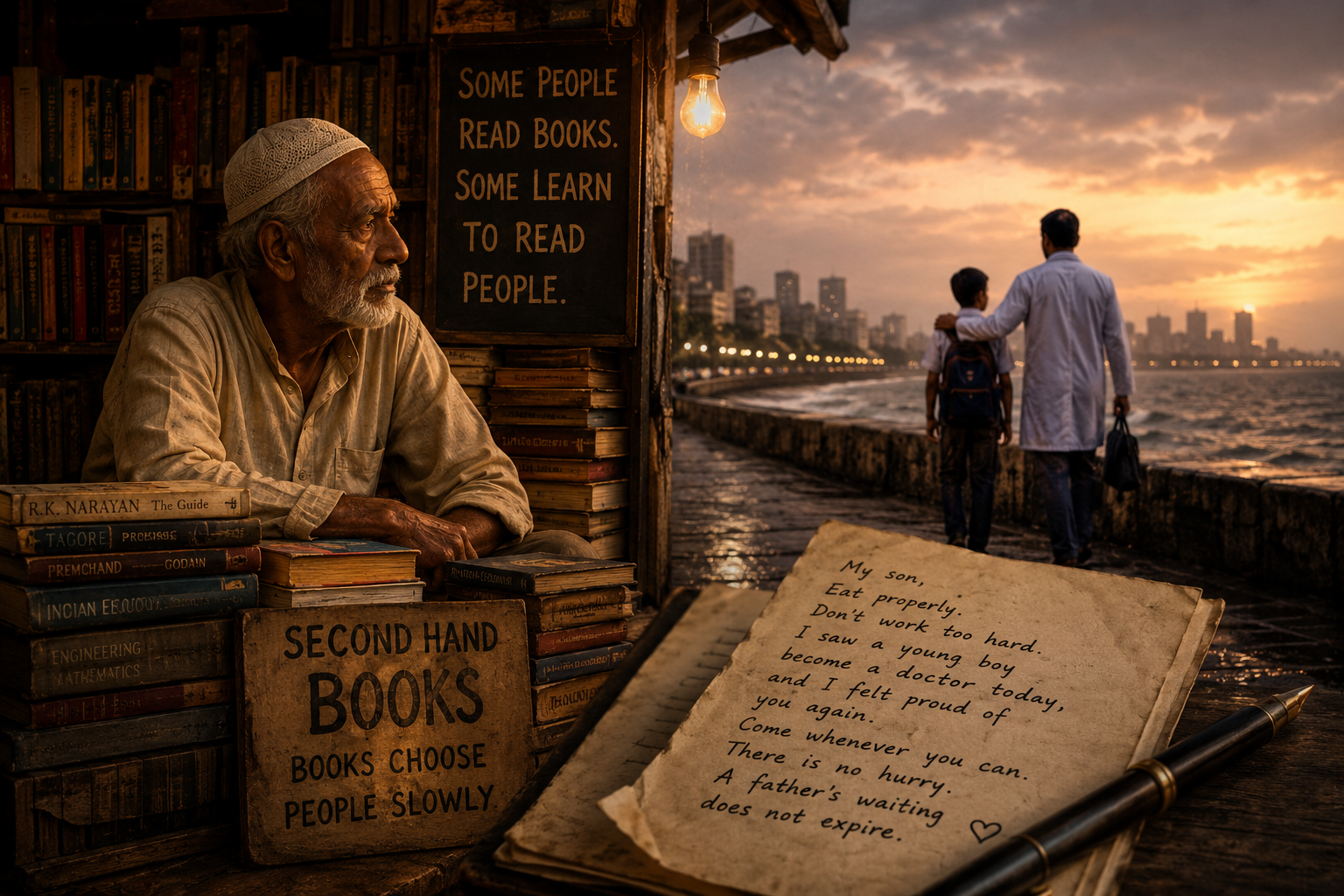
It was about an old man called Salim who sold second-hand books outside Churchgate Station in Mumbai. There was something almost unbearably poignant about him. He had spent his life surrounded by books. And he could not read, not a single word. He had never had the opportunity to go to school. Poverty had closed that door before he was old enough to understand what education meant. Yet he knew his books. He could locate them by the colour of their covers, their size, their position on the shelf. He remembered who had bought them and, sometimes, why. When someone expressed surprise that a man surrounded by thousands of books could not read, he apparently said: “Some people read books. Some learn to read people.”
Whether Salim ever existed is, for me, almost beside the point. Because I was reminded of two stories I wrote in The Last Writer of Kolkata. The first is about an ageing writer whose memories—and the culture embedded within them—become something that others wish to digitise, package and sell.
The second, When the Rain Remembered, is about an old couple, Pradyut and Jaya, who shelter a displaced child called Rai in a retirement enclave where everything has been reduced to rules, protocols and algorithms.
At first glance, these stories might appear to have little in common. But perhaps they do. All three stories are really about what it means to remember. And what it means to care.
The old writer in Kolkata possesses something that technology cannot quite capture—the texture of memory, the fragrance of a city, the small details that make a life one’s own. Pradyut and Jaya discover that a home is not a place governed by regulations. It is created when someone decides that another human being matters. And the story about Salim? He could not read the books he sold.But he understood something that many of us, despite all our education, sometimes forget. A book is only paper and ink until it touches a human life.
Salim had a son. He had worked and sacrificed so that his son could study, become a doctor and eventually build a life abroad. He had given his child what he himself had been denied. And then, as happens so often in life, distance entered quietly. Not through anger, not through rejection but simply through life. Work became demanding. Calls became less frequent. Visits were postponed. There was always a tomorrow. Until, one day, there wasn’t.
The story says that after Salim died, his son discovered letters his father had dictated over the years but never sent. One sentence stayed with me: “A father’s waiting does not expire.”
Perhaps that is what touched my heart. Because parents seldom announce their loneliness. They say, “I am fine.” They say, “Don’t worry about me.” They say, “Come whenever you can.” And children, believing there will always be another opportunity, postpone the visit, the call, the embrace. Until time makes the decision for them.
Yet there is another part of Salim’s story that moved me even more.
He did not allow his deprivation to become bitterness.
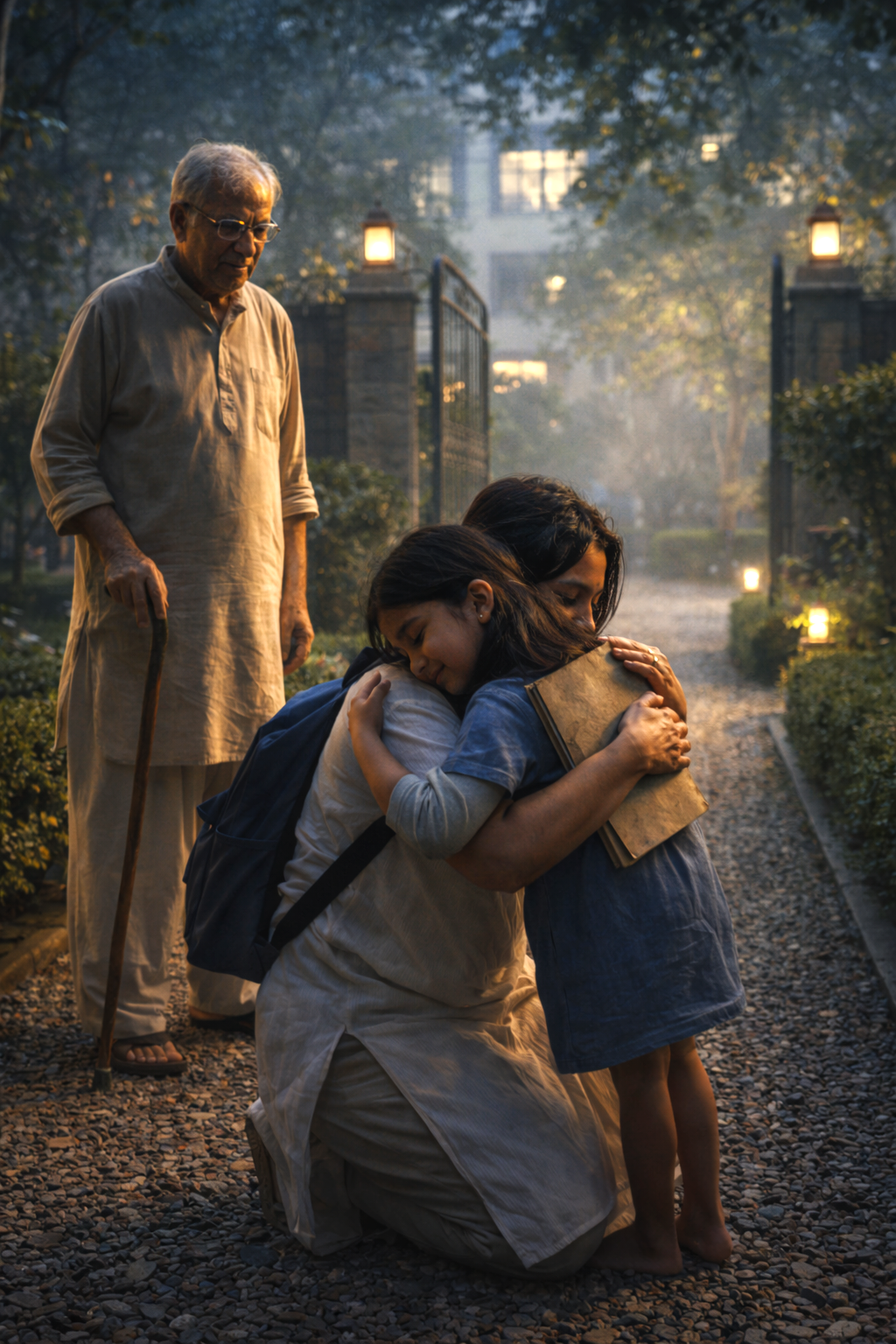
He began giving books to children who, like him, might otherwise never have had access to education. His pain became someone else’s opportunity. His emptiness became someone else’s doorway. And suddenly I found myself thinking again of When the Rain Remembered. Pradyut and Jaya did not change the world. They simply opened a door. They gave shelter to a child whom a system had no place for.
But sometimes that is how humanity survives. Not through grand gestures. But through small acts of defiance against indifference. A door opened. A book given away. A child protected. A lonely person remembered. A hand held. A call made before it is too late.
And then I thought of The Last Writer of Kolkata. What survives us? It is not necessarily our possessions. Not even necessarily our achievements. Perhaps it is the memory we leave in another human being. The writer Rudra Bose leaves behind memories. Pradyut and Jaya leave behind a sense of belonging. Salim leaves behind children who can read the books he never could. And perhaps that is the irony at the heart of his story. The illiterate bookseller who understood literature better than many who have read thousands of books. Because he understood that the ultimate purpose of a book is not to be read. It is to change something in us.
And perhaps the ultimate purpose of a life is not to be remembered by everyone. It is to have mattered deeply to someone. There is something else I find profoundly moving about the idea of Salim’s unsent letters. We spend much of our lives writing things down. Be it as Emails, messages, posts, documents and even books. But the most important things we write are often never written on paper at all.
We write them in the lives of our children. In the confidence of a student. In the memory of a friend. In the courage of someone we encouraged. In the kindness we showed a stranger. These are the things that remain when the writer is gone. Perhaps, in the end, every life is a book. Some are beautifully bound, others torn and weathered. Some have pages missing, some are never published. And some, like Salim’s, may never have been able to read their own pages.
But that does not mean they were unwritten. For our lives are constantly writing themselves into the lives of others. And perhaps that is what The Last Writer of Kolkata, When the Rain Remembered, and this haunting story of a bookseller are really trying to tell : We may forget the words. We may forget the books. We may even forget the people who taught us the words. But we rarely forget how someone made us feel when we were in need of being understood.
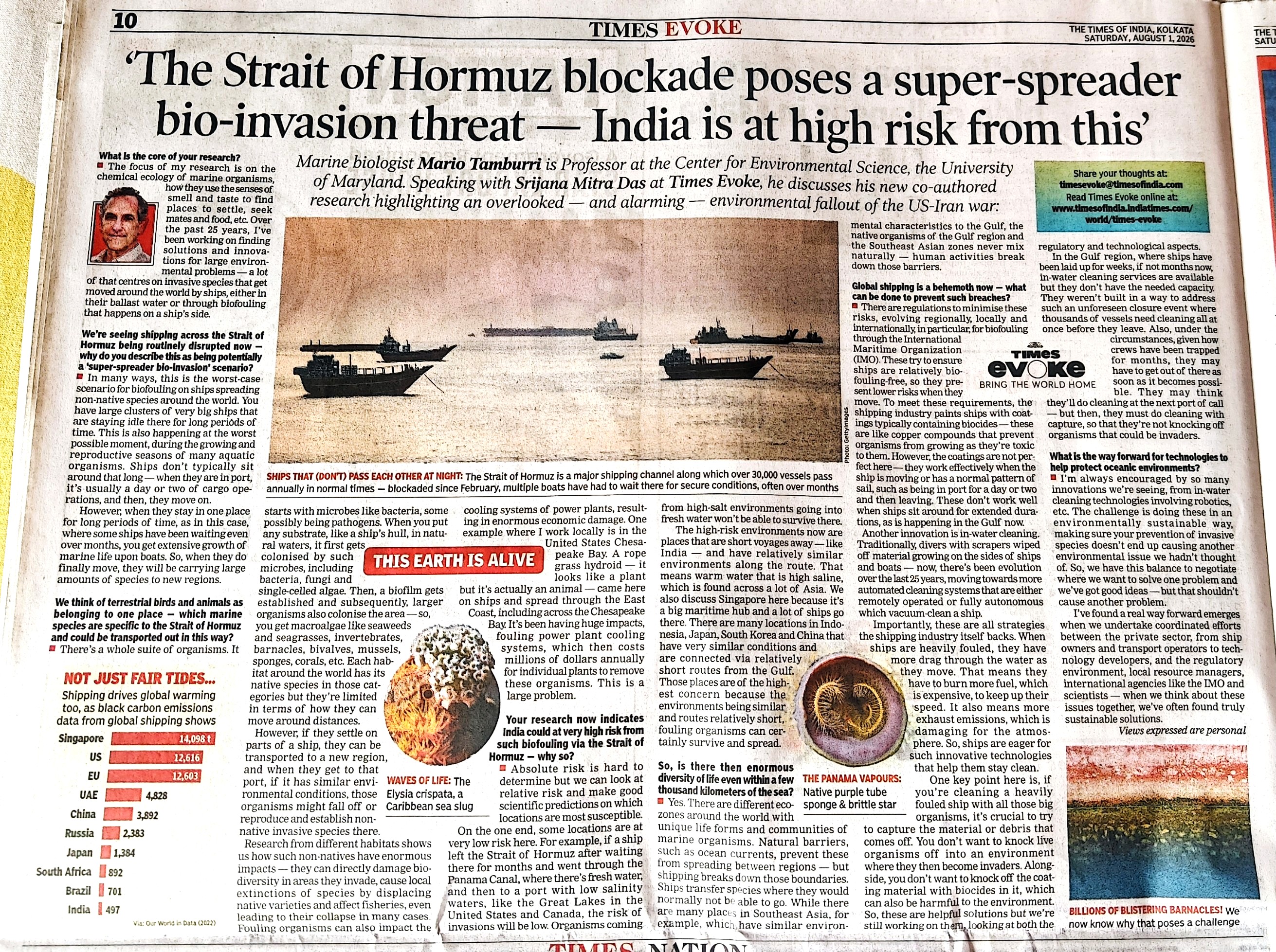
A newspaper report I read the other day literally stopped me in my tracks. It spoke about an unexpected consequence of the geopolitical tensions around the Strait of Hormuz. As ships remain berthed for prolonged periods, marine scientists are warning of an increased risk of invasive organisms hitching a ride across oceans, disrupting ecosystems thousands of kilometres away. At first glance, it appeared to be a story about shipping and marine biology. But as I read further, I realised it was really a story about something much larger.
A Times of india report
Nature rarely responds in straight lines. A political conflict can become an environmental risk. A delay in maritime traffic could alter the movement of microscopic life. Human decisions in one corner of the world quietly reshape ecosystems in another.
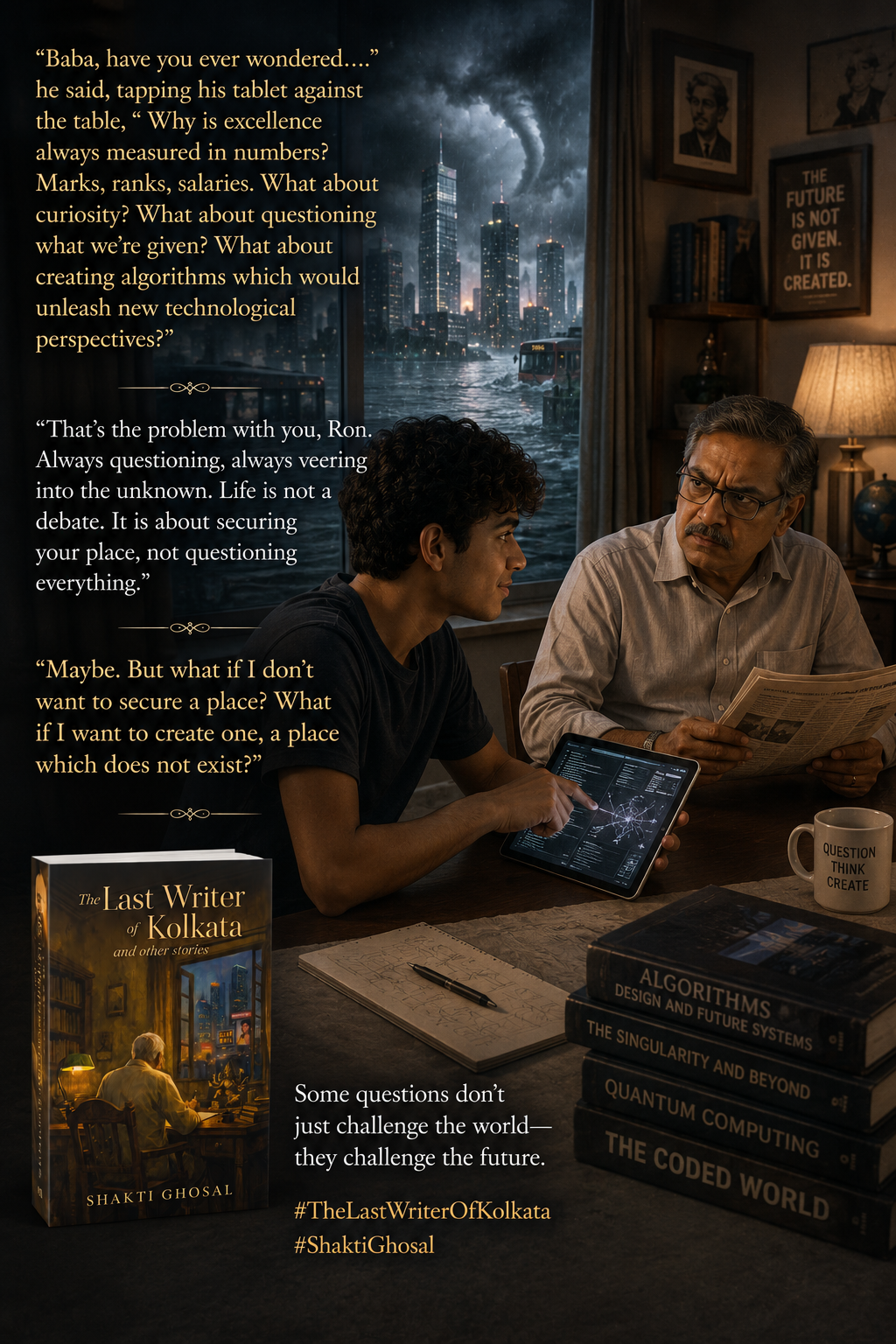
While writing 2056: The Year of Water and Fire, I had found myself returning repeatedly to this thought. We often imagine climate change as a sequence of visible catastrophes—cyclones, floods, rising seas. Yet the more profound transformations are often quieter. Species migrate. Rivers redraw themselves. New ecological relationships emerge. Life adapts in ways we neither anticipate nor fully understand. Toward the end of the story, after a devastating cyclone had rewritten the geography of the Sundarbans, the first instinct of the survivors was despair. But when the dronobots began mapping the devastation, they uncovered something unexpected. Amid the destruction, nature was already experimenting. Islands were shifting. Mangroves were finding new footholds. Wildlife was adapting. The ecosystem, scarred but alive, was quietly reorganising itself for a different climate. It was neither revenge nor redemption, it was recalibration.
That thought had stayed with me because it challenges one of our deepest assumptions. We often speak of “saving nature,” as though it were a fragile object waiting for human intervention. History suggests something more humbling. Nature has an extraordinary capacity to reinvent itself. It is we who struggle to keep pace with the consequences of that reinvention.
Perhaps the real lesson is this. The future will not unfold as a neat extension of the present. It will emerge through countless interactions we barely notice today—between politics and ecology, technology and biology, human ambition and planetary resilience.
In 2056, Nayanjol, the sentient boat, eventually becomes more than a machine. He becomes a guardian who understands that survival does not lie in resisting nature, but in learning to listen to it.
Maybe that is the question our own times are quietly asking. Not whether nature will adapt. But whether we will.
When I wrote 2056: The Year of the Water and Fire, I imagined a Bengal where climate change was no longer an environmental issue. It had become a way of life.
This newspaper report made me pause.
It says that Kolkata now loses around 80 hours of sleep every year because of rising night-time temperatures. Think about that for a moment. Climate change is no longer confined to distant glaciers, rising seas or violent cyclones. It is quietly entering our bedrooms, stealing our sleep, affecting our health, our emotions, and perhaps even the way we think.
The future, I have often felt, rarely announces itself dramatically. It arrives in small, almost unnoticed ways.
A warmer night. A little less sleep. A little less patience. A little more fatigue.
Until one day, we realise that what we once called unusual has quietly become normal.
In 2056: The Year of the Water and Fire, I explored what might happen when rising waters, stronger storms and changing climates begin to reshape not just our landscape, but our choices, our communities and our humanity.
Perhaps the greatest lesson is this:
Climate change is no longer about saving the planet. It is about preserving the quality of human life on it.
The Earth will endure.
The question is whether we will learn to adapt before adaptation is forced upon us.
Aditi Chakraborty is part of the editorial team of the Outlook India group. She has recently done a ‘Book of the Month’ review of ‘The Last Writer of Kolkata and other stories.’
Aditi writes:
‘Shakti Ghosal, in his new book ‘The Last Writer of Kolkata and other stories’, draws a fascinating balance between speculative imagination and deep human struggles that the characters endure. It is a book that highlights technological advancement with emotional vulnerability and social disruption.
Interestingly, Shakti’s stories do not begin with technology; they begin with human dilemmas. An ageing couple confronting abandonment. A man wrestling with memory and cultural erasure. A mind questioning engineered conformity. A community facing ecological collapse. Once the emotional conflict becomes clear, the speculative framework grows around it organically. Readers may enter through the futuristic premise, but they remain because the emotional stakes feel recognisable. The future changes settings; it does not abolish vulnerability.
Environmental collapse, engineered echo chambers, and optimised living appear throughout the collection. Yet the author emphasises that ‘The Last Writer of Kolkata and other stories’ is a work of fiction and not to be treated as a prophecy. However, he agrees that there is a cautionary dimension. Fictions can illuminate trajectories already visible in the present. For instance, climate anxiety is not speculative. Nor is algorithmic influence speculative. Similarly, the pursuit of frictionless efficiency at the cost of emotional depth is not speculative. These are contemporary realities. What his book allows us to do is emotionally inhabit the consequences before they fully arrive.
Despite the unsettling worlds in the book, there is a recurring emphasis on love, dignity, and human connection at the centre of these narratives. “I do not believe technology, however transformative, can erase the fundamental emotional architecture of being human. Civilisations evolve. Systems collapse. Tools become more intelligent. But a parent’s concern, a child’s longing, the dignity of memory, the need to be seen, the quiet courage of human connection—these remain stubbornly persistent,” he explains. For Shakti, love is not merely sentiment. It is resistance. Dignity is resistance. Choosing connection in increasingly impersonal worlds is resistance. “If my stories contain unsettling futures, it is because I wanted the emotional stakes to feel urgent. But despair alone makes for shallow storytelling. I am more interested in the resilience of tenderness.”
The complete Book of the Month review in Outlook India can be found here.
Yesterday’s storm in Kolkata was not merely weather. It was a warning.
87 kmph winds. Uprooted trees. Flooded streets.
The broken branches would no doubt get cleared. The roads would reopen. And life too will resume its familiar rhythm. But perhaps that is precisely how great changes begin—not as catastrophes, but as interruptions. A little more water. A little more heat. A little more wind. Until one day we realise that what we called “unusual” has become normal.
While writing 2056: The Year of Water and Fire, I imagined a world shaped by rising waters and extreme weather. Yesterday, Kolkata offered a glimpse of that possibility. The future is rarely somewhere ahead of us. Often, it is already knocking at the door.
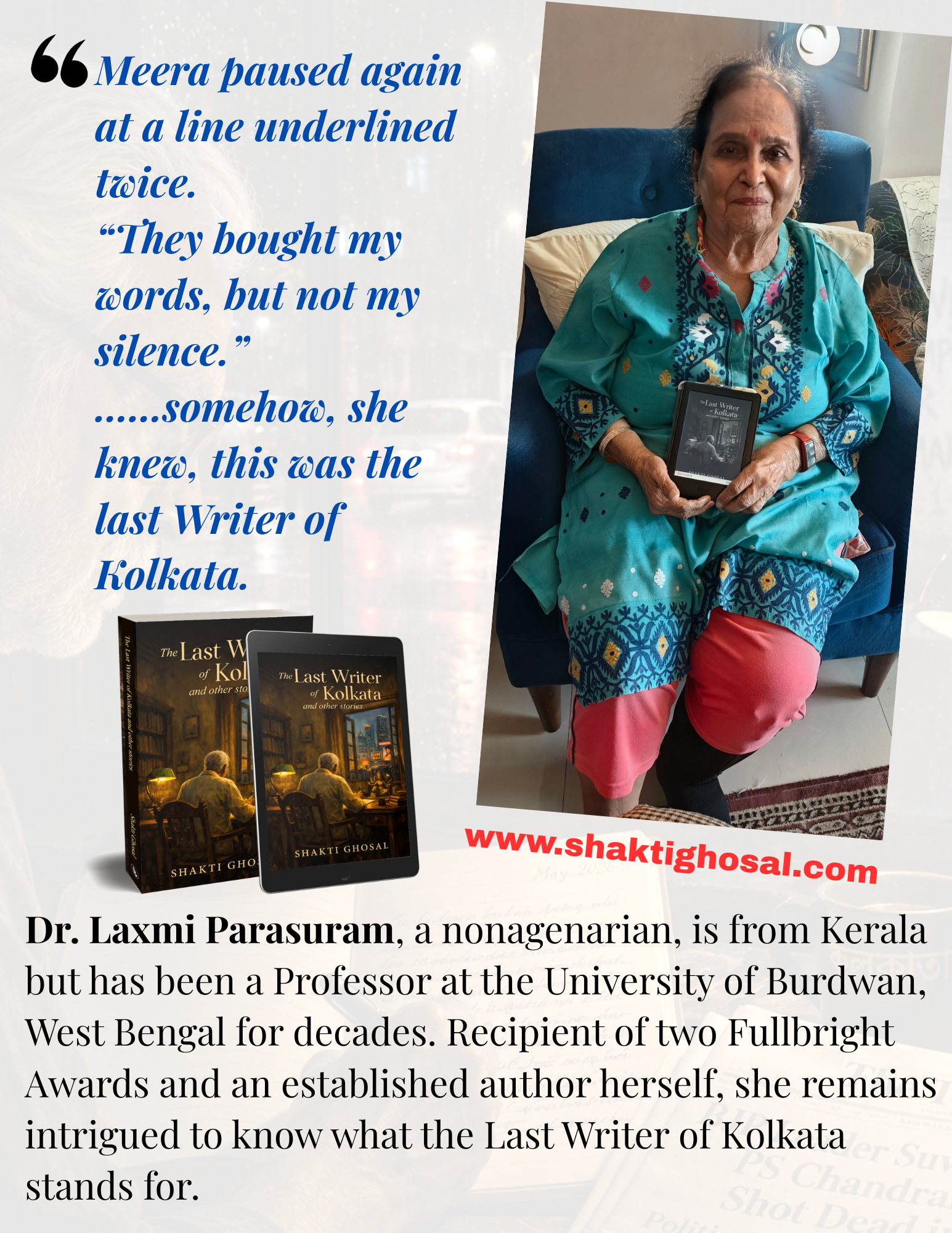
When I met Dr. Laxmi Parasuram to hear her thoughts on The Last Writer of Kolkata and Other Stories, I expected literary observations. What I received instead was a question that lingered.
She spoke of the emotional weight in the stories—the sentiment, the ache, the quiet melancholy. Then she asked, “Why do so many of your stories seem to end sadly?”
The question took me by surprise. I had never consciously thought of these as sad endings. To me, these stories are about ordinary people standing at extraordinary crossroads—where technology, hard trends, and shifting social realities place pressure on the human spirit. In those moments of disruption, what gets tested is not merely survival, but something deeper: memory, dignity, love, identity, silence, moral choice.
And when the protagonists choose to hold on to some irreducible fragment of their humanness—even at a cost—I had seen that not as tragedy, but as resistance. Yet perhaps this is the paradox of our times.
What one person sees as loss, another may see as courage. What appears to be a sad ending may, in fact, be the final refusal to surrender what makes us human.
It made me wonder: Have we become so accustomed to measuring success by comfort, victory, and neat resolutions that acts of emotional fidelity now look like defeat?
Dr. Parasuram’s question stayed with me. And perhaps that is what literature is meant to do—not provide answers but quietly rearrange the questions we ask ourselves.
Four futures. Four hard truths. And the fragile choices that still make us human.
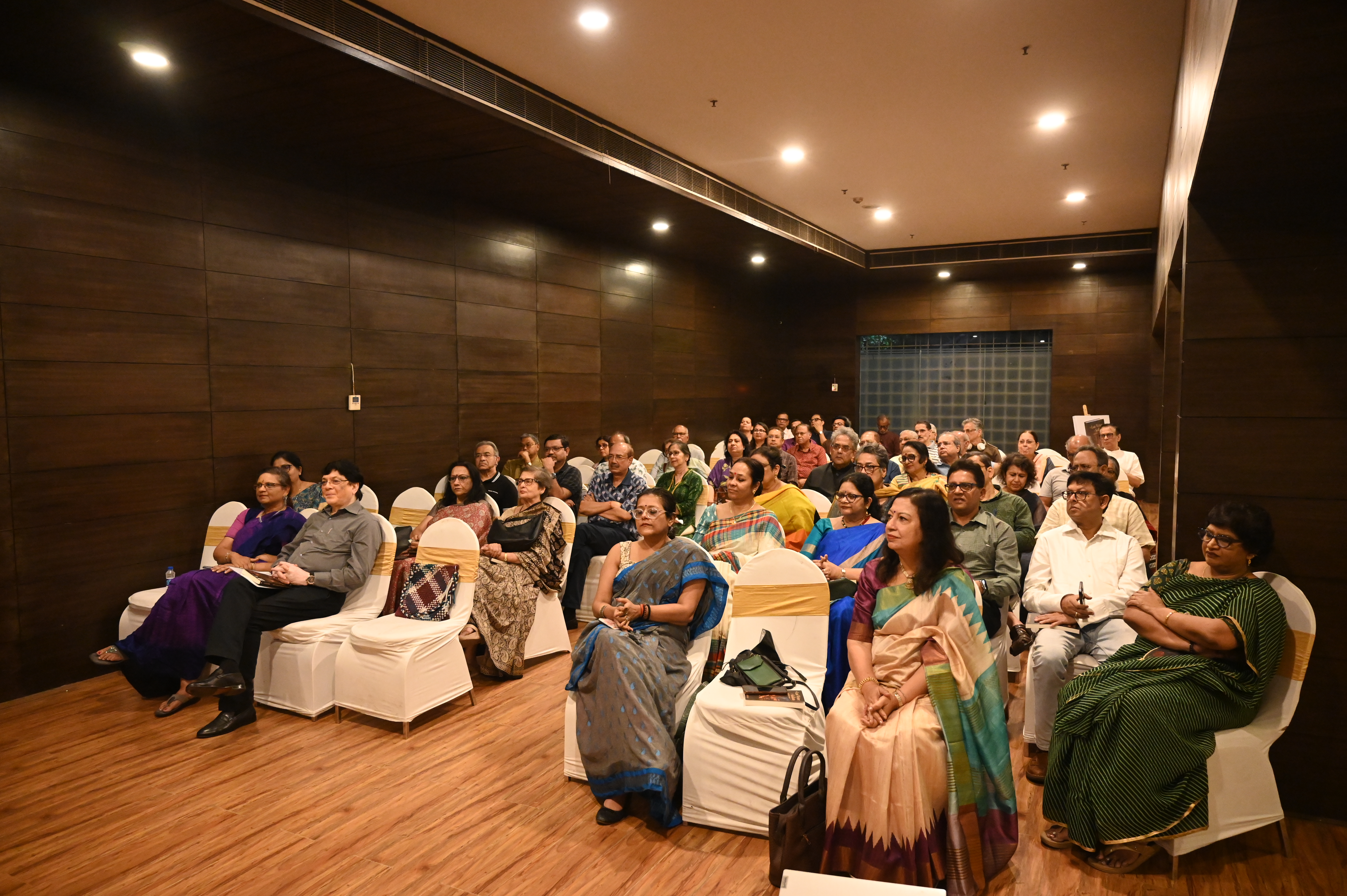
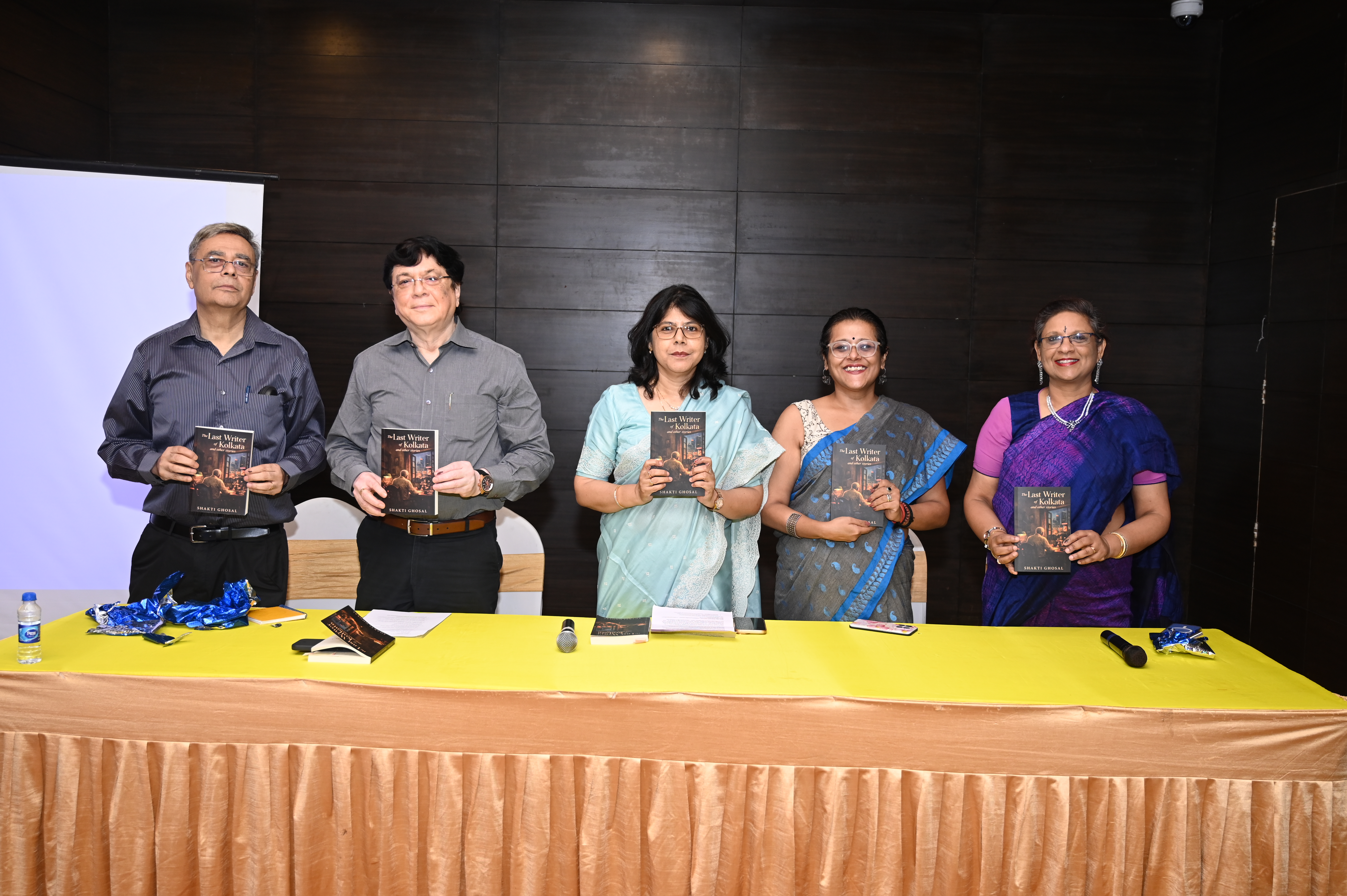
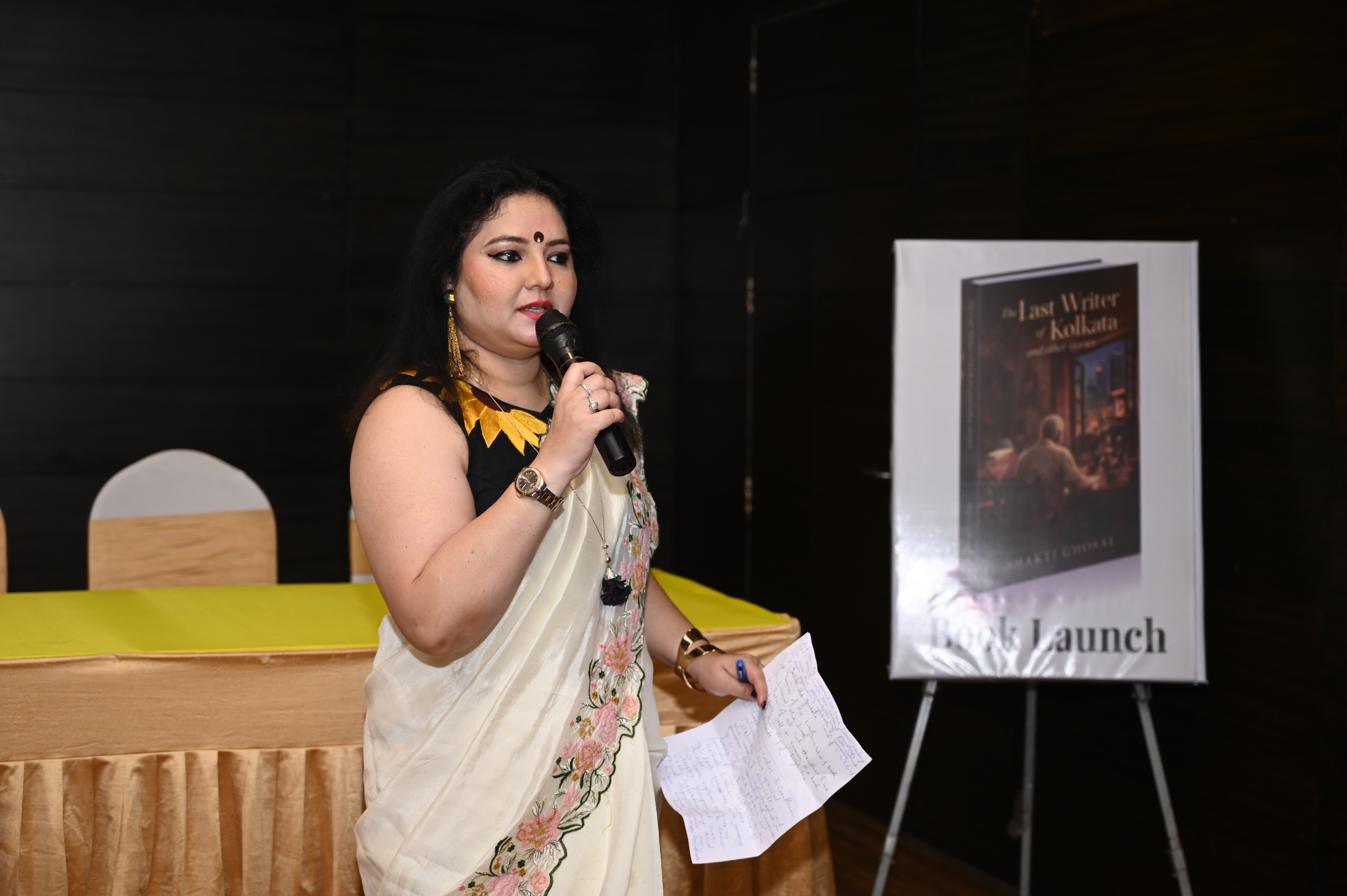
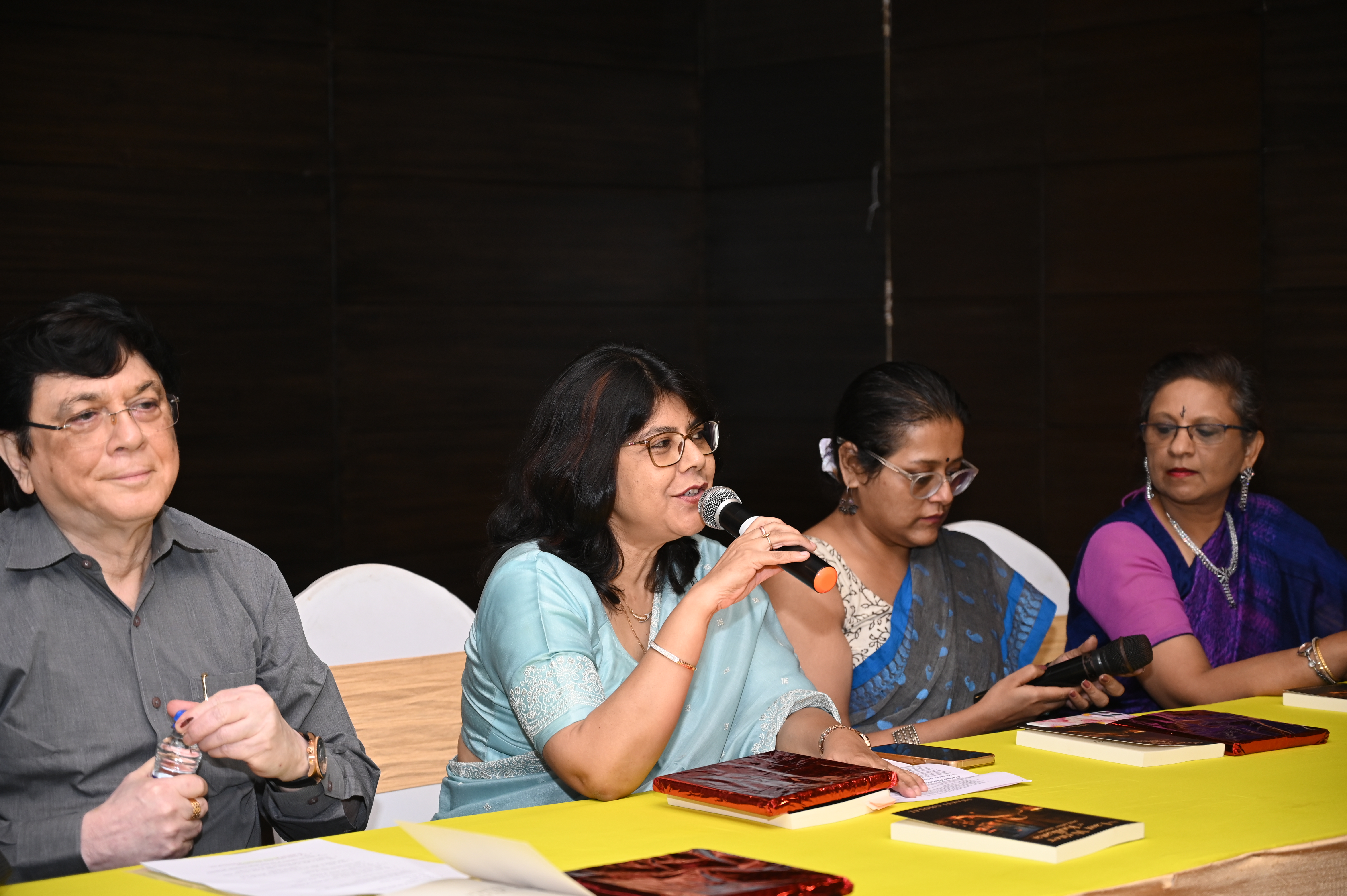
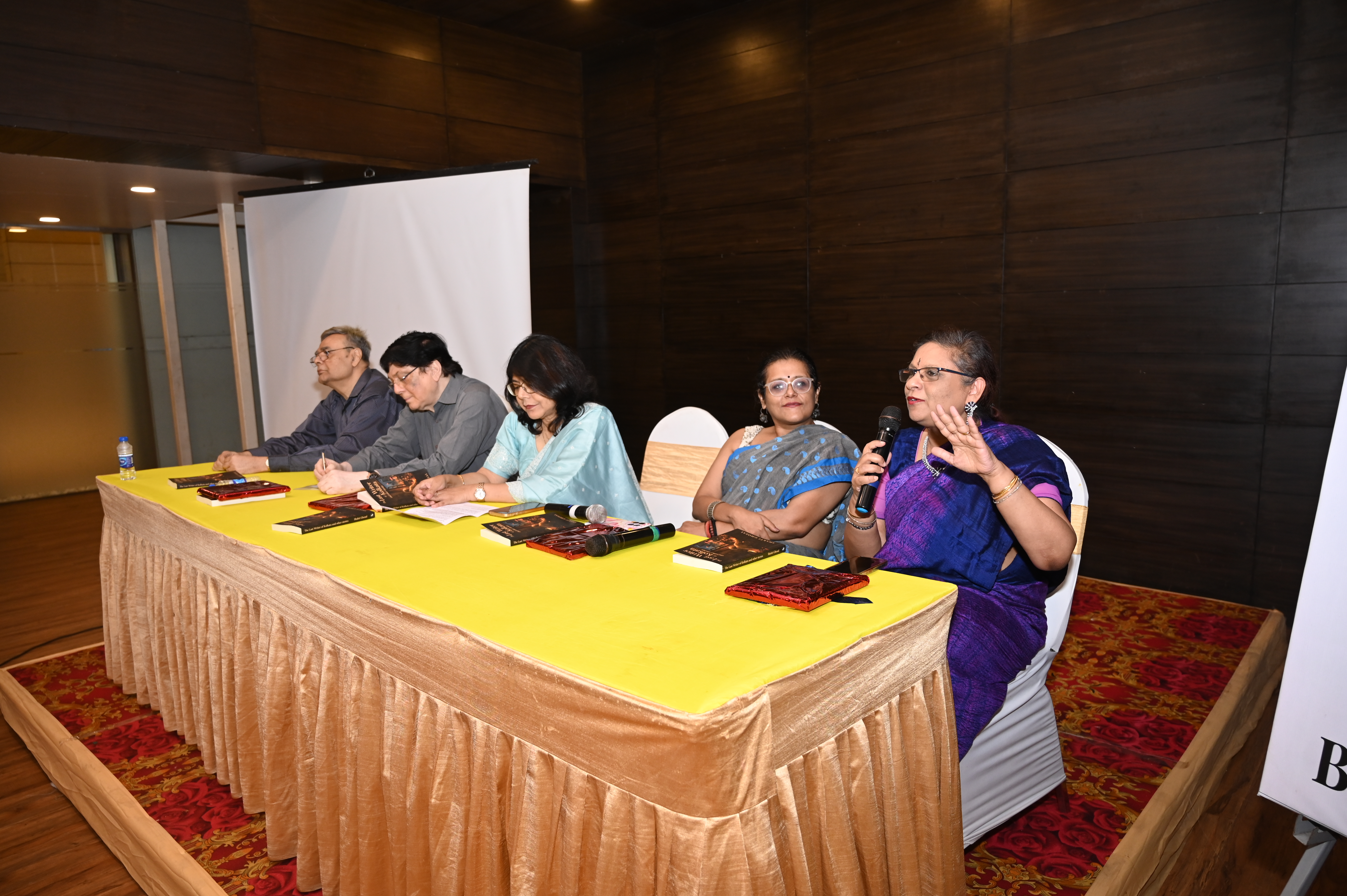
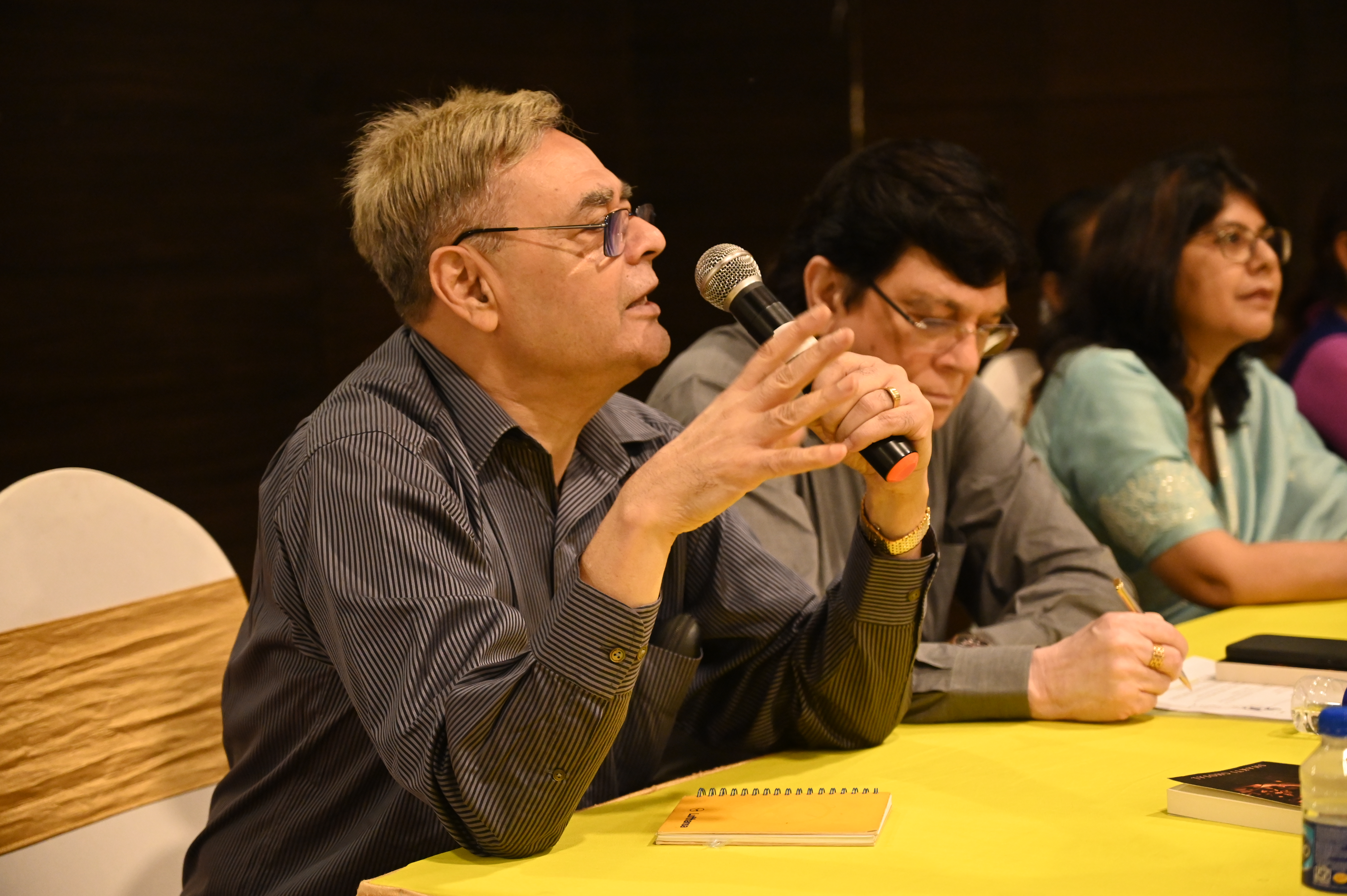
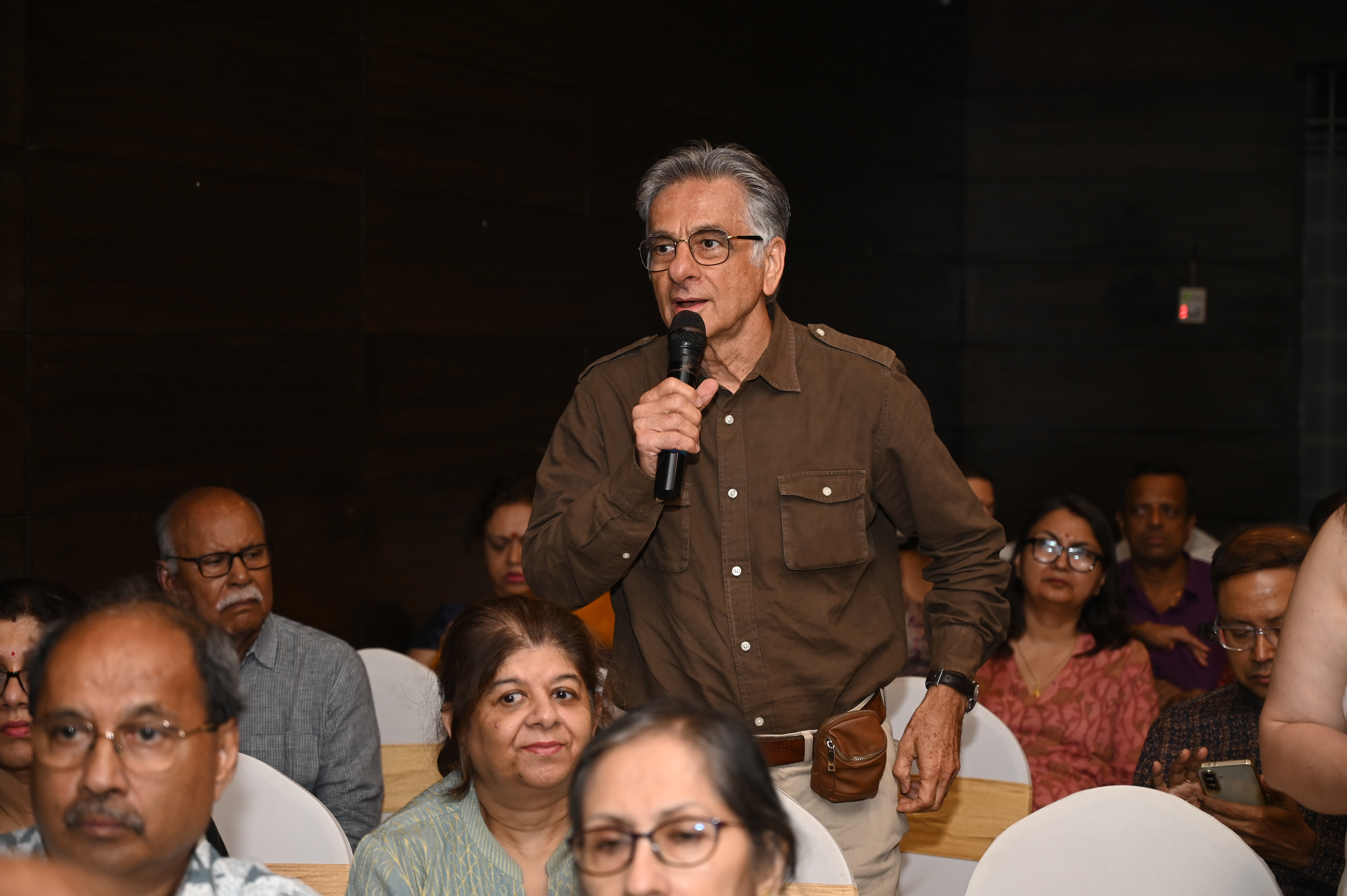
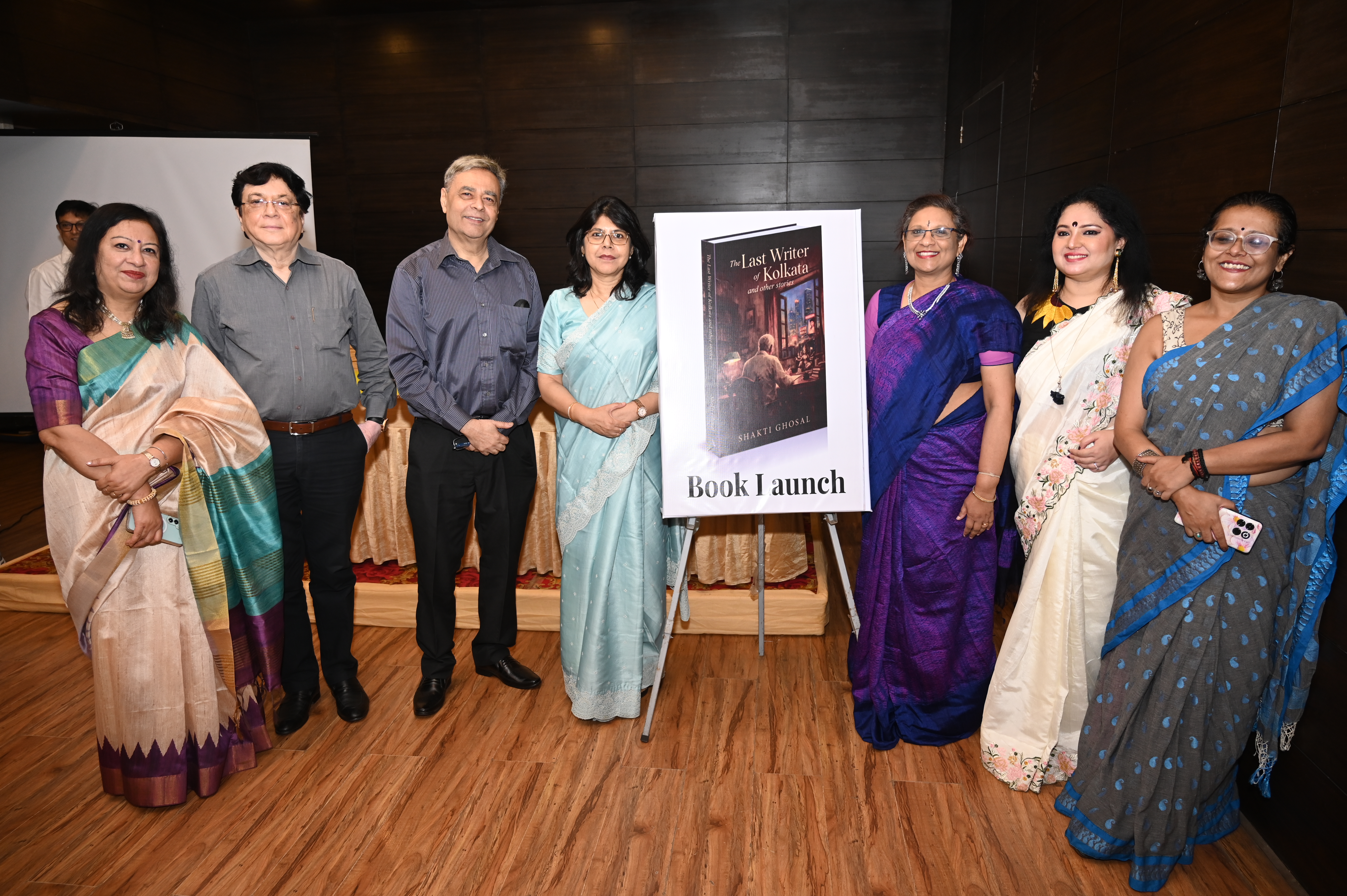
A few Saturdays back, at South City Club Kolkata, The Last Writer of Kolkata and Other Stories began its journey into the world — not merely as a book launch, but as a conversation about the times we are already living through.
What made the evening truly special was the richness of the panel discussion moderated so thoughtfully by Dr. Vishnupriya Sengupta, alongside the deeply perceptive insights shared by Sanjib Chaudhuri, Poorna Banerjee, and Chitralekha Datta. Shawan Sarkar anchored the evening with warmth and elegance.
The discussion moved across many landscapes:
A Kolkata where memory itself becomes a commodity.
A Sundarbans struggling against rising tides and ecological collapse.
A future where human thought can be manipulated through neural networks.
An aging society where loneliness, migration, and technology redefine the meaning of home.
Yet beneath all these imagined futures lay one central question: ‘As the world changes around us, what does it mean to remain human?’
What touched me most was the engagement of the audience — the reflections, questions, disagreements, and personal stories that followed. It reminded me that fiction, at its best, is not an escape from reality, but a mirror held up to the forces quietly reshaping our lives.
My heartfelt gratitude to everyone who attended, participated, encouraged, photographed, listened, questioned, and stayed back afterwards for conversations over tea.
Books may begin in solitude. But they truly come alive in dialogue.
If the above themes intrigue you, I invite you to explore more about the book and the stories at: www.shaktighosal.com
Set in a near future shaped by forces already gathering momentum, this collection explores what happens when irreversible hard trends collide with ordinary human lives. From climate catastrophe and algorithmic control to cultural erasure and institutionalized ageing, each story follows characters forced to rethink love, loyalty, memory, and courage as familiar worlds quietly transform around them. These are not tales of spectacular collapse, but of subtle reckonings—where survival lies not in resistance alone, but in choosing what must still be remembered, protected, and passed on.
The Last Writer of Kolkata In a near-future Kolkata where memory, culture, and even grief are packaged and sold, an ageing writer quietly records a city that no longer listens. When his private words are appropriated and monetized, the story becomes a haunting meditation on erasure, resistance, and the fragile dignity of remembering in a world that profits from forgetting.
2056: The Year of the Water and Fire In a near-future Sundarbans battered by super-cyclones and rising seas, a grieving environmentalist, his resolute daughter, and a sentient AI boat are caught between prophecy and science as fire erupts beneath the ocean. As water and flame converge, the story asks a haunting question: when nature reclaims its power, is survival an act of technology, faith—or human courage to stand and choose?
Echo Chamber In a near future where minds are seamlessly linked and memories can be accessed, altered, and weaponized, a gifted intelligence analyst uncovers a conspiracy that turns thought itself into a tool of control. As truth, identity, and free will begin to blur, the story confronts a chilling question: when belief is engineered, is freedom still a choice—or merely an illusion?
When the Rain Remembered In a near-future Kolkata where ageing has been systematized and kindness regulated, an elderly couple shelter a displaced child inside a gated retirement enclave that has forgotten laughter. As rain, unrest, and quiet courage unsettle rigid rules, the story becomes a tender meditation on belonging—asking whether homes are built by policy, or by the human instinct to care.
The Last writer of Kolkata and other stories is making waves amongst discerning readers. To know more, visit: http://www.shaktighosal.com
Ron with his wife Oishi were staying in their serviced apartment in Pakhiralaya; they were on a visit to Sundarbans. Their daughter Rusha had not accompanied them on that trip because of college work. That evening was heavy and suffocating, as a cyclone loomed. Oishi, with a set of volunteers, was working to strengthen bandhs and send supplies to an isolated fishermen community.
Despite Ron entreating with her to come hinterland to safety, Oishi had remained stubborn.
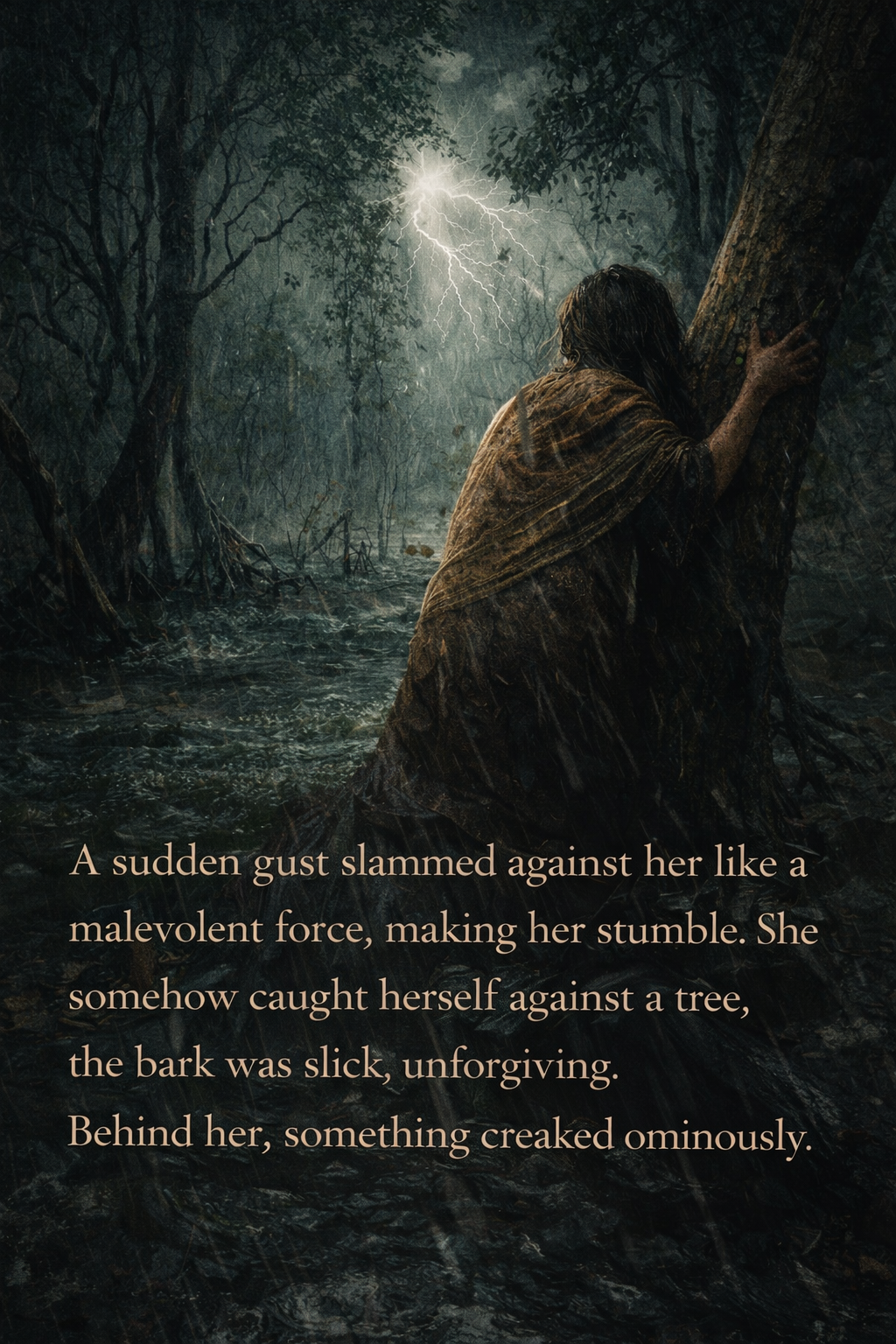
Rasping breath, hurried footsteps—Oishi’s silhouette moved through the dense mangrove shadows, her figure flickering in the erratic glow of distant lightning. The wind howled through the tangled branches, the sound merging with the guttural cries of unseen creatures.
Her breath was coming in short, sharp gasps. She clutched her shawl tightly around her, the fabric soaked and heavy against her skin. The path back to the apartment was barely visible, obscured by the relentless downpour. The ground beneath her feet was treacherous, a shifting sludge of mud and tangled roots.
A sudden gust slammed against her like a malevolent force, making her stumble. She somehow caught herself against a tree, the bark was slick, unforgiving. Behind her, something creaked ominously. The storm was trying to shift the forest itself, bending it to its fury.
The sound came, low at first, then a deafening crack. The air trembled with it. A loud whooshing sound accompanied the toppling of a tree. Oishi turned, eyes wide, searching. A massive limb, gaunt and jagged, descended toward her in an unstoppable arc. The sharp end glinted in the erratic lightning, a spear of nature’s wrath.
She tried to move. But it was too late. A piercing scream became a crescendo, riding atop the growls and grumbles of thunder, rising between the heavens and earth. And then, silence, it was swallowed by the storm.”
The mysterious Pakhiralaya in Sundarbans, the planet’s largest surviving estuarine mangrove forest, features in the story ‘2056: The year of the Water and Fire’, part of my book ‘The Last Writer of Kolkata and other stories’. The book is making waves amongst discerning readers. For more details, visit: http://www.shaktighosal.com.