The Royal Bengal Tiger was always just beyond the frame—a whisper in mangroves, a rumour in grasslands, a story told by guides with knowing smiles.
In the Sundarbans, they warned us, “Don’t look too hard. If you see one, chances are you won’t be seen after.” We looked anyway. We saw nothing.
At Ranthambore National Park, dawn and dusk gave us….. Pugmarks, droppings, and growing humility.
At Periyar Wildlife Sanctuary, they didn’t even pretend. “Forget it,” they said kindly.
And then— it was the turn of Tadoba Tiger Reserve……where, quite unexpectedly, fortune decided to shift…. and behave like Lucknow hospitality.
It began like a well-directed play. Our jeep was rolling lazily when the guide suddenly sprang up, as if the forest had whispered directly into his spine— “Look behind!”
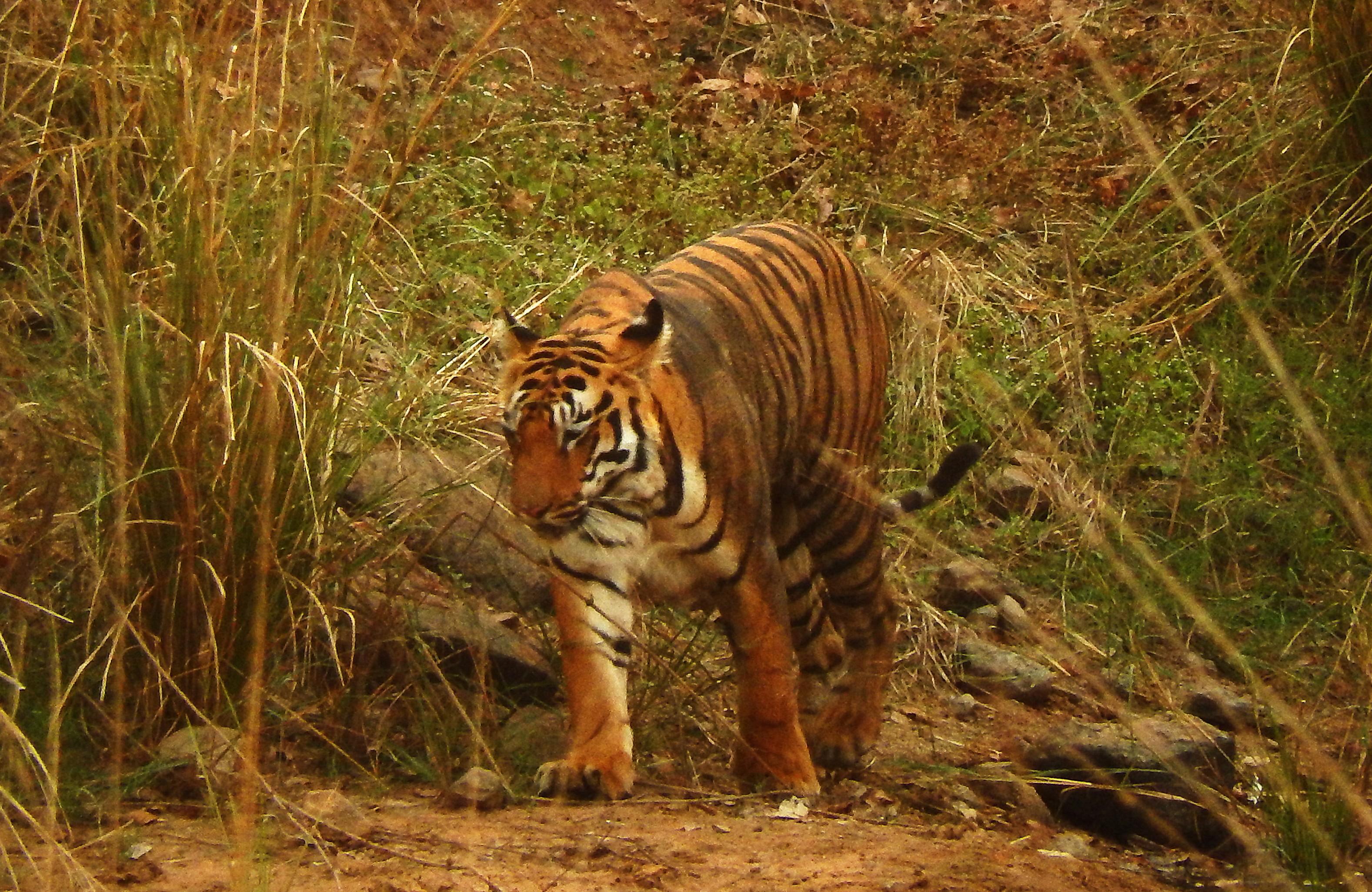
And there she was. A tigress. Standing squarely on the road. Unhurried. Unapologetic. Entirely in charge.
She gazed past us, not at us— as though we were merely an inconvenient paragraph in her story. A low, resonant rumble followed. And then another and another.
“That,” the guide declared with reverence, “is the mother calling her children.”
Of course she was. Even in the wild, mothers don’t wait forever.
What then transpired in front of our eyes was akin to a screenplay. But of the most elegant kind.
As we continued to be transfixed by the one behind, the guide shouted again and pointed. From the front, another tigress appeared—a sibling, perhaps…….She carried a prey in her jaws with the nonchalance of someone bringing snacks to a gathering.
The mother’s rumble deepened.
Translation (we imagined): “Food is fine. But where are the children?”
And then we saw them again. Three grown cubs, walking in a line— like reluctant teenagers responding to a call they had heard thrice already.
They were magnificent. And mildly disobedient.
The mother paced the shoreline now, her calls shifting between soft persuasion and unmistakable authority. It was a language older than words— half love, half command. The forest listened. So did we.
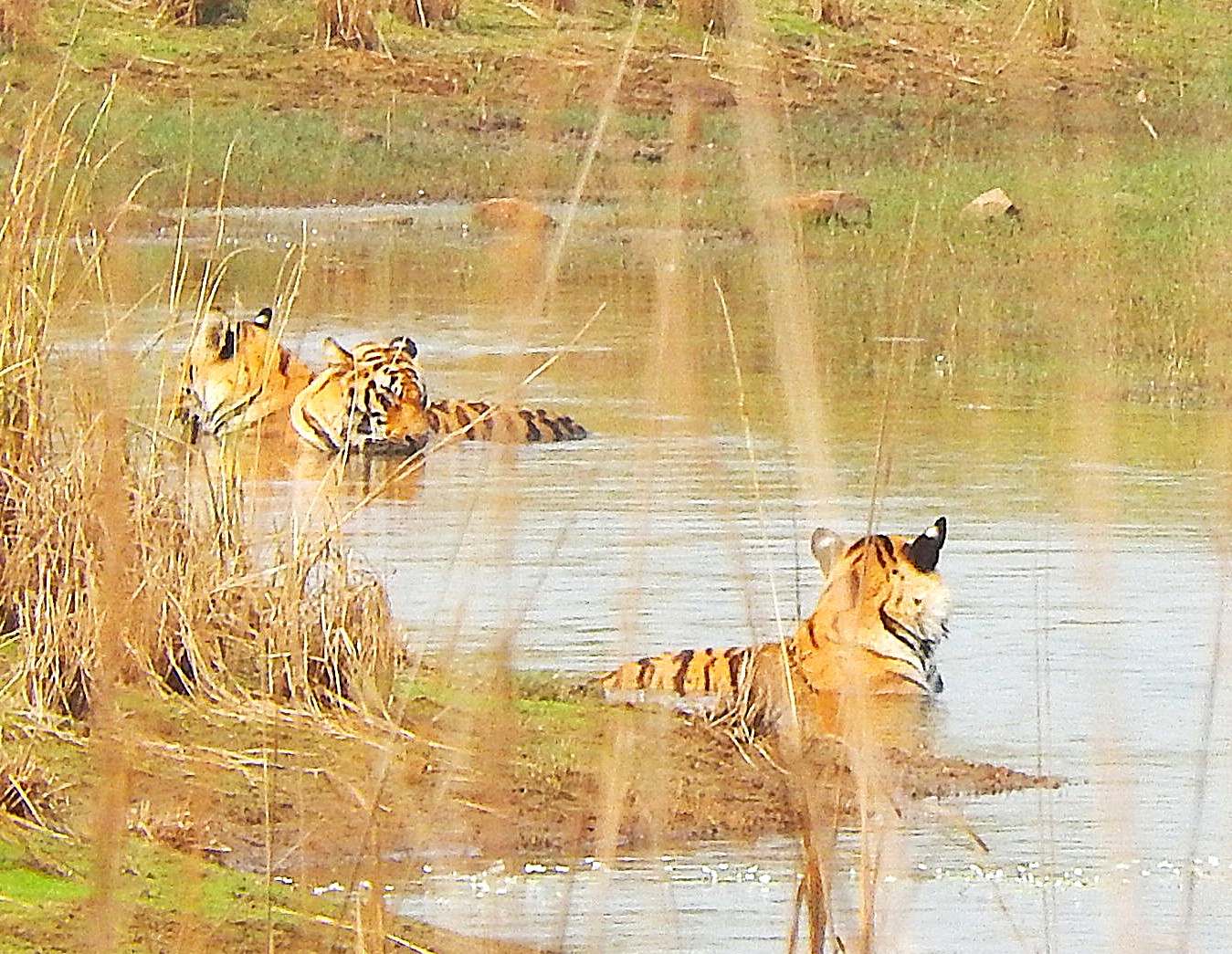
One cub made the first move. It slipped into the water, cutting through it with quiet determination—towards the waiting mother. The other two paused. Of course they did. Every family has those who hesitate at the edge.
The mother, now joined by the brave one, turned and looked back at the rest of the family on the other side. A decision was made and the mother and cub swam again. Not away, but towards the uncertain. And then, as if reminded of something fundamental, the remaining two followed.
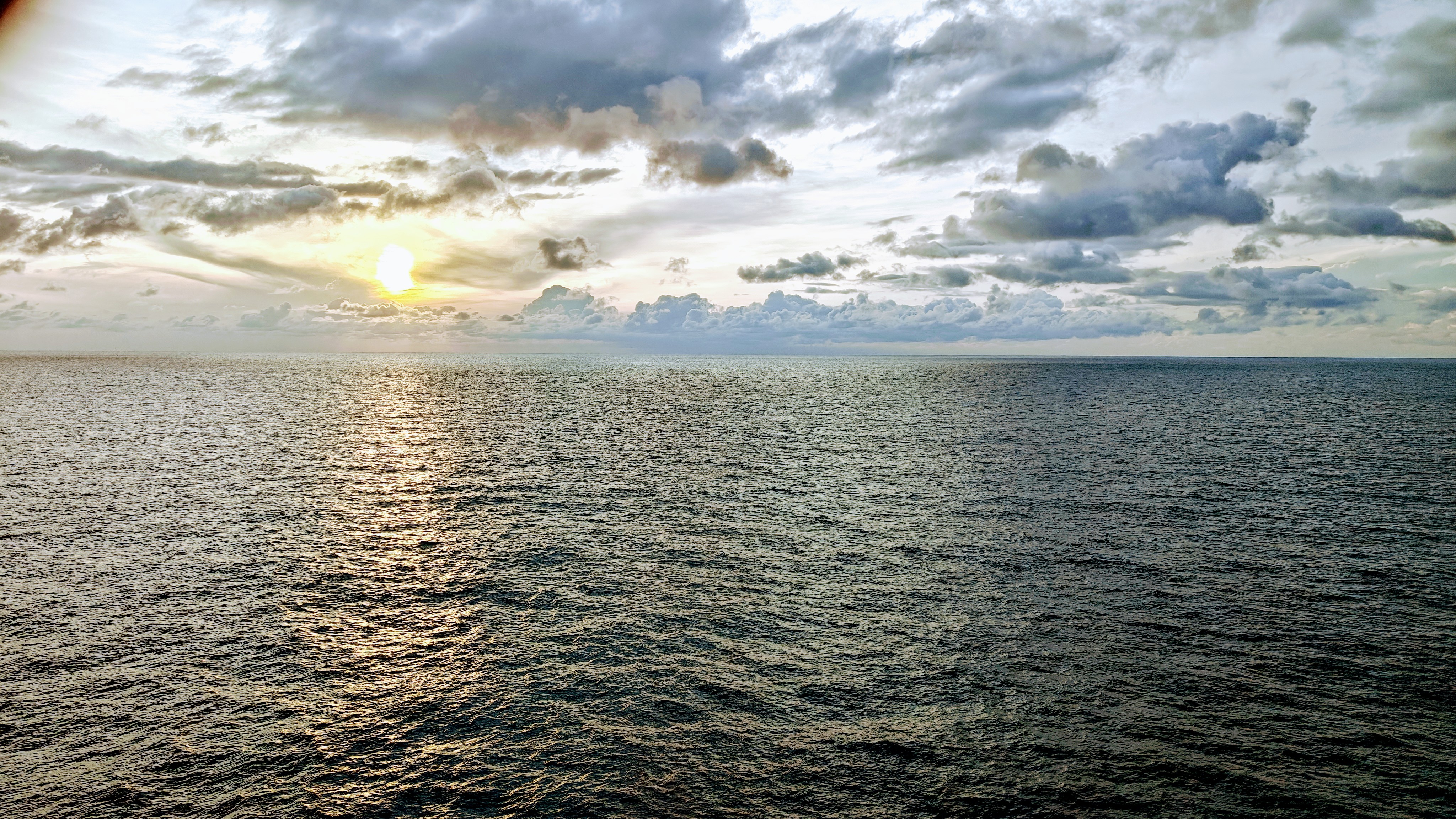
For a moment, time forgot to move. Four tigers. Water rippling. Sunlight holding its breath. And us— utterly irrelevant, yet impossibly privileged.
We had spent years trying to see a tiger. This time we were seeing something else. Not power. Not danger. Not even wilderness. We merely saw a mother trying to gather her children.
And in that quiet, persistent calling, echoing across water and time, the jungle revealed its oldest truth:In every world, wild or civilised, the fiercest force is not the hunt—it is the pull of belonging.
After years of good intentions and postponed plans, we finally pulled off the Great Family Cruise – ten of us, one ship, two waterslides, twenty-three ducks, and a Cruise Director who could’ve moonlighted as a tornado.
From gliding over ocean waves to sliding into water-slide mayhem (albeit with minor misadventures), from buffet binging to Broadway bopping – here’s how we discovered that the only real triangle in Bermuda is one made of sun, sea, and stuffing ourselves silly. Dive into our cruise tale below!
“We had joy, we had fun, we had… sunburn, and the distinct feeling that gravity works differently on a cruise buffet.”
For several years, our family cruise plan floated in the misty sea of ‘someday’. We’d talk about it, sigh wistfully, and then shelve it in favour of life’s more pressing annoyances – work, school schedules, or the sheer logistics of aligning four households across two continents. But this year, the planets and the stars finally aligned – our schedules, and the price of cruise cabins. Over a weekend, the dates and the bookings were locked in over WhatsApp calls. The dream was on!
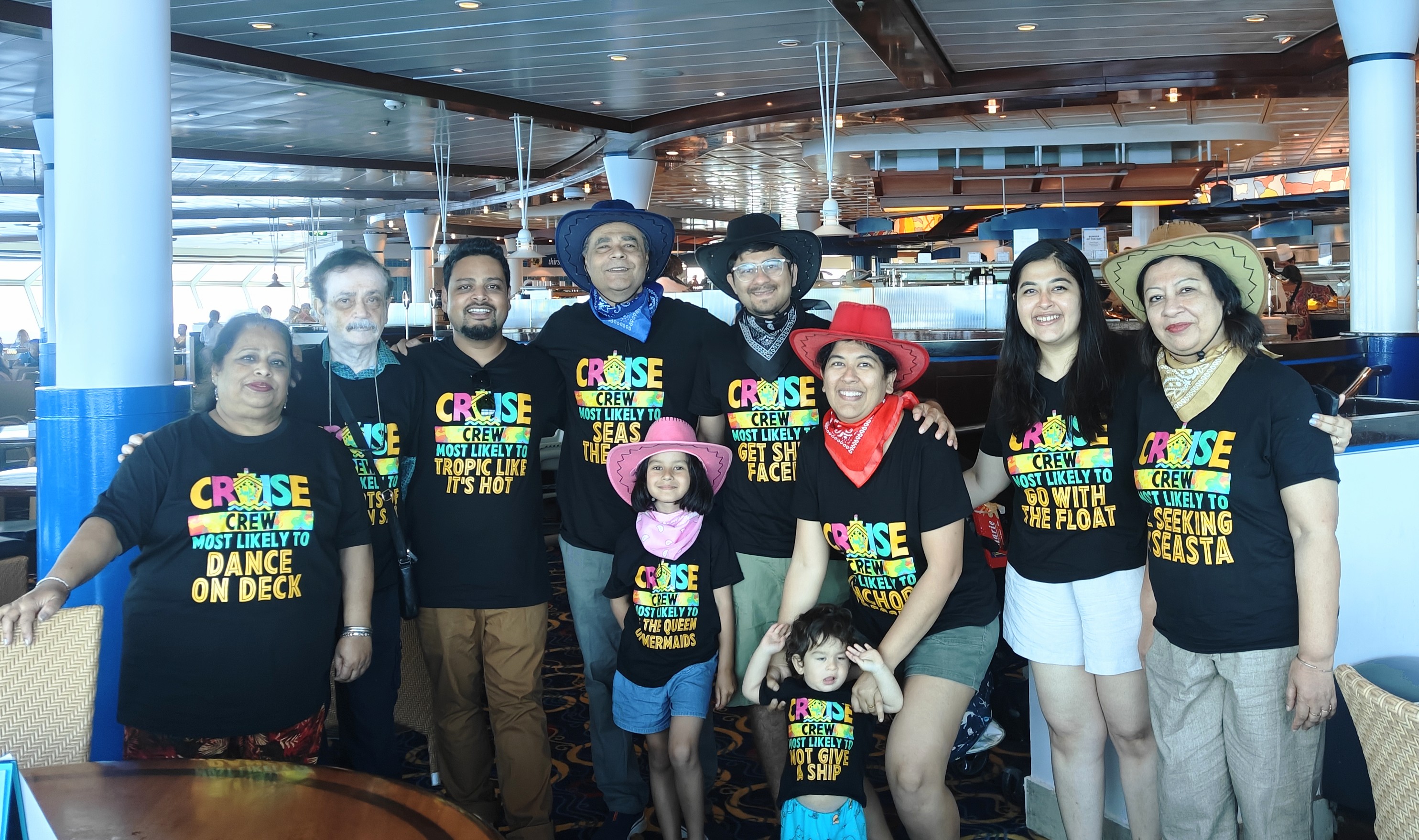
We had zeroed in on a 6-day Royal Caribbean Bermuda Cruise from Bayonne, New Jersey. As luck would have it, both our daughters, Riya and Piya, along with their husbands and children, were in New Jersey. Add to that, grandparents (that would be us), and we had a party of ten. One grand adventure. Two Uber XLs. Four bags per family (because who travels light when going to sea?).
**
The First Glimpse: Love at First Float
Royal Caribbean’s Liberty of the Seas stood docked like a skyscraper that had taken a horizontal sabbatical. Towering, gleaming, with the top decks bustling with sunhat-clad explorers and Pina Colada amateurs, the ship exuded glamour and gravity-defying engineering. How much of it was underwater, I kept wondering
The boarding was smooth; it smacked of efficiency. The Royal Caribbean staff operated with choreographed precision smiles. As we entered our 12th-floor staterooms, our suitcases were already neatly arranged at the door – not unlike obedient puppies waiting to be let in.
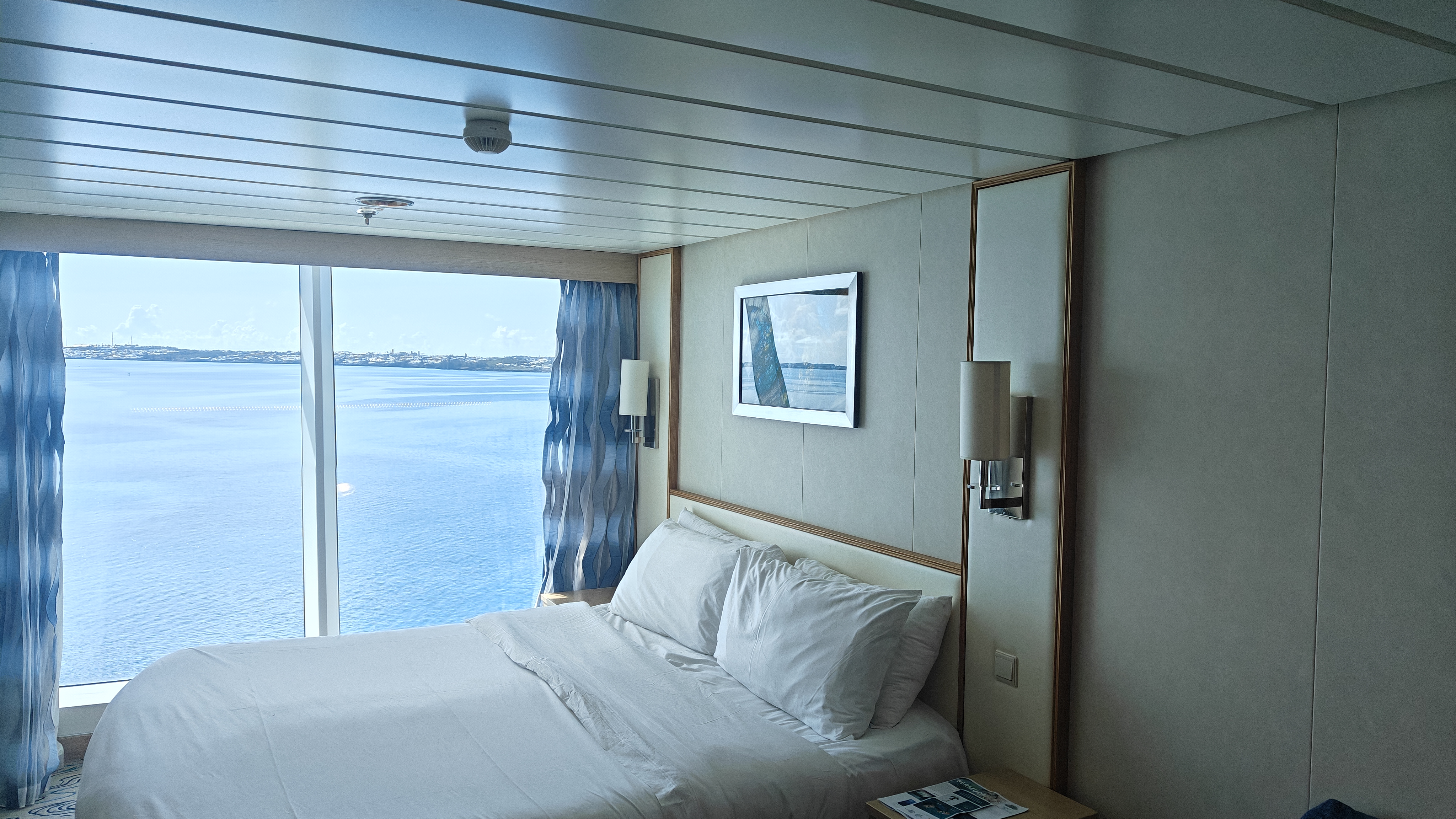
What greeted us inside made us gasp (some of it real, some theatrical I daresay). A wall-to-wall panoramic window offering glorious view of Lady Liberty herself, poised with her torch held high, seemingly wishing us bon voyage. The bed, king-sized and plush, promised to cradle us gently through the Atlantic lullabies.
**
Buffet Warfare and Windjammer Déjà Vu
The first port of call wasn’t Bermuda. It was Windjammer Café – the cruise ship’s legendary buffet zone, an all-you-can-eat haven where diets land up to perish.
“Is that an Italian pasta station or an entire province?” I asked no one in particular as I watched a chef wield a spatula with ‘Keanu Reeves in Matrix’-level reflexes.
Amid spoonfuls of mayonnaise-laced salad and pasta, memories came rushing back. Two decades earlier on a Mediterranean Cruise on Royal Caribbean’s Grandeur of the Seas, we used to frequent the Windjammer Cafe. And just like that, the generations merged across time and geography over plates piled high with memories – and shrimp tempura.
The Family crew @Windjammer
**
The Ship That Never Slept … so how could we
With fourteen floors of everything one could think of. From swimming pools to simulated surfing to an entire promenade that looked like it had been smuggled out of Barcelona, Liberty of the Seas wasn’t a ship – it seemed more akin to a floating nation-state. All this for a guest count of 3400 and service providing crew numbering 1200!
The fun deck
The Platinum Theatre promised nightly shows with a Vegas vibe, and boy, did it deliver. Between ice-skating opera (yes, you read that right) and a Broadway-style rendition of Saturday Night Fever—complete with Bee Gees hits that had us singing falsetto into dessert—we barely had time to digest our dinners.
Ice Opera@ Studio B
Dining was a delight. Our assigned fine-dining restaurant was Botticelli, where we were seated by a window overlooking the Atlantic. It was a view so romantic, it could’ve made an accountant recite poetry.
Fine Dining experience @ The Botticelli
But with great food came great responsibility. We soon fell into the classic cruise rhythm:
As travel writer Kate Simon once said, “A cruise is a floating hotel with the added excitement of going somewhere — and waking up to a new view every day.” We couldn’t agree more, except we were too full to sit up in bed and appreciate that view.
**
Enter: Tornado Tanya and the Duck Hunter General
A cruise, they say, is only as memorable as its Cruise Director. And ours was unforgettable.
Tornado Tanya — part emcee, part event planner, part motivational speaker, and possibly part caffeine incarnate — zipped through venues, hosting dance-offs, trivia, pool parties, and late-night karaoke. She had the boundless energy of a toddler on Red Bull and the voice projection of a Shakespearean actor.
Our six-year-old granddaughter Anaysha ( we call her Tiri) , meanwhile, had embarked on her own high-seas mission: duck hunting. Not the feathered kind, mind you. This was a scavenger hunt for plastic ducks artfully hidden across the ship’s decks, bars, and even casino slot machines. She unearthed twenty-three of them – a personal best, a family record, and possibly a ship-wide headline if only Tanya had announced it.
**
The Bermuda Triangle – A ‘safe’ Detour
When we finally docked at Bermuda, we were slightly disappointed that we hadn’t fallen into a time warp.
Bermuda
Bermuda was…well, let us say, stunning. Coral pink sands, aquamarine waters, pastel houses with white roofs – the island looked like it had been filtered through a tropical Instagram lens. But that tale, especially that of the triangle, deserves its own dedicated post. Let’s just say, we came. We saw. We didn’t vanish, unlike those myriad ships and planes of the years gone by.
Was this the triangle?
**
The Slides, The Slips, and the Near-Scandal
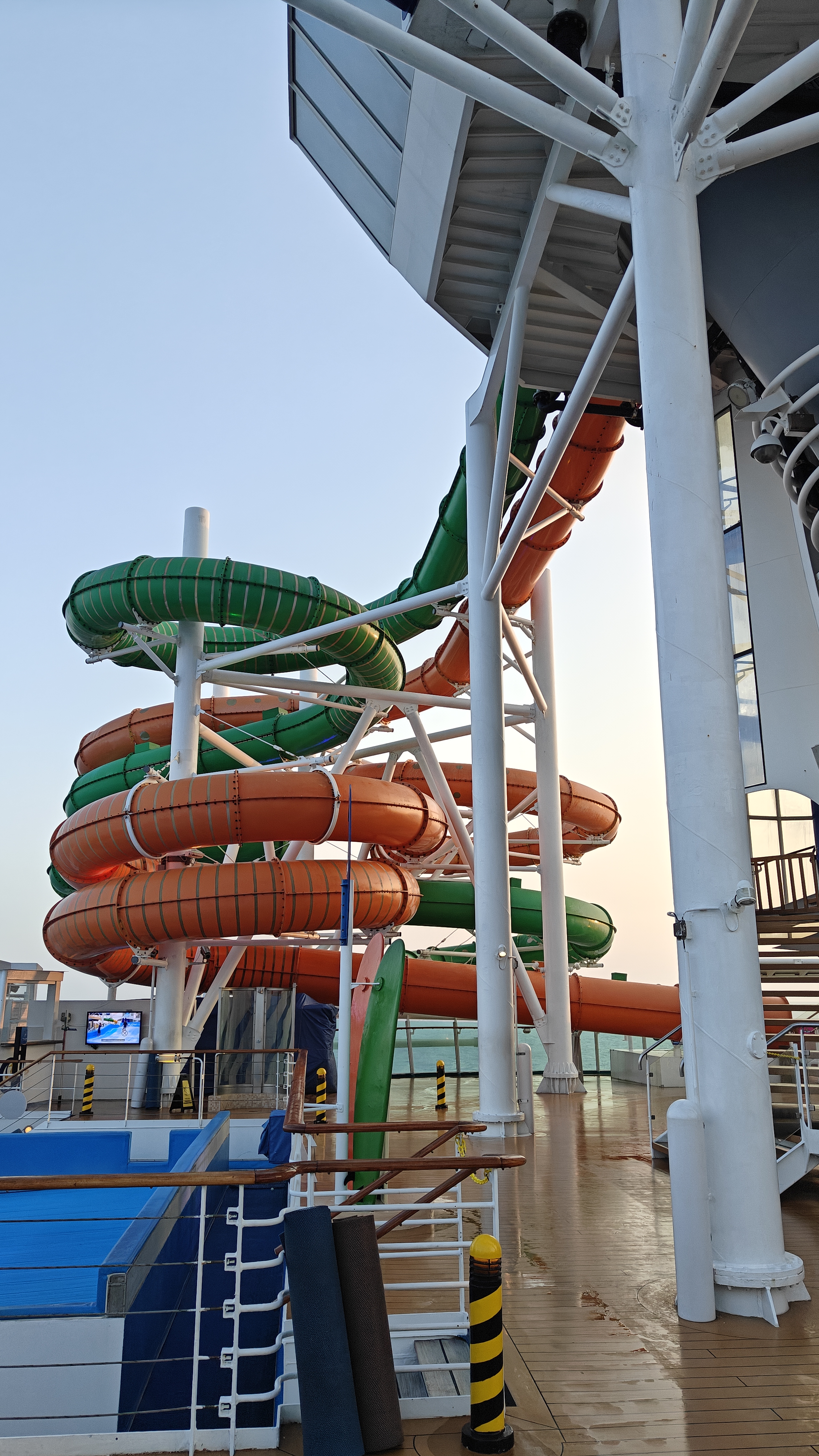
Now, every cruise needs a personal epic. Mine came courtesy of The Slides – those twisting and turning tubes of water doom perched high above the ship like serpentine sculptures of fun and fear.
There were two:
The Pink Slide – dubbed “family friendly”
The Green Slide – otherwise known as “abandon all dignity ye who dare to enter here”
Those Water Slides
My first attempt was on the Pink Slide. It was supposed to be slow. It was. Too slow. Midway through, I got stuck. Yes, stuck. Picture this: an elderly man, wedged inside a tube, using his hands to scoot forward like a plumber in a pipeline.
A voice crackled on the intercom, “Is everything alright in there, sir?” To which I replied, “Define alright…”
Not to be defeated, I took on the Green Slide next. This time, I whooshed out like a human torpedo—splashed spectacularly into the pool… and got stuck sideways. Lifeguard involvement ensued. Applause, or was it suppressed sniggers, was heard. Dignity? Left behind somewhere in the tube.
**
Final Reflections: More Than Just a Cruise
As our ship finally sailed back into Bayonne and we waved a fond goodbye to Liberty of the Seas, it hit us – this had not been just a vacation. It was a story. A memory. A time capsule. A chaotic, joyful, belly-filling, duck-chasing, water-sliding tale of ten souls choosing to pause life and just be… together.
A Stateroom with a view
As travel writer Pico Iyer said, “We travel, initially, to lose ourselves; and we travel, next, to find ourselves.”
Well, we certainly lost our diets. And found laughter, connection, and yes – even a part of ourselves.
And thus ends the tale of the Bermuda cruise. Bon voyage, until next time.
In musing……. Shakti Ghosal
References:
Simon, Kate. Cruising: The Only Way to Travel. Travel Weekly, 2016.
Iyer, Pico. Why We Travel. Salon.com, March 2000.
CruiseCritic.com – “Top 10 Cruise Director Superstars” (2023).
Royal Caribbean Official Website: Liberty of the Seas Deck Plan & Amenities (2024).
From the sun-drenched vineyards of Hawke’s Bay to the Art Deco charms of Napier and the cultured vibes of Wellington, our North Island journey in New Zealand was a heady blend of scenic beauty, fine wine, coastal elegance, and urban character. Here’s a glimpse of three unforgettable days soaking in the essence of Kiwi culture, cuisine, and charm.
Pacific Coastline
**
New Zealand often conjures images of snow-capped peaks, sheep-dotted meadows, and fjord-streaked landscapes. But on the North Island’s eastern edge lies a less-trumpeted triad of experiences that seduce the senses in a quieter, more intimate way: the sun-drenched vineyards of Hawke’s Bay, the Art Deco elegance of Napier, and the cosmopolitan charm of Wellington.
We began the day heading toward Hawke’s Bay, a region known for its Mediterranean climate, rich soils, and status as one of New Zealand’s finest wine-producing areas. The road wound through rolling hills and vineyard vistas that stretched out like pages from a postcard. It’s no wonder that Lonely Planet calls Hawke’s Bay “a food and wine lover’s paradise… where long sunny days and fertile plains create the perfect recipe for indulgence.”
Hawke’s Bay
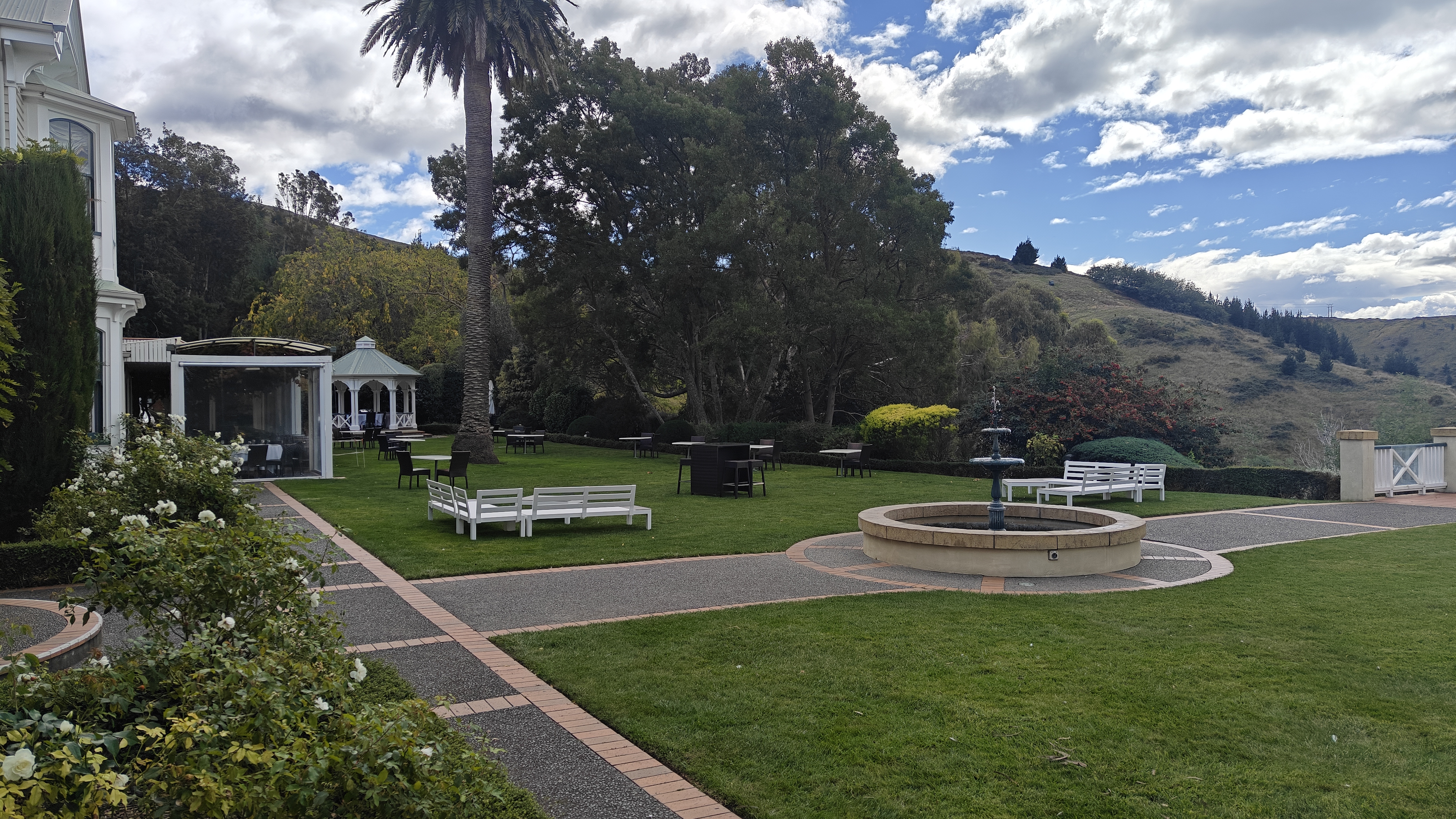
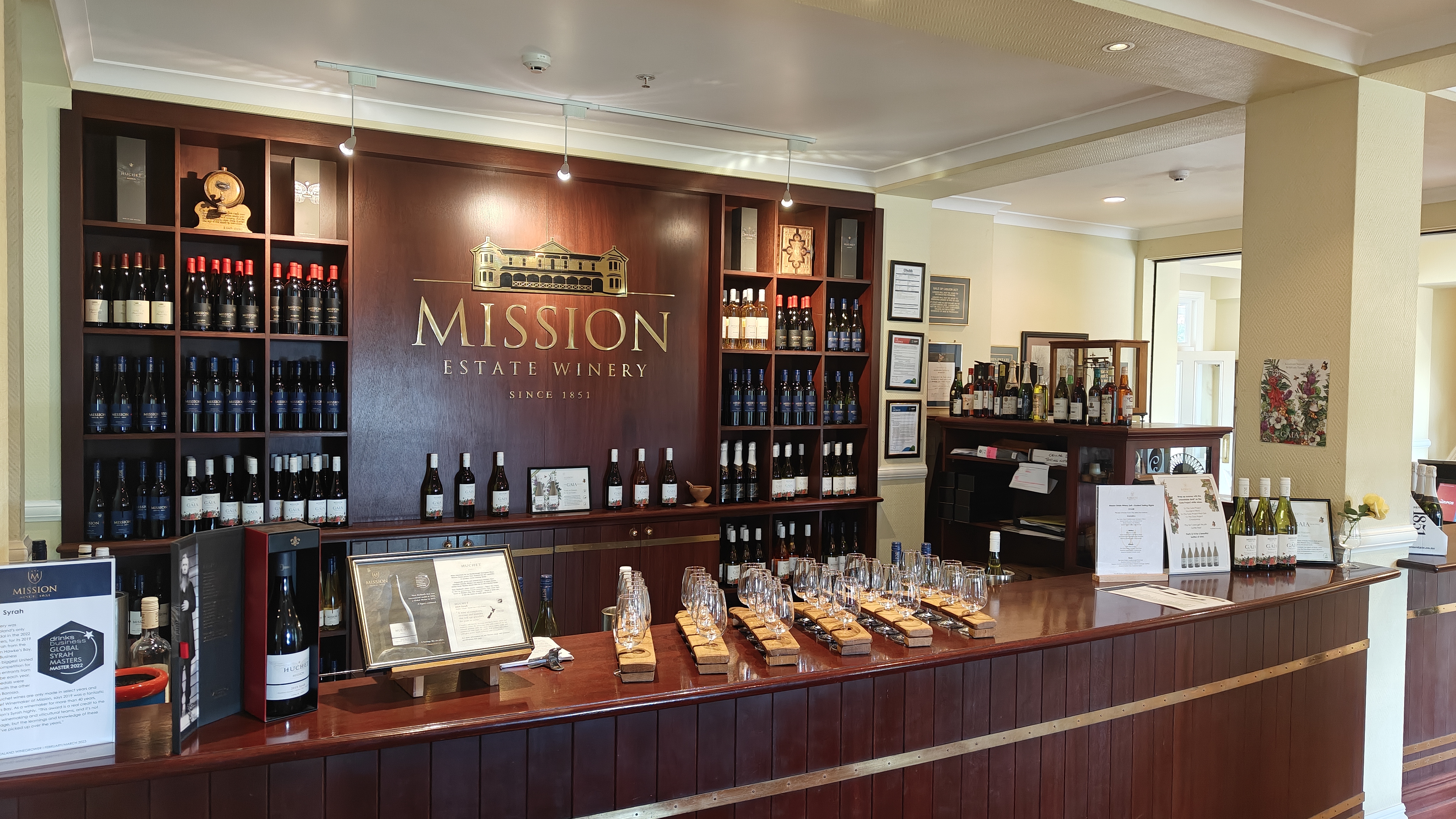
Our stop at Mission Estate Winery—New Zealand’s oldest established winery dating back to 1851—was the highlight of our visit. The elegant colonial-era structure welcomed us like an old friend, and we quickly found ourselves immersed in a world of subtle textures and fragrant bouquets. The Sauvignon Blanc stood out with its crisp minerality, but it was the velvety Syrah that stayed with us long after the last sip. A relaxed lunch followed in a shaded courtyard adorned with trellises, garden blooms, and birdsong. It felt more like a countryside dream than a scheduled stop.
Mission Estate Winery
The next chapter of our journey took us to Napier, a gem of a coastal town shaped by both tragedy and triumph. Rebuilt in the 1930s following a devastating earthquake, the town now proudly showcases one of the most concentrated collections of Art Deco architecture in the world. A stroll down its palm-lined promenade revealed a town wrapped in pastel tones and whimsical curves, as if time itself had taken a gentler turn here.
Art Deco
Condé Nast Traveler once described Napier as “a place where you’ll want to slow down and look up,” and that’s exactly what I did. As I meandered through the town, every façade seemed to carry a story—of resilience, rebirth, and remarkable aesthetic unity. Our hotel, perched with unobstructed views of the Pacific Ocean, felt like a poetic pause in this narrative. The sea, ever restless, offered a calming counterpoint to the symmetry of the streets.
The following morning, we descended further south to Wellington, the capital city nestled between rolling hills and a sparkling harbour. Where Napier wore nostalgia on its sleeve, Wellington was vibrantly alive—a city that fused culture and creativity with surprising sophistication. Its streets, both parallel and sloped, gave it a geometric charm, while cafés spilled out onto sidewalks filled with young creatives, office-goers, and the occasional street performer.
There’s something beautifully paradoxical about Wellington—it’s compact yet buzzing, orderly yet expressive. The Wellington Marina invited us to pause and breathe in the city’s rhythm. Boats bobbed gently in their berths, while locals wandered past us with wind-blown hair and takeaway coffees. No surprise then that the BBC once referred to Wellington as “the coolest little capital in the world.”
Wellington Marina
Dinner was a quiet affair, but we couldn’t resist passing by the city’s political heart—the Beehive, a part of the New Zealand Parliament complexes. The building’s modernist circular form is either intriguing or awkward, depending on your point of view. I found it oddly compelling, a symbol perhaps of the country’s bold architectural spirit, unafraid to provoke a reaction.
As we wound down our day in Wellington, I couldn’t help but reflect on the journey. Each place had offered something distinct: Hawke’s Bay’s pastoral elegance, Napier’s vintage soul, and Wellington’s urban charisma. Yet all were stitched together by a common Kiwi thread—warmth, nature, and quiet sophistication.
In a world where travel often tries to impress through spectacle, this journey stood out for its graceful subtlety. It didn’t shout; it sang.












 A New Beginning