Bethlehem and its Star


Bethlehem, a narrative woven with care,

From missionaries’ prayers to steel’s fiery glare.

Through seasons of change, the city stands tall,

A testament to history, embraced by all.

On an invitation from a close friend, we decided to take a weekend trip to Bethlehem in the state of Pennsylvania. The road travel was a pleasurable one on the I-78 highway and it took just under one and a half hours even though there was a drizzle.

We exited the highway to find ourself in a quaint town with its residential suburb. Directions by the Google map was impeccable and we were soon at my friend’s place nursing a glass of wine and some welcoming starters in front of a brightly decorated Christmas tree.

The conversation soon veered to the fascinating aspect of how the New World has used so many names from the Old World for its own towns and places. So, it seems to have happened for Bethlehem. And therein hang a couple of tales.

Driving through Bethlehem town, one cannot fail to notice the Victorian architecture, presumably from colonial times. The historic part of the town looks just that, with gabled sidewalks and stairways going down to different levels. This dates back to the mid eighteenth century when Bethlehem was founded as a missionary community by a small group of Moravians. The location chosen was where two rivers join, the Monocacy and Lehigh. What is less known is that this was also the time when wars with the original Indian settlers were being fought in the region. In the book ‘Snow over Bethlehem’ chronicling events recorded in old Moravian diaries, author Katherine Milhous writes about a group of children taking refuge in the strong stone buildings of Bethlehem to escape from the ongoing Indian wars. As Christmas approaches, the town of Bethlehem and the children are saved from an Indian attack by a miraculous event.

In Bethlehem’s embrace, a tale unfolds,

A legacy scripted, in stories untold.

Moravian missionaries, with purpose divine,

Founded a haven, where faith did entwine.

During the American War of independence, in the latter part of the eighteenth century, many continental force veterans fled to Bethlehem as the British army advanced from the east. Amongst them was the French aristocrat Marquis De Lafayette who enjoyed a father-son relationship with Commander in Chief George Washington. The Marquis is arguably one of the most fascinating individuals in the pages of history. He was instrumental in trapping British General Lord Charles Cornwallis (future Governor General of India) and his troops in Yorktown which led to the British surrender and losing the war. Subsequently, during the French revolution, as the commander of the National Guard in Paris, the Marquis saved King Louis XVI and Queen Marie Antoinette from the fury of a crowd in Versailles and escorted them back to Paris. He subsequently supported the transfer of power from the aristocracy to the bourgeoisie. In remembrance, Lafayette was granted honorary citizenship of the US in 2002.

Bethlehem has a nice downtown and we drove through a nice medley of restaurants, storefronts and pleasingly architectured buildings. The centre of attraction, visible from a distance, were the five rusted blast furnaces of the erstwhile Bethlehem steel company. Now known as the steel stacks, they serve as a dramatic backdrop to a newly created art and entertainment district.

Bethlehem steel, a symbol of the American industrial revolution, came into being at the turn of the twentieth century. The steel plant supplied steel for many of the famed structures like the Empire state building, the Rockefeller centre and Chrysler Building on Manhattan to name a few. However, it achieved iconic status during the second world war when the corporation President promised Franklin D. Roosevelt, “Mr. President, we remain fully committed to your war effort and will build and handover one warship a day”. The company kept its promise and exceeded that by fifteen ships!

Smokestacks whispered tales of industry’s might,

Yet, in Bethlehem’s heart, shone a guiding light.

Amidst the clangour of progress, a spirit remained,

Of community, resilience, and dreams unrestrained.

Sadly, the company could not keep pace with evolving technologies and competition in the second half of the century and filed for bankruptcy a hundred years after it came into being. The steel stacks stand in mute testimony to a glorious industrial past.

Bethlehem is known as the Christmas City of US. As one drives through the suburbs and downtown, this becomes apparent with every building joining the festive mood with wondrous lighting and decorations. We decided to visit the Christkindlmarkt, the annual Christmas market. The market had been set-up in the steel stacks area and consisted of three massive tents full of traditional artisans displaying their craft, delicious food, knick-knacks and even ice sculptures. The German look and feel were overwhelming.

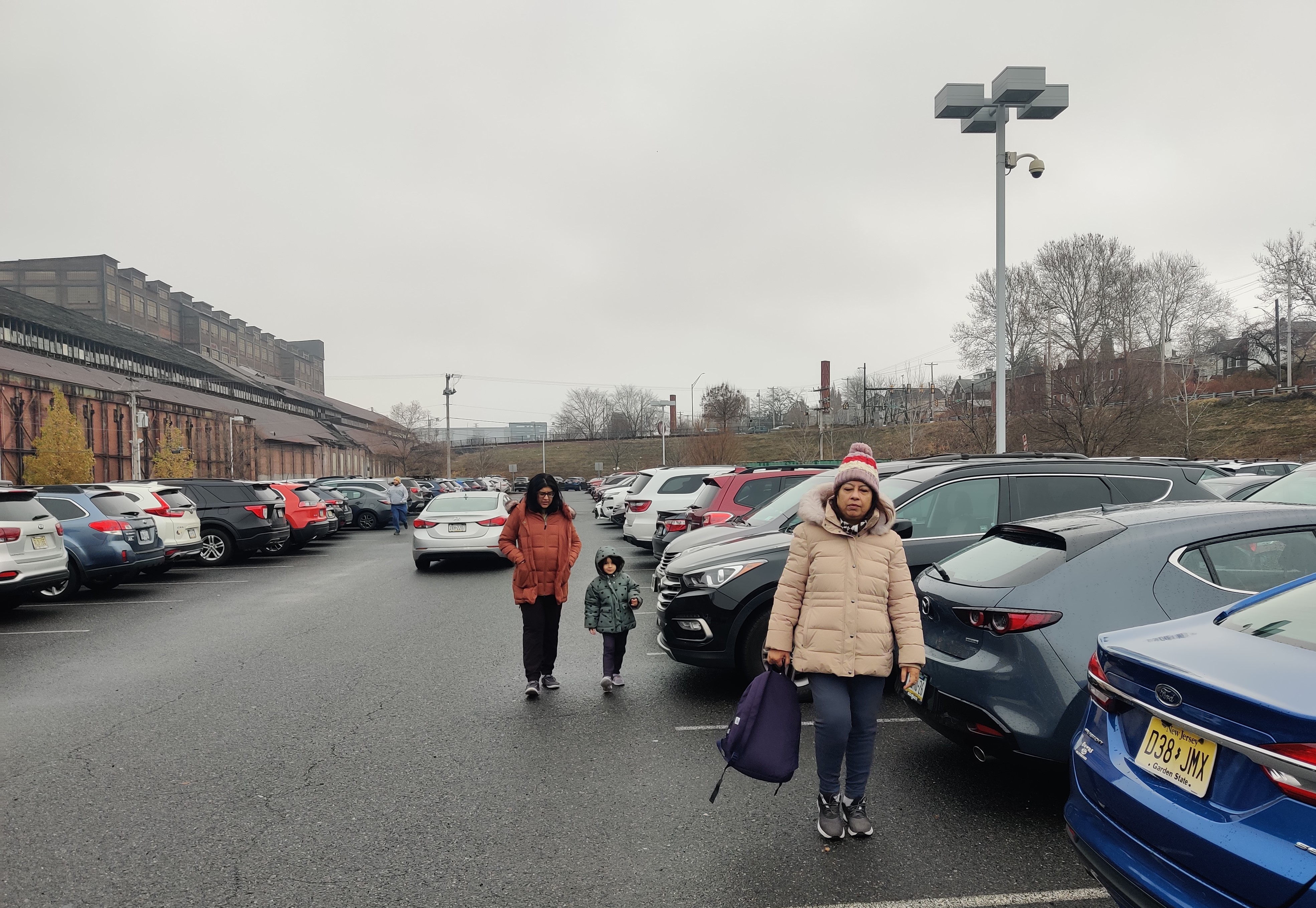
Even though a huge area had been designated for car parking, it was difficult to find a slot because of surging visitors.
As the embers of industry began to cool,

Bethlehem’s spirit endured, an eternal jewel.

From furnaces to festivals, the city transformed,

A Christmas market, where magic is performed.

My host mentioned about the star of Bethlehem in passing. I amusingly thought to myself, if Bethlehem is here, can the star be far behind. Sadly, we didn’t get the chance to spot the star of Bethlehem; we came to know that it is a cluster of LEDs installed at a place called the south mountain (we did not go there). Seems there has been a star on the south mountain since the 1930s.
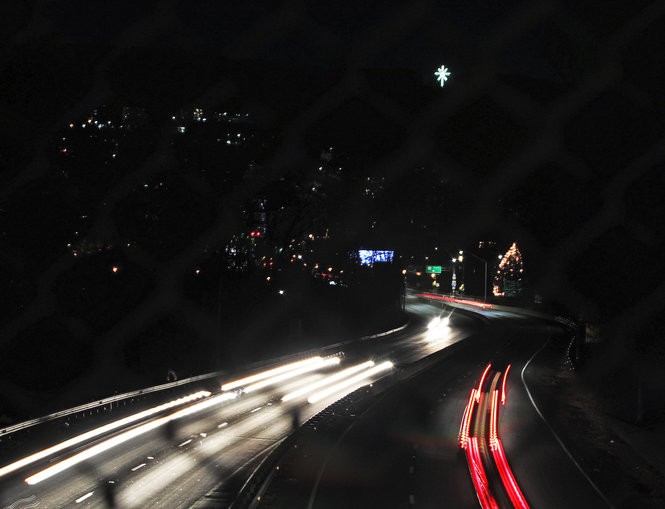
As we drove back, the Star of Bethlehem continued to be in my thoughts. How the three Magi from the East were guided by the star to Jesus’ birthplace in Bethlehem. How on that wintry night, some shepherds were in the adjoining fields guarding their flocks of sheep. And the depth of the parallel between the sheep being taken to Bethlehem to be sacrificed on Sabbath (Friday) and years later, Jesus Christ being led to Bethlehem and crucified on Sabbath. Did the star of Bethlehem see it all?

In musing…….                                                               Shakti Ghosal

Acknowledgement: Snow over Bethlehem by Katherine Milhous. Publisher: Charles Scribner’s Sons; First Edition (January 1, 1945)

Palestine


As the current Israel Hamas war spirals up into the stratosphere, amidst the 24X7 clash of words and images on social media and TV channels, I turn to that iconic graphic novel ‘Palestine’ by Joe Sacco to re-read some parts. The American Book Award winner of 1996, the nine series compilation was based on the author spending months in the Gaza strip in 1991-92. For no amount of ‘from the stands’ perspective of a situation as articulated by news readers sitting in London, New York or even Tel Aviv can match a ‘on the court’ as lived feelings and impressions.

In 1849, French writer Jean-Baptiste Alphonse Karr wrote, “plus ça change, plus c’est la même chose”, which in English translates to “the more things change, the more they stay the same.” Three decades on after Joe Sacco’s as-lived experiences, perceptions and writings, these words seem so prophetically apt when it comes to Palestine.

I remember the six-day Arab Israel war in 1967 in which the latter came out on top, annexing the Sinai Peninsula and the Golan heights, even though it fought the war on three fronts with Egypt, Jordan and Syria. As a school kid in Delhi at that time, I recall being influenced by how the conflict was being projected in the newspapers, majorly a stance of the Indian Government being an Arab supporter. To my mind it was the Arabs who were fighting a just war! My childlike awareness failed to realize that here was a tiny country fighting for its very existence.

The 6 Day Arab Israel war 1967

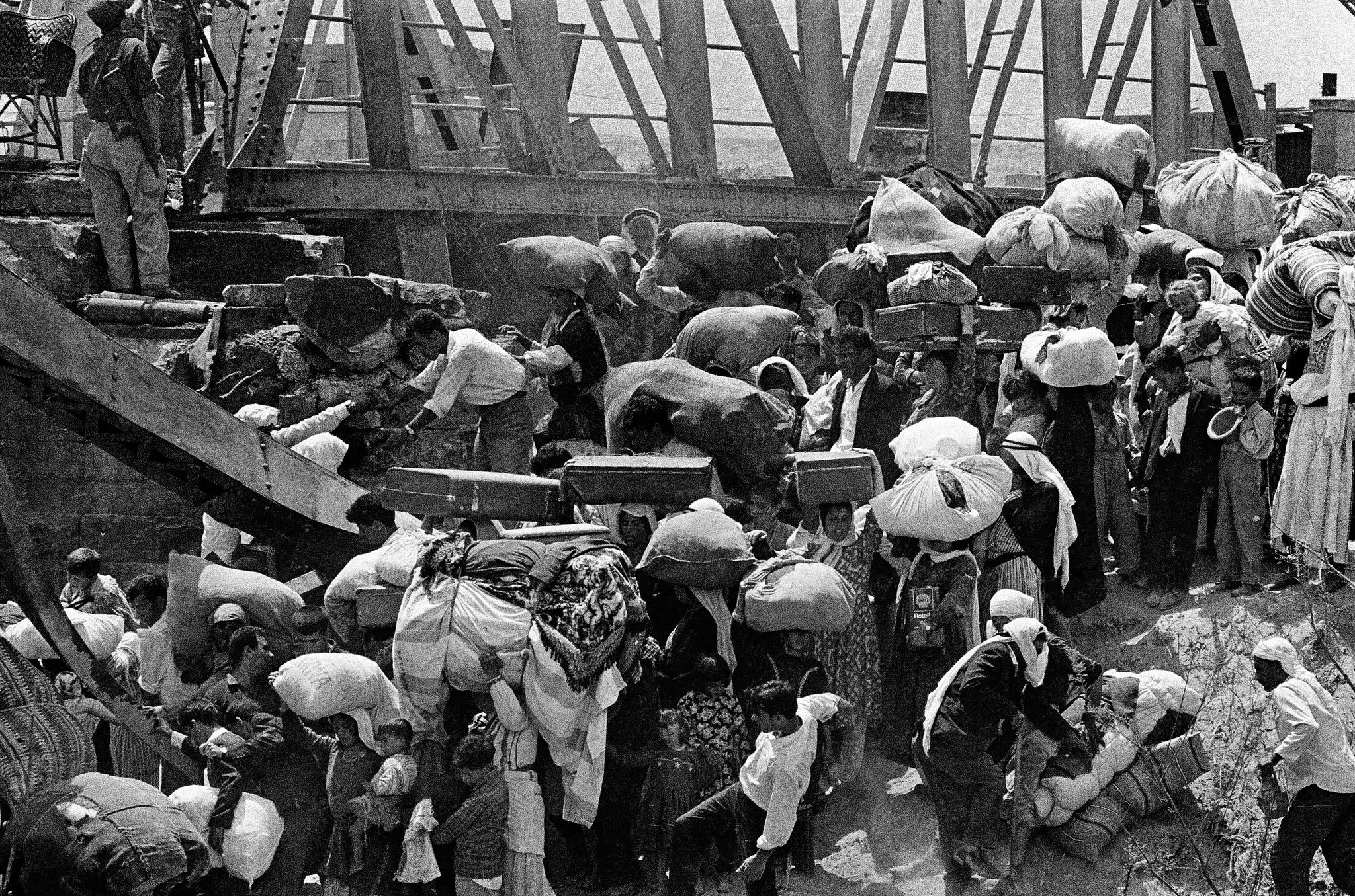
And a consequence which would hold huge implications for the future (and what we are evidencing today as Israel asks Palestinians to vacate North Gaza before the tanks roll in) was the displacement of three hundred thousand Palestinians and an additional hundred thousand Arabs. With victory came arrogance and this was aptly on display when the Israeli Premier Golda Meir remarked, ‘Palestinians did not exist!’

Palestenian Movement of 1967

Much water has flowed down the Suez since then. And with the water has flowed a succession of images (were they reflections of something deeper?), geo-political initiatives and newsbytes.  The shifting of the Palestinian militancy into Lebanon and the Lebanese Civil war of the Nineteen Seventies. The Oslo Peace accord of the Nineties which led to the establishment of the Palestinian National Authority on the West Bank and Gaza. The Palestinian Parliamentary elections in Gaza in 2006, which Hamas won and took over control.

What is ironical is that in its early years, Hamas and its founder Sheikh Ahmed Yassin received patronage of Israel who saw the organisation as a counterweight to the other Palestinian movements. A déjà vu’ situation akin to the US support to the Afghan Mujahideen during the Soviet occupation years, leading to the rise of Osama Bin Laden who then became the former’s nemesis. In the nineteen seventies, Indian PM Indira Gandhi of the Congress party allowed, nay supported, Bhindranwale and his cult to become a Frankenstein’s monster, in a bid to weaken the Akali Party’s hold in Punjab. A horrible decision which spun out of control and sowed the seeds of the Khalistan movement. History is replete with such situations, spawned by political expediency, gone horribly wrong.

As I sit re-reading parts of Sacco’s Palestine, the graphics and the words seem to detach and swirl around, before coalescing with the world news’s images I have been seeing on the screen over the last week.

The more things change, the more they stay the same…….

A Narrative which seemed to be both connected and disconnected from the societal prejudices of race, class and religion. Be it the image of the Palestinians as rock and missile throwing fundamentalists. Or that of the Israelis as a harsh and superior force with an apartheid mindset.

The perception of the Gaza strip of being an intolerable world of quasi freedom, military occupation, demolished houses, torture and brute force to ensure compliance of arbitrary Do’s and Don’ts by the Palestinians. What do you say to the people when this happens to them at the place which they consider their home?

To be a Palestinian in Palestine…..

The Palestinians’ scanty existence, anxious with uncertainty and deprivation. A life without a seeming purpose within Gaza’s inhospitable confines, waiting for a better tomorrow which never comes.

In the book’s preface, Edward Said writes tellingly about the existential lived reality of the average Palestinian in Gaza:

“ ….The vacancy of time , the drabness not to say sordidness of everyday life in the refugee camps, the network of relief workers, bereaved mothers, unemployed young men. Teachers, police, hangers- on, the sense of confinement, permanent muddiness and ugliness conveyed by the refugee camps which is so iconic to the whole Palestinian experience….

….. the scrupulous rendering of the generations, how children and adults make their choices and live their meager lives, how some speak and some remain silent, how they are dressed in drab sweaters, miscellaneous jackets, and warm hattas of an impoverished life, on the fringes of their own homeland, in which they have become the saddest and most powerless and contradictory of creatures….”

The imagery created by the words in my mind are at once frenzied and halting.

“….. how some speak and some remain silent….”  The telling graphic of the ubiquitous Israeli soldier refusing to let Palestinians through a roadblock at his whims and fancy because of a set of enormous, threatening teeth and a M-16 gun that he brandishes, flashes in my mind.

How some speak and some remain silent……

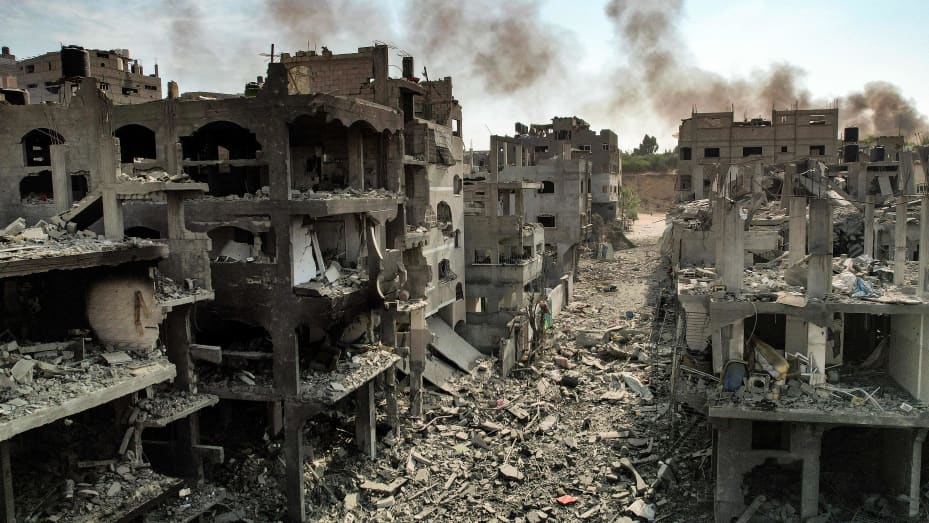
Images swirl on that daily screen in my bedroom. A detached view, I realize, is a blessed state. A state far beyond the reach of the Palestinians and the Israelis.  A young Israeli girl being abducted from a Rave festival and taken away on a motor cycle by masked Hamas gunmen. The naked body of a female tourist being displayed on the back of a truck. The swerving billowy streaks of rockets and missiles. Neighbourhood after neighbourhood in Gaza being bombed out of existence by Israeli firepower. The danger of the entire Middle East region getting engulfed in the conflagration.

The abductions and the terror …….

Rockets & Missiles….

The bombings…….

What is it that has led to the situation spiraling out of control like this, I wonder.

Is it that slow but relentless turning of the screw by Israel on the hapless Palestinians by inflicting insults and hardships on an already miserable existence? Is it the Palestinian mindset that perceives only a hopeless and ‘no light at the end of the tunnel’ existence because of a world order which has turned its back on their right to a respectable and decent life? Has the Palestinian society being pushed to a point when life or death no longer matter, as long as they can hit back at their tormentors?

Or is it a surge of anger in Israel of having been outmaneuvered and upstaged by someone who has been perceives as weak and unequal all these decades? Is it frustration of being ‘caught with one’s pants down’ with one’s vulnerabilities on display?

Be as it may, methinks a way forward can never be achieved through horrendous acts of terror as a last-ditch attempt to gain the world’s attention. Nor through a revenge war to carpet bomb, smoke out and eliminate embedded ‘terrorists’. Both ways unfortunately lead to innocent citizens suffering collateral damage with unimaginable hardships and sorrow all around.

A way forward would require both Israel and Palestinians to eschew Amygdala hijacks, accept the ground reality of each other’s existence through negotiated give and takes. A complex and politically difficult task but not impossible if there is a will and vision. But will the world display such a will and Leadership at this juncture?

God of Comfort
Send your Spirit to encompass all those whose lives
are torn apart by violence and death in Israel and Palestine.
You are the Advocate of the oppressed
and the One whose eye is on the sparrow.
Let arms reach out in healing, rather than aggression.
Let hearts mourn rather than militarize.

Rose Marie Berger, Oct 9th 2023

In musing….. Shakti Ghosal

Acknowledgement : Palestine by Joe Sacco. Random House, London