


The Liberty of the Seas was slipping gracefully through the turquoise waters of the Atlantic, teasing us with views of emerald islets dotting the horizon. As land loomed closer, so did our anticipation. Bermuda—a name that evoked equal parts paradise and paranormal. Our stateroom window framed the unfolding spectacle of the approaching land, pastel-painted resorts on the sea front and the occasional home peeking from behind palm fronds.
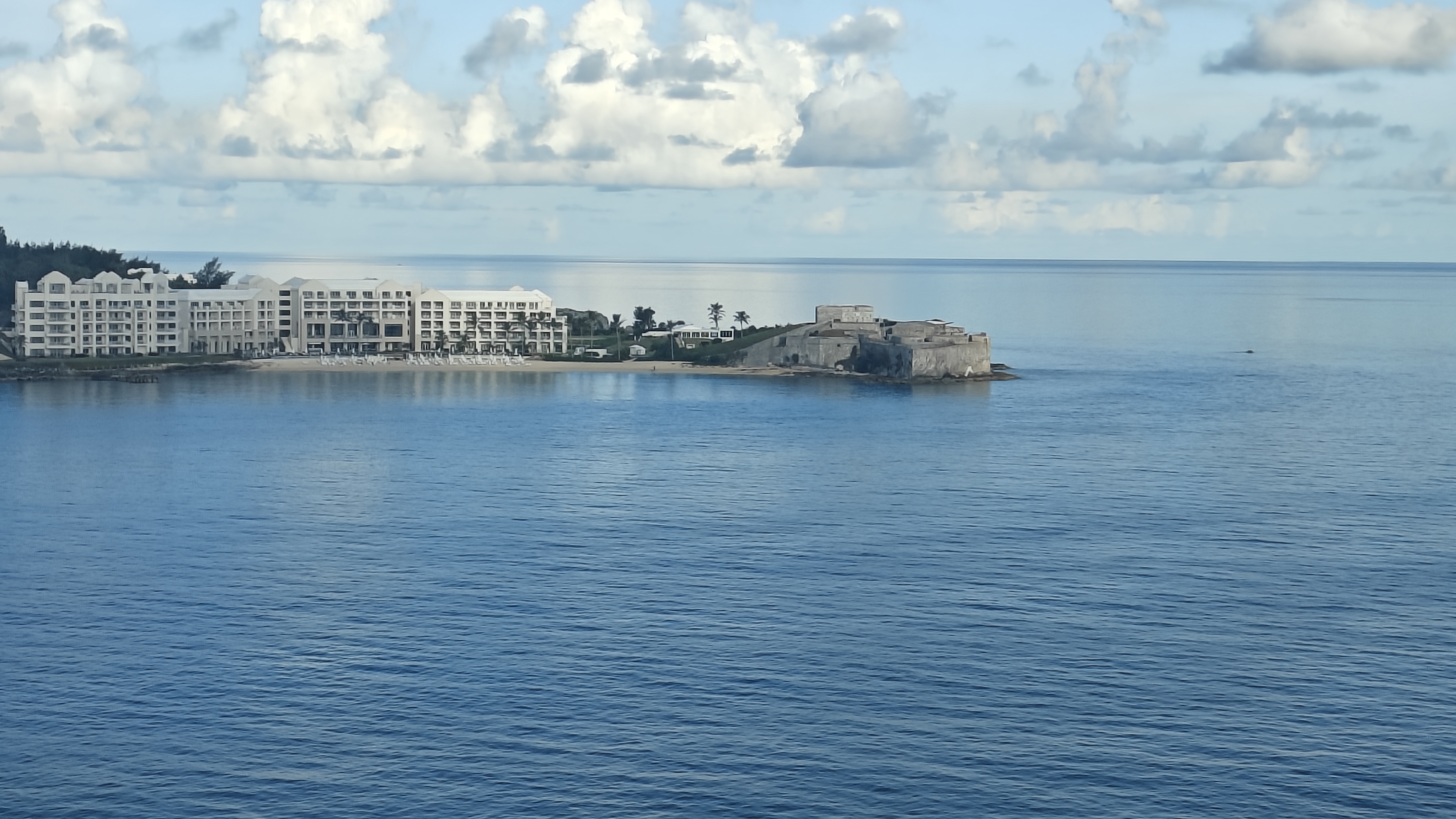
We docked at the Royal Naval Dockyard. Once a formidable British naval base after they were unceremoniously booted out of North America, it now plays host to cruise ships instead of battle cruisers. Think of it as the colonial version of “I’ll be back!”—except the British came back with museums, not muskets.

Once ashore, as we looked around for a suitable transportation, we were greeted by Darrel, a local guide and driver. Silver-haired, sun-tanned, and equipped with the storytelling prowess of a Caribbean mistrel, Darrel introduced himself with a flourish:
“Ninth-generation Bermudian! My ancestor came here as a slave. And now I drive tourists through my island. We’ve come full circle, haven’t we?”
We chuckled, unsure whether to be impressed or introspective. As it turned out, Darrel was about to take us on a version of Bermuda that the glossy brochures never dared to print.
A Personal Bermuda
Darrel wasn’t one for those touristy places. Instead, he showed us his own Bermuda. We were soon snaking past old churches and vintage homes, zigzagging across narrow causeways which connected Bemuda’s islands like hesitant footbridges between old memories.
He took us to his ancestral home; a weathered house nestled on a hillside shaded by cedar trees. “This is where I was born,” he said. There was pride in his voice, not nostalgia. He wasn’t just showing us a place, but offering us a piece of his DNA.
As we crisscrossed the islands, almost missing the transitions thanks to seamless causeways, Darrel pointed out the unique Bermudian water storage systems. There are no freshwater lakes or rivers in Bermuda; every roof thus is designed to catch rainwater and store it in underground tanks. “It’s not just eco-friendly,” Darrel declared, “It’s that, or die thirsty!”

We stopped at an old fort with low embankments, a relic from World War II. What was interesting was that it was armed with British, American, and Canadian gun emplacements. A curious cross-national collaboration.
“They were allies here before NATO was cool,” I quipped. Darrel grinned, “Yeah, and those guns haven’t fired in anger—only in memory.”
Shopping Malls, Lighthouses & Cost Shock
Next came the capital city, Hamilton, gleaming with shopping arcades, business hubs, and enough boutiques to bankrupt a Kardashian. “Don’t be fooled,” Darrel warned, “This is more for you tourists and offshore finance folks than for us locals.”
We could believe it. A loaf of bread cost more than a good bottle of rum back home. Bermuda, it seemed, was as expensive as it was beautiful—a tax haven with a sun-kissed poker face.
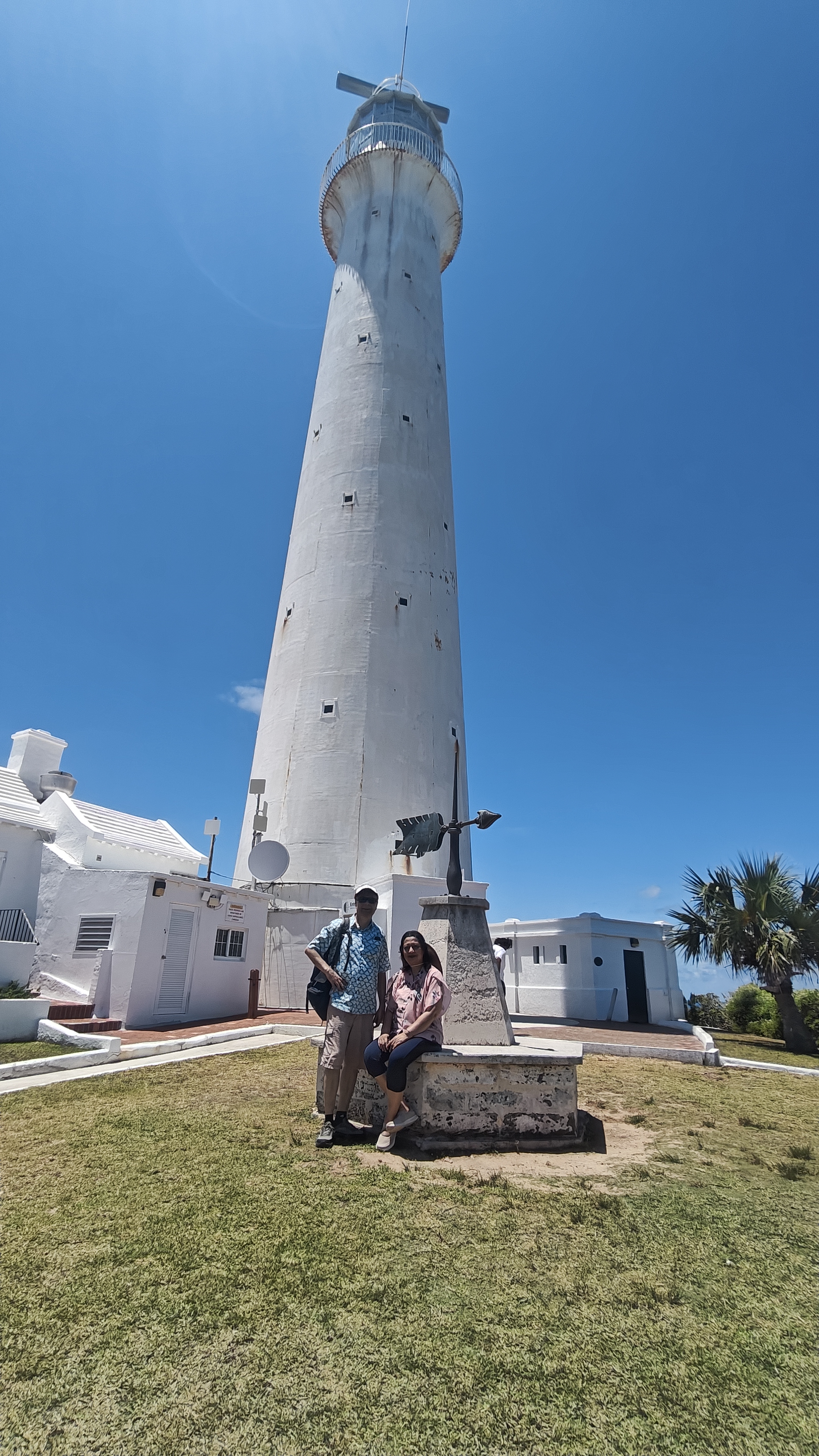
We also visited the Gibbs Hill Lighthouse, where the view from the base was majestic enough to spare us the knees wrecking climb to the top. From there, the Atlantic spread out like an endless blue silk sheet, dotted with hints of human habitation—each island a whisper in the sea.
Of Pink Sands and Rose Hearts
By afternoon, the sun had cast a golden glaze on the island. The temperature was perfect for what we came for: Bermuda’s legendary beaches.
We skipped the Instagram-flooded Horseshoe Bay (thanks to Darrel’s insider intel of it being overcrowded!) and headed to a more secluded beach nearby. And what a choice that turned out to be! Powdery pink sand caressed by clear turquoise water, gentle waves that beckoned instead of bullied, and—most intriguingly—a giant heart-shaped installation of roses left behind from what looked like a beach wedding. Darrel, never missing a beat, winked and said, “That’s either love… or excellent marketing.”
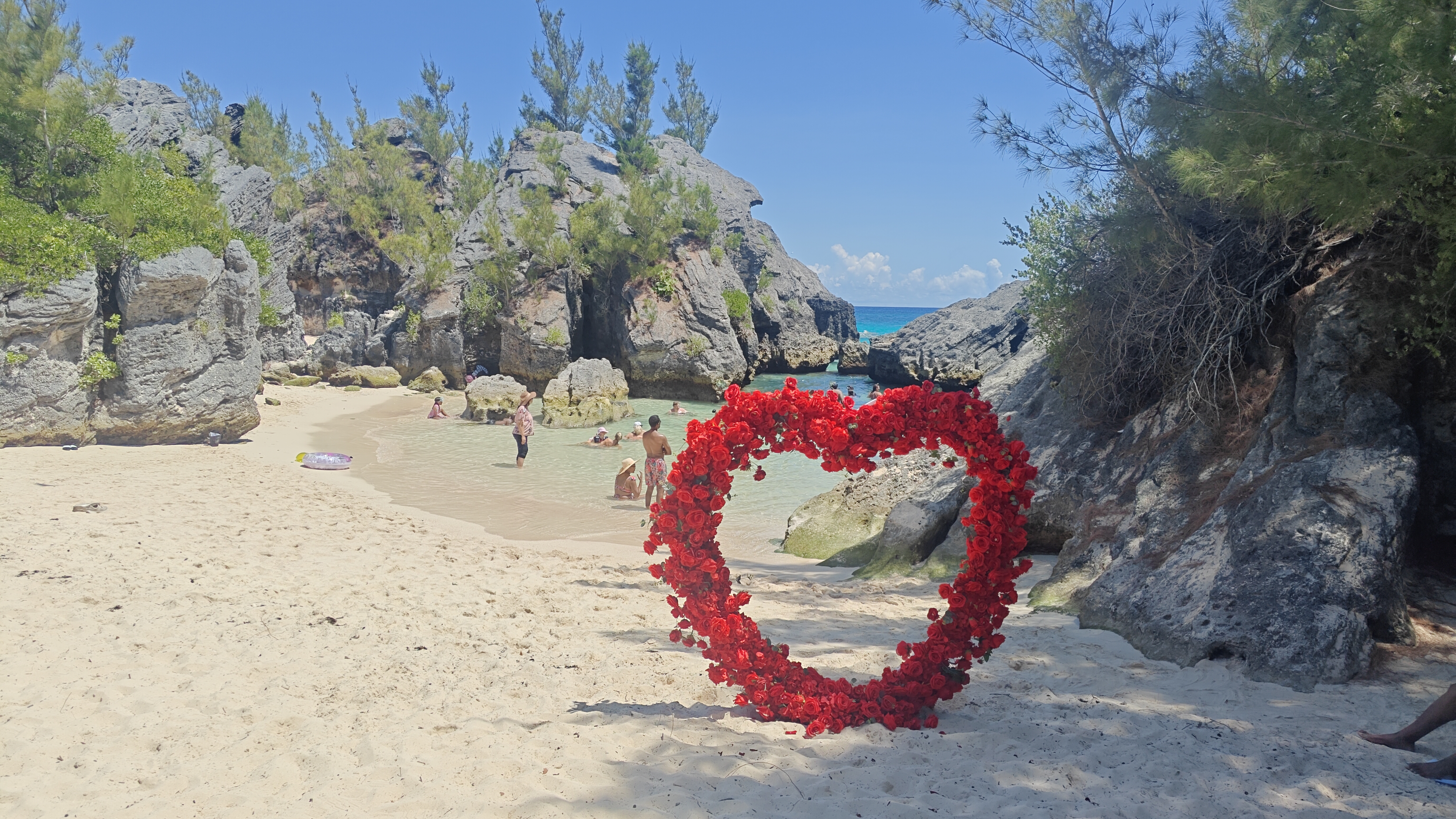
We did what anyone would do: took photos, dipped into the sea, and pretended we had discovered the place ourselves.
The Triangle of Terror… or Hype?
As the sun began its descent, we finally popped the question everyone avoids until dessert, about the Bermuda Triangle.
“So Darrel… any strange goings-on out there?”
He glanced at the ocean and said, “Let me tell you something. Some days, you see gas bubbles rising out of nowhere. Big ones. Not your usual air pockets. These are… different.”
He paused. “Could be alien. Could be methane. Could be the sea having gas. But small boats and aircraft? They don’t always like those bubbles.”

Darrel’s casual eeriness reminded me of the book I’d devoured in my Jamalpur college days: Charles Berlitz’s “The Bermuda Triangle.” The author had chronicled the infamous disappearance of Flight 19, a squadron of five US Navy torpedo bombers in 1945. The flight leader’s last radio transmission still rings like a Lovecraftian riddle:
“We cannot be sure of any direction… everything is strange… the ocean doesn’t look as it should.”
Some say it was magnetic anomalies. Others blame pirates, aliens, or even the lost city of Atlantis. Even National Geographic weighed in years later, shrugging off the mystery with a headline that felt like a sigh:
“No, the Bermuda Triangle isn’t real. Let’s move on.” (Source: National Geographic, 2017)
But standing on a beach where the sand is pink and the stories are surreal; logic starts to feel a bit… overrated.
A Farewell in Technicolour
As we returned to the Liberty of the Seas, the ship shimmering under the evening sun, Bermuda felt like a dream—equal parts sunshine and superstition.

Darrel dropped us at the dock, gave us a conspiratorial wink and said, “Now you know our secrets. Keep them safe.”
Bermuda had shown us its history, its heart, and maybe even a hint of its hauntings. Whether you believe in vanishing ships or just overpriced sandwiches, it’s a place that lingers.In your mind, in your phone camera, and if Darrel’s right, maybe even in your magnetic compass.
In musing…….. Shakti Ghosal
📚 References:
- Berlitz, Charles. The Bermuda Triangle. Doubleday, 1974.
- National Geographic. “No, the Bermuda Triangle Isn’t Real. Let’s Move On.” August 2017.
https://www.nationalgeographic.com/history/article/bermuda-triangle-mystery-disappearances-science - BBC Travel. “The Curious Infrastructure of Bermuda’s Water Tanks.” February 2020.
https://www.bbc.com/travel/article/20200219-the-island-that-catches-rainwater
 A New Beginning