
In an age of selective hearing, understanding whose voices are ignored—and whose are feared—reveals the deeper politics of power and truth.

Abstract
In a world overflowing with voices, some are never heard. Some are never allowed to speak. This article explores the crucial difference between those who are voiceless and those who are deliberately silenced. One group is ignored, the other is feared. Understanding this difference helps us see the mechanics of power, injustice, and the politics of listening in today’s world. As Noam Chomsky famously said, “The smart way to keep people passive and obedient is to strictly limit the spectrum of acceptable opinion, but allow very lively debate within that spectrum.”
**
The idea of this piece came to me when in a social media group discussion about the unevenness of spiritual access in India based on class, caste and privilege, someone quoted author Arundhati Roy’s quote that “There’s really no such thing as the ‘voiceless’. There are only the deliberately silenced, or the preferably unheard.”
The more I thought about what Arundhati had opined, the more I sensed that she had lumped two discrete aspects of our society into one.
What is being Voiceless?
I recall the first few days of India’s response to the COVID – 19 pandemic and the lockdown that ensued. When the country literally shut down with just four hours’ notice, millions of workers—daily wage earners, domestic helpers, factory hands—were stranded without transport, money, or food. With no options available and with little support, around 40 million workers began walking hundreds of kilometres back to their villages. What came to be known as the great migrant crisis of the pandemic.
The workers weren’t silent, in fact far from it. They shared stories, walked in mass protests, called journalists. But their pain barely entered the official narrative. The crisis was, for a time, treated like an unfortunate footnote in a larger national story.

Migrant workers during pandemic
“The working class was not just unseen—they were not considered,” wrote Harsh Mander in The Indian Express. “It was a failure of both empathy and accountability.”
These were people whose voices weren’t suppressed, but simply didn’t count. That’s what it means to be voiceless.
As sociologist Michael Schudson put it, “Communication is a resource distributed as unequally as income or education.” Some voices simply don’t travel—not because they’re weak, but because the world refuses to hear them. This is indeed ironic in an age in which speaking up in fact has never been easier. Through the universal access to tweets, videos, blogs, and platforms are everywhere. But being heard? That’s something else entirely.
Being voiceless doesn’t mean someone has nothing to say. It means that what they say doesn’t register. Their stories don’t make the news. Their ideas don’t get invited to conferences. Their lives rarely shape policy decisions. They live in the blind spots of our systems. One of the main aspects which makes our society unequal.
Now let’s look at the aspect of those who Are the Silenced?
In 2017, the gruesome assassination of Gauri Lankesh hit the headlines in India. A fearless journalist and activist, Lankesh had been a sharp critic of communal violence, right-wing extremism, and state-sponsored misinformation. Her Kannada weekly, Gauri Lankesh Patrike, became a platform for truth-telling and resistance.
Gauri was shot dead outside her home in Bengaluru, her murder was not random—it was a warning.
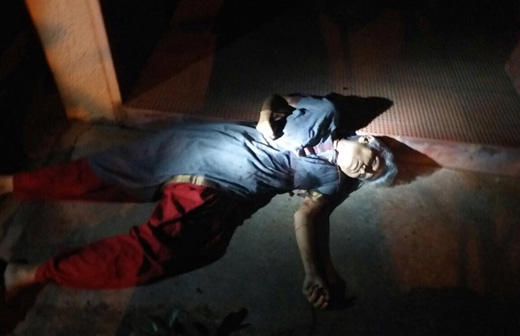
Gauri Lankesh assassination
As journalist Rana Ayyub wrote: “Gauri’s crime was that she refused to be quiet.”
Gauri Lankesh had a platform. She was being heard. And that is exactly why she was targeted. She wasn’t voiceless. She was silenced because her voice made those in power uncomfortable. To those in power, Gauri’s voice had become too powerful; her words shone light on dark places, threatened the status quo, exposed inconvenient truths.
A recent report by the Committee to Protect Journalists ( CPJ) noted that a record number of journalists were jailed in 2022—not for false reporting, but for exposing the truth. As the CPJ observed: “Censorship is no longer enough; silencing must be enforced.”
Can we now see the intrinsic difference between those who are voiceless, and those who are deliberately silenced? Some people, no matter how loudly they speak, never seem to matter. Others are quickly shut down because what they say matters too much. The first are ignored. The second are suppressed. And both are symptoms of a far deeper crisis of listening in our times.
Why the Difference Matters
At first glance, both the voiceless and the silenced seem to suffer the same fate: not being heard. But the reasons behind their invisibility are fundamentally different.
- The voiceless are ignored because they’re deemed irrelevant.
- The silenced are suppressed because they’re considered dangerous.
One is a symptom of systemic neglect. The other, of deliberate fear.
Understanding this distinction is vital. It helps us recognize the difference between absence and erasure, between invisibility and targeting.
The Role of Selective Listening
Today, listening has become selective and often algorithmic. Digital platforms and connectivities are amplifying outrage, repetition, and ideology—not complexity, dissent, or nuance. In such a space, it’s easy for the voiceless to disappear into the margins, and for the silenced to be made invisible through force or discrediting.
As Noam Chomsky famously said, “The smart way to keep people passive and obedient is to strictly limit the spectrum of acceptable opinion, but allow very lively debate within that spectrum.”. As I thought of this, I could see the Voiceless and the Silenced at the two ends of the truth spectrum. Both represent ‘uncomfortable truths’ for the political dispensation and the administration. It is the centre space which holds the ‘comfortable truth’ which the powers that be would always support and push to expand. The voiceless never make it into that spectrum. The silenced try to expand their end, encroach into the ‘comfortable truth’ space and unfortunately end up paying the price
So what can each one of us do?
We need to recognize that the difference between the voiceless and the silenced also changes how we respond. We might decide to support in the following manner.
- The voiceless need amplification. Their stories must be brought to the centre. This would require better representation, inclusive platforms, and ethical journalism.
- The silenced need protection. They must be defended by laws, by solidarity, and by public pressure. Their speech is often a warning bell the rest of us ignore at our own peril.
Both are vital to a functioning democracy. But only one—the silenced—reminds us that truth still threatens power.
In musing……. Shakti Ghosal
References
- Schudson, Michael. The Sociology of News. W. W. Norton & Company, 2000.
- Committee to Protect Journalists. Record Number of Journalists Jailed Worldwide. CPJ, 2022. https://cpj.org/reports/2022
- Chomsky, Noam. Media Control: The Spectacular Achievements of Propaganda. Seven Stories Press, 1997.
- Mander, Harsh. “Locked Down and Left Behind.” The Indian Express, May 2020.
- Ayyub, Rana. “Gauri Lankesh’s Murder Was Not an Aberration.” The Washington Post, Sept 2017

 A New Beginning
Thank you Shakti for sharing such an excellent article. Some of the names of those who comment are most hated right now. Gouri Lankesh’s killers along with Tendulkar’s killers will never be punished. Rana Ayub, Harsh Mandar and many like them are the most disliked people in our country.
Reading this a thought came to my mind. Haven’t we all become voiceless and suppressed? How many of us show the courage? How many of us share articles like this? Are we in this way being less faithful to our country and more to politicians?jj
LikeLiked by 1 person
Himanshu da thank you for your thoughtful and considered comment.
What you say, the questions you ask, carry a lot of weight for each one of us to ponder upon.
Recently, someone mentioned to me that if one is planning to travel abroad, one needs to delete all political oriented chats in one’s WhatsApp and Facebook accounts. This made me wonder what kind of a world we are living in?
Noam Chomsky’s quote seems to be getting more and more traction in the political and regulatory spectrums, riding on the strength of technology and its search and predictive capabilities.
Thank you for your presence here
Shakti
LikeLike
Hi Kajal, it seems your comment came in twice! I had responded to it earlier.
Cheers
Shakti
LikeLike
Thank you Shakti for sharing such an excellent article. Some of the names of those who comment are most hated right now. Gouri Lankesh’s killers along with Tendulkar’s killers will never be punished. Rana Ayub, Harsh Mandar and many like them are the most disliked people in our country.Reading this a thought came to my mind. Haven’t we all become voiceless and suppressed? How many of us show the courage? How many of us share articles like this? Are we in this way being less faithful to our country and more to politicians?
LikeLike
Very insightful, sharp and thought provoking article indicating some people aren’t heard because they’re ignored (voiceless), while others are deliberately silenced because their truth threatens power. That distinction is powerful and true.
I liked how real-life examples were used, like the migrant crisis and Gauri Lankesh’s story. They made the abstract points feel real. Plus, quotes from Arundhati Roy and Chomsky added depth.
That said, a few parts felt a bit repetitive. The central idea gets restated several times, and I wish it explored more grey areas, like people who fall in between those two categories. Also, the “what we can do” part at the end felt a little vague. Some practical takeaways would have made it more impactful.
Still, it’s a meaningful read that makes me think about who gets heard and who doesn’t in today’s world.
LikeLiked by 1 person
Thank you Kajal for your thoughtful comment. I suppose the piece does lack the exploration of the ‘in between’ space. My focus has been to emphasize on the stretch between the Voiceless and the Silenced categories on the Truth spectrum. I suppose that is why some parts show up as repetitive. Thanks for pointing that out.
Cheers
Shakti
LikeLike