Twilight or Dawn? America and the Paradox of Empire


Abstract

Empires are rarely undone by external invasion; they corrode from within. The American project, like Rome, Britain, and Persia before it, now faces the timeless paradox of imperial overreach: wealth without equity, dominance without renewal. This article situates America’s trajectory within the historical cycle of imperial rise and decline, drawing upon both philosophical reflection and historical precedent. The central question is whether the United States will recognize decline as an opportunity for renewal, or whether, blinded by illusions of permanence, it will follow the path of its predecessors into twilight.

**

Introduction: The Cycles of Empire

Over the last few months, especially as the American tariff challenge for the rest of the world heated up, two distinct narratives have emerged in the public space. The first dwells on the unfairness—indeed the shortsightedness—of U.S. tariff policy and how it is being differentially applied to target certain countries while sparing others. The second narrative takes a step back and enters the philosophical domain: What makes America act the way it does? The symptoms, they argue, are those of an empire in decline.

In this piece I attempt to make sense of the unfolding moment through a historical lens of past empires. From the Achaemenid Persians to the British Raj, empires rose not only on military might but on the promise of order and prosperity. Yet, as Gibbon observed in his monumental study of Rome, empires collapse when external expansion conceals internal fragility. ¹

Toynbee later refined this insight, suggesting that civilizations do not perish from conquest but from their failure to respond creatively to crises. ² America, with its wealth concentrated in elites and its politics increasingly polarized, today finds itself at a similar point of reckoning.

**

The Illusion of Permanence

Decline is often hastened by the presumption of permanence. The British Empire, enriched by its Indian possessions, clung to naval supremacy long after its economic foundations had weakened. The Qing dynasty, flush with silver inflows, remained blind to the destabilizing flood of opium that hollowed out its society. The Ottomans celebrated elaborate military ceremony even as their agrarian base stagnated. In each case, the empire was undone less by external enemies than by its inability to adapt.³

The United States mirrors these patterns. Its massive trade deficits, spiraling national debt, and persistent militarism signal not strength but imbalance. Each dollar allocated to foreign wars secures corporate gain more than civic renewal. Bridges crumble, schools falter, healthcare divides communities, and social trust erodes. Yet the spectacle of global dominance continues—an aircraft carrier here, a sanctions regime there—masking fragility at home. This, too, is the illusion of permanence.

Rome thought itself eternal, describing itself as the urbs aeterna, the eternal city. Britain assumed that the sun would never set on its empire. America today speaks of “exceptionalism” with the same conviction, believing its dominance to be destiny rather than circumstance. The danger lies in mistaking temporary advantage for permanent security.

**

The Anatomy of Overreach

The trajectory of great powers often follows a recognizable arc: expansion, consolidation, overreach, and decline. Paul Kennedy, in The Rise and Fall of the Great Powers, describes how military commitments abroad eventually outstrip economic capacity at home.³ For Rome, it was the expense of garrisoning distant frontiers. For Spain, the drain of endless wars in Europe. For Britain, the unsustainable costs of two world wars.

For the United States, overreach is visible in both economic and military forms. The U.S. spends more on defence than the next ten countries combined, maintaining hundreds of bases across the globe. Meanwhile, its domestic economy is marked by widening inequality, stagnant wages, and crumbling infrastructure. The paradox is stark: a nation capable of projecting power thousands of miles away struggles to repair its own highways or ensure equitable healthcare.

Tariff wars, trade imbalances, and fiscal deficits echo earlier imperial mistakes. Protectionist policies may secure short-term bargaining chips, but they also reveal a deeper anxiety: the fear that economic primacy is slipping away. History suggests that such reactive measures rarely restore strength; they merely postpone the reckoning.

**

Philosophy of Decline and Renewal

At its core, the phenomenon of empire offers a philosophical lesson in impermanence. Heraclitus, writing in the sixth century BCE, reminded us that “all things flow,” that permanence is an illusion.⁴ To mistake hegemony for destiny is to deny this truth.

Toynbee argued that the decisive moment for civilizations lies in their response to challenge: renewal through creativity or collapse through inertia.² Renewal requires humility, the willingness to recognize that decline is not failure but an opportunity for rebalance. For America, such renewal would mean abandoning the imperial reflex and returning to the foundations of civic life—justice, education, community, and sustainability.

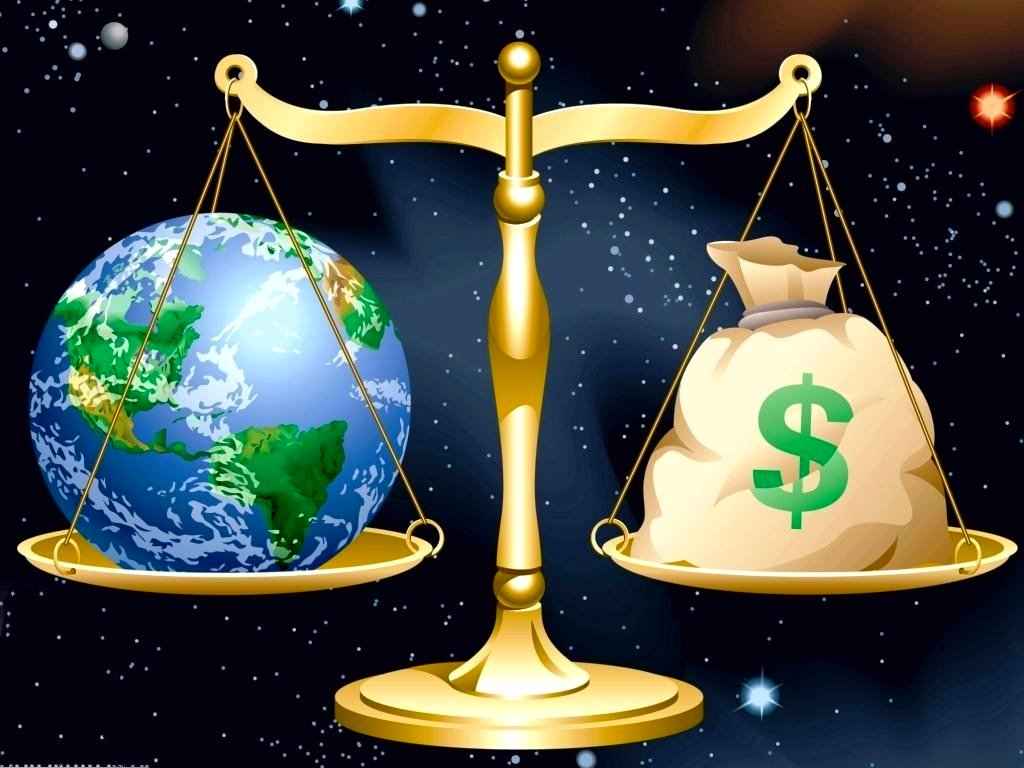
True security lies not in endless war or technological spectacle but in balance: between wealth and justice, expansion and reflection, ambition and humility. Without such rebalancing, the American century risks being remembered as another brilliant but fleeting flame in history’s long night.

**

Lessons from History

The cycles of history caution against complacency. Rome endured for centuries, but its collapse was sudden when it came. The Qing dynasty appeared invulnerable until it unravelled within a few decades. The Soviet Union, projecting strength one year, disintegrated the next. Empires rarely decline in a linear, predictable fashion; instead, they erode silently until an external shock exposes their fragility.

For the United States, that shock could come from multiple directions: financial crisis, climate catastrophe, technological disruption, or internal political fracture. Already, polarization corrodes trust in institutions, while economic inequality breeds resentment. These fissures, if unaddressed, could accelerate decline.
Yet history also shows that renewal is possible. Japan, devastated by war, reinvented itself as an economic powerhouse. Post-imperial Britain, though diminished, adapted into a service economy and retained cultural influence. Even Rome, in its Byzantine continuation, transformed decline into resilience. America, too, could reimagine itself—not as empire, but as a republic recommitted to equity and balance.

**

Conclusion

The setting sun is not fate; it is metaphor. Empires end not because history commands it but because they fail to heed its rhythms. Whether America confronts its inner distortions or clings to the illusion of permanence will decide whether twilight yields dawn—or darkness.

The challenge, then, is not to deny decline but to interpret it rightly. If decline is seen as failure, America will cling to militarism, exceptionalism, and spectacle until resources are exhausted. But if decline is embraced as a chance for renewal, the American project may yet rediscover vitality—proving that twilight need not always lead to night. Sometimes, it can be the hour before a new dawn.

**

Notes

  1. Gibbon, Edward. The History of the Decline and Fall of the Roman Empire (1776–1789).
  2. Toynbee, Arnold. A Study of History. Oxford University Press, 1934–1961.
  3. Kennedy, Paul. The Rise and Fall of the Great Powers. Random House, 1987.
  4. Heraclitus. Fragments. c. 500 BCE.

In musing……..                                            Shakti Ghosal

A Brave New World


How beauteous mankind is!

O brave new world,

That has such people in it!


                                                                                Shakespeare in The Tempest

 Climber enjoys the view from the top of the mountain

“….We must protect our borders from the ravages of other countries making our products, stealing our companies and destroying our jobs. Protection would lead to great prosperity and strength…. We will bring back our jobs. We will bring back our borders. We will bring back our wealth.”

Donald Trump in his Presidential inauguration speech, 20th Jan 2017

***

“But there is simply no need in the 21st century to be part of a federal government in Brussels……… It was a noble idea for its time but it is no longer right for this country. It is the essence of our case that young people in this country can look forward to a more secure and more prosperous future, if we take back the democratic control which is the foundation of our economic prosperity………. We can control our borders in a way that is not discriminatory but fair and balanced and take the wind out of those who would play politics with immigration.”

Boris Johmson, British politician & “Leave EU” BREXIT campaigner, 2016

***

“We launched the Make in India campaign to create employment and self-employment opportunities for our youth. We are working aggressively towards making India a Global Manufacturing Hub. We want the share of manufacturing in our GDP to go up to 25 per cent in the near future.”

Narendra Modi, Indian Prime Minister, 2016

***

The signs are everywhere. Of Globalisation, the beacon that was destined to shape this century, suddenly dimming. Of ‘Walls’ being built to prevent the ‘Others’ read immigrants to come in and usurp work that rightfully is ‘Ours’. Of bringing back off-shored jobs. Of ‘reclaiming back’ what belongs to us.

fair-economic-system

Which brings us to Technology. Now technology has always been  synonymous with productivity and economic progress. From those early days of industrial revolution of the eighteenth century to the mass manufacturing assembly lines of the twentieth century to the global networks of the twenty-first. Over all this period, it has been technology that has created jobs.

Faced with falling economic growth and stubborn unemployment (and under-employment) levels, politicians have been quick to chase symptoms. So the big bad wolf behind joblessness and immigrant inflows is seen as the ‘open doors’ of Globalisation. The Close Sesame formula seems quite straightforward. Close the doors, bring back all the off-shored work and leverage all the right technology. And ‘Hey presto!’ the pathway to economic growth and job creation shall be ours.

So Globalisation, the job destroyer is out……… and Technology, the growth and  job creator is in. Or is it?

Globalisation is all about free flow of technology, talent and capital. So as we turn our backs to Globalisation, can we keep technology, talent and eventually capital on our side?

There is also the other paradox. Of how nations and people get to apply different yardsticks to Globalisation as applicable to oneself versus others.  So Donald Trump sees nothing wrong in the spread of American entertainment and fast food brands globally but hates work getting off-shored. And Britain, the creator of the Commonwealth group of nations worldwide, now prefers to go it alone within Europe. Prime Minister Modi and India cry foul when changes in work Visa rules threaten the country’s IT industry but simultaneously focus on ‘Make in India’ to reduce imports.

And finally there is strong evidence that technology in its present avatar of automation, networks, robotics and artificial intelligence no longer creates jobs, in fact quite the contrary.  It has become the destroyer of jobs!

global_technology

Countries are witness to jobless economic recoveries. The world overall has seen productivity and economic growths far outpacing job creation. What this means is that companies and factories are able to produce more and more goods and services without the need to have more workers. What is it that is balancing the equation? Technology of course!

A major reason for the huge upsurge in start-ups is the widespread access to technology concurrent with the vanishing of  the traditional entry barriers relating to capital, workforce, infrastructure etc. One needs to merely read the stories of millennial entrepreneurs and their creations  like Jan Koum of WhatsApp and Mark Zuckerburg of Facebook to appreciate this.

What technology is also doing is shifting the wealth creation away from the workforce as they lose their indispensability and towards the entrepreneur controlling the technology. So the rich become richer and the Haves and Have Nots disparity continues to increase. In the US, we thus see 1% of the population holding 25% of the national wealth!

Finally, we are witness to the phenomenon of ‘tolerating people at work’. Not because they are intrinsically needed but because they work out cheaper in maintaining status quo compared to technology. So warehouses postpone introducing robotics owing to plentiful labour being available to do the work at low cost. Supermarket checkout counters continue to use clerks even though automation is available to do the job. What this of course implies is that there are growing numbers of people (immigrants, laid off workers, new entrants to the job market etc.) out there who are willing to work at abysmally low wages. Even the otherwise technology-mouthing Governments like it as this sustains socio-economic status quo against fears of disruptions which out- of- work populations might foster.

There are however strong indications that going forward the above compromise may no longer work.

Let me explain myself. It is fairly well known that technology gets governed by Moore’s Law. What this law states is that for every dollar spent the computing power (and the corresponding productivity) doubles every two years. Doesn’t seem much, does it? But hang on a minute! Do you know what this does to productivity over a period of time? Over two decades, the productivity goes up a thousand times. Over four decades, it goes up a million times! And computers and computing power have been with us for more than four decades now. This is the power of the exponential law which all technologies tend to follow. Which leads to the technology cost curves coming down fast and over time tending to become zero!

Another change that is being wrought by raw computing power is the unleashing of Artificial intelligence and machine learning algorithms on a scale unimaginable even a decade back. As you might have guessed, this is leading to machines performing complex tasks which have been the exclusive preserve of professionals. Like medical diagnostics on patients better than the best doctors. Or scanning and interpreting past legal judgments, written contracts and assess risks to make a legal recommendation better and faster than a lawyer. Over the next decade or so, no jobs could be considered safe from being taken over by machines.

Do you see what the above two aspects together would do? Cost of using technology for not only low end jobs but even complex work would keep on spiralling down towards zero. We can’t compete with zero marginal cost can we? The writing is clear on the wall. More and more of us are going to be laid off……. with jobs harder and harder to find. We humans are well on our way to technological obsolescence!

So as I gaze into the crystal ball, what do I see?

I see the process of human work obsolescence accelerating and societal structure changing beyond our wildest imagination. Due to key exponential technologies like the internet of things, machine learning and robotics converging together, wide vistas of traditional human activity have no longer the need for humans. Several projections indicate that over the next two decades, available jobs would decline by 50%!

I also see technology continue to remove money out of the equation by making products and services cheaper and cheaper. This in fact had been happening for a while. Did you know for instance that a one teraflop processor which used to cost forty six million dollars in 2000 now costs below fifty! And the smartphone which we take so much for granted has in fact replaced a plethora of stuff in our lives which would have cost nearly a million dollars a couple of decades back!

 The downward movement of the technology cost curve would only accelerate. So a ‘Car as a Service’ future populated by Uber, Ola and the likes would ensure beggars would also be chauffeured around. The best surgeons would be robots working 24X7 with precision and the records of million past surgeries, at negligible charge. Cost of Housing too would fall dramatically as more and more folks work from anywhere in the world with avatar co-workers in virtual offices. Most people would enjoy energy independence through roof top solar panels and energy stored in vehicles. Rather than spending on energy, they would be earning through trading with the grid. And of course most education and entertainment would be available online for free.

So the future that I see hurtling towards us is of a world of people having little or no work, rather not needing to do any work, with an abundance of products and services available at low cost or free.

As Morpheus says to Neo in the Matrix:

 “……This is your last chance. After this, there is no turning back. You take the blue pill—the story ends, you…. believe whatever you want to believe. You take the red pill……. and I show you how deep the rabbit hole goes. Remember: all I’m offering is the truth. Nothing more….”

Our Brave New World too seems to be a story of the blue and red pills allowing us a choice of the path we could take.

brave-new-world-small-logo-623x261

One road leads us to a virtual utopia. Inhabited by people fully able to realise their creative and innovative potentials. A world where people are uniquely free to follow their passions and creative urges. Where innovations are exploding every other day and unimaginable wealth is getting created. Where products and services are plentiful and available to all. Where being wealthy or not no longer matters. A world that has finally come to realise the socialistic dreams of Karl Marx and Lenin, but in a warped way.

The other way is to the land of dystopia. Of people lacking meaningful work and condemned to exist on the lower rungs of Maslow’s hierarchy. With not a hope in hell of achieving the higher rungs of potential. Of folks condemned to live on a Universal basic income provided by the Governments of the day. Of large sections of society feeling increasingly dispossessed and spiralling down into drugs, gambling, terrorism and similar madness.

As the anti-globalisation clamour becomes more strident, I am left wondering about the pill that we as Mankind are about to take. What is the kind of leadership we need that would point us to the right pill? Is our current leadership upto that task?

In learning……

Shakti Ghosal


Acknowledgements: