


To get commitment from one’s team towards achieving a common objective is a Leadership fundamental.
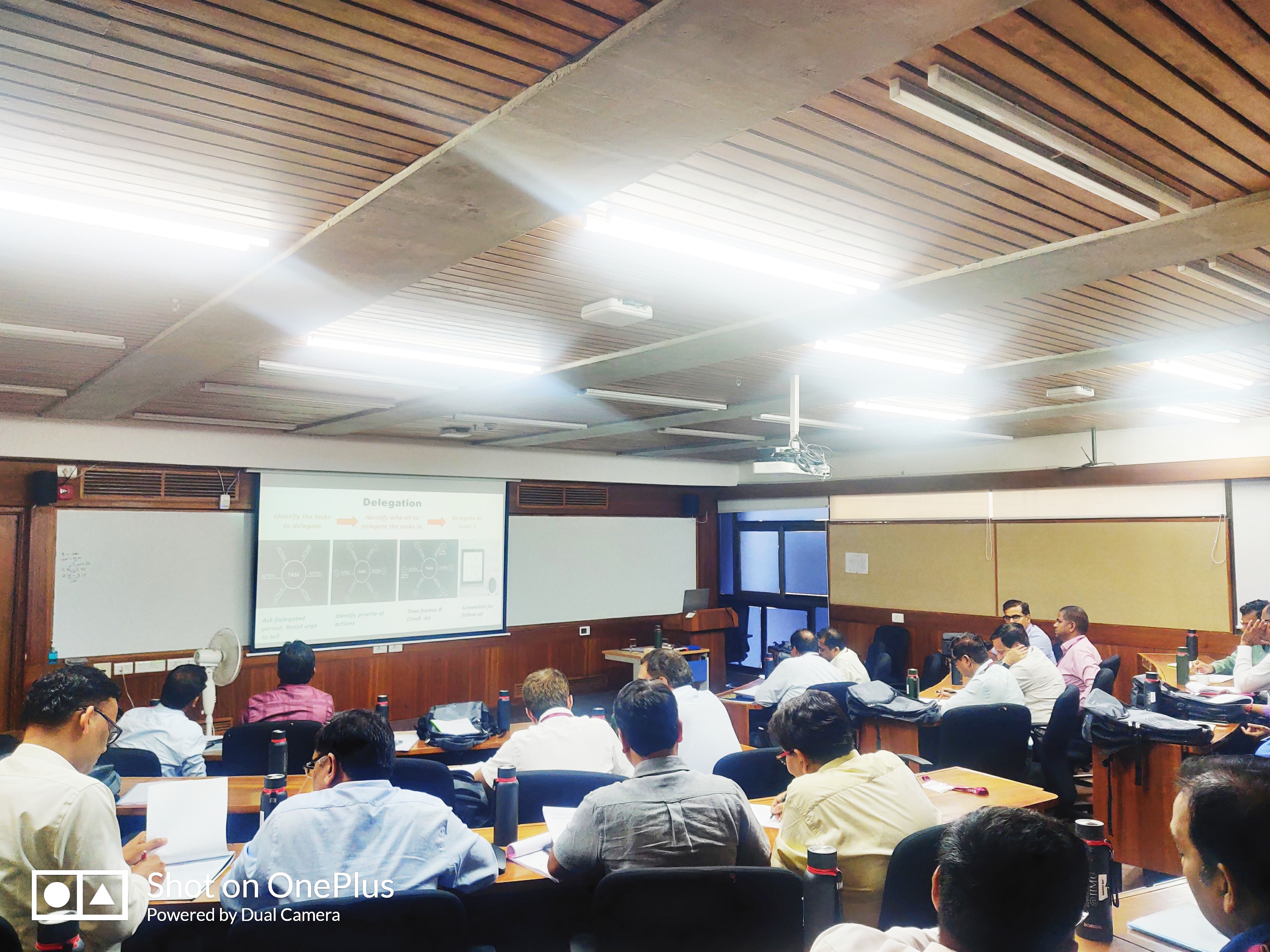
Recently, I was anchoring a Management Development program (MDP) for Senior Managers of National Hydroelectric Power Corporation. The program was designed to endow the participants with Leadership and Performance skills. An experiential aspect of the program required each participant to articulate a Leadership and / or Performance challenge which he is presently facing at the workplace. This challenge would then become the central aspect of learning and application as the participant would be required to apply the various Leadership contextual elements to discover a ‘move forward’ pathway for resolving the challenge.

All the participants could identify such a challenge except one individual. Noticing that the person was looking lost, I asked him as to what the issue was. The response was surprising; the participant after some probing said that he could not think of any challenge at his workplace!
I though persevered and asked, “You surely would have faced some challenge at your workplace in the past, have you not?”
The participant still hesitated and with some reluctance started writing about a past challenge. To me it seemed the gentleman was fearful of recognizing and then committing about the situation at his workplace.
What is that which blocks many of us from recognizing an issue and then making a commitment to resolve it? Even when we might realize that the said commitment is something which works in our favour.
Commitment for many of us is like walking a tightrope. It carries with it the fear of failing, being ridiculed, getting our vulnerabilities exposed. Some of our past life experiences lead us to instinctively ‘avoid’ when it comes to making a commitment; we get conditioned to equate the latter to a danger of failing and losing our ‘status’.
When I think back about the participant and his reluctance to even identify a challenge, I can sense his avoidance mindset. In his mind, he would have been linking recognition of a workplace challenge to a commitment that he might need to make to resolve. If one avoids looking at an issue, one avoids getting involved. Like the protagonist Neo in the movie Matrix, one can cozily sleep walk in one’s make-believe world without the need to accept the harsh realities that exist.
So, what else could I have done to make it easy for that reluctant participant to identify and commit?
I could have tried to empathise about the stress he might have been feeling. I could have said, “Confronting your challenge must be stressful for you”. I could have made a commitment to him that I would work with him to ensure that his challenge is resolved.
***
At the work place, we often wonder, “How can I get my team to do what I want them to do?” Commitment cannot be force fitted and that paradoxically remains a leadership tool which can disempower. The answer is people do what THEY want to do. This remains at the core of how we could Invite effective commitment.
At the core of effective commitment:
- Leadership which is unselfish; one which is willing to make unsolicited commitment to and investments in people.
- Working from a perspective that commitment is a two-sided street.
- Information sharing with all team members who have committed. Keeping information away weakens commitment.
- Transparent and open-hearted conversations build connections which empowers two way commitments.
- Moving on the commitment pathway addresses a deep-seated concern of each team member

Lasting goal achievement success requires commitment, not coercion.
As a leader, how might you establish shared commitments?
In Learning…….. Shakti Ghosal
 A New Beginning