“In our legends it is said that the goddess Ganga’s descent from the heavens would have split the earth had Lord Shiva not tamed her torrent by tying it into his ash-smeared locks. To hear this story is to see the river in a certain way: as a heavenly braid, for instance, an immense rope of water, unfurling through a wide and thirsty plain. That there is a further twist to the tale becomes apparent only in the final stages of the river’s journey- and this part of the story always comes as a surprise, because it is never told and thus never imagined. It is this: there is a point at which the braid comes undone; where Lord Shiva’s matted hair is washed apart into a vast, knotted tangle. Once past this point the river throws off its bindings and separates into hundreds, maybe thousands, of tangled strands.
Until you behold it for yourself, it is impossible to believe that here, interposed between the sea and plains of Bengal, lies an immense archipelago of islands………”
Author Amitava Ghosh in ‘The Hungry tides’
This is the Sundarban, the beautiful forest. Also home to the Royal Bengal Tiger.
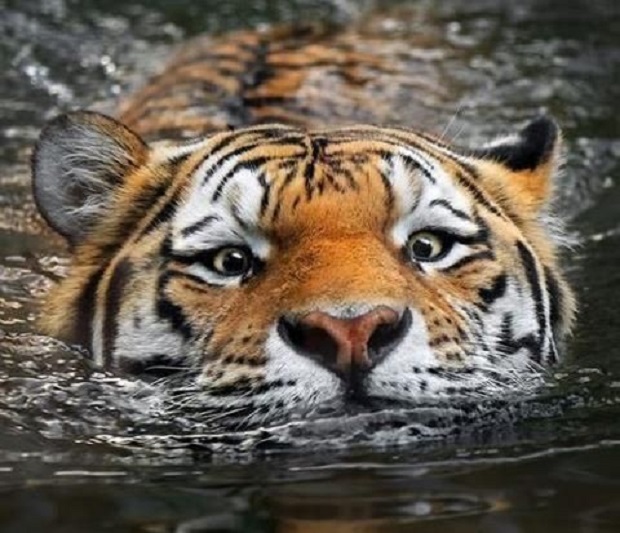
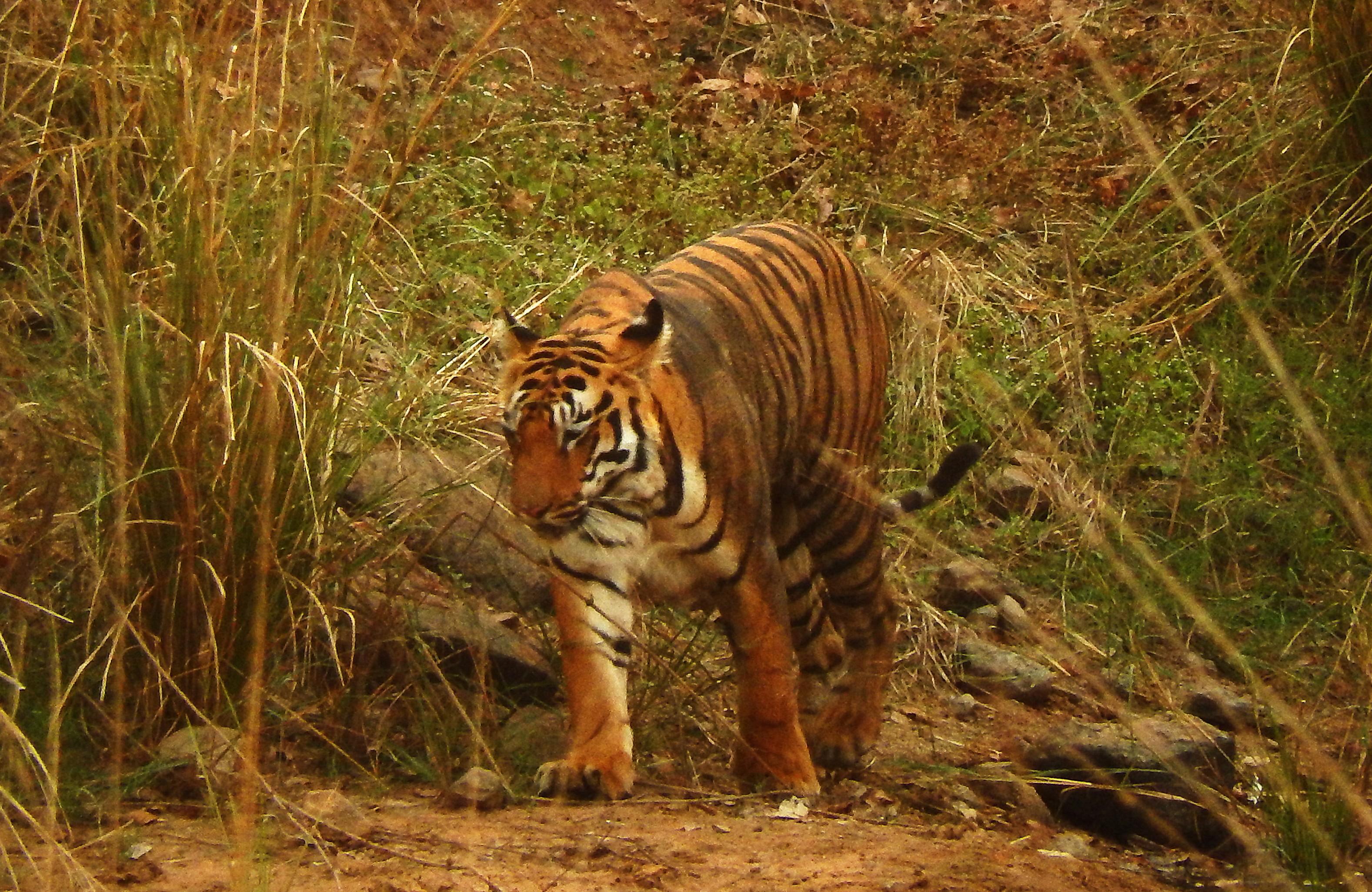
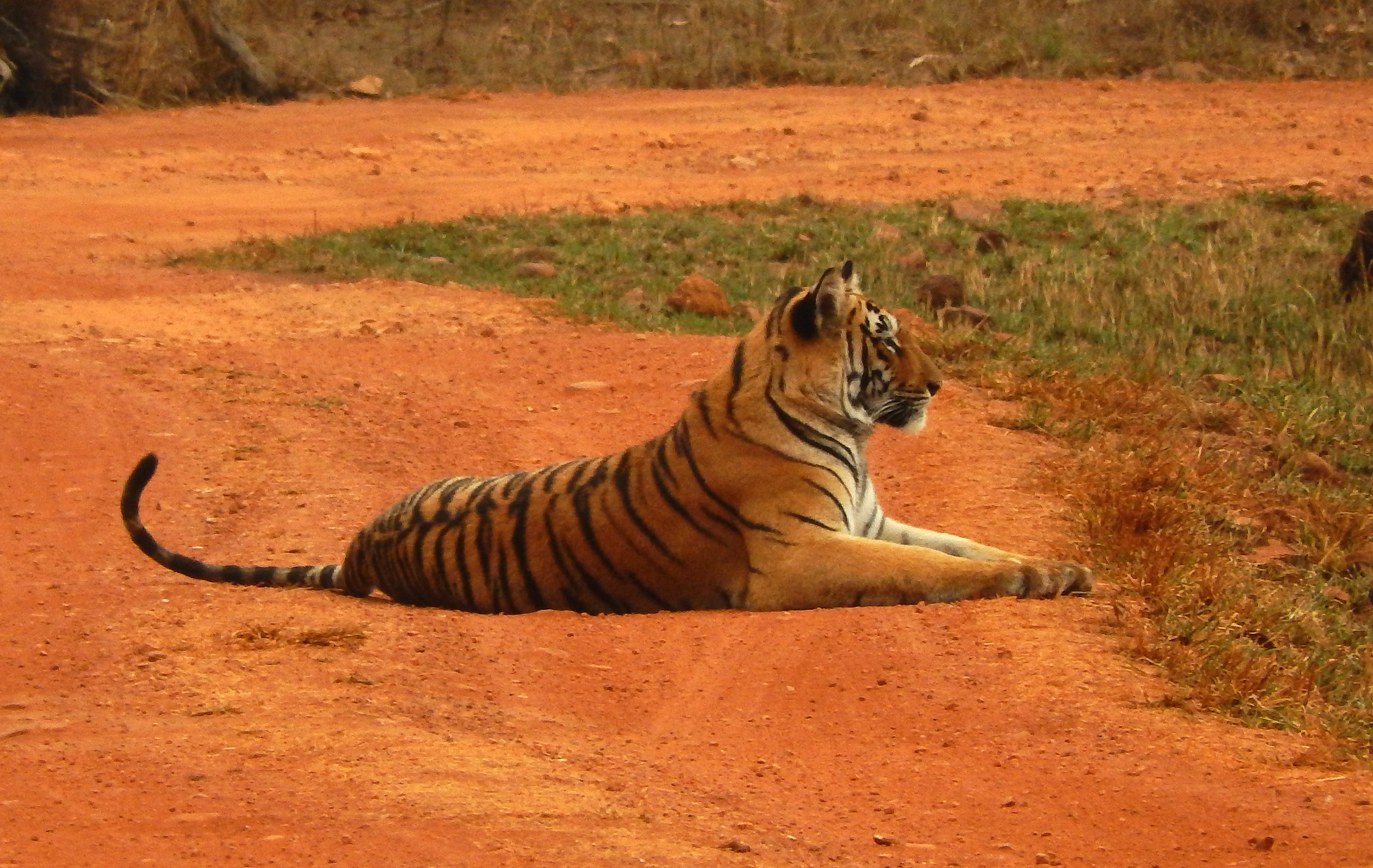
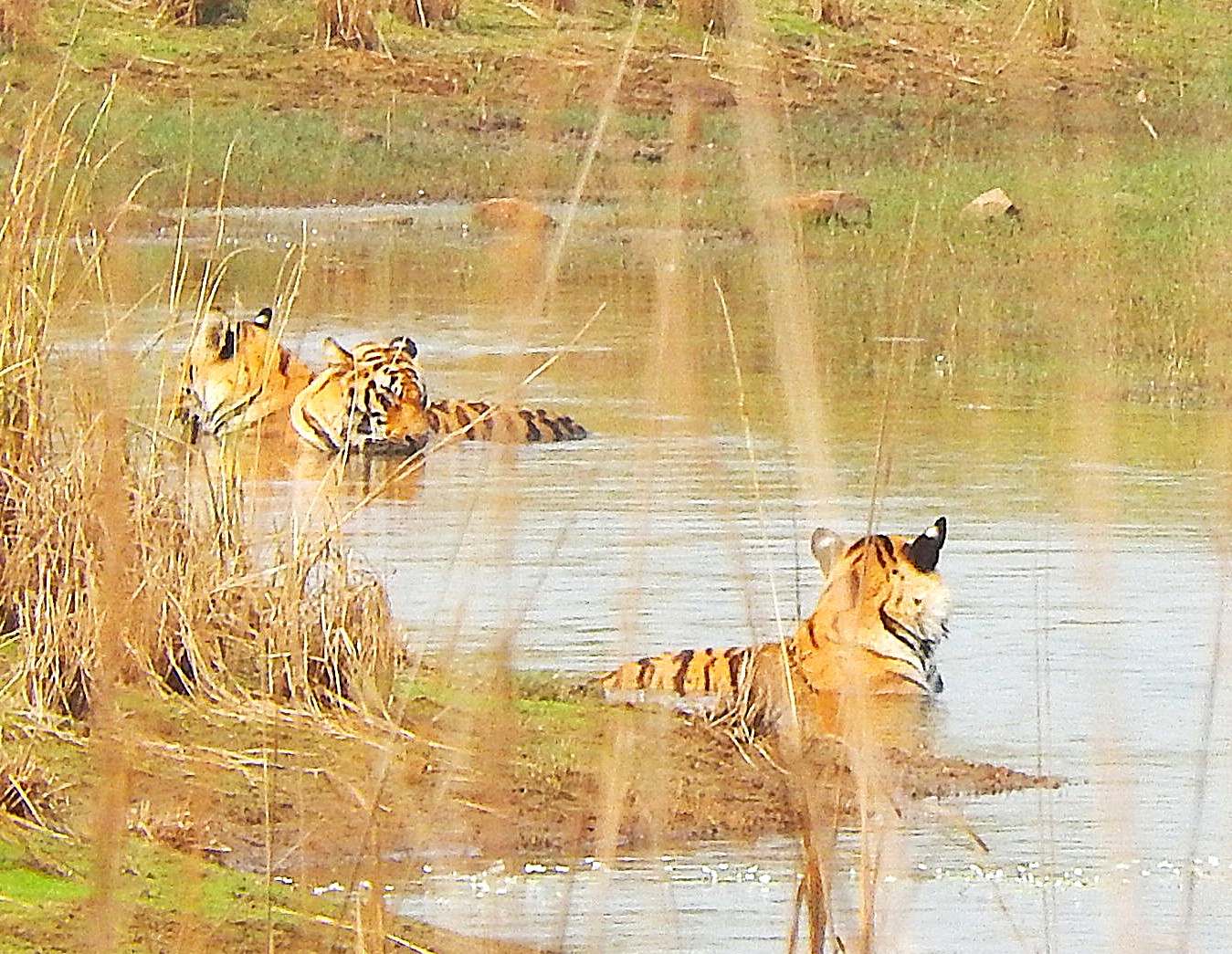
The Royal Bengal tiger is one of the most majestic creations of Mother Nature. Known for its grace, beauty and ferocity, it can grow up to twelve feet in length and weigh as much as 190 Kgs. Possessing the longest canine amongst meat eating mammals, the Royal Bengal is a solitary animal and marks large territories for itself extending up to two hundred square miles. It has adapted itself to the Bengal mangrove ecosystem of the Sundarban by being an ardent swimmer; anything that moves in this habitat is food! One forceful attack and the prey has nowhere to run; the Royal Bengal possesses such power as to snap the spinal cord of the victim in one jerk. A less known fact is that in one to one combat with a lion, the king of the forest, the Royal Bengal tiger has almost always won. And like the erstwhile Royal families of India, the Royal Bengal Tiger is well on its way to extinction.
( Facts from Internet )
Our trip to Sundarban starts with a car ride to Godkhali ferry ghat which lies at the end of the Bengal peninsula. The road ends at a decrepit sign announcing, ‘Gateway to Sundarban’ next to the worn steps of the ghat. A short boat ride to the island of Gosaba and we step into a Bazaar, its by-lanes, its teeming humanity and the filth and squalor which today’s plastic, paper and throwaways create. Alas! Quite a contrast to the vision I had held about Bengal’s villages in my mind’s eye.
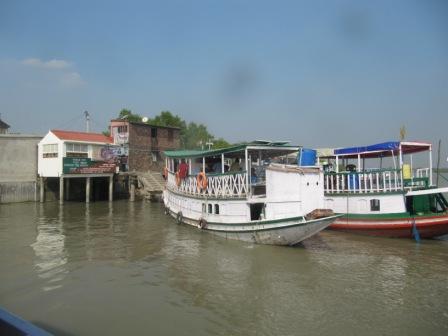
Forty five minutes of bone rattling auto-rickshaw ride through grain fields, ponds, and hutments later we are finally at our Eco-resort. With the promise of Sundarban just beyond the flowing waters.
Sundarban. A UNESCO World Heritage site. The name itself conjures up exotic images for me. Of narrow waterways hemmed in by overgrown foliage on the banks. Of boats navigating the waterways in stealth with the rowers in search of the wood of Sundari trees, the much sought after Bagda Chingri ( Tiger prawn) and madhu (honey). Of crocodiles waiting on the banks in ambush for their prey.Of giant pythons coiled around tree branches. And of course of the Royal Bengal tiger swimming out in the darkness to climb onto the boats.
As we journey on our river cruise away from inhabited islands to the uninhabited ones, the stark beauty of arguably the largest mangrove forest land in the world begins to unfold. The kaleidoscopic flora seamlessly embracing the silted land and the silt laden waters. The fascinating adaptation of the different mangrove species to the tides and the saline water with the stilt and the breathing roots. The latter manifesting as countless hard spikes sprouting out of the ground. As if warning that you enter these lands at your own peril. As we get to the widest water expanse created by the confluence of five rivers, the boat engine is shut. The sudden stillness and silence is enigmatic. Of time standing still, as if waiting for the Sundar Ban to reveal its mysteries.
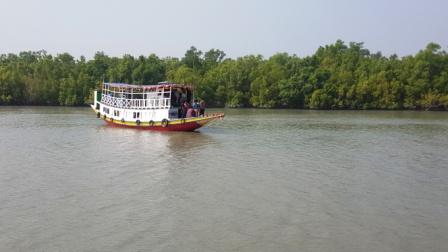


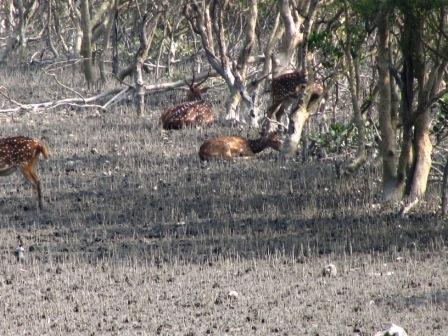
Which brings me back to that star attraction of Sundarban, the Royal Bengal Tiger. Well we fail to spot the guy even though we do the rounds of the three main watch towers in the Tiger reserve- the Sajnekhali, Dobanki and the Sudhnyakhali. But in the bargain, we do get vantage views of the magnificent Sundarban forests as the guide points us to the Goshap (Water monitor lizard), Horeen ( spotted deer), Kumeer ( crocodile) and different bird species.
As we prepare to leave Sundarban, I sense its allure beckoning me to come back again.Inviting me to explore more of the complex network of tributaries and tidal waterways between the islands and atolls. Inviting me to marvel at the creation of new islands as the old ones submerge under cyclones and tides. Inviting me to immerse in the mythology of Goddess Bonbibi, that ultimate saviour of the forest and all who venture within. Inviting me to once again savour the ethereal sunset and enveloping darkness on the Vidya Dhori river. And of course inviting me to set up one more rendezvous with the elusive Royal Bengal tiger.
As I once again undertake the bone rattling auto rickshaw ride on my return journey, I see the beauty and tranquility of an agrarian lifestyle jostling to retain its place amongst the ugliness and discomfort imposed by so-called ‘development’- once concretised roads lying dilapidated and broken, haphazard and unfinished infrastructure and the filth of plastic and other wastes. Just like the Sundarban tiger and other wildlife having jostled for space with the ever expanding humanity through decades……….

Sitting in the ferry moving towards the mainland, I think of the socio-political leadership needed for inclusive development of the simple and friendly people of Sundarban. Leadership which would hold the ability to listen to and align with the concerns of all on the ground. But beyond such Leadership, the question that comes to my mind is , “What could each one of us do to support and sustain the rare and fragile ecosystem that is Sunderban?”

In Learning….
Shakti Ghosal
Travel Recommendation : We travelled using the services of Sundarban Chalo Tours Contact No. 9748278990, sundarbanchalo@gmail.com
We had booked the 2 nights 3 days Tour package. I believe we need this kind of a period to savour and appreciate the sights and sounds of Sundarban.
While we had opted to join the tour from Chowringhee Lane, Sundarban Chalo Tours in fact had several convenient pick up points in Kolkata for guests. We found the vehicle quality and driver to be excellent.
The company owns its own boat and crew and so we felt we were on our own private cruise while sailing in the Sundarban river network and estuaries! The tour coordinator and the guide went out of their way to make the trip memorable with piping hot breakfast and lunch cooked and served on-board.
The Eco-resort we stayed in was clean and the employees extremely friendly and customer oriented. All the meals served was freshly cooked with a surprise evening entertainment program of folk music, dances and barbecue under the stars!
Shakti Ghosal shared this


 A New Beginning