

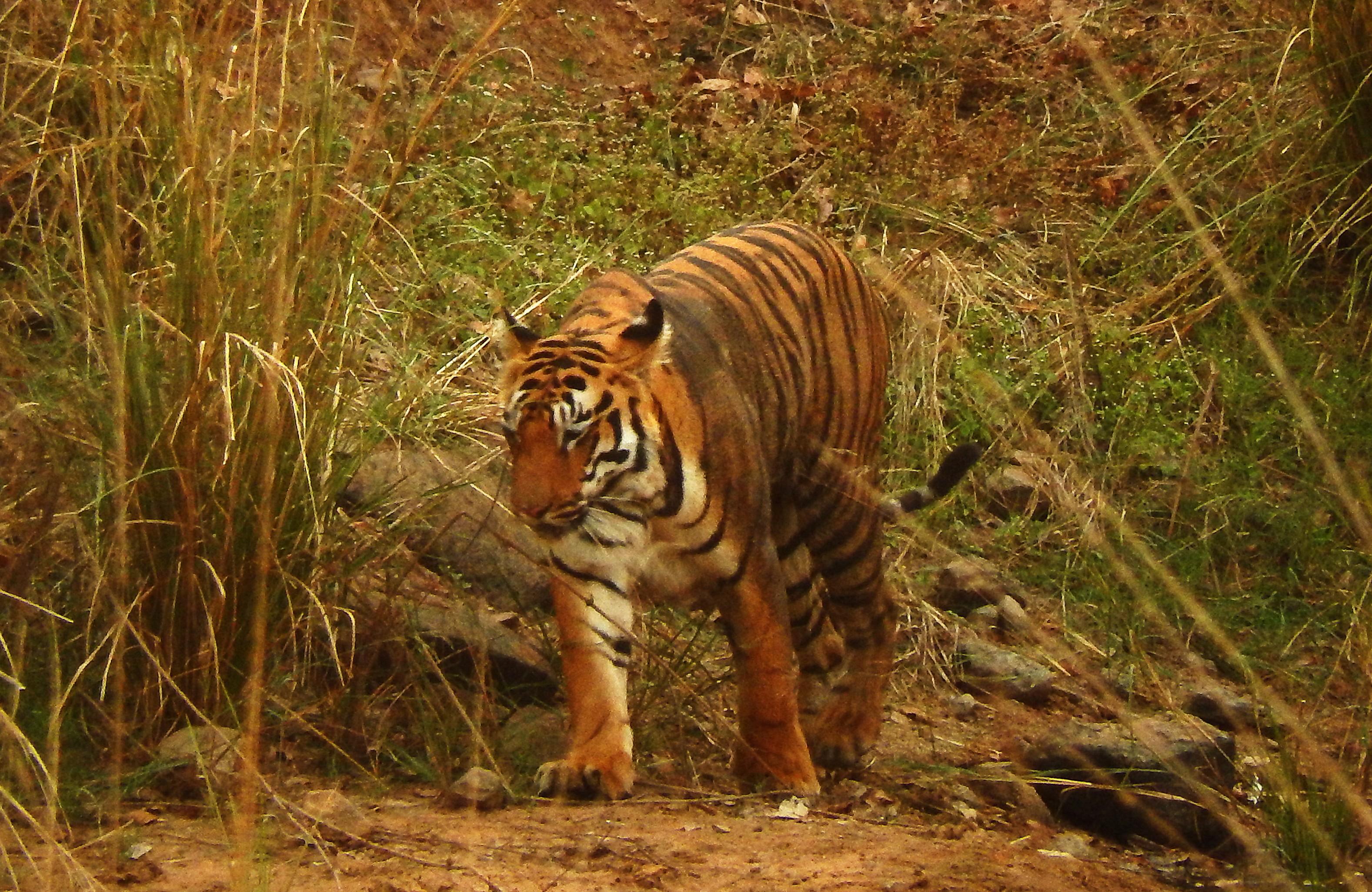
We had spent years chasing a rumour.
The Royal Bengal Tiger was always just beyond the frame—a whisper in mangroves, a rumour in grasslands, a story told by guides with knowing smiles.
In the Sundarbans, they warned us, “Don’t look too hard. If you see one, chances are you won’t be seen after.” We looked anyway. We saw nothing.
At Ranthambore National Park, dawn and dusk gave us…..
Pugmarks, droppings, and growing humility.
At Periyar Wildlife Sanctuary, they didn’t even pretend. “Forget it,” they said kindly.
And then— it was the turn of Tadoba Tiger Reserve……where, quite unexpectedly, fortune decided to shift…. and behave like Lucknow hospitality.
It began like a well-directed play. Our jeep was rolling lazily when the guide suddenly sprang up, as if the forest had whispered directly into his spine—
“Look behind!”
And there she was. A tigress. Standing squarely on the road. Unhurried. Unapologetic. Entirely in charge.
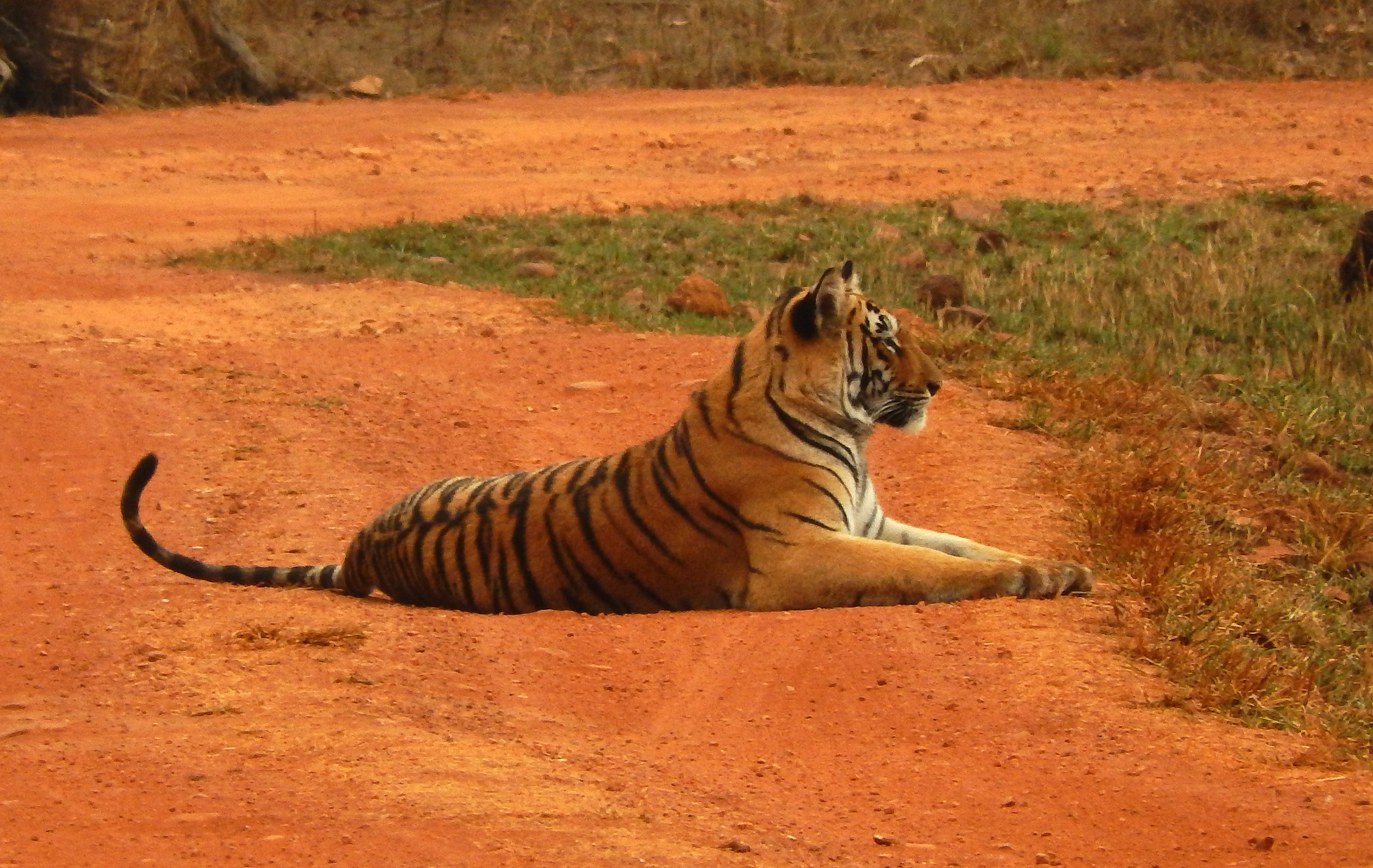
She gazed past us, not at us— as though we were merely an inconvenient paragraph in her story. A low, resonant rumble followed. And then another and another.
“That,” the guide declared with reverence, “is the mother calling her children.”
Of course she was. Even in the wild, mothers don’t wait forever.
What then transpired in front of our eyes was akin to a screenplay. But of the most elegant kind.
As we continued to be transfixed by the one behind, the guide shouted again and pointed. From the front, another tigress appeared—a sibling, perhaps…….She carried a prey in her jaws with the nonchalance of someone bringing snacks to a gathering.
The mother’s rumble deepened.
Translation (we imagined): “Food is fine. But where are the children?”
And then we saw them again. Three grown cubs, walking in a line— like reluctant teenagers responding to a call they had heard thrice already.
They were magnificent. And mildly disobedient.
The mother paced the shoreline now, her calls shifting between soft persuasion and unmistakable authority. It was a language older than words— half love, half command. The forest listened. So did we.
One cub made the first move. It slipped into the water, cutting through it with quiet determination—towards the waiting mother. The other two paused. Of course they did. Every family has those who hesitate at the edge.
The mother, now joined by the brave one, turned and looked back at the rest of the family on the other side. A decision was made and the mother and cub swam again. Not away, but towards the uncertain. And then, as if reminded of something fundamental, the remaining two followed.
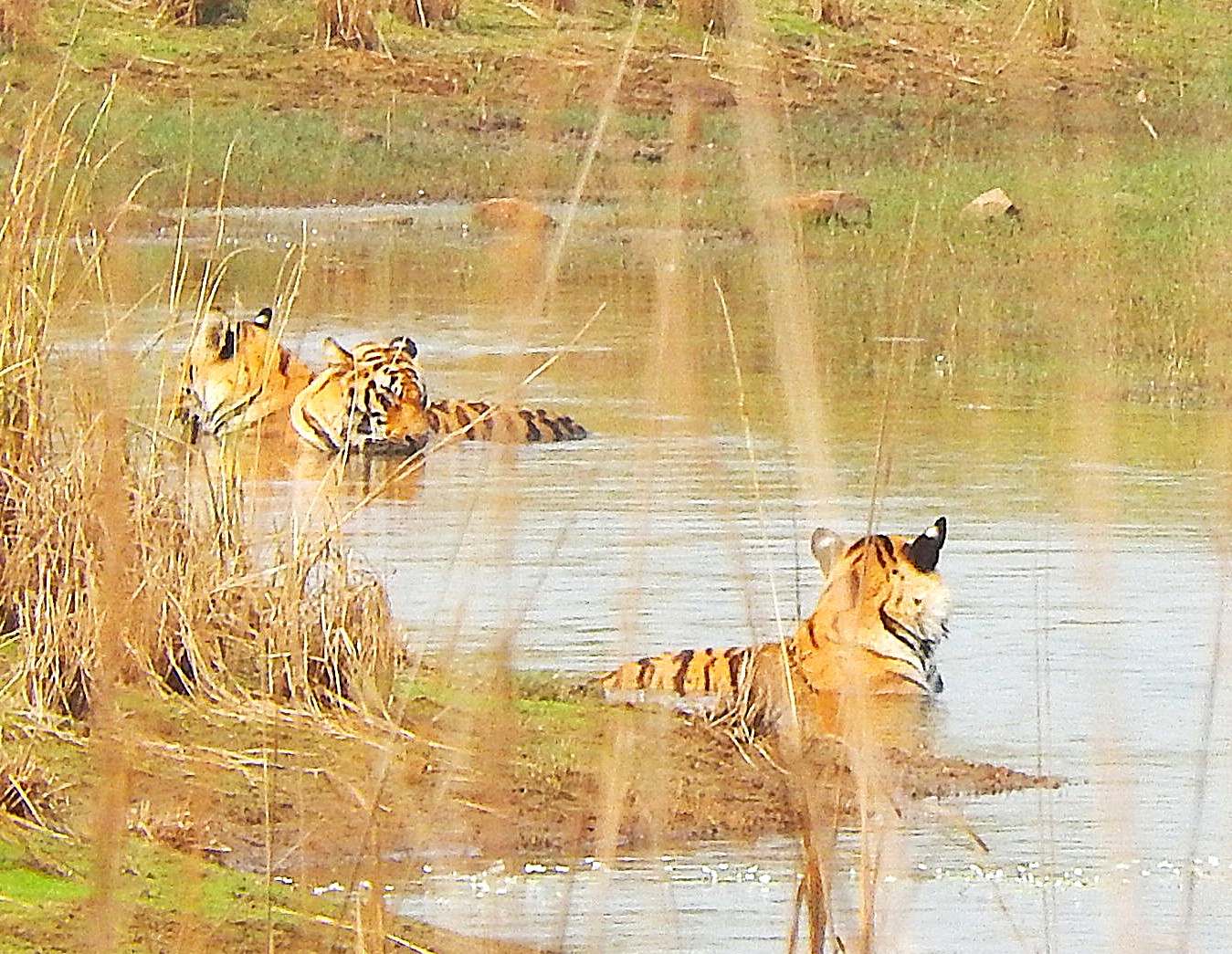
For a moment, time forgot to move. Four tigers. Water rippling. Sunlight holding its breath. And us— utterly irrelevant, yet impossibly privileged.
We had spent years trying to see a tiger. This time we were seeing something else. Not power. Not danger. Not even wilderness. We merely saw a mother trying to gather her children.
And in that quiet, persistent calling, echoing across water and time, the jungle revealed its oldest truth: In every world, wild or civilised, the fiercest force is not the hunt—it is the pull of belonging.
In musing………….. Shakti Ghosal
 A New Beginning