🌴 Breezing Through Bermuda: Pink Sands, Ghost Ships & Darrel’s Secrets


The Bermuda Archipelago

The Liberty of the Seas was slipping gracefully through the turquoise waters of the Atlantic, teasing us with views of emerald islets dotting the horizon. As land loomed closer, so did our anticipation. Bermuda—a name that evoked equal parts paradise and paranormal. Our stateroom window framed the unfolding spectacle of the approaching land,  pastel-painted resorts on the sea front and the occasional home peeking from behind palm fronds.
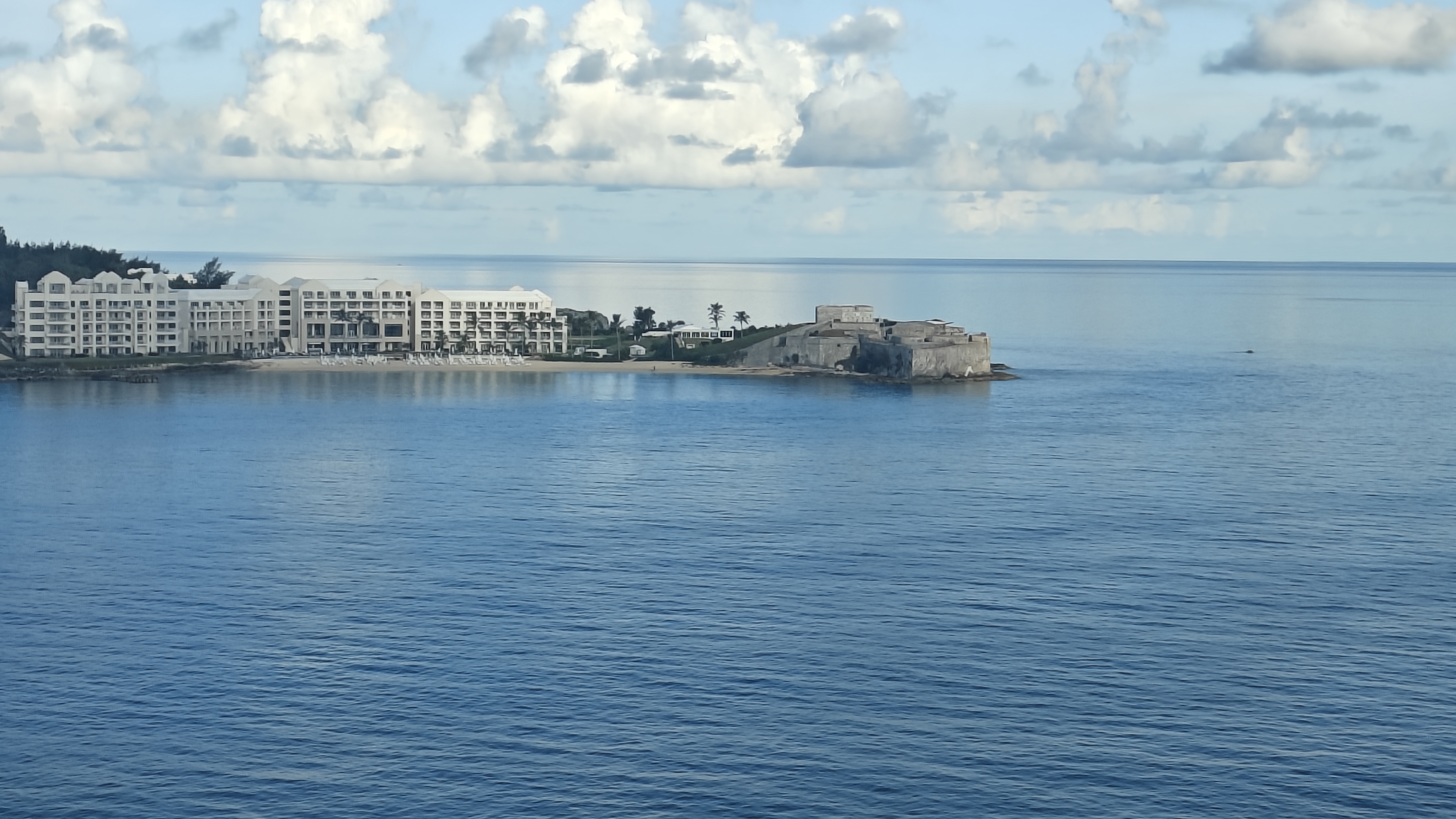
A Bermuda resort

We docked at the Royal Naval Dockyard. Once a formidable British naval base after they were unceremoniously booted out of North America, it now plays host to cruise ships instead of battle cruisers. Think of it as the colonial version of “I’ll be back!”—except the British came back with museums, not muskets.

Royal Naval Dockyard

Once ashore, as we looked around for a suitable transportation, we were greeted by Darrel, a local guide and driver. Silver-haired, sun-tanned, and equipped with the storytelling prowess of a Caribbean mistrel, Darrel introduced himself with a flourish:

“Ninth-generation Bermudian! My ancestor came here as a slave. And now I drive tourists through my island. We’ve come full circle, haven’t we?”

We chuckled, unsure whether to be impressed or introspective. As it turned out, Darrel was about to take us on a version of Bermuda that the glossy brochures never dared to print.

A Personal Bermuda

Darrel wasn’t one for those touristy places. Instead, he showed us his own Bermuda. We were soon snaking past old churches and vintage homes, zigzagging across narrow causeways which connected Bemuda’s islands like hesitant footbridges between old memories.

He took us to his ancestral home; a weathered house nestled on a hillside shaded by cedar trees. “This is where I was born,” he said. There was pride in his voice, not nostalgia. He wasn’t just showing us a place, but offering us a piece of his DNA.

As we crisscrossed the islands, almost missing the transitions thanks to seamless causeways, Darrel pointed out the unique Bermudian water storage systems. There are no freshwater lakes or rivers in Bermuda; every roof thus is designed to catch rainwater and store it in underground tanks. “It’s not just eco-friendly,” Darrel declared, “It’s that, or die thirsty!”

Exploring the Bermuda water storage system

We stopped at an old fort with low embankments, a relic from World War II. What was interesting was that it was armed with British, American, and Canadian gun emplacements. A curious cross-national collaboration.

 “They were allies here before NATO was cool,” I quipped. Darrel grinned, “Yeah, and those guns haven’t fired in anger—only in memory.”

Shopping Malls, Lighthouses & Cost Shock

Next came the capital city, Hamilton, gleaming with shopping arcades, business hubs, and enough boutiques to bankrupt a Kardashian. “Don’t be fooled,” Darrel warned, “This is more for you tourists and offshore finance folks than for us locals.”

We could believe it. A loaf of bread cost more than a good bottle of rum back home. Bermuda, it seemed, was as expensive as it was beautiful—a tax haven with a sun-kissed poker face.

We also visited the Gibbs Hill Lighthouse, where the view from the base was majestic enough to spare us the knees wrecking climb to the top. From there, the Atlantic spread out like an endless blue silk sheet, dotted with hints of human habitation—each island a whisper in the sea.
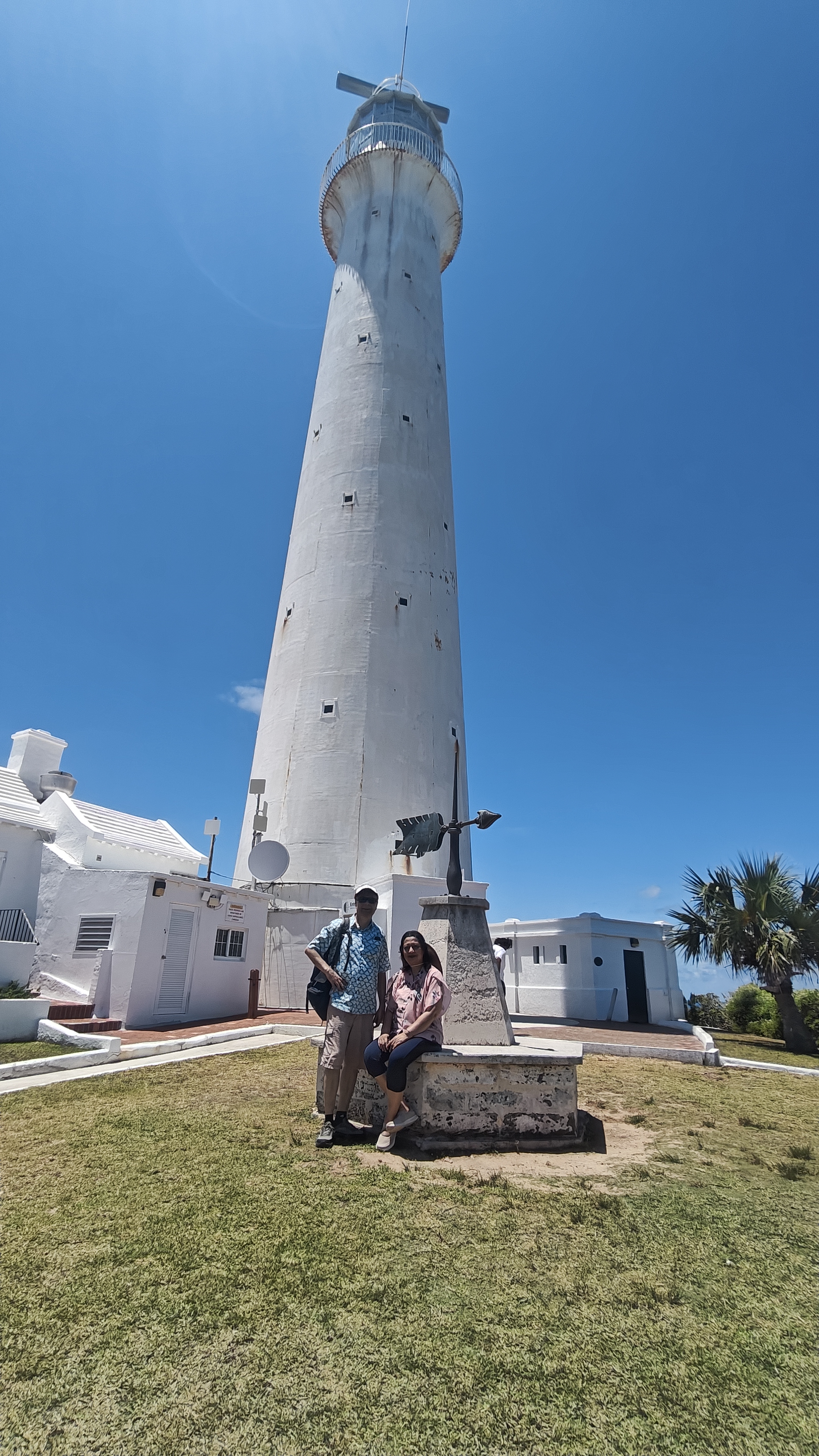
Gibbs Hill Lighthouse

Of Pink Sands and Rose Hearts

By afternoon, the sun had cast a golden glaze on the island. The temperature was perfect for what we came for: Bermuda’s legendary beaches.

We skipped the Instagram-flooded Horseshoe Bay (thanks to Darrel’s insider intel of it being overcrowded!) and headed to a more secluded beach nearby. And what a choice that turned out to be! Powdery pink sand caressed by clear turquoise water, gentle waves that beckoned instead of bullied, and—most intriguingly—a giant heart-shaped installation of roses left behind from what looked like a beach wedding. Darrel, never missing a beat, winked and said, “That’s either love… or excellent marketing.”
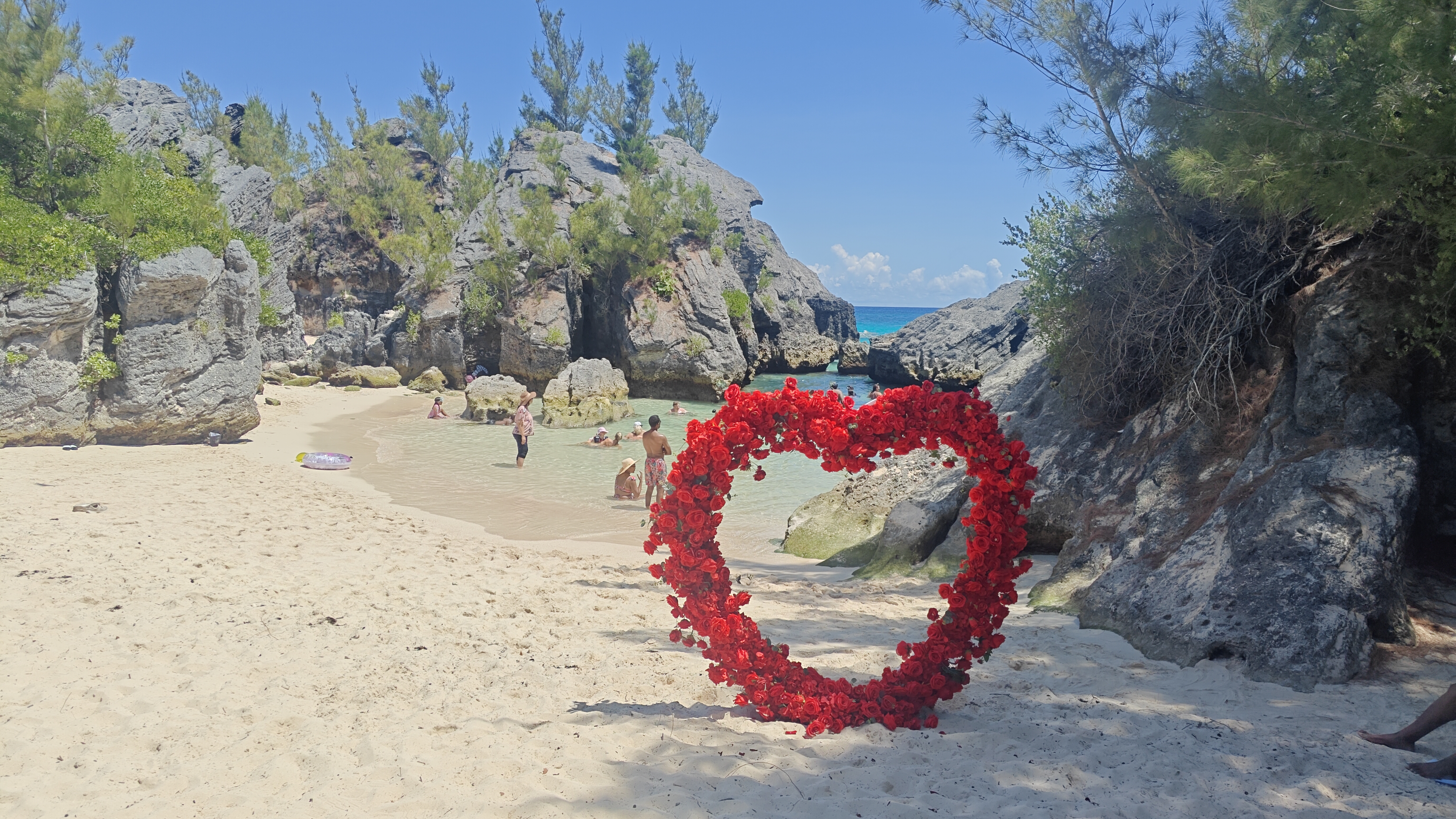
Love….. or marketing?

We did what anyone would do: took photos, dipped into the sea, and pretended we had discovered the place ourselves.

The Triangle of Terror… or Hype?

As the sun began its descent, we finally popped the question everyone avoids until dessert, about the Bermuda Triangle.

“So Darrel… any strange goings-on out there?”

He glanced at the ocean and said, “Let me tell you something. Some days, you see gas bubbles rising out of nowhere. Big ones. Not your usual air pockets. These are… different.”

He paused. “Could be alien. Could be methane. Could be the sea having gas. But small boats and aircraft? They don’t always like those bubbles.”

In search of Bermuda triangle…..

Darrel’s casual eeriness reminded me of the book I’d devoured in my Jamalpur college days: Charles Berlitz’s “The Bermuda Triangle.” The author had chronicled the infamous disappearance of Flight 19, a squadron of five US Navy torpedo bombers in 1945. The flight leader’s last radio transmission still rings like a Lovecraftian riddle:

“We cannot be sure of any direction… everything is strange… the ocean doesn’t look as it should.”

Some say it was magnetic anomalies. Others blame pirates, aliens, or even the lost city of Atlantis. Even National Geographic weighed in years later, shrugging off the mystery with a headline that felt like a sigh:
“No, the Bermuda Triangle isn’t real. Let’s move on.” (Source: National Geographic, 2017)

But standing on a beach where the sand is pink and the stories are surreal; logic starts to feel a bit… overrated.

A Farewell in Technicolour

As we returned to the Liberty of the Seas, the ship shimmering under the evening sun, Bermuda felt like a dream—equal parts sunshine and superstition.

Liberty of the Seas

Darrel dropped us at the dock, gave us a conspiratorial wink and said, “Now you know our secrets. Keep them safe.”

Bermuda had shown us its history, its heart, and maybe even a hint of its hauntings. Whether you believe in vanishing ships or just overpriced sandwiches, it’s a place that lingers.In your mind, in your phone camera, and if Darrel’s right, maybe even in your magnetic compass.

In musing……..                                            Shakti Ghosal

📚 References:

  1. Berlitz, Charles. The Bermuda Triangle. Doubleday, 1974.
  2. National Geographic. “No, the Bermuda Triangle Isn’t Real. Let’s Move On.” August 2017.
    https://www.nationalgeographic.com/history/article/bermuda-triangle-mystery-disappearances-science
  3. BBC Travel. “The Curious Infrastructure of Bermuda’s Water Tanks.” February 2020.
    https://www.bbc.com/travel/article/20200219-the-island-that-catches-rainwater
Final Notes from Aotearoa- New Zealand


From the breezy ferry crossing over Cook Strait to sipping Sauvignon Blanc in a sun-drenched vineyard, our final days in New Zealand were an ode to quiet charm, coastal beauty, and surprising encounters. Dolphins, Blue Crayfish, and the gentle resilience of Christchurch—this last leg gave us a sense of what it truly means to journey, not just travel

As our journey across New Zealand’s North Island drew to a close, a sense of calm anticipation took hold. We were about to cross the Cook Strait—nature’s moat dividing the North and South Islands. After breakfast, we boarded the ferry at Wellington, following the well-worn advice to keep our eyes peeled for the scenic spectacle of Marlborough Sounds.

The Cook Strait has a reputation for being dramatic, both in its swells and its views. Ours was thankfully a smooth crossing, the deck wind-swept but tolerable—as long as you held tightly to your cap. While no seals or orcas showed up to greet us, a joyful surprise awaited mid-journey: a school of dolphins, dancing alongside our ferry near the starboard bow. It was a moment that felt choreographed by the sea itself.

Crossing Cook’s strait

The ferry eventually pulled into Picton, a sleepy harbor town where time seems to slow down. After our coach rolled off the ship’s lower deck, we headed into Blenheim, nestled at the heart of Marlborough—New Zealand’s most renowned wine region. As wine writer Michael Cooper once noted, “The Sauvignon Blancs here speak with piercing clarity and freshness, as if the land itself had whispered the recipe” (Wine NZ Magazine, 2022). Our lunch at a vineyard, paired with one of these signature whites, was a perfect blend of terroir and tranquility.

Marlborough region

Post lunch, the drive to Nelson was comfortably uneventful. Known as New Zealand’s sunshine capital, the town lived up to its name. Bathed in golden light, its leafy streets invited slow, deliberate exploration. We took a detour to the Abel Tasman National Park, where aquamarine coves and golden beaches teased us with just a glimpse of their natural magic. Later, a short cab ride took us on the Prince’s Drive, a winding hill route offering panoramic ocean views. It was one of those rare moments when the vastness of the ocean made one feel wonderfully small.

Abel Tasman National Park

From Nelson, our coastal drive traced the edge of the South Island’s spine. The Kaikoura stretch was especially dramatic—dark cliffs tumbling into turquoise waters. We stopped here, as one must, to try the region’s famed Blue Crayfish. Served fresh and simply, it needed little more than a squeeze of lemon. As travel writer Brook Sabin put it in a Stuff NZ feature, “Kaikoura offers a kind of wild luxury—the bounty of the sea framed by snow-capped peaks.”

Kaikoura

The inland leg to Canterbury gave us rolling pastures, distant alpine backdrops, and a lingering sense of serenity. Finally, we arrived in Christchurch, a city still tender from its past, yet confidently looking ahead. Much of it felt brand new, and understandably so—years after the 2011 earthquake, which damaged more than 80% of the central city.

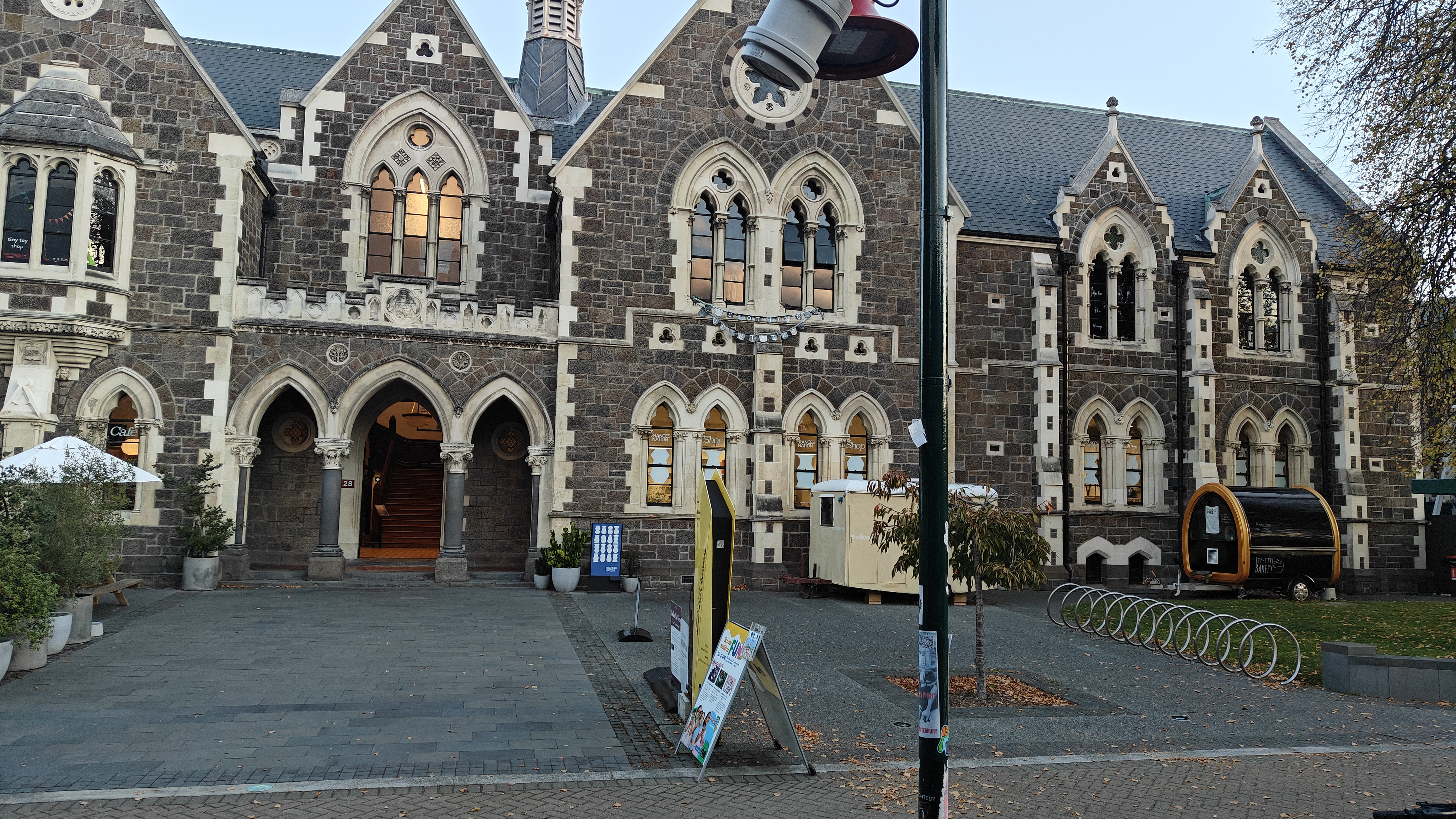
Christchurch Tram Tour

But there was pride in the restoration, and even more in the spirit of the people. We hopped onto the Christchurch Tram Tour, a delightful old-world loop through a new-age city. Glassy riverbanks, modern architecture, and gentle storytelling from the conductor made it feel like a living museum, still writing its narrative.

Christchurch

And then, just like that, it was time to leave.

At Christchurch Airport, waiting to board our flight home, we reflected on what had made this journey special. Not just the landscapes—though they are indeed epic. Not just the food or wine or wildlife. It was the rhythm of New Zealand: slow when it needs to be, stirring when you least expect it.

New Zealand doesn’t just show you its beauty. It reveals it, bit by bit. Like its shifting light, it rewards those who take the time to look closely.

We departed with tired feet, happy hearts, and the quiet promise that someday, we would return.


References

  1. Cooper, Michael. “Marlborough Sauvignon Blanc: Still Leading the Way.” Wine NZ Magazine, 2022.
  2. Sabin, Brook. “Kaikoura’s Wild Luxury: Where the Sea Meets the Snow.” Stuff.co.nz, 2021.
  3. Tourism New Zealand. “Christchurch Rebuild: Resilience and Renewal.” newzealand.com, 2023.

Where Fire Meets Ferns: A Journey Through Rotorua, Murupara, and Taupo in New Zealand


oplus_8650752

Abstract :Volcanoes, Redwoods, Maori traditions, and turquoise waterfalls—our journey through Rotorua, Murupara, and Taupo was like walking through nature’s raw and sacred diary. From the haunting silence of a buried village to the fiery hiss of boiling mud pools, and the warmth of a traditional Maori Hangi—New Zealand never stops surprising. 🌋🌲🌊

We skirted the edge of Lake Rotorua in hopeful anticipation, eyes squinting past the mist, searching for the silhouette of the legendary Mount Tarawera. But nature had other plans. Clouds draped the landscape like a reluctant curtain, denying us a view of the volcano that, in 1886, tore apart an entire region in a violent, unforgettable eruption.

Lake Rotorua

As we moved closer to the remnants of this catastrophe, we reached the Buried Village of Te Wairoa. It was haunting, almost sacred. Buildings lie preserved in ash, stories frozen in time, and silence whispered louder than words. Our guide painted a vivid picture of the night the earth roared—of ash raining down, of craters splitting open, and lives changed forever. According to the Buried Village site, it is “New Zealand’s most visited archaeological site, where stories of resilience and survival rise from the earth.” (Reference 1) And indeed, walking among the ruins, one feels that spirit deeply.

Buried village of Te Wairoa

From volcanic scars, we sought the solace of trees—and what trees they were! The Whakarewarewa Forest, just outside Rotorua, offered a surreal contrast. We wandered under towering Redwoods—some over 100 years old—and marveled at the magnificence of Douglas Firs and the ethereal grace of silver ferns, New Zealand’s national icon. Walking in their shadow, one feels both infinitely small and impossibly privileged. As described by Whakarewarewa Village, this forest is home to “majestic trees from California alongside native species in a uniquely Kiwi blend,” and the harmony between old world and new world flora is breathtaking.

Those Redwoods of Whakarewarewa

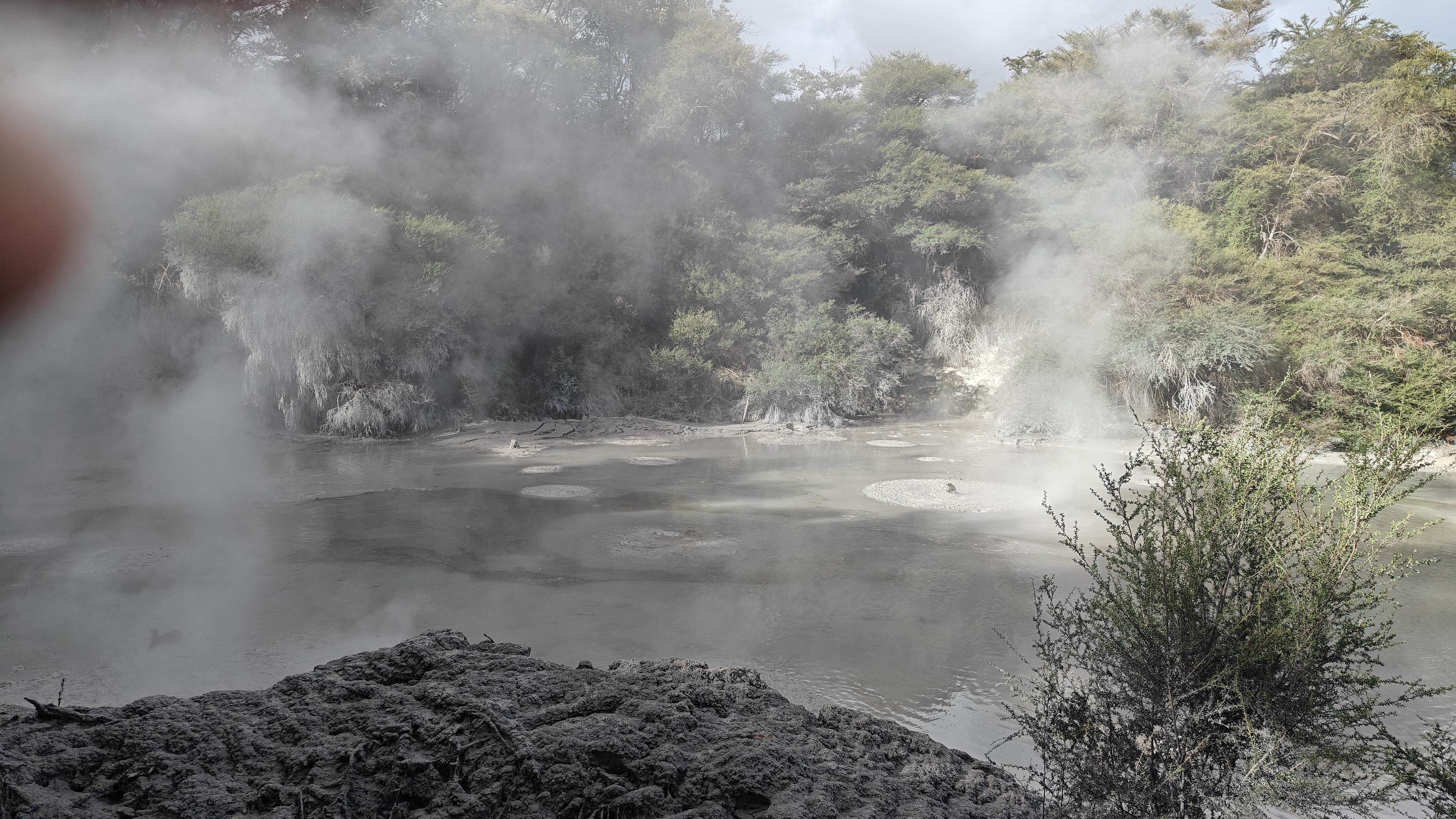
Yet Rotorua wasn’t done with its drama. The ground here breathes fire. Boiling mud pools gurgled around us, sending plumes of steam into the crisp morning air. Lakes hissed and steamed as though conversing with ancient gods. The smell of sulphur lingered, sharp and earthy. And yes, the unsettling thought did strike—what if another eruption lay dormant beneath our very feet?

Boiling mudpools of Rotorua

From geothermal energy to spiritual energy, we travelled onward to Lake Aniwhenua in Murupara. Here, the journey took a cultural turn. We were welcomed by the Māori people in a traditional ceremony that blended chants, fierce expressions, and deep respect. Though the language was unfamiliar, the sincerity needed no translation.

Maori temple

The highlight was witnessing the preparation of a traditional Hāngi meal—an earth-oven cooking method that has nourished Māori communities for centuries. Watching the fire-heated stones laid into a pit, food wrapped and buried under earth, felt remarkably similar to the tandoor cooking I’ve seen in North India. Different continents, similar soul food.

Hangi preparation

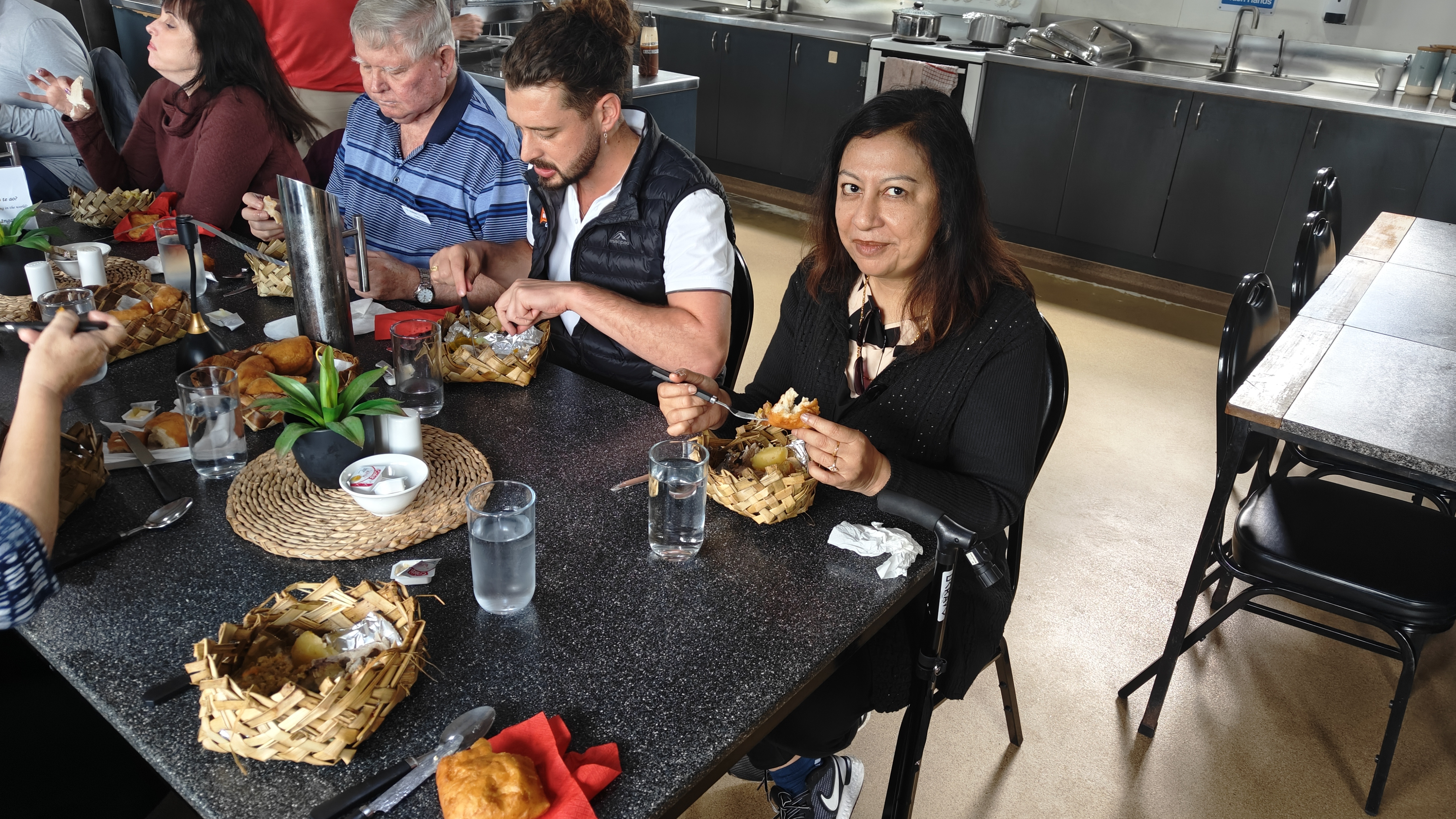
Later that afternoon at the Māori lodge, as the Hāngi was unveiled and its earthy aroma filled the air, it felt like we were not just eating a meal—we were partaking in a ceremony of memory, tradition, and togetherness. As the village itself puts it, “Whakarewarewa is more than just a village—it is a living legacy of Māori culture and community,” (Reference 2) and every moment we spent there reinforced that truth.

Traditional Maori meal

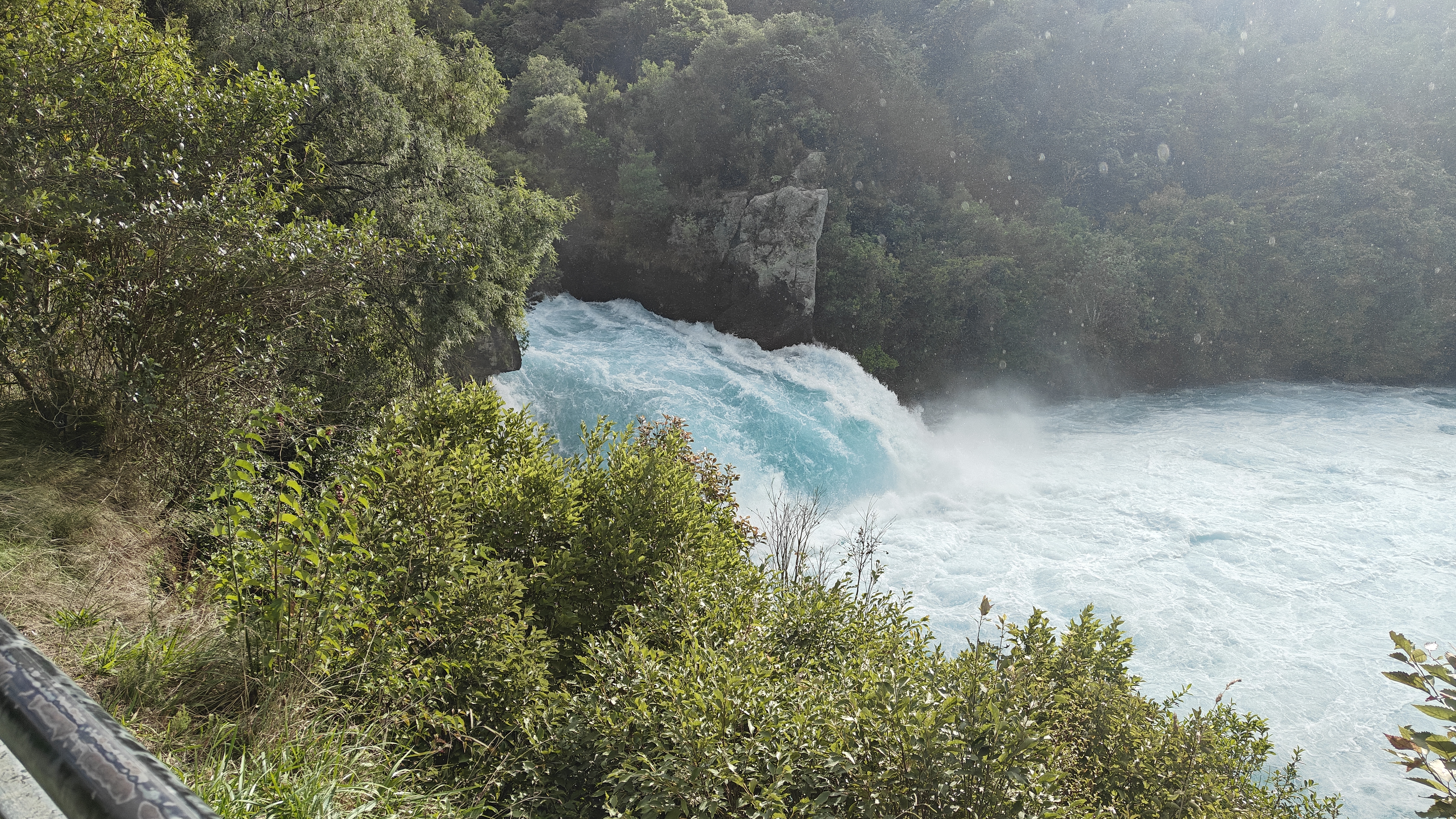
The final leg of this segment took us to Taupo, but not before a breathtaking interlude at the Huka Falls. The water there doesn’t just fall—it thunders. A hypnotic blue torrent squeezes through a narrow gorge before erupting into a frothy cascade. According to LoveTaupo.com, this “220,000 litres per second of crystal clear water” ( Reference 3)  surging through the Waikato River is one of New Zealand’s most visited natural attractions—and for good reason. It’s power and poetry in motion.

The blue torrents of Huka

As we stood watching the falls, droplets misting our faces, I realised New Zealand isn’t just a destination—it’s an emotion. It stirs awe and respect in equal measure. One moment it shows you the fury of nature, and the next, it cradles you in cultural warmth.

And so, this chapter of our journey closed—not with an exclamation, but a deep, quiet breath of gratitude.


References:

  1. The Buried Village of Te Wairoa – Rotorua’s Most Visited Archaeological Site
    https://buriedvillage.co.nz/
  2. Whakarewarewa – The Living Māori Village
    https://whakarewarewa.com/
  3. Huka Falls, Taupo – New Zealand’s Most Visited Natural Attraction
    https://www.lovetaupo.com/en/see-do/all/huka-falls/

In musing………….. Shakti Ghosal