Bangalore and the Lie!


The Bangalore Skyline

‘One Saturday evening, Anjan suggested, “How about going to the pub and having some chilled beer? The treat is on me”.

But that evening Rohit was not enthusiastic, “I would have loved to Anjan, but it is a colleague’s birthday and I need to attend the party”.

 Anjan with a few other friends decided to go for Steven Spielberg’s Jurassic Park which was being screened at Rex Theatre on Brigade Road. Being a night show, getting tickets was not a problem and the group soon sank back into the plush seats in air-conditioned comfort, each with a tub of popcorn. The lights were still on. As Anjan looked around, he got a shock. A few rows ahead, he saw Rohit sitting with a girl, their heads leaning towards each other. Anjan could hardly believe his eyes.  Rohit, his closest friend, his buddy, had lied to him!’

Snippet: The name “Bangalore” was given by the British as an anglicized version of the original Kannada name Bengaluru. As the legend goes, Veera Ballala II, the most famous king of the Hoysala dynasty (twelfth century), while on a hunting expedition, lost his way in the forest. Tired and hungry, he came across a poor old woman who served him boiled beans. The grateful king named the place “bend-kaal-uru” (literally, “town of boiled beans”), which eventually evolved into Bengaluru.

 Bangalore is widely regarded as the “Silicon Valley of India”. A cosmopolitan city, it  is the second fastest-growing major metropolis in India. The iconic Rex Theatre on Brigade Road downed its shutters for good on first January 2019 after entertaining Bangalore folks for seventy eight years.

The city of Bangalore and Rex Theatre feature in the story Fault Lines, a part of my forthcoming book, ‘The Chronicler of the Hooghly and other stories ’. www.shaktighosal.com

#fiction,#pageturner,#thechroniclerofthehooghly,#faultlines,#goodread,#bangalore,#shaktighosal,#rextheatre,#novel

The Black Hole of Calcutta


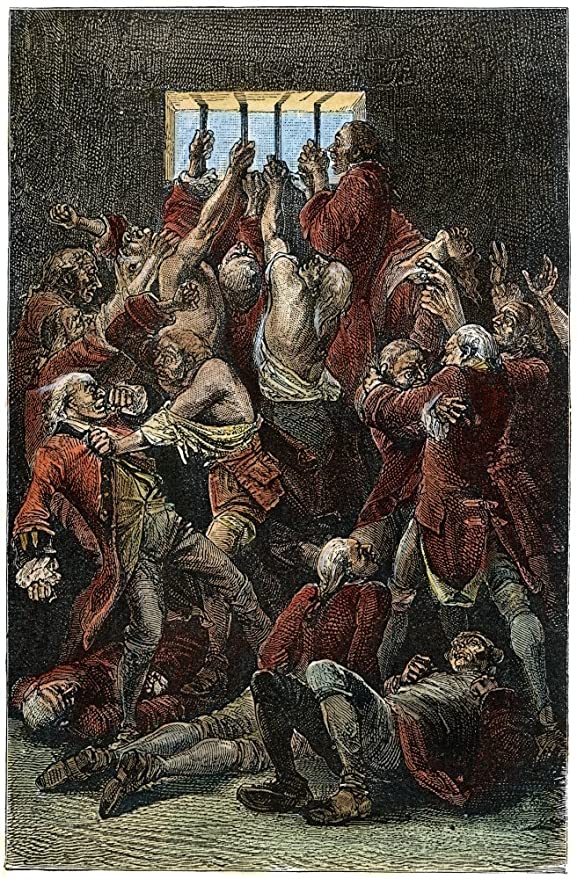
Fort William on the Hooghly 1757 Artistic depiction

“Jim with a few of his soldiers stood surrounded by a large contingent of the Nawab’s forces. Soon Jemmaatdaars shepherded the Captain Commandant with soldiers and civilians into a small room. This is when the horror began.

Packed like sardines in the room, delirious from lack of air and acrid smoke from the burning godowns filling their lungs, the prisoners started feeling suffocated and begged the guards for water. In their despair, they started offering whatever money they had to the Nawab’s guards outside. “One thousand rupees! Two thousand rupees!”

Though finding it difficult to breathe himself, Jim passed the little water that was brought in to others using his hat. But in the frenzy that ensued with the prisoners struggling to get to the window, most of the water was spilled. Worse, people were getting trampled.

Jim shouted over the ravings and rantings, “Gentlemen, we need to help each other, we need to keep our heads if we are to survive this night”.

He could dimly see a Captain frothing at the mouth and collapsing. Jim himself was losing consciousness from the heat and exhaustion. As he slowly crumpled in a heap on the ground, strangely enough the last image which fluttered across his mind’s eye was the suffused glow of the pearl and emerald necklace he had glimpsed briefly the previous night.”

Snippet: After the fall of East India Company’s Fort William to Nawab Siraj Ud Daulah’s forces on 20th June 1756, the surviving English soldiers, Indian sepoys along with some civilians were rounded and locked up in a small room for the night. Next morning only twenty odd prisoners had survived, the remaining around forty to sixty having perished from exhaustion, suffocation and stampede. The incident came to be known as the Black Hole tragedy of Calcutta and directly led to the British seeking revenge by overthrowing Siraj Ud Daulah as the Nawab of Bengal by defeating him at the Battle of Plassey the following year.

The fall of Fort William and the Black Hole Tragedy feature in the story ‘The Chronicler of the Hooghly’, part of my forthcoming book of the same name.

#thechroniclerofthehooghly, #blackholetragedy, #fortwilliam, #shaktighosal, #eastindiacompany

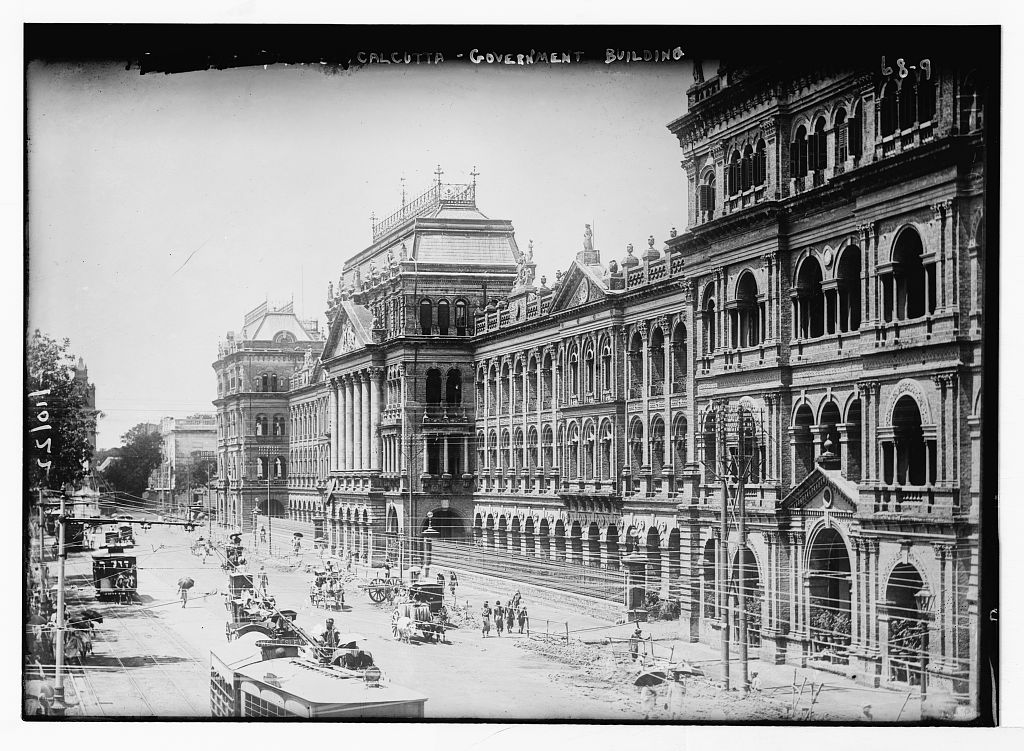
The Writers Building


“1912

Sujit was hurrying from his desk in the administrative block of the Writer’s building. The office chaprasi had conveyed his officer’s summons.

Having completed his matriculation, Sujit had been lucky to have secured the position of a Junior Clerk in the British administrative office at Writer’s Building. His desk was in one of the newly constructed blocks which required him to walk down the front corridor whenever summoned to the officer block.

Sujit never failed to admire the newly added Roman facade to the building, the central portico and the exposed red bricks on the outside walls. A quick glance showed the outside promenade with a few carriages and the lake water beyond glistening in the morning sunlight.

“Hello Sujit, come sit down. I wanted to speak to you”, said his officer on seeing him. The friendly words belied an overall nervousness of the gentleman’s posture and movement.”

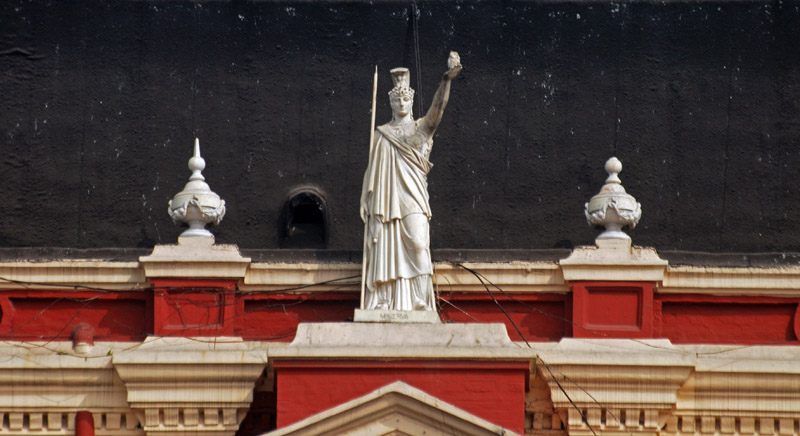
Snippet: The Writers’ Building was built in 1777 by the erstwhile East India Company to serve as an office for its trading operations. The building got its name from the company’s junior clerks called writers. The Writers Building became the effective headquarters of the East India Company, serving as it eventually did as the centre of British power for more than 200 years. It actually marked the centre of the ‘White Town’, where the English and the East India Company officials lived and was kept separate from the ‘Black Town’ populated primarily by the native Indian people.

On 8th December 1930, three young Bengali revolutionaries Benoy Basu, Badal Gupta and Dinesh Gupta, armed with revolvers and wearing English attire, entered the Writer’s Building and shot dead Colonel N.S. Simpson, the Inspector of Police, notorious for brutal oppression of Indian political prisoners. In the ensuing gun battle, they were overpowered by the Calcutta police. Unwilling to give themselves up, Badal took potassium cyanide and died instantly, while his comrades shot themselves. Benoy died five days later but Dinesh survived only to be hanged.  In memory of their martyrdom, a statue of Benoy, Badal and Dinesh stands in front of the Writers’ Building.

The Writers Building is currently under renovation.

The Writers Building features in the story, ‘Ashtami’, part of my forthcoming book ‘The Chronicler of the Hooghly and other stories’. Should you wish to receive exclusive previews and the chance of winning a free copy of the book, do write to me @ author.esgee@gmail.com

#historicalfiction,#pageturner,#thechroniclerofthehooghly,#shatighosal,#ashtami,#writersbuilding.

The Birth of the Chronicler of the Hooghly


Borders were drawn through history dividing mankind into smaller more manageable divisions that could be ruled and led. Borderless is a celebration of the human spirit that soars exploring and developing links beyond all the borders that exist in today’s world. 

Borderless is a literary journal to connect all writers and readers beyond the bonds of money, nationality, rituals and cultures… to a world of ideals. We look for any positive input — humour, poetry, prose. There are no boundaries to human imagination and thought and that is what we are set to explore…

I am delighted to append below the book excerpt of ‘The Chronicler of the Hooghly and other stories’ featured in the November 2020 edition of the Borderless journal.

#thechronicler of the Hooghly, #shaktighosal,#borderlessjournal

The London Birmingham Railways and Prince Dwarkanath Tagore


England, 1842

“The train was chugging on the newly opened London Birmingham Railways. Inside the well-appointed first class carriage sat an elderly English couple and a middle aged distinguished looking Indian gentleman. The latter was listening to the tchjk tchjk tchjk of the engine as his mind raced with the possibilities of Railways in his native land.

“Good morning to you Sir. Are you from India?”, asked the English Gentleman, opening a conversation with a fellow passenger who seemed to be from the exotic Orient.

“Good morning, indeed so”, came the response with perfect diction. “I am Dwarkanath Tagore and I am visiting England on business”.

“I am Thomas Woods from Berkhamsted”. Leaning over both men shook hands and Dwarkanath bowed to the lady with respect. The conversation warmed up.”

Snippet: The London and Birmingham Railway (L&BR) was an early railway company in the United Kingdom.The 112-mile railway line between London and Birmingham, was the first intercity line to be built and was engineered by Robert Stephenson.

Prince Dwarkanath Tagore, a title he earned as one of the pioneering Indian industrialists, was one of the earliest promoters of Railways in India. He was the grandfather of nobel laureate and poet Rabindranath Tagore.

The London Birmingham Railway and Dwarkanath Tagore feature in the story ‘The Chronicler of the Hooghly’, part of my forthcoming book of the same name. Should you wish to receive exclusive previews and free copy of the book, do write to me @ author.esgee@gmail.com.

#thechroniclerofthehooghly,#dwarkanathtagore,#londonbirminghamrailway,#startofindianrailways

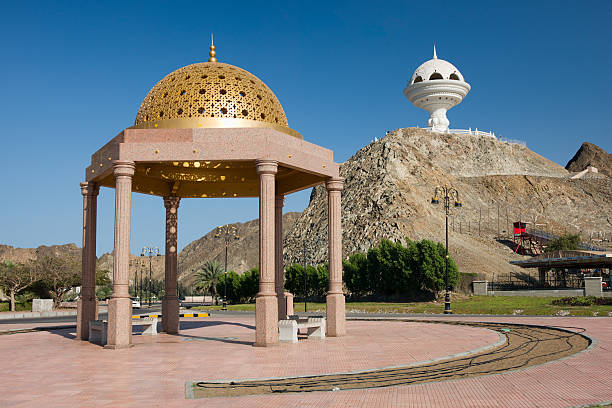
The Corniche and the Mutrah Souq


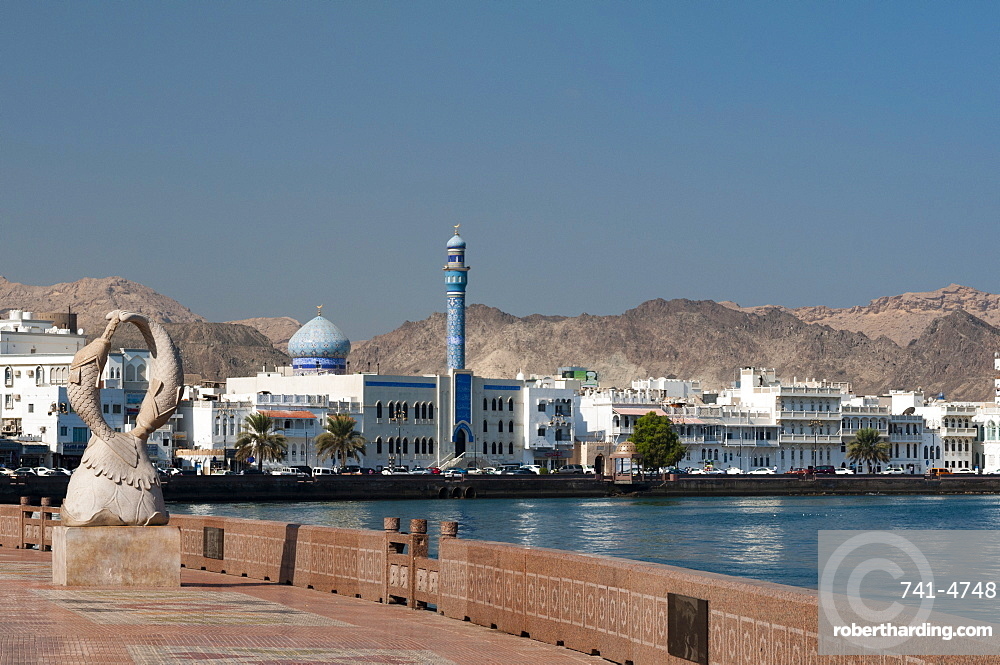
Muttrah Corniche, Muscat, Oman, Middle East

“Anjan managed to park his car between two cars in the congested parking area of the Muttrah corniche. Mercifully it was early afternoon when the crowds were less. Anjan had driven through the old town areas of Darsait and Jibroo, go around the small and quaint fish roundabout before parking close to Muttrah Souq.

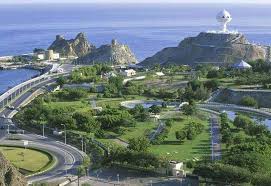
As he stepped out of the car, Anjan looked at the long and curving corniche and the sea beyond. He could see a few ships and dhows anchored. To his right, he could see the giant incense burner standing guard over Riyam park. It was always a pleasure to visit this old Muscat area and savour the beauty of the surroundings.

Corniche – Harbor Promenade in the City of Muttrah. Muttrah Corniche, Oman, Middle East.

Anjan had come to purchase a gift of a framed Omani Khanjar for an industry colleague who was leaving Oman and returning back to India. The best place to buy was from one of the many small souvenir shops in Mutrah souq….”

Snippet : Before the discovery of oil, Muttrah was the center of commerce in Muscat, Oman . It is still a center of commerce as one of the largest sea ports of the region is located there. Muttrah Souq is one of the oldest marketplaces in Oman dating back two hundred years. In Arabic, it is known as Al Dhalam Souq, which signifies darkness because of the crowded stalls and lanes where the sunrays do not infiltrate during the day.

Muttrah Corniche and Souq feature in the story Fault Lines, a part of my forthcoming book, ‘The Chronicler of the Hooghly and other stories ’. Should you wish to receive exclusive previews and the chance of winning a free copy of the book, do write to me @ author.esgee@gmail.com

The Embarkation and the Journey


Come! Embark with the Chronicler on a journey through Time and Transformation.

Four Stories. Five Crucible experiences.

What could be behind you taking this trip today……. and me telling you this tale?

Which Pandemic is going to leave a more lasting impact, the one inside the head or the one outside, can we be sure?

Can a moan carry with it the realisation that friendship and harmony have lost out to communal mindset and greed?

What do you say when you go away……. only to come back and find that your life has irretrievably changed?

In Learning………

Shakti Ghosal

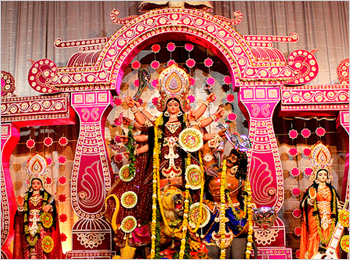
Ashtami @ New Delhi Kali Bari


“O, Jayanti, Mangala, Kali, Bhadrakali, Kapalini, Durga, Shiva, Khama, Dhatri, Swaha, Shwadha, my earnest dedication to you all. Ma Durga, salutation to thee!”

At the conclusion of each mantra, pushpa, flowers were offered at the Goddess’ feet.

Shanti just loved the overall feel and smell of Durga Pujo, replete with the incense of Dhoop-dhuno, flowers, folks adorned in new clothes and jewellery and the heavenly rhythm of the dhak.

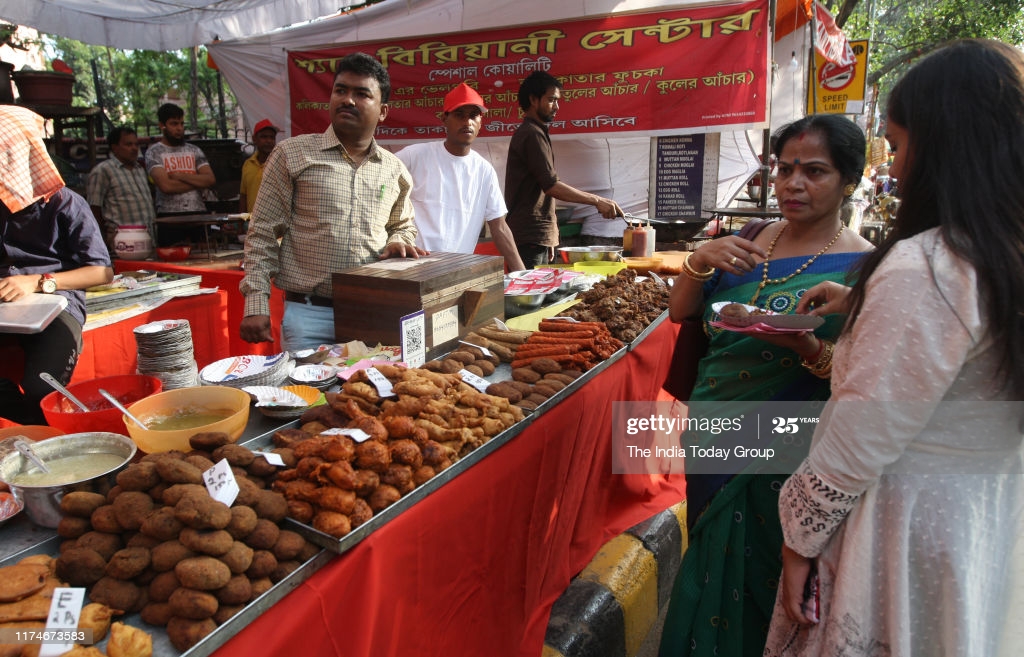
Having offered pushpanjali, Shanti ate the prasad being distributed with great relish. He then slowly limped down the stairs onto the road where food stalls and makeshift cafes were vying with each other to attract the Pujo visitors with snacks. Shanti had fasted since morning to offer his anjali and now looked forward to having his customary Mughlai paratha, peas ghoogni and a soft drink.

Food stalls at Kali Bari Durga Puja pandal at Mandir Marg in New Delhi on October 05, 2019. (Photo by Qamar Sibtain/India Today Group/Getty Images)

That evening Bina’s condition worsened. It was almost as if she had been waiting for this day.

Snippet:  Durga puja at New Delhi Kalibari started in 1925. mainly by the Indian Babus who had relocated from Kolkata to Delhi with the British administartion. Kali Bari continues to follow the traditional ekchalar thakur and sholar kaaj.

The Kali Bari Durga Puja features in the story, ‘Ashtami’, part of my forthcoming book ‘The Chronicler of the Hooghly and other stories’. Should you wish to receive exclusive previews and the chance of winning a free copy of the book, do write to me @ author.esgee@gmail.com

The Company Puja


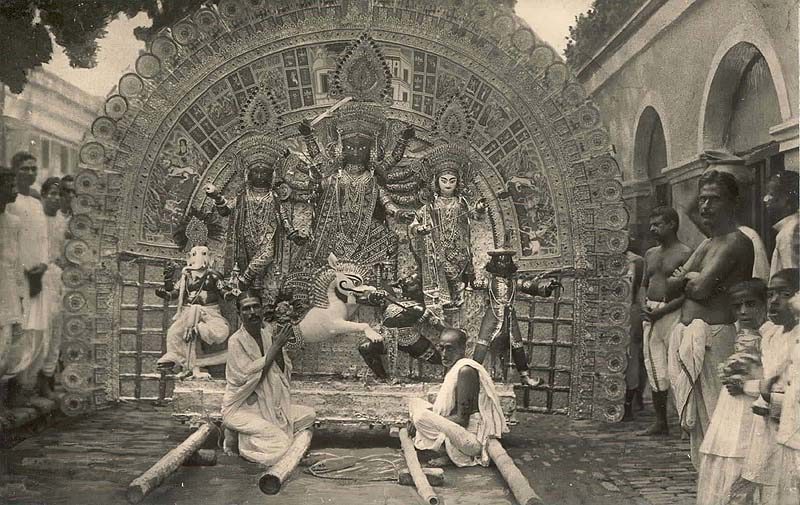
‘On the appointed day of the Pujo, Robert Clive drove in his carriage to Nabakrishna Deb’s residence in Shova Bazaar and participated in what was to become the biggest festival in the Bengali calendar. He was accompanied by a number of Englishmen. The pomp and grandeur of the pujo were such that it became a talking point and something to aspire for by the upcoming rich merchant class. The Company Pujo, as it became known as, was not the usual conservative ritual based Hindu puja. Instead, it became known for its dance parties, elaborate menu of meats from the Wilson Hotel and unlimited drinks!

It is also said that Raja Nabakrishna Deb’s guests were regaled with the performances of the best nautch girls of Calcutta, one of them being the sensational new courtesan Rajni Bai who also responded to the name Joba……..’

Shova Bazaar Rajbari and its Durga Puja features in the story ‘The Chronicler of the Hooghly’, part of my forthcoming book of the same name. Should you wish to receive exclusive previews and free copy of the book, do write to me @ author.esgee@gmail.com.

The Tonga wallah and his tonga


The tonga wallah had duly arrived and was waiting near the door when accompanied by shrieks of joy, Niren and Suren ran out with Roma toddling behind. Both the boys were scampering to get up on the front seat of the Tonga before the other; this gave a vantage view of not only the road ahead but also the horse and this led to a huge competition of who will sit in the front. Along with the tonga wallah, Sujit could sit with only one of the children. Usually, it would be one of the more vociferous boys.

“Niren! Suren ! Behave yourself. Do not leave your sister behind like this”, admonished Sujit, as he came out of the quarter. “Today, Roma will sit with me in the front”.

Snippet: The ubiquitous tonga-wallah and his tonga remained on the Delhi roads for more than a century till in 2011, the Municipal Corporation of Delhi banned their services. The ‘clip-clop’ sound of the horses’ hooves is no longer heard on Delhi roads!

The tongawallah and the tonga feature in the story, ‘Ashtami’, part of my forthcoming book ‘The Chronicler of the Hooghly and other stories’. Should you wish to receive exclusive previews and the chance of winning a free copy of the book, do write to me @ author.esgee@gmail.com

http://www.shaktighosal.com