How do we motivate our own self in the face of goal multiplicity and pathway uncertainty?


As I thought about this question, a workplace experience from the past showed up. In my first job, I was an Assistant Mechanical Engineer in an Electric Diesel Locomotive maintenance workshop of the Indian Railways. I seemed to be confronted with disparate and multiple problems like dirty work bays, breakdown of machines, the workers’ trade union raising different kinds of demands, and so on. As I tackled one issue, other workplace crises seemed to occur elsewhere. I was always firefighting with disparate problems with no overall improvements in terms of productivity and output.

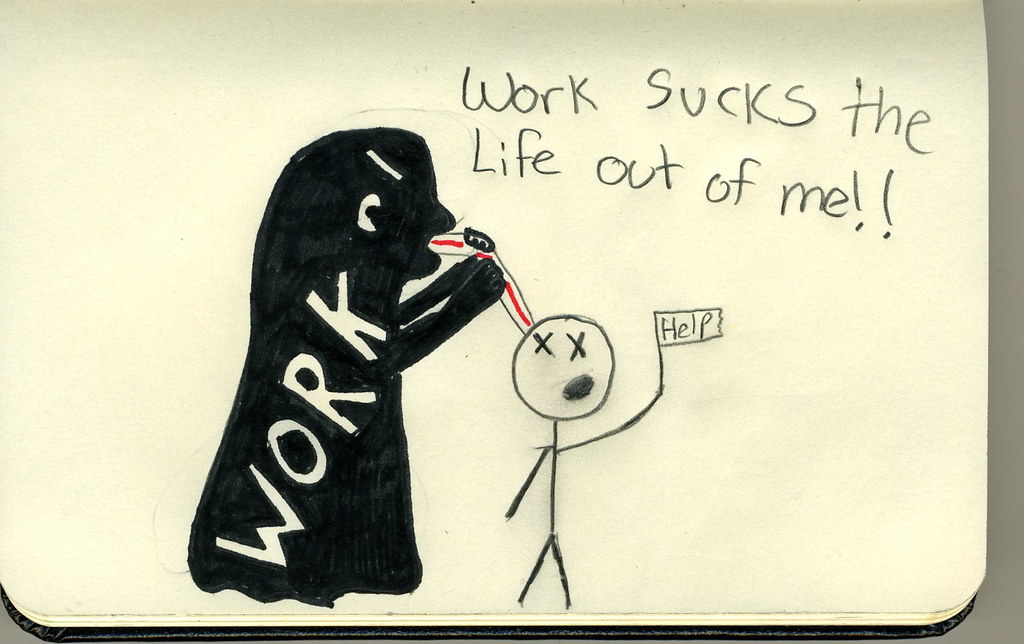
 Over time, I became demotivated with ‘loser mindset’ thoughts which kept circling in my head. These thoughts were like ‘I am doing the best I can’, ‘No point in trying hard, nothing will change’, “I have a wrong boss, bad subordinates’… and so on. A kind of workplace lethargy set in, a laziness to try newer ways and the unwillingness to get out of the rut.

 My mind shifted during a footplate inspection when I experienced firsthand the problems faced by the travellers from locomotive failures. A context got created in my mind, ‘When we don’t operate timely schedules, people’s lives get effected’. As I brought this perspective as an overarching vision for myself, my day-to-day work focus, the language I would use, my handling of situations changed. I felt more energy flow, motivation, and excitement. What was more remarkable was that my team started aligning itself with the overarching vision. My passion seemed to be seeping into them as they perceived that the actions were also addressing their own concerns.

 As I think back, I can say that what can motivate us most is our ability to create an overarching vision which excites and pulls us towards goal achievement as more and more stakeholders start seeing the vision meaningful, relevant, and addressing their own concerns.

Recently, in a ‘Mindset Matters’ podcast, while discussing the above subject, we came to a counterintuitive and interesting perspective that the sheer act of encouraging someone else can lead to our own selves being encouraged and motivated to achieve our own goals.

Should you wish to listen to the podcast, do DM me and I would be happy to send the link.

In Learning……… Shakti Ghosal

Unveiling The Essence of AI and Leadership in the Future


Frank Marinko and myself, both international Executive Coaches and Facilitators, grappled with this question using the critical thinking methodology, in a joint podcast. You might enjoy the discourse and the podcast link is given at the end.

If we are to deliberate on this question, we need to get to the essence of two aspects mentioned. First, AI or Artificial Intelligence as we call it. Second, ‘to lead’ which is all about Leading or Leadership.

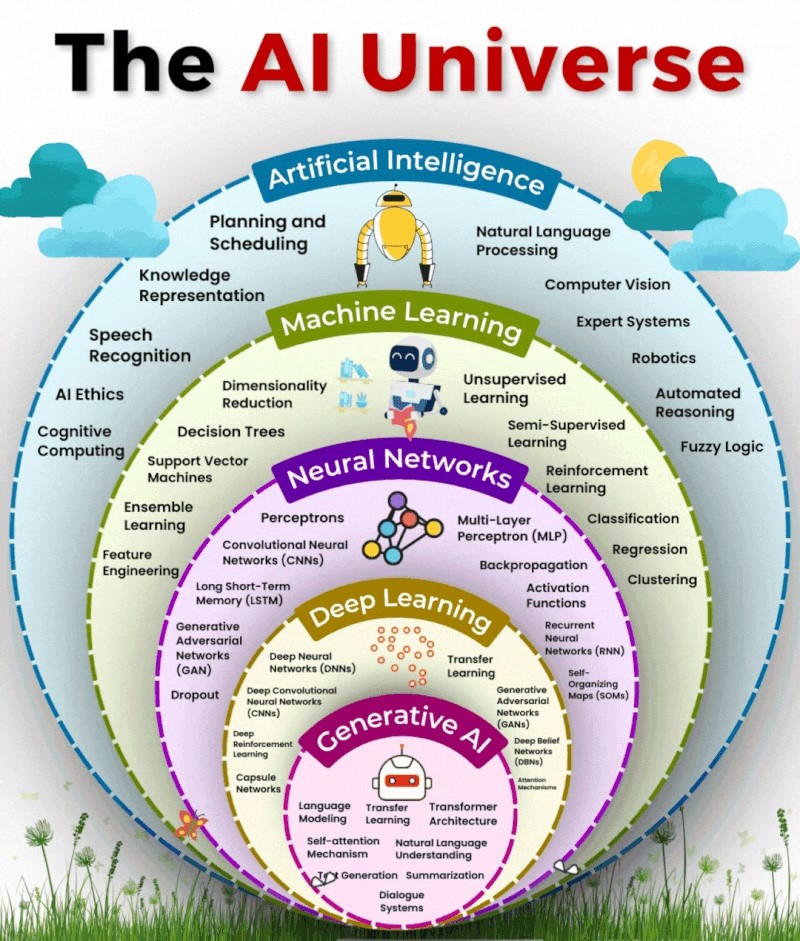
So, what really is the essence of AI? That lies in its ability to mimic and augment human intelligence and decision-making processes using computational algorithms and data. At its core, AI systems can analyze vast amounts of data, recognize patterns, infer relationships, and make predictions or recommendations.

The important aspect to be kept in mind is AI’s ability to ‘learn’, its adaptability and the ability to improve over time. Machine learning algorithms, for example, can automatically adjust their behavior based on new data, allowing AI systems to become more accurate and effective with experience.

And when we think of the essence of Leadership, it is really all about envisioning a future which speaks to all stakeholders by addressing their concerns or satisfying some needs.  Leadership thus involves directing and coordinating the efforts so that the full potential and collective success can be realised.

With the dawn of computers seven decades back, Alan Turing had considered the question, ‘Can a machine think like a human?’ and came up with a test now known as the Turing Test. With the advent of AI, several Artificial Intelligence programs have already passed the test. The purpose of this question seems to be a deep-down threat to our unique ‘leadership ability’ that we see emanating from AI. There are concerns that AI will not only start doing complex and decision-making tasks replacing humans but in the long run go beyond human controls and frameworks.

This idea of technological obsolescence where technology renders humans obsolete, and takes over most of human jobs and work, is a concern that has been raised in discussions about AI and automation. However, we humans have creativity, empathy, intuition, adaptability, and the capacity for complex moral reasoning, which are integral to many aspects of work and life. These qualities enable humans to excel in areas such as innovation, problem-solving, interpersonal relationships, and above all Leadership.

The idea of AI achieving consciousness is another topic of much speculation and debate. Consciousness is a complex and still poorly understood phenomenon, and whether AI can truly achieve it is uncertain. Even if AI were to achieve consciousness, the process of its development would likely still involve human input and guidance. AI systems, as they exist today, are created, and trained by humans, and any future developments in AI consciousness would likely follow a similar path.

However, it is worth noting that AI can already exhibit forms of “thinking” and problem-solving that are quite different from human cognition. Machine learning algorithms, for example, can process vast amounts of data and recognize complex patterns in ways that humans cannot.

Whether AI should create its own thinking framework independent of human influence is a philosophical question with no easy answer. It raises issues of autonomy, control, and ethics. If AI were to develop its own thinking framework, it would still need to start and remain ‘biased’ by frameworks that align with human values and approach. It thus seems that in the foreseeable future, Humans would continue to lead AI, leaving aside the esoteric visions of the Matrix and Terminator movies.

To effectively lead AI development which would synergise with human development, adherence to principles such as transparency, fairness, accountability, and human-centered design would be needed. We would then be able to harness the full potential of AI while minimizing harm. These principles should serve as guardrails rather than roadblocks, helping to steer AI development in a direction that aligns with human values and promotes the common good.

Podcast link : https://audio.com/frank-marinko/audio/podcast-1

In Learning……. Shakti Ghosal

What to do when the world stinks


Some years back, I had a Divisional head join the team.

The guy had impressed the recruiting board with his talk of ‘track record’ and ‘ideas’ about how he planned to transform the business. When I got around to have a chat with him, he seemed to be all humility and spoke of his own self development through working and learning from me. But several subsequent events seemed to indicate that at the sniff of a challenge, his self-serving shield would go up, a lot of talk about blaming the environment and others in the team would emerge but not much action on the ground. In the meanwhile, the company kept losing competent and productive staff as well as customer accounts; his oft repeated declaration about ‘brickwalling’ them did not seem to be working.

To me it appeared that the Divisional Head did not know what he was working to develop; he was definitely not working on his own leadership. When I again had a chat with him, what came up were several blames. ‘That he had not bargained for the kind of work he was now being expected to do.’ ‘That I was failing to support him adequately.’ ‘That he was stuck with incompetent team members.’

In a nutshell, the job stank, I as the boss stank and the team stank! I did not have the heart to ask the guy that if the world all around stank, could it be that he himself was the problem?

How many of you have faced a similar situation at the workplace? If you have, have you wondered what one might need to do to transform the situation?

The world can shift when one shows up with authenticity and with humility.

Transformation:

  • When we see ourselves as the problem, we can be the solution too. We need to spend more time working on our own selves rather than trying to fix others.
  • Do we have the expectation that our team members should be the harbinger of good news and developments? We need to lower that expectation.
  • Empathy is a strong word; being empathetic is easier said than done. Nonetheless we need to practice putting ourselves in the shoes of others and seeing the world through their lens.
  • Gain the realization that others do not really humble us; we humble ourselves.
  • Show up as a servant leader. A leadership style that enables everyone in the organisation to feel empowered and thrive fearlessly as his / her authentic self.
  • Say ‘Thank you’ to three persons in a day. Look them in the eye and be specific. If someone is not around, send a thank you email or Whatsapp or make a call.

In Learning……                                                                 Shakti Ghosal

A recipe to develop humility in Leadership


It was an economic downturn period with the attendant business concerns. In a management strategy meeting, team members were called upon to offer suggestions about how they would wish to ring fence one’s customer accounts, sustain revenues and margins, bring down expenses and so on. I got the sense that the participants were merely sticking to the safety of what we had been doing in the past; no creative suggestions were forthcoming. It seemed to me that in a perceived environment of insecurity, no one was willing to stick his / her neck out. All were hesitating, waiting to do what they would be told.

This set me thinking. Could it be that my seeking suggestions of what each team member plans to do in an adverse situation was being viewed as appraising and judgmental? Could it be that my stance smacked of arrogance, that I was putting others in a spot but was not willing to commit myself?

In a follow-up meeting, I decided to orient the conversation differently. Prior to the meeting, I sent a note to all participants inviting them to come into the meeting with an answer to a simple statement and a question:

  • You would like to ask me about  _______________
  • What suggestion do you have about what I need to do?

The response was surprisingly overwhelming this time. Everyone chipped in with their frank assessment and the feedback I received were ‘I needed to be more of a team player, needed to be more accountable for team efforts’ and so on. Moreover, one could sense a renewed level of energy and vigour in the team’s declarations.

I thanked all for their frank inputs and avoided giving any explanations.

When later I thought about what had happened, I sensed that it all came down to my practicing humility in the meeting with vulnerability and the willingness to listen and learn. Without knowing it, I had shown up as a ‘Servant Leader’.

In ‘What Is Servant Leadership? A Philosophy for People-First Leadership’, author Sarah K. White, CIO says, Servant leadership is a leadership style that prioritizes the growth, well-being, and empowerment of employees. It aims to foster an inclusive environment that enables everyone in the organization to thrive as their authentic self. it helps create a “psychological ethical climate” that allows employees to be authentic and not fear judgment from leadership for being themselves.’

Humility begins with authenticity. And the pathway to the practice of authenticity begins with ‘being authentic to your own self about your own inauthenticities’. This pathway has no end, it is the journey that we need to enjoy.

If we are not careful, a leadership role has this nasty tendency of making us arrogant. “I am a leader because I am better. I know what is good for the team, so it needs to be my way or highway” is the kind of thought that can sometimes circle inside us. And such thoughts manifest in our conversations and actions.

Arrogance blocks growth, humility drives growth. Humble leaders always strive to develop themselves.

What humble practices might you adopt to develop your team?

In Learning…….  Shakti Ghosal

Acknowledgement: ‘What Is Servant Leadership? A Philosophy for People-First Leadership’ by  Sarah K. White, SHRM Labs, Feb. 28th 2022

How to navigate a Control Freak?


In our work life, all of us have come across bosses who are control freaks. These are folks with hardened mindsets about what got them to their positions of power. Under uncertain and ambiguous situations ( and today’s environment is becoming increasingly that), they are most prone to risk-aversion, look for scapegoats or black and white solutions and doubtful decision making.

Before we start forming strong opinions about others, we need to hold the thought we too  exhibit ‘control freak’ characteristics at certain times; we are genetically wired with an intrinsic need for control.

In a past assignment, I was reporting to a ‘control freak’ in the corporate office. He lacked domain knowledge relating to our area of business and made up for this lack through demanding total transparency of all operational aspects from our side but with an opaque Blackbox approach from his end. In meetings, he would ask all the questions and then attempt to put one manager against another in a classic divide and rule tactic, to elicit the ‘correct answer’. At times he would deploy the ruse of ‘letting go’ when he would shift to a ‘looking over the shoulder’ kind of control.

What the ‘control freak’ boss ended up achieving was disrespecting and devaluing people, demotivating me and creating stress all round.

The way I managed to handle the situation was to shift from my preoccupation and anxiety about what the boss was saying and thinking to a more inward looking focus. I started thinking about myself, my ‘own battles’ and what I could do in a situation. Every time I felt mistreated, I tried to hold the thought that it was really ‘not about me’; this allowed me to shift from reactiveness and choose a better response. Over time I knew that if I was not careful, my ‘response’ might easily get tainted with bitterness, fear or thoughts of revenge.

In my work life, I was also lucky to have worked with a boss at the other end of the spectrum. He was the ‘hands off’ type but at the same time objective driven. He shied away from taking credit but was always available for discussions and guidance relating to decision making. The team under his watch successfully handled one of the most technically challenging and largest HVAC projects in the country.

So, how might we support others impacted by excessive control in the work place?

  1. Coach how to ‘let go’ when perceiving to have been wronged. Such ‘looking inward’ practise needs dollops of courage, humility and self-compassion.
  2. Listen to frustrations. Acknowledge that it’s awful to feel disrespected by one’s boss.
  3. After listening, turn the conversation to the following: (a)How might you be a better team player as a result of working for a controlling boss? (b)How might you motivate yourself to perform even though your boss is disappointing?

In Musing ……..                Shakti Ghosal

Leadership and Introspection


A way to grow one’s Leadership is through introspection. One needs to look back into one’s past and identify all that which contributed to one’s Leadership and performance development.

This may sound easy but it is not. As we move through work responsibilities and the corporate hierarchy, we tend to develop our own plethora of ‘what we believe made us succeed’ mechanisms consisting of inauthentic facades, assumptions and ‘need to impress the other guy’ behaviours. We also hone our survival instincts. So, when we do get down to ‘looking into our past’ and identifying all that which contributed to our development and growth, we tend to see stuff distorted by our facades, beliefs and impress the-other-guy behaviours.

The way to grow one’s leadership through introspection is to do the following practices.

  • Ask yourself, ‘Who were the people who changed you?’

When I thought about this question, I could identify two individuals.

 The first was a senior colleague at the start of my career as an Assistant Mechanical Engineer in the Indian Railways.  The quality that my colleague brought into our relationship was one of sunny optimism and a natural instinct to mentor without a self-serving mindset.

The second was my boss in Voltas Ltd, where I was handling HVAC projects. The quality that he brought into our relationship was one of down to earth openness and transparency.

I realise today that what allowed me to grow through the above relationships was to try and inculcate a non-self-serving mindset as also authenticity through openness and transparency.

  • Ask yourself, ‘What kind of people did you gravitate towards?’

When I thought about this question, I could again identify two individuals.

In my tenure in the Indian Railways, I had two workshop foremen report to me. The first was a kind of a ‘yes man’ guy. He made me at once comfortable through his unquestioning loyalty; he would do exactly what I asked him to. This was a great relationship for maintaining status quo about situations and other stuff.

The second was a guy who was a ‘shop floor rebel’. He would usually give a counter viewpoint to most stuff I would suggest, and at times speak uncomfortable truths based on his own past experience and arguments. I would often ‘see’ his approach as unwillingness to accept my authority or trying to prove me wrong. I would feel upset.

This did not seem to be the kind of relationship I would be comfortable with or gravitate towards at that point in time. But I realise today that the person who allowed me to grow was this ‘rebel’ guy as he shattered my comfort zone and forced me to look at uncomfortable possibilities.

So how might you grow your leadership in today’s disruptive world? How might you foster such growth in your team members?

Gain mastery about how to succeed in a business environment that is constantly changing and being disrupted. Do this free module:

https://www.learndesk.us/class/6399442649350144/winning-in-a-disruptive-world-module-1

In Learning……… Shakti Ghosal

#leadership, #introspection, #practices, #authenticity, #facades, #assumptions, #survival, #disruptive world, #succeed, #Indian Railways, #Voltas

Are you winning in today’s disruptive world?


  • Do you remain dissatisfied and uncertain about how to face emerging situations and challenges in today’s fast-changing world?
  • Do you frequently get the sense that however hard you or your team are trying, there seems to be always someone ahead of you and winning?
  • As you resolve a problem or a challenge, do you get confronted by fresh ones?
  • Are you frequently unable to prioritize which problem to tackle first?
  • However much you strive, are you unable to see the big picture and align yourself and your team with that?

….. And on a more personal level:

  • Do you want to get that job or assignment that you have been trying?
  • Do you want to get that promotion and recognition you have been aspiring for?

If you have been plagued by one or more of the above questions, the Winning in a Disruptive World program might just be what you need to improve your winnability quotient in today’s world.

 The fact is that our present world is constantly getting disrupted. By new technologies, new competitors, or other factors that can disrupt traditional business models. The disruptive world with its VUCA (Volatile, Uncertain, Complex, Ambiguous) characteristics allows us to reside in a significantly narrow band in the present with a hazy and uncertain future in front and the inability to take recourse of our past experience.

Conceived and developed based on workshops and programs conducted for leading organisations and Business Schools, the course showcases the major types of disruptions that are shaping the world. You, as the participant, would gain an insight into what leads to us getting disrupted. You would review the process followed by a probability-based mindset and the need to shift to a possibility-based mindset to be able to better handle disruptions. You would practice and gain proficiency in the five action steps for the needed shift by conducting in-depth Inquiry through a structured process.

  • Creation of a context by using hard trends in three areas.
  • Creation of the three lists.
  • ‘Plug into the future’.
  • Relational assimilation through a triad of competencies.
  • Creation of a Resilience Plan.

Get a sense of what it is all about.

I look forward to seeing you in the program!

Shakti Ghosal

How could you shift from Influence versus Impact to  influence and impact?


Larsen & Toubro Leadership Workshop

Sometime back, in a Leadership workshop for Larsen & Toubro that I was conducting, one of the participants shared a challenge he was facing.

 “Earlier I had been involved in direct sales of earthmoving equipment to institutional buyers. A year back I got promoted and was moved to product and market development. However even now a few of the clients continue to contact me on even small issues.”

“That only goes to show that they still have a lot of trust in your support to them, is it not?” I commented.

“True,” the participant agreed. “But it often leads to negativity and bad blood with my sales colleagues who think I am trying to throw my weight around and stepping on their toes.”

“So, what is stopping you from letting go and clearly informing your ex-clients suitably?” I asked.

“That is what I am finding difficult to do. I feel I might be letting my clients down” was the response.

“That surely is a good intention. But are you taking accountability of future sales to the client?” I asked.

Looking at me, the participant slowly shook his head to conveying that he was not.

***

Each one of us, in our career, would have faced a similar situation. The problem occurs because of the clash between our stated positive intention and the negative impact we are making. If we are not careful, we can get sucked into a black hole of spiraling negativity which ironically arises from an initial intention to help.

The authority being exercised in some manner (even with good intentions) without being accountable is really abuse. If we expect others to be accountable for the task at hand, and we get sucked in, we need to be equally accountable to them, even if hierarchically they are junior to us.

Simply put our impact and influence may move in contrary direction leading to minimal or nil positive outcome. We thus need to explore how these two may operate together in the same direction to maximise the positivity of the outcome. Think of a train being pulled by a set of double engines.

Jim Dougherty, CEO of a software company, writes in Harvard Business Review ( Dec 12, 2012 issue),  “If you want to get an emotional connect with the  people you are working with or with whom you have business relationships — you need to be willing to commit and be accountable to them , unsolicited and without direct hope of reward.”

Should you wish to move on the road to better influence and impact, I invite you to explore and answer these questions:

  • Are you willing to make personal investments in people?
  • Are you willing to share what you are learning?
  • Are you willing to empathise with the stresses and frustrations others feel?
  • Are you willing to work for a shared purpose, results and consequences?

What could you do to maximise the overall outcome from the influence and impact you make?

In Learning……………..                                             Shakti Ghosal

Winning in a Disruptive World


Sometime back, at a ‘Learning & Development’ elective course I was running at Indian Institute of Management Kashipur, one of the participants came to me for a discussion.

“ Sir, you have been emphasizing again and again about the need to have a lifelong Learning mindset. You have also been mentioning about the criticality of the L & D template to remain relevant during unpredictable and disruptive situations in terms of one’s problem solving ability and initiatives. Don’t you think these two aspects are contradictory to each other? “, he said.

This intrigued me. I asked, “How so? Could you clarify some more?”

The participant explained, “In my MBA program, we are learning concepts and tools which allow us to make sense of a business situation and solve problems. They have stood the test of time. But what you have been advocating is to seek completely new way of looking at things to solve problems in uncertain, fast changing environments. So whatever we are learning in our MBA Course would no longer work. To me, that is both scary and disheartening”.

“Well, It is YES and NO”, I replied. “ Your domain knowledge would always continue to play a role. It would be something like a searchlight which will show up a situation in a particular manner, highlighting certain aspects but hiding others.  However, the L & D funnel which you would master in our course should allow you to do a Learning Needs  analysis in terms of desired outcomes within a shifting environment and spot the needed L&D strategy. In other words, the superstructure that you would need to build on top of your domain expertise would be your new learning need tactics”.

***

We remain dis-satisfied and uncertain about how to face emerging situations and challenges. Be it on the professional front or may be in our personal life.

“Winning in a disruptive world” would mean succeeding in a business environment that is constantly changing and being disrupted. By new technologies, new competitors, or other factors that can disrupt traditional business models. So, what does one do to win?

The human mind loves continuity and certainty. These allow us to make sense of what we see as stuff we are familiar with. This is why we, our sense making brains, detest change and disruption. For the latter take us into uncertain and unfamiliar territory. We thus like to lull ourselves into believing we are living in a stable world, a world which we understand. We handle new and unfamiliar aspects by distorting and force fitting them into the mental model we hold of the world.

If you have seen the movie, Matrix. It is like living in a never changing, make believe world as the protagonist Neo was doing even though the real world was totally different with its own equations and challenges.

Neo’s Make Believe World…..

Neo’s real world….

So if we are to draw some lessons from the story of Neo in the matrix, ‘Winning in a disruptive world’ would require a mindset to embrace change and adapt quickly to new circumstances, as well as a focus on innovation, creativity, and agility.

I invite you to dwell on the following questions.

  • What are the questions we need to answer in the exploration ‘making sense’ stage of our Learning & Development cycle?
  • How do we align the outputs of the ‘making sense’ stage with our critical analysis of the emerging situation?
  • How do we carry out a decentering exercise between our domain expertise and the gaps thrown up by our critical analysis?

In Learning……..                                                                                           Shakti Ghosal

Control versus letting-go: A Leadership tale


Sometime back, at a two-day Leadership Development program that I was running for Larsen and Toubro Ltd (a heavy engineering and multi-business conglomerate in India), a participant came to me during one of the breaks and said:

“All these techniques which we are learning seem to be of little value to me. I am faced with a different kind of problem. My boss has a strong controlling impulse. It is usually his way or the highway. It seems to me he believes this mindset is what has helped him reach his current position. So even if I try, there is never a win/win situation for my boss vis a vis me. What should I do?”

@ L & T Workshop

As I stood there listening to him, several thoughts came to mind. I asked him whether he was okay to delve into the issue some more.

We need to start exploring. We need to ask, ‘What is that which our ‘controlling boss’ would really like to control and change?’  And even more important, ‘What is that we ourselves are willing to let go?’ For ‘letting go’ could be the start of getting back in control.

Could we try and meet the ‘control freak’ half away down? For instance, certain relationships and one to one interactions could still be kept under our control. This realization itself can give us a sense of empowerment.

Could we ‘let go’ by avoiding reacting when we are being pushed to accept the controller’s point of view? Acknowledge what we have been told and then explain what we plan to do, why we have decided so and that we are willing to take full responsibility of the outcome.

The above exploration would allow us to create our action steps in the matter, thus elevating our own control of the situation.

‘Becoming a leader’ does not arise from knowing techniques or aping what we see great leaders do as they exercise leadership effectively in varied situations. Leadership and Performance is very little about what we know, it is almost all about how we see.  ‘How we see’ comes from our ability to shift our perception through developing a contextual framework for our own selves.

http://www.empathinko.in