
What to do when the world stinks


Some years back, I had a Divisional head join the team.

The guy had impressed the recruiting board with his talk of ‘track record’ and ‘ideas’ about how he planned to transform the business. When I got around to have a chat with him, he seemed to be all humility and spoke of his own self development through working and learning from me. But several subsequent events seemed to indicate that at the sniff of a challenge, his self-serving shield would go up, a lot of talk about blaming the environment and others in the team would emerge but not much action on the ground. In the meanwhile, the company kept losing competent and productive staff as well as customer accounts; his oft repeated declaration about ‘brickwalling’ them did not seem to be working.

To me it appeared that the Divisional Head did not know what he was working to develop; he was definitely not working on his own leadership. When I again had a chat with him, what came up were several blames. ‘That he had not bargained for the kind of work he was now being expected to do.’ ‘That I was failing to support him adequately.’ ‘That he was stuck with incompetent team members.’
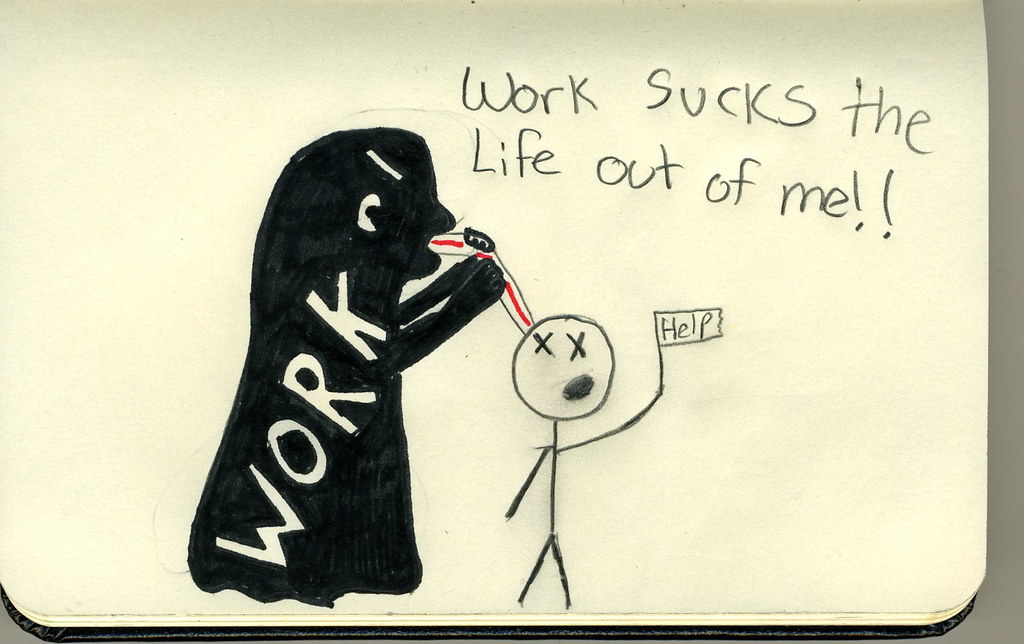
In a nutshell, the job stank, I as the boss stank and the team stank! I did not have the heart to ask the guy that if the world all around stank, could it be that he himself was the problem?

How many of you have faced a similar situation at the workplace? If you have, have you wondered what one might need to do to transform the situation?

The world can shift when one shows up with authenticity and with humility.

Transformation:

  • When we see ourselves as the problem, we can be the solution too. We need to spend more time working on our own selves rather than trying to fix others.
  • Do we have the expectation that our team members should be the harbinger of good news and developments? We need to lower that expectation.
  • Empathy is a strong word; being empathetic is easier said than done. Nonetheless we need to practice putting ourselves in the shoes of others and seeing the world through their lens.
  • Gain the realization that others do not really humble us; we humble ourselves.
  • Show up as a servant leader. A leadership style that enables everyone in the organisation to feel empowered and thrive fearlessly as his / her authentic self.
  • Say ‘Thank you’ to three persons in a day. Look them in the eye and be specific. If someone is not around, send a thank you email or Whatsapp or make a call.

In Learning……                                                                 Shakti Ghosal

The Millennial Leadership Series : Core of Leadership transformation


The only way to change someone’s mind is to connect with them from the heart.”

– Rasheed Ogunlaru, Life Coach & Speaker


How-Well-Do-You-Use-the-Leadership-Skill-of-Empathy

Recently I had the opportunity to be a Master Mentor to a set of alumni mentors of a premier business school as part of its ambitious initiative to offer a Career Support Program for its graduating students.  As the master mentor, my role was really about ensuring the effectiveness of the mentoring process.

The alumni mentors had graduated from the same school few years back and were shaping up as young business leaders in the industry.

In one of my interactions, an alumni mentor mentioned that inspite of his efforts, he sensed a lack of openness and desire to engage from some of the students. I could sense his frustration of seeing his mentoring efforts becoming unproductive.

I asked, “What shows up when you think of your own leading ability?”

“Well, when I am able to influence and get things done”, he answered.

“… and when you see that happening, what behaviours do you display?” I continued.

Reflecting a bit, the mentor replied, “Well I believe I encourage people to take on new initiatives.”

I could sense the disparity between what the mentor believed he was committed to and the outcome that he was achieving. I avoided saying so.

Changing the track somewhat, I then asked, “What do you think gets in the way when you try to support others to take on new challenges?”

The alumni mentor responded almost immediately, “Well I think I need to be more empathetic and less of a stickler to holding people accountable.”

I thanked him for this great insight.

***********

As a Leader, Manager or Supervisor dealing with teams tasked to produce outcomes, we get conditioned to link results to all that is happening outside us. So tracking people, their performance and holding them accountable comes naturally to us. Very seldom do we look inside our own selves to determine whether the way we speak, listen and act could have a bearing on our team member’s performance. This is where the power of empathy steps in.

In the disruptive world that we live in, where past performance has less and less traction for the future, Leaders need to anchor more within, with empathy at the core of growth and transformation.

  • What might you do today to focus on building trust through empathy?
  • How could you be a ‘success enabler’ of people by proactively removing barriers out of their way?
  • How could you be a sounding board for people to come to, so that you could put them in a position to succeed?

In Learning

Shakti Ghosal