

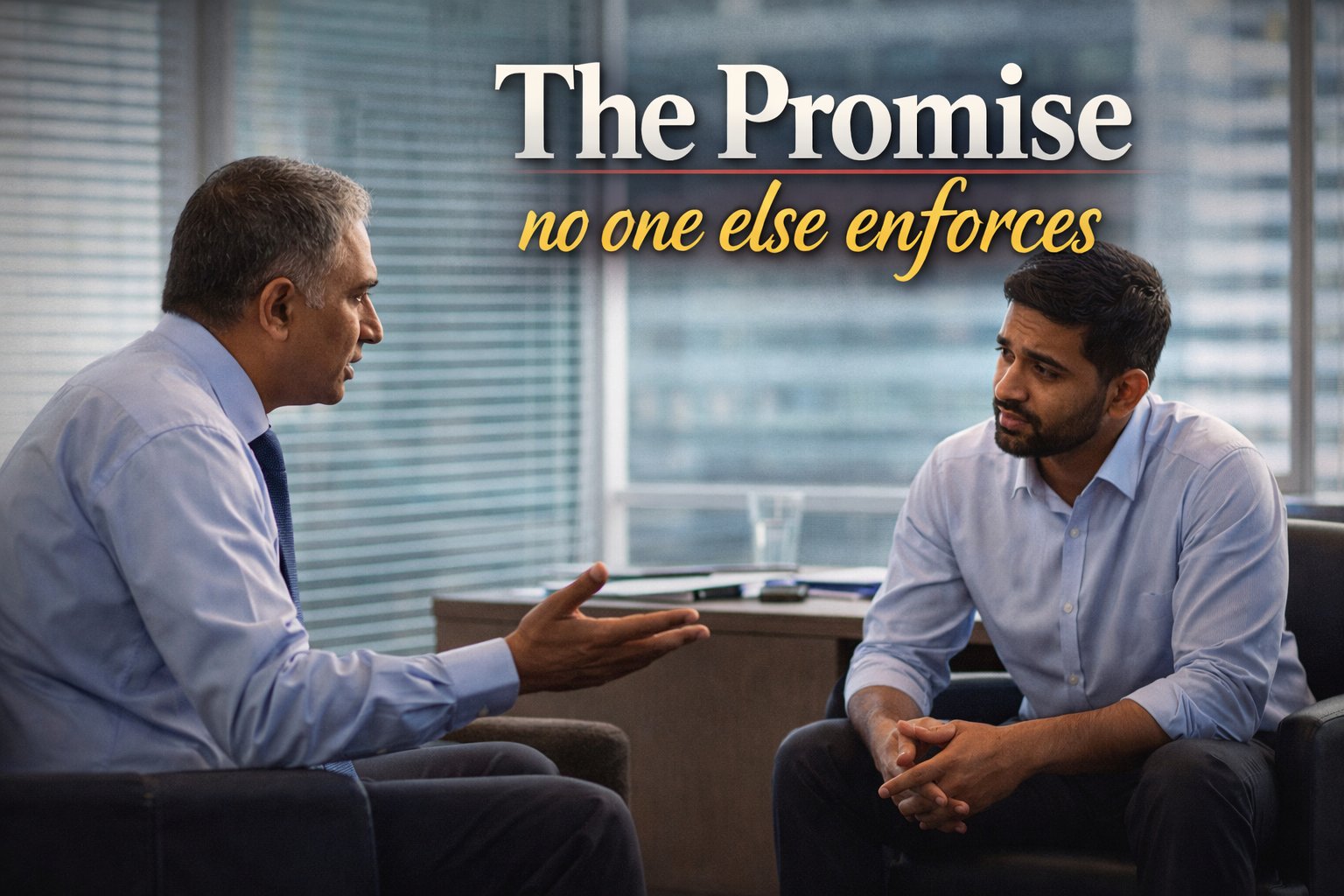
A decade after my executive coaching certification, one idea continues to stay with me: Accountability is rarely about others. It is about the promises we make to ourselves.
Not the corporate version of deadlines, dashboards, and reviews. Something quieter. More personal.
A simple question: Who holds us accountable for the things that truly matter?
The uncomfortable answer: we do.
**
Some time ago, a senior leader — let’s call him Arvind — walked into my office. Highly capable. Well respected. Clearly exhausted.
“I’m working harder than ever,” he said, “but everything feels stuck.”
Experience has taught me that “everything” usually has a centre of gravity.
“What feels most stuck?” I asked.
“My restructuring initiative,” he replied. “Everyone agrees it’s necessary. But it’s just not happening.”
“What’s stopping it?”
“The usual,” he sighed. Quarterly pressures. Reviews. Endless fires. Bad timing.
Logical. Reasonable. Entirely human.
But then I asked him three questions:
“If the Chairman had mandated this with a deadline — would it still be pending?”
“Of course not.”
“If your compensation depended on it?”
“Would have been done already.”
“If your team’s survival required it?”
“ Then, I would have done it yesterday.”
And there it was. The barrier wasn’t capability, clarity, or even time. It was consequence. Nothing happened if he delayed. No penalty. No discomfort. No urgency.
**
“Whose goal is this restructuring?” I asked.
“Mine.”
“Imposed?”
“No.”
“Do you believe in it?”
“Completely.”
“Then what agreement have you made with yourself about it?”
Silence. Then a smile of recognition. “None.”
**
Many of us confuse intention with commitment.
We say:
• I should do this
• I need to get to that
• I’ve been meaning to…
But progress rarely responds to “should.”
“What if,” I suggested, “you treated this not as a project — but as a promise?” Something you either honour or break. Not endlessly postpone.
**
“What’s the next visible action?” I asked.
“Announcing it to my leadership team.”
“When?”
“…Friday.”
“And how would you like me to support your accountability?” That question matters. Accountability imposed feels like control. Accountability invited becomes partnership.
“Ask me next week,” he said. “And challenge me if I haven’t done it.”
**
The following Tuesday he returned, noticeably lighter. “It’s done.”
“What changed?”
“I stopped treating it as something I should do,” he said, “and started treating it as something I had said I would do.”
A small shift. A profound one.
**
The most important commitments in our lives rarely come with external enforcement. No one penalises postponed courage. No dashboard tracks delayed growth. And yet, these commitments shape everything.
Accountability is not a management technique. It is a quiet act of integrity —an agreement between who we are today and who we intend to become.
**
Curious to hear your thoughts: 👉 Where have you seen self-accountability make the biggest difference in leadership or life?
In Musing……… Shakti Ghosal


 A New Beginning