🌴 Breezing Through Bermuda: Pink Sands, Ghost Ships & Darrel’s Secrets


The Bermuda Archipelago

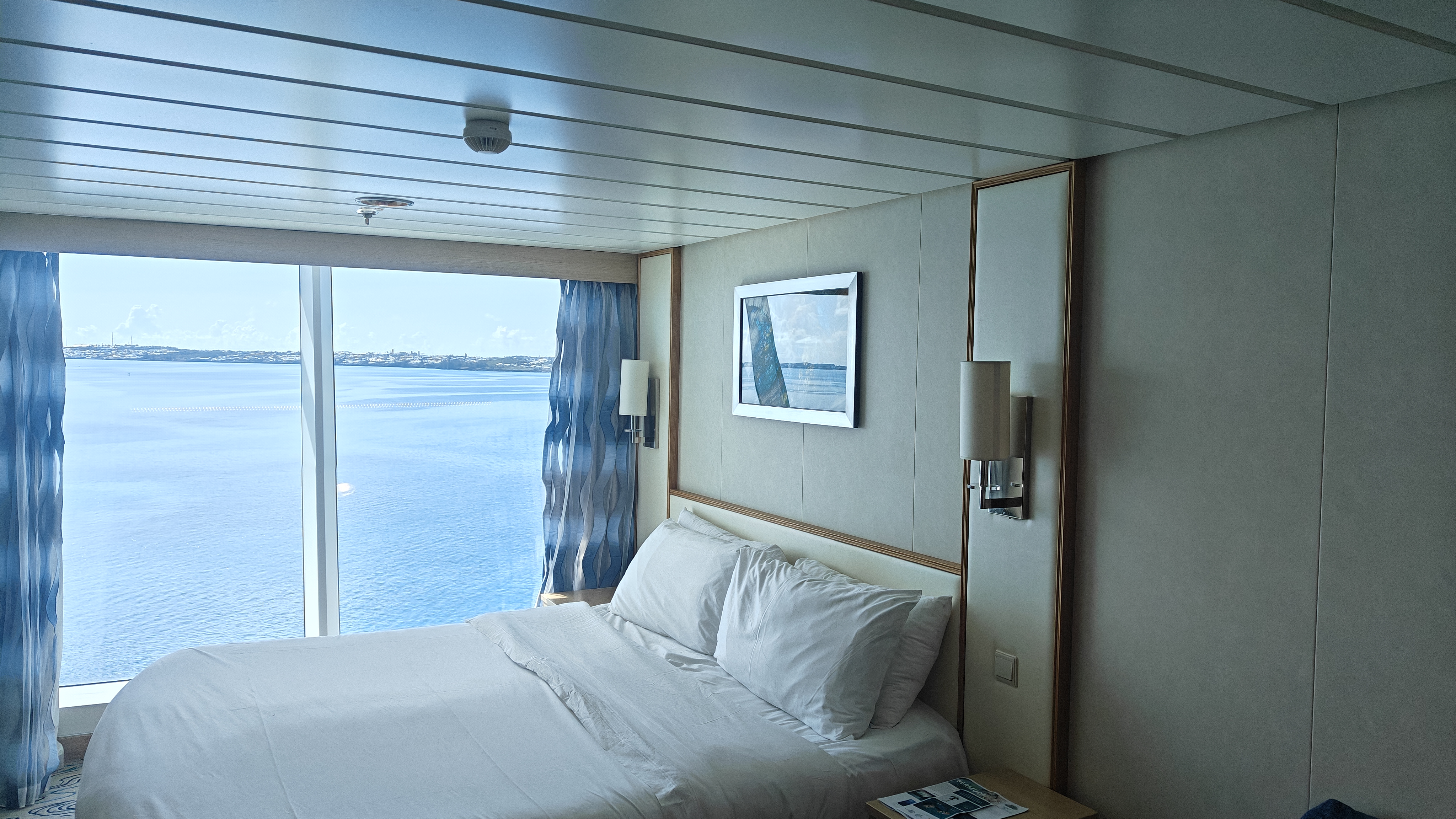
The Liberty of the Seas was slipping gracefully through the turquoise waters of the Atlantic, teasing us with views of emerald islets dotting the horizon. As land loomed closer, so did our anticipation. Bermuda—a name that evoked equal parts paradise and paranormal. Our stateroom window framed the unfolding spectacle of the approaching land,  pastel-painted resorts on the sea front and the occasional home peeking from behind palm fronds.
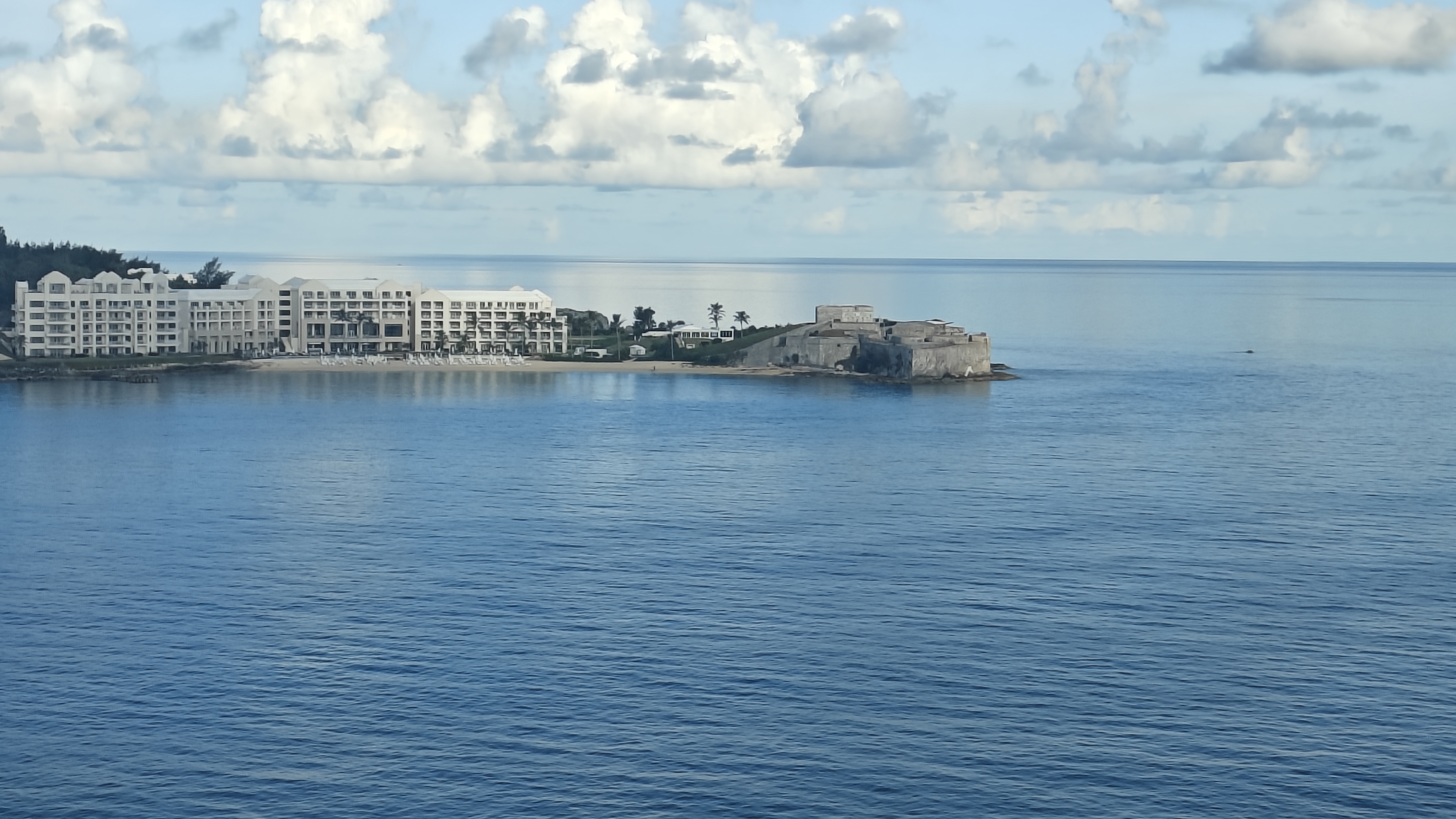
A Bermuda resort

We docked at the Royal Naval Dockyard. Once a formidable British naval base after they were unceremoniously booted out of North America, it now plays host to cruise ships instead of battle cruisers. Think of it as the colonial version of “I’ll be back!”—except the British came back with museums, not muskets.

Royal Naval Dockyard

Once ashore, as we looked around for a suitable transportation, we were greeted by Darrel, a local guide and driver. Silver-haired, sun-tanned, and equipped with the storytelling prowess of a Caribbean mistrel, Darrel introduced himself with a flourish:

“Ninth-generation Bermudian! My ancestor came here as a slave. And now I drive tourists through my island. We’ve come full circle, haven’t we?”

We chuckled, unsure whether to be impressed or introspective. As it turned out, Darrel was about to take us on a version of Bermuda that the glossy brochures never dared to print.

A Personal Bermuda

Darrel wasn’t one for those touristy places. Instead, he showed us his own Bermuda. We were soon snaking past old churches and vintage homes, zigzagging across narrow causeways which connected Bemuda’s islands like hesitant footbridges between old memories.

He took us to his ancestral home; a weathered house nestled on a hillside shaded by cedar trees. “This is where I was born,” he said. There was pride in his voice, not nostalgia. He wasn’t just showing us a place, but offering us a piece of his DNA.

As we crisscrossed the islands, almost missing the transitions thanks to seamless causeways, Darrel pointed out the unique Bermudian water storage systems. There are no freshwater lakes or rivers in Bermuda; every roof thus is designed to catch rainwater and store it in underground tanks. “It’s not just eco-friendly,” Darrel declared, “It’s that, or die thirsty!”

Exploring the Bermuda water storage system

We stopped at an old fort with low embankments, a relic from World War II. What was interesting was that it was armed with British, American, and Canadian gun emplacements. A curious cross-national collaboration.

 “They were allies here before NATO was cool,” I quipped. Darrel grinned, “Yeah, and those guns haven’t fired in anger—only in memory.”

Shopping Malls, Lighthouses & Cost Shock

Next came the capital city, Hamilton, gleaming with shopping arcades, business hubs, and enough boutiques to bankrupt a Kardashian. “Don’t be fooled,” Darrel warned, “This is more for you tourists and offshore finance folks than for us locals.”

We could believe it. A loaf of bread cost more than a good bottle of rum back home. Bermuda, it seemed, was as expensive as it was beautiful—a tax haven with a sun-kissed poker face.

We also visited the Gibbs Hill Lighthouse, where the view from the base was majestic enough to spare us the knees wrecking climb to the top. From there, the Atlantic spread out like an endless blue silk sheet, dotted with hints of human habitation—each island a whisper in the sea.
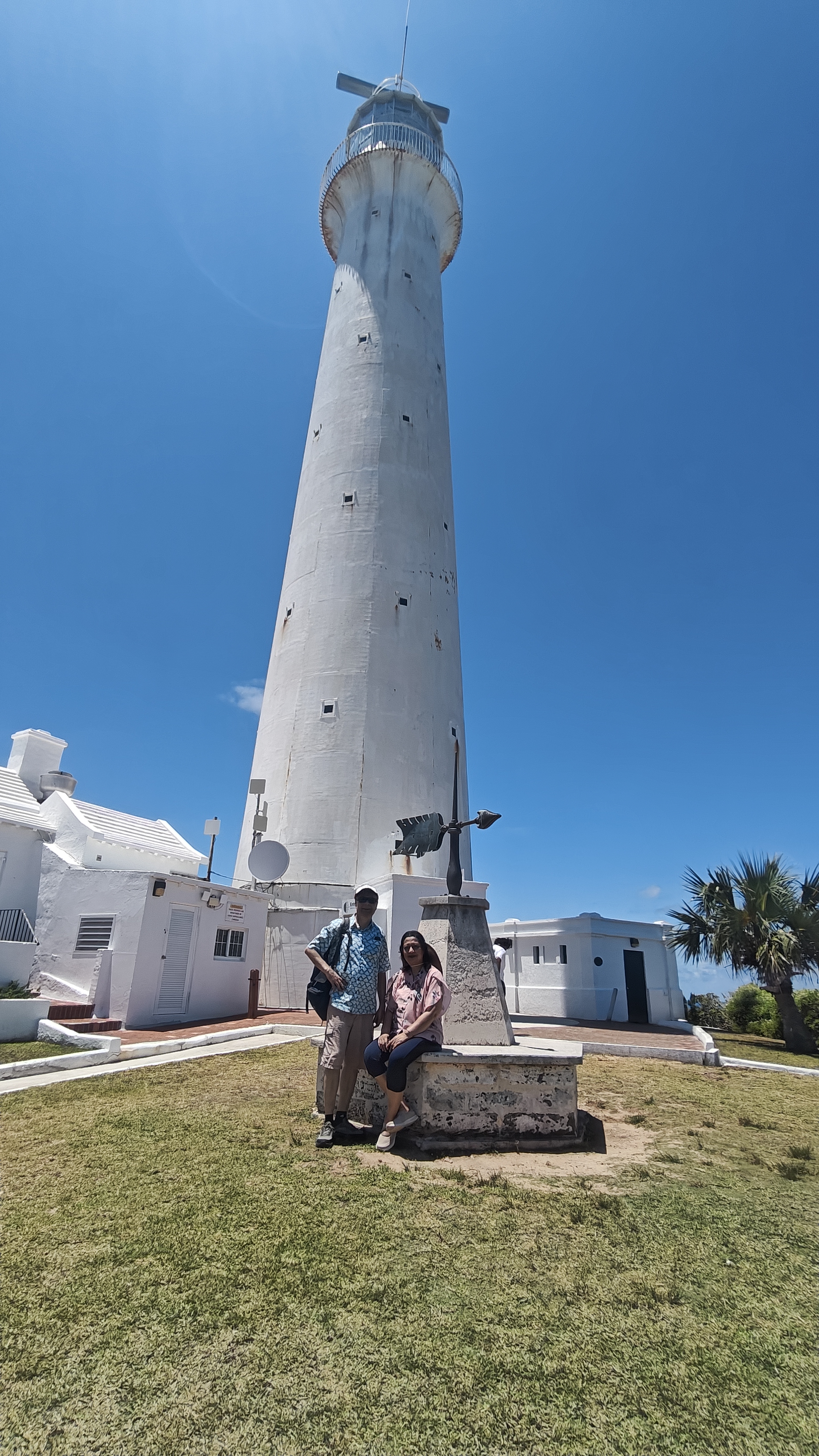
Gibbs Hill Lighthouse

Of Pink Sands and Rose Hearts

By afternoon, the sun had cast a golden glaze on the island. The temperature was perfect for what we came for: Bermuda’s legendary beaches.

We skipped the Instagram-flooded Horseshoe Bay (thanks to Darrel’s insider intel of it being overcrowded!) and headed to a more secluded beach nearby. And what a choice that turned out to be! Powdery pink sand caressed by clear turquoise water, gentle waves that beckoned instead of bullied, and—most intriguingly—a giant heart-shaped installation of roses left behind from what looked like a beach wedding. Darrel, never missing a beat, winked and said, “That’s either love… or excellent marketing.”
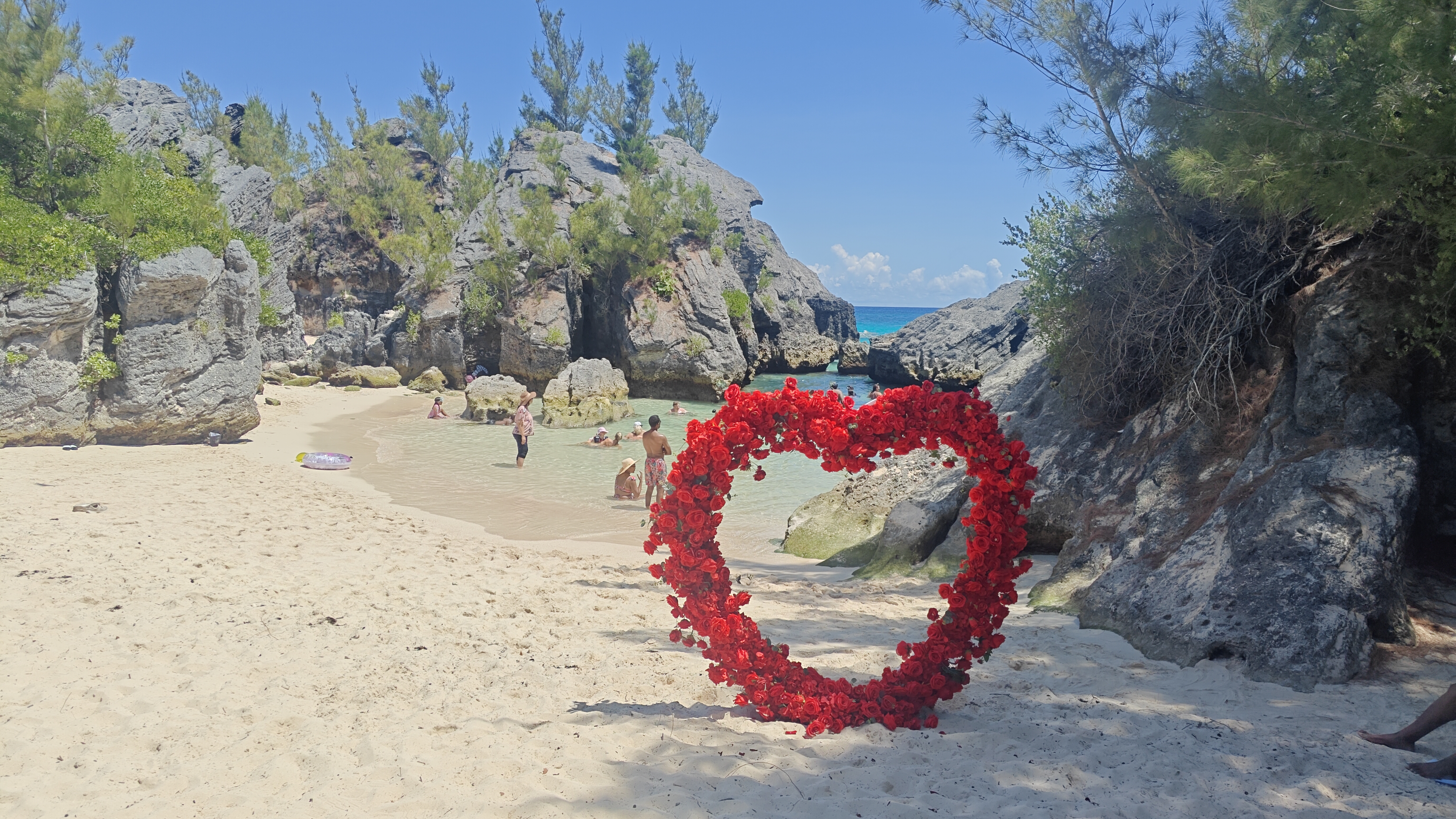
Love….. or marketing?

We did what anyone would do: took photos, dipped into the sea, and pretended we had discovered the place ourselves.

The Triangle of Terror… or Hype?

As the sun began its descent, we finally popped the question everyone avoids until dessert, about the Bermuda Triangle.

“So Darrel… any strange goings-on out there?”

He glanced at the ocean and said, “Let me tell you something. Some days, you see gas bubbles rising out of nowhere. Big ones. Not your usual air pockets. These are… different.”

He paused. “Could be alien. Could be methane. Could be the sea having gas. But small boats and aircraft? They don’t always like those bubbles.”

In search of Bermuda triangle…..

Darrel’s casual eeriness reminded me of the book I’d devoured in my Jamalpur college days: Charles Berlitz’s “The Bermuda Triangle.” The author had chronicled the infamous disappearance of Flight 19, a squadron of five US Navy torpedo bombers in 1945. The flight leader’s last radio transmission still rings like a Lovecraftian riddle:

“We cannot be sure of any direction… everything is strange… the ocean doesn’t look as it should.”

Some say it was magnetic anomalies. Others blame pirates, aliens, or even the lost city of Atlantis. Even National Geographic weighed in years later, shrugging off the mystery with a headline that felt like a sigh:
“No, the Bermuda Triangle isn’t real. Let’s move on.” (Source: National Geographic, 2017)

But standing on a beach where the sand is pink and the stories are surreal; logic starts to feel a bit… overrated.

A Farewell in Technicolour

As we returned to the Liberty of the Seas, the ship shimmering under the evening sun, Bermuda felt like a dream—equal parts sunshine and superstition.

Liberty of the Seas

Darrel dropped us at the dock, gave us a conspiratorial wink and said, “Now you know our secrets. Keep them safe.”

Bermuda had shown us its history, its heart, and maybe even a hint of its hauntings. Whether you believe in vanishing ships or just overpriced sandwiches, it’s a place that lingers.In your mind, in your phone camera, and if Darrel’s right, maybe even in your magnetic compass.

In musing……..                                            Shakti Ghosal

📚 References:

  1. Berlitz, Charles. The Bermuda Triangle. Doubleday, 1974.
  2. National Geographic. “No, the Bermuda Triangle Isn’t Real. Let’s Move On.” August 2017.
    https://www.nationalgeographic.com/history/article/bermuda-triangle-mystery-disappearances-science
  3. BBC Travel. “The Curious Infrastructure of Bermuda’s Water Tanks.” February 2020.
    https://www.bbc.com/travel/article/20200219-the-island-that-catches-rainwater

Cruise Chronicles – A Bermuda Triangle of Fun, Frolic, and Farce


Abstract

After years of good intentions and postponed plans, we finally pulled off the Great Family Cruise – ten of us, one ship, two waterslides, twenty-three ducks, and a Cruise Director who could’ve moonlighted as a tornado.

 From gliding over ocean waves to sliding into water-slide mayhem (albeit with minor misadventures), from buffet binging to Broadway bopping – here’s how we discovered that the only real triangle in Bermuda is one made of sun, sea, and stuffing ourselves silly. Dive into our cruise tale below!


“We had joy, we had fun, we had… sunburn, and the distinct feeling that gravity works differently on a cruise buffet.”

For several years, our family cruise plan floated in the misty sea of ‘someday’. We’d talk about it, sigh wistfully, and then shelve it in favour of life’s more pressing annoyances – work, school schedules, or the sheer logistics of aligning four households across two continents. But this year, the planets and the stars finally aligned –  our schedules, and the price of cruise cabins. Over a weekend, the dates and the bookings were locked in over WhatsApp calls. The dream was on!

We had zeroed in on a 6-day Royal Caribbean Bermuda Cruise from Bayonne, New Jersey. As luck would have it, both our daughters, Riya and Piya, along with their husbands and children, were in New Jersey. Add to that, grandparents (that would be us), and we had a party of ten. One grand adventure. Two Uber XLs. Four bags per family (because who travels light when going to sea?).

**

The First Glimpse: Love at First Float

Royal Caribbean’s Liberty of the Seas stood docked like a skyscraper that had taken a horizontal sabbatical. Towering, gleaming, with the top decks bustling with sunhat-clad explorers and Pina Colada amateurs, the ship exuded glamour and gravity-defying engineering. How much of it was underwater, I kept wondering

The boarding was smooth; it smacked of efficiency. The Royal Caribbean staff operated with choreographed precision smiles. As we entered our 12th-floor staterooms, our suitcases were already neatly arranged at the door – not unlike obedient puppies waiting to be let in.

What greeted us inside made us gasp (some of it real, some theatrical I daresay). A wall-to-wall panoramic window offering glorious view of Lady Liberty herself, poised with her torch held high, seemingly wishing us bon voyage. The bed, king-sized and plush, promised to cradle us gently through the Atlantic lullabies.

**

Buffet Warfare and Windjammer Déjà Vu

The first port of call wasn’t Bermuda. It was Windjammer Café – the cruise ship’s legendary buffet zone, an all-you-can-eat haven where diets land up to perish.

“Is that an Italian pasta station or an entire province?” I asked no one in particular as I watched a chef wield a spatula with ‘Keanu Reeves in Matrix’-level reflexes.

Amid spoonfuls of mayonnaise-laced salad and pasta, memories came rushing back. Two decades earlier on a Mediterranean Cruise on Royal Caribbean’s Grandeur of the Seas, we used to frequent the Windjammer Cafe. And just like that, the generations merged across time and geography over plates piled high with memories – and shrimp tempura.

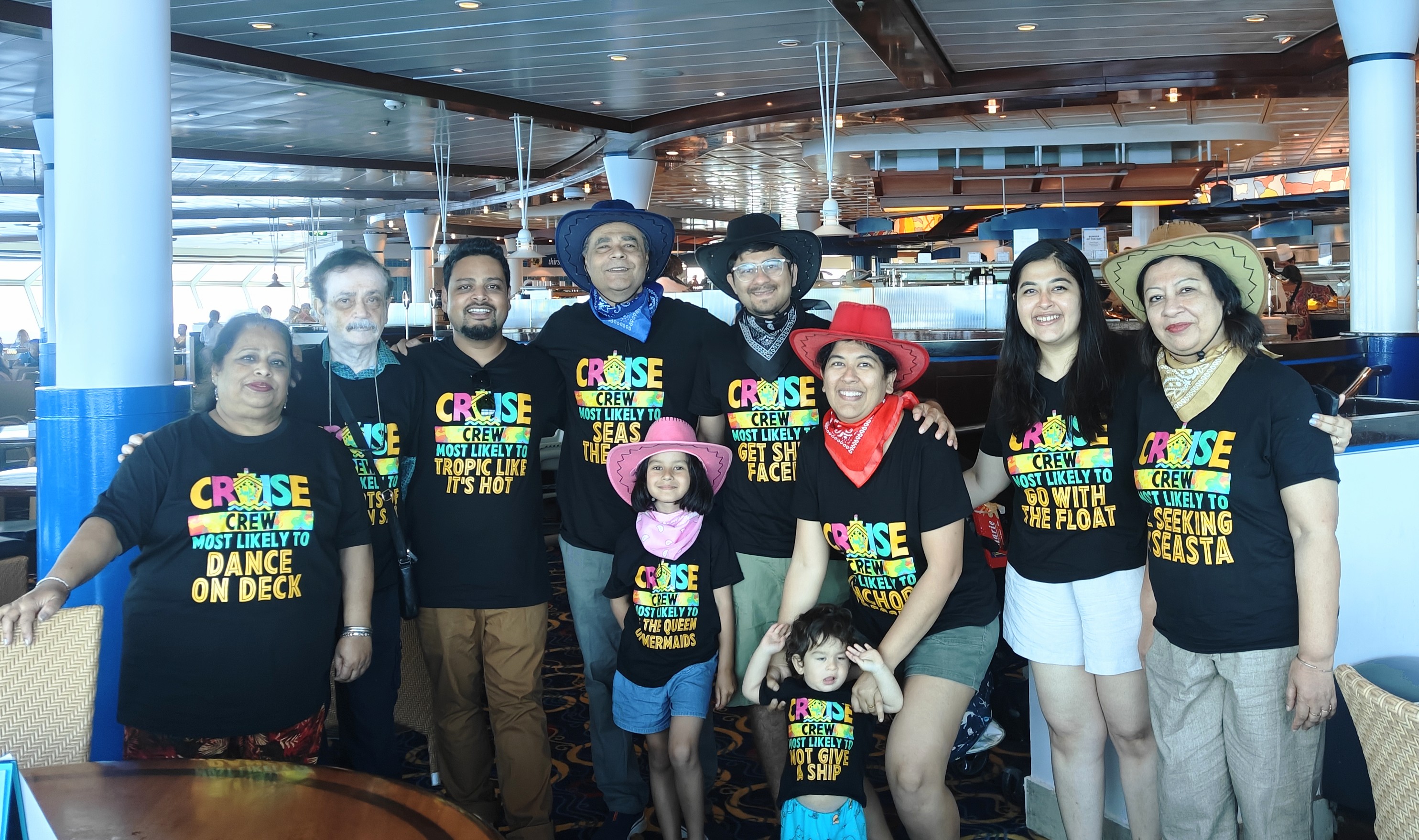
The Family crew @Windjammer

**

The Ship That Never Slept … so how could we

With fourteen floors of everything one could think of. From swimming pools to simulated surfing to an entire promenade that looked like it had been smuggled out of Barcelona, Liberty of the Seas wasn’t a ship – it seemed more akin to a floating nation-state. All this for a guest count of 3400 and service providing crew numbering 1200!

The fun deck

The Platinum Theatre promised nightly shows with a Vegas vibe, and boy, did it deliver. Between ice-skating opera (yes, you read that right) and a Broadway-style rendition of Saturday Night Fever—complete with Bee Gees hits that had us singing falsetto into dessert—we barely had time to digest our dinners.

Ice Opera@ Studio B

Dining was a delight. Our assigned fine-dining restaurant was Botticelli, where we were seated by a window overlooking the Atlantic. It was a view so romantic, it could’ve made an accountant recite poetry.

Fine Dining experience @ The Botticelli

But with great food came great responsibility. We soon fell into the classic cruise rhythm:

  • Breakfast like royalty 🥓
  • Mid-morning Jacuzzi + cocktails 🍹
  • Poolside ice cream, obviously 🍦
  • Pre-dinner Pizza and cocktails 🍕🥂
  • Dinner like it’s your last meal on Earth 🍽️
  • A ‘Broadway’ show for digestion 🎭
  • Midnight coffee and cake “sometimes, why not?” ☕🍰
Mid Morning Jac

As travel writer Kate Simon once said, “A cruise is a floating hotel with the added excitement of going somewhere — and waking up to a new view every day.” We couldn’t agree more, except we were too full to sit up in bed and appreciate that view.

**

Enter: Tornado Tanya and the Duck Hunter General

A cruise, they say, is only as memorable as its Cruise Director. And ours was unforgettable.

Tornado Tanya — part emcee, part event planner, part motivational speaker, and possibly part caffeine incarnate — zipped through venues, hosting dance-offs, trivia, pool parties, and late-night karaoke. She had the boundless energy of a toddler on Red Bull and the voice projection of a Shakespearean actor.

Our six-year-old granddaughter Anaysha ( we call her Tiri) , meanwhile, had embarked on her own high-seas mission: duck hunting. Not the feathered kind, mind you. This was a scavenger hunt for plastic ducks artfully hidden across the ship’s decks, bars, and even casino slot machines. She unearthed twenty-three of them – a personal best, a family record, and possibly a ship-wide headline if only Tanya had announced it.

**

The Bermuda Triangle – A ‘safe’ Detour

When we finally docked at Bermuda, we were slightly disappointed that we hadn’t fallen into a time warp.

Bermuda

Bermuda was…well, let us say, stunning. Coral pink sands, aquamarine waters, pastel houses with white roofs – the island looked like it had been filtered through a tropical Instagram lens. But that tale, especially that of the triangle, deserves its own dedicated post. Let’s just say, we came. We saw. We didn’t vanish, unlike those myriad ships and planes of the years gone by.

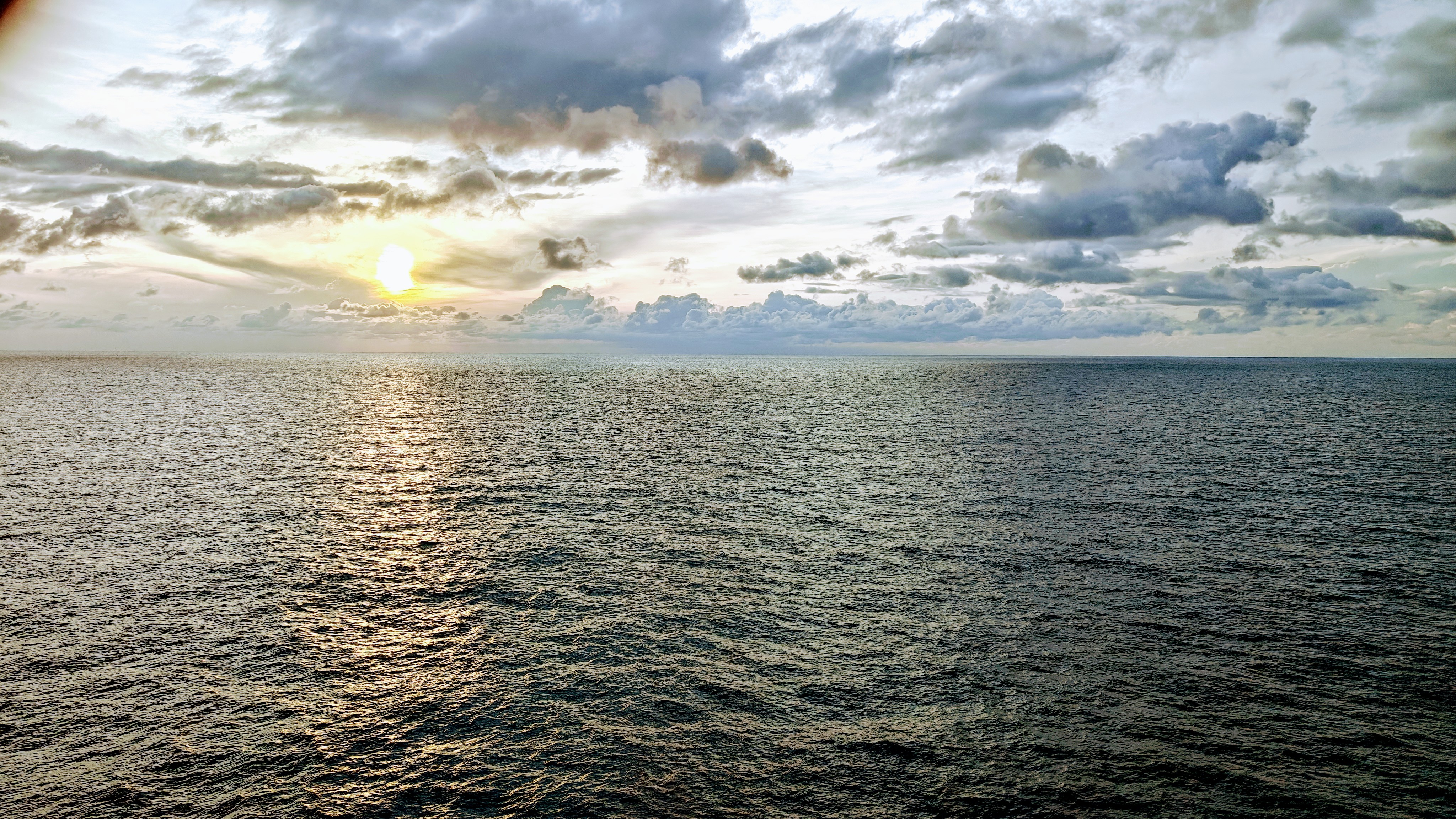
Was this the triangle?

**

The Slides, The Slips, and the Near-Scandal

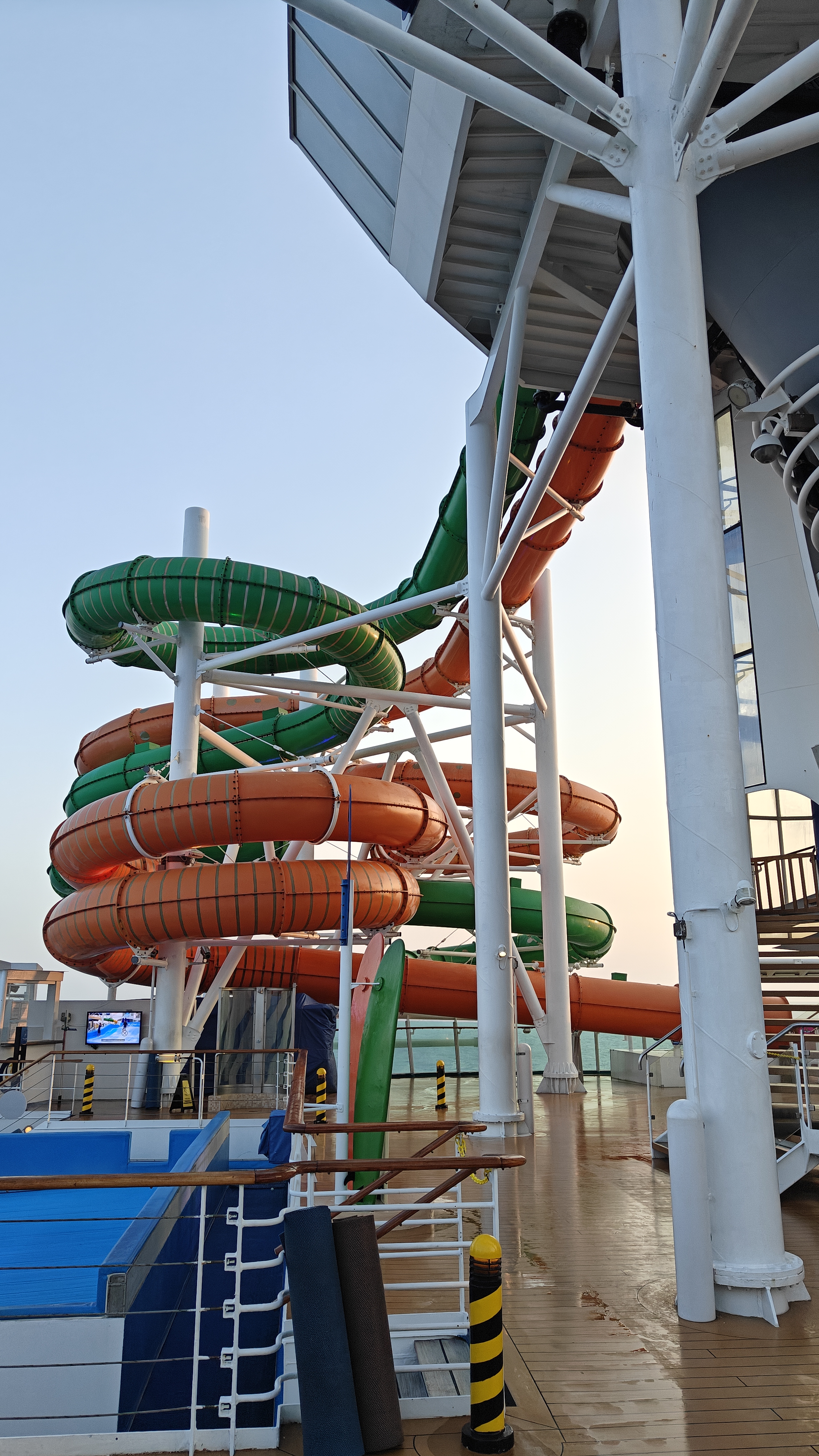
Now, every cruise needs a personal epic. Mine came courtesy of The Slides – those twisting and turning tubes of water doom perched high above the ship like serpentine sculptures of fun and fear.

There were two:

  • The Pink Slide – dubbed “family friendly”
  • The Green Slide – otherwise known as “abandon all dignity ye who dare to enter here”
Those Water Slides

My first attempt was on the Pink Slide. It was supposed to be slow. It was. Too slow. Midway through, I got stuck. Yes, stuck. Picture this: an elderly man, wedged inside a tube, using his hands to scoot forward like a plumber in a pipeline.

A voice crackled on the intercom, “Is everything alright in there, sir?”
To which I replied, “Define alright…”

Not to be defeated, I took on the Green Slide next. This time, I whooshed out like a human torpedo—splashed spectacularly into the pool… and got stuck sideways. Lifeguard involvement ensued. Applause, or was it suppressed sniggers, was heard. Dignity? Left behind somewhere in the tube.

**

Final Reflections: More Than Just a Cruise

As our ship finally sailed back into Bayonne and we waved a fond goodbye to Liberty of the Seas, it hit us – this had not been just a vacation. It was a story. A memory. A time capsule. A chaotic, joyful, belly-filling, duck-chasing, water-sliding tale of ten souls choosing to pause life and just be… together.

A Stateroom with a view

As travel writer Pico Iyer said, “We travel, initially, to lose ourselves; and we travel, next, to find ourselves.”

Well, we certainly lost our diets. And found laughter, connection, and yes – even a part of ourselves.

And thus ends the tale of the Bermuda cruise. Bon voyage, until next time.

In musing…….                                                Shakti Ghosal

References:

  1. Simon, Kate. Cruising: The Only Way to Travel. Travel Weekly, 2016.
  2. Iyer, Pico. Why We Travel. Salon.com, March 2000.
  3. CruiseCritic.com – “Top 10 Cruise Director Superstars” (2023).
  4. Royal Caribbean Official Website: Liberty of the Seas Deck Plan & Amenities (2024).

Final Notes from Aotearoa- New Zealand


From the breezy ferry crossing over Cook Strait to sipping Sauvignon Blanc in a sun-drenched vineyard, our final days in New Zealand were an ode to quiet charm, coastal beauty, and surprising encounters. Dolphins, Blue Crayfish, and the gentle resilience of Christchurch—this last leg gave us a sense of what it truly means to journey, not just travel

As our journey across New Zealand’s North Island drew to a close, a sense of calm anticipation took hold. We were about to cross the Cook Strait—nature’s moat dividing the North and South Islands. After breakfast, we boarded the ferry at Wellington, following the well-worn advice to keep our eyes peeled for the scenic spectacle of Marlborough Sounds.

The Cook Strait has a reputation for being dramatic, both in its swells and its views. Ours was thankfully a smooth crossing, the deck wind-swept but tolerable—as long as you held tightly to your cap. While no seals or orcas showed up to greet us, a joyful surprise awaited mid-journey: a school of dolphins, dancing alongside our ferry near the starboard bow. It was a moment that felt choreographed by the sea itself.

Crossing Cook’s strait

The ferry eventually pulled into Picton, a sleepy harbor town where time seems to slow down. After our coach rolled off the ship’s lower deck, we headed into Blenheim, nestled at the heart of Marlborough—New Zealand’s most renowned wine region. As wine writer Michael Cooper once noted, “The Sauvignon Blancs here speak with piercing clarity and freshness, as if the land itself had whispered the recipe” (Wine NZ Magazine, 2022). Our lunch at a vineyard, paired with one of these signature whites, was a perfect blend of terroir and tranquility.

Marlborough region

Post lunch, the drive to Nelson was comfortably uneventful. Known as New Zealand’s sunshine capital, the town lived up to its name. Bathed in golden light, its leafy streets invited slow, deliberate exploration. We took a detour to the Abel Tasman National Park, where aquamarine coves and golden beaches teased us with just a glimpse of their natural magic. Later, a short cab ride took us on the Prince’s Drive, a winding hill route offering panoramic ocean views. It was one of those rare moments when the vastness of the ocean made one feel wonderfully small.

Abel Tasman National Park

From Nelson, our coastal drive traced the edge of the South Island’s spine. The Kaikoura stretch was especially dramatic—dark cliffs tumbling into turquoise waters. We stopped here, as one must, to try the region’s famed Blue Crayfish. Served fresh and simply, it needed little more than a squeeze of lemon. As travel writer Brook Sabin put it in a Stuff NZ feature, “Kaikoura offers a kind of wild luxury—the bounty of the sea framed by snow-capped peaks.”

Kaikoura

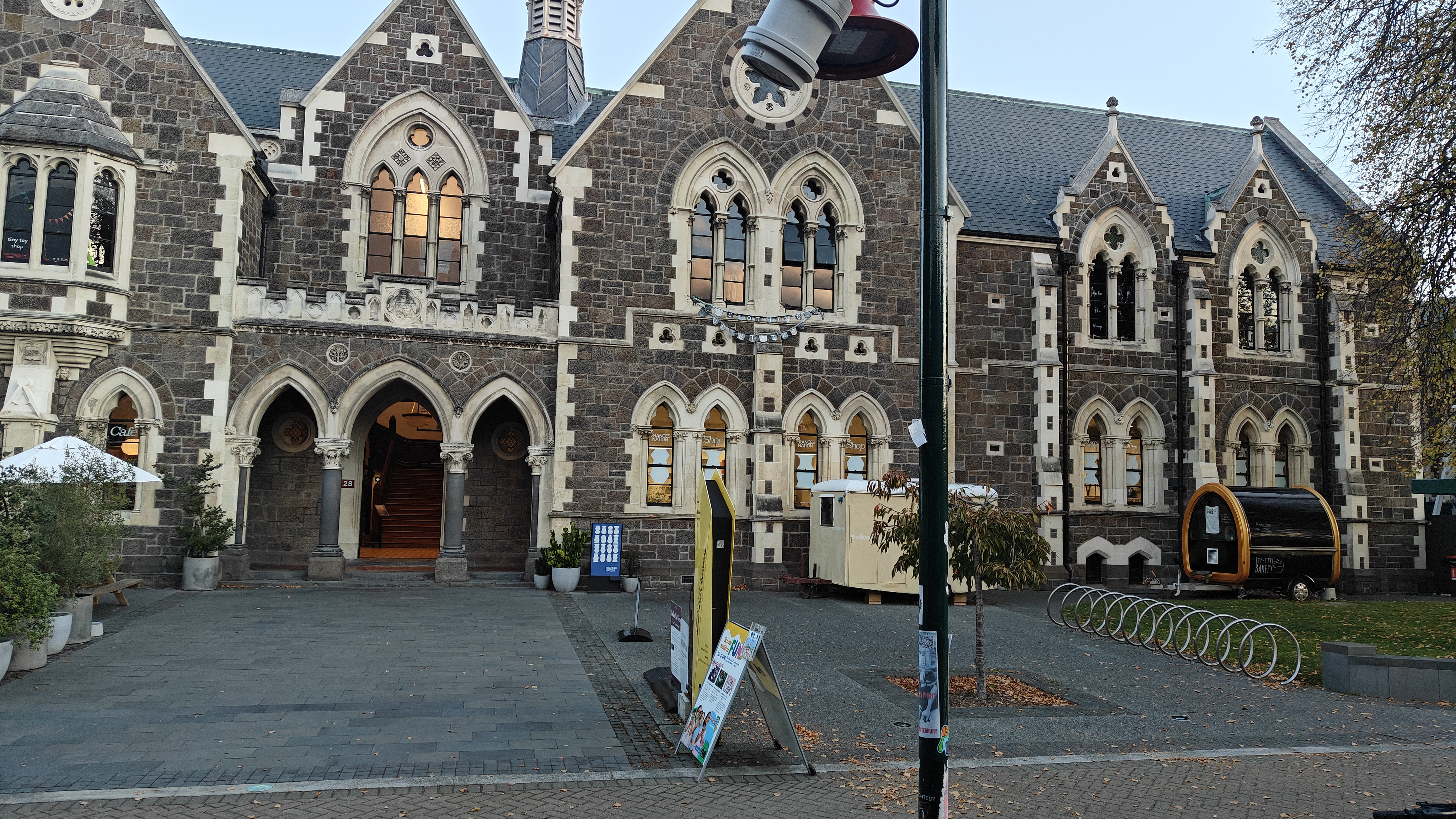
The inland leg to Canterbury gave us rolling pastures, distant alpine backdrops, and a lingering sense of serenity. Finally, we arrived in Christchurch, a city still tender from its past, yet confidently looking ahead. Much of it felt brand new, and understandably so—years after the 2011 earthquake, which damaged more than 80% of the central city.

Christchurch Tram Tour

But there was pride in the restoration, and even more in the spirit of the people. We hopped onto the Christchurch Tram Tour, a delightful old-world loop through a new-age city. Glassy riverbanks, modern architecture, and gentle storytelling from the conductor made it feel like a living museum, still writing its narrative.

Christchurch

And then, just like that, it was time to leave.

At Christchurch Airport, waiting to board our flight home, we reflected on what had made this journey special. Not just the landscapes—though they are indeed epic. Not just the food or wine or wildlife. It was the rhythm of New Zealand: slow when it needs to be, stirring when you least expect it.

New Zealand doesn’t just show you its beauty. It reveals it, bit by bit. Like its shifting light, it rewards those who take the time to look closely.

We departed with tired feet, happy hearts, and the quiet promise that someday, we would return.


References

  1. Cooper, Michael. “Marlborough Sauvignon Blanc: Still Leading the Way.” Wine NZ Magazine, 2022.
  2. Sabin, Brook. “Kaikoura’s Wild Luxury: Where the Sea Meets the Snow.” Stuff.co.nz, 2021.
  3. Tourism New Zealand. “Christchurch Rebuild: Resilience and Renewal.” newzealand.com, 2023.

🍇 Savouring Sunshine, Wine, and Wind: A Journey through Hawke’s Bay, Napier and Wellington


🌿 Abstract

From the sun-drenched vineyards of Hawke’s Bay to the Art Deco charms of Napier and the cultured vibes of Wellington, our North Island journey in New Zealand was a heady blend of scenic beauty, fine wine, coastal elegance, and urban character. Here’s a glimpse of three unforgettable days soaking in the essence of Kiwi culture, cuisine, and charm.

Pacific Coastline

**

New Zealand often conjures images of snow-capped peaks, sheep-dotted meadows, and fjord-streaked landscapes. But on the North Island’s eastern edge lies a less-trumpeted triad of experiences that seduce the senses in a quieter, more intimate way: the sun-drenched vineyards of Hawke’s Bay, the Art Deco elegance of Napier, and the cosmopolitan charm of Wellington.

We began the day heading toward Hawke’s Bay, a region known for its Mediterranean climate, rich soils, and status as one of New Zealand’s finest wine-producing areas. The road wound through rolling hills and vineyard vistas that stretched out like pages from a postcard. It’s no wonder that Lonely Planet calls Hawke’s Bay “a food and wine lover’s paradise… where long sunny days and fertile plains create the perfect recipe for indulgence.”

Hawke’s Bay

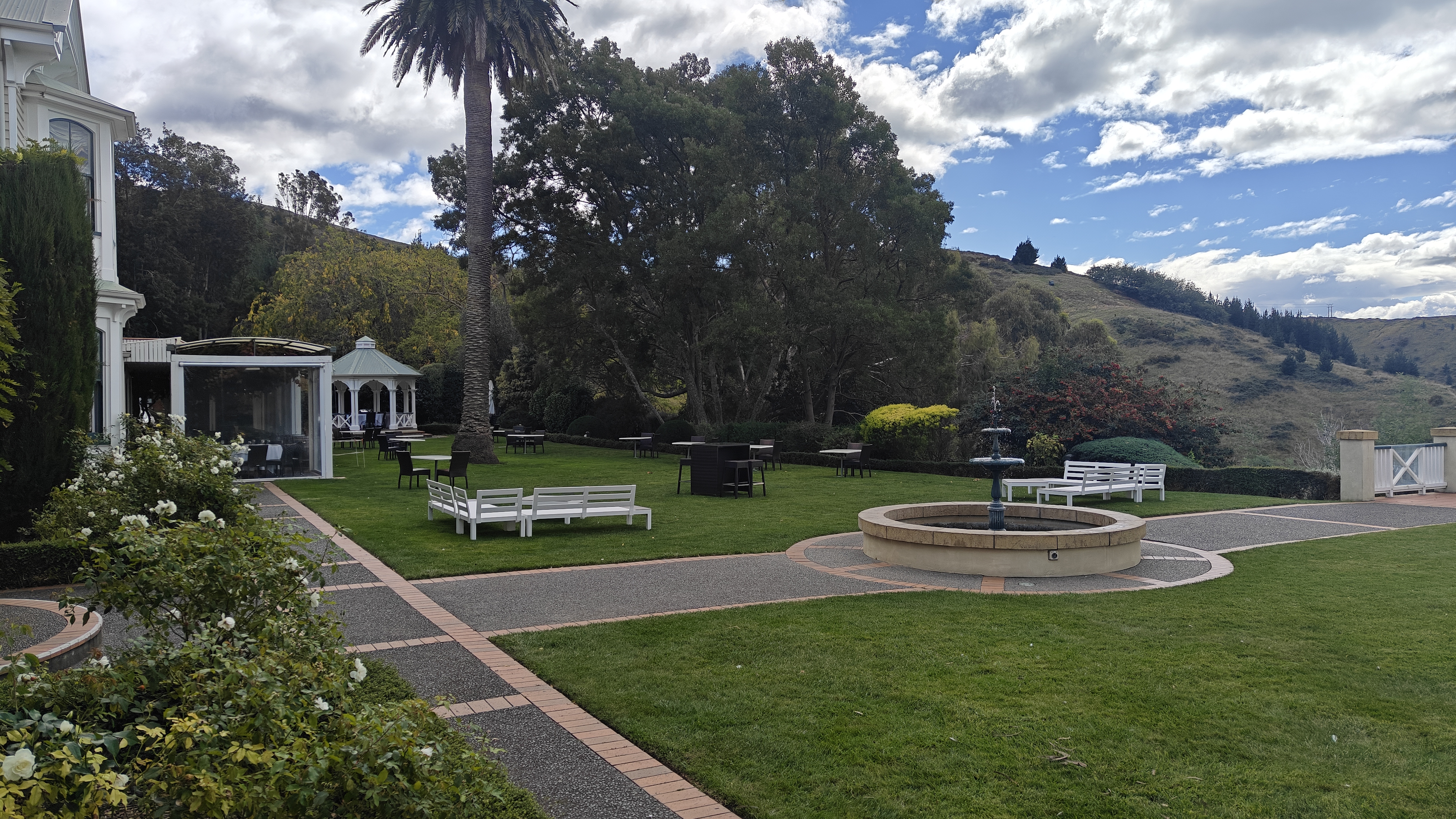
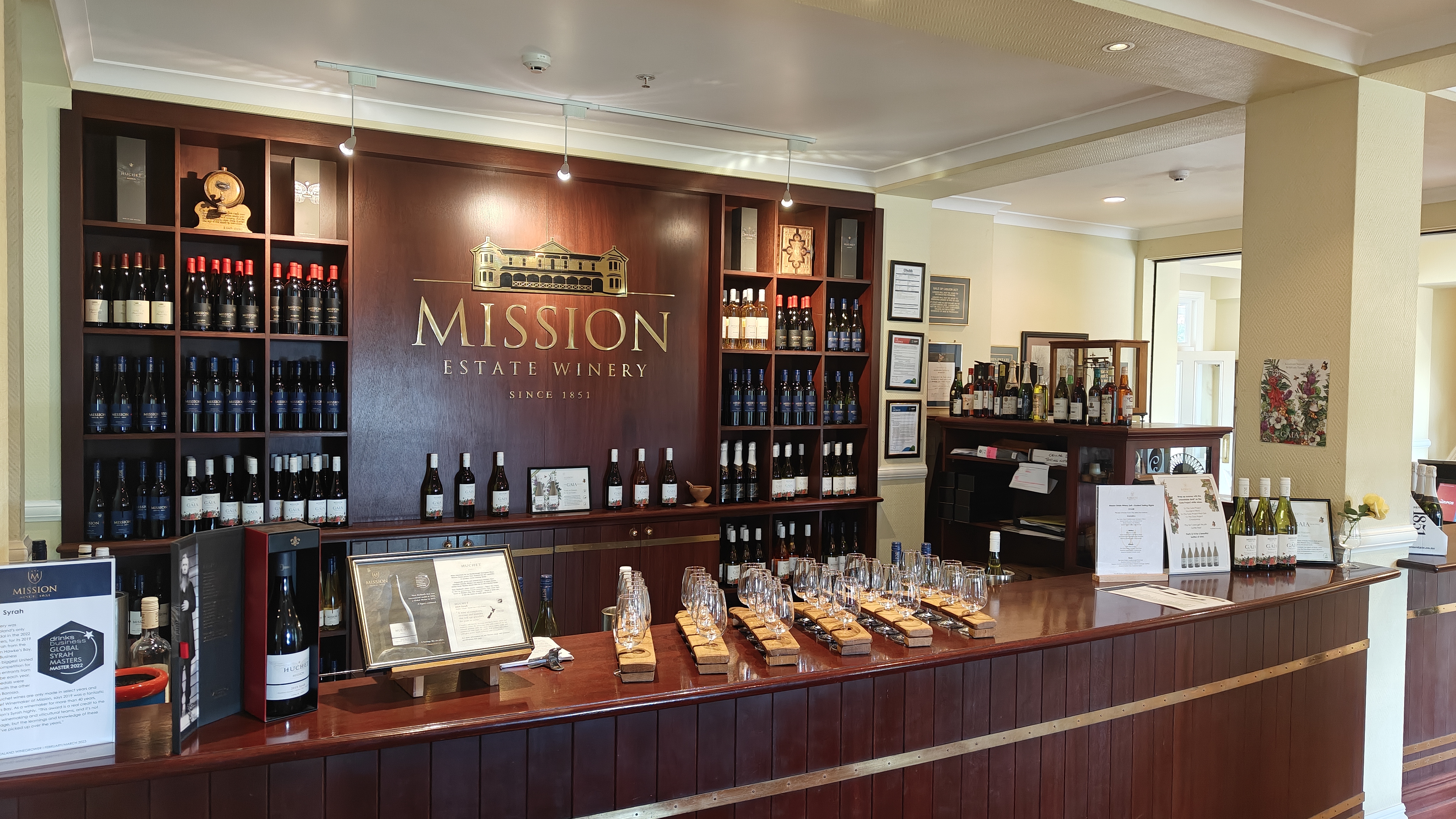
Our stop at Mission Estate Winery—New Zealand’s oldest established winery dating back to 1851—was the highlight of our visit. The elegant colonial-era structure welcomed us like an old friend, and we quickly found ourselves immersed in a world of subtle textures and fragrant bouquets. The Sauvignon Blanc stood out with its crisp minerality, but it was the velvety Syrah that stayed with us long after the last sip. A relaxed lunch followed in a shaded courtyard adorned with trellises, garden blooms, and birdsong. It felt more like a countryside dream than a scheduled stop.

Mission Estate Winery

The next chapter of our journey took us to Napier, a gem of a coastal town shaped by both tragedy and triumph. Rebuilt in the 1930s following a devastating earthquake, the town now proudly showcases one of the most concentrated collections of Art Deco architecture in the world. A stroll down its palm-lined promenade revealed a town wrapped in pastel tones and whimsical curves, as if time itself had taken a gentler turn here.

Art Deco

Condé Nast Traveler once described Napier as “a place where you’ll want to slow down and look up,” and that’s exactly what I did. As I meandered through the town, every façade seemed to carry a story—of resilience, rebirth, and remarkable aesthetic unity. Our hotel, perched with unobstructed views of the Pacific Ocean, felt like a poetic pause in this narrative. The sea, ever restless, offered a calming counterpoint to the symmetry of the streets.

The following morning, we descended further south to Wellington, the capital city nestled between rolling hills and a sparkling harbour. Where Napier wore nostalgia on its sleeve, Wellington was vibrantly alive—a city that fused culture and creativity with surprising sophistication. Its streets, both parallel and sloped, gave it a geometric charm, while cafés spilled out onto sidewalks filled with young creatives, office-goers, and the occasional street performer.

There’s something beautifully paradoxical about Wellington—it’s compact yet buzzing, orderly yet expressive. The Wellington Marina invited us to pause and breathe in the city’s rhythm. Boats bobbed gently in their berths, while locals wandered past us with wind-blown hair and takeaway coffees. No surprise then that the BBC once referred to Wellington as “the coolest little capital in the world.”

Wellington Marina

Dinner was a quiet affair, but we couldn’t resist passing by the city’s political heart—the Beehive, a part of the New Zealand Parliament complexes. The building’s modernist circular form is either intriguing or awkward, depending on your point of view. I found it oddly compelling, a symbol perhaps of the country’s bold architectural spirit, unafraid to provoke a reaction.

As we wound down our day in Wellington, I couldn’t help but reflect on the journey. Each place had offered something distinct: Hawke’s Bay’s pastoral elegance, Napier’s vintage soul, and Wellington’s urban charisma. Yet all were stitched together by a common Kiwi thread—warmth, nature, and quiet sophistication.

In a world where travel often tries to impress through spectacle, this journey stood out for its graceful subtlety. It didn’t shout; it sang.

In Musing……… Shakti Ghosal

**

📚 References:

  1. Lonely Planet. (2023). Hawke’s Bay Travel Guide. Retrieved from: https://www.lonelyplanet.com/new-zealand/hawkes-bay
  2. Condé Nast Traveler. (2022). The Most Beautiful Towns in New Zealand. Retrieved from: https://www.cntraveler.com/gallery/most-beautiful-towns-in-new-zealand
  3. BBC Travel. (2021). Why Wellington is the World’s Coolest Little Capital. Retrieved from: https://www.bbc.com/travel/article/20210315-wellington-the-worlds-coolest-little-capital

Where Fire Meets Ferns: A Journey Through Rotorua, Murupara, and Taupo in New Zealand


oplus_8650752

Abstract :Volcanoes, Redwoods, Maori traditions, and turquoise waterfalls—our journey through Rotorua, Murupara, and Taupo was like walking through nature’s raw and sacred diary. From the haunting silence of a buried village to the fiery hiss of boiling mud pools, and the warmth of a traditional Maori Hangi—New Zealand never stops surprising. 🌋🌲🌊

We skirted the edge of Lake Rotorua in hopeful anticipation, eyes squinting past the mist, searching for the silhouette of the legendary Mount Tarawera. But nature had other plans. Clouds draped the landscape like a reluctant curtain, denying us a view of the volcano that, in 1886, tore apart an entire region in a violent, unforgettable eruption.

Lake Rotorua

As we moved closer to the remnants of this catastrophe, we reached the Buried Village of Te Wairoa. It was haunting, almost sacred. Buildings lie preserved in ash, stories frozen in time, and silence whispered louder than words. Our guide painted a vivid picture of the night the earth roared—of ash raining down, of craters splitting open, and lives changed forever. According to the Buried Village site, it is “New Zealand’s most visited archaeological site, where stories of resilience and survival rise from the earth.” (Reference 1) And indeed, walking among the ruins, one feels that spirit deeply.

Buried village of Te Wairoa

From volcanic scars, we sought the solace of trees—and what trees they were! The Whakarewarewa Forest, just outside Rotorua, offered a surreal contrast. We wandered under towering Redwoods—some over 100 years old—and marveled at the magnificence of Douglas Firs and the ethereal grace of silver ferns, New Zealand’s national icon. Walking in their shadow, one feels both infinitely small and impossibly privileged. As described by Whakarewarewa Village, this forest is home to “majestic trees from California alongside native species in a uniquely Kiwi blend,” and the harmony between old world and new world flora is breathtaking.

Those Redwoods of Whakarewarewa

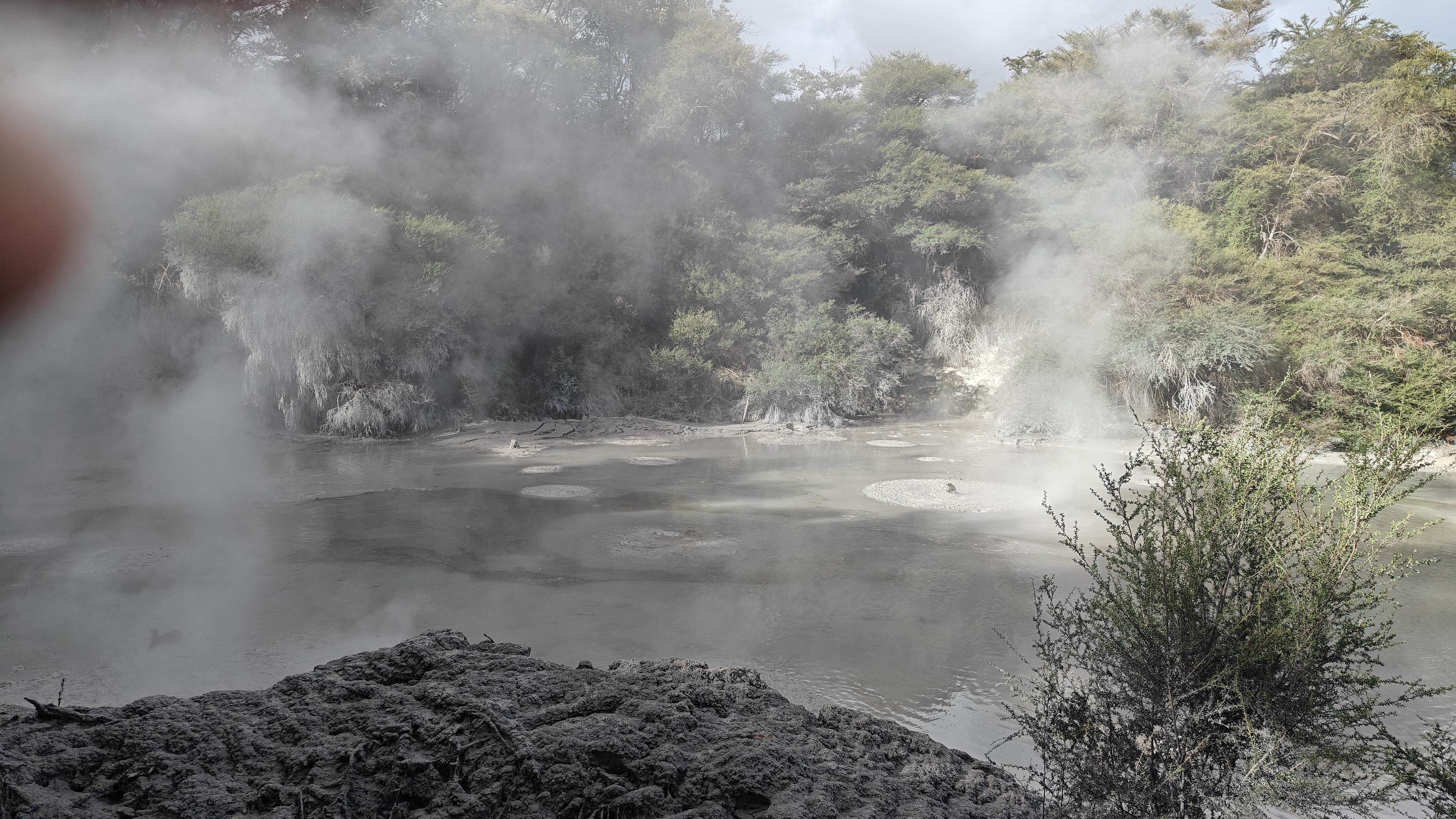
Yet Rotorua wasn’t done with its drama. The ground here breathes fire. Boiling mud pools gurgled around us, sending plumes of steam into the crisp morning air. Lakes hissed and steamed as though conversing with ancient gods. The smell of sulphur lingered, sharp and earthy. And yes, the unsettling thought did strike—what if another eruption lay dormant beneath our very feet?

Boiling mudpools of Rotorua

From geothermal energy to spiritual energy, we travelled onward to Lake Aniwhenua in Murupara. Here, the journey took a cultural turn. We were welcomed by the Māori people in a traditional ceremony that blended chants, fierce expressions, and deep respect. Though the language was unfamiliar, the sincerity needed no translation.

Maori temple

The highlight was witnessing the preparation of a traditional Hāngi meal—an earth-oven cooking method that has nourished Māori communities for centuries. Watching the fire-heated stones laid into a pit, food wrapped and buried under earth, felt remarkably similar to the tandoor cooking I’ve seen in North India. Different continents, similar soul food.

Hangi preparation

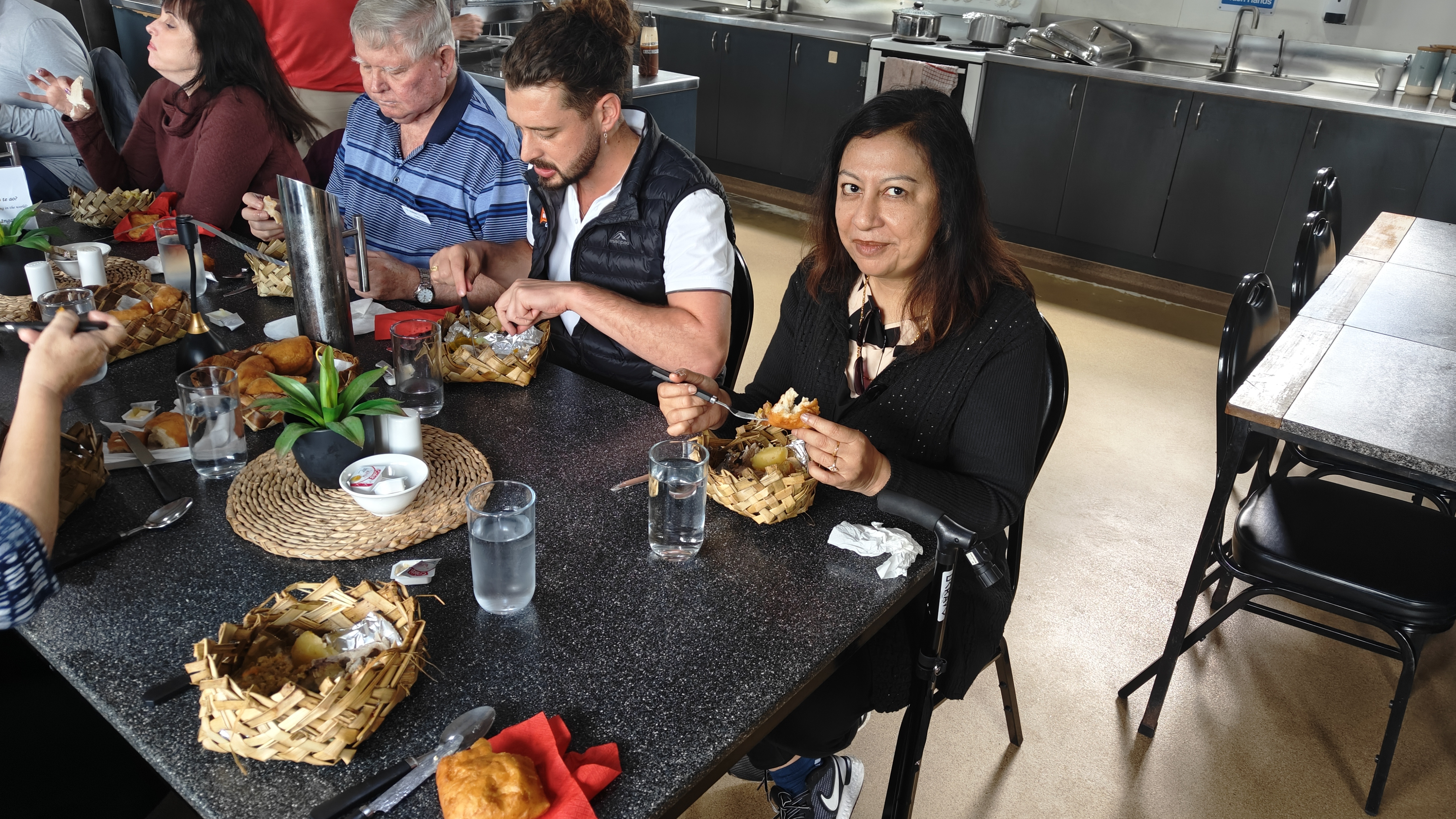
Later that afternoon at the Māori lodge, as the Hāngi was unveiled and its earthy aroma filled the air, it felt like we were not just eating a meal—we were partaking in a ceremony of memory, tradition, and togetherness. As the village itself puts it, “Whakarewarewa is more than just a village—it is a living legacy of Māori culture and community,” (Reference 2) and every moment we spent there reinforced that truth.

Traditional Maori meal

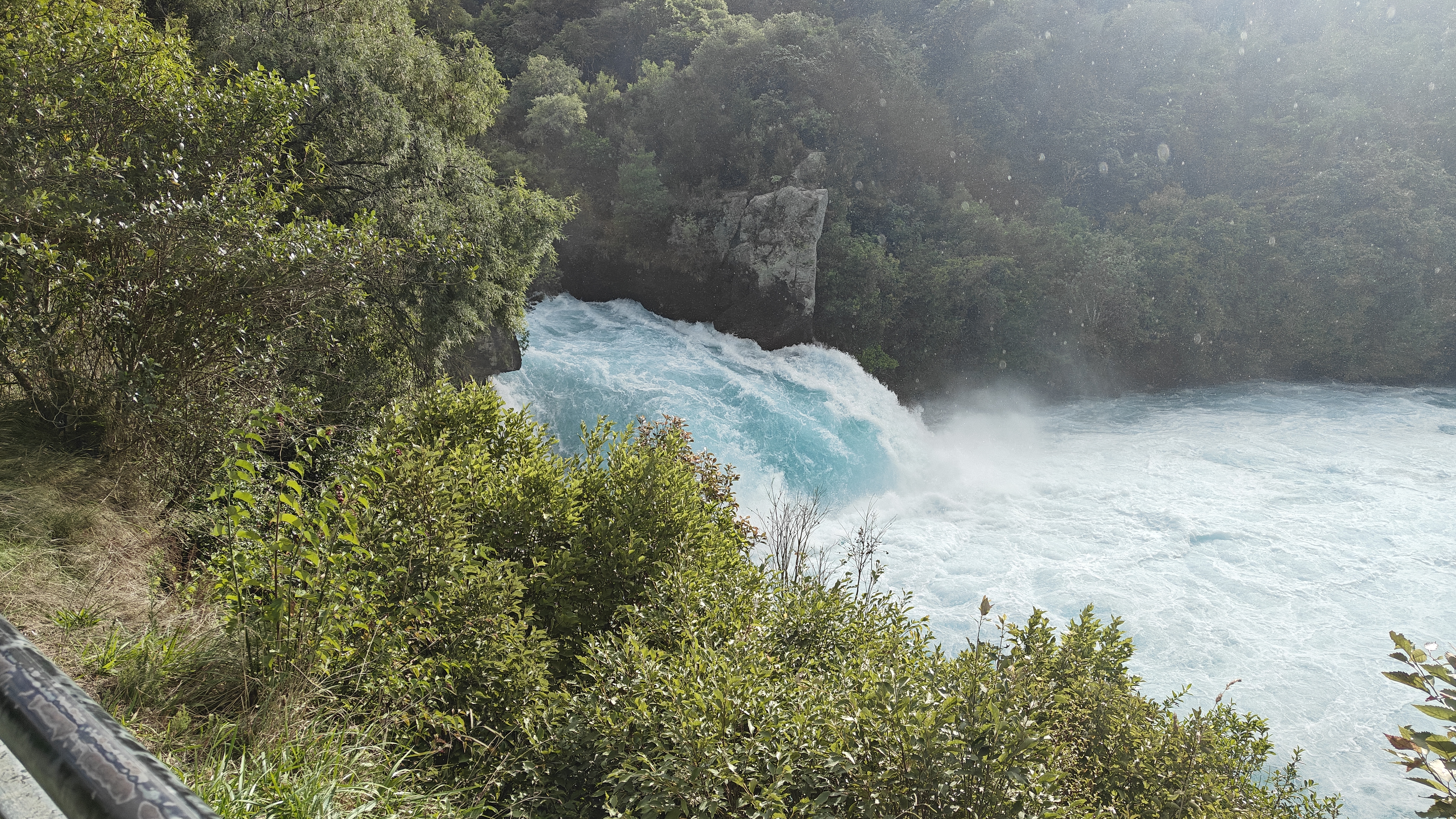
The final leg of this segment took us to Taupo, but not before a breathtaking interlude at the Huka Falls. The water there doesn’t just fall—it thunders. A hypnotic blue torrent squeezes through a narrow gorge before erupting into a frothy cascade. According to LoveTaupo.com, this “220,000 litres per second of crystal clear water” ( Reference 3)  surging through the Waikato River is one of New Zealand’s most visited natural attractions—and for good reason. It’s power and poetry in motion.

The blue torrents of Huka

As we stood watching the falls, droplets misting our faces, I realised New Zealand isn’t just a destination—it’s an emotion. It stirs awe and respect in equal measure. One moment it shows you the fury of nature, and the next, it cradles you in cultural warmth.

And so, this chapter of our journey closed—not with an exclamation, but a deep, quiet breath of gratitude.


References:

  1. The Buried Village of Te Wairoa – Rotorua’s Most Visited Archaeological Site
    https://buriedvillage.co.nz/
  2. Whakarewarewa – The Living Māori Village
    https://whakarewarewa.com/
  3. Huka Falls, Taupo – New Zealand’s Most Visited Natural Attraction
    https://www.lovetaupo.com/en/see-do/all/huka-falls/

In musing………….. Shakti Ghosal

Enchanted Darkness: Our Visit to the Glowworm Caves of Waitomo, New Zealand


Away in the lush hills of New Zealand’s North Island, the Waitomo Glowworm Caves offer a breathtaking, almost surreal experience. In this post, we share our unforgettable journey through the glowing underworld—highlighting the ethereal beauty, fascinating geology, and a boat ride that felt like drifting through the galaxy itself.

**

It’s not every day that you find yourself in total darkness, floating quietly through a cathedral of stars—underground. But that’s exactly what we experienced at the Waitomo Glowworm Caves, one of New Zealand’s most magical natural wonders.

Waitomo, a small town in the Waikato region, is famous for its network of limestone caves and the tiny bioluminescent creatures that live in them: Arachnocampa luminosa, the native New Zealand glowworm. We visited the brightest of these caves, one that has even played host to the legendary Sir David Attenborough during the filming of one of his BBC documentaries. That fact alone raised our expectations—and the cave delivered in spectacular fashion.

oplus_264192

As we entered the cave, we found ourselves in a world carved over millions of years. Stalactites and stalagmites stood like silent sentinels in a cool, damp chamber. Another part of the system featured truly astonishing limestone formations, some resembling frozen waterfalls, others like delicate curtains suspended in time.

But nothing prepared us for the glowworm grotto.

We stepped quietly onto a small boat, guided by a rope in pitch darkness. There were no torches, no artificial lights—just the sound of gentle water and the soft echo of a distant underground waterfall. Then, as our eyes adjusted, the ceiling of the cave revealed itself: a galaxy of living lights. Thousands upon thousands of glowworms dotted the darkness, shining blue-green like a perfectly clear night sky.

oplus_262144

We sat in awe, heads tilted back, silently gliding through this dreamlike world. The experience was not only visually stunning but oddly humbling. It reminded us of how much wonder still hides inside nature, waiting to be discovered by us.

The boat turned just before the waterfall; the roar of the falling water had become fully audible; then slowly made its way back. It was one of those rare moments where no one spoke, everyone too spellbound to interrupt the magic.

oplus_262144

The Waitomo caves are a powerful reminder of the slow, silent work of nature and the strange beauty of life in the dark. If you’re ever in New Zealand, this is a journey not to be missed.

For those interested in learning more, the official Waitomo Glowworm Caves website offers great insights, and showcases just how enchanting these creatures can be.

Final Tip: Book early and wear warm clothes—it gets chilly underground! Based on out own experience we would recommend you opt for a guided tour to hear more about the fascinating biology and geology of the region.

In Learning……                                                                  Shakti Ghosal

#waitomo, #visitnewzealand, #glowworm, #glowwormcaves, # DavidAttenborough

Visit to the Shire: Walking in the Footsteps of Hobbits


“Not all those who wander are lost” Bilbo Baggins

“The adventure begins at the edge of the Shire — welcome to Hobbiton!”

As long-time admirers of The Lord of the Rings and The Hobbit trilogies, visiting the real-life locations where these epic tales were brought to life had always been a dream. So, when we planned our trip to New Zealand, a visit to Hobbiton — the iconic Shire of Frodo and Bilbo Baggins — was a non-negotiable stop. We simply couldn’t leave Middle-earth behind without stepping into its most charming corner.

Hobbiton is nestled in the heart of Matamata, a region of lush pastures and gently rolling hills on New Zealand’s North Island. It was here, in the late 1990s, that director Peter Jackson conducted aerial surveys in search of the perfect location for the Shire. Legend has it that when his team spotted the Alexander family farm, it was love at first sight. The unspoiled beauty of the land — its sweeping meadows, mature trees, and bucolic charm — was exactly what Tolkien had described in his books.

“A view straight out of Tolkien’s imagination — rolling hills dotted with hobbit homes.”

Initially, the Alexanders weren’t too keen on turning part of their farm into a movie set. But with some persuasion (and an undisclosed agreement), they eventually agreed. And so, the world’s most beloved village of hobbits came into being. One delightful piece of trivia we learned during our visit was that Peter Jackson ran out of funds during the initial stages of development. To keep the project going, he approached the New Zealand government, who in turn had the New Zealand Army assist with the early groundwork — an unusual but heartwarming collaboration that helped build movie magic.

Our tour began with a tranquil ride in a golf cart through the countryside. As we crested a hill and caught our first glimpse of the Shire, a wave of excitement washed over us. There they were — the familiar round doors, grassy rooftops, and colorful gardens tucked into the hillsides. Every corner of Hobbiton was bursting with life and detail, from miniature wheelbarrows and rustic lanterns to tiny clotheslines with hobbit-sized laundry flapping in the breeze.

“Every round door tells a story — could this be a baker’s home or a gardener’s cottage?”

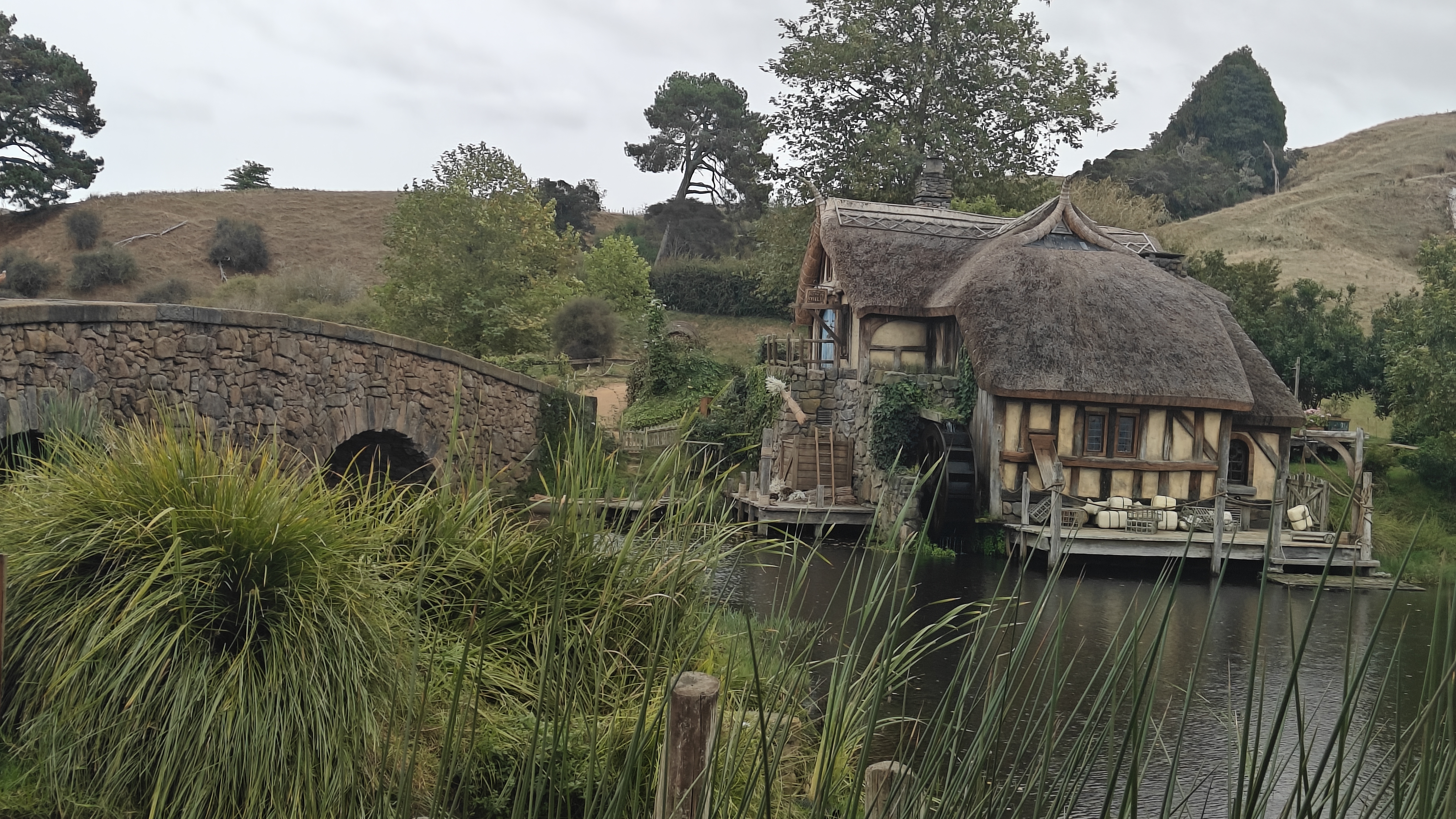
We explored the Shire with childlike wonder, moving from one hobbit hole to the next. Each home had its own character and charm — some for bakers, some for fishmongers, each with a story hinted at through props and signs. The stone bridge with its iconic double arches, the waterwheel gently turning by the mill, and the peaceful lake all brought scenes from the films vividly to mind.

“The iconic bridge where Gandalf once rode into the Shire — picture perfect.”

A true highlight was visiting the inside of Frodo Baggins’ house. Walking through the rooms, we could almost imagine him pacing about, deep in thought, the weight of the Ring heavy in his pocket.

“Stepping into Frodo’s world — the journey truly begins here.”

Although we couldn’t go inside Bilbo’s house, Bag End, just seeing it up close — with its iconic green door and lush garden — was magical in itself.

“Bag End in all its glory — the green door that launched an adventure.”

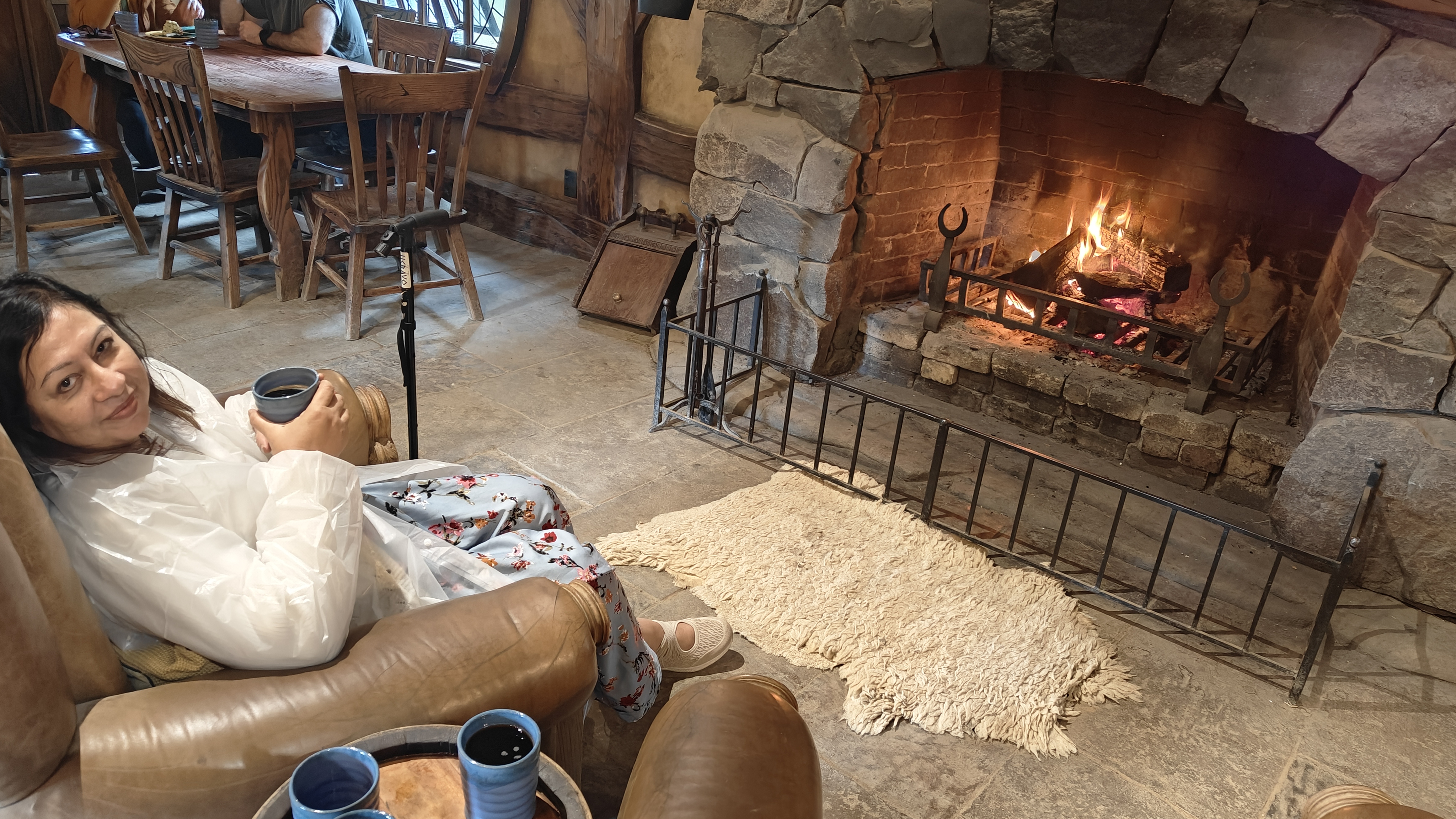
And then came the perfect ending: a visit to the Green Dragon Inn. Stepping inside, we were welcomed by a roaring fire, wooden beams, and the unmistakable coziness of a true hobbit gathering place. We ordered a round of their specially brewed ales and sat by the hearth, sipping slowly and soaking in the atmosphere. It truly felt like we had been transported into Tolkien’s world.

Raising a mug of Hobbit ale at the Green Dragon — a toast to the Shire!”

Our visit to Hobbiton was not just a tour — it was an experience, a nostalgic walk through a world that had enchanted us for years. If you’re ever in New Zealand, take the detour to Matamata. Whether you’re a die-hard fan or just someone who appreciates storytelling, nature, and craftsmanship, the Shire will leave you spellbound.

“One for the memory books — peace, beauty, and a touch of magic.”

In Musing……….. Shakti Ghosal

#Hobbitonmovieset, #thelordoftherings ,#shire, #Peterjackson,#Hobbit, #JRTolkien,#Frodobaggin, #greendragoninn,#Bibobaggin,#newzealandhighlight,#alexanderfarm,#matamata

Porto – A Blend of Harry Potter, Port Wine, and Fado Music


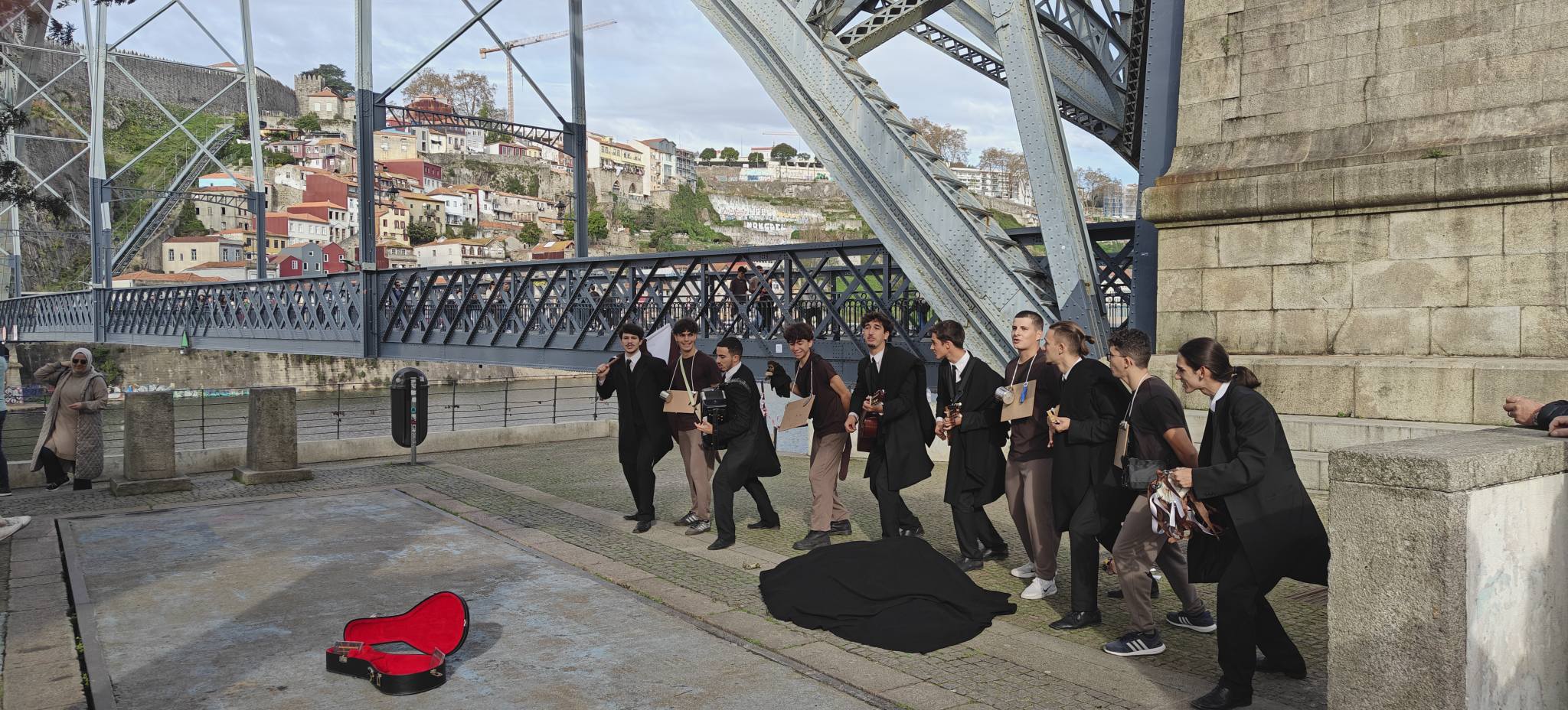
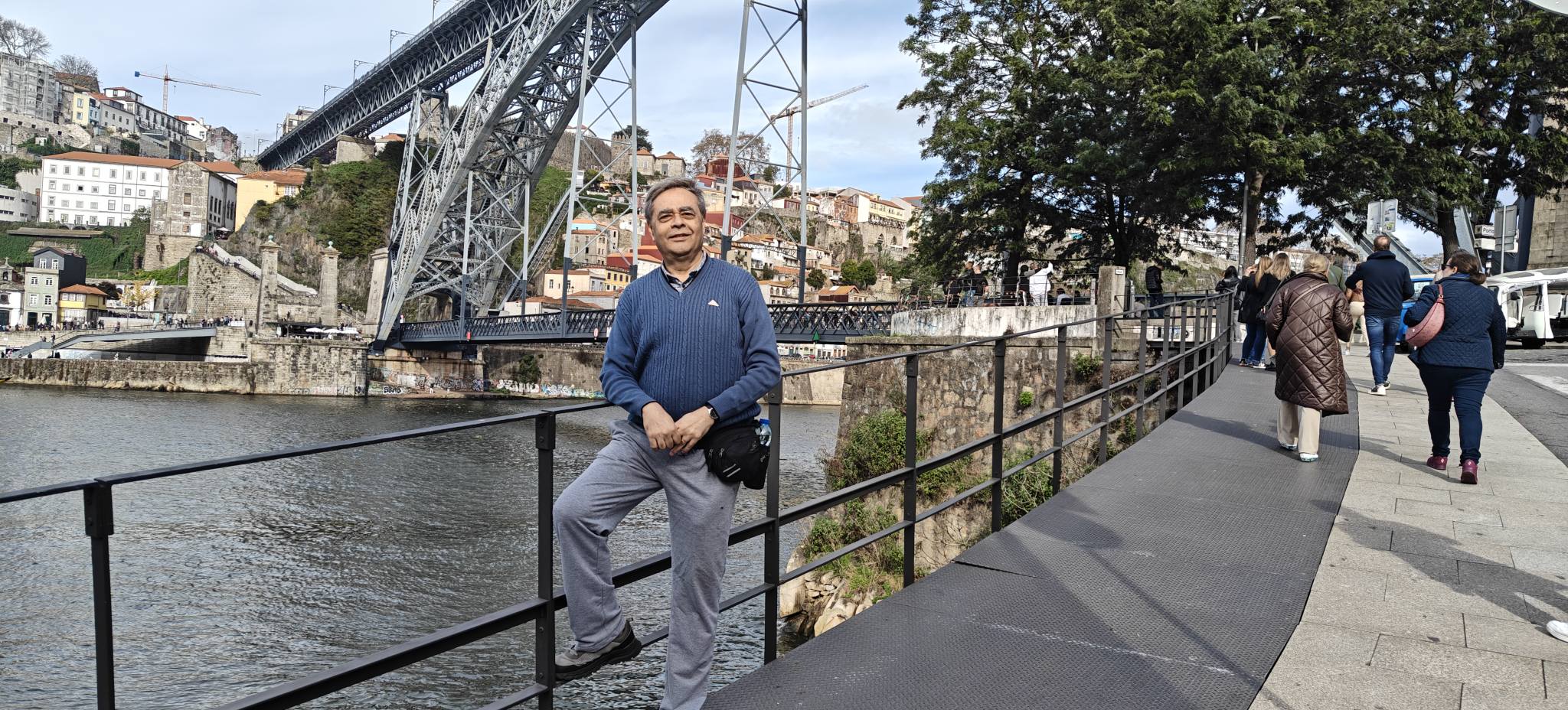
Porto greeted us like an old friend with a tale to tell. Perched on the cliffs of the Douro River, its charming houses, adorned with colorful azulejos, cascaded down towards the water, as if drawn by an invisible thread. Overhead, the majestic Dom Luís I Bridge, an iron marvel designed by a student of Gustave Eiffel, stretched across the river, connecting the historic heart of Porto to Vila Nova de Gaia.

With every step on its cobbled streets, we felt transported to a different era—one where history, literature, and music wove together in an enchanting dance. Had we unknowingly stepped into a storybook town? It certainly felt that way.

A walk through History

Porto’s origins date back to Roman times when it was known as Portus Cale—a name that would eventually shape the very identity of Portugal. The city has seen centuries of maritime explorations, witnessed the rise and fall of empires, and remained resilient through wars and revolutions. Yet, despite its rich past, Porto doesn’t merely live in history; it embraces the present with a dynamic energy that makes it one of Europe’s most captivating destinations.

Wandering through its labyrinth of streets, we stumbled upon grand baroque churches, lively squares, and hidden corners filled with stories. But among all its treasures, one place stood out—Livraria Lello, a bookshop that seemed to pulse with an almost magical energy.

Where Magic and Literature collide

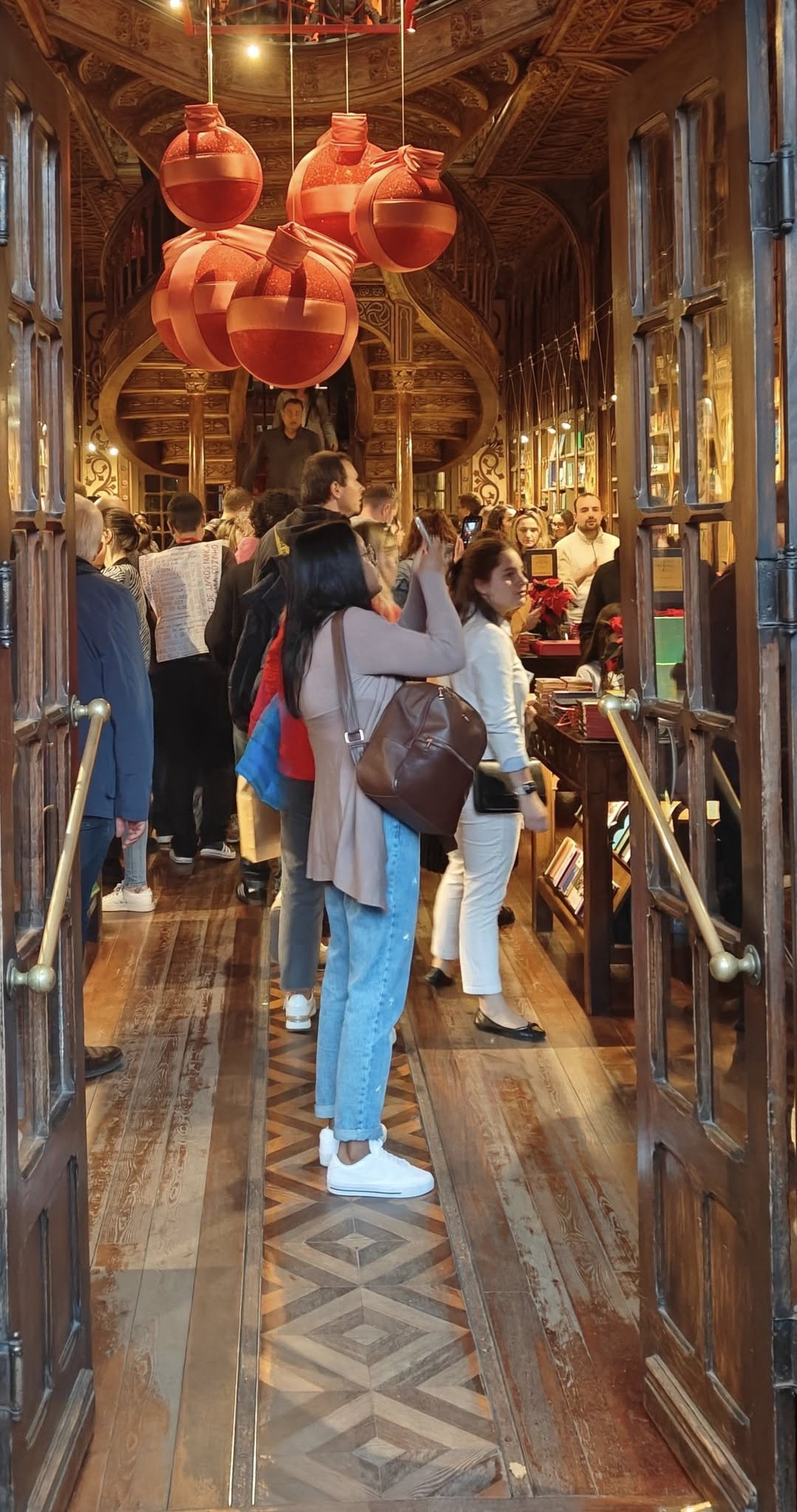
If there was ever a bookstore that felt like it belonged in the world of Harry Potter, Livraria Lello was it. The moment we stepped inside, we were mesmerized. The towering bookshelves, the elaborate wood carvings, and the intricate stained-glass ceiling bathed the room in a golden glow. But the real showstopper? The sweeping crimson staircase—elegant, almost alive, as if it had a mind of its own.

It was easy to see why J.K. Rowling, once an English teacher in Porto, found inspiration here. It is said that the Hogwarts moving staircases were born from this very place. As we traced our fingers along the wooden railings, it wasn’t hard to imagine young witches and wizards bustling about, spellbooks in hand.

Porto’s literary magic doesn’t stop there. Even beyond Rowling’s influence, the city has long been a haven for writers, poets, and dreamers. In many ways, its winding streets, misty evenings, and old-world charm make it the perfect setting for a fantastical tale.

A Sip of Tradition – The World of Port Wine

Leaving behind the world of books, we set off to indulge in another of Porto’s legendary offerings—Port wine. A short walk across the Dom Luís I Bridge took us to Vila Nova de Gaia, home to the centuries-old wine cellars that have made Porto famous.

The sweet, fortified wine that bears the city’s name has been produced here since the 17th century. We toured one of the many historic lodges, where enormous wooden barrels lined the dimly lit cellars, aging gracefully over time. The scent of oak, fruit, and a hint of spice filled the air as we sipped on rich ruby, tawny, and vintage varieties, each one telling a story of the Douro Valley’s sun-drenched vineyards.

The experience was more than just a tasting—it was a journey through time, where ancient traditions met modern refinement. With every sip, we felt a deeper connection to the land and the generations of winemakers who had perfected their craft.

Fado – The Soulful Sound of Portugal

As the sun began to set over Porto, painting the sky in hues of amber and violet, we found ourselves drawn to yet another defining element of Portuguese culture—Fado music.

Fado, meaning fate, is the heart and soul of Portugal’s musical heritage. Rooted in deep emotion, it tells stories of longing, nostalgia, and the bittersweet beauty of life. We entered a small, candlelit Fado house, where a singer, draped in black, took the stage alongside a guitarist.

As the first notes of the Portuguese guitar rang out, a hush fell over the room. Then came the voice—haunting, powerful, and filled with raw emotion. The lyrics spoke of sailors lost at sea, of distant lovers, of dreams that never came true. Though we didn’t understand every word, the melody transcended language, speaking directly to the heart.

It was a moment of pure magic—one that seemed to suspend time. When the final chord faded into silence, there was a collective sigh in the room, as if everyone had just awoken from a dream.

Porto, You have truly cast a Spell

As we strolled back along the riverbank, the twinkling lights reflecting on the Douro’s surface, we couldn’t help but feel enchanted. Porto had given us so much—history, magic, melody, and flavor—all wrapped in its unique charm.

It is a city that whispers tales of the past, yet sings with the vibrancy of the present. A city where Harry Potter’s magic lingers in the air, where every sip of wine is a tribute to centuries of tradition, and where the sound of Fado echoes through the night like a poet’s last verse.

Porto, you have truly cast a spell on us. Until we meet again!

#portugaltravel #traveldiaries2024 #portoportugal #portwinelover #fadonight #jkrowling #harrypotter #douroriver #domluisbridge

Tomar and the legend of the Knights Templar


Non nobis, Domine, non nobis, sed Nomini tuo da gloriam ( Latin). In English it translares to : Not to us, Lord, not to us, but to Thy name give the glory

Tomar in the heart of Portugal, is a town steeped in history, mystery, and legend. During our recent visit, it transported us back to the era of the Knights Templar, the Crusades, and the Church Order. 

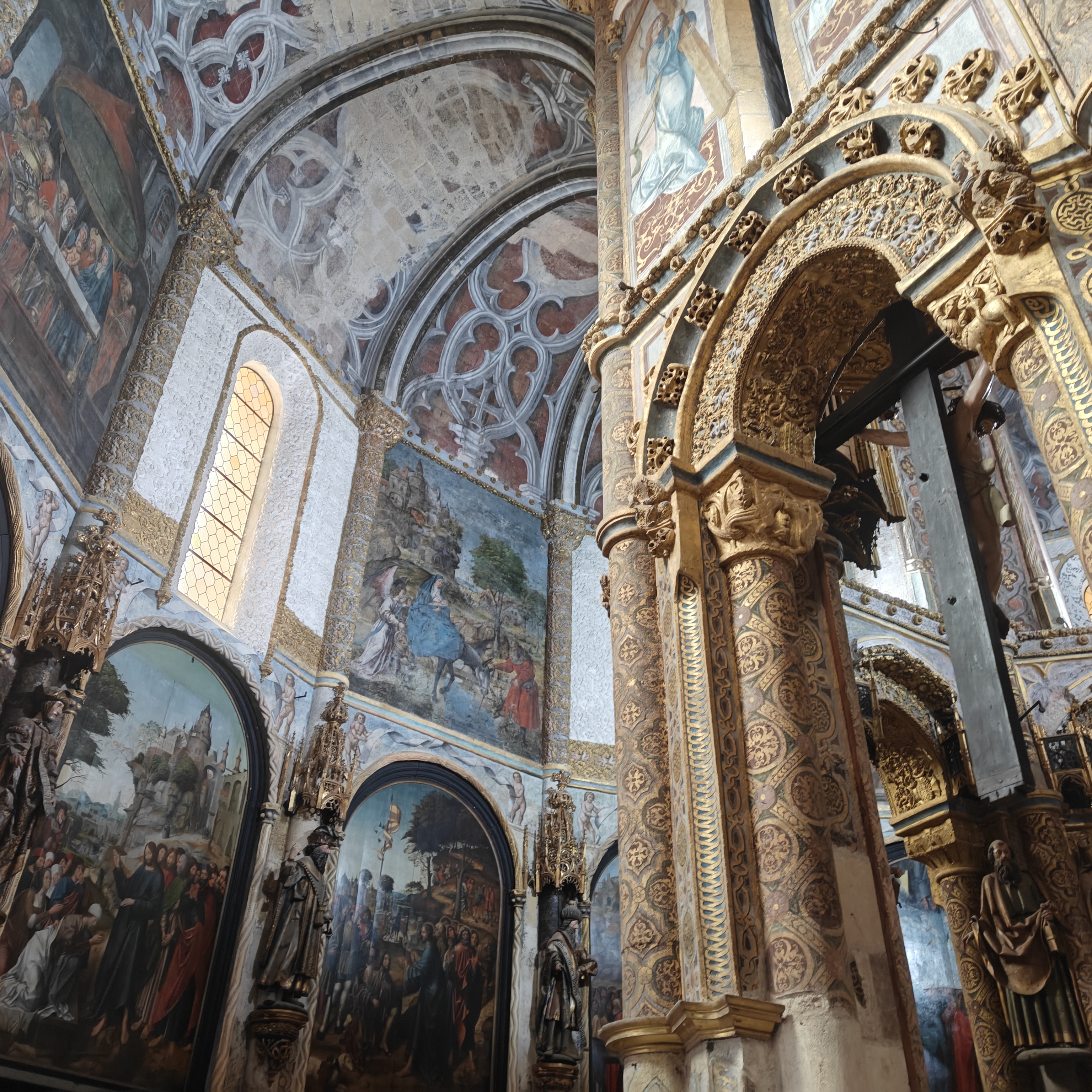
The Convent of Christ, a UNESCO World Heritage Site, is a masterpiece of medieval architecture. A Templar stronghold, it was both a church and a fortress with a unique blend of Romanesque, Gothic, and Renaissance styles.

We entered the Convent and as we walked through the corridors, we could almost see in our mind’s eye the knights riding in. As the legend goes, the knights would even pray while on horseback as they chose never to be caught off guard and remained ever ready to fight on behalf of the church. This was the reason for the spectacular Templar’s round church with its high archways being built in the heart of the convent.

oplus_262176

The Convent of Christ and its structure was inspired by the Church of the Holy Sepulchre in Jerusalem. The latter had been built at the traditional site of Jesus’ crucifixion and burial and thus it is no surprise that it was in this city that the legend of the Knights Templar started.

The Knights in their white mantles and a Red Cross emblazoned on the chest were arguably the best fighting units on the side of Christianity in the Crusades. For centuries they remained committed to defending Jerusalem as also offering safe passage to Christian pilgrims travelling to the Holy Land.

The Knight Templars achieved the zenith of their fame in the 12th century when in the Battle of Montgisard, six hundred odd knights beat the redoubtable Muslim general Saladin and his army numbering twenty-six thousand!

The other noteworthy aspect of the Templars Order was that it became the banker to Europe from a Papal sanction. Knights desirous of joining the order donated large amounts, nobles going to Crusades would place their wealth and businesses with the Templars for safe keeping. This huge aggrandizement of wealth though led to its eventual downfall. It is said that in the early fourteenth century, the French Monarch Philip IV, deeply indebted to the Templars and unable to pay back, started to arrest, torture, and execute the French knights.

After the dissolution of the Order, the Templars found refuge in Portugal under a new ‘Order of Christ.’ Our guide spoke of the secret knowledge the order brought in and how that influenced Portugal’s Age of Discoveries, including Vasco da Gama’s travel to India. Ostensibly, much of the so called ‘secret knowledge’ of the Templars had been acquired from Arabs during their travels to Jerusalem and beyond.

For us, Tomar wasn’t just about history; it was more about the Knights Templars’ valour and enduring legacy. Their closely guarded secrets included that of the Holy Grail which forms the basis of Dan Brown’s famed thriller ‘The Da Vinci Code’. In the book, the Knights Templar order is portrayed as the guardians of vital information relating to Christianity spanning over one millennia.

In learning…….                                                 Shakti Ghosal

#tomarvisit #traveldiaries2024 #davincicode #knightstemplar #DanBrown #portugaltravel #conventofchrist #crusades

My God! What have we done?


Atomic Dome today

The bomb exploded 600 meters above the city. A blinding flash of light, a thumping boom and more than 50,000 people were dead. Those who survived were destined to suffer from the horrendous effects of radiation linked diseases and mental trauma over months and years.

I was at the Hiroshima Peace Memorial Museum, watching the recreation of 6th August 1945, that fateful day when ‘fat boy’, the first Atomic Bomb, was dropped and detonated over the city of Hiroshima.

A detailed cinematic view of how Hiroshima would have looked on that day was being projected from the ceiling on a large circular surface. It was akin to looking at the city from above. I could see the city scape with cars, vehicles and streetcars moving on the roads, boats sailing on the river channels and the concentration of buildings in the city Centre. A city like any other, with people going about their daily chores. Doing what they should, thinking of tomorrow, aspiring for a better future.

Hiroshima on 6th August 1945 morning
Street cars on Hiroshima streets on 6th Aug. 1945 morning

Then the bomb comes into view. Pirouetting and gyrating as it falls in slow motion.  If I had not known what it was, it did not look menacing at all. And then it explodes. A writhing, swirling engulfment by crimson flames, smoke and a mushrooming cloud blocks out everything. When visibility returns, I can see nothing on the ground except a few building structures standing; everything else had been obliterated.

Hiroshima on 6th August 1945 after the Bomb

As I meandered through the Hiroshima Peace Memorial Museum, looking at the exhibits, the graphic visuals and reading the quotes of unknown people of eighty years back, little did I realise the mind-altering experience it was having for me. 

A visit to Japan and Hiroshima had been on my bucket list for a long time. My dad used to frequently tell me stories about his trip to Japan in the nineteen fifties. Japan was barely a few years beyond the great war when all its cities had been devastated by American bombing. But as per my dad, it’s veritable phoenix like ‘rise from the ashes’ was a testimony to the Japanese indomitable spirit.

Moving out of the Museum, I strolled through the Hiroshima Peace Memorial gardens. I could see the skeletal remains of the Atom Bomb dome, now a UNESCO heritage site. Interestingly, it was the only building close to the nuclear blast which remained standing. Today, it remains a mute reminder to an event which should never have happened.

The Atomic Dome buiding after the bombing

In between the Museum and the Atomic Dome is the memorial cenotaph, a saddle shaped monument in remembrance of all those whose life got so suddenly snuffed out by the atomic bomb.

A view of the memorial cenotaph

The park, nestled as it is between the gently flowing waters of two river canals, has a tear shaped outline. Does it signify the tear drops of the holocaust survivors as they went about looking for their near and dear ones all those years ago? I wondered………

Peace memorial garden- the river canal
Hiroshima Peace Memorial garden

As I walked under the afternoon sun, the images and the writings in the museum danced and coalesced in my mind.  The perceptions of the victor and the vanquished. How those perceptions led to differing narratives and actions. Those contrasting threads of recorded history about what led to what happened and how what happened showed up for the unaware Hiroshima dwellers on that fateful day. Yes, there was a victor and a vanquished. But no winners, only losers all round ……….

@ Hiroshima Castle which was completely destroyed by the bomb, reconstructed a few years later

**

  • With the surrender of Germany, the Allies focus had shifted to Japan which continued to fight. The Potsdam declaration of end July 1945 threatened ‘utter destruction’ and sought an unconditional surrender of Japan, a demand that got rejected by the Japanese armed forces.

US War publicity poster

“My mother and I, aged 6, went grocery shopping. Every- one was out on their verandas, enjoying the absence of piercing warning signals. Suddenly, an old man yelled ‘Plane!’ Everyone scurried into their homemade bomb shelters. My mother and I escaped into a nearby shop. As the ground began to rumble, she quickly tore off the tatami flooring, tucked me under it and hovered over me on all fours.

Everything turned white. We were too stunned to move, for about 10 minutes. When we finally crawled out from under the tatami mat, there was glass everywhere, and tiny bits of dust and debris floating in the air. The once clear blue sky had turned into an inky shade of purple and grey…….”

-Takato Michishita, Atomic Bomb survivor

  • Despite brutal firebombing of more than a hundred Japanese cities and towns which led to near destruction of infrastructure and large civilian casualties, the American high command remained unconvinced about its efficacy to end the war. The firebombing of Tokyo, codenamed Operation Meetinghouse, killed an estimated hundred thousand and destroyed forty square kilometers and more than two hundred and fifty thousand buildings in a single night.

“I was three years old at the time of the bombing. I don’t remember much, but I do recall that my surroundings turned blindingly white, like a million camera flashes going off at once. Then, pitch darkness. I was buried alive under the house, I’ve been told. When my uncle finally found me and pulled my tiny three-year-old body out from under the debris, I was unconscious. My face was misshapen. He was certain that I was dead.

Thankfully, I survived. But since that day, mysterious scabs began to form all over my body. I lost hearing in my left ear, probably due to the air blast. My younger sister suffers from chronic muscle cramps to this day, on top of kidney issues that has her on dialysis three times a week. ‘What did I do to the Americans?’ she would often say, ‘Why did they do this to me?”

-Yasujiro Tanaka, Atomic bomb survivor

  • As a full-fledged Allied invasion and ground offensive into Japan was being planned, U.S. President Truman and his war cabinet were getting increasingly alarmed by the estimates of American casualty that would occur from such an invasion. The estimates ranged between two to four million casualties and more than half a million dead. A nation and its citizens were increasingly war fatigued. The President and his cabinet came round to the view that it would be better to use Atomic Bombs to end the war quickly and save American lives. But can such an arithmetic tradeoff justify taking the lives of innocent citizens? I wondered……

“I was eight when the bomb dropped. My older sister was 12. She left early that morning to work on a tatemono sokai (building demolition) site and never came home. My parents searched for her for months and months. They never found her remains. My parents refused to send an obituary notice until the day that they died, in hopes that she was healthy and alive somewhere, somehow.

I too was affected by the radiation and vomited profusely after the bomb attack. My hair fell out, my gums bled, and I was too ill to attend school………”

-Emiko Okada, Atomic Bomb survivor

  • A month before that fateful day when the Atom bomb was dropped on Hiroshima, the highly secretive Manhattan project in the US had produced two distinctive types of atomic weapons. The first was code named ‘Little Boy,’ a Uranium based fission chain reaction type bomb. The other was called the ‘Fat Man,’ a more sophisticated and powerful plutonium-based implosion type weapon. Nuclear Physicist J. Robert Oppenheimer, now made famous by the Oscar winning movie of the same name, oversaw the research into the calculation of the fissile material critical mass and detonation.

“Then the sky turned bright white. My siblings and I were knocked off our feet and violently slammed back into the bomb shelter. We had no idea what had happened.

As we sat there shell-shocked and confused, heavily injured burn victims came stumbling into the bomb shelter en masse. Their skin had peeled off their bodies and faces and hung limply down on the ground, in ribbons. Their hair was burnt down to a few measly centimeters from the scalp. Many of the victims collapsed as soon as they reached the bomb shelter entrance, forming a massive pile of contorted bodies. The stench and heat were unbearable.” 

-Shigeko Matsumoto, Atomic Bomb survivor

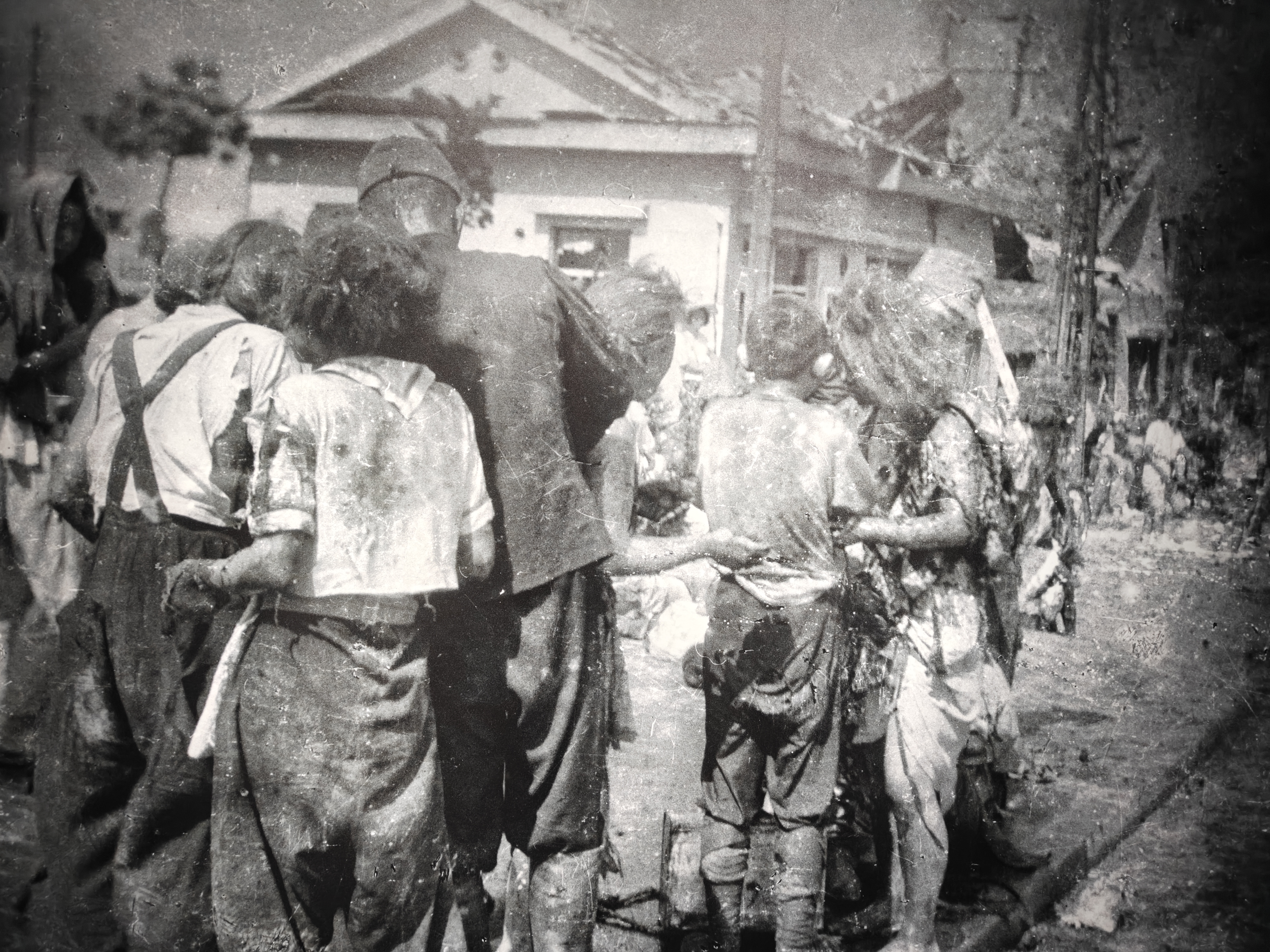
In the aftermath of the bomb
  • As the Atomic Bombs were being assembled for eventual use, simultaneously, pilots of the U.S. Air Force were getting trained on the long-distance B-29 Super fortress aircrafts which would be used to deliver the bombs.

“As my mother and I were eating breakfast, I heard the deep rumble of engines overhead. Our ears were trained back then; I knew it was a B-29 immediately. I stepped out into the field out front but saw no planes. Bewildered, I glanced to the northeast. I saw a black dot in the sky. Suddenly, it ‘burst’ into a ball of blinding light that filled my surroundings. A gust of hot wind hit my face; I instantly closed my eyes and knelt to the ground. As I tried to gain footing, another gust of wind lifted me up and I hit something hard. I do not remember what happened after that.

When I finally came to, I was passed out in front of a bouka suisou (stone water container used to extinguish fires back then). Suddenly, I felt an intense burning sensation on my face and arms, and tried to dunk my body into the bouka suisou. The water made it worse. I heard my mother’s voice in the distance. ‘Fujio! Fujio!’ I clung to her desperately as she scooped me up in her arms. ‘It burns, mama! It burns!’

I drifted in and out of consciousness for the next few days. My face swelled up so badly that I could not open my eyes. I was treated briefly at an air raid shelter and later at a hospital in Hatsukaichi, and was eventually brought home wrapped in bandages all over my body.” 

-Fujio Torikoshi, Atomic Bomb survivor

In the adtermath of the bomb
  • Just after 2 am on 6th August 1945, three B-29s took off from the island of Tinian and proceeded on their six-hour flight to Japan. One of them, the Enola Gay, carried the Little Boy atomic bomb. The bomb was released and detonated over Hiroshima just after eight in the morning. The radius of destruction was two kilometers with fires raging over eleven square kilometers.

“One incident I will never forget is cremating my father. My brothers and I gently laid his blackened, swollen body atop a burnt beam in front of the factory where we found him dead and set him alight. His ankles jutted out awkwardly as the rest of his body was engulfed in flames. My oldest brother suggested that we take a piece of his skull – based on a common practice in Japanese funerals in which family members pass around a tiny piece of the skull with chopsticks after cremation – and leave him be.

As soon as our chopsticks touched the surface, however, the skull cracked open like plaster and his half-cremated brain spilled out. My brothers and I screamed and ran away, leaving our father behind. We abandoned him, in the worst state possible.”

-Yoshiro Yamawaki, Atomic Bomb survivor.

Melted statue of Buddha
  • From the Enola Gay, the crew saw “a giant purple mushroom” that was boiling upward and had reached much above the aircraft altitude.  At the base of the cloud, fires were springing up everywhere amid a turbulent mass of smoke that had the appearance of bubbling hot tar. The city that had been clearly visible in the sunlight a few minutes ago, had completely disappeared under smoke and fire. Captain Robert Lewis, co-pilot of Enola Gay, wrote in his log, “My God! What have we done?”

“The injured were sprawled out over the railroad tracks, scorched and black. When I walked by, they moaned in agony. ‘Water… water…’. I heard a man in passing announce that giving water to the burn victims would kill them. I was torn. I knew that these people had hours, if not minutes, to live. These burn victims – they were no longer of this world.

‘Water… water…’

I decided to look for a water source. Luckily, I found a futon nearby engulfed in flames. I tore a piece of it off, dipped it in the rice paddy nearby, and wrang it over the burn victims’ mouths. There were about 40 of them. I went back and forth, from the rice paddy to the railroad tracks. They drank the muddy water eagerly. Among them was my dear friend Yamada. ‘Yama- da! Yamada!’ I exclaimed, giddy to see a familiar face. I placed my hand on his chest. His skin slid right off, exposing his flesh. I was mortified. ‘Water…’ he murmured. I wrang the water over his mouth. Five minutes later, he was dead.

In fact, most of the people I tended to were dead…….”

-Inosuke Hayasaki, Atomic Bomb survivor

**

Epilogue: The final death toll in Hiroshima from the bomb was close to 150,000 people, mostly civilians. An event which led to Japan surrendering nine days later, effectively ending the great war.

Despite heightened awareness of the ‘end of Humanity’ risk posed by nuclear weapons, the cold war between the U.S. and the erstwhile U.S.S.R. ensured continued stockpiling of these very weapons.

In Remembrance……                                                                      Shakti Ghosal

Acknowledgements:

  1. Time Magazine ‘After the Bomb’, 1985.
  2. Wikipedia: ‘Atomic bombings of Hiroshima and Nagasaki’
  3. Several of the photos used are from the exhibits in the Hiroshima Peace Memorial Museum.