


Frank Marinko and myself, both international Executive Coaches and Facilitators, grappled with this question using the critical thinking methodology, in a joint podcast. You might enjoy the discourse and the podcast link is given at the end.
If we are to deliberate on this question, we need to get to the essence of two aspects mentioned. First, AI or Artificial Intelligence as we call it. Second, ‘to lead’ which is all about Leading or Leadership.
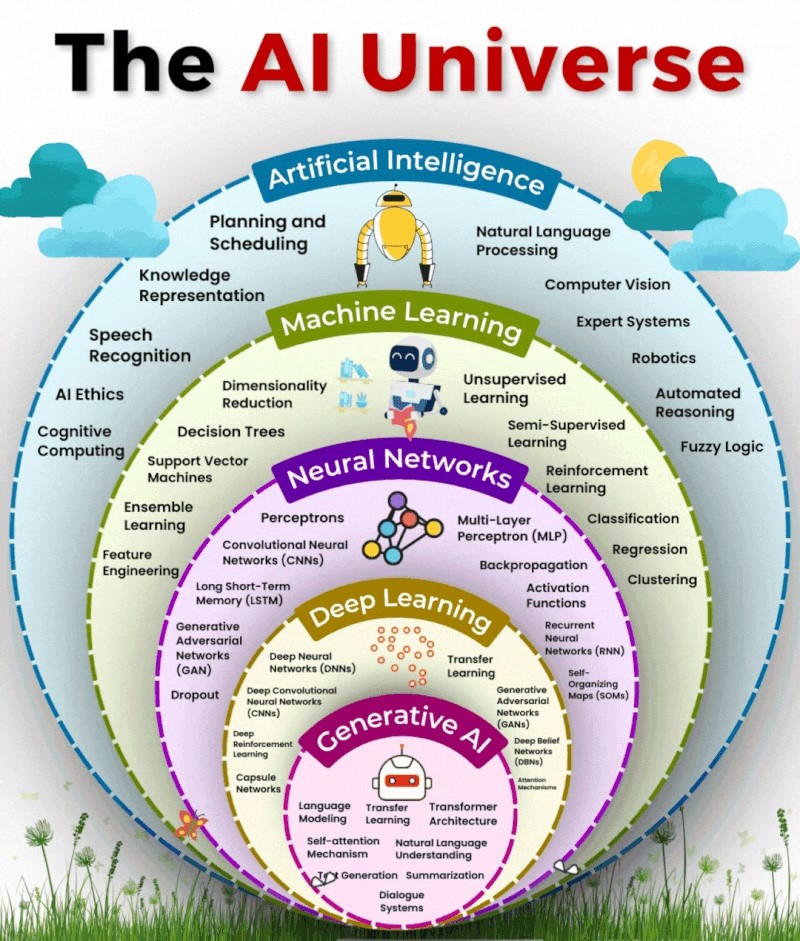
So, what really is the essence of AI? That lies in its ability to mimic and augment human intelligence and decision-making processes using computational algorithms and data. At its core, AI systems can analyze vast amounts of data, recognize patterns, infer relationships, and make predictions or recommendations.
The important aspect to be kept in mind is AI’s ability to ‘learn’, its adaptability and the ability to improve over time. Machine learning algorithms, for example, can automatically adjust their behavior based on new data, allowing AI systems to become more accurate and effective with experience.
And when we think of the essence of Leadership, it is really all about envisioning a future which speaks to all stakeholders by addressing their concerns or satisfying some needs. Leadership thus involves directing and coordinating the efforts so that the full potential and collective success can be realised.
With the dawn of computers seven decades back, Alan Turing had considered the question, ‘Can a machine think like a human?’ and came up with a test now known as the Turing Test. With the advent of AI, several Artificial Intelligence programs have already passed the test. The purpose of this question seems to be a deep-down threat to our unique ‘leadership ability’ that we see emanating from AI. There are concerns that AI will not only start doing complex and decision-making tasks replacing humans but in the long run go beyond human controls and frameworks.
This idea of technological obsolescence where technology renders humans obsolete, and takes over most of human jobs and work, is a concern that has been raised in discussions about AI and automation. However, we humans have creativity, empathy, intuition, adaptability, and the capacity for complex moral reasoning, which are integral to many aspects of work and life. These qualities enable humans to excel in areas such as innovation, problem-solving, interpersonal relationships, and above all Leadership.
The idea of AI achieving consciousness is another topic of much speculation and debate. Consciousness is a complex and still poorly understood phenomenon, and whether AI can truly achieve it is uncertain. Even if AI were to achieve consciousness, the process of its development would likely still involve human input and guidance. AI systems, as they exist today, are created, and trained by humans, and any future developments in AI consciousness would likely follow a similar path.
However, it is worth noting that AI can already exhibit forms of “thinking” and problem-solving that are quite different from human cognition. Machine learning algorithms, for example, can process vast amounts of data and recognize complex patterns in ways that humans cannot.
Whether AI should create its own thinking framework independent of human influence is a philosophical question with no easy answer. It raises issues of autonomy, control, and ethics. If AI were to develop its own thinking framework, it would still need to start and remain ‘biased’ by frameworks that align with human values and approach. It thus seems that in the foreseeable future, Humans would continue to lead AI, leaving aside the esoteric visions of the Matrix and Terminator movies.
To effectively lead AI development which would synergise with human development, adherence to principles such as transparency, fairness, accountability, and human-centered design would be needed. We would then be able to harness the full potential of AI while minimizing harm. These principles should serve as guardrails rather than roadblocks, helping to steer AI development in a direction that aligns with human values and promotes the common good.
Podcast link : https://audio.com/frank-marinko/audio/podcast-1
In Learning……. Shakti Ghosal
 A New Beginning