Success…… Vision or Delusion?


“When your life flashes before your eyes, make sure you’ve got plenty to watch, be it vision or delusion.”

Anonymous


 Success is such an empowering word. We think of it and we think of…. Happiness….Self esteem….Superiority…..  facets which enthuse, inspire, pump the adrenalin. Success seems to be   what we live for. What our parents and teachers always exhorted us to do. Scholastically, materialistically, competitively. Success brings forth visions of wealth, power, intelligence and with these the ability to control the outcome of events. All those external trappings. What the world judges us by.

But as I think of success, I also see within it the other paradigm. Of increased self awareness and self development. Of a positive intention and an alignment with a higher purpose. Of that mysterious inner process which ensures personal integrity and a commitment to values. The aspect of success as exemplified by Mahatma Gandhi when he said, “I must first be the change that I want to see in the world.” Success thus gets linked, not to the external world, but to an inner compass, an inside out initiative.

Which brings me to Vision and Delusion, those two aspects of our mind. We are conditioned to see these as the Good and the Bad on the same spectrum. We see great positivity in Vision but perceive delusion as something to be shed. So as vision becomes that which drives, delusion is that which keeps us lazy. Vision has logic and reasoning supporting it while delusion is immersed in randomness. If we go by this perception, we tend to associate Success with vision and not with delusion. But is this association valid?

 My daughter has this linkage to success. She needs to wear an old watch with a jaded pink band whenever she is writing examinations. She remains convinced that wearing this watch has something to do with her succeeding. The thinking is, “I wore this watch. I succeeded. My success is because I wore the watch.” The watch deludes her into self confidence and purpose; its absence leads to nervousness and lack of focus.

A work colleague of mine has this high belief in his own capability.  Every time he jumps into a fresh project, he deludes himself to over-estimate his own contribution and gives no credence to the positive role of other people or circumstances. So while he gets accoladed as an achiever, I notice him getting increasingly delusional from the success. Do I see shades of Hitler and Saddam Hussein who, in their time, were similarly deluded about their own great power and ability to control events?

Coming to my own self, I can see the several beliefs that have contributed to what success I have seen. Beliefs pertaining to people, situations and work. The other day, when a business associate was proposing a new process, I noticed an instinctive resistance building up within me. I heard myself countering that our prevailing processes brought success in the past so why change. Later when I thought about my negative reaction, I wondered if I had got trapped in my own success delusion, refusing to move with change.

The above provide glimpses of how success gets linked to the outside. But what about success that comes from within?

When we look inwards for that inner success, I believe this requires a balance between mental, emotional and spiritual dimensions. Success here gets closely aligned to our core values. It is this alignment which allows a clear vision of the future. Of innovative action and a sense of direction. Mahatma Gandhi had such a vision when he undertook the novel path of non-violence to gain India its independence from its colonial masters. Decades later, this also became the power of Martin Luther King’s “I have a dream” speech.

So I come back to the question, “What does success mean to us, a vision or a delusion?”

I believe true success would need to embody both external and inner facets of our existence. Which would mean that both delusion and vision would play a role.  If delusion panders to our emotions, makes us feel optimistic and helps us to aim higher, vision allows us to dream the future and inspires action with imagination and insight. So as our success remains a product of both sides of the Vision- Delusion polarity, the kind of success each one of us achieves depends on the mix of vision and delusion we have created within ourselves.

Could this be the reason for the thin line we often notice between a visionary and a delusionary? Could this have been the reason for the visionary brilliance of Nobel laureate John Nash as he grappled with his schizophrenic delusions, so eloquently portrayed in the film Beautiful Mind?

My Bad is stronger than my Good.


“I’m an accumulation of every single thing I’ve done, good and bad.”

                                           David Millar, Scottish Road racing cyclist champion


Morals preach at me, “Love thy neighbour…… Do Good unto others…” I stand brainwashed to believe that Paradise beckons as I align my thoughts and actions to the goodness of my values.

Millennia of Religion and philosophy have depicted human life as that eternal conflict between the Good and Bad. The Goodness of Creation and Harmony ranged against the Badness of Destruction and Chaos. As I look down from the metaphysical level, I recall ‘Good’ and ‘Bad’ amongst the earliest words I learnt as a child. All my fairy tales and comic books dealt with the likes of Krishna vs. Kanksh, Superman vs. Lex Lothar et al. I go through life and see my ‘Bad ‘instincts of jealousy and fear battle against the ‘Good’ strivings of my intentions and fulfillment.

I surf the news channels and notice how much thoroughly ‘Bad’ and negative information is investigated and followed through as compared to ‘Good’ and positive developments. Almost as if we are waiting to imbibe and carry away all the bad impressions and stereotypes. Could it be that we get attracted and these are quicker to form within us?

My colleague wins a lottery and feels elated. The euphoria however scarcely lasts for a couple of days and I can sense that the feel good level quickly returns to what it had been before the lottery win. The same person however gets into a prolonged bout of unhappiness and blame game when he incurs a loss in the stock market, a fraction of what he had won.

I remain witness to how a loving relationship between my friend and his spouse so easily degenerates into a break-up from a single anger-driven destructive action. Several positive overtures and communications fail to heal the rupture.

As I drive on the crowded roads, I become enraged from a single case of rash driving. As I leave the scene fuming, I scarcely notice the multitude of folks who give way and allow me to pass. My emotions can scarcely be quelled, be it by such good behaviour or kindness. The ‘bad’ memory remains vivid and I continue to rant about it on the dinner table, hours later.

As I go through life, do I see a Bad Good asymmetry? A negative bias towards Bad. Be it in the reports in media and in everyday events as above…

I look inwards and sense that I too am more motivated to avoid bad self perceptions than to pursue good ones. I muse and wonder why this is so. Could this be because ‘Bad’ signals that I need to change? And does my ‘Bad’ intuitively push me to adapt and change myself in line with a situation or environment? So does ‘Bad’ condition me to become more flexible and adaptive to an ever-changing world? Is this why my Bad is stronger and thus more relevant than my Good?

What is out of harmony and how do I restore it?


But what is happiness except the simple harmony between a man and the life he leads?

                                                    Albert Camus, French philosopher, early 20th century
 

Harmony. The word itself brings forth visions that soothe and caress. Of wafting melodies. Of the gurgling of a mountain spring. Of the swaying of flowers in the wind. Of a synchronicity of notes and music.

What is my harmony? It is intrinsic to who I am. What I feel, what I think, what I say and what I do. It is a ballet of all these aspects of mine. When I am in harmony, these pieces fit and the alignment between my inner and outer self comes into being.

As I reflect on ‘What is out of harmony and how do I restore it?’ I realise this holds the power to set the ultimate goal for my inner self. As I try to align my inner self with my outer behaviour into a harmonic resonance.

Am I in harmony? I shine the light of this question inwards and seek. Where is the disconnect in the way I feel, think, speak or behave? Yes, at times I do feel out of sorts- frustrated or confused. At other times I feel upset or overwhelmed. I see this happening mostly in my relationships- at work, at home or amongst friends. I see the disharmony between what I feel and think and the way I am conditioned to act and speak. These are clearly not on the same page. I notice that what comes in the way is my ego. That ego which is always putting up a façade and trying to project a different image of “ME- SELF” than what I really am inside.

But my ego has its usefulness. It creates a resistance, sometimes aggressive, sometimes passive, sometimes positive and at other times negative to any perceived attack on my self. And I do find this resistance gives me stability.  Stability about “Who I am”, “Who I want to be.” And at other times “Who I do not want to be.” As I further think of this, I realise that I am also offering some kind of stability to the attacker as he tries to push, pull or grab some aspect of me. The attacker expects and needs my resistance for his attack to work. I seek to be part of the conflict and this makes me feel emotionally powerful. I justify to myself that I need to maintain my ego because otherwise the attacker would see the weak real me.

I time travel into the nineties. Fresh into a new job, I was having an awful time with this guy from the corporate office. I felt powerless in front of his overbearing and bossy attitude. An attitude which made me feel like a scapegoat every time we interacted. Then one day the volcano burst- an outburst from the usual reticent me. And it was too late to pick up the pieces. Years later, I came to realise that the corporate guy had similar qualities to a school teacher in my childhood. This teacher used to bruise my confidence (ego) by always judging and criticising me in a discriminatory manner. My reaction in the workplace came from the perception that my ego faced a similar hurtful situation. I had played the script of offering resistance to my attacker to perfection.

But does my past justify how I need to react in the future? Or is this my excuse to maintain disharmony in my life?

  • What thoughts and beliefs do I engage in that create disharmony in my life?
  • Does disharmony in me cause conflict with others at  work, at home or at play?
  • Do I tend to blame others for my disharmony?
  • What if I let my ego down? What could happen?
  • What if the other guy sees the real me?

As I ask myself these questions, I start gaining clarity. I see them as issues to be dealt with rather than excuses.

I realise that to restore my harmony, I would need to offer no resistance, or as little as possible, to attacks on my ego. This is initially a frightening prospect with my deep rooted fear of getting hurt taking control over me. But I delve deeper…..

When the other person decides to attack me / my ego, he is breaking the harmony of our joint universe.  If I choose to offer no resistance, I move to a place of harmony as I leave my attacker out of harmony in his relationship with our universe. I believe that as he is left alone without any resistance from me to give him stability, nature would restore harmony in him. Without my ego for him to attack, he would have to stop.

I see now that harmony empowers the highest level of Self Management in me. As it supports me to act from a place of integrity; a place where there is no fakeness or self-deception. Harmony allows me to be at peace within my own skin. But I also notice that to achieve harmony, I need to begin with my values. What’s really, really important to me?

Ultimately, to answer the question, “What is out of harmony and how do I restore it?” I need to first answer, “Am I living my values?”

In learning……………..                                                                           Shakti Ghosal

Age of Discontinuity and the Chinese Shi


Fluidity and discontinuity are central to the reality in which we live   

                                                                               – Mary Catherine Bateson, 1990.

 The other day, I sat leafing through the yellowing pages of that half a century old Peter Drucker classic, ‘The Age of Discontinuity’. This book never ceases to amaze me at the prescient feeling it can generate even after so many decades. Drucker of course could not have envisioned the internet and today’s information flows but his book does ask the question, “As technology becomes ubiquitous, how would we need to cope?” He also challenged us “to be prepared for the complexities”. Big discontinuities that he saw so many years back……. as yet unresolved.

Since the dawn of history, Mankind has experienced discontinuities brought in by adoption of learnt skills and technology. As the first human learnt how to seed and grow plants, Mankind did a makeover from a wandering lifestyle to that of settlers on land. Then with the successive arrivals of the steam engine and electricity, the agrarian lifestyle started morphing into industrial clusters and an associated urban way of life.

And so has been the cycle. A periodic massive disruption of the way we live, the way we work, the way we trade, all leading to a discontinuity. But always, Mankind returned back to stability. Adjusting back into the equilibrium of a new socio-economic format, till the next bout of discontinuity.

But methinks we now have reached a different arena. A space and time where technologies are no longer stabilizing. If at all, they seem to be changing at a faster and faster pace. One needs to just see what is happening to computing, information and communication to appreciate this.

As I reflect, I am left wondering if we are facing the mother of all discontinuities, a shift to a world without stability. A world in which extreme social and economic disruptions become the norm. Be it the ongoing financial turmoil in the global markets. Be it increasing volatility in commodity prices. Be it companies losing out their leadership positions at an increasing rate. Be it product life cycles becoming shorter and shorter. I wonder if these indeed be the symptoms of a world becoming increasingly unstable.

So how do we, the individuals, cope with such constant discontinuities and loss of stability? Wired as we are to cherish stability and continuity in life, how do we retain our balance and sanity?

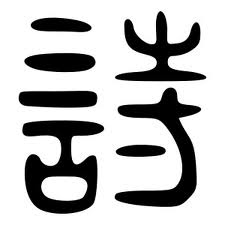
I think of the Chinese concept of Shi. Simply put it signifies a propensity based on situation. So whenever there is the propensity to play out to an extreme, there also occurs the tendency to self correct and reverse course. And herein lies the magic of Shi- embodying the spirit of dancing in the moment.

Shi is a belief. It promotes lightness and a dynamic view of our world. In Shi, everything is in a state of becoming. So as we focus on the flows and the lightness of the moment, we lose our obsession with discrete people, objects or situations. Shi allows a holistic appreciation of the complex webs of relationships among people, objects and the broader environment.

In a world fast losing traditional reference points, the future may well belong to those who adopt a Shi mindset. Those who embrace the lightness of relationships and flows rather than the heaviness of resource ownership. I believe it would be these ‘dancers of the moment’ who would lead the world in this era of uncertainty and discontinuity.

Acknowledgements:

1  The Age of Discontinuity: Guidelines to our changing society

by Peter F Drucker,1969.

2.   The Propensity of Things: Toward a History of Efficacy in China

by Francois Julien,1999.

What if……..


If thought is the fabric from which reality is made, then faith and intention become the mechanisms by which we focus and project thought.

                                                                                                              – Anonymous

What if we were spirits, balls of energy?  What if prior to being born, we could choose the Men and Women who would conceive us and help us with our values and beliefs? What if we could meet up with all the other spirits who would also be born to play enabling roles in our future life? What if we could choose our destiny?

What if…..

Grounded back to our reality, we see “What if….” as the yearnings of a meandering soul. Or a delusionary dream that needs to be closeted in the attics of our minds. But what if we did carry a master blueprint containing all our yearnings somewhere in our DNAs? Or what if the dream did have moorings in our wakefulness?

I see two pathways. One arising out of faith and the other from our intention. Which path to follow becomes our choice.

Our faith leads us to the realms of spirituality .We conjecture that situations do not happen randomly nor people come into our lives by chance. As we move through this maze of situations and people, we can choose to see our life journey as a blueprint ordained by a higher purpose. With this choice comes the realisation that the reason we are here is to heal our beliefs, learn from them and not to master and forcibly change them. Such a perspective does allow us to make peace with areas of our life which we find confusing and out of control.

But were we to move on the pathway of intention, we can choose to see our life as something we create and are responsible for. This becomes the essence. As we step out with positive intentions to make a choice, we start understanding the underlying reasons why we fail to do so on many occasions.

I get reminded of that wonderful Arbinger Institute publication, “Leadership and Self Deception: Getting out of the box”. While the book focuses on leadership in the organisational context, its argument applies in our life situation too. The book states that people respond to “how we feel about them” and not because “how we treat them.” Let us halt here and absorb the import of what is being said. “Feeling inside” has far greater impact than “action outside.” The genuineness, or otherwise, of what our true feelings or thoughts are, seeps out irrespective how or what we show on the outside.

We “get into the box” as we allow our lives to be dominated by our insecurities and start projecting our failures on to others to try and protect ourselves from our own reality. This then becomes our strategy of self deception and “keeps us trapped inside the box”, away from the truth of our attitude towards others and its crippling impact on our relationships.

As an example, if you are in an abusive relationship, this could be due to your belief that you are unloved. If you believe you are unlovable, you will attract those ‘into the box” who can help you to demonstrate this belief because you have it, not because it is the truth. Abuse is one way that this belief can be played out.

But intention does allow us to choose to become the observer of our beliefs and changing them once they are no longer working for us. And as we change ourselves inside, what we attract on the outside also changes. And this becomes our pathway to move “out of the box.”

So, do we move on the faith path as we reconcile and make peace with our troubling beliefs and other aspects of life? Or do we follow our intentions as we face failure and turbulence in our efforts to implant new beliefs and a life change?

What if….. we could make this choice?

In Learning………                                                                                                  Shakti Ghosal

Acknowledgement:

* Leadership and Self-Deception: Getting Out of the Box – An Arbinger Institute publication, 2008.

Dream Barriers


“All men dream, but not equally. Those who dream by night in the dusty recesses of their minds wake in the day to find that it was vanity; but the dreamers of the day are dangerous men, for they may act their dream with open eyes, to make it possible.”

                                                                                          T. E. Lawrence, 1922

Have you had this kind of a dream? A dream about a friend sitting near a window at the corner coffee shop and reading a magazine article about YOU. What is he reading? In your dream, you do your best to look over his shoulders to see. But the harder you try and closer you get, the alphabets keep receding away. You never really are able to decipher as you try again and again. Always with no results. Have you woken up from such a dream…… with a sense of loss?

Dreams can be so compelling at times. Compelling and stuck at the same place. As Alice discovers in Through the Looking-Glass when the Red Queen tells her, “Now, here, you see, it takes all the running you can do, to keep in the same place.” So what is the purpose of dreams?  Do we use dreams to compensate for the under-developed parts of our waking life personality, as Carl Jung had theorised? Or are dreams merely a safety valve of our mind seeking clarity on the way forward?

I recall the movie Inception which operated in a three layered “dream within a dream” sequence. And the reason for protagonist Cobb to set up this situation was because he needed to break successive dream barriers to access deeper levels of victim Fischer’s mind and implant a specific thought. Cobb knew that implanting the thought into Fischer’s mind would bring clarity of purpose and the desired action and results. Inception made me reflect further. What prevents an enabling thought from entering the mind under normal circumstances? And why is it necessary to go down into deeper levels of the mind?

Which brings us to the aspect of dream barriers. As we dream with open eyes, we may not “see” these barriers coming up, shaping our thoughts and actions.

Dream:    If only I could get that CEO position.

Barrier:    I am not successful and good enough. I would be exposed.

***

Dream:    If only I could own that lovely villa on the beachside.

Barrier:    I may not be able to afford it. Also I really do not deserve it.

***

Dream:    If only I could handle my investment decisions wisely.

Barrier:    I do not have any skills or resources in that area.

***

Dream:    If only I could set up a successful business.

Barrier:    I don’t believe it is possible so why bother.

***

Dream:    If only I could give up my job and live the life of my dreams.

Barrier:    What will my family and friends think of me?

***

Do we see that most of the barriers are internal, all about me? Do we see that it all boils down to my beliefs? And these beliefs have been developing inside me from the time I was born, lying below the surface. And today, they are at the core of who I am, my thoughts, attitudes and behaviours. So every time, I dream up some desire, my lurker friend, the underlying belief, rears up to push me in the opposite direction, negating my resolve and ensuring my dream does not come true.

I am reminded of a workshop in which the instructor asked, “How many believe that it is possible to follow our dreams?” Most participants said, “Yes.” But when asked, “How many of you believe that you can make your dreams come true?”, only one hand went up. Do we see the gap between possibility and probability? This is the extent to which our beliefs can queer the pitch.

We need to be willing to tackle our limiting beliefs. Remember, it is these beliefs that create our thoughts and then actions. So like in the Inception movie above, could the trick be to delve deeper to examine our beliefs, let them go and in their place, implant positive, enabling thoughts into our ‘dreams’? And, what happens when we start developing a positive belief and thought structure? We improve our self esteem. We reduce our fear of failure. We have more courage to take responsibility of our actions.

So can we become Lawrence’s dreamer willing to act our dream and make it possible? And can we envision our dream with such clarity that we can read what is written about us in that magazine of the future? Are we willing to live our dreams……. and our future?

In Learning………..

Not so elementary, my dear Watson!


“Knowledge comes by eyes always open and working hands; and there is no knowledge that is not power.”

                                                                                                        Ralph Waldo Emerson, 1862

 Awhile back, I had been intrigued to read about IBM’s artificial intelligence (AE) named Watson competing in the Quiz show Jeopardy and beating two of Jeopardy’s record holding champions at their own game! It made me realise the extent to which AE development has been able to close in on to the human mind in terms of sifting through and analysing information to reach a correct decision. IBM’s Watson has clearly graduated from the realm of data crunching to become a possessor of knowledge.

Since the dawn of civilisation, Man has sought knowledge. Knowledge to alleviate hardships, to control the environment, to predict outcomes. Knowledge became a source of power and this manifested itself throughout history. Be it through intrigue, technology or the Brahmin rituals. Through millennia and centuries, such a belief only got reinforced.

As individuals, we develop our knowledge by linking it to other knowledge bases. But our belief in our own knowledge is not for knowledge sake but the power we derive from it. Be it in our personal or professional lives. Our inner fears of loss of power or relevance make us resist any changes in our knowledge structure. Eve though deep down we do realise that like all else, there can be no permanence; change in one aspect can shift the entire knowledge structure and its relevance.

But knowledge to be useful has to move away from being mere information. Especially as we face an exponential overload of information. Raw, disjointed data streaming in from all over. And as we grapple with this information avalanche, we have no time to reflect, analyse and produce usable knowledge.

It was only in the last century that we witnessed a formal acknowledgement of what has come to be known as “knowledge work”. And in 1959, Peter Drucker coined “Knowledge worker” as someone who works primarily with information or one who develops and uses knowledge in the workplace.

So how do I see knowledge trending? As organisations have sailed into this century, business leaders have believed in the mantra of investing in technology and knowledge workers. But they also continue to hold the belief that for goals to be achieved there needs to be a control over the work activity and process flow. But this clashes with the loose and unstructured environment that the knowledge worker seeks.

And then there is the deeper issue of a radically changing workplace. As chip based machines take over structured and repetitive activities, the less skilled workers increasingly take on “knowledge worker-like” qualities. Be it book-keepers, clerks or factory floor workers. In essence, more and more workers are learning to manipulate and use knowledge in a decentralised and flat manner.

The twenty first century workplace demands knowledge through unhindered access to information not only within the organisation but by connecting to diverse, outside sources. But does this not run contrary to our age old belief that to retain power, we need to keep the individual in a silo, fed with only ‘need to know” information and expertise? Clearly a significant perspective shift is warranted in our business leaders to be able to accept a radically different information flow and power structure.

And this I would term as our knowledge quandary.

As workers, we need and demand more and more instant access to information from all over. As individuals, we have less and less time to mull over and process the veritable deluge of information coming at us. As leaders and managers, we like to retain power by restricting information and knowledge flows on a “need to know” basis. As we hold onto these power bases using outdated knowledge. And in the midst of all this, now queering the pitch is Watson and artificial intelligence coming centre stage. Truly a case worthy of Sherlock Holmes and he would have doubtlessly remarked, “Not so elementary, my dear Watson!”

And what do I envision going forward? Do I see the “power of knowledge’ pendulum swinging wildly between the individual and the corporation? As the former uses unfettered knowledge for empowerment? And as the latter fights to retain control through use of Watson to aggrandise and analyse information, convert to knowledge and take decisions? And what if Watson were to evolve and “learn” to the point that he cracks the last human stronghold of intuition and creativity?

In Learning……………..                                                                                  Shakti Ghosal

I AM…….


The words “I am” are potent words; be careful what you hitch them to.  The thing you’re claiming has a way of reaching back and claiming you. 

~A.L. Kitselman, American author, early 20th Century

Some days back, on the seventieth Birthday of the iconic Mohammed Ali, I watched some of the old grainy footages of another time, another place. Of a newly crowned world heavyweight champion declaring, “I am the Greatest!” Did these words come from a space of vanity and arrogance? Of projecting a ‘bigger than life’ aura as a shield against racism and perceived injustice? Or was it simply to frighten and unnerve the opposition?

In my childhood, my parents and teachers told me, “Do not fall prey to self arrogance, be humble. Shun personal greed, be generous in giving, be of service.” And there were enough morals like ‘thou shalt love thy neighbour as thyself’’ floating around to reinforce the belief in me that anything to do with ‘Me, mine, I am…etc” reeked of selfishness and a self serving attitude and thus needed to be hidden from view.

And as I have gone through life, I have had my share of successes. In areas of family, work, money. I have run these races and done better than many. And at times like these, as I have looked at the other faces, did I feel those twinges of guilt deep down? Was this the underlying belief rearing its head to derail me from further success?

It was only the other day that my moderator Leon led me to the TBOLITNFL website featuring “The Deuce Lutui Story”. This is a story of Coach Steve Hardison and his coaching relationship with footballer Deuce Lutui. TBOLITNFL means ‘The Best Offensive Linesman in the National Football League’ and this is what Deuce transforms into. Watching the site video is a moving experience and brings home the sheer power of ‘I AM….’

For Deuce Lutui ‘I AM….’ resonates with the infectious positivity of ‘Personal Internal Commitment.’ As Steve Hardison writes to Deuce in one of his E mails, “Your commitment is so profound and so deep and so powerful.  I believe that if we took a blood sample right now and put your blood under a microscope and looked at the individual blood cells you would see letters floating in your blood cells. Do you know what letters you would see in the blood cells?  These letters: TBOLITNFL :)”

I reflect.

‘I AM…’ is about ME. But does it only relate to my personal internal commitment? The ancient Vedas of India speak of Soham which means, “I AM…” Soham is a Universal mantra with its breath like vibrations creating a bridge between the individual’s senses, actions and his awareness. But at a more fundamental level, Soham also celebrates that deep underlying essence of Being. The Being that does not need to react, that just is and is part of the universal consciousness.

I see the connection.

“I AM…” is what I am committed to, what I am passionate about. It is about rewiring my long held beliefs, my internal sinews and muscles as I proclaim “I AM…” to the outside world.  But my senses and actions come from the space of Being. “I AM…” therefore is neither my arrogance nor my selfishness. “I AM…” is no longer a zero sum game in which my wins are at the cost of someone else. I make the transformational leap   allowing my personal commitments to be at peace with my values of humility, generosity and service to others. “I AM…” is my tryst with the universal consciousness.

I realise now that Mohammed Ali’s declaration so many decades back had more to do with his belief in himself and his personal internal commitment than the opposition or the outside world. AsLeonbeautifully sums it up, “Failure to commit to I AM… is high cost of low living”.

I am an inspirational leader of men.

I  AM…..

I am a loving and positive minded husband and father.

I AM…..

I am the best CEO and Executive Coach for this age of discontinuity.

I AM…

“When you truly want something, all the universe conspires in helping you to achieve it.”

                                                                                  Paulo Coelho ‘The Alchemist’, 1993


In learning…….                                                                        Shakti Ghosal


Acknowledgement:  http://www.tbolitnfl.com

We vs. Them


“One day our descendants will think it incredible that we paid so much attention to things like the amount of melanin in our skin or the shape of our eyes or our gender instead of the unique identities of each of us as complex human beings.” 

                                                                                               ~Franklin Thomas, 1964 AD

On the screen, I hear the father of slain Indian student Anuj Bidve speak, “The world is finished for us – that is all I can say,” Anuj, a post graduate student , had been shot in the head  by a man describing himself as “Psycho Stapleton” in Manchester in a mindless act of violence. Seeing the old parents forlornly trying to cope with the loss of their only child, an indescribable feeling of sadness engulfs me.

The incident is being described as a Race attack. One of the many similar attacks that have plagued newly arrived immigrants and students in the UK, US, Australia over the years. Many reasons are up for debate. Is this an anger against new residents getting access to “scarce” resources which otherwise was the prerogative of the old community? Are these attacks a sign of increasingly disaffected youth with limited work and employment opportunities? Are these problems temporary and would “go away” once the incoming folks integrate with the community at large? Was the victim at the wrong place at the wrong time? There is much talk regarding strategies needed to reduce such race attacks through community development and deterrent police measures.

As I reflect, I wonder if these underlying beliefs about race attacks are not merely chasing the symptoms rather than trying to unearth the core cause. And if this be so, would the strategies being talked of be really effective?

What makes a person, without provocation, brutally attack and kill another fellow human? Is this from a distorted self image, itself a product of a distorted belief and need system? Or is it due to an egoistic self- centricity, a product of a selfish and materialistic world? To my mind, these aspects are responsible for much of the created sufferings in the world. These become the arrogant starting points that separate us from others. These make us feel that others are a threat and that the world is a hostile place. We get forced into undesirable behaviour – reacting to others’ words or actions. We end up needlessly competing, being envious or judgmental and feeling threatened by others’ successes.

So what can we do? I believe the strategy needs to start from within. We need to look inside, increase our self awareness. It is this awareness that aligns us with our inner values and brings lightness and a sense of purpose. It is in this space that our ego starts subsiding. Freeing us from that endless loop of Desire and Dissatisfaction, Freeing us from that eternal hunt and chase mindset.

“What is tolerance?  It is the consequence of humanity.  We are all formed of frailty and error; let us pardon reciprocally each other’s folly – that is the first law of nature.”            

                                                                                                               –  Voltaire, 1764 AD

In Learning…………..                            Shakti Ghosal

Oh! To be still……..


The woods are lovely, dark, and deep,
But I have promises to keep,
And miles to go before I sleep,
And miles to go before I sleep.

                                                                   Robert Frost, 1923.


We hurtle faster and faster. To keep pace with a changing world, a morphing society. To keep up with the Joneses. All around us are triggers to keep us in action. Project deadlines at the workplace. To do lists stuck on the refrigerator door. Management seminars extolling the virtues of proactive action and business initiatives. Weekly coaching sessions empowering us to move towards the rainbow of purpose and goals.

As I watch the TV screen, I find more prejudices against inaction. As protests and deaths in the country continue unabated,Syria is warned of inaction by the Arab league, Americans say that they just cannot have any further inaction by Washington as health insurance costs skyrocket. In India, Anna Hazare and his team accuse the Government of inaction to introduce a strong anti-corruption legislation.

Awhile back, I had read about a little known but interesting incident of the Second World War in which afterFrance’s surrender to the German forces in June 1940, a large part of the French navy positioned elsewhere at Gibraltar remained frozen in inaction and refused to follow the Allies instructions. Till they were bombed and fired upon by the British navy!

So is inaction always bad? And why do we sometimes freeze up and halt all action as the French naval commander had done?  I ponder as I try to find some answers. If action signifies moving forward towards light and a better future, does it imply that inaction means something backward and worse? Unfortunately, in today’s materialistic and achievement oriented world and society, this is the belief that stands constantly reinforced. So as we love to show our own “bias for action”, we lump all inaction with lethargy and vacuousness.

But does action always imply moving forward? Does it always demand achievement of discernible goals?  Our perception, fed on a diet of instant gratification, equates action to goal achievement. But does this not detract from the importance of the action steps, the empowerment of the action journey? And does this not lead us to judge the other person by results rather than the path he follows?

And what about inaction? Does it always signify the stillness of the unborn, the slowing down of atoms, the dissipation of energy?  What if there indeed be intrinsic positivity in the stillness of no action? In the Chinese Tao philosophy, wei wu wei means “action without action”. As we observe, we reflect. As we comprehend, we try to make sense of it all. As we strategise, we commit our intentions. Do we realise that goal achievement and critical perspective shifts usually flow from such moments of contemplative inaction?

I believe much of the world’s misconceptions arise due to a lack of understanding of what action truly signifies. And the news stories above underscore this point. So how do we differentiate between the inaction of no action and the stillness of “making sense of it all”?

Simply put, inaction occurs from a fear of the unknown, of leaving our comfort zone. From remaining stuck due to our underlying beliefs (UBs). So the sooner we get down to confronting our fears, unpacking the baggage of our UBs and letting them go, that much faster we regain our airy fairy childhood state of unhampered curiosity and motion.

But when we stand still to ‘make sense of it all”, we do not really choose to move. We seek instead the solace of something still, something changeless, something which will anchor us from the slippery slopes of uncertainty. Like a sheet of still water reflecting back and providing reassurance of our own inherent changelessness. As we visualise the road forward with intention to act and bring in the change.

So, as the world around us moves in an ever maddening whirl, do we retain the conviction to find the balance between the still and restful “woods” of our inner reflections and the “promises to keep’ of our societal actions? And the wonderment and pleasure of the “miles to go” journey itself?

In Learning……………

                                                                                                                                                                  Shakti Ghosal