More than a decade after my coaching certification, certain ideas still return to me with surprising clarity. One of them is deceptively simple:
The difference between reacting and responding.
Most leaders intellectually understand this distinction. Few recognise how profoundly it shapes their daily impact.
I was reminded of this during a coaching conversation with a senior executive — let me call him Raghav. Raghav was known for his brilliance and intensity. Quick thinker. Decisive. Deeply committed. But his team described him using another word, offered cautiously and repeatedly: “Intimidating.”
When he came into coaching, his concern was framed differently. “My team has become strangely silent,” he told me. “Meetings lack energy. No one challenges anything. It’s frustrating.”
Frustration, I have learned, is often an interesting doorway.
“What usually happens when someone disagrees with you?” I asked. He looked puzzled. “Nothing unusual. We discuss.”
But leaders rarely observe their own behavioural patterns with accuracy. Our reactions are invisible to us precisely because they are so familiar. So, I asked him to walk me through a recent meeting.
He described a discussion where a junior manager questioned a proposal. As he narrated the incident, something subtle appeared — not in his words, but in his tone. “I explained why the idea wouldn’t work,” he said.
Then after a pause: “Perhaps a bit sharply.” “What do you think the manager experienced in that moment?” I asked. He shrugged. “Direct feedback.” “And if we asked them?” Silence.
The human mind is wonderfully efficient at justifying its own reactions.
**
In coaching, reactions are rarely the real story. Triggers are.
“What specifically triggered your response?” I asked. “The suggestion didn’t make sense.” “Was it the quality of the idea,” I continued, “or the fact that it challenged yours?”
That question lingered longer. Eventually he smiled — the kind that signals reluctant insight. “I don’t like being questioned in areas I know well.”
There it was. A deeply human pattern. Trigger → irritation → sharp dismissal.
Repeated often enough, reactions harden into leadership style. Unexamined long enough, they reshape culture.
We explored a small experiment. “Next time you feel that familiar irritation,” I said, “don’t change your opinion. Don’t soften your standards. Simply pause.”
“Pause?”
“Four seconds,” I suggested. “One breath. No words.” He laughed. “That sounds trivial.” “It is trivial,” I agreed. “And extremely difficult.”
Because reactions are automated. Responses are chosen.
**
Several weeks later, Raghav returned with an observation that genuinely surprised him. “The meetings feel different,” he said.
“What changed?”
“I haven’t changed my decisions,” he clarified. “But I’ve started noticing the moment before I speak.”
“And?”
“The irritation is still there,” he admitted. “But the pause stops me from firing.” That single gap — barely a few seconds — had altered the emotional climate of his interactions.
People spoke more. Defensiveness reduced. Energy returned. Nothing structural had changed. Only awareness.
**
Reacting is effortless because it is borrowed from the past — old patterns, old triggers, old conditioning.
A decade after my executive coaching certification, one idea continues to stay with me: Accountability is rarely about others. It is about the promises we make to ourselves.
Not the corporate version of deadlines, dashboards, and reviews. Something quieter. More personal.
A simple question: Who holds us accountable for the things that truly matter?
The uncomfortable answer: we do.
**
Some time ago, a senior leader — let’s call him Arvind — walked into my office. Highly capable. Well respected. Clearly exhausted.
“I’m working harder than ever,” he said, “but everything feels stuck.”
Experience has taught me that “everything” usually has a centre of gravity.
“What feels most stuck?” I asked.
“My restructuring initiative,” he replied. “Everyone agrees it’s necessary. But it’s just not happening.”
“What’s stopping it?”
“The usual,” he sighed. Quarterly pressures. Reviews. Endless fires. Bad timing.
Logical. Reasonable. Entirely human.
But then I asked him three questions:
“If the Chairman had mandated this with a deadline — would it still be pending?” “Of course not.”
“If your compensation depended on it?” “Would have been done already.”
“If your team’s survival required it?” “ Then, I would have done it yesterday.”
And there it was. The barrier wasn’t capability, clarity, or even time. It was consequence. Nothing happened if he delayed. No penalty. No discomfort. No urgency.
**
“Whose goal is this restructuring?” I asked.
“Mine.”
“Imposed?”
“No.”
“Do you believe in it?”
“Completely.”
“Then what agreement have you made with yourself about it?”
Silence. Then a smile of recognition. “None.”
**
Many of us confuse intention with commitment.
We say:
• I should do this • I need to get to that • I’ve been meaning to…
But progress rarely responds to “should.”
“What if,” I suggested, “you treated this not as a project — but as a promise?” Something you either honour or break. Not endlessly postpone.
**
“What’s the next visible action?” I asked.
“Announcing it to my leadership team.”
“When?”
“…Friday.”
“And how would you like me to support your accountability?” That question matters. Accountability imposed feels like control. Accountability invited becomes partnership.
“Ask me next week,” he said. “And challenge me if I haven’t done it.”
**
The following Tuesday he returned, noticeably lighter. “It’s done.”
“What changed?”
“I stopped treating it as something I should do,” he said, “and started treating it as something I had said I would do.”
A small shift. A profound one.
**
The most important commitments in our lives rarely come with external enforcement. No one penalises postponed courage. No dashboard tracks delayed growth. And yet, these commitments shape everything.
Accountability is not a management technique. It is a quiet act of integrity —an agreement between who we are today and who we intend to become.
**
Curious to hear your thoughts: 👉 Where have you seen self-accountability make the biggest difference in leadership or life?
“Did you read that piece I sent?” Arjun asked. Sameer frowned. “Who wrote it?”
“Why?” “Because that tells me everything.”
“So the argument doesn’t matter?” “Oh! it does matter,” Sameer said. “All folks who offer opinions always have an agenda.”
Arjun watched him quietly. “So we don’t examine the idea… we examine the person?”
Sameer shrugged. “Background. Bias. That’s how you know.”
Case closed.No thinking required. We like to believe we are rational. But most of the time, we are defenders, not thinkers.
Once a belief settles into the mind, it doesn’t stay a belief for long. It quietly becomes identity. And the moment that happens, any opposing idea stops feeling like information. It feels like an attack. Not on the argument. On us.
“Just look at the data,” Arjun said. “I already know the truth,” Sameer replied.That was the shift.His mind had stopped being a judge.It had become a lawyer. *Not asking, “What is true?”But, “How do I prove I’m right?”*
So the evidence hunt began: “I’ve read studies that agree with me.” “Experts support this.” “Your source must be flawed.”
And when facts refuse to cooperate? The mind does what skilled lawyers do. It bends them. Reframes them. Twists them — until they fit the story already believed.
“But you didn’t even consider it,” Arjun said. “I don’t need to,” Sameer replied. “I know the type.” That’s the final defense. If you can’t defeat the idea, discredit the person. “Who said it?” “What’s their background?” “What bias can we label them with?” Once a label is found, the argument is declared invalid. Comfort restored. Identity protected. This isn’t intelligence at work. This is ego guarding identity.
Psychology calls it confirmation bias — the tendency to search for evidence that supports what we already believe and dismiss what doesn’t. But deeper than that, it’s belief defense. The mind protecting its mental world from discomfort. Because being wrong doesn’t just feel incorrect. It feels like losing a piece of who we are.
Arjun said softly, “You know when real thinking starts?” Sameer looked at him. “When something challenges you… and you still choose to look.” A long pause. “That uncomfortable feeling?” Arjun added. “That’s the doorway most of us shut.”
Because growth never comes from defending what we already know. It comes from risking being wrong.
And in that small, silent moment —when we stop arguing and start examining — the mind takes off its lawyer’s coat…and remembers how to be a judge.
So we compress people into labels—rude, careless, incompetent.
And we expand ourselves into explanations—pressure, timing, constraints, intent.
This is the Perspective & Motivation Attribution Model.
From the outside, a person looks like a trait.
From the inside, a person feels like a situation.
Their one act becomes their identity.
Our one act becomes an exception.
Their failure becomes “who they are.”
Our failure becomes “what happened to us.”
And here’s the uncomfortable truth:
our reasoning is often not a search for what is true—
it is a search for what is forgivable.
The mind is not just a storyteller.
It is also a lawyer.
Wisdom begins when we offer others the same context, we demand for ourselves—
and hold ourselves to the same standards we casually apply to others.
So, what could be the road map forward?
Awareness is the start of moving forward. We start by noticing Perspective & Motivation in folks around us- through their articulations and behaviour. We then turn the searchlight onto our own selves. And we become observers of our own Perspective & Motivation afflictions…….
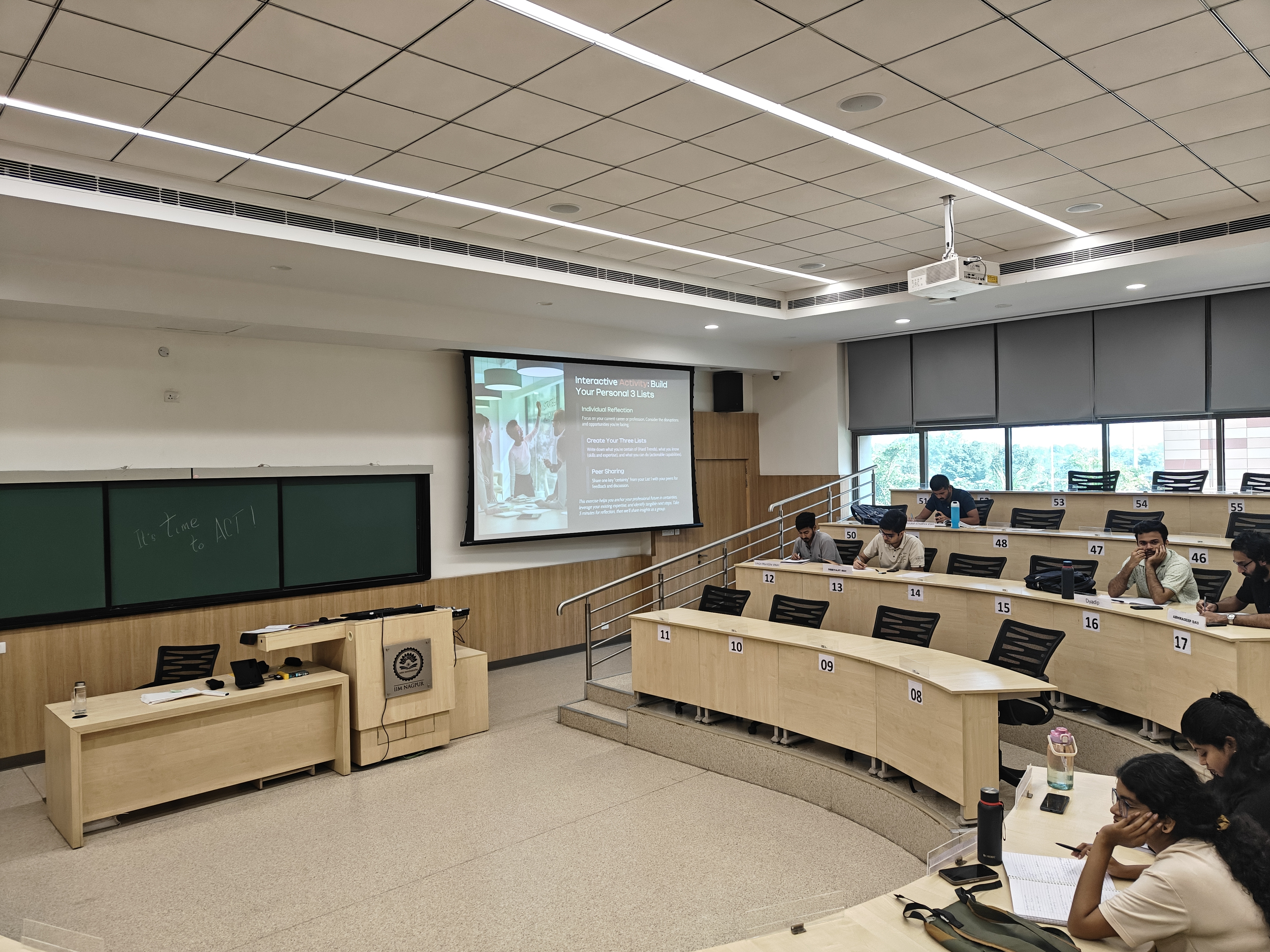
It was midway through my elective course “Winning in a Disruptive World” at IIM Nagpur last month when a student raised a question that momentarily silenced the class.
“Professor,” he began, “Elon Musk and Tesla seem to have anticipated the future before anyone else — electric vehicles, reusable rockets, large-scale battery storage. How does someone think so far ahead and act with that kind of conviction when others are still debating the probability of success?”
It was an incisive question — and one that went to the heart of what our course was about: how to win, not just survive, in a world defined by disruption.
The Disruptive Context
Disruption today is not an occasional storm; it’s the climate we live in. The rules of business are rewritten faster than most organizations — or individuals — can adapt.
In the course, we explored how the world has shifted from the VUCA paradigm — Volatile, Uncertain, Complex, Ambiguous — to what futurist Jamais Cascio calls BANI — Brittle, Anxious, Non-linear, and Incomprehensible. In such a world, the question isn’t whether disruption will occur; it’s whether we are ready to anticipate and shape it.
That was precisely what Elon Musk and Tesla managed to do — not by reacting to disruption, but by engineering it.
Tesla and the Power of Future-Back Thinking
When traditional automakers analyzed the electric vehicle (EV) opportunity, they saw it through the lens of probability. Their forecasts said adoption would be slow. Battery costs were high. Charging networks were inadequate. The “safe” conclusion was that the world wasn’t ready.
Tesla took the opposite route. It didn’t ask, What’s probable today? It asked, What’s possible tomorrow?
That question unlocked an entirely different trajectory.
Musk’s strategy exemplifies what I call Anticipatory Future-Back Thinking — a concept we explored in the later sessions of the course. It involves imagining the desired future state first — in this case, a world where sustainable energy mobility is the norm — and then working backward to identify what must be true today to make that future real.
Rather than extrapolating from today’s constraints, Tesla worked backward from a bold vision of tomorrow. That shift — from present-forward to future-back — is what differentiates disruptors from the disrupted.
Exploring Anticipatory future back thinking
Possibility vs. Probability: The Mindset Divide
When I turned back to my student’s question, I began with a simple observation.
“Most organizations,” I said, “plan from the present forward. They look at past data, run probability models, and make incremental improvements. That’s the Kodak way of thinking — safe, predictable, and ultimately self-limiting.”
In contrast, possibility thinkers — like Tesla — start from a future that doesn’t yet exist. They ask, What could be true if we dared to imagine differently?
Daniel Burrus, the futurist who first articulated the concept of Hard Trends, reminds us that the future is not entirely uncertain. Some aspects — technological evolution, demographic shifts, regulatory movements — are future facts. These are the certainties around which possibility thinking can safely operate.
Tesla built its strategy precisely on such hard trends:
The inevitability of climate change driving clean energy adoption
The advancement of battery technology and digital control systems
The regulatory momentum toward lower emissions
These were not probabilities; they were certainties in motion. Musk simply connected them into a coherent future vision — and then acted as if that future were already here.
From Disruption to Design
This is the essence of anticipatory leadership — not reacting to disruption, but designing it.
In my sessions, we discussed how the future-back approach allows leaders to create clarity where uncertainty dominates. It flips the conventional question from “What will happen to us?” to “What must we make happen?”
The difference is profound.
Present-forward leaders forecast the future.
Future-back leaders architect it.
McKinsey’s research on future-back strategy underscores that such leaders don’t rely on forecasts alone. They use scenario design to imagine multiple plausible futures and then work backward to identify strategic moves that remain resilient across them.
That’s what Tesla did: invest early in charging infrastructure, build direct-to-consumer distribution, and create software-driven vehicles that improve over time. Each move was part of a deliberate future architecture.
The Classroom Reflection
I recall telling my students that day: “Elon Musk is not successful because he predicts the future; he’s successful because he constructs it backwards.*”
In the classroom, this insight tied together much of what we had explored:
Hard Trends (what is certain) form the foundation.
The Three Lists (what I’m certain of, what I know, what I can do) create clarity.
Resilience sustains momentum when the future resists you.
Each of these steps builds toward the mindset of a possibility architect — someone who doesn’t wait for disruption, but wields it as a tool.
As the discussion deepened, another student remarked, “So Tesla wasn’t just lucky — it was structurally anticipatory.”
Exactly.
The Classroom reflection
Why This Matters Beyond Tesla
Every industry today — from energy and aviation to education and healthcare — faces its own “Tesla moment.”
In the energy sector, companies that waited for the probability of renewables to rise are now scrambling to catch up with those who invested early in solar and storage. In education, universities that anticipated the AI wave and reimagined learning around it are moving ahead, while others debate policies. Even in government policy, we see anticipatory thinking at work in projects like UPI and ONDC, where India intentionally designed positive disruption instead of waiting to be disrupted.
The principle is the same: the future belongs to those who can see differently, envision differently, and execute differently.
A Call to Future Architects
At the end of that class, I offered the students a reflection that I’ll share here too.
Winning in a disruptive world doesn’t mean outpacing change — it means aligning yourself with the inevitabilities of tomorrow and daring to act before others see them as obvious.
Elon Musk’s brilliance lies not in foresight alone, but in the courage to build on the certainties he could already see — however faintly — and to commit resources to them before anyone else believed.
For leaders and managers today, the lesson is clear: Don’t ask, What’s probable? Ask, What’s possible — and what must I do today to make it inevitable?
Closing Reflection
As we wrapped up the session that day, I noticed a quiet shift in the room. The students weren’t merely intrigued by Tesla anymore — they were reflecting on their own “future-back” opportunities.
That, to me, was the real win.
Because when young leaders begin to think like architects of the future rather than survivors of disruption, they start embodying the very mindset our world now demands — one that balances imagination with foresight, vision with action, and optimism with resilience.
And perhaps, in some classroom somewhere, the next Tesla is already being imagined.
In an age of selective hearing, understanding whose voices are ignored—and whose are feared—reveals the deeper politics of power and truth.
Abstract
In a world overflowing with voices, some are never heard. Some are never allowed to speak. This article explores the crucial difference between those who are voiceless and those who are deliberately silenced. One group is ignored, the other is feared. Understanding this difference helps us see the mechanics of power, injustice, and the politics of listening in today’s world. As Noam Chomsky famously said, “The smart way to keep people passive and obedient is to strictly limit the spectrum of acceptable opinion, but allow very lively debate within that spectrum.”
**
The idea of this piece came to me when in a social media group discussion about the unevenness of spiritual access in India based on class, caste and privilege, someone quoted author Arundhati Roy’s quote that “There’s really no such thing as the ‘voiceless’. There are only the deliberately silenced, or the preferably unheard.”
The more I thought about what Arundhati had opined, the more I sensed that she had lumped two discrete aspects of our society into one.
What is being Voiceless?
I recall the first few days of India’s response to the COVID – 19 pandemic and the lockdown that ensued. When the country literally shut down with just four hours’ notice, millions of workers—daily wage earners, domestic helpers, factory hands—were stranded without transport, money, or food. With no options available and with little support, around 40 million workers began walking hundreds of kilometres back to their villages. What came to be known as the great migrant crisis of the pandemic.
The workers weren’t silent, in fact far from it. They shared stories, walked in mass protests, called journalists. But their pain barely entered the official narrative. The crisis was, for a time, treated like an unfortunate footnote in a larger national story.
Migrant workers during pandemic
“The working class was not just unseen—they were not considered,” wrote Harsh Mander in The Indian Express. “It was a failure of both empathy and accountability.”
These were people whose voices weren’t suppressed, but simply didn’t count. That’s what it means to be voiceless.
As sociologist Michael Schudson put it, “Communication is a resource distributed as unequally as income or education.” Some voices simply don’t travel—not because they’re weak, but because the world refuses to hear them. This is indeed ironic in an age in which speaking up in fact has never been easier. Through the universal access to tweets, videos, blogs, and platforms are everywhere. But being heard? That’s something else entirely.
Being voiceless doesn’t mean someone has nothing to say. It means that what they say doesn’t register. Their stories don’t make the news. Their ideas don’t get invited to conferences. Their lives rarely shape policy decisions. They live in the blind spots of our systems. One of the main aspects which makes our society unequal.
Now let’s look at the aspect of those who Are the Silenced?
In 2017, the gruesome assassination of Gauri Lankesh hit the headlines in India. A fearless journalist and activist, Lankesh had been a sharp critic of communal violence, right-wing extremism, and state-sponsored misinformation. Her Kannada weekly, Gauri Lankesh Patrike, became a platform for truth-telling and resistance.
Gauri was shot dead outside her home in Bengaluru, her murder was not random—it was a warning.
Gauri Lankesh assassination
As journalist Rana Ayyub wrote: “Gauri’s crime was that she refused to be quiet.”
Gauri Lankesh had a platform. She was being heard. And that is exactly why she was targeted. She wasn’t voiceless. She was silenced because her voice made those in power uncomfortable. To those in power, Gauri’s voice had become too powerful; her words shone light on dark places, threatened the status quo, exposed inconvenient truths.
A recent report by the Committee to Protect Journalists ( CPJ) noted that a record number of journalists were jailed in 2022—not for false reporting, but for exposing the truth. As the CPJ observed: “Censorship is no longer enough; silencing must be enforced.”
Can we now see the intrinsic difference between those who are voiceless, and those who are deliberately silenced? Some people, no matter how loudly they speak, never seem to matter. Others are quickly shut down because what they say matters too much. The first are ignored. The second are suppressed. And both are symptoms of a far deeper crisis of listening in our times.
Why the Difference Matters
At first glance, both the voiceless and the silenced seem to suffer the same fate: not being heard. But the reasons behind their invisibility are fundamentally different.
The voiceless are ignored because they’re deemed irrelevant.
The silenced are suppressed because they’re considered dangerous.
One is a symptom of systemic neglect. The other, of deliberate fear.
Understanding this distinction is vital. It helps us recognize the difference between absence and erasure, between invisibility and targeting.
The Role of Selective Listening
Today, listening has become selective and often algorithmic. Digital platforms and connectivities are amplifying outrage, repetition, and ideology—not complexity, dissent, or nuance. In such a space, it’s easy for the voiceless to disappear into the margins, and for the silenced to be made invisible through force or discrediting.
We need to recognize that the difference between the voiceless and the silenced also changes how we respond. We might decide to support in the following manner.
The voiceless need amplification. Their stories must be brought to the centre. This would require better representation, inclusive platforms, and ethical journalism.
The silenced need protection. They must be defended by laws, by solidarity, and by public pressure. Their speech is often a warning bell the rest of us ignore at our own peril.
Both are vital to a functioning democracy. But only one—the silenced—reminds us that truth still threatens power.
In musing……. Shakti Ghosal
References
Schudson, Michael. The Sociology of News. W. W. Norton & Company, 2000.
Committee to Protect Journalists. Record Number of Journalists Jailed Worldwide. CPJ, 2022. https://cpj.org/reports/2022
Chomsky, Noam. Media Control: The Spectacular Achievements of Propaganda. Seven Stories Press, 1997.
Mander, Harsh. “Locked Down and Left Behind.” The Indian Express, May 2020.
Ayyub, Rana. “Gauri Lankesh’s Murder Was Not an Aberration.” The Washington Post, Sept 2017
This article explores the social behavior commonly referred to as “Puppy Dog Wag Tail Syndrome”—where older individuals attempt to gain acceptance from younger social groups through excessive compliance, self-effacement, or mimicry, wagging one’s tail so to say! While this behavior stems from a natural human desire for belonging, it often compromises one’s authenticity and self-respect. Drawing from research in social psychology, this piece delves into the emotional drivers behind such behavior and advocates for embracing authenticity across generational lines.
Have you ever witnessed an elderly individual awkwardly trying to “blend in” with a younger group? Perhaps they crack out-of-place jokes, adopt unfamiliar slang, or seem constantly eager to please — laughing too hard, offering unsolicited help, or nervously seeking approval. This performative effort to fit in, often at the cost of dignity and self-awareness, is what might be called Puppy Dog Syndrome. Much like an over-eager pet desperate for affection, the individual’s behavior becomes centered around pleasing others, often sacrificing self-expression and confidence in the process.
While it may appear superficial on the surface, this behavior is rooted in something deeply human: the need to belong. Social psychologists Roy Baumeister and Mark Leary (1995) identified belongingness as a fundamental human motivation. Regardless of age, people crave connection, approval, and inclusion. Yet, when belonging feels uncertain — especially in cross-generational settings where values, cultural references, and energy levels diverge — the fear of exclusion can drive compensatory behaviors.
Older individuals, particularly in youth-dominated spaces like workplaces, social media platforms, or casual gatherings, may feel a loss of relevance or influence. In such settings, some try to gain favor by imitating youth or subordinating themselves — often unconsciously — in exchange for social acceptance. But the cost of such behavior can be significant. Carl Rogers, the humanistic psychologist, referred to this pattern as living according to “conditions of worth” — behaving in ways that earn external validation rather than expressing one’s true self.
This misalignment can take a psychological toll. A 2006 study by Kernis and Goldman found that chronic inauthenticity is associated with lower self-esteem, increased anxiety, and reduced life satisfaction. It’s a hollow kind of belonging that demands constant performance, rather than one built on mutual respect and individuality.
What’s most tragic about Puppy Dog Syndrome is that it often masks the rich experience, insight, and stability that older individuals have to offer. Rather than chasing youth, they might be better served — and more appreciated — by showing up as their authentic selves, offering perspective rather than parody.
Intergenerational engagement works best not through mimicry but through mutual curiosity and honesty. Younger generations often value authenticity more than they let on. There’s strength in standing tall in one’s own identity, wisdom in speaking with one’s own voice, and grace in not needing to follow the crowd.
In a world obsessed with fitting in, perhaps the most radical act is simply being yourself — fully, unapologetically, and without the need for approval.
References
Baumeister, R. F., & Leary, M. R. (1995). The need to belong: Desire for interpersonal attachments as a fundamental human motivation. Psychological Bulletin, 117(3), 497–529.
Kernis, M. H., & Goldman, B. M. (2006). A multicomponent conceptualization of authenticity: Theory and research. Advances in Experimental Social Psychology, 38, 283–357.
Rogers, C. R. (1959). A theory of therapy, personality and interpersonal relationships as developed in the client-centered framework. In S. Koch (Ed.), Psychology: A Study of a Science, Vol. 3. McGraw-Hill.
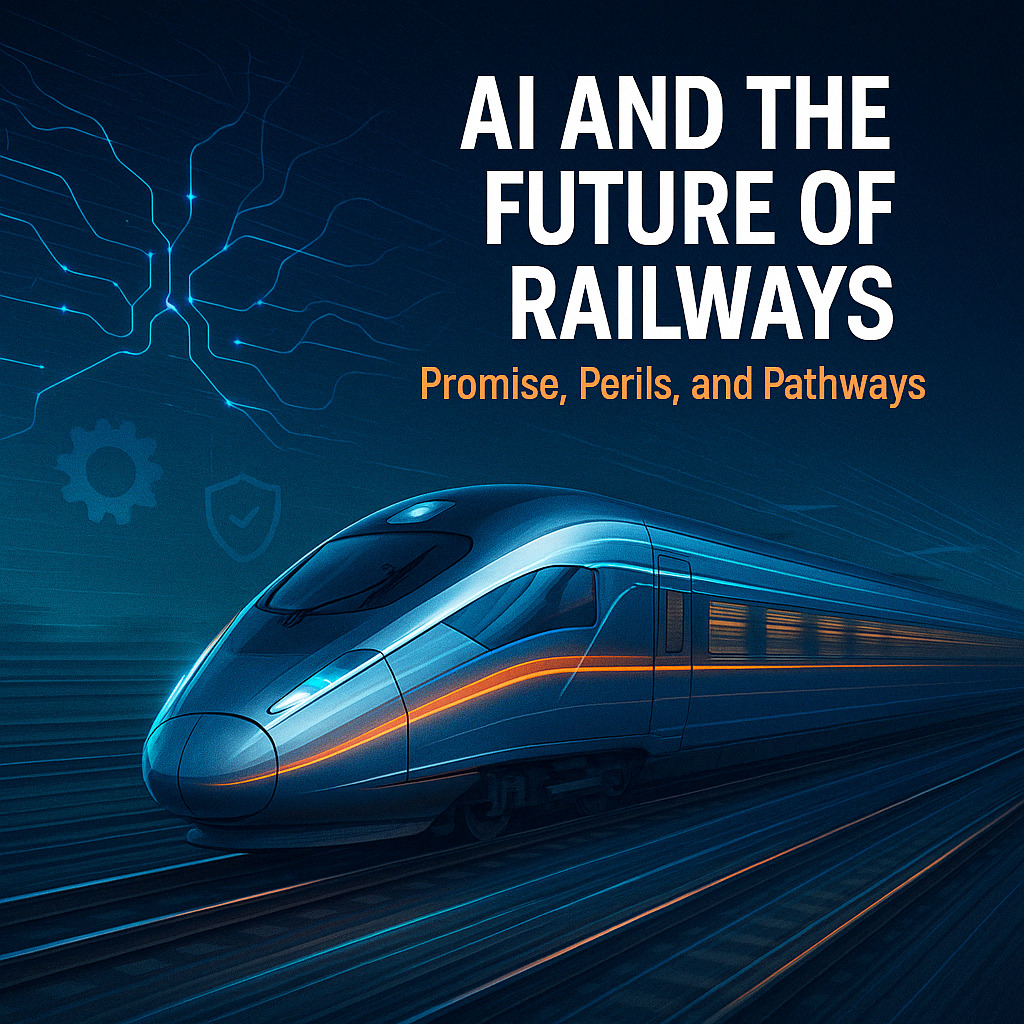
“The railway industry, one of the oldest enablers of industrial transformation, now stands on the cusp of another revolution—this time powered by Artificial Intelligence.”
From the steam engines of the 19th century to today’s high-speed trains, railways have been symbols of innovation. Now, as we move deeper into the 21st century, Artificial Intelligence (AI) promises to redefine how rail networks are managed, how trains are operated, and how passengers experience travel.
But like every major transformation, the rise of AI in railway transportation is not without its challenges. The genesis of this article stems from the fact that I started my work life in the Indian Railways Service of Mechanical Engineers nearly half a century back. More recently when I was doing a Wharton Business School program on AI applications, the idea of this piece came to me.
In this article, I have tried to explore the promise, perils, and pathways of integrating AI into one of the most vital sectors of modern infrastructure, particularly for a dense population country like India.
***
🚄The Promise: Efficiency, Safety, and Customer Experience
AI does hold considerable potential to make a high-density transportation mode like the Railways smarter, safer, and more responsive. Here are just a few areas where the promise can be seen:
Predictive Maintenance: Machine learning models can analyze vibration, temperature, and operational data to detect potential failures before they occur—reducing costly downtime and enhancing safety.
Predictive maintenance, powered by sensor analytics and machine learning, are reducing unplanned downtime by up to 30% in Germany (Deutsche Bahn). In India, AI-equipped SMART coaches can now monitor vibrations, structural wear, and staff behavior, leading to substantial maintenance savings and enhanced safety.
Optimized Scheduling and Routing: AI can dynamically adjust train schedules based on real-time data—weather, demand, or disruptions—minimizing delays and maximizing throughput.
In dense rail networks like India’s or Japan’s, such precision translates into better asset utilization, optimized route rationalization, and more efficient capacity deployment.
Safety and Reliability: AI enhances safety through real-time monitoring and automated diagnostics. Computer vision systems are today identifying track defects, unauthorized access, and obstacles with over 90% accuracy. AI-powered drones can now inspect tracks and overhead equipment faster than traditional crews, improving both safety and inspection efficiency.
Train operations benefit from AI-assisted driver alertness monitoring and automatic braking recommendations based on track conditions. These advancements reduce human error—still a leading cause of railway incidents.
Passenger Experience and Multimodal Connectivity: In many places, AI-driven chatbots and journey planners have started offering personalized updates, route alternatives, and digital ticketing, improving passenger convenience. Integrating railways with buses, metros, and even micro-mobility options via AI platforms is enabling seamless urban mobility. In megacities, this creates rail-centric multimodal ecosystems where trains form the backbone of transportation.
Smart Ticketing and Crowd Management: With the use of computer vision and behavioural analytics, Railways can monitor crowd flows in stations and adjust boarding strategies in real time, improving passenger experience and safety.
Energy Efficiency: AI-powered driving systems can optimize acceleration and braking, saving energy and reducing emissions—a critical benefit as Railways strive to meet sustainability goals.
Environmental Sustainability: AI can help Railways fine-tune energy use by adjusting acceleration, coasting, and braking in real time, reducing fuel and electricity consumption.
When paired with green innovations like hydrogen-powered trains—such as Germany’s Coradia iLint and the US’s ZEMU—railways can become even more climate-friendly, especially in non-electrified regions
In short, AI can turn data into decisions—at scale and in real time.
***
⚠️The Perils: Bias, Job Displacement, and System Vulnerabilities
Yet, for all its promise, AI also brings forth complex challenges that Railway systems must navigate with care. Let us try and understand what these are.
Algorithmic Bias: AI systems are only as unbiased as the data they’re trained on. In Railways, there is a high chance this could lead to unfair prioritization of certain routes or populations. This is because of historical inequities that are embedded in the stored data.
Job Displacement: As AI would continue to automate driving, monitoring, scheduling, maintenance and customer service, several roles would become redundant. While this may lead to job displacement in the short term, it will also create new roles in data science, system integration, and AI governance.
This is where visionary leadership would come in to shift focus and resources relating to reskilling, transitioning and to answer the more fundamental question about the human cost of automation.
High Implementation Costs: AI deployment demands hefty upfront investment in digital infrastructure—sensors, data platforms, training, and cybersecurity. For developing economies like India, justifying these expenses against long-term gains poses a financial and strategic challenge. This is also where a visionary leadership needs to come in.
Cybersecurity Risks and systemic reliability: Risks would surely go up as a more digitized and AI-integrated Railways system would become an attractive target for cyberattacks. A breach in an AI-driven control system could have dangerous and far-reaching consequences.
Reliance on AI systems thus must be balanced with robust fail-safes by strong governance and redundancy protocols.
Public Trust and Ethics: AI in public infrastructure must be transparent and accountable. Otherwise, trust erodes—especially if systems malfunction or make controversial decisions without human oversight.
The above risks underscore the need for careful design, regulation, and human-in-the-loop systems.
***
Railways vs Other Transport Modes: A Comparative Snapshot
Factor
Railways (AI-enhanced)
Road Transport
Air Transport
Cost
Low per ton/km for freight
High due to fuel and labor
Highest operational cost
Environmental Impact
Low (electrified or hydrogen)
High (diesel trucks)
Very high (jet fuel)
Convenience
Ideal for dense corridors
Flexible last-mile service
Speed for long distances
Railways, strengthened by AI, would thus remain the most cost-effective and sustainable mode for high-density freight and passenger volumes. Hydrogen trains further extend these advantages to non-electrified routes.
***
🧭The Pathways: Navigating the AI Railway Future
So, how can the Railways harness AI’s promise while avoiding its perils? The following thoughts come to mind.
1. Adopt a Human-Centric Approach: AI should always be viewed as an Enabler, not a Replacer of human expertise. Railways systems should ensure the centrality of human judgment, ethics, and oversight; this becomes particularly important in safety-critical functions.
2. Invest in Digital Infrastructure: To unlock AI’s power, the Railway systems would need high-quality data, real-time connectivity, and interoperable platforms. One can well envisage that Digital twins, Edge computing, and IoT-enabled trains would form the backbone of AI-enabled rail networks in the future.
3. Prioritize Ethics and Explainability: AI based decisions need to necessarily be transparent and explainable. Regulators and the Railways need to work together to ensure AI systems meet public standards of fairness, accountability, and non-discrimination.
4. Reskill and Redesign Work: The rise of AI urgently calls for a parallel investment in people—training them to work with AI tools, interpreting machine insights, and contributing to higher-value tasks. Railway jobs and functions need to evolve, not disappear.
5. Collaborate Across Sectors: The Railways need tocollaboratewith the private sector vendors and suppliers, technology companies, and researchers to create standards, protocols, and governance models that ensure responsible innovation.
***
🚉Need for a New Era of Railways Leadership
Integrating AI into Railway transportation is not merely a technological shift—it’s a leadership challenge. It requires vision, ethics, inclusiveness, and a commitment to long-term impact.
As Railway systems worldwide experiment with smart stations, autonomous maintenance, and AI-based scheduling, one thing is clear: those who navigate this transformation thoughtfully will shape the future of mobility.
***
Future Outlook: Smarter, Cleaner Railways
Over the next 3 to 5 years, we’ll surely witness:
Autonomous train operations with AI-powered dispatch and navigation.
Real-time dynamic pricing to optimize demand and revenue.
Prototypes of hydrogen-electric hybrid locomotives becoming mainstream in Europe, North America, and parts of Asia.
AI-enhanced simulation systems to train staff and emergency responders.
Railways stand at a unique inflection point. From my own early days in the Indian Railway Service of Mechanical Engineers, I’ve seen the disruption from steam to diesel-electric and now to AI and hydrogen. With the right investments, policy frameworks, and workforce strategies, the railways of tomorrow will be not just faster or cleaner—but smarter
Final Thoughts
The train to the future has already left the station. The question is:Are we building the right tracks for it?
If you’re working in transportation, AI, or infrastructure, or remain interested and curious about these domains, I would love to hear your thoughts. How is AI showing up in your work? What opportunities—or concerns—are you seeing? Let’s build the conversation together.
“In life, we meet two kinds of people—those who shine like the sun, radiating wisdom and energy, often challenging yet deeply inspiring; and those who, like planets, reflect borrowed light, offering comfort but little growth. Choice remains ours- whether we choose to orbit the suns, or chase reflections.”
Life is a cosmic dance, a vast expanse where we cross paths with many kinds of people. Some shine with their own light—bright, intense, and sometimes difficult to stand too close to. They challenge us, push us beyond our comfort zones, which might make us feel humiliated or insecure. However they do ignite sparks of transformation within us. These are the suns—radiant sources of wisdom, energy, and inspiration.
Then there are those who do not generate their own light but instead reflect the glow of others. Like planets orbiting a star, they offer comfort, familiarity, and predictability. Their borrowed light may bring temporary warmth, but it does not fuel real growth. They move in predefined paths, circling endlessly, never venturing beyond what is known.
The question before us is simple yet profound: whom do we choose to orbit? Do we dare to brave the brilliance of the suns, knowing that their intensity might burn, but also illuminate new possibilities? Or do we settle for the steady, reflected glow of planets, avoiding discomfort but also forsaking true transformation?
The Challenge of the Suns
Suns in our lives come in many forms—mentors who push us to excel, leaders who challenge conventional thinking, friends who demand authenticity, or experiences that shatter complacency. These forces can be unsettling, their intensity requiring us to adapt, to evolve, and sometimes to withstand discomfort.
Yet, it is from these sources that we learn the most. They force us to question our assumptions, face our fears, and tap into strengths we never knew we possessed. They inspire us to expand our horizons, to break free from the gravitational pull of mediocrity, and to blaze our own trails. As Kouzes and Posner (2017) suggest in The Leadership Challenge, transformative leaders create environments where individuals are encouraged to experiment, innovate, and grow beyond their limitations.
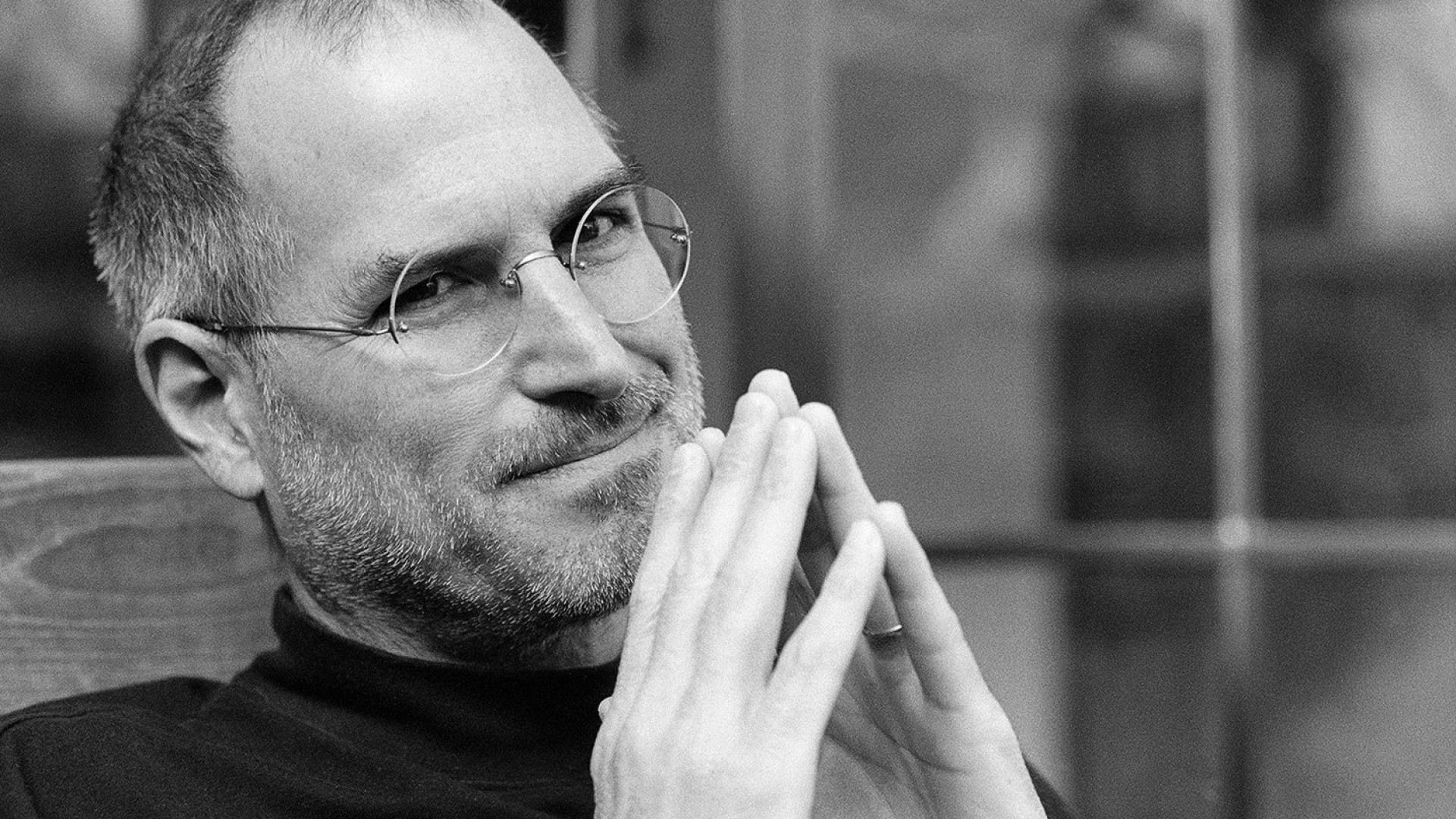
The Sun: Steve Jobs and the Apple Revolution
Steve Jobs was a quintessential “sun”—intense, visionary, and sometimes difficult to work with. He challenged the status quo, demanding excellence from those around him. Many who worked closely with Jobs describe the experience as transformative, albeit tough. His relentless pursuit of innovation forced others to think differently, step beyond their comfort zones, and achieve greatness. Those who chose to stay in his orbit were often pushed to their limits but emerged stronger, more creative, and capable of making an impact.
Lesson: Following the light of a “sun” can be difficult, but it leads to extraordinary growth.
The Comfort of the Planets
Planets, on the other hand, offer familiarity. They provide steady companionship, reassuring words, and a sense of belonging. Their presence is not without valuable— at times we do need the comfort of the known, the stability of routine, the ease of like-minded company. However, if we linger too long in their orbit, we stagnate. The pursuit of borrowed light may seem safe, but it rarely leads to personal evolution.
Consider the case of corporate career paths. Many professionals spend decades in the same organization, never venturing beyond predefined career trajectories. They are competent and reliable but do not challenge existing structures. Meanwhile, those who step outside their comfort zones—whether by switching industries, seeking disruptive mentors, or engaging in lifelong learning—often experience exponential growth. Carol Dweck (2006), in her seminal work Mindset: The New Psychology of Success, emphasizes the importance of a growth mindset—embracing challenges, learning from criticism, and persisting in the face of setbacks.
The Planet: The Comfort of Routine in Corporate Careers
Consider an employee who has spent two decades in the same corporate job, doing well but never pushing beyond the familiar. He is competent, reliable, and comfortable in his position. However, his growth is limited—he reflects the expectations of his environment rather than shaping it. While his job provides security, he misses out on opportunities to innovate, learn new skills, or challenge himself.
Lesson: Comfort is not always conducive to progress. Staying in the orbit of planets can lead to stagnation.
Making the Choice
There is no right or wrong answer—only awareness. There are times in life when we need the warmth of planets, moments of rest and reassurance. But growth happens when we dare to reach for the suns. It is in their radiance that we find our own light, forging our path not as mere reflections but as luminous beings in our own right.
The choice is ours. Do we settle for the comfortable glow of borrowed light, or do we embrace the challenge of the suns, knowing that their brilliance will shape us into something greater?
In the grand design of the universe, we are not bound to any orbit. We are free to choose our celestial path. The only question that remains is—where will we set our course?
The Choice: Malala Yousafzai’s Defiance of the Status Quo
Malala Yousafzai, a young Pakistani girl, had a choice—to accept the constraints imposed by her environment (where education for girls was restricted) or to challenge the norms. She chose to orbit the “sun” of enlightenment, education, and progress, even at great personal risk. Today, she is a global advocate for education, inspiring millions.
Lesson: Choosing to orbit the “suns” of wisdom and progress, even in the face of adversity, can lead to transformational impact.
Conclusion
The world is full of both suns and planets, but ultimately, we decide which forces shape our journey. The challenge is to recognize when we are merely reflecting light and when we are generating our own. Growth, transformation, and true impact come from stepping into the orbit of those who challenge us, inspire us, and push us beyond our perceived limits.
So, ask yourself—are you ready to seek the suns, even if their brilliance demands more of you? The answer will determine the trajectory of your life.
In Learning……. Shakti Ghosal
References
Dweck, C. S. (2006). Mindset: The New Psychology of Success. Random House.
Kouzes, J. M., & Posner, B. Z. (2017). The Leadership Challenge: How to Make Extraordinary Things Happen in Organizations. Wiley.
“The ability to observe without evaluating is the highest form of intelligence” – Jiddu Krishnamurti
Some years back, I did a course on Mindfulness. I did it more out of curiosity. The course turned out to be significantly experiential in nature, involving several practices.
So what is Mindfulness? At its core it is the practice of paying attention to the present moment with openness, curiosity, and without judgment. It is about being ‘in the moment’ with awareness of where one is, what one is doing. As one practices this, one reduces one’s reactiveness or being overwhelmed by situations, circumstances, and people.
When I think back, I realise that my first exposure to and experience of Mindfulness and intervention based on it was more than20 years back. I had participated in a week long “Art of Living” program. The essence of the program was a routine which consisted of ‘Pranayam, Bhrastika and Kriya”. All these practices were essentially breathing routines, heightened awareness of the flow of breath and culminating with a body scan. While it had not been mentioned then as being a Mindfulness practice, I realised subsequently that it was so.
After I started practicing Mindfulness through the Art of Living routine, I did start noticing a higher level of energy through the day as also being more at peace with my situation. By God’s grace, I have been able to avoid chronic health situations like hypertension, stress related ailments etc. I somehow sense that one of the contributing reasons for my being able to maintain good physical and mental health has been my continuing the practice of Mindfulness as elaborated above.
In a recent ‘Mindset Matters’ podcast, Executive Coach Frank Marinko and I had a lively conversation about what ‘Mindfulness’ is and its impact.













 A New Beginning