Winchester and the follies of Leadership


A leader is best when people barely know he exists, when his work is done, his aim fulfilled, they will say: we did it ourselves.

– Lao Tzu , Chinese philosopher, 6th century BC

 Winchester_Model_1873_Short_Rifle_1495

The quiz master asks, “Where did the famous Winchester rifles originate from?”

“Winchester of course!” I quip back.

The Quizmaster gives me a quizzical look.

 ***

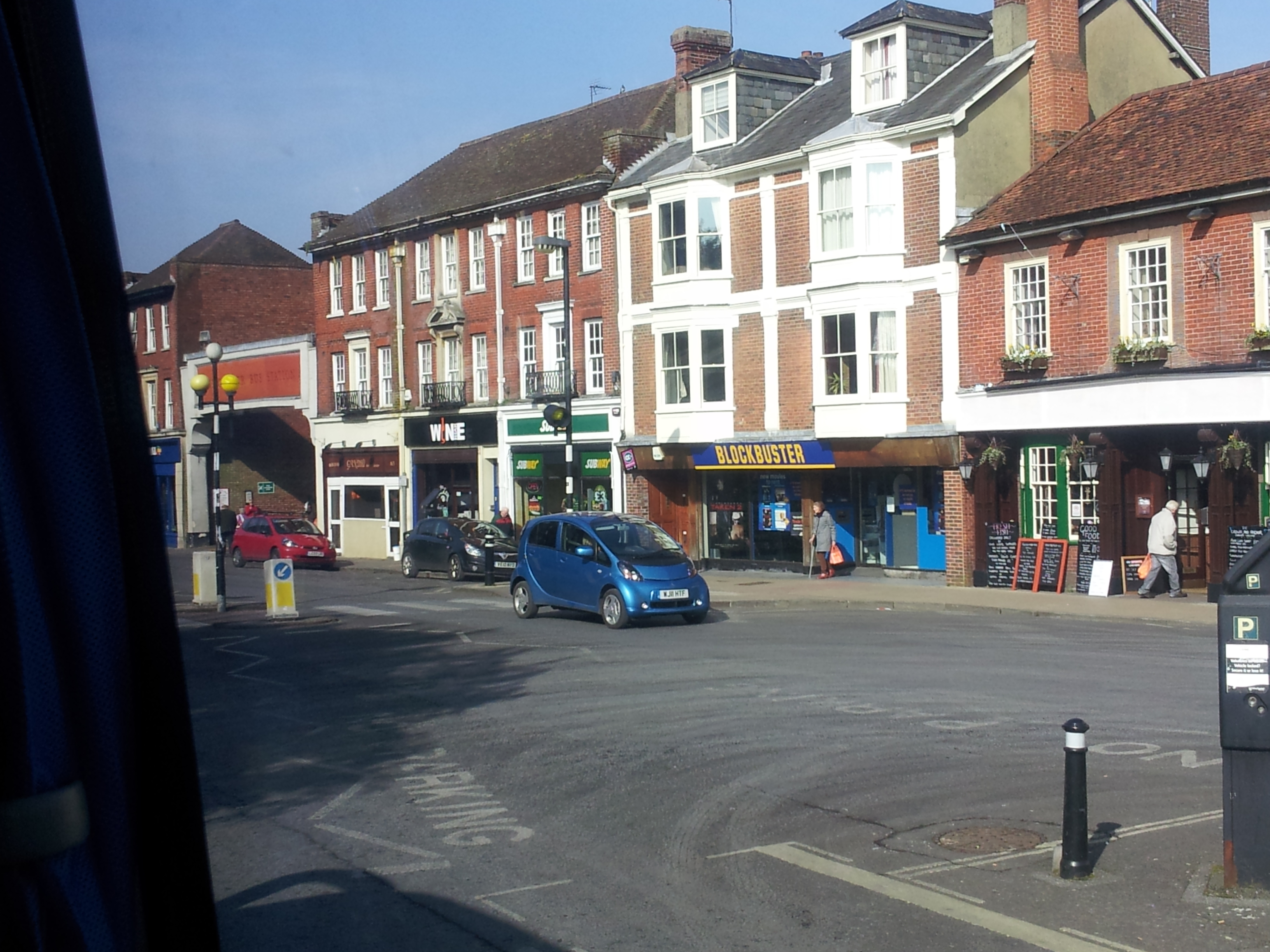
 As I land at London Heathrow and take the coach to Winchester, I recall the above incident. Traveling through the beautiful English countryside of Hampshire, I reach the town.

20130304_112349

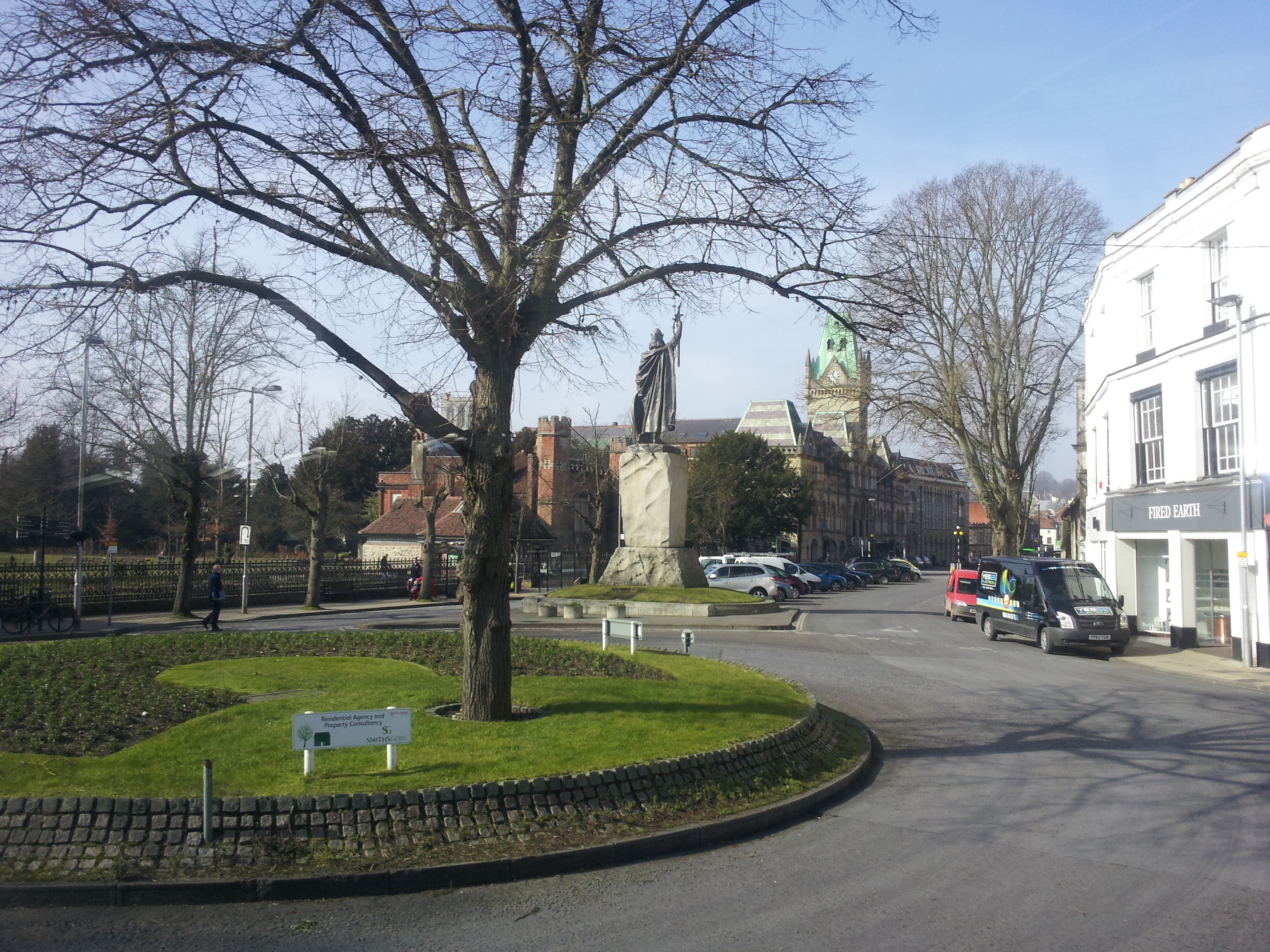
The coach stops in the city centre with the statue of King Alfred the Great visible in the distance. Winchester’s claim to fame began during the Roman times and indeed became a Roman province with defensive walls all around. But it was during the Anglo- Saxon times that it reached its zenith and the cross shaped Saxon street plan as laid out by King Alfred can be seen even today.
20130304_112439

20130304_112406

I was there to meet up with Stanley, the owner of a Management Consulting company. As I stepped into his office, Stan introduced me to Nick, his protégé and the current CEO of the firm. We got down to discussing a joint venture proposal in the UK for which I had sought the services of Stanley’s company. But the discussions never could take off. Every time I would seek advice and Nick would start off on possible options, I found Stan interrupting him.

“That surely could be one of the ways to proceed,” he would say, “but it might work better if you….” and then he would veer off into a rambling story off how it had worked for him many years back in a different context. As Nick, after a while, tried to get back to what he had been saying, he would be interrupted almost immediately by Stan who would again take the discussion into yet another of his personal success stories.

As the outsider, I seemed to be stranded in the middle. As the discussions flowed more around than with me, I quickly realised that we were not going anywhere with our main agenda.

As I walked away from failed negotiations on the JV, scarcely noticing the old medieval city walls, I pondered. Why do Business leaders like Stan have this intrinsic need to win, even against their own? Is it a deep down insecurity about one’s insufficiency to handle a world and environment that has changed? Could such insufficiency be making Stan avoid the right focus and seek refuge and comfort of past glories? Does Stan realise that such frequent “peeping over the shoulder” approach, though well meaning, could in fact be fast reducing Nick’s commitment to the organisation?

 ***

 And so I come back to the question of where the Winchester rifles come from.

Well, the rifles had their origin across the Atlantic when, just before the American civil war, a certain Oliver Winchester had the vision to buy out a bankrupt gun company in New Haven, Connecticut. The repeater rifle he redesigned was a huge success with the Union army and, after the war, the company became renamed as “The Winchester Repeating Arms Company.” So path breaking and visionary was the design that it earned the nickname of “The Gun that won the West.” For almost a century thereafter, the Winchester name remained synonymous with vision and success. It was in the 1960s that the company chose to forget what had made it successful in the first place, refused to embrace technology changes and in fact did faulty redesigning of its firearms. It was downhill thereafter till the company was split up and sold off in 1980.

As I muse over the Rise and Fall of Winchester Guns, I see its parallel in the mindset of Business leaders like Stan. As they build a company through vision and change, somewhere along that long and arduous road, such leaders choose to get stuck to their own perceived ‘success recipe’. This attachment veers them away from all that which made them successful in the past. An attachment which leads to a refusal to acknowledge a changing future and the possibilities it brings. A refusal which pushes business away, as it did my proposal.

In Learning…………………….                                                Shakti Ghosal
Those faces of Berlin


All free men, wherever they may live, are citizens of Berlin. And therefore, as a free man, I take pride in the words “ Ich bin ein Berliner!”      John F. Kennedy, June 1963

 This is really a refresh of a piece I had written a few years back. My motivation to do this is from the plethora of visions and thoughts which overwhelmed me during a recent re-vist…….

It started as most things do. With a simple mail requesting my presence at ITB Berlin, requiring me to lug my lazy bones across the seas to that wintry land. My flight was sustained by some pleasing prospects of meeting several business associates and the even more welcome thoughts of doffing a few German pilseners in a Pfeffersteak Haus.

 What is it about Berlin that envelops me every time I am there? I try to find out.

 ***

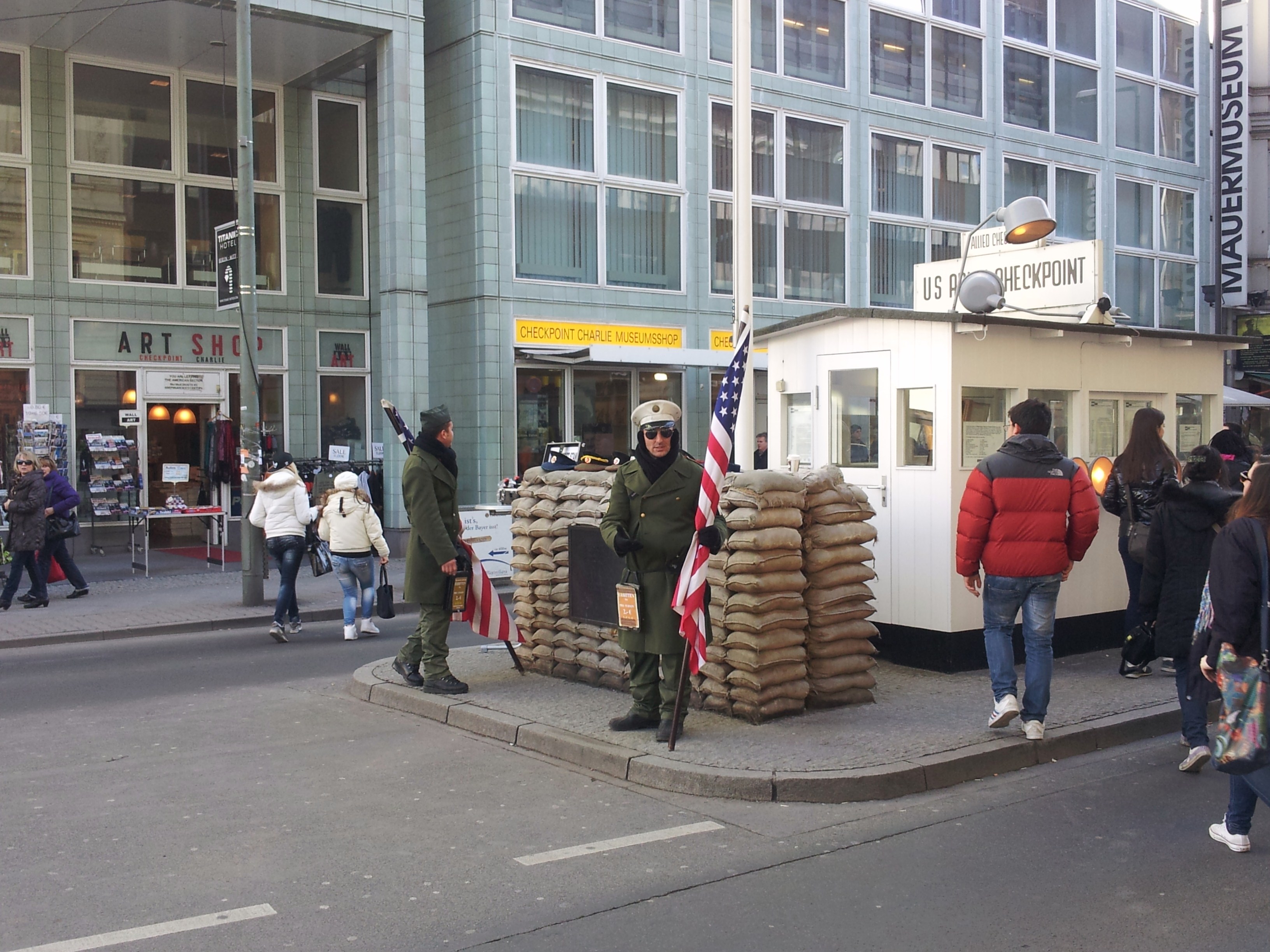
Walking on Friedrichstrasse, I spot a bunch of excited tourists waiting to be photographed and facebook uploaded with the ‘US marines’ at Checkpoint Charlie. A makeshift cabin and protective sand bags, stands forlornly in the midst of a modern office district. As I walk past, my mind goes back to an incident which happened here more than half a century back.

Checkpoint Charlie

It was October 1961. Allan Lightner, a US diplomat based in Berlin and his wife were great connoisseurs of the Opera in East Berlin. But one evening, while driving across Checkpoint Charlie, Allan was accosted by the East German guards who insisted on verifying his travel documents. This inspite of his diplomatic immunity. A standoff which snowballed into Soviet and American tanks facing each other across the checkpoint. A tale of how one man’s love of opera nearly pushed John Kennedy and Nikita Kruschev towards World War III a year earlier to the Cuban missile crisis.

As I look back at the incongruity of that checkpoint today, I sense societal evolution. What would it have taken to break the divisiveness between the erstwhile West and the East? What would it have taken to shift away from the WW II implanted belief of separation and hatred?

Does Berlin symbolise the promise of a choice made while negotiating the tectonic fault lines of political and societal beliefs?

 ***

Driving through one of the many avenues radiating outwards from the Siegessäule (Victory Column), I cannot help but notice the unbelievably serene “islands in Humanity’s stream” that Tiergarten, that famous parkland of the city, consists of. Built by the Prussian emperors Fredrich I and Fredrich II a few hundred years back, Tiergarten holds both a Baroque feel as also an English garden environment.

tiergarten-siegessaule[1]

Passing through Tiergarten in the evening, amidst the stark and leafless trees standing like sentinels in the dusk, I can well imagine stories of those hunting sprees by the Electors of Brandenburg, ,of shootings and murders,  of the Reichstag fire of 1933, of the devastation by air raids in the forties……

Does Berlin symbolise nature’s serenity and permanence through Mankind’s follies?

 ***

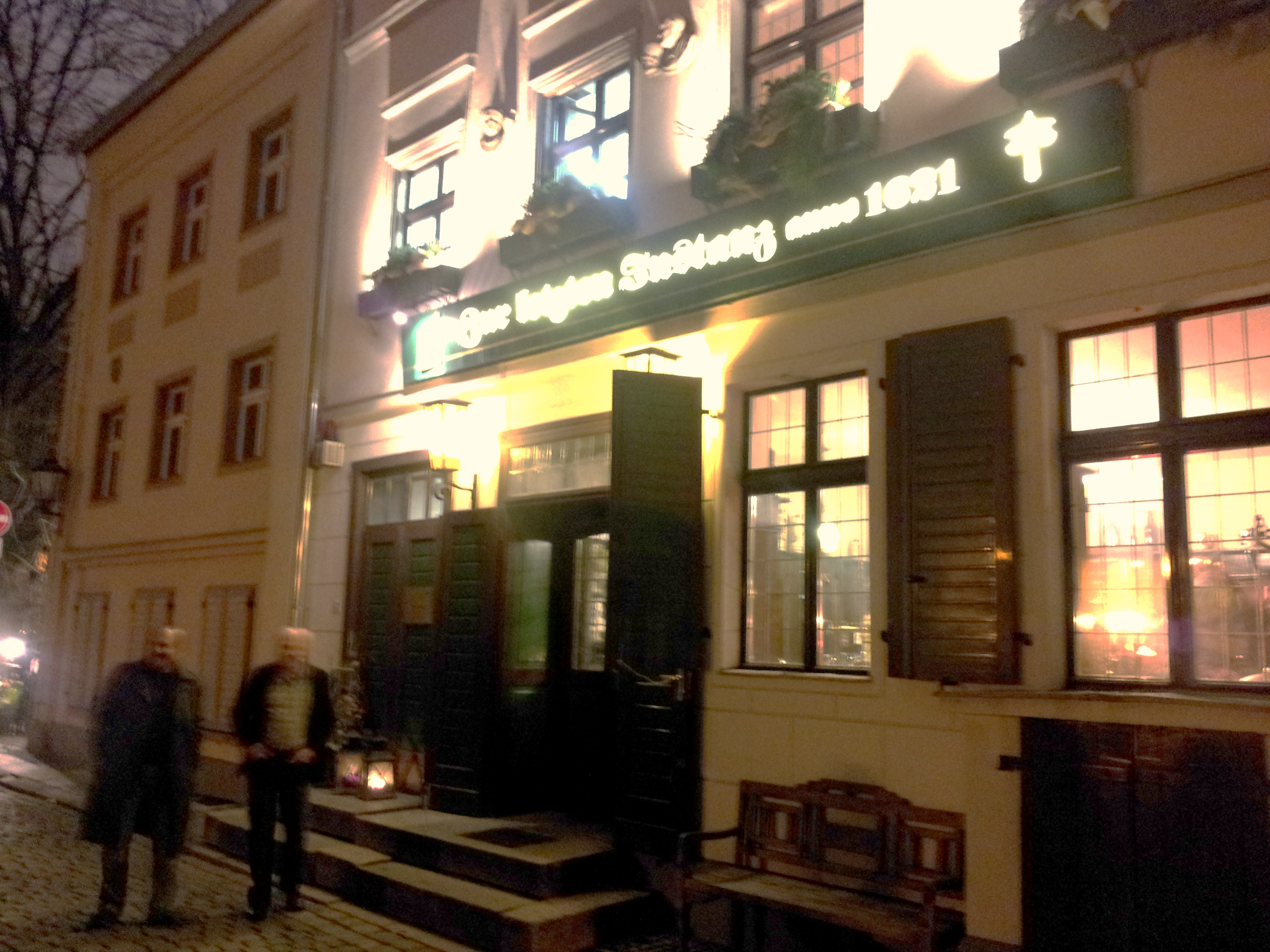
I get invited to a traditional German evening at the Zur letzten Instanz, arguably the oldest surviving restaurant in the German capital. Built in 1621, this remains one of the very few buildings from the medieval times to have miraculously come out unscathed from the carpet bombings of World War II. As I go up the original spiral staircase to the upper floor, marveling at the old wooden panels, I can almost envision Napolean Bonaparte sitting by the oven yonder and warming himself during his occupation of Berlin those many years back.

Zur letzten Instanz 1

Zur letzten Instanz 2

Does Berlin’s spirit embrace foes and friends alike?

 ***

I fast forward a few centuries to a non-descript old building block close to Schweizerhof Budapester Strabe 25. Bendlerblock, as this building is named, happens to be of enormous historical significance. In July 1944, this building became the focal point of German military resistance to the Nazi regime. The “Valkyrie” operation, as it came to be known, was a plan for a coup d’etat against Hitler hatched by senior military officers when it became quite clear that Germany was not going to win the war. The plan led to bombing of Hitler’s eastern headquarters, the “Wolf’s lair” in East   Prussia. Unfortunately for the conspirators, Hitler survived the day and members of the uprising were executed by a firing squad in the courtyard of Bendlerblock.

bendlerblock[1]

While the Valkyrie plot is well known and in fact formed the basis for the 2008 Tom Cruise starrer movie of the same name, what is little known but more interesting is the fact that famed field marshal Rommel, the “desert fox”, lent support to the plot since he felt he had to “come to the rescue of Germany.”

Is Berlin about the whisperings of History gone astray?

***

Finally moving to Internationale Tourismus-Börse (ITB)  at Messe Berlin, the mother of all Travel and Tourism Shows on the planet. Spread over twenty six interconnected halls, more than ten thousand exhibitors from 188 countries and regions, ITB symbolises Berlin’s hosting of  the first industrial exhibition almost two hundred years back and the  ordinary German’s propensity to travel and discover.

ITB 1

ITB 2

Does Berlin ultimately showcase both the German solidity and passion?

 ***

 As my flight takes off on the way back, looking down at the endless vista of building blocks and roads, I ponder again over what it is about Berlin that resonates.

Is it about reexamination and refresh of our beliefs?

Is it about acceptance and sustenance of an environment that serves?

Is it about the heightened consciousness of a past that no longer serves?

Is it about a mindset that appreciates and embraces?

Is it about being where our passion is?

Or is it about a mix of all this?

I wish I could be certain…..

In Learning………..                                                                         Shakti Ghosal

Antalya and Mindfulness


“The little things? The little moments? They aren’t little.”

                                                ― Jon Kabat-Zinn, Professor of Medicine Emeritus, Massachusetts Medical School


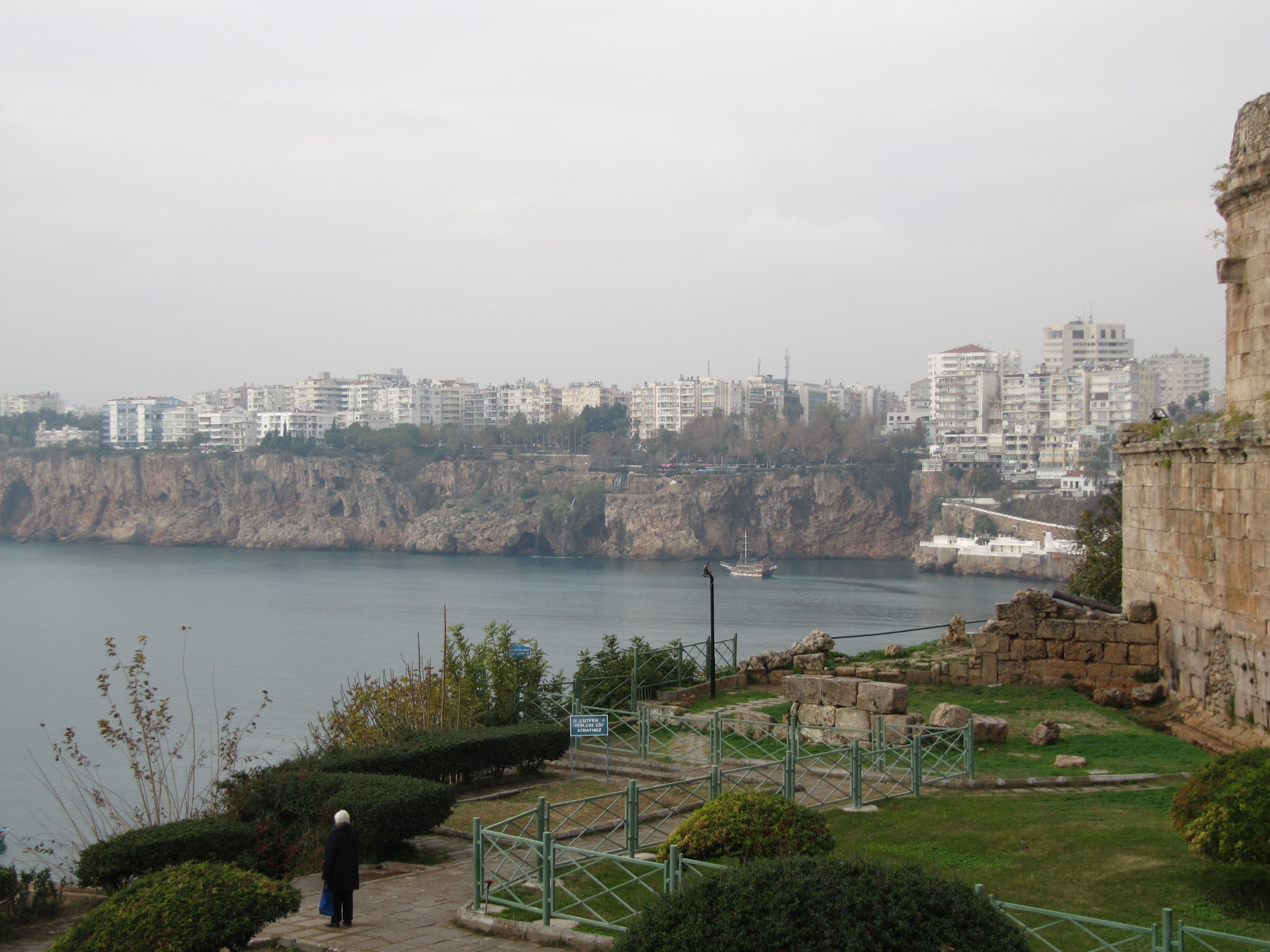
Antalya town sits on top of a rocky outcrop on the Mediterranean coastline.

IMG_1499

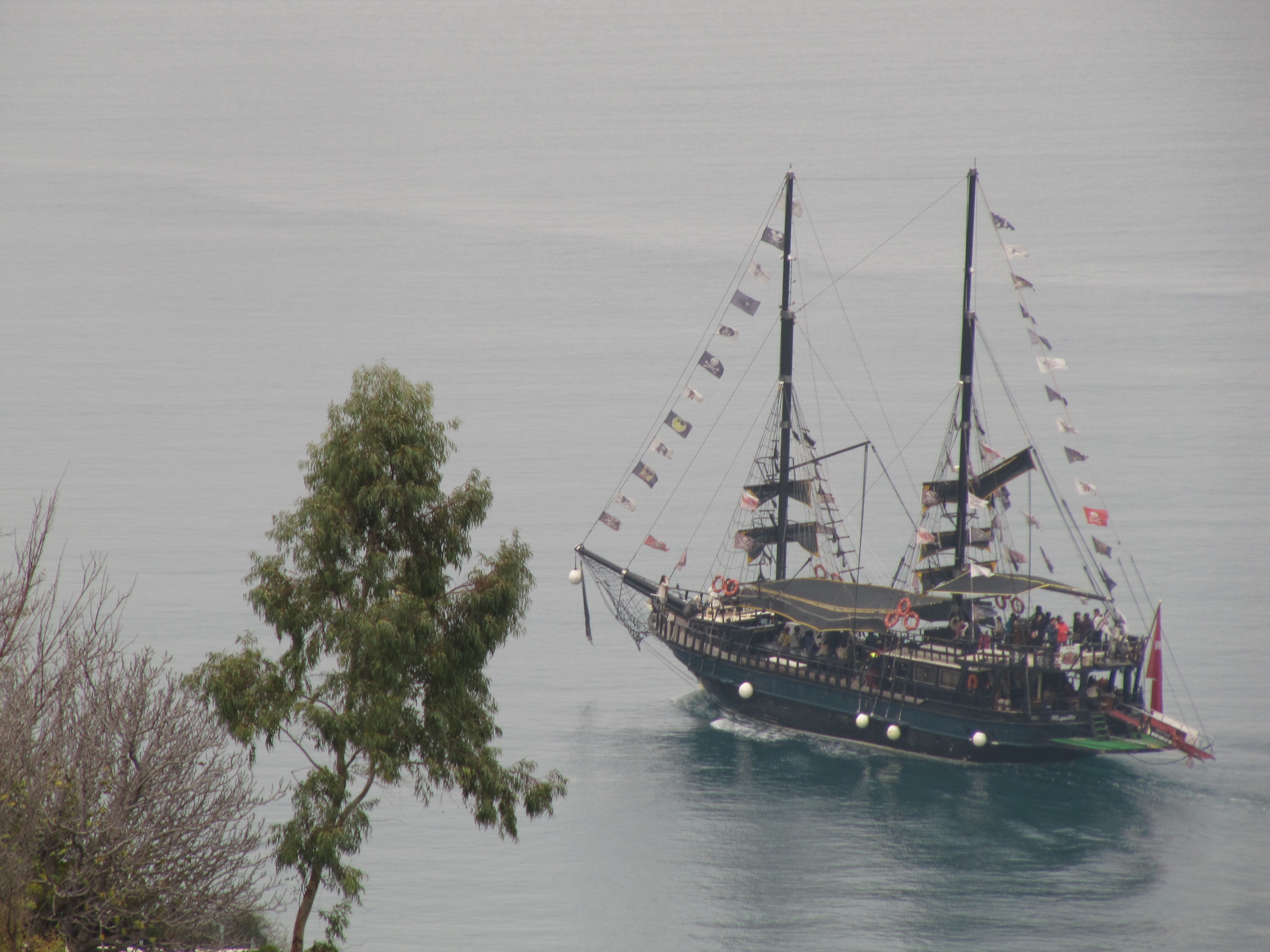
Walking in the gardens after breakfast, I spot a wooden dhow sailing out.

IMG_1483

As the wind pushes the dhow, it whispers its secrets of days gone by. Of, Attalos II the  King of Pergamon founding this strategically important port city more than two millennia back. Of pirates seeking refuge in the steep rocks and mountains, biding their time to loot the arriving merchant ships. Of the waxing and waning of Christianity as the Byzantine forces fought and lost naval battles to the Arabs in these waters. I listen entranced as I watch the gardeners lazily tending to the shrubs. Can they not hear these whisperings?

IMG_1492

Strolling through Hadrians Gate and into the old historical quarters, I am reminded of  Ibn Battuta, that prolific Arab traveler in the fourteenth century, and his impressions of Anatalya. Of a beautiful town, well laid out and counting amongst its citizenry an impressive social diversity of Christians, Greeks, Jews and Muslims. As I walk the narrow cobbled bylanes, I can almost “see” the comings and goings of these diverse people in the centuries gone by. But do these souvenir shop owners sitting here day in and day out, not share my vision?

IMG_1506

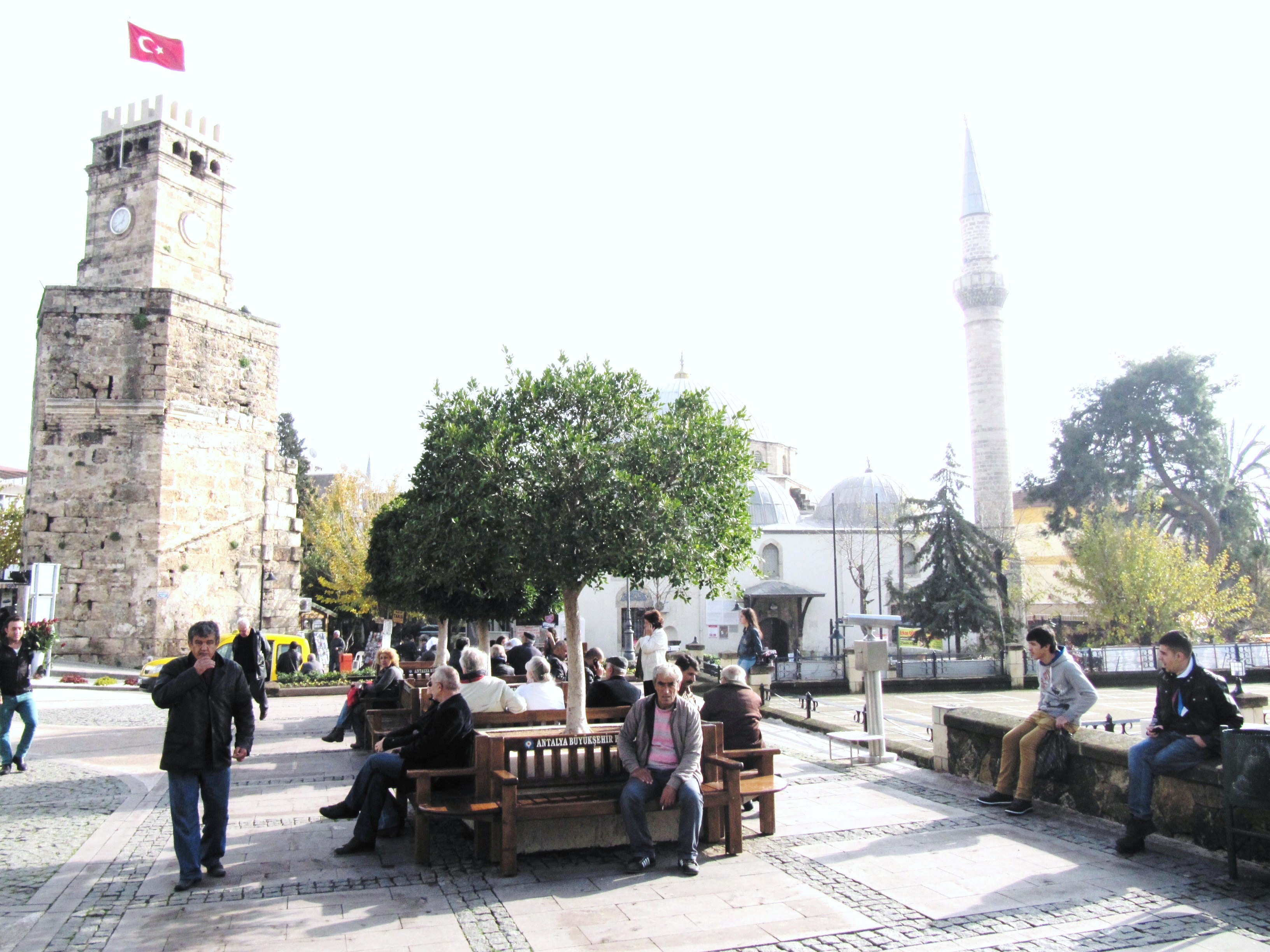
I sit near the clock tower, a nineteenth century stone citadel of the Ottoman times. The Kaleici district, replete with old houses and narrow lanes, slopes down to meet the Mediterranean shores. As if in an effort to balance on the slope the rooftops and terraces point out at awkward angles. Folks sit around peacefully, hardly a word being spoken.

IMG_1502

The stillness gets broken by the tingling laughter of two girls as they come running to the chestnut selling vendor. School over, they speak excitedly about the beautiful weather and their plans to go down to the harbourside. Young open minds, soaking in the sights and sounds, passionately open to possibilities. Scarcely a head turns however to watch the girls excitedly canter down the narrow lane. What stops these good folks from appreciating the beauty around them?

I wonder what is it that stops the gardeners, the souvenir shop owners and those folks near the clock tower from seeing and appreciating the “here” and “now” as I could. Could it be that as a visitor, the newness of the place opens me to receive all that is around me? And could it be that for all these other folks, the familiarity and routineness of their daily lives makes them go on autopilot? A mode allowing them to escape a boring present. As they choose to enjoy the thrill ride negotiating between a “what I could have been” past and “how I would show up” future.

And so as I walk away, I muse on how we could bring that curious visitor mindset in our day to day lives, free of clutter, mindful of the present, open to possibilities. What we  could do to shift ourselves  to live our passion in the moment, make choices free of fear, guilt or societal expectations.

“Don’t wait for the perfect moment. Take the moment and make it perfect.” – Unknown

 In learning…………..                                                                                  Shakti Ghosal

The Other Side of Sadness


Don’t cry when the sun is gone, because the tears won’t let you see the stars. 
Violata Parra, Chilean folklorist, early 20th century.

Met Death last month.

I asked, “What brings you here?”
He said, “My job.”
“But don’t you think it’s a bit too early.”
“Well maybe, but who cares.”
“I do.”
“Who are you?”
“A wife, a mother.”
He curled his lip and sneered, “Is that all you are?”
“Uh…. Yes, that’s all I want to be.”
“I’ll give you a new identity.”
“And what is that?”
“…. A rebel.”
“But who do I rebel against? You?”
“Yes.”
“But I’ll never win.”
“Trust me, you’ll never lose either.”

And he left, his job done.

Facebook entry of a young wife recently widowed.

OLYMPUS DIGITAL CAMERA

A close relative died young last month. He lost the war to leukemia, leaving behind a young wife and a five year old daughter. The daughter still goes around asking and searching for her Dad. She believes he has gone away on a long journey.

Having watched him through birth, childhood and adulthood, I find my own emotions swing between a connection severing anguish and a “out of mind, out of sight” normalcy. Sometimes when I see myself normalising thus, guilt returns in waves. Am I a betrayer, is my self-centeredness making me forget a loved one? Or could it be that as I reach out to others in my normalcy, I initiate my inner healing?

I read the Facebook entry again. Is there some coping mechanism here too? Is it a way to confront and face the very intimate and intense feelings the widow holds? Could this creative piece of writing be a vent through which she in fact is acknowledging Death?

My thoughts shift to that path breaking book, The Other Side of Sadness authored by George A. Bonanno. Dr. Bonanno refutes the widely held belief that a surviving family member needs to necessarily go through several stages of Denial, Anger, Bargaining and Hurt before he or she can reach the healing stage of Acceptance. The good doctor contends that the person in grief would in fact find a surprising inner storehouse of resiliency that would take him or her to the shores of Normalcy. He further maintains that “the natural sadness that actually follows a death is not a thick soup of tears and depression but a fluctuation that is nothing short of spectacular, the prevalence of joy during these times can in fact be striking.”

4340270_f520

As I muse on Dr. Bonanno’s thesis, I begin to see that while there can be no common pathway through grief nor a pre-determined structure for the grieving process, we may indeed share common responses. The Facebook entry for the widow and my periods of normalcy could just be the catharsis the doctor has written about. With this thought my emotional pendulum swings again. I understand the need to acknowledge my present emotion of normalcy just as I feel the urge to shout out to my widowed relative.

“Feel what you feel without embarrassment. It’s okay to be angry, to yell, to cry. It’s equally okay to laugh, to find your joy and let go when you are ready.”
In learning………..                                                                            Shakti Ghosal

Acknowledgement: The Other Side of Sadness: What the new Science of Bereavement tells us about Life after Loss by George A. Bonanno Ph.D, September 2009.

Connecticut, Delhi and HO’OPONONO……..


What we feel and think and are is to a great extent determined by the state of our ductless glands and viscera. ~Aldous Huxley, English author, 20th century

Over the last month the media streams have remained clogged with two events. First,the horrific massacre of school children and teachers in Connecticut, USA. Second, the barbaric rape and “murder” of an Indian medical student in Delhi.

ConnecticutSchoolShooting110059--525x270

delhi_gangrape_protest_new_pti

As part of an increasingly aware and connected society, we remain quick to rationalise into the underlying reasons and ascribe blame. The flickering screens become full with debates and sermons as questions and suggestions fly thick and fast.

Why does the U.S. Government not take up with the National Rifle Association and amend the gun ownership laws?
• What makes the Indian police so insensitive and ill equipped to take care of women safety on the roads?
• If, as it now emerges, gunman Adam Lanza displayed worrisome and awkward behaviour, why did his mother not do something about it?
• What was the trigger for the gang of rapists to have conducted themselves in such a brutal and violent manner?

…and so on, the list goes on and on.

Delhi rape

We may sit in judgement and hold holier than thou perceptions. As we take time out to show our solidarity with the cause and impatience and distrust with the ‘powers that be’. Or we may choose to get involved with our hearts, indulge in emotional outpourings and feel we are doing our bit. Either way we do not take responsibility for what happened.

But could it be that as we come across such evil and darkness in the world, there lies a seed of responsibility within us? When we accept the status quo of injustice on the plea that this is how it has been? When we prefer to remain an onlooker to a crime perpetrated on someone else? When we spend our energy to protect our own cocoon only? When we expect the Government and the police to follow standards of morality and behaviour higher than our own?

My thoughts flit to Joe Vitale and his book “Zero Limits”. About therapist Dr.Hew Len and his handling of a ward of criminally insane patients. Dr. Len never saw patients but only reviewed their files. As he looked at the files, he would work on himself by repeating the following universal mantras.
• I am sorry.
• Please forgive me.
• I thank you
• I love you.

And as he worked and improved himself, the patients started to improve and heal!

Dr. Hew Len was following the concept of HO’OPONONO, a Hawaiian word dealing with “extreme responsibility” which requires the person to take total responsibility of his life including all people and situations coming into it. A ‘tough to swallow’ and bizarre concept on first sight!

hooponopono-hula-rye-optimiced

But as I muse on the need to take responsibility of anything that shows up in our life, absolutely everything, I start seeing a continuum. Between extreme responsibility and that of reconciliation and forgiveness. I also come face to face with my Karma in that I must be willing to experience myself what I have allowed to happen to others, either by my inaction or inability.

And today in this new millennium, as we sit on the explosive powder keg of increasing disparity, isolation of the ‘left behinds’ in fast changing societies and values and technology driven, rapid creation of awareness and beliefs, could HO’OPONONO show us the way forward?

In learning……… Shakti Ghosal

Acknowledgement: Zero Limits: The Secret Hawaiian System for Wealth, Health, Peace, and More by Joe Vitale & Ihaleakala Hew Len, Dec. 2008.

Where do we go from here?


Wonder if we look, inside our hearts, exactly what
We’d find
Or Maybe we could take a lot of pain away
Yeah
Or maybe we could heal the world today
Yeah
Or maybe, you know, something, I don’t, if you do then

Tell me    
Where do we go from here

                                                   Chris Rene, American Singer

A few weeks back I had watched the limited coverage of the national convention of the Chinese Communist Party. Rows and rows of party leaders listening and taking notes as a new leader Mr. Xi Jinping took over China’s leadership. With China’s flagging growth, Mr. Jinping is widely expected to provide his vision of the Chinese economic and living standards growth going forward.

The current UPA Government in India seems to be on its last legs and is frantically trying to reverse the ominous dip in GDP growth rates through desperate reform measures. While the jury is still out on the short-term impact of these “big ticket” reforms, it is obvious that no coalition or party can come back to power without a proven record of economic and consumption growth.

This story repeats in country after country in the developing world. Per capita growth, higher standards of living, endless availability of goods and services seems to be the universal mantra. The flickering images on the LCD panels, the endless sitcoms on myriad channels instigate us to go for that I phone 5. Or a fine dining experience. Or hanker for that newly launched car or luxury home. Our ability to consume, to pander to whims and fancies is seen as our success and growth.

But what happens when the two and a half billion folks from China and India come onto the field and want to play ball? What happens when the Chinese and Indians turn around to ask, “Hey you guys in the west, you followed your own American dream for more than a century. Now it’s our turn.”

Thomas Friedman did allude to this in his best seller ‘The World is Flat” but  said it in the context of Globalisation and a world view of a level playing field allowing everyone  an equal opportunity. Methinks however that the far more critical issue is the emerging stress on sustainability. The strain on our planet to continue to produce in pace with the exponentially rising consumption. To put it bluntly, mankind is well on course to strip this planet dry. Do see my earlier post We need a second planet by 2030” in which consequences of mindless growth and consumption have been discussed.

So where do we go from here?

We need a shift in perspective and mindset. The twentieth century dream of conspicuous consumption cannot remain a role model any longer. This needs to be revisited, reviewed, redefined. We need to be able to answer the following.

“What really is personal prosperity, what constitutes our success?”

“Does success necessarily have to come from ownership and self-aggrandizement?”

“Could our hunger for access to better products and services be satiated, not necessarily by owning, but by sharing?”

This of course is easier said than done. We remain conditioned to acquire and own for our psychological security and comfort. This harks back to days of yore when scarcity and competing for scarce resources was the norm. This mindset continues even though access and availability is on a different plane. In our mind, Owning signifies upward mobility and prestige, of having arrived in a brave new world of capitalism. While Sharing is looked down upon as the vestige of a failed experiment called socialism.

Clearly a tectonic shift in perspective is called for. In a different context in “Age of Discontinuity and the Chinese Shi”, I had brought up the aspect of the Shi mindset which eschews the heaviness of resource ownership. Could this be a perspective that may be needed today?

I think of this and wonder who could play a catalysing role. Political leaders? Opinion makers? Media? What could be the trigger for them to buy-in and play such a role?

The good news is that technology and engineering acumen exists to achieve the above shift. Through better public transportation, better residential spaces with higher density, superior services delivery and energy efficiency, better use of public spaces, better reuse of stuff which we tend to throw away etc.The other great opportunity is of more and more “have not” folks gaining access to products and services which till now have been out of their reach.

Could this be the moment when the best tenets of Capitalism and Socialism coalesce and synergise to open up the path to sustainability?

In Learning………                                        Shakti Ghosal

 Acknowledgement: The World is flat A brief history of the twenty-first century: Thomas Friedman, 2005.

Success…… Vision or Delusion?


“When your life flashes before your eyes, make sure you’ve got plenty to watch, be it vision or delusion.”

Anonymous


 Success is such an empowering word. We think of it and we think of…. Happiness….Self esteem….Superiority…..  facets which enthuse, inspire, pump the adrenalin. Success seems to be   what we live for. What our parents and teachers always exhorted us to do. Scholastically, materialistically, competitively. Success brings forth visions of wealth, power, intelligence and with these the ability to control the outcome of events. All those external trappings. What the world judges us by.

But as I think of success, I also see within it the other paradigm. Of increased self awareness and self development. Of a positive intention and an alignment with a higher purpose. Of that mysterious inner process which ensures personal integrity and a commitment to values. The aspect of success as exemplified by Mahatma Gandhi when he said, “I must first be the change that I want to see in the world.” Success thus gets linked, not to the external world, but to an inner compass, an inside out initiative.

Which brings me to Vision and Delusion, those two aspects of our mind. We are conditioned to see these as the Good and the Bad on the same spectrum. We see great positivity in Vision but perceive delusion as something to be shed. So as vision becomes that which drives, delusion is that which keeps us lazy. Vision has logic and reasoning supporting it while delusion is immersed in randomness. If we go by this perception, we tend to associate Success with vision and not with delusion. But is this association valid?

 My daughter has this linkage to success. She needs to wear an old watch with a jaded pink band whenever she is writing examinations. She remains convinced that wearing this watch has something to do with her succeeding. The thinking is, “I wore this watch. I succeeded. My success is because I wore the watch.” The watch deludes her into self confidence and purpose; its absence leads to nervousness and lack of focus.

A work colleague of mine has this high belief in his own capability.  Every time he jumps into a fresh project, he deludes himself to over-estimate his own contribution and gives no credence to the positive role of other people or circumstances. So while he gets accoladed as an achiever, I notice him getting increasingly delusional from the success. Do I see shades of Hitler and Saddam Hussein who, in their time, were similarly deluded about their own great power and ability to control events?

Coming to my own self, I can see the several beliefs that have contributed to what success I have seen. Beliefs pertaining to people, situations and work. The other day, when a business associate was proposing a new process, I noticed an instinctive resistance building up within me. I heard myself countering that our prevailing processes brought success in the past so why change. Later when I thought about my negative reaction, I wondered if I had got trapped in my own success delusion, refusing to move with change.

The above provide glimpses of how success gets linked to the outside. But what about success that comes from within?

When we look inwards for that inner success, I believe this requires a balance between mental, emotional and spiritual dimensions. Success here gets closely aligned to our core values. It is this alignment which allows a clear vision of the future. Of innovative action and a sense of direction. Mahatma Gandhi had such a vision when he undertook the novel path of non-violence to gain India its independence from its colonial masters. Decades later, this also became the power of Martin Luther King’s “I have a dream” speech.

So I come back to the question, “What does success mean to us, a vision or a delusion?”

I believe true success would need to embody both external and inner facets of our existence. Which would mean that both delusion and vision would play a role.  If delusion panders to our emotions, makes us feel optimistic and helps us to aim higher, vision allows us to dream the future and inspires action with imagination and insight. So as our success remains a product of both sides of the Vision- Delusion polarity, the kind of success each one of us achieves depends on the mix of vision and delusion we have created within ourselves.

Could this be the reason for the thin line we often notice between a visionary and a delusionary? Could this have been the reason for the visionary brilliance of Nobel laureate John Nash as he grappled with his schizophrenic delusions, so eloquently portrayed in the film Beautiful Mind?

My Bad is stronger than my Good.


“I’m an accumulation of every single thing I’ve done, good and bad.”

                                           David Millar, Scottish Road racing cyclist champion


Morals preach at me, “Love thy neighbour…… Do Good unto others…” I stand brainwashed to believe that Paradise beckons as I align my thoughts and actions to the goodness of my values.

Millennia of Religion and philosophy have depicted human life as that eternal conflict between the Good and Bad. The Goodness of Creation and Harmony ranged against the Badness of Destruction and Chaos. As I look down from the metaphysical level, I recall ‘Good’ and ‘Bad’ amongst the earliest words I learnt as a child. All my fairy tales and comic books dealt with the likes of Krishna vs. Kanksh, Superman vs. Lex Lothar et al. I go through life and see my ‘Bad ‘instincts of jealousy and fear battle against the ‘Good’ strivings of my intentions and fulfillment.

I surf the news channels and notice how much thoroughly ‘Bad’ and negative information is investigated and followed through as compared to ‘Good’ and positive developments. Almost as if we are waiting to imbibe and carry away all the bad impressions and stereotypes. Could it be that we get attracted and these are quicker to form within us?

My colleague wins a lottery and feels elated. The euphoria however scarcely lasts for a couple of days and I can sense that the feel good level quickly returns to what it had been before the lottery win. The same person however gets into a prolonged bout of unhappiness and blame game when he incurs a loss in the stock market, a fraction of what he had won.

I remain witness to how a loving relationship between my friend and his spouse so easily degenerates into a break-up from a single anger-driven destructive action. Several positive overtures and communications fail to heal the rupture.

As I drive on the crowded roads, I become enraged from a single case of rash driving. As I leave the scene fuming, I scarcely notice the multitude of folks who give way and allow me to pass. My emotions can scarcely be quelled, be it by such good behaviour or kindness. The ‘bad’ memory remains vivid and I continue to rant about it on the dinner table, hours later.

As I go through life, do I see a Bad Good asymmetry? A negative bias towards Bad. Be it in the reports in media and in everyday events as above…

I look inwards and sense that I too am more motivated to avoid bad self perceptions than to pursue good ones. I muse and wonder why this is so. Could this be because ‘Bad’ signals that I need to change? And does my ‘Bad’ intuitively push me to adapt and change myself in line with a situation or environment? So does ‘Bad’ condition me to become more flexible and adaptive to an ever-changing world? Is this why my Bad is stronger and thus more relevant than my Good?

What is out of harmony and how do I restore it?


But what is happiness except the simple harmony between a man and the life he leads?

                                                    Albert Camus, French philosopher, early 20th century
 

Harmony. The word itself brings forth visions that soothe and caress. Of wafting melodies. Of the gurgling of a mountain spring. Of the swaying of flowers in the wind. Of a synchronicity of notes and music.

What is my harmony? It is intrinsic to who I am. What I feel, what I think, what I say and what I do. It is a ballet of all these aspects of mine. When I am in harmony, these pieces fit and the alignment between my inner and outer self comes into being.

As I reflect on ‘What is out of harmony and how do I restore it?’ I realise this holds the power to set the ultimate goal for my inner self. As I try to align my inner self with my outer behaviour into a harmonic resonance.

Am I in harmony? I shine the light of this question inwards and seek. Where is the disconnect in the way I feel, think, speak or behave? Yes, at times I do feel out of sorts- frustrated or confused. At other times I feel upset or overwhelmed. I see this happening mostly in my relationships- at work, at home or amongst friends. I see the disharmony between what I feel and think and the way I am conditioned to act and speak. These are clearly not on the same page. I notice that what comes in the way is my ego. That ego which is always putting up a façade and trying to project a different image of “ME- SELF” than what I really am inside.

But my ego has its usefulness. It creates a resistance, sometimes aggressive, sometimes passive, sometimes positive and at other times negative to any perceived attack on my self. And I do find this resistance gives me stability.  Stability about “Who I am”, “Who I want to be.” And at other times “Who I do not want to be.” As I further think of this, I realise that I am also offering some kind of stability to the attacker as he tries to push, pull or grab some aspect of me. The attacker expects and needs my resistance for his attack to work. I seek to be part of the conflict and this makes me feel emotionally powerful. I justify to myself that I need to maintain my ego because otherwise the attacker would see the weak real me.

I time travel into the nineties. Fresh into a new job, I was having an awful time with this guy from the corporate office. I felt powerless in front of his overbearing and bossy attitude. An attitude which made me feel like a scapegoat every time we interacted. Then one day the volcano burst- an outburst from the usual reticent me. And it was too late to pick up the pieces. Years later, I came to realise that the corporate guy had similar qualities to a school teacher in my childhood. This teacher used to bruise my confidence (ego) by always judging and criticising me in a discriminatory manner. My reaction in the workplace came from the perception that my ego faced a similar hurtful situation. I had played the script of offering resistance to my attacker to perfection.

But does my past justify how I need to react in the future? Or is this my excuse to maintain disharmony in my life?

  • What thoughts and beliefs do I engage in that create disharmony in my life?
  • Does disharmony in me cause conflict with others at  work, at home or at play?
  • Do I tend to blame others for my disharmony?
  • What if I let my ego down? What could happen?
  • What if the other guy sees the real me?

As I ask myself these questions, I start gaining clarity. I see them as issues to be dealt with rather than excuses.

I realise that to restore my harmony, I would need to offer no resistance, or as little as possible, to attacks on my ego. This is initially a frightening prospect with my deep rooted fear of getting hurt taking control over me. But I delve deeper…..

When the other person decides to attack me / my ego, he is breaking the harmony of our joint universe.  If I choose to offer no resistance, I move to a place of harmony as I leave my attacker out of harmony in his relationship with our universe. I believe that as he is left alone without any resistance from me to give him stability, nature would restore harmony in him. Without my ego for him to attack, he would have to stop.

I see now that harmony empowers the highest level of Self Management in me. As it supports me to act from a place of integrity; a place where there is no fakeness or self-deception. Harmony allows me to be at peace within my own skin. But I also notice that to achieve harmony, I need to begin with my values. What’s really, really important to me?

Ultimately, to answer the question, “What is out of harmony and how do I restore it?” I need to first answer, “Am I living my values?”

In learning……………..                                                                           Shakti Ghosal

The Oxymoron of our times


From the heart of all matter
Comes the anguished cry
Wake, wake, great Siva,
Our body grows weary
Of its law-fixed path,
Give us new form
Sing our destruction,
That we gain new life…

                                                                                             Rabindranath Tagore

               (Translated from the Bengali original)

The media remains flush with dire tidings. About persisitent US unemployment. About the Euro zone crisis. About faltering growths in the BRIC economies. On screen debates and coffee table discussions waft around how to get back to the old ways of Capitalism fuelled growth.

We remain witness to cycles. The boom and bust. The shortening of product and business cycles. The rapid changes of technology and society. As I muse, I visualise the ebb and flow of human endeavour. Of our  knowledge and  creativity. Of our  follies and emotions. I see the movement, at once intuitive and playful, of the flowing curves and trends. I see economic and social aspirations as energy, unfolding and folding within itself. I see oscillations between  active and dormant states. I start to see Creation and Destruction….

I think of Creative Destruction, a concept by Joseph Schumpeter that has often resonated with me. Schumpeter saw human advance as a “perennial gale of creative destruction”. He likened it to the Darwinian natural selection to secure the “survival of the fittest”. What Schumpeter envisioned was the economy and society constantly regenerating from within by shedding old and failing businesses and social structures as it reallocates resources to newer, more productive ones.

I do see the path that Creative Destruction has taken in times gone by. As steam powered factories and looms closed down to give way to those with electric power. As did the horse drawn carriage give way to the automobile on the roads. And more recently, how the digital revolution squeezed out the traditional photography and music industries.

A machine perennially ON, creating that which is ‘new’ as it destroys what is ‘old.’ Like Lord Siva’s Rudra Tandava ( Dance of destruction) in Hindu mythology. Like the proverbial phoenix, rising from the ashes of that which no longer serves. And as it rises, it creates new Capital, new Thought, new Man. I see unstoppable movement. To stop would mean stopping change, evolution, progress. To stop would mean the inevitable decline.

But as I muse, I start seeing how Creative Destruction is failing today, just as it succeeded in centuries gone past.

As the old “debris” is destroyed, the ground needs to be cleared for the new to arise in a sweeping upward motion. This of course presupposes that both creation and destruction take place within the same society, winners and losers standing close and people gaining in other ways as they lose in some.

The grandeur of those great American auto towns in Detroit and the tens of thousands who worked in and around have surely gone with the wind, not to return. But as these jobs got destroyed in that area, many other value added and differentiated opportunities did arise, if not within the state, at least within the US itself. So Creative Destruction did work…….but this was last century.

Cut forward to our era of Globalisation and we see the Information and Technology outsourcing leading to near elimination of that industry in many parts of the world. Jobs destroyed in fact get created somewhere half way round the world, never to return. And with this we have been witness to the near destruction of the very communities from which they emanated

Whole countries and regions are becoming long term losers through destruction versus others becoming winners through creation. In this globalised age, the integrity of the oxymoron ‘Creative Destruction’ is being torn apart, way beyond what Schumpeter could have visualised.

And so I come back to the aspect of how the current global crisis looks through the lens of Creative Destruction. Are governments the world over in fact doing all the wrong things through politics? As they bail out top-heavy banks. As they subsidise inefficient businesses. As they prevent natural job losses. By doing these, has the world willy nilly shortchanged creation itself? And sowed the seeds of Capitalism’s own destruction?

In learning…..

Acknowledgement: Prophet of Innovation: Joseph Schumpeter and Creative Destruction    by Thomas K. McCraw, 2007.