
Ma is Coming
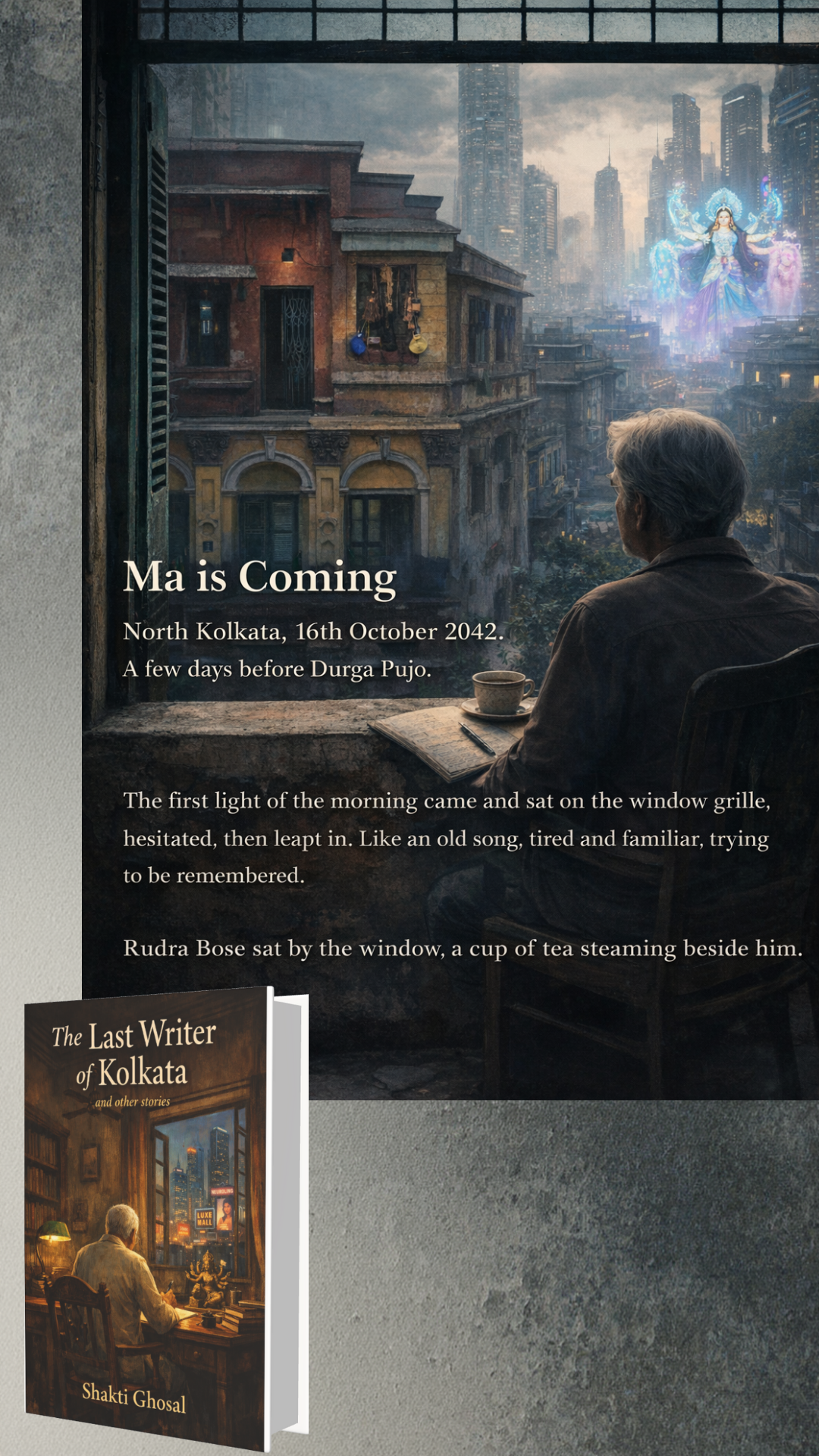
North Kolkata, 16th October 2042. A few days before Durga Pujo.
The first light of the morning came and sat on the window grille, hesitated, then leapt in. Like an old song, tired and familiar, trying to be remembered.
Rudra Bose sat by the window, a cup of tea steaming beside him. The cup was chipped, the saucer mismatched, the tea, a stubborn blend of milk, tea dust, and habit. Outside, the lane yawned into a waking slumber, its air thick with last night’s incense, stale samosa oil, and the ever-present, low-grade air pollution.
“Ma is coming,” he had heard someone shout on the street last evening.
She was, of course. Ma came every year. Only nowadays she arrived on a cloud of holograms, flanked by LED lions and thunderous drumbeats pouring through subwoofers. The city had found new ways to worship, more theatrical, more saleable.
Rudra shifted in his chair, his bones protesting like rusted hinges. In his lap, his journal lay open, an old pen resting across the page like a reluctant weapon. He hadn’t written yet. He was waiting, unsure of something. Was he waiting for a thought, a familiar smell, or the comfort of a Kolkata that seemed to slip further away each year?
Durga Pujo. Once, it had been magic.
As a boy, he had spent mornings watching Mashis, aunts and Boudis, sisters-in-law threading marigolds for the Pandal and Thakurer Bedi. In the afternoons it would be the decorators stringing up festoon lights of different colours all along the lane. Nights were all about rehearsing lines for the Natok, stage play they would perform on Nabami.
He had once accompanied his mother, walking barefoot to the river to collect Gangajal, the sacred waters of Ganga. He remembered his father reading out the Chandipath under a suffused light. Long buried memories of his parents surfaced and meandered.
“Rudra, you were born with too much silence,” his mother had once said, as she used a hand fan during load shedding. “You are eleven. Most boys your age chase dragonflies. You chase metaphors.”
“I like listening,” he had replied, “Words sound different when you don’t rush to answer them.”
His mother had turned towards him, “Then promise me, don’t let the noise teach you to forget what silence feels like.”
North Kolkata is the soul of the city, where the past isn’t just remembered—it’s lived. Often called “Babu Kolkata,” this region is a labyrinth of narrow lanes, grand 19th-century mansions, and centuries-old traditions that remain untouched by modernity. Historically, the British referred to the area inhabited by the native Bengali elite as the “Black Town,” in contrast to the “White Town” of Central Kolkata where the British lived.
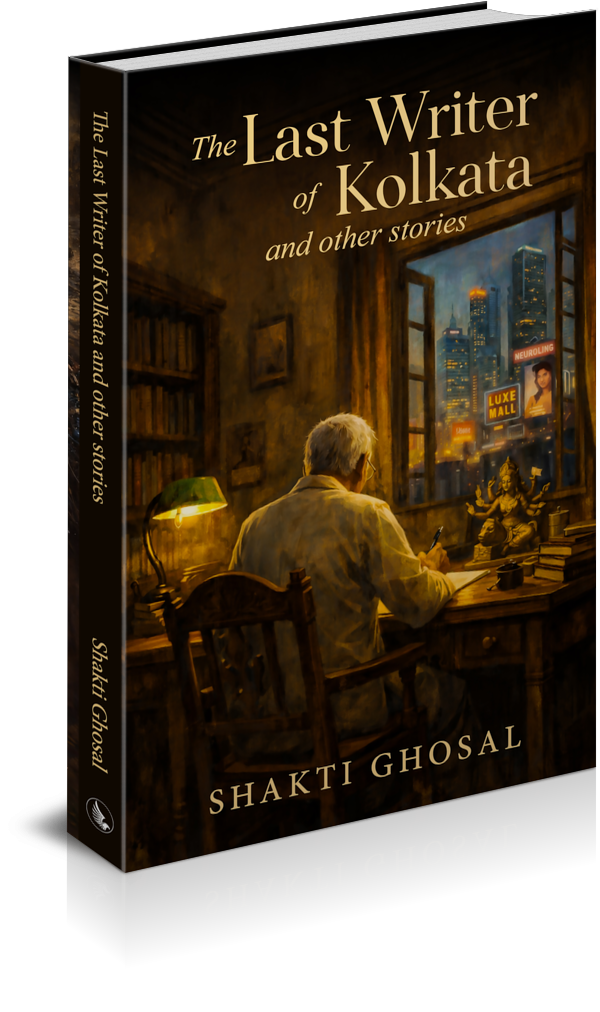
North Kolkata features in the ‘Last writer of Kolkata’, part of my forthcoming book of the same name. Should you wish to receive exclusive previews and the chance of winning a free copy of the book, do write to me @ author.esgee@gmail.com
Shakti Ghosal







 A New Beginning