


Abstract
Empires are rarely undone by external invasion; they corrode from within. The American project, like Rome, Britain, and Persia before it, now faces the timeless paradox of imperial overreach: wealth without equity, dominance without renewal. This article situates America’s trajectory within the historical cycle of imperial rise and decline, drawing upon both philosophical reflection and historical precedent. The central question is whether the United States will recognize decline as an opportunity for renewal, or whether, blinded by illusions of permanence, it will follow the path of its predecessors into twilight.
**
Introduction: The Cycles of Empire
Over the last few months, especially as the American tariff challenge for the rest of the world heated up, two distinct narratives have emerged in the public space. The first dwells on the unfairness—indeed the shortsightedness—of U.S. tariff policy and how it is being differentially applied to target certain countries while sparing others. The second narrative takes a step back and enters the philosophical domain: What makes America act the way it does? The symptoms, they argue, are those of an empire in decline.

In this piece I attempt to make sense of the unfolding moment through a historical lens of past empires. From the Achaemenid Persians to the British Raj, empires rose not only on military might but on the promise of order and prosperity. Yet, as Gibbon observed in his monumental study of Rome, empires collapse when external expansion conceals internal fragility. ¹

Toynbee later refined this insight, suggesting that civilizations do not perish from conquest but from their failure to respond creatively to crises. ² America, with its wealth concentrated in elites and its politics increasingly polarized, today finds itself at a similar point of reckoning.
**
The Illusion of Permanence
Decline is often hastened by the presumption of permanence. The British Empire, enriched by its Indian possessions, clung to naval supremacy long after its economic foundations had weakened. The Qing dynasty, flush with silver inflows, remained blind to the destabilizing flood of opium that hollowed out its society. The Ottomans celebrated elaborate military ceremony even as their agrarian base stagnated. In each case, the empire was undone less by external enemies than by its inability to adapt.³

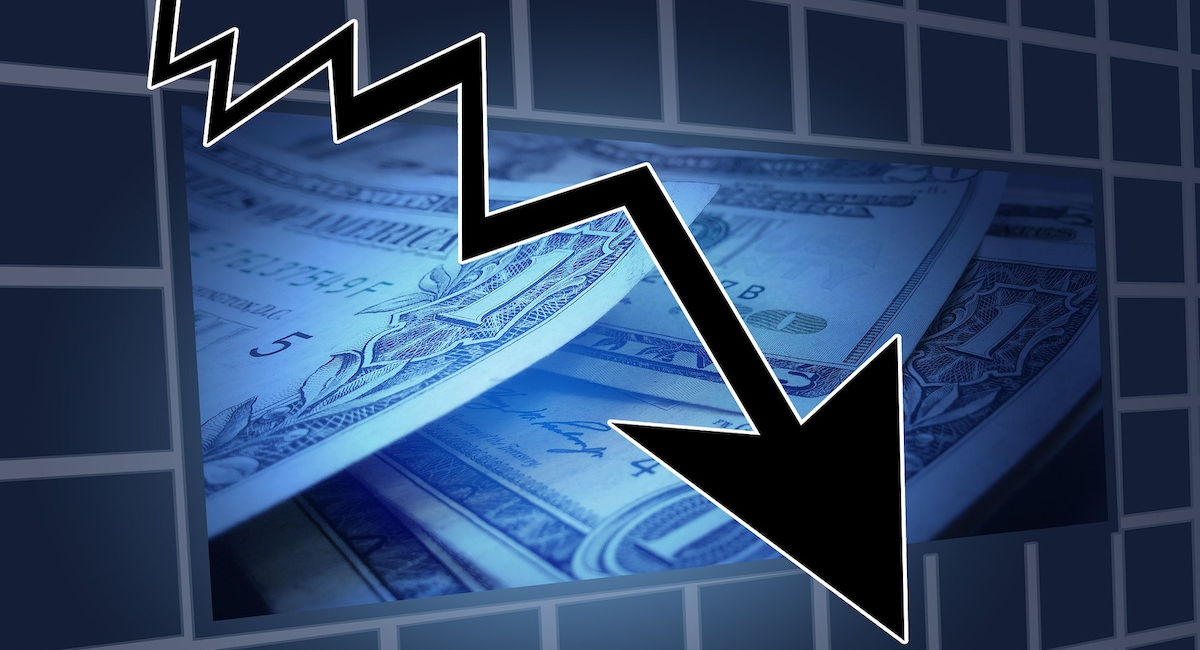
The United States mirrors these patterns. Its massive trade deficits, spiraling national debt, and persistent militarism signal not strength but imbalance. Each dollar allocated to foreign wars secures corporate gain more than civic renewal. Bridges crumble, schools falter, healthcare divides communities, and social trust erodes. Yet the spectacle of global dominance continues—an aircraft carrier here, a sanctions regime there—masking fragility at home. This, too, is the illusion of permanence.
Rome thought itself eternal, describing itself as the urbs aeterna, the eternal city. Britain assumed that the sun would never set on its empire. America today speaks of “exceptionalism” with the same conviction, believing its dominance to be destiny rather than circumstance. The danger lies in mistaking temporary advantage for permanent security.
**
The Anatomy of Overreach
The trajectory of great powers often follows a recognizable arc: expansion, consolidation, overreach, and decline. Paul Kennedy, in The Rise and Fall of the Great Powers, describes how military commitments abroad eventually outstrip economic capacity at home.³ For Rome, it was the expense of garrisoning distant frontiers. For Spain, the drain of endless wars in Europe. For Britain, the unsustainable costs of two world wars.
For the United States, overreach is visible in both economic and military forms. The U.S. spends more on defence than the next ten countries combined, maintaining hundreds of bases across the globe. Meanwhile, its domestic economy is marked by widening inequality, stagnant wages, and crumbling infrastructure. The paradox is stark: a nation capable of projecting power thousands of miles away struggles to repair its own highways or ensure equitable healthcare.

Tariff wars, trade imbalances, and fiscal deficits echo earlier imperial mistakes. Protectionist policies may secure short-term bargaining chips, but they also reveal a deeper anxiety: the fear that economic primacy is slipping away. History suggests that such reactive measures rarely restore strength; they merely postpone the reckoning.
**
Philosophy of Decline and Renewal
At its core, the phenomenon of empire offers a philosophical lesson in impermanence. Heraclitus, writing in the sixth century BCE, reminded us that “all things flow,” that permanence is an illusion.⁴ To mistake hegemony for destiny is to deny this truth.
Toynbee argued that the decisive moment for civilizations lies in their response to challenge: renewal through creativity or collapse through inertia.² Renewal requires humility, the willingness to recognize that decline is not failure but an opportunity for rebalance. For America, such renewal would mean abandoning the imperial reflex and returning to the foundations of civic life—justice, education, community, and sustainability.
True security lies not in endless war or technological spectacle but in balance: between wealth and justice, expansion and reflection, ambition and humility. Without such rebalancing, the American century risks being remembered as another brilliant but fleeting flame in history’s long night.
**
Lessons from History
The cycles of history caution against complacency. Rome endured for centuries, but its collapse was sudden when it came. The Qing dynasty appeared invulnerable until it unravelled within a few decades. The Soviet Union, projecting strength one year, disintegrated the next. Empires rarely decline in a linear, predictable fashion; instead, they erode silently until an external shock exposes their fragility.
For the United States, that shock could come from multiple directions: financial crisis, climate catastrophe, technological disruption, or internal political fracture. Already, polarization corrodes trust in institutions, while economic inequality breeds resentment. These fissures, if unaddressed, could accelerate decline.
Yet history also shows that renewal is possible. Japan, devastated by war, reinvented itself as an economic powerhouse. Post-imperial Britain, though diminished, adapted into a service economy and retained cultural influence. Even Rome, in its Byzantine continuation, transformed decline into resilience. America, too, could reimagine itself—not as empire, but as a republic recommitted to equity and balance.
**
Conclusion
The setting sun is not fate; it is metaphor. Empires end not because history commands it but because they fail to heed its rhythms. Whether America confronts its inner distortions or clings to the illusion of permanence will decide whether twilight yields dawn—or darkness.
The challenge, then, is not to deny decline but to interpret it rightly. If decline is seen as failure, America will cling to militarism, exceptionalism, and spectacle until resources are exhausted. But if decline is embraced as a chance for renewal, the American project may yet rediscover vitality—proving that twilight need not always lead to night. Sometimes, it can be the hour before a new dawn.
**
Notes
- Gibbon, Edward. The History of the Decline and Fall of the Roman Empire (1776–1789).
- Toynbee, Arnold. A Study of History. Oxford University Press, 1934–1961.
- Kennedy, Paul. The Rise and Fall of the Great Powers. Random House, 1987.
- Heraclitus. Fragments. c. 500 BCE.
In musing…….. Shakti Ghosal




















 A New Beginning