Twilight or Dawn? America and the Paradox of Empire


Abstract

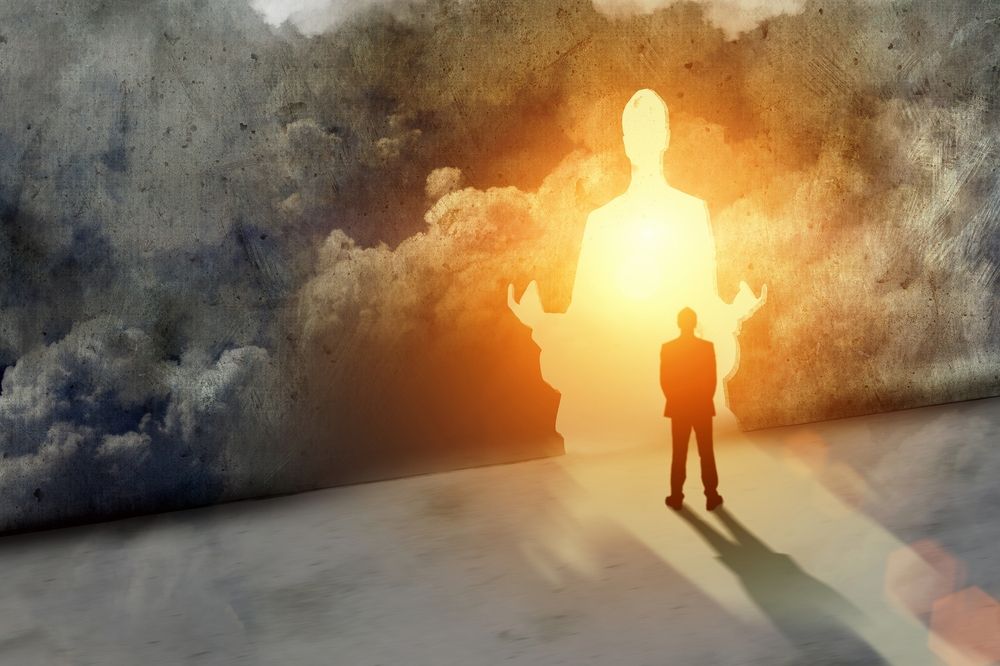
Empires are rarely undone by external invasion; they corrode from within. The American project, like Rome, Britain, and Persia before it, now faces the timeless paradox of imperial overreach: wealth without equity, dominance without renewal. This article situates America’s trajectory within the historical cycle of imperial rise and decline, drawing upon both philosophical reflection and historical precedent. The central question is whether the United States will recognize decline as an opportunity for renewal, or whether, blinded by illusions of permanence, it will follow the path of its predecessors into twilight.

**

Introduction: The Cycles of Empire

Over the last few months, especially as the American tariff challenge for the rest of the world heated up, two distinct narratives have emerged in the public space. The first dwells on the unfairness—indeed the shortsightedness—of U.S. tariff policy and how it is being differentially applied to target certain countries while sparing others. The second narrative takes a step back and enters the philosophical domain: What makes America act the way it does? The symptoms, they argue, are those of an empire in decline.

In this piece I attempt to make sense of the unfolding moment through a historical lens of past empires. From the Achaemenid Persians to the British Raj, empires rose not only on military might but on the promise of order and prosperity. Yet, as Gibbon observed in his monumental study of Rome, empires collapse when external expansion conceals internal fragility. ¹

Toynbee later refined this insight, suggesting that civilizations do not perish from conquest but from their failure to respond creatively to crises. ² America, with its wealth concentrated in elites and its politics increasingly polarized, today finds itself at a similar point of reckoning.

**

The Illusion of Permanence

Decline is often hastened by the presumption of permanence. The British Empire, enriched by its Indian possessions, clung to naval supremacy long after its economic foundations had weakened. The Qing dynasty, flush with silver inflows, remained blind to the destabilizing flood of opium that hollowed out its society. The Ottomans celebrated elaborate military ceremony even as their agrarian base stagnated. In each case, the empire was undone less by external enemies than by its inability to adapt.³

The United States mirrors these patterns. Its massive trade deficits, spiraling national debt, and persistent militarism signal not strength but imbalance. Each dollar allocated to foreign wars secures corporate gain more than civic renewal. Bridges crumble, schools falter, healthcare divides communities, and social trust erodes. Yet the spectacle of global dominance continues—an aircraft carrier here, a sanctions regime there—masking fragility at home. This, too, is the illusion of permanence.

Rome thought itself eternal, describing itself as the urbs aeterna, the eternal city. Britain assumed that the sun would never set on its empire. America today speaks of “exceptionalism” with the same conviction, believing its dominance to be destiny rather than circumstance. The danger lies in mistaking temporary advantage for permanent security.

**

The Anatomy of Overreach

The trajectory of great powers often follows a recognizable arc: expansion, consolidation, overreach, and decline. Paul Kennedy, in The Rise and Fall of the Great Powers, describes how military commitments abroad eventually outstrip economic capacity at home.³ For Rome, it was the expense of garrisoning distant frontiers. For Spain, the drain of endless wars in Europe. For Britain, the unsustainable costs of two world wars.

For the United States, overreach is visible in both economic and military forms. The U.S. spends more on defence than the next ten countries combined, maintaining hundreds of bases across the globe. Meanwhile, its domestic economy is marked by widening inequality, stagnant wages, and crumbling infrastructure. The paradox is stark: a nation capable of projecting power thousands of miles away struggles to repair its own highways or ensure equitable healthcare.

Tariff wars, trade imbalances, and fiscal deficits echo earlier imperial mistakes. Protectionist policies may secure short-term bargaining chips, but they also reveal a deeper anxiety: the fear that economic primacy is slipping away. History suggests that such reactive measures rarely restore strength; they merely postpone the reckoning.

**

Philosophy of Decline and Renewal

At its core, the phenomenon of empire offers a philosophical lesson in impermanence. Heraclitus, writing in the sixth century BCE, reminded us that “all things flow,” that permanence is an illusion.⁴ To mistake hegemony for destiny is to deny this truth.

Toynbee argued that the decisive moment for civilizations lies in their response to challenge: renewal through creativity or collapse through inertia.² Renewal requires humility, the willingness to recognize that decline is not failure but an opportunity for rebalance. For America, such renewal would mean abandoning the imperial reflex and returning to the foundations of civic life—justice, education, community, and sustainability.

True security lies not in endless war or technological spectacle but in balance: between wealth and justice, expansion and reflection, ambition and humility. Without such rebalancing, the American century risks being remembered as another brilliant but fleeting flame in history’s long night.

**

Lessons from History

The cycles of history caution against complacency. Rome endured for centuries, but its collapse was sudden when it came. The Qing dynasty appeared invulnerable until it unravelled within a few decades. The Soviet Union, projecting strength one year, disintegrated the next. Empires rarely decline in a linear, predictable fashion; instead, they erode silently until an external shock exposes their fragility.

For the United States, that shock could come from multiple directions: financial crisis, climate catastrophe, technological disruption, or internal political fracture. Already, polarization corrodes trust in institutions, while economic inequality breeds resentment. These fissures, if unaddressed, could accelerate decline.

Yet history also shows that renewal is possible. Japan, devastated by war, reinvented itself as an economic powerhouse. Post-imperial Britain, though diminished, adapted into a service economy and retained cultural influence. Even Rome, in its Byzantine continuation, transformed decline into resilience. America, too, could reimagine itself—not as empire, but as a republic recommitted to equity and balance.

**

Conclusion

The setting sun is not fate; it is metaphor. Empires end not because history commands it but because they fail to heed its rhythms. Whether America confronts its inner distortions or clings to the illusion of permanence will decide whether twilight yields dawn—or darkness.

The challenge, then, is not to deny decline but to interpret it rightly. If decline is seen as failure, America will cling to militarism, exceptionalism, and spectacle until resources are exhausted. But if decline is embraced as a chance for renewal, the American project may yet rediscover vitality—proving that twilight need not always lead to night. Sometimes, it can be the hour before a new dawn.

**

Notes

  1. Gibbon, Edward. The History of the Decline and Fall of the Roman Empire (1776–1789).
  2. Toynbee, Arnold. A Study of History. Oxford University Press, 1934–1961.
  3. Kennedy, Paul. The Rise and Fall of the Great Powers. Random House, 1987.
  4. Heraclitus. Fragments. c. 500 BCE.

In musing……..                                            Shakti Ghosal

The Robber Baron Mansion & the American Way


Vanderbilt Mansion today

Wishing all Readers merry Christmas and a great and purposeful 2024!

1938

President Franklin D. Roosevelt was staying in his favoured Hyde Park home. An early riser, he was standing by the window allowing the early aura to caress him. The low hung clouds, changing hues from the morning sun, glistened shades of orange as they floated by.

The rather modest Springwood estate had been home to President Roosevelt since birth. As he looked out at the estate’s trees and greenery, in his mind’s eye he was grappling with more weightier subjects. Coming at the helm of affairs five years back during the great depression, he had steered this vast land through the New Deal and 3 R’s reforms which he believed had allowed for people to regain faith in themselves, leading to employment rising and recoveries in Agriculture, Industry and Banking. However, once again, the country was facing production and profit declines coupled with rising unemployment. Arrayed with this threat of depression rearing its head, was the larger danger of the ongoing European conflict escalating out of control and engulfing the United States too. Roosevelt’s preferred policy to keep the US neutral was coming under increasing strain with both France and Britain pleading for US involvement against Adolf Hitler and Germany.

With an effort, the President shifted his mind from the above grim thoughts. He loved to look at the trees flourishing all around, now grown from the saplings he had been painstakingly planting for over a quarter of a century. Just a few days back, he had come to know that Mrs. Margaret Van Allen, the owner of the estate in the north, was hobnobbing with land developers to sell off the property. Having witnessed the birth of the Vanderbilt estate in his teens, he had a certain attachment to it.

President Roosevelt asked for his specially designed Ford Phaeton to be brought onto the driveway; he loved driving the car around Hyde Park. Followed by his security in a separate vehicle, he was soon on his way to the Vanderbilt mansion a few miles to the north.

“Mr. President, this is indeed an honour”, gushed Margaret Van Allen. “I just got a call an hour back about your visit, so do pardon any lack of…….”

“Mrs. Allen, it is I who needs to apologise for this unwarranted and sudden intrusion”, President Roosevelt responded with his usual grace. “I will come to the point. I understand you want to sell the estate. Your beautiful home has always held a special place in my heart. It is not only the magnificence of this mansion which I saw built as a teenager, I knew your aunt Louise and uncle Frederick well. They were so passionate and proud of their home. The Vanderbilt estate is the soul of Hyde Park. If it gets divided and sold off in parts, the casualty would not only be Hyde Park but the wonderful collection of trees. I would hate to see that happen….”

The President’s voice seemed to trail off as if coalescing with some deeper thoughts.

“I dream of Hyde Park the way it has been since my childhood. I plan to will my own estate at Springwood in its entirety to the American people. That way it’s past heritage would be preserved for future generations. May I also request you to do the same. That way the entire Hyde Park area would remain preserved”.

Margaret Van Allen felt elated at being asked by the President of the United States to join him in such a noble cause. She promised to consider the proposal seriously.

As President Roosevelt was leaving on the expansive circular driveway, he could not but help admire the beautiful array of trees and plants which Frederick Vanderbilt had so lovingly nurtured over decades.

**

Present

We could not help but admire the trees and the gardens as we drove on the circular driveway to the car parking area.

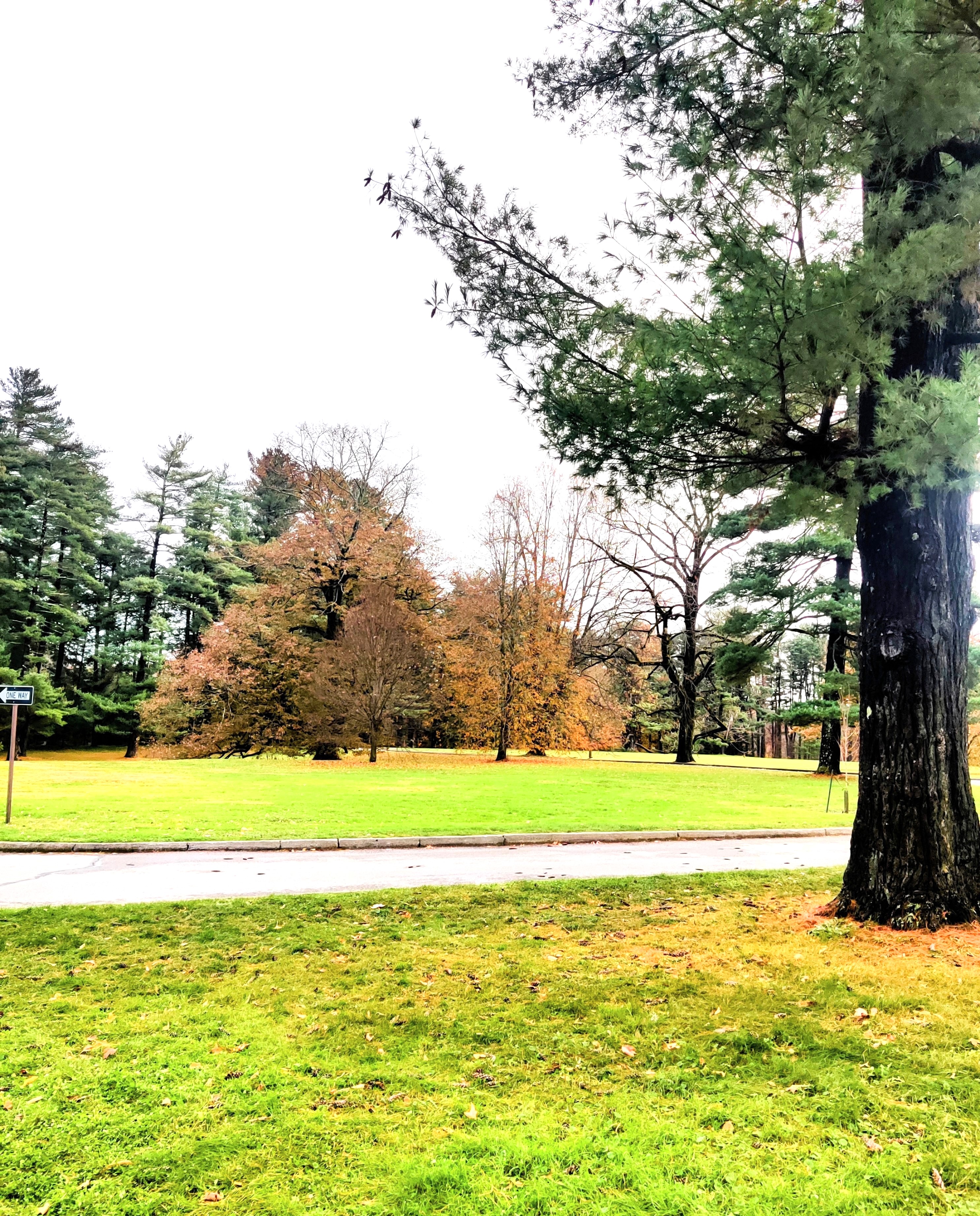
We were visiting the Vanderbilt mansion, the national historic site in the Hyde Park area on the banks of the Hudson River. We had heard impressive accounts about the place and were curious to know more.  Parking our car, we strolled to the small chalet like building which housed the National Park Service (NPS) office, the mansion was visible at some distance. From the French windows in the rear, one got the first views of the flowing Hudson; the in between park area was a golden abundance of fallen leaves, glistening in the autumn sun.

Hudson river banks in the autumn

How the NPS got into the place is an interesting story. More than eight decades back, Margaret Allen, the niece of Frederick Vanderbilt, moved by President Roosevelt’s vision, decided to handover the estate to the Government. The US Congress approved the acquisition and the expansive park with the mansion was purchased by the NPS against a consideration of one dollar!

The rise of the Vanderbilts forms the basis of the book ‘The First Tycoon: The epic life of Cornelius Vanderbilt’. Author T. J. Stiles provides an engrossing perspective of the American capitalism’s original sinner, the man who inspired the term ‘robber baron’.

Cornelius Vanderbilt, the family founder, was the individual who essentially invented the modern corporation through his purchase and consolidation of New York’s major railroads, and brought the American professional and managerial middle class into being. His influence remains so great as to be almost intangible. As the author writes: ‘He may have left his most lasting mark in the invisible world, by creating an unseen corporate architecture which later generations of Americans would take for granted.’

According to the author, Cornelius Vanderbilt’s greatest coup was buying up New York’s major railroad lines, using every trick in his arsenal, including the manipulation of stock prices. His wealth became enormous. He writes that Vanderbilt ‘exacerbated problems that would never be fully solved: a huge disparity in wealth between rich and poor; the concentration of great power in private hands; the fraud and self-serving deception that thrives in an unregulated environment.

Cornelius’ grandson Frederick had a personality quite contrary to that of his grandfather’s flamboyance and bluster. Quiet and reserved by nature, Frederick Vanderbilt nevertheless possessed great investment skill to rapidly increase the inheritance he had received. He with his wife Louise purchased the Hyde Park estate and built a palatial country home for themselves which came to be known as the Vanderbilt mansion.

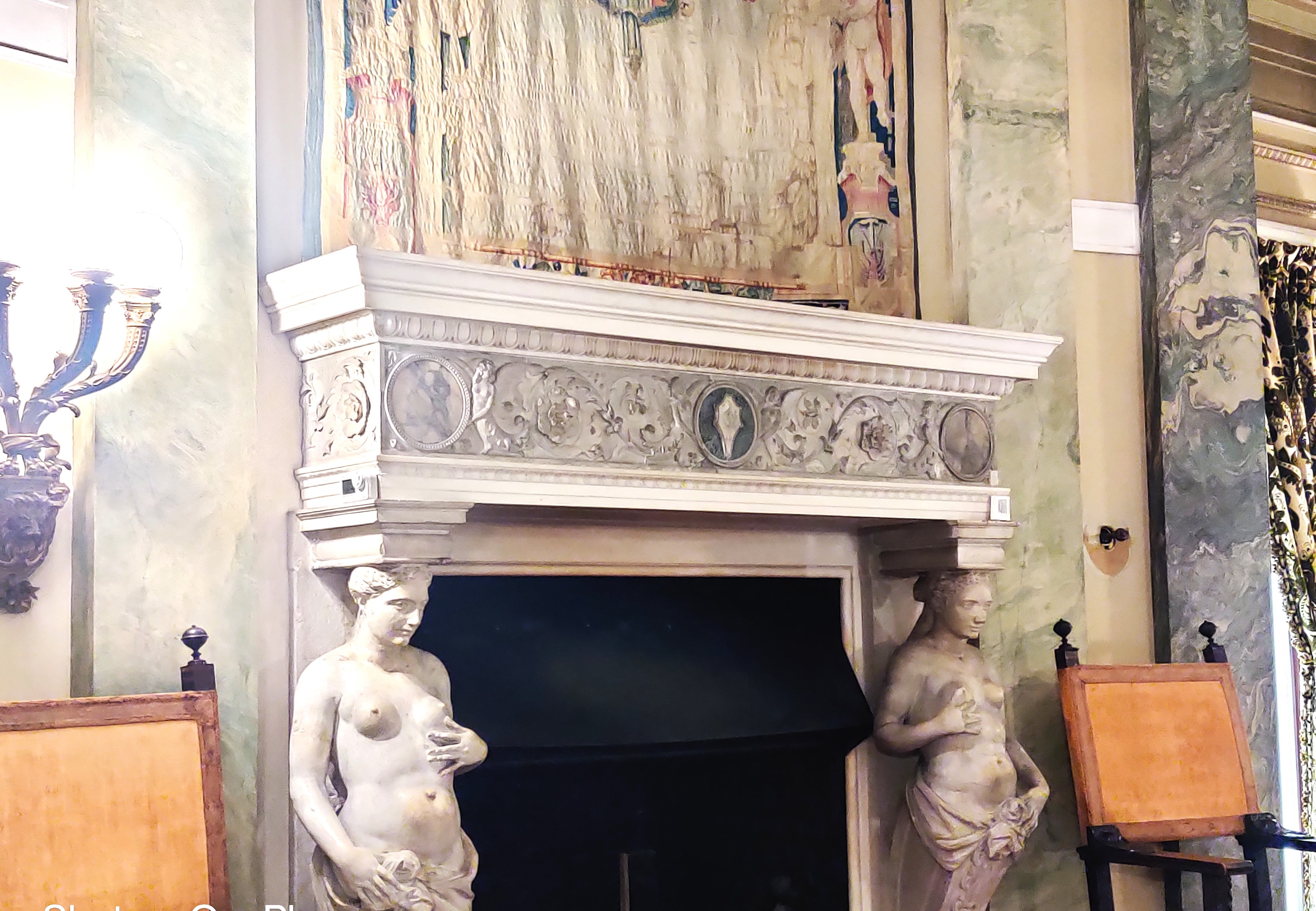
The Vanderbilt mansion was inspired by the Italian renaissance styles. It really showcased Frederick and Louise’s obsession to flaunt their taste of refinement. Money in itself would never give the status of Western Europe’s blue-blooded aristocracy which the couple hankered for; what was needed was to assume the tastes and behaviour. Stepping into the entrance hall of the mansion and looking at the opulence and object d’arts, one gets the sense that the owners wanted to leave an indelible impact in the minds of visitors.

Entrance lobby

Each of the mansion rooms, be it the guest entertainment area, formal dining room, the study and boudoirs, seem to be telling a story of their own. Standing there, one could almost see Frederick retiring with his guests post dinner for a brandy and a fireplace chat.

Guest seating

Dining room

The mansion remained the preferred home of Frederick Vanderbilt and his wife Louise for several decades. It incorporated a number of modern innovations of the day, including plush bathrooms and the couple lived a life of incredible luxury with sixty employees at their beck and call.

Bedroom

Bathroom of early twentieth century

Looking at the extensive kitchen, staff dining areas in the basement with separate stairways and bedrooms, one gets reminded of Downton Abbey and the life of the retinue of servants attached to the British aristocratic Crawley family in the series.

After Louise Vanderbilt’s death in 1926, Frederick lived a largely reclusive life in the mansion till he passed away twelve years later. Prior to his death, he bequeathed the estate to Louise’s niece Margearet Van Allen.

As we left the Vanderbilt estate at the end of our visit, the beauty of the surroundings seemed juxtaposed with visions of the Robber Baron family and the manner in which they contributed to the American way, the disparity in wealth, the aggrandisement of power and the unregulated environment it had spawned.

The American way……

In musing………                                                              Shakti Ghosal

Acknowledgement:

  1. The NPS Guide services @ the Vanderbilt Mansion
  2. ‘The First Tycoon: The Epic life of Cornelius Vanderbilt’, by T.J. Stiles, April, 2010. Winner of National Book Award.

Disclosure: The conversations in the first section are fictional constructs based on historical incidents.

A discussion in the Metaphysical World


Goura Prasad from Odisha, a student of literature, has sent me this beautiful piece and I am copying it below:

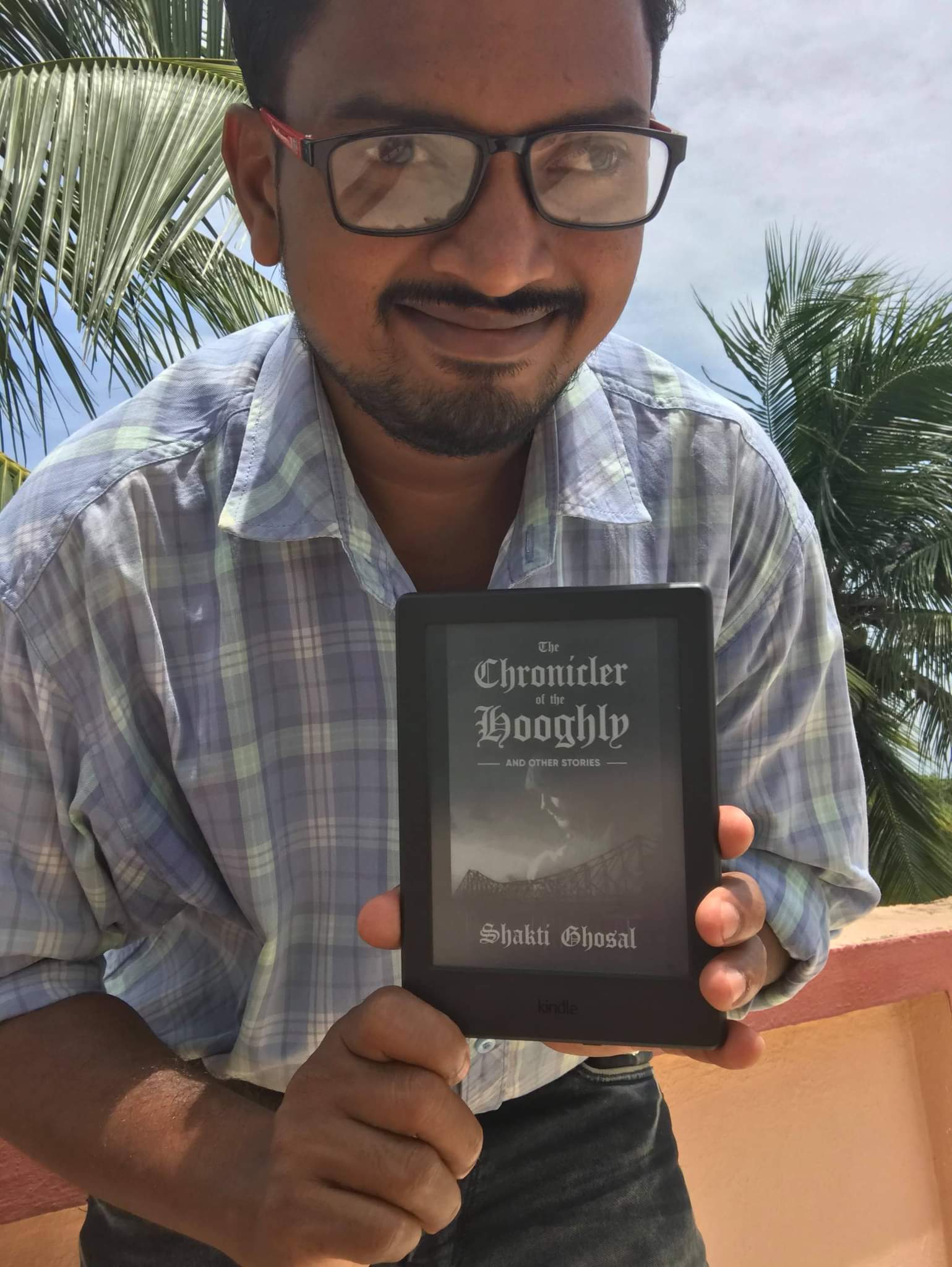
“I’m an admirer of literature. I used to write short poems, few lines about my teachers and felt happy to write about that. I ‘m enjoying The Chronicler of the Hooghly on a fine Sunday morning.

The Chronicler of the Hooghly is a good book with a unique writing style. It can be best enjoyed at the dining table, a father with a copy of the book in his hand and his children as active listeners.

Goura Prasad further provides this so very interesting discussion in the metaphysical world!

(Topic- Author Shakti Ghosal)

If Shakespeare, George Benard Shaw, William Wordsworth, Robert Frost and some other contemporary writers of their level were to talk to each other in the metaphysical world regarding Author Shakti Ghosal they may be very much thankful towards him firstly.

How Shakti is deeply rooted in the field of literature with some advanced literary ideas; claps may come voluntarily from them while talking to each other in the metaphysical world.

Shakespeare might say this to Shakti, “I’ve written so many dramas and sonnets, but the way you present the incidents with appropriate scenes Hail Thee to it.”

George Benard Shaw might suggest, ” No foreigner can speak English with hundred percent accuracy but your writing style is worth observing.”

Robert Frost may confide, ” I could not stop in the forest to enjoy the growing darkness of an advancing evening as I was assigned with so many responsibilities and I ‘ve mentioned this also in “Stopping by Woods on Snowy Evening.” But from our discussion, I can assure you I’ll take leave to enjoy your The Chronicler of the Hooghly.”

And the discussion goes on……..

Thank you Goura for the above wonderful thought. You have indeed made my day!!

www.shaktighosal.com

#shaktighosal#chroniclerofthehooghly#nazmesahityaaward2021#bookofthemonth#novel,#readersgonnaread,#booklover,#bookworm,#ereader,#kindlebook,#bookrecommendation,#fiction,,#bookloversunite,#booksbooksbooks#booknerd,#bookobsessed,#bookaddict,#booksofig,#bookstherapy,#returntoreading,#rediscovergoodread,#happyreading,#bookishlife,#booksbrat

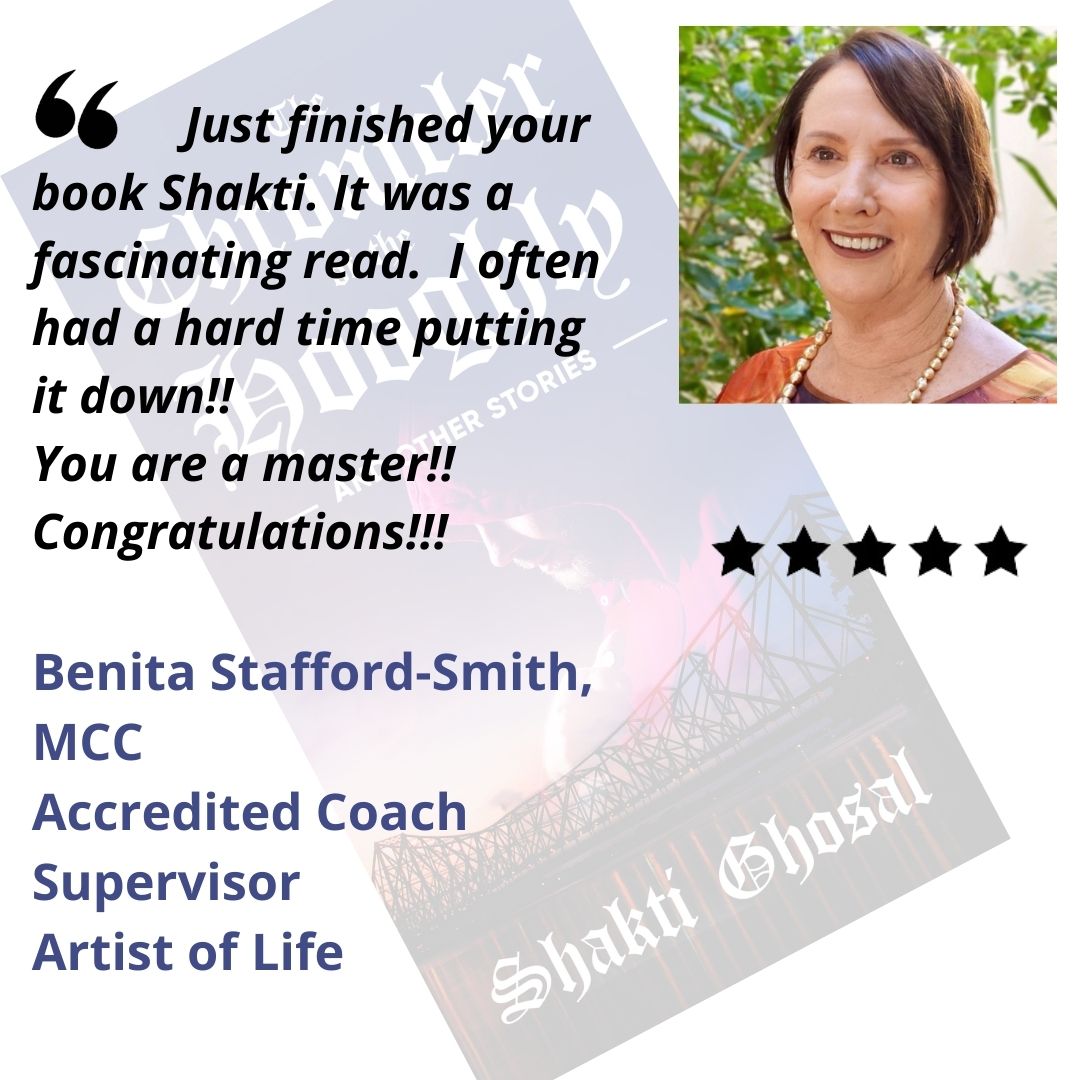
A Coach’s verdict


Meanwhile on the other side of the world, Riya with daughter Tiri decide to have a fun day with the elegant Mice couple, Mickey and Minnie. They have chosen to live by the Chronicler’s coaching philosophy of, ‘Life is….‘. As Professor Gracy Samjetsabam mentions in her review, ‘……..sprinkles of confetti of coaching in life skills.…..’

@Times Square, New York

The Chronicler of the Hooghly and other stories’ is available worldwide on Amazon, Flipkart and select bookstores.

Adjudged ‘Book of the Month’ for March 2021 by Booknerds, The book has already got more than a hundred excellent ratings and reviews on Amazon worldwide.

www.shaktighosal.com

#chroniclerofthehooghly#shaktighosal#bookofthemonth#bookcommunity#bookaholic#bibliophile  #shelfie#bookshelf#readers#bookoftheday#ilovereading#bookblog#bookgeek#bookalicious#readingforfun#ilovebooks#bookstagramfeature#booklife#bookaddiction#beautifulbooks#unitedbookstagram#bookishfeatures#bookgeek#bookprojects#readingforfun#addictedtobooks#readabook

A Profound way of articulating the tragedies of life


Blogger Archana speaks of my profound way of articulating the tragedies of life.

I believe this articulation comes from seeing it as ‘Life Is’. The way we see situations as good or bad, tragedies or otherwise is really our perspective based on the experience lens we use to look at and make sense of them.

The full blog may be read here.

https://www.booknerds.in/features/ghosal-s-profound-way-of-articulating-the-tragedies-of-life-is-highly-commendable-.html?fbclid=IwAR0JLBdkRlaBg7SuYPb16Mm1_lOIq89xwbHOutcEeiQixih7-h-tQ8vy1CM

Available worldwide on Amazon, Flipkart and select bookstores.

www.shaktighosal.com

#chroniclerofthehooghly#shaktighosal#encourageauthorshakti#bookofthemonth#bookcommunity #bookaholic #bibliophile #shelfie #bookshelf #readers  #bookoftheday #ilovereading #bookblog #bookgeek #bookalicious #readingforfun #ilovebooks #bookstagramfeature #booklife #bookaddiction #beautifulbooks #unitedbookstagram #bookishfeatures #bookgeek

Dr. Viraj P. Thacker muses….


Dr.Viraj P. Thacker, currently based in the US, is the famed Author of ‘The Myth of Prosperity: Globalization and the South’. He is also the Academic Facilitator, Development Consultant and the International Executive Director of Manushi for Sustainable Development.

After reading the ‘Chronicler of the Hooghly and other stories, he sent me his thoughts, which I have copied below. Arguably, this is one of the most wonderful acknowledgments that the Chronicler has garnered.

QUOTE

My Humble reflections on the ‘Chronicler of the Hooghly’:

To use a living metaphor, the legendary structure that spans the Hooghly in Calcutta ingeniously personifies the very title of a deeply reflective & flowing read…touching stories of life & circumstance that bridge the history of British Calcutta & Delhi…a reflective re-capture of the social-historical-cultural fabric of India.

To be quite honest, the gently flowing chapters brilliantly managed to evoke a deep sense of my own family history of some 6 generations, in the erstwhile Second City of the Empire…later, the City of Joy!

What truly grips the reader In this wonderful complexity of ‘a touch of the old Raj’ and the deep humanity of the pages that captivate, is the ‘pandemic’ that translates well to our current global dilemma. In fact, the author brilliantly credits the composition of the book to time well spent in lockdown!

The Chronicler of the Hooghly truly resonated with this reader on many counts & in a most heartwarming fashion, left me with a sense of hope-faith in the human experience.

UNQUOTE

Available worldwide on Amazon, Flipkart and select bookstores.

www.shaktighosal.com

#chroniclerofthehooghly#shaktighosal#encourageauthorshakti#bookofthemonth#readrsofinstagram,#novel,#readersgonnaread,#booklover,#bookworm,#ereader,#kindlebook,#bookrecommendation,#fiction,,#bookloversunite,#booksbooksbooks#booknerd,#bookobsessed,#bookaddict,#booksofig,#bookstherapy,#returntoreading

A Live Event on Instagram… with a surprise at the end.


The Chronicler goes live on Instagram!

I am happy to report that I was recently invited by Vishakha Raghav who runs the Instagram Thread “vishing_sky”.

I loved the Online Event on Instagram and some of the very interesting and fundamental questions posed by Vishakha. Questions relating to the underlying inspiration, current publishing system and tips for bussing authors from one of their own ilk!

Available worldwide on Amazon, Flipkart and select bookstores.

http://www.shaktighosal.com

#chroniclerofthehooghly#shaktighosal#bookofthemonth,#booksinstagramindia,#historical,#historicalfiction,#writersofinstagram,#instaauthor,#authorofinstagram,#readrsofinstagram,#novel,#readersgonnaread,#booklover,#bookworm,#ereader,#kindlebook,#bookrecommendation,#fiction,,#bookloversunite,#booksbooksbooks#booknerd,#bookobsessed,#bookaddict,#booksofig,#bookstherapy,#returntoreading,#rediscovergoodread,#happyreading,#bookishlife,#booksbrat,#bookstaengagement

The Chronicler of the Hooghly as a Book recommendation for March 2021


The Book recommendation video by Book Nerds alludes to the underlying theme of ‘Crucible Experiences’ in each of the stories.In our lives, we at times get confronted with intense and traumatic events which force us to question who we are, what really matters to us and what we believe in. In some ways these events alter our sense of reality.Each of the four stories in this book draw inspiration from such crucible events that I have had to face. The protagonists in that sense carry a bit of my own ‘experience and thought’ genes. As I see them now within the larger fabric of the stories, I do notice shades of myself and others who have been part of my life. Writing the stories has been a personal journey in that sense. At times the stories seemed to write themselves.

Available Worldwide on Amazon, Flipkart and select bookstores.

www.shaktighosal.com

#chroniclerofthehooghly#shaktighosal#bookofthemonth#bookstherapy,#returntoreading,#rediscovergoodread,#happyreading

Fault Lines Curtain Raiser video


The Chronicler Tales….

Come embark on a journey through Time and Transformation.

Suffering severe injuries from a gas explosion, Anjan meets Savio who brings him face to face with the private demons from his past. But past demons do have a way to come into one’s present with life changing consequences. Who is Savio?

The Chronicler of the Hooghly and other stories is now available worldwide on Amazon, Flipkart and select book stores.

The Chronicler of Hoogly


We booked the sunset cruise on the Hoogly recently. With winter on its way, the sun was setting early leaving behind a long balmy evening. Good time to observe the river and the city as it transitioned from day into the night.

20161015_144940

Boarding the boat from the Millennium Park jetty, we soon chugged out in the company of other sight-seekers like us. The itinerary was to cruise up the Hoogly to Belur Math, the much revered global headquarters of the Ramakrishna Mission founded by Swami Vivekananda. We were scheduled to reach in time for the evening Aarati before we returned. Travelling with us was a Study tour group from Germany.

20161015_160253

As I sat on the deck, I was engulfed by a kaleidoscope of sights………….

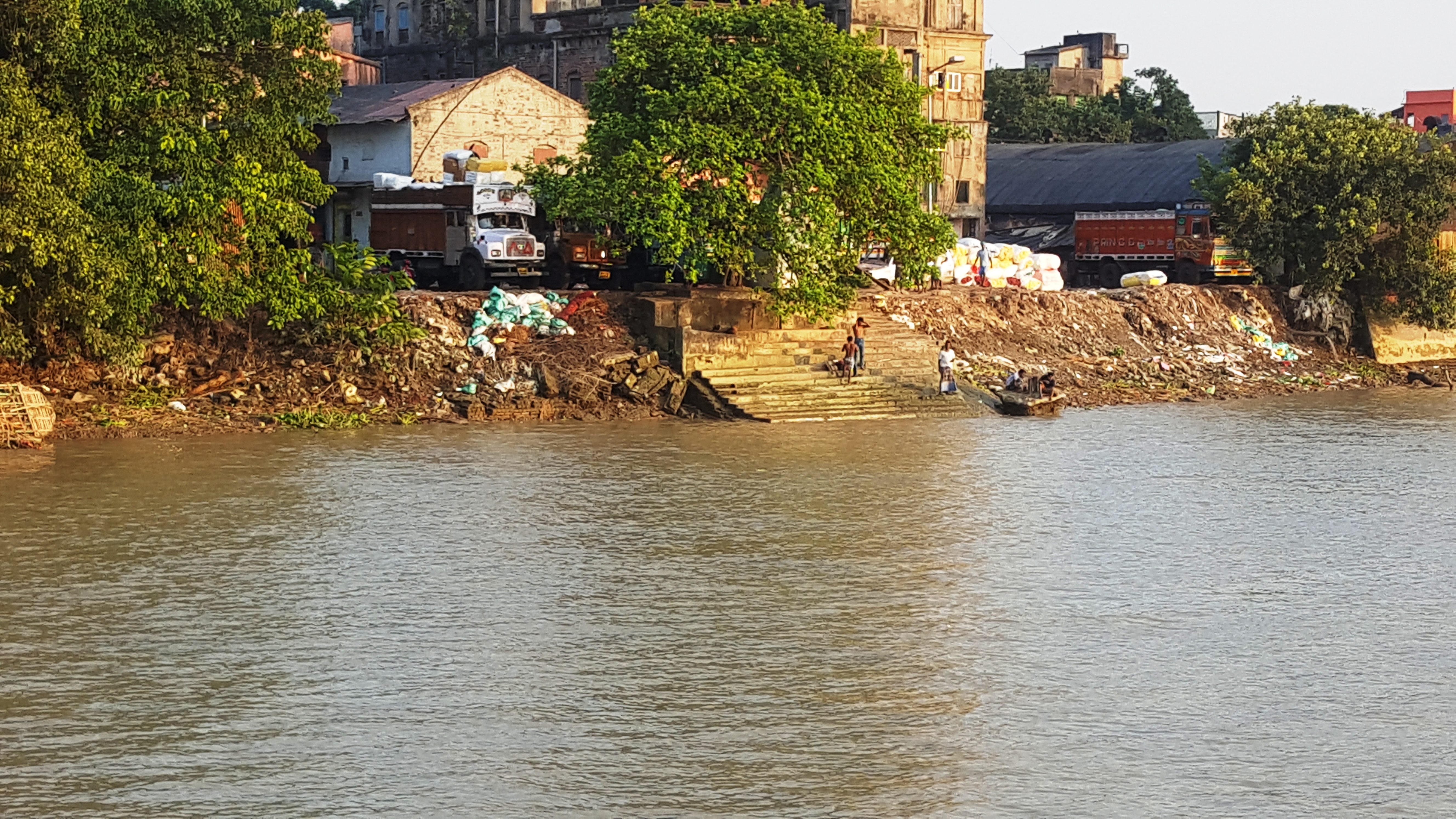
 Of the looming floating bridge of Howrah, still considered a cantilever feat of engineering seventy-five years after it was built. Of decrepit ghats and jetties. Of derelict and abandoned warehouses, shanties and slums. Of colonial architectures separated by grimy and slushy by lanes. Of how Man’s creativity and resolve has sunk under the grime of his daily struggle and existence………….

20161015_160652

20161015_161702

20161015_170530

Of temples and riverside religious rituals coexisting with stinking garbage and defecation grounds. Of the riverside walled up   along long stretches as if to hide its shame from the very people who have sullied it thus. Of how Spirituality jostles with poverty…….

20161015_161712_001

20161015_161836

20161015_162131

My thoughts and emotions get stopped by a flurry of activity on the deck. Probably sensing the approaching sunset, the service staff had got busy offering beverages and ‘muri and aloor chop’ snacks while the German tourists were busy with their telephoto lenses and cameras. I look at the setting sun, the morphing shades of the flowing waters and could not but marvel at how nature yet manages to shine its beauty on an environment gone increasingly awry…………

20161015_165139

With the falling dusk, I notice a lone figure sitting at the rear side of the deck. Somewhat taken aback for not having noticed this person earlier, I walk across and introduce myself. “You may call me the Chronicler”, he tells me. Intrigued I plonk into a deck chair beside him. “Would you like to hear a tale about all that we are witness to today?”, comes the soft voice. Even before I can respond, the voice continues.

“Great metropolises, they say, grow out of a river. London…. Paris….. Rome…… Moscow…….. Cairo….. Istanbul. In each of these cases, the mighty rivers that flowed, the Thames, the Siene, the Tiber, the Moskva, the Nile and the Bosphorus, provided sustenance and remain the heart and soul of the cities….”

“And so was the symbiotic relationship between Hoogly and what we know as Kolkata. While today we are wont to see the river as some kind of an appendage to the city, what if I told you that it is really the other way around? That Kolkata is really an offshoot of all that the Hoogly has been witness to over the centuries.”

“When we started our cruise, we saw Fairlie Place and its jetty to the right with the Strand running beside it. So what would you say are its important landmarks?”, the Chronicler asks.

“Well I suppose it is the Customs House and the Eastern Railway headquarters. Apart from a few more important office blocks”, I respond.

“But what if I told you that about three hundred years back most of that place including what we know as Dalhousie Square was a large water body called Lal Dighi ? This was the time when the British East India Company was busy consolidating its position and Fort William stood on the banks of Hoogly. That is when the attack happened”

“Attack!”, I exclaim, “By whom and why?”

“The then Nawab of Bengal Siraj-Ud-Daulah attacked, captured Fort William and incarcerated British prisoners in a dungeon which came to be known as the Black Hole of Calcutta. An incident which directly led to the battle of Plassey and the subsequent two hundred years British Rule of the subcontinent.”

“Hang on!”, I interject. “Is not Fort William more in the hinterland, near the Maidan?”

“Indeed”, the Chronicler continues, “but what is less known is that there were two Fort Williams. The present one near Maidan was built by Robert Clive after the attack on the first one.”

“The battle of Plassey, which was to change the history and the shape of things to come for ever for the subcontinent, was also fought on the banks of Hoogly but to the north of where we are. But that is another story.”

“The Fairlie Ghat holds another interesting tale”, the Chronicler continues.” In the mid nineteenth century, Prince Dwarkanath Tagore, while travelling on a train in England, got the brain wave of setting up a rail link to carry coal from his Raniganj colliery to the Calcutta port at Fairlie. On return he invested into setting up the ‘The Great Western Bengal Railway Company’. Unfortunately, his proposal got turned down by the British East India Company bosses on the grounds that ‘it would not be possible to allow a company using such strategic technology under native management….’ His efforts and thoughts however did push the British to set up rail services though the East India Railway Company with its Headquarters at Fairlie Place.”

“Hmm! That name Dwarkanath Tagore sounds familiar. Was he in some way related to Rabindranath Tagore?” I muse.

“Indeed he was!”, the Chronicler quips back, “He was in fact the grandfather of Gurudev Rabindranath Tagore, that venerable Bard of Bengal and the first non-European to win the Nobel Prize in Literature more than a century back”.

“The Hoogly ghats then were a far cry from the crumbling cesspools that we are seeing today. With magnificent facades and European classical architectures, the ghats were witness to impressive steam ships and tall masted  boats sailing out to faraway places in England, Australia and New Zealand as also upstream to ports on the Ganga.”, the Chronicler continues.

“Did you know that there were thriving French, Dutch and Armenian settlements on the Hoogly in the early years of colonisation?” I am asked.

Well I had read about the French settlement and I say so.

“Fascinating is it not that events and rivalries five thousand miles away in Europe would show up in the waxing and waning of the Hoogly ghats! And so it was that as the British colonialism went into ascendancy after winning the Napoleonic Wars in early nineteenth century, the settlements of other nationalities on the Hoogly faded into oblivion.”

20161015_161118

20161015_162631

20161015_165008

“Which brings us to the Shova bazaar Ghat and its fascinating history. The Ghat and the Shova Bazaar Rajbari ( Palace), was built with great pomp and grandeur by Raja ( King) Nabakrishna Deb.The latter famed for organizing the Shovabazaar Rajbari Durga Pujo about two hundred and  fifty years ago ( which continues till today!). What is seldom spoken of is that all of the Raja’s wealth came from the huge bribe money of Rupees eighty million paid to him, Mir Jaffar and a couple of others by the British administration for betraying Nawab Siraj–ud-Daulah on the battlefield of Plassey. A betrayal which led to a small British force of 3000 soldiers winning a decisive victory over a twenty times larger opponent. A betrayal which led to the British becoming the dominant colonial power in the subcontinent for over two centuries. Is it not ironic that one of the greatest betrayals in Indian history is so inexorably linked to one of the biggest religious festivals in the country?”

So engrossed had I become in listening to the Chronicler’s tales that I had scarcely noticed the darkness enveloping the Hoogly and the boat engine slowing down.

My companion on the deck points to a brightly lit temple and ghat complex to the right. “That is the Dhakshineswar Kali temple built in the mid nineteenth century by Rani (Queen) Rashmoni based on a dream in which Goddess Kali exhorted her, ‘There is no need to go to Banaras. Install my statue in a beautiful temple on the banks of the Ganges river and arrange for my worship there. Then I shall manifest myself in the image and accept worship at that place.’ The temple attained fame because of Ramakrishna Paramhansa, the famous mystic and the spiritual guru of Swami Vivekanand.”

20161015_172222

The boat docks on the Belur Math Ghat. I notice the Chronicler making no attempt to get up even as other guests disembark and start walking up the Ghat steps. The tour supervisor advises us on the way to reach the temple premises for the evening Aarati. As we hurry, some of the German tourists stop to look at souvenirs in the roadside shops.The Belur Math design incorporates the different Medieval, Gothic, Renaissance as well as Hindu and Islamic styles that Swami Vivekanand had observed during his travels in India and abroad.

I return back to our moored boat with the intoxicating chants of the Aarati still resonating in my ears. As the boat starts on its return journey downstream, I look around for the Chronicler but he is nowhere to be seen. Dinner is announced and we go down to the dining room in the lower deck. The fascinating vision of the Hoogly  created by the Chronicler’s tales in sharp contrast to the hugely run-down and depressing sights I had been witness to, continues to wrestle in my mind.

What is it that has made the Hoogly hold onto its rusting warehouses, its hideous shanties and walls which no longer serve any purpose? What is it that has made Kolkata turn its back on the river that brought it into existence? What is that which leads us to abuse and neglect that very water that we consider holy and religious? What is that in our societal psyche that fuels such dichotomy?

As we reach back and walk off our cruise, these questions continue to haunt…..


……… In Learning.

Shakti Ghosal