
Unveiling The Essence of AI and Leadership in the Future


Frank Marinko and myself, both international Executive Coaches and Facilitators, grappled with this question using the critical thinking methodology, in a joint podcast. You might enjoy the discourse and the podcast link is given at the end.

If we are to deliberate on this question, we need to get to the essence of two aspects mentioned. First, AI or Artificial Intelligence as we call it. Second, ‘to lead’ which is all about Leading or Leadership.

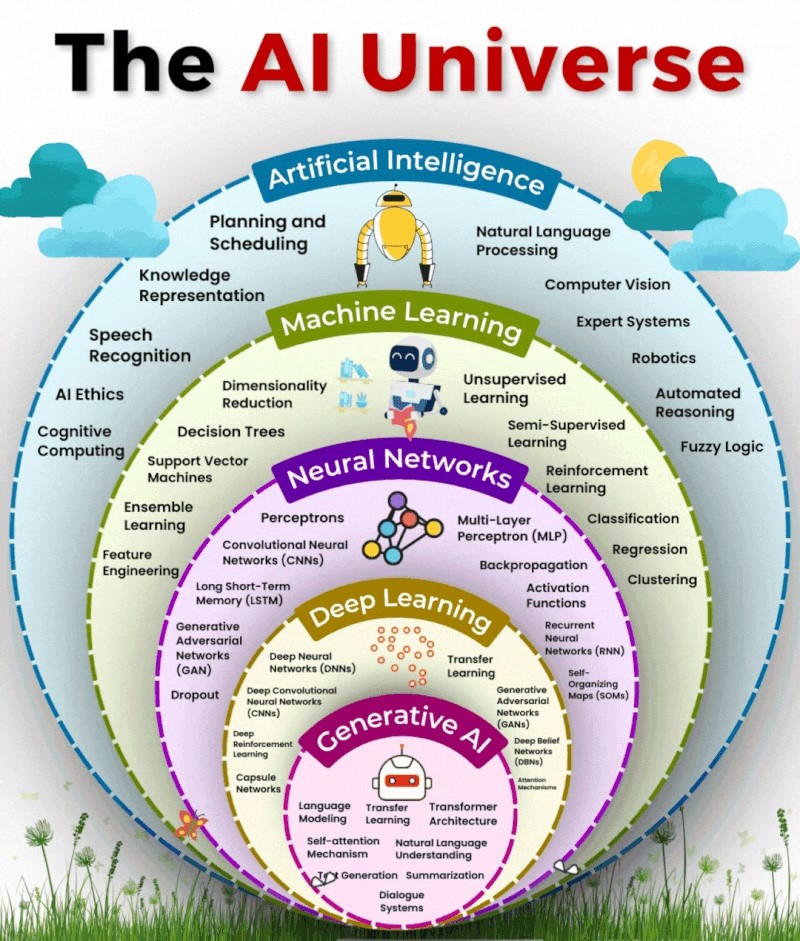
So, what really is the essence of AI? That lies in its ability to mimic and augment human intelligence and decision-making processes using computational algorithms and data. At its core, AI systems can analyze vast amounts of data, recognize patterns, infer relationships, and make predictions or recommendations.

The important aspect to be kept in mind is AI’s ability to ‘learn’, its adaptability and the ability to improve over time. Machine learning algorithms, for example, can automatically adjust their behavior based on new data, allowing AI systems to become more accurate and effective with experience.
And when we think of the essence of Leadership, it is really all about envisioning a future which speaks to all stakeholders by addressing their concerns or satisfying some needs.  Leadership thus involves directing and coordinating the efforts so that the full potential and collective success can be realised.

With the dawn of computers seven decades back, Alan Turing had considered the question, ‘Can a machine think like a human?’ and came up with a test now known as the Turing Test. With the advent of AI, several Artificial Intelligence programs have already passed the test. The purpose of this question seems to be a deep-down threat to our unique ‘leadership ability’ that we see emanating from AI. There are concerns that AI will not only start doing complex and decision-making tasks replacing humans but in the long run go beyond human controls and frameworks.

This idea of technological obsolescence where technology renders humans obsolete, and takes over most of human jobs and work, is a concern that has been raised in discussions about AI and automation. However, we humans have creativity, empathy, intuition, adaptability, and the capacity for complex moral reasoning, which are integral to many aspects of work and life. These qualities enable humans to excel in areas such as innovation, problem-solving, interpersonal relationships, and above all Leadership.

The idea of AI achieving consciousness is another topic of much speculation and debate. Consciousness is a complex and still poorly understood phenomenon, and whether AI can truly achieve it is uncertain. Even if AI were to achieve consciousness, the process of its development would likely still involve human input and guidance. AI systems, as they exist today, are created, and trained by humans, and any future developments in AI consciousness would likely follow a similar path.

However, it is worth noting that AI can already exhibit forms of “thinking” and problem-solving that are quite different from human cognition. Machine learning algorithms, for example, can process vast amounts of data and recognize complex patterns in ways that humans cannot.

Whether AI should create its own thinking framework independent of human influence is a philosophical question with no easy answer. It raises issues of autonomy, control, and ethics. If AI were to develop its own thinking framework, it would still need to start and remain ‘biased’ by frameworks that align with human values and approach. It thus seems that in the foreseeable future, Humans would continue to lead AI, leaving aside the esoteric visions of the Matrix and Terminator movies.

To effectively lead AI development which would synergise with human development, adherence to principles such as transparency, fairness, accountability, and human-centered design would be needed. We would then be able to harness the full potential of AI while minimizing harm. These principles should serve as guardrails rather than roadblocks, helping to steer AI development in a direction that aligns with human values and promotes the common good.

Podcast link : https://audio.com/frank-marinko/audio/podcast-1

In Learning……. Shakti Ghosal

Oh! To be still……..


The woods are lovely, dark, and deep,
But I have promises to keep,
And miles to go before I sleep,
And miles to go before I sleep.

                                                                   Robert Frost, 1923.


We hurtle faster and faster. To keep pace with a changing world, a morphing society. To keep up with the Joneses. All around us are triggers to keep us in action. Project deadlines at the workplace. To do lists stuck on the refrigerator door. Management seminars extolling the virtues of proactive action and business initiatives. Weekly coaching sessions empowering us to move towards the rainbow of purpose and goals.

As I watch the TV screen, I find more prejudices against inaction. As protests and deaths in the country continue unabated,Syria is warned of inaction by the Arab league, Americans say that they just cannot have any further inaction by Washington as health insurance costs skyrocket. In India, Anna Hazare and his team accuse the Government of inaction to introduce a strong anti-corruption legislation.

Awhile back, I had read about a little known but interesting incident of the Second World War in which afterFrance’s surrender to the German forces in June 1940, a large part of the French navy positioned elsewhere at Gibraltar remained frozen in inaction and refused to follow the Allies instructions. Till they were bombed and fired upon by the British navy!

So is inaction always bad? And why do we sometimes freeze up and halt all action as the French naval commander had done?  I ponder as I try to find some answers. If action signifies moving forward towards light and a better future, does it imply that inaction means something backward and worse? Unfortunately, in today’s materialistic and achievement oriented world and society, this is the belief that stands constantly reinforced. So as we love to show our own “bias for action”, we lump all inaction with lethargy and vacuousness.

But does action always imply moving forward? Does it always demand achievement of discernible goals?  Our perception, fed on a diet of instant gratification, equates action to goal achievement. But does this not detract from the importance of the action steps, the empowerment of the action journey? And does this not lead us to judge the other person by results rather than the path he follows?

And what about inaction? Does it always signify the stillness of the unborn, the slowing down of atoms, the dissipation of energy?  What if there indeed be intrinsic positivity in the stillness of no action? In the Chinese Tao philosophy, wei wu wei means “action without action”. As we observe, we reflect. As we comprehend, we try to make sense of it all. As we strategise, we commit our intentions. Do we realise that goal achievement and critical perspective shifts usually flow from such moments of contemplative inaction?

I believe much of the world’s misconceptions arise due to a lack of understanding of what action truly signifies. And the news stories above underscore this point. So how do we differentiate between the inaction of no action and the stillness of “making sense of it all”?

Simply put, inaction occurs from a fear of the unknown, of leaving our comfort zone. From remaining stuck due to our underlying beliefs (UBs). So the sooner we get down to confronting our fears, unpacking the baggage of our UBs and letting them go, that much faster we regain our airy fairy childhood state of unhampered curiosity and motion.

But when we stand still to ‘make sense of it all”, we do not really choose to move. We seek instead the solace of something still, something changeless, something which will anchor us from the slippery slopes of uncertainty. Like a sheet of still water reflecting back and providing reassurance of our own inherent changelessness. As we visualise the road forward with intention to act and bring in the change.

So, as the world around us moves in an ever maddening whirl, do we retain the conviction to find the balance between the still and restful “woods” of our inner reflections and the “promises to keep’ of our societal actions? And the wonderment and pleasure of the “miles to go” journey itself?

In Learning……………

                                                                                                                                                                  Shakti Ghosal