
Trust- A bulwark of relationships


Trust is a foundational element of relationships and interactions. My decades of working   in organisations and relating to people have made me realise that Trust flows out from three aspects of how we relate to people and how we interact with team members and others.

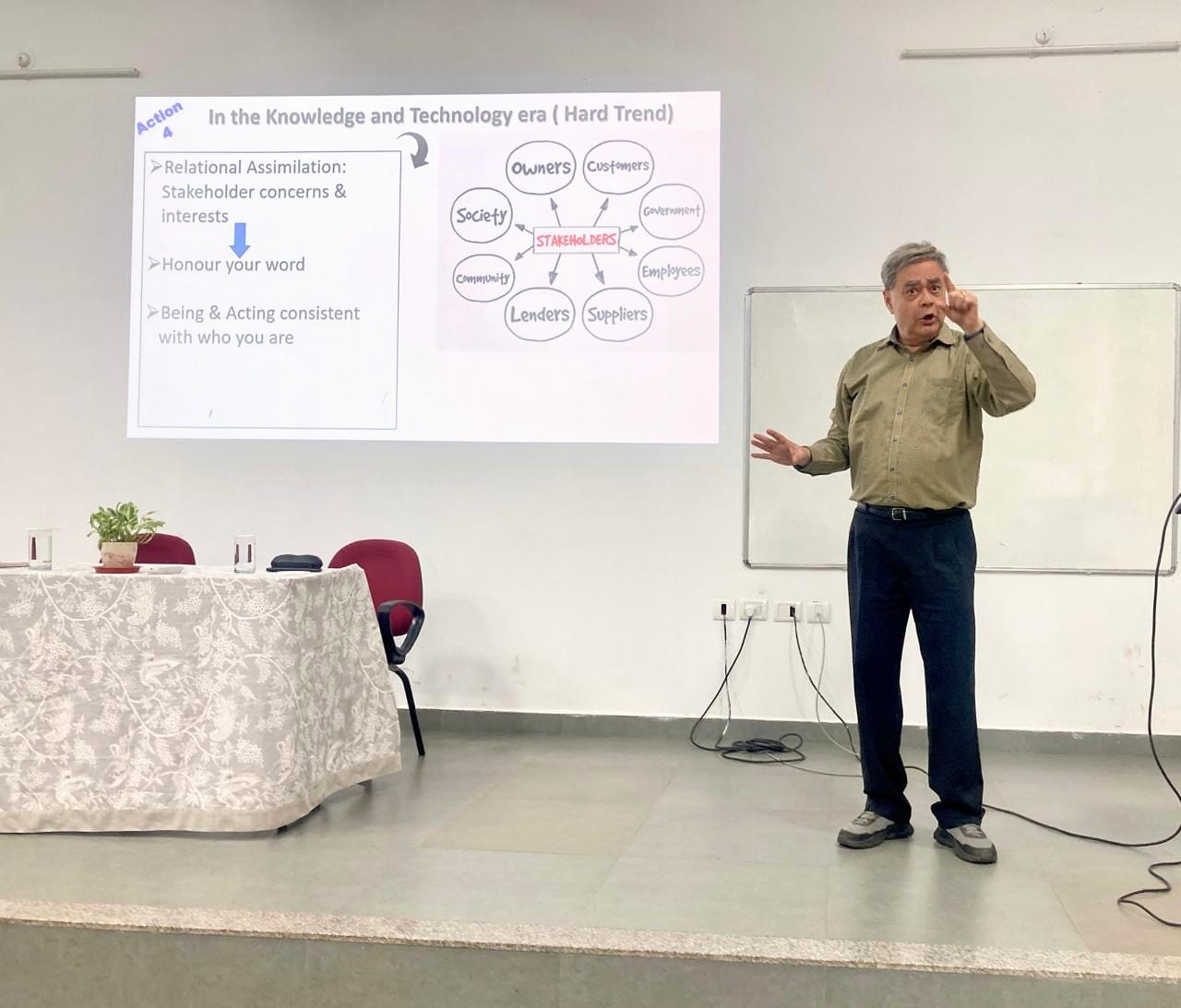
First and foremost is the Integrity of our word. We need to be clear to our own selves that the way others see us is how we ‘honour our word.’ Do we keep it and if we cannot, do we inform about that at the earliest opportunity and be willing to clear up any mess caused?

Second is the aspect of accountability. When we can own up to our own errors of judgement and take responsibility, we start creating an environment where others ‘feel safe’ to do the same.

And finally, is the aspect of transparency which builds credibility and shows others that we are willing to share information honestly, even when it is difficult.

What trust leads to is open communication and ‘risk taking’ initiatives with the potential to transform workplaces to becoming more supportive and innovative.

To showcase, how Trust works, I wish to relate the case of Johnson & Johnson and its Tylenol product crisis of 1982. The company faced a severe crisis when people in Chicago died after taking cyanide-laced capsules of Extra-Strength Tylenol, a top-selling, trusted pain reliever.

While Johnson & Johnson was not responsible for the tampering, it faced intense scrutiny and an immediate threat to the overall J & J brand.

The company made a series of bold decisions, guided by its corporate philosophy, which prioritized customers over all else. It immediately recalled over thirty million bottles of the product costing the company over $100 million. The company maintained open and honest communication with the public, issuing warnings and engaging with the media. This transparency helped rebuild public trust and showed they were prioritizing customer well-being.

 By placing consumer trust above profit and acting with integrity, Johnson & Johnson was able to rebuild and even strengthen their brand. In a matter of months, Tylenol regained a significant share of the pain-reliever market, and Johnson & Johnson became known as a company that values trust and ethics.

In a recent ‘Mindset Matters’ podcast, Executive Coach Frank Marinko and I deep dived into the fundamentals of what constitutes Trust and how what constitutes our word becomes so crucial in the matter.

In learning……….                                                Shakti Ghosal

How do we motivate our own self in the face of goal multiplicity and pathway uncertainty?


As I thought about this question, a workplace experience from the past showed up. In my first job, I was an Assistant Mechanical Engineer in an Electric Diesel Locomotive maintenance workshop of the Indian Railways. I seemed to be confronted with disparate and multiple problems like dirty work bays, breakdown of machines, the workers’ trade union raising different kinds of demands, and so on. As I tackled one issue, other workplace crises seemed to occur elsewhere. I was always firefighting with disparate problems with no overall improvements in terms of productivity and output.

 Over time, I became demotivated with ‘loser mindset’ thoughts which kept circling in my head. These thoughts were like ‘I am doing the best I can’, ‘No point in trying hard, nothing will change’, “I have a wrong boss, bad subordinates’… and so on. A kind of workplace lethargy set in, a laziness to try newer ways and the unwillingness to get out of the rut.

 My mind shifted during a footplate inspection when I experienced firsthand the problems faced by the travellers from locomotive failures. A context got created in my mind, ‘When we don’t operate timely schedules, people’s lives get effected’. As I brought this perspective as an overarching vision for myself, my day-to-day work focus, the language I would use, my handling of situations changed. I felt more energy flow, motivation, and excitement. What was more remarkable was that my team started aligning itself with the overarching vision. My passion seemed to be seeping into them as they perceived that the actions were also addressing their own concerns.

 As I think back, I can say that what can motivate us most is our ability to create an overarching vision which excites and pulls us towards goal achievement as more and more stakeholders start seeing the vision meaningful, relevant, and addressing their own concerns.

Recently, in a ‘Mindset Matters’ podcast, while discussing the above subject, we came to a counterintuitive and interesting perspective that the sheer act of encouraging someone else can lead to our own selves being encouraged and motivated to achieve our own goals.

Should you wish to listen to the podcast, do DM me and I would be happy to send the link.

In Learning……… Shakti Ghosal

Do your Leadership choices upset your stakeholders?


This was the question that was debated during a podcast which I did recently with Executive Coach Frank Marinko in Australia.

All of us know that leadership is all about making choices. It is about aligning the organisation and its underlying stakeholder relationships with an overarching vision and intrinsic values. However, the prism that each stakeholder uses to evaluate decisions and decide on a roadmap could be significantly different from one another. We might hold complete clarity, based on our own belief and experience-based prism, about what and how something needs to be done. This is where the pitfall of a ‘My way or highway’ mindset lies.

Based on market conditions and the need to do a strategic shift, you might need to cut costs by reducing the workforce. But this could lead to employee insecurity and negative publicity. You might decide to use certain material to improve product quality but that might bring a backlash from environmentalists. A tradeoff between shareholder profits and employee benefits might lead to morale drop and lower productivity. Such a list of potential pitfalls can be long.

So how could you as a leader successfully negotiate and mitigate the above risks?

In this context, you might wish to listen to the two podcasts which are in the laser coaching realm.

In Learning…….. Shakti Ghosal

The Mantra of Personal Mastery


Recently at an IIM Udaipur conducted Management Development Program (MDP) for Indus Towers managers, I anchored four sessions. We started with the overarching perspective of Leadership and personal mastery before drilling down to specifics of Power & influence in teams, Managing high performance teams and the Feedback & Delegation aspects in Team Dynamics. We ensured a surfeit of activities, Role Plays and Case Studies to deepen the learning through practice and Ideation.

oplus_262144

In one of the sessions, we were in discussion of the aspects of ‘Honouring one’s word’ and ‘Being Authentic’ as performance accelerators of a team. Several participants mentioned their reservations about this, as under:

“If we become authentic and honour our word and others in the team do not do it, we would be taken advantage of and would be forced to do the work of others”

“All this is good theory but just does not work in real life. The fact is the Management has perceptions of who are good versus who are bad and irrespective of whether we honour our word or not, the favoured ones would get rewarded in terms of promotions and bonus”

In life, we are conditioned to judge others on moral and ethical yardsticks but remain quick to rationalize our own failings against the same yardsticks. We look around to try and determine who all are ‘honouring their word’ and tell ourselves that we would wait for others to honour and keep their word before we keep our own. As Chris Argyris had said about self-deception, ‘Put simply, people consistently act inconsistently, unaware of the contradiction between the way they think they are acting and the way they really act.’

 To gain the ability to honour our own word, we should be prepared to deeply deliberate and answer the question, ‘Where is my word when it comes time for me to keep my own word?’  In the ultimate analysis, there is a simple but inviolable equation of workability which is YOU are equal to YOUR WORD.

As I explained to the participants, team performance has very little to do with peering over shoulders to ascertain who is doing what. It has almost everything to do with how we can create trust of others in us. And creating trust has everything to do about Integrity viz. honouring our word and being authentic about how we show up for others. While some may try and take advantage of your trust in the short term, the aura of trust leads to team members gravitating towards you, working with you as you shift into being a natural leader.

How might you incorporate ‘Honouring your word’ and ‘Being authentic’ as part of how you show up tomorrow with your stakeholders?

In Learning……. Shakti Ghosal

Further Reading: ‘Integrity is a matter of a person’s word- nothing more, nothing less’– Michael Jensen, Professor Emeritus, Harvard Business School. Revised March 28, 2014.

Note : Indus Towers is India’s largest mobile tower installation company.  In India, 3 out of every 5 calls made are through an Indus site. https://www.industowers.com/

Unveiling The Essence of AI and Leadership in the Future


Frank Marinko and myself, both international Executive Coaches and Facilitators, grappled with this question using the critical thinking methodology, in a joint podcast. You might enjoy the discourse and the podcast link is given at the end.

If we are to deliberate on this question, we need to get to the essence of two aspects mentioned. First, AI or Artificial Intelligence as we call it. Second, ‘to lead’ which is all about Leading or Leadership.

So, what really is the essence of AI? That lies in its ability to mimic and augment human intelligence and decision-making processes using computational algorithms and data. At its core, AI systems can analyze vast amounts of data, recognize patterns, infer relationships, and make predictions or recommendations.

The important aspect to be kept in mind is AI’s ability to ‘learn’, its adaptability and the ability to improve over time. Machine learning algorithms, for example, can automatically adjust their behavior based on new data, allowing AI systems to become more accurate and effective with experience.

And when we think of the essence of Leadership, it is really all about envisioning a future which speaks to all stakeholders by addressing their concerns or satisfying some needs.  Leadership thus involves directing and coordinating the efforts so that the full potential and collective success can be realised.

With the dawn of computers seven decades back, Alan Turing had considered the question, ‘Can a machine think like a human?’ and came up with a test now known as the Turing Test. With the advent of AI, several Artificial Intelligence programs have already passed the test. The purpose of this question seems to be a deep-down threat to our unique ‘leadership ability’ that we see emanating from AI. There are concerns that AI will not only start doing complex and decision-making tasks replacing humans but in the long run go beyond human controls and frameworks.

This idea of technological obsolescence where technology renders humans obsolete, and takes over most of human jobs and work, is a concern that has been raised in discussions about AI and automation. However, we humans have creativity, empathy, intuition, adaptability, and the capacity for complex moral reasoning, which are integral to many aspects of work and life. These qualities enable humans to excel in areas such as innovation, problem-solving, interpersonal relationships, and above all Leadership.

The idea of AI achieving consciousness is another topic of much speculation and debate. Consciousness is a complex and still poorly understood phenomenon, and whether AI can truly achieve it is uncertain. Even if AI were to achieve consciousness, the process of its development would likely still involve human input and guidance. AI systems, as they exist today, are created, and trained by humans, and any future developments in AI consciousness would likely follow a similar path.

However, it is worth noting that AI can already exhibit forms of “thinking” and problem-solving that are quite different from human cognition. Machine learning algorithms, for example, can process vast amounts of data and recognize complex patterns in ways that humans cannot.

Whether AI should create its own thinking framework independent of human influence is a philosophical question with no easy answer. It raises issues of autonomy, control, and ethics. If AI were to develop its own thinking framework, it would still need to start and remain ‘biased’ by frameworks that align with human values and approach. It thus seems that in the foreseeable future, Humans would continue to lead AI, leaving aside the esoteric visions of the Matrix and Terminator movies.

To effectively lead AI development which would synergise with human development, adherence to principles such as transparency, fairness, accountability, and human-centered design would be needed. We would then be able to harness the full potential of AI while minimizing harm. These principles should serve as guardrails rather than roadblocks, helping to steer AI development in a direction that aligns with human values and promotes the common good.

Podcast link : https://audio.com/frank-marinko/audio/podcast-1

In Learning……. Shakti Ghosal

My God! What have we done?


Atomic Dome today

The bomb exploded 600 meters above the city. A blinding flash of light, a thumping boom and more than 50,000 people were dead. Those who survived were destined to suffer from the horrendous effects of radiation linked diseases and mental trauma over months and years.

I was at the Hiroshima Peace Memorial Museum, watching the recreation of 6th August 1945, that fateful day when ‘fat boy’, the first Atomic Bomb, was dropped and detonated over the city of Hiroshima.

A detailed cinematic view of how Hiroshima would have looked on that day was being projected from the ceiling on a large circular surface. It was akin to looking at the city from above. I could see the city scape with cars, vehicles and streetcars moving on the roads, boats sailing on the river channels and the concentration of buildings in the city Centre. A city like any other, with people going about their daily chores. Doing what they should, thinking of tomorrow, aspiring for a better future.

Hiroshima on 6th August 1945 morning
Street cars on Hiroshima streets on 6th Aug. 1945 morning

Then the bomb comes into view. Pirouetting and gyrating as it falls in slow motion.  If I had not known what it was, it did not look menacing at all. And then it explodes. A writhing, swirling engulfment by crimson flames, smoke and a mushrooming cloud blocks out everything. When visibility returns, I can see nothing on the ground except a few building structures standing; everything else had been obliterated.

Hiroshima on 6th August 1945 after the Bomb

As I meandered through the Hiroshima Peace Memorial Museum, looking at the exhibits, the graphic visuals and reading the quotes of unknown people of eighty years back, little did I realise the mind-altering experience it was having for me. 

A visit to Japan and Hiroshima had been on my bucket list for a long time. My dad used to frequently tell me stories about his trip to Japan in the nineteen fifties. Japan was barely a few years beyond the great war when all its cities had been devastated by American bombing. But as per my dad, it’s veritable phoenix like ‘rise from the ashes’ was a testimony to the Japanese indomitable spirit.

Moving out of the Museum, I strolled through the Hiroshima Peace Memorial gardens. I could see the skeletal remains of the Atom Bomb dome, now a UNESCO heritage site. Interestingly, it was the only building close to the nuclear blast which remained standing. Today, it remains a mute reminder to an event which should never have happened.

The Atomic Dome buiding after the bombing

In between the Museum and the Atomic Dome is the memorial cenotaph, a saddle shaped monument in remembrance of all those whose life got so suddenly snuffed out by the atomic bomb.

A view of the memorial cenotaph

The park, nestled as it is between the gently flowing waters of two river canals, has a tear shaped outline. Does it signify the tear drops of the holocaust survivors as they went about looking for their near and dear ones all those years ago? I wondered………

Peace memorial garden- the river canal
Hiroshima Peace Memorial garden

As I walked under the afternoon sun, the images and the writings in the museum danced and coalesced in my mind.  The perceptions of the victor and the vanquished. How those perceptions led to differing narratives and actions. Those contrasting threads of recorded history about what led to what happened and how what happened showed up for the unaware Hiroshima dwellers on that fateful day. Yes, there was a victor and a vanquished. But no winners, only losers all round ……….

@ Hiroshima Castle which was completely destroyed by the bomb, reconstructed a few years later

**

  • With the surrender of Germany, the Allies focus had shifted to Japan which continued to fight. The Potsdam declaration of end July 1945 threatened ‘utter destruction’ and sought an unconditional surrender of Japan, a demand that got rejected by the Japanese armed forces.

US War publicity poster

“My mother and I, aged 6, went grocery shopping. Every- one was out on their verandas, enjoying the absence of piercing warning signals. Suddenly, an old man yelled ‘Plane!’ Everyone scurried into their homemade bomb shelters. My mother and I escaped into a nearby shop. As the ground began to rumble, she quickly tore off the tatami flooring, tucked me under it and hovered over me on all fours.

Everything turned white. We were too stunned to move, for about 10 minutes. When we finally crawled out from under the tatami mat, there was glass everywhere, and tiny bits of dust and debris floating in the air. The once clear blue sky had turned into an inky shade of purple and grey…….”

-Takato Michishita, Atomic Bomb survivor

  • Despite brutal firebombing of more than a hundred Japanese cities and towns which led to near destruction of infrastructure and large civilian casualties, the American high command remained unconvinced about its efficacy to end the war. The firebombing of Tokyo, codenamed Operation Meetinghouse, killed an estimated hundred thousand and destroyed forty square kilometers and more than two hundred and fifty thousand buildings in a single night.

“I was three years old at the time of the bombing. I don’t remember much, but I do recall that my surroundings turned blindingly white, like a million camera flashes going off at once. Then, pitch darkness. I was buried alive under the house, I’ve been told. When my uncle finally found me and pulled my tiny three-year-old body out from under the debris, I was unconscious. My face was misshapen. He was certain that I was dead.

Thankfully, I survived. But since that day, mysterious scabs began to form all over my body. I lost hearing in my left ear, probably due to the air blast. My younger sister suffers from chronic muscle cramps to this day, on top of kidney issues that has her on dialysis three times a week. ‘What did I do to the Americans?’ she would often say, ‘Why did they do this to me?”

-Yasujiro Tanaka, Atomic bomb survivor

  • As a full-fledged Allied invasion and ground offensive into Japan was being planned, U.S. President Truman and his war cabinet were getting increasingly alarmed by the estimates of American casualty that would occur from such an invasion. The estimates ranged between two to four million casualties and more than half a million dead. A nation and its citizens were increasingly war fatigued. The President and his cabinet came round to the view that it would be better to use Atomic Bombs to end the war quickly and save American lives. But can such an arithmetic tradeoff justify taking the lives of innocent citizens? I wondered……

“I was eight when the bomb dropped. My older sister was 12. She left early that morning to work on a tatemono sokai (building demolition) site and never came home. My parents searched for her for months and months. They never found her remains. My parents refused to send an obituary notice until the day that they died, in hopes that she was healthy and alive somewhere, somehow.

I too was affected by the radiation and vomited profusely after the bomb attack. My hair fell out, my gums bled, and I was too ill to attend school………”

-Emiko Okada, Atomic Bomb survivor

  • A month before that fateful day when the Atom bomb was dropped on Hiroshima, the highly secretive Manhattan project in the US had produced two distinctive types of atomic weapons. The first was code named ‘Little Boy,’ a Uranium based fission chain reaction type bomb. The other was called the ‘Fat Man,’ a more sophisticated and powerful plutonium-based implosion type weapon. Nuclear Physicist J. Robert Oppenheimer, now made famous by the Oscar winning movie of the same name, oversaw the research into the calculation of the fissile material critical mass and detonation.

“Then the sky turned bright white. My siblings and I were knocked off our feet and violently slammed back into the bomb shelter. We had no idea what had happened.

As we sat there shell-shocked and confused, heavily injured burn victims came stumbling into the bomb shelter en masse. Their skin had peeled off their bodies and faces and hung limply down on the ground, in ribbons. Their hair was burnt down to a few measly centimeters from the scalp. Many of the victims collapsed as soon as they reached the bomb shelter entrance, forming a massive pile of contorted bodies. The stench and heat were unbearable.” 

-Shigeko Matsumoto, Atomic Bomb survivor

In the aftermath of the bomb
  • As the Atomic Bombs were being assembled for eventual use, simultaneously, pilots of the U.S. Air Force were getting trained on the long-distance B-29 Super fortress aircrafts which would be used to deliver the bombs.

“As my mother and I were eating breakfast, I heard the deep rumble of engines overhead. Our ears were trained back then; I knew it was a B-29 immediately. I stepped out into the field out front but saw no planes. Bewildered, I glanced to the northeast. I saw a black dot in the sky. Suddenly, it ‘burst’ into a ball of blinding light that filled my surroundings. A gust of hot wind hit my face; I instantly closed my eyes and knelt to the ground. As I tried to gain footing, another gust of wind lifted me up and I hit something hard. I do not remember what happened after that.

When I finally came to, I was passed out in front of a bouka suisou (stone water container used to extinguish fires back then). Suddenly, I felt an intense burning sensation on my face and arms, and tried to dunk my body into the bouka suisou. The water made it worse. I heard my mother’s voice in the distance. ‘Fujio! Fujio!’ I clung to her desperately as she scooped me up in her arms. ‘It burns, mama! It burns!’

I drifted in and out of consciousness for the next few days. My face swelled up so badly that I could not open my eyes. I was treated briefly at an air raid shelter and later at a hospital in Hatsukaichi, and was eventually brought home wrapped in bandages all over my body.” 

-Fujio Torikoshi, Atomic Bomb survivor

In the adtermath of the bomb
  • Just after 2 am on 6th August 1945, three B-29s took off from the island of Tinian and proceeded on their six-hour flight to Japan. One of them, the Enola Gay, carried the Little Boy atomic bomb. The bomb was released and detonated over Hiroshima just after eight in the morning. The radius of destruction was two kilometers with fires raging over eleven square kilometers.

“One incident I will never forget is cremating my father. My brothers and I gently laid his blackened, swollen body atop a burnt beam in front of the factory where we found him dead and set him alight. His ankles jutted out awkwardly as the rest of his body was engulfed in flames. My oldest brother suggested that we take a piece of his skull – based on a common practice in Japanese funerals in which family members pass around a tiny piece of the skull with chopsticks after cremation – and leave him be.

As soon as our chopsticks touched the surface, however, the skull cracked open like plaster and his half-cremated brain spilled out. My brothers and I screamed and ran away, leaving our father behind. We abandoned him, in the worst state possible.”

-Yoshiro Yamawaki, Atomic Bomb survivor.

Melted statue of Buddha
  • From the Enola Gay, the crew saw “a giant purple mushroom” that was boiling upward and had reached much above the aircraft altitude.  At the base of the cloud, fires were springing up everywhere amid a turbulent mass of smoke that had the appearance of bubbling hot tar. The city that had been clearly visible in the sunlight a few minutes ago, had completely disappeared under smoke and fire. Captain Robert Lewis, co-pilot of Enola Gay, wrote in his log, “My God! What have we done?”

“The injured were sprawled out over the railroad tracks, scorched and black. When I walked by, they moaned in agony. ‘Water… water…’. I heard a man in passing announce that giving water to the burn victims would kill them. I was torn. I knew that these people had hours, if not minutes, to live. These burn victims – they were no longer of this world.

‘Water… water…’

I decided to look for a water source. Luckily, I found a futon nearby engulfed in flames. I tore a piece of it off, dipped it in the rice paddy nearby, and wrang it over the burn victims’ mouths. There were about 40 of them. I went back and forth, from the rice paddy to the railroad tracks. They drank the muddy water eagerly. Among them was my dear friend Yamada. ‘Yama- da! Yamada!’ I exclaimed, giddy to see a familiar face. I placed my hand on his chest. His skin slid right off, exposing his flesh. I was mortified. ‘Water…’ he murmured. I wrang the water over his mouth. Five minutes later, he was dead.

In fact, most of the people I tended to were dead…….”

-Inosuke Hayasaki, Atomic Bomb survivor

**

Epilogue: The final death toll in Hiroshima from the bomb was close to 150,000 people, mostly civilians. An event which led to Japan surrendering nine days later, effectively ending the great war.

Despite heightened awareness of the ‘end of Humanity’ risk posed by nuclear weapons, the cold war between the U.S. and the erstwhile U.S.S.R. ensured continued stockpiling of these very weapons.

In Remembrance……                                                                      Shakti Ghosal

Acknowledgements:

  1. Time Magazine ‘After the Bomb’, 1985.
  2. Wikipedia: ‘Atomic bombings of Hiroshima and Nagasaki’
  3. Several of the photos used are from the exhibits in the Hiroshima Peace Memorial Museum.

What to do when the world stinks


Some years back, I had a Divisional head join the team.

The guy had impressed the recruiting board with his talk of ‘track record’ and ‘ideas’ about how he planned to transform the business. When I got around to have a chat with him, he seemed to be all humility and spoke of his own self development through working and learning from me. But several subsequent events seemed to indicate that at the sniff of a challenge, his self-serving shield would go up, a lot of talk about blaming the environment and others in the team would emerge but not much action on the ground. In the meanwhile, the company kept losing competent and productive staff as well as customer accounts; his oft repeated declaration about ‘brickwalling’ them did not seem to be working.

To me it appeared that the Divisional Head did not know what he was working to develop; he was definitely not working on his own leadership. When I again had a chat with him, what came up were several blames. ‘That he had not bargained for the kind of work he was now being expected to do.’ ‘That I was failing to support him adequately.’ ‘That he was stuck with incompetent team members.’

In a nutshell, the job stank, I as the boss stank and the team stank! I did not have the heart to ask the guy that if the world all around stank, could it be that he himself was the problem?

How many of you have faced a similar situation at the workplace? If you have, have you wondered what one might need to do to transform the situation?

The world can shift when one shows up with authenticity and with humility.

Transformation:

  • When we see ourselves as the problem, we can be the solution too. We need to spend more time working on our own selves rather than trying to fix others.
  • Do we have the expectation that our team members should be the harbinger of good news and developments? We need to lower that expectation.
  • Empathy is a strong word; being empathetic is easier said than done. Nonetheless we need to practice putting ourselves in the shoes of others and seeing the world through their lens.
  • Gain the realization that others do not really humble us; we humble ourselves.
  • Show up as a servant leader. A leadership style that enables everyone in the organisation to feel empowered and thrive fearlessly as his / her authentic self.
  • Say ‘Thank you’ to three persons in a day. Look them in the eye and be specific. If someone is not around, send a thank you email or Whatsapp or make a call.

In Learning……                                                                 Shakti Ghosal

 Bethlehem and its Star


Bethlehem, a narrative woven with care,

From missionaries’ prayers to steel’s fiery glare.

Through seasons of change, the city stands tall,

A testament to history, embraced by all.

On an invitation from a close friend, we decided to take a weekend trip to Bethlehem in the state of Pennsylvania. The road travel was a pleasurable one on the I-78 highway and it took just under one and a half hours even though there was a drizzle.

We exited the highway to find ourself in a quaint town with its residential suburb. Directions by the Google map was impeccable and we were soon at my friend’s place nursing a glass of wine and some welcoming starters in front of a brightly decorated Christmas tree.

The conversation soon veered to the fascinating aspect of how the New World has used so many names from the Old World for its own towns and places. So, it seems to have happened for Bethlehem. And therein hang a couple of tales.

Driving through Bethlehem town, one cannot fail to notice the Victorian architecture, presumably from colonial times. The historic part of the town looks just that, with gabled sidewalks and stairways going down to different levels. This dates back to the mid eighteenth century when Bethlehem was founded as a missionary community by a small group of Moravians. The location chosen was where two rivers join, the Monocacy and Lehigh. What is less known is that this was also the time when wars with the original Indian settlers were being fought in the region. In the book ‘Snow over Bethlehem’ chronicling events recorded in old Moravian diaries, author Katherine Milhous writes about a group of children taking refuge in the strong stone buildings of Bethlehem to escape from the ongoing Indian wars. As Christmas approaches, the town of Bethlehem and the children are saved from an Indian attack by a miraculous event.

In Bethlehem’s embrace, a tale unfolds,

A legacy scripted, in stories untold.

Moravian missionaries, with purpose divine,

Founded a haven, where faith did entwine.

During the American War of independence, in the latter part of the eighteenth century, many continental force veterans fled to Bethlehem as the British army advanced from the east. Amongst them was the French aristocrat Marquis De Lafayette who enjoyed a father-son relationship with Commander in Chief George Washington. The Marquis is arguably one of the most fascinating individuals in the pages of history. He was instrumental in trapping British General Lord Charles Cornwallis (future Governor General of India) and his troops in Yorktown which led to the British surrender and losing the war. Subsequently, during the French revolution, as the commander of the National Guard in Paris, the Marquis saved King Louis XVI and Queen Marie Antoinette from the fury of a crowd in Versailles and escorted them back to Paris. He subsequently supported the transfer of power from the aristocracy to the bourgeoisie. In remembrance, Lafayette was granted honorary citizenship of the US in 2002.

Bethlehem has a nice downtown and we drove through a nice medley of restaurants, storefronts and pleasingly architectured buildings. The centre of attraction, visible from a distance, were the five rusted blast furnaces of the erstwhile Bethlehem steel company. Now known as the steel stacks, they serve as a dramatic backdrop to a newly created art and entertainment district.

Bethlehem steel, a symbol of the American industrial revolution, came into being at the turn of the twentieth century. The steel plant supplied steel for many of the famed structures like the Empire state building, the Rockefeller centre and Chrysler Building on Manhattan to name a few. However, it achieved iconic status during the second world war when the corporation President promised Franklin D. Roosevelt, “Mr. President, we remain fully committed to your war effort and will build and handover one warship a day”. The company kept its promise and exceeded that by fifteen ships!

Smokestacks whispered tales of industry’s might,

Yet, in Bethlehem’s heart, shone a guiding light.

Amidst the clangour of progress, a spirit remained,

Of community, resilience, and dreams unrestrained.

Sadly, the company could not keep pace with evolving technologies and competition in the second half of the century and filed for bankruptcy a hundred years after it came into being. The steel stacks stand in mute testimony to a glorious industrial past.

Bethlehem is known as the Christmas City of US. As one drives through the suburbs and downtown, this becomes apparent with every building joining the festive mood with wondrous lighting and decorations. We decided to visit the Christkindlmarkt, the annual Christmas market. The market had been set-up in the steel stacks area and consisted of three massive tents full of traditional artisans displaying their craft, delicious food, knick-knacks and even ice sculptures. The German look and feel were overwhelming.

Even though a huge area had been designated for car parking, it was difficult to find a slot because of surging visitors.

As the embers of industry began to cool,

Bethlehem’s spirit endured, an eternal jewel.

From furnaces to festivals, the city transformed,

A Christmas market, where magic is performed.

My host mentioned about the star of Bethlehem in passing. I amusingly thought to myself, if Bethlehem is here, can the star be far behind. Sadly, we didn’t get the chance to spot the star of Bethlehem; we came to know that it is a cluster of LEDs installed at a place called the south mountain (we did not go there). Seems there has been a star on the south mountain since the 1930s.

As we drove back, the Star of Bethlehem continued to be in my thoughts. How the three Magi from the East were guided by the star to Jesus’ birthplace in Bethlehem. How on that wintry night, some shepherds were in the adjoining fields guarding their flocks of sheep. And the depth of the parallel between the sheep being taken to Bethlehem to be sacrificed on Sabbath (Friday) and years later, Jesus Christ being led to Bethlehem and crucified on Sabbath. Did the star of Bethlehem see it all?

In musing…….                                                               Shakti Ghosal

Acknowledgement: Snow over Bethlehem by Katherine Milhous. Publisher: Charles Scribner’s Sons; First Edition (January 1, 1945)

A recipe to develop humility in Leadership


It was an economic downturn period with the attendant business concerns. In a management strategy meeting, team members were called upon to offer suggestions about how they would wish to ring fence one’s customer accounts, sustain revenues and margins, bring down expenses and so on. I got the sense that the participants were merely sticking to the safety of what we had been doing in the past; no creative suggestions were forthcoming. It seemed to me that in a perceived environment of insecurity, no one was willing to stick his / her neck out. All were hesitating, waiting to do what they would be told.

This set me thinking. Could it be that my seeking suggestions of what each team member plans to do in an adverse situation was being viewed as appraising and judgmental? Could it be that my stance smacked of arrogance, that I was putting others in a spot but was not willing to commit myself?

In a follow-up meeting, I decided to orient the conversation differently. Prior to the meeting, I sent a note to all participants inviting them to come into the meeting with an answer to a simple statement and a question:

  • You would like to ask me about  _______________
  • What suggestion do you have about what I need to do?

The response was surprisingly overwhelming this time. Everyone chipped in with their frank assessment and the feedback I received were ‘I needed to be more of a team player, needed to be more accountable for team efforts’ and so on. Moreover, one could sense a renewed level of energy and vigour in the team’s declarations.

I thanked all for their frank inputs and avoided giving any explanations.

When later I thought about what had happened, I sensed that it all came down to my practicing humility in the meeting with vulnerability and the willingness to listen and learn. Without knowing it, I had shown up as a ‘Servant Leader’.

In ‘What Is Servant Leadership? A Philosophy for People-First Leadership’, author Sarah K. White, CIO says, Servant leadership is a leadership style that prioritizes the growth, well-being, and empowerment of employees. It aims to foster an inclusive environment that enables everyone in the organization to thrive as their authentic self. it helps create a “psychological ethical climate” that allows employees to be authentic and not fear judgment from leadership for being themselves.’

Humility begins with authenticity. And the pathway to the practice of authenticity begins with ‘being authentic to your own self about your own inauthenticities’. This pathway has no end, it is the journey that we need to enjoy.

If we are not careful, a leadership role has this nasty tendency of making us arrogant. “I am a leader because I am better. I know what is good for the team, so it needs to be my way or highway” is the kind of thought that can sometimes circle inside us. And such thoughts manifest in our conversations and actions.

Arrogance blocks growth, humility drives growth. Humble leaders always strive to develop themselves.

What humble practices might you adopt to develop your team?

In Learning…….  Shakti Ghosal

Acknowledgement: ‘What Is Servant Leadership? A Philosophy for People-First Leadership’ by  Sarah K. White, SHRM Labs, Feb. 28th 2022

Long Island – It’s legend, it’s Lore, it’s Landscape


“Long Island, where every whisper of the wind carries the echoes of its legend, every tale spun weaves into its lore, and every horizon unveils the tapestry of its landscape.”

I had been fascinated with Long Island since the time I had read F. Scott Fitzerald’s ‘The Great Gatsby’. The place symbolised for me the American dream, the roaring economy, the hedonism and a fast evolving, couldn’t-care- less society of a hundred years ago. I recall this line about Jay Gatsby’s extravagant parties, “There was music from my neighbour’s house through the summer nights. In his blue gardens men and girls came and went like moths among the whisperings and the champagne and the stars”.

More recently, Long Island again came back to mind as I watched that disturbing apocalyptic movie ‘Leave the world behind’. The story played out in a luxurious Long Island home with menacing deer herds symbolising a world and its technology coming apart.

So recently, when we got the opportunity of a longish break to take a vacation on Long Island, I was excited.

We drove through Manhattan and the boroughs of Brooklyn and Queens on our way to Riverhead where we planned to stay. The place turned out to be a quaint town with some excellent Mexican eateries.

Riverhead is at the fork from where the East and the West fingers of the island branch out. Our room had a view onto a lake which had a surreal lustre under moonlight. As we relaxed in the evening, the conversation took a supernatural turn as it is wont to do at such times.

There is the tale of ‘Curse of The Lady of the lake’ which does the rounds in these parts. Legend has it that a Native American princess takes the life of one boy every year by drowning them in the lake, as she looks for her lost love. It is about a beautiful Indian princess who fell in love with a settler named Hugh Birdsall. Birdsall lived in a log hut and the princess was not permitted to meet him. For seven years she sent messages to him on bits of bark that floated underground from the lake to his hut. After seven years of waiting, she paddled out to the middle of the lake in her canoe. The next day the canoe carrying her dead body floated down to her lover. He leaped into the canoe and together they were swept out to sea.

Prior to the seventeenth century, Long Island had been inhabited by several Indian tribes before the European colonisers arrived. First it was the Dutch who started settling on the west side. They were soon followed by the English who initially came in on the east side but eventually took over the entire island. The English presence became so strong on the island that even during the American Revolution, while the British troops were losing ground to the American army elsewhere, they won the crucial Battle of Long Island and continued to hold sway on the island till the end of the war.

As an interesting aside, General George Washington, the Commander in Chief of the American continental army, having gained the upper hand over the British at Boston, moved his army to defend New York because of its strategic port. However, he was outmanoeuvred by the British when his troops were attacked from two sides and had to hastily retreat with his men back to Manhattan. Part of the victorious British troops was led by Charles Cornwallis. Years later though, General Cornwallis with the entire British troops surrendered to George Washington at Yorktown, marking the beginning of the end of British colonisation in America. He subsequently took over as Governor General of the Indian colony. The American war experience may have influenced Cornwallis in terms of his approach to governance in India and perhaps a desire to avoid the mistakes made in the American colonies.

As we travelled on the western finger towards the tip, the landscape transformed into vineyards and undulating woods. We took a Wine Tasting break at one of the Wineries near Peconic bay. We sat sipping some of the excellent Reserve Merlots, Chardonnays and Cabernet Sauvignons served with cheese and ham.

Looking out at the rolling vineyards and woods, we seemed to have indeed left the world behind. In our mind’s eye, we could see the herd of antlered deer looking back at us.

The next day we motored down on the east branch of Long Island. This is the part where the Rich and Famous have homes. The Hampton suburbs are dotted with colonial era and extravagant mansions. One is quite likely to come face to face with glamorous looking folks inside super markets and get tempted to pop the question, “Are you famous?” With luck, one might bump into Sarah Jessica Parker or Matthew Broderick!

Driving onwards through picture perfect suburbs, we finally reached Land’s End, the farthest point of Long Island jutting out into the Atlantic Ocean.

Montauk, named after the original Indian tribe which lived in these parts, has wonderful viewing points of the ocean apart from desolate beaches and the Montauk lighthouse. A veritable treat of a 360-degree view of the Atlantic awaited us.

Standing there, my thoughts went to The Great Gatsby’s East Egg and West Egg neighbourhoods and the lighthouse light which flashed across the bay.

Having explored Long Island and its two branches, it was time for us to get back. I was happy to have seen and experienced all that Long Island had to offer. Or so I thought!

Driving back, we noticed an exit to Amityville. The memory jangled.

The Amityville story became known across the globe with the publication of the book ‘The Amityville Horror- A True story’ half a century back, subsequently made into several movies over decades. The infamous house in Amityville is where an individual murdered six members of his family in their sleep. The Lutz family purchased and moved into the house a year later. That is when the terror began and the family had to literally run away in twenty-eight days. The Lutzs could never give details about what they faced in the house but alluded to evil spirits and demons. A priest who had been invited to bless the house was forced to leave by a deep voice telling him to ‘get out!’; later he developed high fever and blisters on his hand.

As we continued on our way back to New York city, Long Island held sway on me with the legend, lore and landscapes it had spawned.

In musing…….                                                                                Shakti Ghosal

PostBlock

Summary

VisibilityPublic

PublishToday at 4:37 am

URLesgeemusings.com/2024/01/22/long-island-its-legend-its-lore-its-landscape/Stick to the top of the blogPOST FORMATAsideAudioChatGalleryImageLinkQuoteStandardStatusVideoAUTHORShakti GhosalSwitch to draftMove to trash

Access

Excerpt

12 Revisions

Categories

SEARCH CATEGORIESPersonalPlacesShakti GhosalTravelAuthorThe Chronicler of the HooghlyAwarenessBookClimate changeCoachingContestCrucible experienceCustomsDevelopmentDisruptionPandemicenvironmentFictionHistorical FictionHistoryLeadershipLeadership IncubationRelational IntelligenceLife experienceManagementEconomicspage turnerperformancePhilosophyRitualsTransformationTrendsWorld eventAdd New Category

Tags

ADD NEW TAG

Amittyville (1 of 16)Amittyville

Amityville Horror (2 of 16)Amityville Horror

Atlantic Ocean (3 of 16)Atlantic Ocean

battle if Long Island (4 of 16)battle if Long Island

F Scott Fitzerald (5 of 16)F Scott Fitzerald

Hampton (6 of 16)Hampton

Hugh Birdsall (7 of 16)Hugh Birdsall

Leave the world behind (8 of 16)Leave the world behind

Long Island (9 of 16)Long Island

Lutz family (10 of 16)Lutz family

Montauk (11 of 16)Montauk

Montauk Point State Park (12 of 16)