
The ‘Puppy Dog Wag tail’ Syndrome: When the Need to Belong Undermines Authenticity


Abstract:

This article explores the social behavior commonly referred to as “Puppy Dog Wag Tail Syndrome”—where older individuals attempt to gain acceptance from younger social groups through excessive compliance, self-effacement, or mimicry, wagging one’s tail so to say! While this behavior stems from a natural human desire for belonging, it often compromises one’s authenticity and self-respect. Drawing from research in social psychology, this piece delves into the emotional drivers behind such behavior and advocates for embracing authenticity across generational lines.


Have you ever witnessed an elderly individual awkwardly trying to “blend in” with a younger group? Perhaps they crack out-of-place jokes, adopt unfamiliar slang, or seem constantly eager to please — laughing too hard, offering unsolicited help, or nervously seeking approval. This performative effort to fit in, often at the cost of dignity and self-awareness, is what might be called Puppy Dog Syndrome. Much like an over-eager pet desperate for affection, the individual’s behavior becomes centered around pleasing others, often sacrificing self-expression and confidence in the process.

While it may appear superficial on the surface, this behavior is rooted in something deeply human: the need to belong. Social psychologists Roy Baumeister and Mark Leary (1995) identified belongingness as a fundamental human motivation. Regardless of age, people crave connection, approval, and inclusion. Yet, when belonging feels uncertain — especially in cross-generational settings where values, cultural references, and energy levels diverge — the fear of exclusion can drive compensatory behaviors.

Older individuals, particularly in youth-dominated spaces like workplaces, social media platforms, or casual gatherings, may feel a loss of relevance or influence. In such settings, some try to gain favor by imitating youth or subordinating themselves — often unconsciously — in exchange for social acceptance. But the cost of such behavior can be significant. Carl Rogers, the humanistic psychologist, referred to this pattern as living according to “conditions of worth” — behaving in ways that earn external validation rather than expressing one’s true self.

This misalignment can take a psychological toll. A 2006 study by Kernis and Goldman found that chronic inauthenticity is associated with lower self-esteem, increased anxiety, and reduced life satisfaction. It’s a hollow kind of belonging that demands constant performance, rather than one built on mutual respect and individuality.

What’s most tragic about Puppy Dog Syndrome is that it often masks the rich experience, insight, and stability that older individuals have to offer. Rather than chasing youth, they might be better served — and more appreciated — by showing up as their authentic selves, offering perspective rather than parody.

Intergenerational engagement works best not through mimicry but through mutual curiosity and honesty. Younger generations often value authenticity more than they let on. There’s strength in standing tall in one’s own identity, wisdom in speaking with one’s own voice, and grace in not needing to follow the crowd.

In a world obsessed with fitting in, perhaps the most radical act is simply being yourself — fully, unapologetically, and without the need for approval.


References

  • Baumeister, R. F., & Leary, M. R. (1995). The need to belong: Desire for interpersonal attachments as a fundamental human motivation. Psychological Bulletin, 117(3), 497–529.
  • Kernis, M. H., & Goldman, B. M. (2006). A multicomponent conceptualization of authenticity: Theory and research. Advances in Experimental Social Psychology, 38, 283–357.
  • Rogers, C. R. (1959). A theory of therapy, personality and interpersonal relationships as developed in the client-centered framework. In S. Koch (Ed.), Psychology: A Study of a Science, Vol. 3. McGraw-Hill.

In musing……… Shakti Ghosal

How to improve Power Listening in today’s Disruptive World


Introduction

In today’s dynamic and disruptive world, where change is the only constant, the ability to listen deeply and effectively—what we call ‘Power Listening’—has become an essential leadership and personal development skill. To many of us, Listening occurs as a passive process. No one notices when we tune off, we also retain the luxury of judging what we are hearing. This is also why Listening is a complex and demanding skill that needs conscious effort and self-awareness. I have always found it difficult to listen to what is being said with no intention, no judgment, no right or wrong.

In a landscape characterized by rapid technological advancements, shifting economic paradigms, and evolving workplace dynamics, power listening enables leaders, professionals, and individuals to navigate complexities with greater clarity, empathy, and strategic foresight.

According to Zenger and Folkman (2016) in their Harvard Business Review article What Great Listeners Actually Do, great listening goes beyond simply being silent while others speak. It involves active engagement, thoughtful questioning, and creating a safe space for open dialogue. Similarly, in The Power of Listening in Leadership (Forbes, 2021), Kevin Kruse emphasizes that effective listening strengthens leadership presence and fosters trust in professional relationships.

Understanding the Challenges of Listening

Despite its fundamental role in communication, listening is often overshadowed by speaking. Many assume they are good listeners, yet, as I have realized through personal introspection, listening is fraught with unconscious biases, preconceptions, and cognitive distractions. Each individual listens for different reasons and in unique ways, influenced by past experiences, emotions, and personal filters.

Reflecting on my own listening tendencies, I recognize that my ability to listen deeply is not always consistent. My engagement in a conversation depends largely on three factors: (1) my genuine interest and curiosity in the subject matter, (2) the perceived relevance and importance of the topic to me, and (3) the significance of the speaker in my personal and professional life. In the absence of these factors, I have observed a decline in my listening quality, often succumbing to perceptual blocks such as impatience, judgment, and the urge to prepare my response rather than truly absorbing the speaker’s message.

The Value of Power Listening

Power listening goes beyond hearing words—it involves deep engagement, empathy, and a conscious effort to understand the speaker’s perspective. I have personally found that when practiced effectively, power listening yields several benefits:

  1. Building Trust and Confidence: A powerful listener enhances the self-worth of others, creating an environment of psychological safety where individuals feel valued and heard.
  2. Enhancing Leadership Effectiveness: Leaders who listen powerfully cultivate stronger relationships, inspire loyalty, and encourage collaboration. Employees and stakeholders gravitate towards those who make them feel understood.
  3. Facilitating Problem-Solving and Innovation: Power listening fosters a collaborative and open atmosphere, enabling teams to engage in meaningful dialogue and address complex challenges effectively.
  4. Encouraging a Growth Mindset: When leaders listen without judgment, they instill confidence in others, encouraging a culture of learning, experimentation, and continuous improvement.

A Plan to Enhance Power Listening Skills

One might ask the question, ‘So what kind of a plan one needs to become a power listener?’ My plan included the following steps:

  1. Develop Self-Awareness: I continuously assessed my natural listening tendencies, acknowledged biases, and consciously worked to overcome them.
  2. Identify Communication Gaps: By reflecting on daily interactions, I could recognize patterns where my listening faltered and I needed to refocus back.
  3. Practice Active Listening: I needed to implement the following techniques in my conversations:
    1. Attentiveness: Focus on the speaker’s words, emotions, and underlying intent.
    1. Empathy: Place myself in the speaker’s position, avoiding premature judgment.
    1. Validation: Reflect back to the speaker meaningful insights to acknowledge and appreciate the speaker’s perspective.
    1. Mental Clarity: Train myself to resist formulating responses while listening.
    1. Patience: Allow space for the speaker to elaborate without interruption.
    1. Encouragement: Reinforce the speaker’s strengths and motivate action.

The Emotional Impact of Being Heard

Listening is not just a transactional activity—it is deeply emotional and relational. When I am truly listened to, I experience a profound sense of connection, self-worth, and trust. The act of being heard or having ‘being gotten’ fulfills an intrinsic human need, fostering intimacy and mutual respect. Philosophers have long argued that being listened to is one of the most powerful affirmations of one’s existence. It provides the confidence to articulate thoughts, process challenges, and move forward with clarity and purpose.

Conclusion

In an era where distractions are rampant and attention spans are shrinking, power listening stands as a critical skill that differentiates effective leaders and impactful professionals. It is a skill that must be cultivated with intentionality, self-reflection, and consistent practice. By refining our listening abilities, we could aspire to become a more empathetic, perceptive, and influential leader—one who not only hears but truly understands and empowers others. In doing so, one would contribute to a more engaged, collaborative, and resilient world.

In Learning……                                                   Shakti Ghosal

References

  • Zenger, J., & Folkman, J. (2016). What Great Listeners Actually Do. Harvard Business Review. Retrieved from https://hbr.org
  • Kruse, K. (2021). The Power of Listening in Leadership. Forbes. Retrieved from https://www.forbes.com

#powerlistening, #leadershipeffectiveness, #disruptiveworld, #Zengerandfolkman,#Kruse, #Innovation,#growthmindset,#selfawareness, #communicationgaps, #activelistening,#empathy

How do we motivate our own self in the face of goal multiplicity and pathway uncertainty?


As I thought about this question, a workplace experience from the past showed up. In my first job, I was an Assistant Mechanical Engineer in an Electric Diesel Locomotive maintenance workshop of the Indian Railways. I seemed to be confronted with disparate and multiple problems like dirty work bays, breakdown of machines, the workers’ trade union raising different kinds of demands, and so on. As I tackled one issue, other workplace crises seemed to occur elsewhere. I was always firefighting with disparate problems with no overall improvements in terms of productivity and output.

 Over time, I became demotivated with ‘loser mindset’ thoughts which kept circling in my head. These thoughts were like ‘I am doing the best I can’, ‘No point in trying hard, nothing will change’, “I have a wrong boss, bad subordinates’… and so on. A kind of workplace lethargy set in, a laziness to try newer ways and the unwillingness to get out of the rut.

 My mind shifted during a footplate inspection when I experienced firsthand the problems faced by the travellers from locomotive failures. A context got created in my mind, ‘When we don’t operate timely schedules, people’s lives get effected’. As I brought this perspective as an overarching vision for myself, my day-to-day work focus, the language I would use, my handling of situations changed. I felt more energy flow, motivation, and excitement. What was more remarkable was that my team started aligning itself with the overarching vision. My passion seemed to be seeping into them as they perceived that the actions were also addressing their own concerns.

 As I think back, I can say that what can motivate us most is our ability to create an overarching vision which excites and pulls us towards goal achievement as more and more stakeholders start seeing the vision meaningful, relevant, and addressing their own concerns.

Recently, in a ‘Mindset Matters’ podcast, while discussing the above subject, we came to a counterintuitive and interesting perspective that the sheer act of encouraging someone else can lead to our own selves being encouraged and motivated to achieve our own goals.

Should you wish to listen to the podcast, do DM me and I would be happy to send the link.

In Learning……… Shakti Ghosal

Have you experienced the power of active listening?


Listening as an activity seems passive and an easy one. It is not. When someone speaks to us, we end up listening though a mesh of beliefs, prejudices, preconceived notions, and past relational baggage. What we end up really ‘hearing’ in our brains is a distorted version of what was communicated.

For listening to be effective, it needs to land for us with minimal distortion. To do that we need to master the art of Active Listening. Which is listening without intention, without judgment, without RIGHT or WRONG.

I would like to relate an incident of an irate customer from a previous assignment. He was a regular buyer of our services but on that day, he came to book a family holiday and said he would pay once he returned. Such credit to individuals was not allowed as per company policy. The counter supervisor tried to reason with him but he got even more upset and stormed into my office.

Customer: “I can’t believe this, the way I have been treated just now. After all these years, are you guys telling me you don’t trust me? I have tried to explain to your supervisor but he throws the rule book at me.”

Sensing the anger and upset, I decided against trying to explain and opted to listen empathetically. As the customer continued to rant, I maintained eye contact, nodded sympathetically, and made verbal assertions like, ‘I see’, ‘I understand’.

When the customer finally stopped, I said, “I heard what you said and realise how upset and unacknowledged you must be feeling. You mentioned that you wish to make the payment of your much awaited holiday package after your return. Have I understood you right?”

The customer for the first time cooled down. “Yes, that is correct. I find it demeaning that your company does not trust me.”

“Okay, this is what we could do,” I said. “You could give us a post-dated cheque and I will authorize its acceptance as a special case.”

Now, this was not at all an innovative solution and could have been offered earlier also. So what could have been the reason for this not happening? Clearly, the engagement had been more about protecting one’s own turf and resolution had not been part of the mindsets.

As I think back to that situation, I can see that the active listening demonstrated in that interaction is what resolved the situation. The eye contact and nods, the acknowledgement of emotions, the paraphrasing and the offer of a solution is what allowed the customer to be heard, valued and reassured and be willing to co-create a resolution with me.

In Learning……………….. Shakti Ghosal

Do your Leadership choices upset your stakeholders?


This was the question that was debated during a podcast which I did recently with Executive Coach Frank Marinko in Australia.

All of us know that leadership is all about making choices. It is about aligning the organisation and its underlying stakeholder relationships with an overarching vision and intrinsic values. However, the prism that each stakeholder uses to evaluate decisions and decide on a roadmap could be significantly different from one another. We might hold complete clarity, based on our own belief and experience-based prism, about what and how something needs to be done. This is where the pitfall of a ‘My way or highway’ mindset lies.

Based on market conditions and the need to do a strategic shift, you might need to cut costs by reducing the workforce. But this could lead to employee insecurity and negative publicity. You might decide to use certain material to improve product quality but that might bring a backlash from environmentalists. A tradeoff between shareholder profits and employee benefits might lead to morale drop and lower productivity. Such a list of potential pitfalls can be long.

So how could you as a leader successfully negotiate and mitigate the above risks?

In this context, you might wish to listen to the two podcasts which are in the laser coaching realm.

In Learning…….. Shakti Ghosal

The Mantra of Personal Mastery


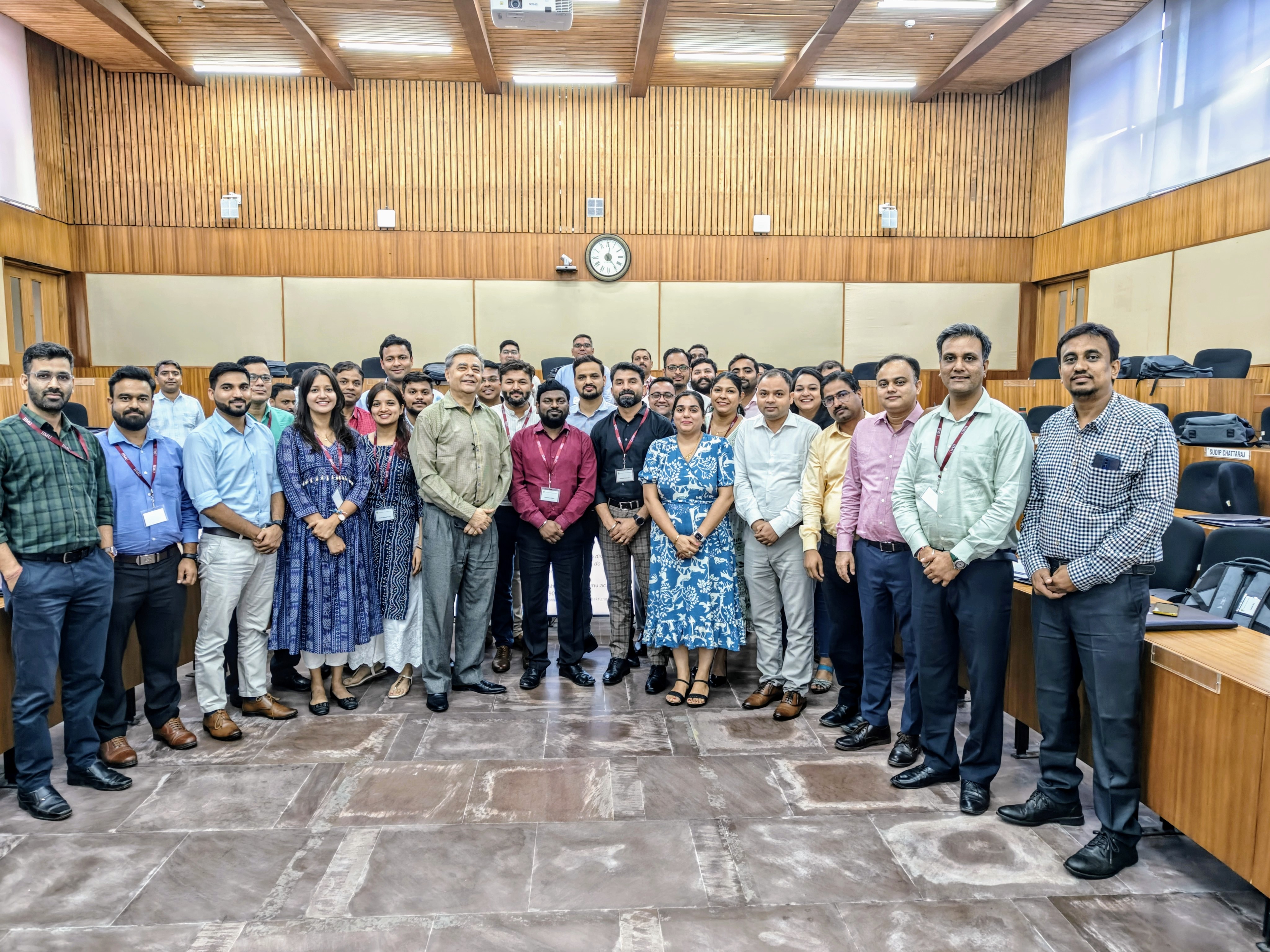
Recently at an IIM Udaipur conducted Management Development Program (MDP) for Indus Towers managers, I anchored four sessions. We started with the overarching perspective of Leadership and personal mastery before drilling down to specifics of Power & influence in teams, Managing high performance teams and the Feedback & Delegation aspects in Team Dynamics. We ensured a surfeit of activities, Role Plays and Case Studies to deepen the learning through practice and Ideation.

oplus_262144

In one of the sessions, we were in discussion of the aspects of ‘Honouring one’s word’ and ‘Being Authentic’ as performance accelerators of a team. Several participants mentioned their reservations about this, as under:

“If we become authentic and honour our word and others in the team do not do it, we would be taken advantage of and would be forced to do the work of others”

“All this is good theory but just does not work in real life. The fact is the Management has perceptions of who are good versus who are bad and irrespective of whether we honour our word or not, the favoured ones would get rewarded in terms of promotions and bonus”

In life, we are conditioned to judge others on moral and ethical yardsticks but remain quick to rationalize our own failings against the same yardsticks. We look around to try and determine who all are ‘honouring their word’ and tell ourselves that we would wait for others to honour and keep their word before we keep our own. As Chris Argyris had said about self-deception, ‘Put simply, people consistently act inconsistently, unaware of the contradiction between the way they think they are acting and the way they really act.’

 To gain the ability to honour our own word, we should be prepared to deeply deliberate and answer the question, ‘Where is my word when it comes time for me to keep my own word?’  In the ultimate analysis, there is a simple but inviolable equation of workability which is YOU are equal to YOUR WORD.

As I explained to the participants, team performance has very little to do with peering over shoulders to ascertain who is doing what. It has almost everything to do with how we can create trust of others in us. And creating trust has everything to do about Integrity viz. honouring our word and being authentic about how we show up for others. While some may try and take advantage of your trust in the short term, the aura of trust leads to team members gravitating towards you, working with you as you shift into being a natural leader.

How might you incorporate ‘Honouring your word’ and ‘Being authentic’ as part of how you show up tomorrow with your stakeholders?

In Learning……. Shakti Ghosal

Further Reading: ‘Integrity is a matter of a person’s word- nothing more, nothing less’– Michael Jensen, Professor Emeritus, Harvard Business School. Revised March 28, 2014.

Note : Indus Towers is India’s largest mobile tower installation company.  In India, 3 out of every 5 calls made are through an Indus site. https://www.industowers.com/

What to do when the world stinks


Some years back, I had a Divisional head join the team.

The guy had impressed the recruiting board with his talk of ‘track record’ and ‘ideas’ about how he planned to transform the business. When I got around to have a chat with him, he seemed to be all humility and spoke of his own self development through working and learning from me. But several subsequent events seemed to indicate that at the sniff of a challenge, his self-serving shield would go up, a lot of talk about blaming the environment and others in the team would emerge but not much action on the ground. In the meanwhile, the company kept losing competent and productive staff as well as customer accounts; his oft repeated declaration about ‘brickwalling’ them did not seem to be working.

To me it appeared that the Divisional Head did not know what he was working to develop; he was definitely not working on his own leadership. When I again had a chat with him, what came up were several blames. ‘That he had not bargained for the kind of work he was now being expected to do.’ ‘That I was failing to support him adequately.’ ‘That he was stuck with incompetent team members.’

In a nutshell, the job stank, I as the boss stank and the team stank! I did not have the heart to ask the guy that if the world all around stank, could it be that he himself was the problem?

How many of you have faced a similar situation at the workplace? If you have, have you wondered what one might need to do to transform the situation?

The world can shift when one shows up with authenticity and with humility.

Transformation:

  • When we see ourselves as the problem, we can be the solution too. We need to spend more time working on our own selves rather than trying to fix others.
  • Do we have the expectation that our team members should be the harbinger of good news and developments? We need to lower that expectation.
  • Empathy is a strong word; being empathetic is easier said than done. Nonetheless we need to practice putting ourselves in the shoes of others and seeing the world through their lens.
  • Gain the realization that others do not really humble us; we humble ourselves.
  • Show up as a servant leader. A leadership style that enables everyone in the organisation to feel empowered and thrive fearlessly as his / her authentic self.
  • Say ‘Thank you’ to three persons in a day. Look them in the eye and be specific. If someone is not around, send a thank you email or Whatsapp or make a call.

In Learning……                                                                 Shakti Ghosal

A recipe to develop humility in Leadership


It was an economic downturn period with the attendant business concerns. In a management strategy meeting, team members were called upon to offer suggestions about how they would wish to ring fence one’s customer accounts, sustain revenues and margins, bring down expenses and so on. I got the sense that the participants were merely sticking to the safety of what we had been doing in the past; no creative suggestions were forthcoming. It seemed to me that in a perceived environment of insecurity, no one was willing to stick his / her neck out. All were hesitating, waiting to do what they would be told.

This set me thinking. Could it be that my seeking suggestions of what each team member plans to do in an adverse situation was being viewed as appraising and judgmental? Could it be that my stance smacked of arrogance, that I was putting others in a spot but was not willing to commit myself?

In a follow-up meeting, I decided to orient the conversation differently. Prior to the meeting, I sent a note to all participants inviting them to come into the meeting with an answer to a simple statement and a question:

  • You would like to ask me about  _______________
  • What suggestion do you have about what I need to do?

The response was surprisingly overwhelming this time. Everyone chipped in with their frank assessment and the feedback I received were ‘I needed to be more of a team player, needed to be more accountable for team efforts’ and so on. Moreover, one could sense a renewed level of energy and vigour in the team’s declarations.

I thanked all for their frank inputs and avoided giving any explanations.

When later I thought about what had happened, I sensed that it all came down to my practicing humility in the meeting with vulnerability and the willingness to listen and learn. Without knowing it, I had shown up as a ‘Servant Leader’.

In ‘What Is Servant Leadership? A Philosophy for People-First Leadership’, author Sarah K. White, CIO says, Servant leadership is a leadership style that prioritizes the growth, well-being, and empowerment of employees. It aims to foster an inclusive environment that enables everyone in the organization to thrive as their authentic self. it helps create a “psychological ethical climate” that allows employees to be authentic and not fear judgment from leadership for being themselves.’

Humility begins with authenticity. And the pathway to the practice of authenticity begins with ‘being authentic to your own self about your own inauthenticities’. This pathway has no end, it is the journey that we need to enjoy.

If we are not careful, a leadership role has this nasty tendency of making us arrogant. “I am a leader because I am better. I know what is good for the team, so it needs to be my way or highway” is the kind of thought that can sometimes circle inside us. And such thoughts manifest in our conversations and actions.

Arrogance blocks growth, humility drives growth. Humble leaders always strive to develop themselves.

What humble practices might you adopt to develop your team?

In Learning…….  Shakti Ghosal

Acknowledgement: ‘What Is Servant Leadership? A Philosophy for People-First Leadership’ by  Sarah K. White, SHRM Labs, Feb. 28th 2022

How to navigate a Control Freak?


In our work life, all of us have come across bosses who are control freaks. These are folks with hardened mindsets about what got them to their positions of power. Under uncertain and ambiguous situations ( and today’s environment is becoming increasingly that), they are most prone to risk-aversion, look for scapegoats or black and white solutions and doubtful decision making.

Before we start forming strong opinions about others, we need to hold the thought we too  exhibit ‘control freak’ characteristics at certain times; we are genetically wired with an intrinsic need for control.

In a past assignment, I was reporting to a ‘control freak’ in the corporate office. He lacked domain knowledge relating to our area of business and made up for this lack through demanding total transparency of all operational aspects from our side but with an opaque Blackbox approach from his end. In meetings, he would ask all the questions and then attempt to put one manager against another in a classic divide and rule tactic, to elicit the ‘correct answer’. At times he would deploy the ruse of ‘letting go’ when he would shift to a ‘looking over the shoulder’ kind of control.

What the ‘control freak’ boss ended up achieving was disrespecting and devaluing people, demotivating me and creating stress all round.

The way I managed to handle the situation was to shift from my preoccupation and anxiety about what the boss was saying and thinking to a more inward looking focus. I started thinking about myself, my ‘own battles’ and what I could do in a situation. Every time I felt mistreated, I tried to hold the thought that it was really ‘not about me’; this allowed me to shift from reactiveness and choose a better response. Over time I knew that if I was not careful, my ‘response’ might easily get tainted with bitterness, fear or thoughts of revenge.

In my work life, I was also lucky to have worked with a boss at the other end of the spectrum. He was the ‘hands off’ type but at the same time objective driven. He shied away from taking credit but was always available for discussions and guidance relating to decision making. The team under his watch successfully handled one of the most technically challenging and largest HVAC projects in the country.

So, how might we support others impacted by excessive control in the work place?

  1. Coach how to ‘let go’ when perceiving to have been wronged. Such ‘looking inward’ practise needs dollops of courage, humility and self-compassion.
  2. Listen to frustrations. Acknowledge that it’s awful to feel disrespected by one’s boss.
  3. After listening, turn the conversation to the following: (a)How might you be a better team player as a result of working for a controlling boss? (b)How might you motivate yourself to perform even though your boss is disappointing?

In Musing ……..                Shakti Ghosal

That Disempowering edge of Commitment


To get commitment from one’s team towards achieving a common objective is a Leadership fundamental.

Recently, I was anchoring a Management Development program (MDP) for Senior Managers of National Hydroelectric Power Corporation. The program was designed to endow the participants with Leadership and Performance skills. An experiential aspect of the program required each participant to articulate a Leadership and / or Performance challenge which he is presently facing at the workplace.  This challenge would then become the central aspect of learning and application as the participant would be required to apply the various Leadership contextual elements to discover a ‘move forward’ pathway for resolving the challenge.

All the participants could identify such a challenge except one individual. Noticing that the person was looking lost, I asked him as to what the issue was. The response was surprising; the participant after some probing said that he could not think of any challenge at his workplace!

I though persevered and asked, “You surely would have faced some challenge at your workplace in the past, have you not?”

The participant still hesitated and with some reluctance started writing about a past challenge. To me it seemed the gentleman was fearful of recognizing and then committing about the situation at his workplace.

What is that which blocks many of us from recognizing an issue and then making a commitment to resolve it? Even when we might realize that the said commitment is something which works in our favour.

Commitment for many of us is like walking a tightrope. It carries with it the fear of failing, being ridiculed, getting our vulnerabilities exposed. Some of our past life experiences lead us to instinctively ‘avoid’ when it comes to making a commitment; we get conditioned to equate the latter to a danger of failing and losing our ‘status’.

When I think back about the participant and his reluctance to even identify a challenge, I can sense his avoidance mindset. In his mind, he would have been linking recognition of a workplace challenge to a commitment that he might need to make to resolve. If one avoids looking at an issue, one avoids getting involved. Like the protagonist Neo in the movie Matrix, one can cozily sleep walk in one’s make-believe world without the need to accept the harsh realities that exist.

So, what else could I have done to make it easy for that reluctant participant to identify and commit?

 I could have tried to empathise about the stress he might have been feeling. I could have said, “Confronting your challenge must be stressful for you”. I could have made a commitment to him that I would work with him to ensure that his challenge is resolved.

***

At the work place, we often wonder, “How can I get my team to do what I want them to do?”  Commitment cannot be force fitted and that paradoxically remains a leadership tool which can disempower. The answer is people do what THEY want to do. This remains at the core of how we could Invite effective commitment.

At the core of effective commitment:

  • Leadership which is unselfish; one which is willing to make unsolicited commitment to and investments in people.
  • Working from a perspective that commitment is a two-sided street.
  • Information sharing with all team members who have committed. Keeping information away weakens commitment.
  • Transparent and open-hearted conversations build connections which empowers two way commitments.
  • Moving on the commitment pathway addresses a deep-seated concern of each team member

Lasting goal achievement success requires commitment, not coercion.

As a leader, how might you establish shared commitments?

In Learning……..                                                                                                      Shakti Ghosal