The Audacity of Who I am


“High above the noise and fear mongering of critics and cynics softly speaks your true self.”
– Mollie Marti, Psychologist, Lawyer & Coach, USA

The other day, I watched the Bollywood movie Queen. In it Rani, a girl from Delhi, travels to Europe after being spurned by her fiancé. The movie then goes on to explore Rani’s ‘World view’ as dictated by her Indian middle class values and how that alters, as her biases and prejudices fall away, as she is confronted by radically different value systems and perspectives. A journey of self discovery in surroundings where she is no longer weighed down by others’ expectations and diktats. As she morphs, she confuses and pisses off many people including herself. Rani emerges from this crucible of experience as a more authentic human being. As she chooses to be ‘who she is for herself and for others’, she symbolises courage as well as resistance. Walking out of the theatre, I could not help but acknowledge how Rani’s awareness and acceptance of ‘who she is for herself and for others’ left her more empowered and in control of her destiny.

Kangana Ranaut in Queen

Who I am for myself and for others? How many of us are willing to make this query a daily practice as we loosen the constraints imposed by our world-view, let go of who we believe we should show up as and embrace who we really are?

What is it that makes me avoid being who I am for myself and for others? I can see this stemming from my desperation to be admired, liked and looking good. My life experiences have conditioned me to avoid being straightforward and veer towards being diplomatic if I perceive it is the latter which makes me look good. I have also been guilty of the corporate lie. On occasions I have stretched the truth about my company and its services, hidden what could have been embarrassing. On other occasions I have manipulated situations and people. All this to succeed, be admired, look good.

I muse. Have my efforts to gain admiration and look good empowered me to greater heights? Have I succeeded in engaging in my life from a place of worthiness? I remain increasingly unsure.

So if avoiding ‘who I am for myself and for others’ has not worked for me, how could I embrace it? As I think of this, I begin to see what being who I am for myself and for others could mean for me.
Who I am 1

It would mean the audacity to show up as the ‘imperfect me’ that I am and the willingness to be vulnerable.

It would mean the audacity to let my hair down and allow myself to truly belong with the folks I choose.

It would mean the audacity to be compassionate and loving even when I hold the fear of not being good enough.

It would mean the audacity to be authentic about my own inauthenticities.

Am I committed to being this audacious?

***

“Real isn’t how you are made,’ said the Skin Horse.’ It’s a thing that happens to you. When a child loves you for a long, long time, not just to play with, but REALLY loves you, then you become Real.’

‘Does it hurt?’ asked the Rabbit.

‘Sometimes,’ said the Skin Horse, for he was always truthful. ‘When you are Real you don’t mind being hurt.’

‘Does it happen all at once, like being wound up,’ he asked, ‘or bit by bit?’

‘It doesn’t happen all at once,’ said the Skin Horse. ‘You become. It takes a long time. That’s why it doesn’t happen often to people who break easily, or have sharp edges, or who have to be carefully kept. Generally, by the time you are Real, most of your hair has been loved off, and your eyes drop out and you get loose in the joints and very shabby. But these things don’t matter at all, because once you are Real you can’t be ugly, except to people who don’t understand.”

Excerpt from ‘The Velveteen Rabbit’ by Margery Williams

In Learning….. Shakti Ghosal

Is this all there is?


What all is out there

I cannot claim to recall what I first saw as I came into this world. But I do hold memories of the wonder I felt as a child as I looked up at the evening sky and the stars. Or as I lay on the grass for hours, watching an array of ants or beetles carrying morsels of food. As I think back to those times of wonderment, I can still sense the question at the core, “What all is out there?”

Growing up, seeing and trying things for the first time, leaving home and going to hostel, getting into a new job, place, assignment. Into the unknown every time. At all such junctures, I sensed support from that accompanying question, “What all is out there?”

Life seemed to accompany with surprises galore. As I walked the pathway of new decisions, new insights, new direction, new philosophies. And as I continued to negotiate life’s surprises, what remained with me was, “What all is out there?”

“What all is out there?” It was about embracing and trusting that first step. It was about seeing things for the first time. It was about that unquestioning and unconditional mindset to take it all in. It was about listening to the life and energy that surrounds. It was about feeling connected to all things. It was about that undeniable faith that the world gives.

Those were the days my friend
We thought they’d never end
We’d sing and dance forever and a day
We’d live the life we choose
We’d fight and never lose
For we were young and sure to have our way

– Mary Hopkins, 1968

But somewhere along the way, that childlike wonder, vision and instinct seemed to dim. What seeped in was disenchantment and boredom. A preoccupation with things that are artificial. The burden of living up to other’s expectations. The loss of the allure of things acquired and goals achieved. The ‘Wow!’ and the newness of the first time giving way to ‘Being there, Done that’ refrain. The question taking center stage in my mind was, “Is this all there is?”

Is this all there is

“Is this all there is?” I wonder how this has taken root within me. Is this a mindset shift that gives undue importance to my knowing rather than feeling? Is this the conditioning from my education and peers which extol knowledge and wisdom as must-have virtues and gives short shrift to emotion and intuition? Is this my refuge from the sheer inadequacy I feel in dealing with a complex world?

Even though I discipline myself to ‘count my blessings’ and think of all that I have achieved in terms of position, wealth and family, I sense an emptiness and a lack of fulfillment. A feeling of disorientation and loss. Why is this I wonder?

I also sense another change in me. I now think much more of how much time and opportunity I have left rather than how far I have come and what I have achieved. If only I could recapture that ‘sense of wonder’ from my childhood for this remaining time and opportunity I have. I know in my heart of hearts that this could be that unfailing antidote against all that boredom and disenchantment I feel. But how could I do this?

Authors Werner Erhard and Michael Jensen in ‘Four Ways of Being that Create the Foundations of A Great Life, Great Leadership and A Great Organization’ point to a way when they identify one of the foundations as, ‘Being committed to something bigger than oneself’. In the words of the authors, “This is being committed in a way that shapes one’s being and actions so that your ways of being and acting are in the service of realizing something beyond your personal concerns for yourself – beyond a direct personal payoff. As they are acted on, such commitments create something to which others can also be committed and have the sense that their lives are about something bigger than themselves. This is an important aspect of a great personal life, great leadership and a great organization”.

As I muse I realize that the way to handle “Is this all there is” is in finding and pursuing a Cause that ignites a passion in me. A cause bigger than myself, that which energises and lights me up from within. What may this Cause be for me I am left wondering.

***
A quote from George Bernard Shaw’s ‘Man and Superman’.

“This is the true joy in life, the being used for a purpose recognized by yourself as a mighty one; the being a force of nature instead of a feverish selfish little clod of ailments and grievances complaining that the world will not devote itself to making you happy.

I am of the opinion that my life belongs to the whole community and as long as I live, it is my privilege to do for it whatever I can.

I want to be thoroughly used up when I die, for the harder I work the more I live. I rejoice in life for its own sake. Life is no “brief candle” to me. It is a sort of splendid torch which I have got hold of for the moment, and I want to make it burn as brightly as possible before handing it on to future generations.”25
***

In learning……….. Shakti Ghosal

Acknowledgements:
1) Four Ways of Being that Create the Foundations of A Great Life, Great Leadership and A Great Organization– by Werner Erhard and Michael Jensen, a Harvard Business School research paper, Nov. 2013.

2) Man and Superman– by George Bernard Shaw, 1903

The Value of Privacy?


The other day I was reading about the uproar the class action law suit against Facebook was creating. Commentators and activists alike were deriding the fact that Facebook had unscrupulously ‘eavesdropped’ on private messages to determine what kind of advertisements and products could be pushed onto our personal Facebook home pages. There has been a long held suspicion and whisper campaign that internet giant Google is also not above board on such personal data mining and use without permission. The fear of personal data theft and use and the consequences thereof seems to be morphing into Privacy versus Technology crusade for many.

value-of-privacy-624x468

As I muse over all this, I wonder what really is this outrage over privacy all about? Is it not that we voluntarily share information about ourselves a thousand times more than what we did a mere decade back? Is it not that we share such information to make our own lives easier?

I can recall a prescient prediction of more than a decade ago which said that ‘our planet will acquire an electronic skin’. We seem to have reached some kind of a tipping point where communication between person to person, person to inanimate object and even between inanimate objects is becoming increasingly commonplace using smart devices. Such communications and information flows get supported as disparate technologies converge and in between gatekeepers vanish. Technology giant CISCO dubs this as “internet of everything”.

So what really is occurring? On one end of the spectrum is the promise of Web 2.0, cloud computing and allied architecture allowing off-machine data storage and ‘on demand’ application access. Somewhere in the middle are the rapid strides of broadband, wireless internet and cutting edge data analytics. The other end of the spectrum remains all about mobile devices and smart phones. Each of them holding computing power more than what was available for the Apollo missions to the moon!

As the planet’s ‘electronic skin’ becomes more pervasive in this manner, it supports us to make things simple. As it begins to ‘understand’ our needs, preferences and propensity for repetitive tasks. Be it about the kind of television channel or social media we watch. Or the kind of cuisine and wine we prefer on weekends. Or monitor chronic ailments to cut our health costs. Or track and complete payments of our bills. Or our office / home address and what route to take to reach there most optimally. Or our offices and homes to predict and act on our energy, water and other service needs. Or to………….. The possibilities are endless and ever increasing.

wired-world

How could this ‘electronic skin’ support us in all the above ways if it was not privy to our private information and preferences? How could we hanker for more of our needs to be anticipated by the environment if we did not allow more complete profiles of ourselves to be maintained within the same environment?

I muse about this apparent contradiction.

Could it be that as we seek increased support and comforts from technology in terms of automating our life’s mundane tasks, we choose to ignore the fact that this requires constant exchange of our privacy data between networks and devices? Could it be that what we assumed as our ‘privacy perimeter’ in the past may no longer be relevant in an increasingly wired world? As Steve Rambam, the internet privacy specialist says, “Privacy is dead- get over it”. So how do we ‘get over it’ and re-visualise our privacy parameter?

I sense the concern that most of us carry about privacy. Through the annals of history, we have come to see privacy as an undeniable human right, inseparable from the concept of liberty. When we perceive an assault on our privacy, we apprehend a loss of freedom through being judged, criticized and corrected. Further, with an ‘electronic skin’ all around, we now fear that electronic footprints we leave behind might be used to implicate or defraud us. Is the core of our privacy concern about being compromised by something we have hidden or need to hide? Or is it about losing our individuality as all we say or do gets recorded in that all around ‘electronic skin’?

So how could we reassess the value of privacy in our lives today? I believe that first we need to shift ourselves away from the perspective that it is all about liberty versus control. This need not be if we retain conviction about what we say and do and not get dissuaded by the thought of getting judged or criticized. Secondly, we need to become comfortable with our personal lives being increasingly visible to others. As we feel less need to ‘hide’ aspects of ourselves. As we embrace values of integrity and authenticity into our lives. As we align more and more with the path yielding the greatest good for our organisations, communities and society at large.

In learning…………… Shakti Ghosal

Acknowledgement: ‘The Value of Privacy’- A blog post by Bruce Schneier, May 2006

Sagrada Familia and the Power of Intentions


“Inspiration is intention obeyed.” Emily Carr, Canadian artist and writer, early twentieth century

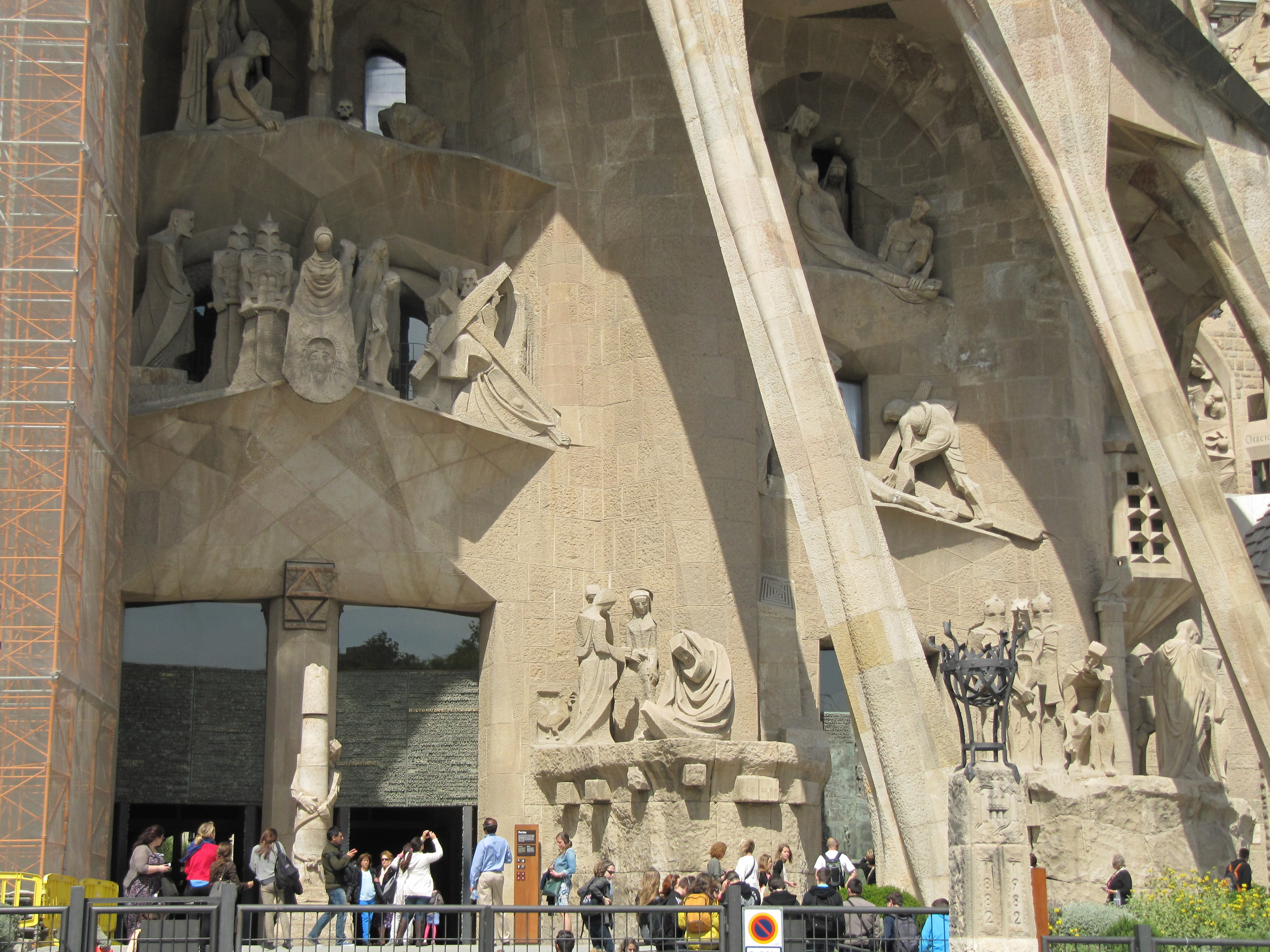
Coming into Barcelona by the high speed AVE train, we disembark at Barcelona Sants and proceed to our hotel. Check-in over, I enquire about how to go to Sagrada Familia and am delighted to learn that it is a mere ten minutes away by walk.

My pre-visit reading up on the Sagrada Familia basilica does not stop me from gasping in wonderment as I first set my eyes on the structure from across the park in front. At once imposing due to an unorthodox modernistic architecture and at the same time incongruous due to the plethora of construction platforms and jib cranes.
IMG_1887
This Antoni Gaudi creation has been a work in process for one hundred and thirty years now, having survived the World Wars and the much more vicious Spanish Civil War. Termed as the most ambitious cathedral in human history and the work completion still uncertain, the gargantuan structure continues to attract generations of architects and sculptors from across the world.
IMG_1890
Stepping inside the interiors of the main tower, I am astounded by the myriad forked columns going up to create a network which resembles a forest cover. Is this how the creator visualised this I wonder? So what was the final image that Gaudi held when he passed away close to a century back leaving behind a fraction of what he had set out to make?
IMG_1910
IMG_1900
Near the rear façade, I overhear a guide telling a bunch of tourists that the reason why Antonio Gaudi had not been able to make progress with the construction over more than four decades of his personal involvement was because he was always improvising and making design changes even when the construction was on. And some of the complex architecture he envisioned required technologies and processes not then conceived.
IMG_1905
IMG_1896
I stroll away musing. What was it that had motivated Gaudi to keep on improvising and changing thus to hamper the progress of what he wanted to create? Strange as it may seem, could it be that Gaudi was not oriented toward a time specific goal? Could he have been following a path that only focussed on ‘how he was being in that moment’? Could he have set his intentions to align away from the actual work completion and more with his inner values?

Contrary to what we generally believe, our intentions can be significantly different from our goals. The whole concept of goal achievement can be seen as a cause and effect relationship. Something like an Action- Reaction with the goal being the final effect; the reason why goal achievements need action plans. With the increasing hype and obsession with goals, we see our actions as the cause that lead us to the goal. But brickwalling our thinking thus prevents us from probing deeper for the real cause and we are frequently frustrated to see set Goals not being achieved. A misalignment of externally motivated goals and our true inner intentions. A century ago, was Gaudi too a victim of such misalignment, I wonder?

So how do we align our goals with our true intentions? How could we simply plant an intention and watch it grow into a desired goal? Dr. Wayne Dyer, the renowned speaker in the field of self-improvement, says, “You have to just be. You have to let go. You have to allow. You have to be free and make this your consciousness.” He continues, “Basically, what you would see is a frequency (of energy) that manifests itself through the process of giving, of allowing, of offering and of serving. It asks nothing back. This is the power of intention.” According to Dr. Dyer, the process of allowing, just being and embracing this heightened level of consciousness, goes back not to attracting what you want, but attracting what you are.

Walking away, I look back one last time at Gaudi’s magnum opus in the fading evening light. I sense the power of intention which allowed Gaudi and the scores of architects and sculptors after him for more than a century, to only “give, allow, serve” asking nothing in return as they continued their journey of “being”.

In learning…….. Shakti Ghosal

Acknowledgement: The Power of Intention- Learning to co-create your World your Way
by Dr. Wayne W. Dyer, 2010. A Hay House Inc. publication.

The ‘Being Human’ Organisation of the twenty-first century


‘It is amazing how much you can accomplish when it doesn’t matter who gets the credit.’ Unknown

The other day, a news item on Johnson & Johnson caught my attention. About the company accepting charges of bribery to promote its antipsychotic drug Risperdal to children and people with developmental disabilities and agreeing to pay USD 2.2 billion in criminal and civil fines. My thoughts go out to another disparate case closer home where a reputed business group stands charged of selling fake machinery parts as genuine, endangering people’s lives while making huge profits.

What is it that makes an organisation declare values to which it does not adhere to? What is it that makes multinational corporations like Johnson & Johnson spend millions to create a brand equity of “love and care” while bribing to ‘push’ a controversial drug onto people who need love and care the most?

I muse about my own self. As I think of who I am and what I do at work, I notice significant dichotomies. As an individual working in the corporate world for three decades, I see that I have conditioned myself to believe that the value systems which apply to me at the individual level no longer remain valid as soon as I wear my organisational hat. Be it in aspects of transparency, business ethics, environmental concerns and several other areas. Somehow, I have developed the underlying belief that these fall lower in priority than the core business objectives of top line and bottom line growth. I must confess that I have rarely questioned why it should be so.

What is it that has conditioned me so? I think of how organizations evolved in the last century. Of how they have remained focused on achieving growth and profit objectives alone. Of how Organisations have ‘learned’ ways to pass on the costs of their activities for others to pay. Of how this behaviour resulted in the 2008 global financial crisis when companies created bad debt and exported that all over the world.

As I wear the organisational hat, I can see the intrinsic conflicts that I face.

• Do I achieve success by maximising Shareholder wealth or do I take the path of social responsibility?
• Do I increase profits or do I take responsibility for an environment crying out for help?
• Do I indulge in rampant business expansion or do I ensure avoidance of exploitation?

tight-rope-walker-pink_pan_14115

In the 2003 award wining documentary film, ‘ The Corporation’, University of British Columbia professor and author Joel Bakan asks, ‘If a corporation is a person, what type of a person is it?’ The documentary goes on to show that most organisations comprise of network of conversations that are inconsistent, dissonant and cluttered. The conversations exhibit the qualities and attributes that, if the organisation were to be a person, it would be termed a psychopath. The induced organisational behaviour from such a conversational clutter ranges from “callous disregard for people’s feelings, incapability to maintain human relationships, deceiving for profit, inability to feel guilt and complete disregard for the safety of others.”

Clearly the world seems to be reaching an inflexion point. Jay Deragon, in a recent blog post titled ‘Being Human’ says, “It seems odd to think that business leaders are just now recognizing that their business results have a direct correlation to the organizations ability to think, act, speak and feel in human terms. Yet instead of measuring the organization’s human abilities, leaders still focus on measuring, thinking and chasing outcomes in financial terms.”

Consciousness has arisen that for sustainability there needs to be an alignment and acceptance of the core human values at the organisational level too. To me that is a wonderful shift and a significant evolutionary development.

So with such consciousness what could be the way forward?

creativity-training-eye

Authors Steve Zaffron and Dave Logan in their path breaking book, ‘The Three Laws of Performance’ point to a direction as they suggest the need for organisations to transform themselves into being “Self-led”. This ‘Self’ arises from all people and stakeholders participating in the organisation’s network of conversations. So how do we do that? By first shifting away from the belief that “we need to involve only those who need to be involved”. As I look inwards, I realize that this belief arises from my apprehension of a ‘loss of control’. But as I choose to allow external stakeholders into my network of conversations, I am able to shift them into a space where they feel they can contribute. A shift away from ‘we don’t trust you’ and towards ‘let’s all of us get involved in the success vision of our business’.

Can we see the need for us to contextualize our ‘organisation hat’ wearing persona in the society within which we are embedded and exist? Methinks every one of us needs to become an active player in this great initiative. For in this resides the opportunity to find the balance we seek in the world today.

In Learning………… Shakti Ghosal

Acknowledgements:

1)The Corporation– a documentary film written by Joel Bakan, and directed by Mark Achbar and Jennifer Abbott, 2003 : http://www.thecorporation.com

2)Being Human creates higher returns– a blog by Jay Deragon:
http://www.relationship-economy.com/2013/10/being-human-creates-higher- returns/

3)The Three Laws of Performance- Rewriting the Future of your Organisation and your life by Steve Zaffron and Dave Logan, Aug.2011: http://www.threelawsofperformance.com/

An Equal Music….


“…….no noise nor silence, but one equal music; 
no fears nor hopes, but one equal possession; 
no ends nor beginnings, but one equal eternity….”

                                           
   – John Donne, English Poet and Preacher, 17th Century

imagesCAMC30Z3
 

My earliest memories of Shanti kaku is of him slowly limping back home with a bag carrying some basic groceries.

 Since the time I could remember Shanti kaku had always been around, doing odd errands for all and sundry. He was the youngest of seven surviving children of my paternal grand parents. It was rumoured that his birth had been complicated because of a forceps delivery process gone horribly wrong. It led to him coming into the world challenged, both mentally and physically.

 Shanti kaku survived. Only to suffer the ignominy and arrows of being unequal, different, even retarded. I have sometimes wondered how this unfortunate uncle of mine made peace with these demons. Or did he really need to? Could it just be that what he saw of the world and people around him was normal to him, what he had experienced from the time he could remember? Without the consciousness of ‘what could have been’, he had nothing to compare his experience with, nothing to feel bad about.

  All the other aunts and uncles went to school, some then to college. My grand parents tried to send Shanti kaku to school but faced rejection. Not having the benefit of psychiatric support nor any special needs school in those days, there remained no other option but for Shanti kaku to  continue  his frugal education at home. Sitting, lying beside his mother, listening to her relating the grand tales of Ramayana and Mahabharata.

 Slowly but surely, Shanti kaku started to fathom what my grandmother really wanted. In his own special way, in a way quite different from his siblings who were growing up with their own dreams and destinies. He instinctively knew that what his mother desired, beyond most things, was to see him happy. Was this a primal connection driven back to the womb?

Time passed and brought change, as it inevitably does. Change in the situation of my father and the “normal” aunts and uncles who settled down into their own lives and families. Change in the feelings and attitude towards their youngest sibling which shifted from being “different” to being a “burden.” Come to think of it, burden is such an interesting word. A word loaded with different meanings allowing the user to at once demean the other person and highlight one’s own inability towards taking responsibility. What remained changeless was Shanti kaku’s situation and his connection to my grandmother. Shanti kaku remained what he was, where he was. As he continued to do the menial chores which he was asked to.

 It was my final school leaving year. In fact, it was during my Board examinations when my Grandmother, then in her eighties and staying with us, became seriously ill, destined not to recover. For sometime her health had been failing, that time honoured twinkle in her eyes fading. But as she lay dying, one could but hardly avoid noticing how she held on and lingered as her last remaining purpose in life, that “different” child, sat beside her.

 After all these decades, I can still recall that early morning when my grandmother passed away. Amongst all the sound of preparations to take the body for cremation and folks coming to pay their last respects, there remained that low pitched moan from the room of the deceased. It emanated from Shanti kaku as he alone held onto his mother’s hand.

It seemed disturbingly like music of a past trying to equal and come to terms with that of an uncertain future. Full of sadness, tiredness and the irrelevance of it all To my teenage mind however, obsessed as it was with success in examinations and the promise of a hopeful tomorrow, it evoked intolerance and impatience.

 Today, decades later, as I stand in that tomorrow I have created, and look back, what do I see? What I see are moments of happiness I have enjoyed, moments of energy as I followed my passion, moments of the relevance I have had in the world. Why then does the music of my actions and words search for its equal in a future that continues to be elusive? I wonder.


In Learning………………………                                                    Shakti Ghosal

Segovia and the polarity in my life


‘Have a dialogue between the two opposing parts and you will find that they always start out fighting each other until we come to an appreciation of difference… a oneness and integration of the two opposing forces.’
– Frederick Salomon Perls, German born, Jewish psychotherapist, 1950s.

Segovia- the name itself conjures up visions of victory and beyond.

Walking through the Plaza del Azoguejo, I can scarcely fail to sense the ebbs and flows of more than two millennia. As I stroll on the Plaza, myriad visions seem to surround me. Of the Celts declaring this their homestead during the Iron-age and looking down at the small valleys and canyons watered by the River Doraton. Of the Romans who took over as they pushed their empire far and wide, employing cutting edge technologies like the aquaduct. Of this once proud city lying forlorn and abandoned after the Arab invasion. Of its rejuvenation and the Gothic architectural renaissance after the middle ages.

???????????????????????????????
As I walk along the Calle Real towards the Plaza mayor, I am confronted with two distinctive aspects of this quaint World heritage town. Of expansive monuments, castles and cathedrals soaring into the skies, free of all restraint. Standing cheek by jowl with narrow, cobbled alleys, portraying a different world of scarcity and constraint. Interesting, is it not, this variance in the mindset of a society which creates and builds such contrasts? Is this merely a reflection of the socio-economic disparity and exploitation as many might suggest? Or could this be about something deeper within the human psyche?

???????????????????????????????
???????????????????????????????
I muse and look inwards. And I start seeing the polarity of the differing aspects coexisting within me. An Abundance of resolve and the Scarcity of insecurity. An unrestrained Soaring of broadmindedness and the constricted Narrowness of prejudices.

I soar as I become conscious of my unique magnificience, replete with my abilities, experiences and values. As I live in a mindset of abundance, knowing there is plenty of wealth, happiness and fulfillment to go around. A belief which allows me to acknowledge my gratitude for people, situations and circumstances that foster me.

I constrict when I feel the need to protect myself from what I perceive to be a dangerous world.As I get conditioned to focus on what’s wrong with me and my life rather than celebrate what is right. As I see myself in competition for the world’s resources and the love and attention of others.

Looking at these aspects within me, I however see no stretch, no strain. How so, I reflect in wonderment?

But as I reflect, I start seeing the pattern. Of the continuum that exists within me with the ‘soaring magnificence ’ at one end and the ‘constricting narrowness’ at the other. Two poles that define the polarity of my existence. I further see how my coloured perception of different situations make me land at different points on the continuum. Making me soar and constrict at different times.

I am….. Soaring Magnificence ( SM)
I am… Constricting Narrowness ( CN).

I acknowledge both and, for the first time, make them to speak to each other.

twoheatsbeatasone1

SM : “I need to soar. I need to break out of this vicious cycle of competition .and domination.”
CN: “You couldn’t possibly do that, could you? Do you realise what is at the core of these?”
SM: “Not really. What would that be?”
CN: “Well it is your Self doubt and fear. Self doubt that you are not good enough to get your fair share of love, fun, money.. Fear that if you do not resist, you will be dominated and cheated. Can you not see how essential these are for your security?”
SM: “Hmmm! So what could I do to rid me of self doubt and fear?
CN: “Frankly I wouldn’t know. In any case, why would you like to do that, losing your comfort zone and safety?”
SM: “But I wish to soar! That’s what I am here for. Suppose I were to replace self doubt and fear with trust. Trusting myself and others. Trusting my own abilities. Trusting that others are doing the best they know how to.”
CN: “How would you do that? Should you not be judging and be attached to what you would like to achieve?”
SM: “That’s it! You have shown me the way forward. I shall not judge, I shall remain unattached.”

There is no further comeback.

In learning…………………. Shakti Ghosal

Connectedness – My takeaway from Avatar


“….and unless we touch others, we’re out of touch with life.”
– Oliver Wendall Holmes, American physician & poet. 19th Century

6e91d48bad32277a5f6b56ca4e94bbdd81b17975def448dd3f73f4b6

Most of us remember the James Cameron directed 2009 epic Avatar as a technically brilliant Sci Fi extravaganza. But what fascinated me about the story was the vast neural connectivity between every living organism on that beautiful world of Pandora. A network which allowed the humanoid species called Na’vi to not only connect to every other flora and fauna on the planet but to an evolved and higher planetary consciousness called Eywa. Eywa apparently is all about deep connection , bonding and balance, termed in Na’vi language as tsaheylu, and this alone becomes responsible for the defeat of the otherwise technologically superior and better armed human army.

Sometime back I had mused on the influence of internet and social media connectivity and the shift it is bringing to our society in ‘A World of Tweeple’. A shift that is moving large swathes of humanity from traditional groupings of ethnicity, community and religion to individual ‘Me- Self’ connectivities that satisfy emotional and social needs. My crystal ball gazing showed up two paths. One leading to a frightening Matrix like future where wired to central intelligences, we access information at will in return for our innermost thoughts and beliefs on display for others to examine. The other path holding the promise of our individualism being empowered by the power of networks to achieve a utopian future.
20090921_social_connections
What is it about these visions of connectivity that fascinate so? Does such connectedness somehow, somewhere, signify an aspect of yearning, an area where we see a lack? I dwell upon this. I see myself connected to every life form through that double helix structure called DNA. I see my connections in the symbiotic relationship of the air, food and water that I take in. And I also see my connections in my social needs to bond and belong.

So what exactly is lacking?

I decide to do a reality check. What is it that makes us prefer Facebook friends to real ones? Could this be because deep down we remain diffident and uncertain about our ability to ‘connect with our hearts’, so essential to blossom a real friendship? Could this be because Facebook and such social media technologies allow us to calibrate and control how much, when and where we choose to share? Something which real friendships and connections could never tolerate. Could this be the reason that as technology gives us the means ‘to connect’ more and more, we see increasing evidence of disempowering disconnect all around? As we try and escape by shifting our connectivity to gadgets and technologies than to each other……….

I once again come round to the thinking that we have indeed become obsessed with a “Me- Self” mindset. And have chosen to forget all that had our forefathers had learnt to reach this stage of societal development. Aspect of being there for each other. Aspects of trust and empathy. The need to reboot our ‘operating system’ back to “Us –Selves” from the recently acquired “Me- Self”

So I come back to the question about what could we do to steer onto the alternative path promising that utopian future?

In a recent graduation address, Nipun Mehta, the 32 year old founder of CharityFocus.org and a recipient of the Jefferson Award for Public Service, speaks of three keys that helped him to return to a place of connection.

• Key number one ‘To Give’: Contrary to what the corporate world teaches, Nipun started with the hypothesis, “Maybe Greed is good but Generosity is better”. His experience with several projects has shown that (in his own words) ‘People consistently underestimate generosity, but human beings are internally wired to give.”

• Key number two ‘To Receive’: In Nipun’s words, “With any act of unconditional service, no matter how small, our biochemistry changes, our mind quietens, and we feel a sense of gratefulness. This inner transformation fundamentally shifts the direction of our lives.” It is in giving that we receive.

• Key number three ‘To Dance’: Contrary to what most people do, Nipun says that we should never try and track what is being given or received. Instead we need to let go and tune into the rhythm. The real reward of the give and take lies not in the value of what is being exchanged but the connection which flows underneath.

To Nipun Mehta’s three keys, I wish to add a fourth one.

• Key number four ‘To be Conscious’: As conscious beings, we are uniquely endowed with awareness and imagination. Aspects which allow us to connect to the Universe. As we do this, using vehicles like Science, Art and Religion, we are able to gain the unique understanding of the “spirit” that permeates and connects all things. Much like the connectivity in Avatar, it is this spiritual consciousness that becomes our ultimate connection to everything in the universe.

zen-of-connectedness-hands-frame

So, are we ready to give, to receive, to dance and to be conscious……… and to connect as we move through our lives?

“The cosmos is within us. We are made of star-stuff. We are a way for the universe to know itself.”
― Carl Sagan, 1990.

In Learning…………………… Shakti Ghosal
Acknowledgement: Miserable & Magical: A Graduation Speech for Paradoxical Times– by Nipun Mehta, May 27, 2013.

Being versus Doing- A tale of two airlines


“We are human beings, not human doings” – Deepak Chopra,2008.

being-and-doing

Over the last year or so, I have had two markedly different experiences with Airlines on the same issue. Let me not name the airlines here but rather focus on the experiences.

Airline A : I reached Chicago over the airline’s European hub only to find that both my bags had not arrived. It was eighteen hours into the journey and as I stood there clutching the missing baggage report, I was advised by the ground handling staff to call up the airline toll free number for further assistance and updates. Little did I realise that this was the beginning of my ordeal. Countless calls only led me into the votaries of a sophisticated message switch with friendly automated voices always offering a menu of further numbers to be dialed and inviting me to leave a message. I felt like going round and round the mulberry bush! Try as I did, I could never reach a human voice. Several frustrated calls and auto reply emails later, the airline deigned to send a cryptic SMS to the effect that the missing bags were available for collection and for further assistance, could I call them on phone. I shuddered. Visions of me once again failing to negotiate the matrix like maze of the airline communication system haunted me in technicolour.

Airline B : A few months later as I traveled on a lesser known regional airline, my bags once again failed to make it to the conveyor belt. As I was getting the passenger irregularity form filled, hearing running steps, I turned around to see the airline station representative come to me. He hesitated and then apologetically told me that since his airline baggage tracing system was still not automated, he would be the point of contact. I remained skeptical but to my pleasant surprise next morning, not only did I get a call from the guy that my bags had arrived but that he had arranged to send them to me. The bags duly arrived along with a box of chocolates and an apology note.

lost-luggage

What is it that differentiated my service level experiences of these two airlines thus?

My thoughts once again returned to “Leadership and Self Deception” by the Arbinger Institute*. One of the great take-away from this book is that our externally manifested behaviour of how we do what we do is never as important as who we are. We hold the choice of how we wish to see people around us.

We can choose to see people as people. Which leads us to genuinely connect with people and do what is right.

Or we can choose to see people as tasks. Which leads us to see them somehow as obstacles in our scheme of things, stuff which need to be completed and disposed off in the most efficient manner.

Airline A chose to see me and my bags as a task to be done. Being a global brand, it used the latest customer response technology. I and my missing bags were a blip in the statistics and graphs. A blip that goes off with no trace once the problem gets sorted. The airline had chosen to follow the path of ‘how we do what we do’. So in all its affirmations of providing the best in class customer service and experience, technology had taken centre stage, employees relegated to being merely the support cast.

Airline B chose to see me as a person. Someone with feelings and emotion. Someone who was desperate to find a person who would listen and care. It had put its faith in showing up as ‘Who we are’. Lacking great resources, it had to make do with the few employees it had on the ground and trusting and empowering them.

So I come back to why ‘Who we are’ resonated so much more deeply than ‘How we do what we do’ with me. I could intuitively put my trust in the genuineness of ‘Who Airline B was’, complete with its vulnerability and shortcomings. What really mattered to me was that my existence was being acknowledged. Contrast this with the Airline A’s focus on technology and ‘How it does what it does’. For me, this remained what it was, the Airline’s obsession with its own inner process and priorities, not really about me, the client.

What is it then that makes many of us, organisations and individuals alike, take the path of how we do what we do? Is this because of the modern day belief that the more we do, the more we have? A belief reinforced by technology that allows us to ‘do’ 24X7, globally, virtually. Is it because as we ‘do’, we get reassured of the results? But could this be conditioning us into a compulsive ‘doing’ behaviour? A behaviour that stops us from being ‘who we are’, something which would have allowed us to gain greater awareness and become more discerning about what we do.

I come to the realisation that be it as organisations or individuals, it is only when we remain firmly anchored in ‘who we are’, our core values and competences, and allow ‘what we do’ to flow out of that can we hope to be the true leaders and game changers of tomorrow.

In learning………………….. Shakti Ghosal

Footnote: * In an earlier post titled, “ What if……..”, I had taken reference to the book, Leadership and Self Deception, in a somewhat different context.

Acknowledgement: Leadership and Self-Deception: Getting Out of the Box – An Arbinger Institute publication, 2008.

The Mask


I recall that delightful Jim Carrey starrer ‘The Mask’ of almost two decades back. In the movie, merely putting on the magical mask would at once transform the otherwise meek and submissive Stanley Ipkiss (Jim Carrey) into a brash, uninhibited and intractable guy with super-hero powers. Predictably the Mask was able to achieve all that his alter ego Ipkiss could only dream of.

The Mask

What if we could lay our hands on such a magical mask and make all our dreams come true?

As I think of this, I realise that I too have a mask which I wear. Where did this mask come from? I think back into my past to find an answer. Growing up, in school and at home, I was ‘taught’ to smoothen the jagged, impulsive edges of who I was, to conform to all that surrounded me. I quickly ‘learnt’ to keep my jaggedness and impulses under wraps for fear of being branded a rebel. This need to conform, to show up the way others wanted me to, brought the first layers of my mask.

At work, I remain conditioned to use the authority vested in me by my job title. Over the years I have ‘learnt’ to show up in set ways to demand respect and results from others. Day in, day out, this need to show up as someone larger than who I am, a know-all superior guy, seemingly in control, has made up more layers of my mask.

I see that the mask has served me to achieve outcomes. But as it has served, it has also hardened to become an intrinsic part of who I am. So intrinsic that today it is the mask which mostly ‘runs the show’, not the authentic me. I have become the Mask. That imposter strutting on the world stage, relegating the authentic me into the dark recesses.

What is it that compels me to wear the mask? What is it that makes me hide behind it thus? I see this emanating from my need to wield power, control outcomes, what I want to do. So I hide behind my mask, forgetting who I want to be. Yes, my “what I want to do’ has taken precedence over “who I want to be.”

Seeming and being

A voice asks. “You have had your way, done what you wanted to. Have your dreams come true?”
Pondering over this question, I can only whisper, “Not really…… I still search for that elusive pot of happiness and fulfillment.”
“What could be the way forward?” I ask.
‘What if you could redeem your true self from the role you have got conditioned to play? What if you could forget what you want to do? What if you could just be who you want to be?” says the departing voice.

But what would this take?

Am I prepared to embrace openness and be vulnerable?
Can I be non-judgemental?
Am I prepared to let go of my fear of rejection?
Am I willing to surrender?

Like Ipkiss, I decide to let go of the mask. As I negotiate this rarely trodden path to mask-freedom, I luxuriate in the myriad human connections, their love and sharing that approach the authentic me. I see now what a great trade-off this has been.

***

“Chronicler shook his head and Bast gave a frustrated sigh.”How about plays? Have you seen The Ghost and the Goosegirl or The Ha’penny King?

Chronicler frowned. “Is that the one where the king sells his crown to an orphan boy?”

Bast nodded. “And the boy becomes a better king than the original. The goosegirl dresses like a countess and everyone is stunned by her grace and charm.” He hesitated, struggling to find the words he wanted. “You see, there’s a fundamental connection between seeming and being. Every Fae child knows this, but you mortals never seem to see. We understand how dangerous a mask can be. We all become what we pretend to be.”

Extracted from ‘The Name of the Wind” from the Kingkiller Chronicle series by Patrick Rothfuss, 2007

In learning……………… Shakti Ghosal