The Millennial Leadership Series : To Be or To Do……


“To be, or not to be: that is the question:
Whether ’tis nobler in the mind to suffer
The slings and arrows of outrageous fortune,
Or to take arms against a sea of troubles,
And
by opposing end them?

– William Shakespeare in Hamlet

visualisation of a future

A few days back I was reading Richard Branson, the Virgin Group Chairman’s blog on New Year resolutions. What jumped out at me was the section in which he says we need to shift our resolution from a ‘To Do’ list to ‘To Be who we wish to be’ mindset.

As we tick off completed items of our To Do resolutions, we do derive a sense of achievement, do we not. But does such a sense actually support us to move forward?

The world we live in today is all about change and uncertainty. The opportunities and possibilities out there remain optimally aligned to our To Do lists for a limited time. The leader who lacks this awareness is like the guy who patches the first visible leak in an old pipe and puts pressure back only to find new cracks developing. A solution leading to a new problem.  Before we even realise it , we have sacrificed our strategy and ‘To Do’ prioritization  at the altar of day to day expediency.

Some years back, I was part of a corporate group which was in a downward spiral. Market share on most product lines was getting lost leading to the profit targets getting missed. Dissatisfaction and blame game was awash all round, affecting even personal relationships between colleagues. Business alliances with Principals were fraying, lurching from one emergency situation to another. We seemed to be living a corporate death-wish.

We were so busy fire-fighting with the daily ‘To Do’ priorities, the underlying issues perpetuating the problem were left untouched. Leadership and employees alike held beliefs like:

“We are fighting a losing battle. Things would just not work out”

“We just don’t have in us what is needed”

“We’ll just shrink and shrink… till we shut down”

These beliefs and the resulting assumptions, fears and cynicism were leading the organisation into a future of mediocrity and possible demise.

The way the millennial leader could tackle above kind of situation is to jettison the ‘To Do’ in favour of ‘To Be’ mindset. To be the catalyst to rewrite the future. A future that is not derived from the past. A future that would be lived into by all concerned. A future that holds the capacity to shift people’s actions from disengaged to proactive, from resigned to inspired, from frustrated to generative.

What is it that the Millennial leader needs to do to be the catalyst to rewrite such a future for his organisation?


…… In Learning     

The Millennial Leadership Series: Authenticity and the Gremlin


Gremlin

Wish you, dear Reader,  a wonderful 2018 ahead! 

On a longish flight last week, I was again drawn to “Taming your Gremlin”. In the book, the author Rick Carson claims to offer a surprisingly simple method for getting out of your own way.  As I riffled through the pages, I came across the various manifested Gremlins who masquerade as us to the outside world in terms of our personality, our beliefs and our behaviours. This inauthentic persona a.k.a. our Gremlin got created somewhere in the past due to certain specific circumstances but has now taken control of who we are.

Millennial leaders are being increasingly buffeted by disruptions and an environment that lacks predictable cycles and trends. Such unpredictability gives short shrift to management tools and organisational decision making processes. In the absence of path clarity Leadership can get subsumed by the Gremlin.

The Gremlin whispers.

“As a leader you cannot afford to lose peoples’ admiration. If needed you need to stretch the truth and hide what is embarrassing or awkward and even…..manipulate situations and people.”

“As a Leader you need to maintain the pretense of loyalty to your bosses and supporters. Otherwise you run the risk of losing their admiration and support in these uncertain times.”

“You need to look knowledgeable and pretend to have understood things which you haven’t. Else people would think poorly of you.”

Increasingly the inauthentic ‘Gremlin’ persona holds sway. But unfortunately, the personality traits, the beliefs and the behaviour which worked earlier might not succeed under the changed circumstances. After all ……………………

  • Can you be effective in what you want to do when you are trying to be someone you are not?
  • Can you put faith and trust in others to handle an uncertain situation when you yourself are faking it?
  • Can you exercise moral authority on people to embrace something new when you are being inauthentic?

The millennial leader needs to increasingly anchor himself to the foundational element of Authenticity. Being authentic is being and acting consistent with who he holds himself out to be for others, and who he holds himself to be for himself.

Also, one cannot pretend to be authentic. That, by definition, is inauthentic……………

So, what is the pathway that the Millennial leader needs to follow to improve his authenticity?


In Learning…………

Acknowledgement:  Taming your Gremlins by Richard D. Carson. Harper Collins, 2003

The Millennial Leadership Series : What a Millennial Leader needs.

How could the millennial leader develop the twin competences of uncovering the ‘unsaid’ concerns and envisioning a future that inspires and aligns?


Millennial leader


Yesterday I was at the bank with my relationship manager. A petite lady in her thirties, I had always found her customer- centric with a willingness to serve. After the bank work was done and we got to chatting, I discovered the magnitude of disillusionment with her work environment that she harboured. What was interesting was that her boss, the branch manager too had a great reputation of being customer-centric and was clearly a high flyer within the bank.

As I left the bank I wondered what it was that created such misalignment between a leader and his people even though both held the same work values and traits.

Over the last hundred years, Leadership has come to be characterized by certain values. The more than a hundred thousand books available on Leadership speak of aspects like Vision, Motivational, Inspiring, Purposeful, Communication ability, Goal oriented and so on. So why is it that knowing and even exercising these values and traits does not lead to great leadership?

In this new millennium, organisations have increasingly shifted away from top down instruction driven structures to flexi- flat competence enabled networks of ‘heads up open mind’ individuals  eager to innovate and seize opportunities.

The millennial leader can no longer be a chest beater with a ‘my way or highway’ mindset. He needs to bring in a set of his own competences into the work network.

First, the ability to uncover the ‘unsaid’ concerns of stakeholders and put these concerns where they belong, in the Past, by appropriate closing.

Second, the ability to envision a future that inspires and excites by aligning with what the stakeholders expect.

How could the millennial leader develop the twin competences of uncovering the ‘unsaid’ concerns and envisioning a future that inspires and aligns?

In Learning…………… Shakti Ghosal

The Millennial Leadership Series : Disrupt or be Disrupted?


disruptive humour

Disruption, be it through technology, innovation process or through something else, seems to be the flavour of the corporate environment. So what is disruption? In simple terms, it is when a new product or service helps create a new market and in the process significantly weakens and at times destroys an existing product or service, market category and even an industry.

As can be seen from the above, there are two facets of Leadership that operate in a disruptive environment.

First, the kind of Leadership that can envision and innovate a product, service or process that  either creates a new market or sets about destroying an existing product market category. Think of the I Phone. Think of Uber.

Second, the kind of Leadership that can recognise the disruptions gaining strength within the industry and take timely and intuitive actions to not only protect one’s  existing business but ride the disruption as an opportunity. Think of General Motors and its incisive investments into EV and autonomous vehicle technology.

The 20th Century has been witness to innumerable cases of strong leaderships with impeccable management credentials consistently failing to anticipate market disruptions and falling by the wayside. Think of Kodak.

With the exponential growth of disruptive products and processes that we are witness to today and the convergence of these to create mega disruptive trends, a completely new kind of Leadership blueprint and mindset is needed to be effective in the twenty-first century.

What kind of Leadership blueprint and mindset might this be? How does one acquire it?


In Learning………

Presentation1

A Brave New World


How beauteous mankind is!

O brave new world,

That has such people in it!


                                                                                Shakespeare in The Tempest

 Climber enjoys the view from the top of the mountain

“….We must protect our borders from the ravages of other countries making our products, stealing our companies and destroying our jobs. Protection would lead to great prosperity and strength…. We will bring back our jobs. We will bring back our borders. We will bring back our wealth.”

Donald Trump in his Presidential inauguration speech, 20th Jan 2017

***

“But there is simply no need in the 21st century to be part of a federal government in Brussels……… It was a noble idea for its time but it is no longer right for this country. It is the essence of our case that young people in this country can look forward to a more secure and more prosperous future, if we take back the democratic control which is the foundation of our economic prosperity………. We can control our borders in a way that is not discriminatory but fair and balanced and take the wind out of those who would play politics with immigration.”

Boris Johmson, British politician & “Leave EU” BREXIT campaigner, 2016

***

“We launched the Make in India campaign to create employment and self-employment opportunities for our youth. We are working aggressively towards making India a Global Manufacturing Hub. We want the share of manufacturing in our GDP to go up to 25 per cent in the near future.”

Narendra Modi, Indian Prime Minister, 2016

***

The signs are everywhere. Of Globalisation, the beacon that was destined to shape this century, suddenly dimming. Of ‘Walls’ being built to prevent the ‘Others’ read immigrants to come in and usurp work that rightfully is ‘Ours’. Of bringing back off-shored jobs. Of ‘reclaiming back’ what belongs to us.

fair-economic-system

Which brings us to Technology. Now technology has always been  synonymous with productivity and economic progress. From those early days of industrial revolution of the eighteenth century to the mass manufacturing assembly lines of the twentieth century to the global networks of the twenty-first. Over all this period, it has been technology that has created jobs.

Faced with falling economic growth and stubborn unemployment (and under-employment) levels, politicians have been quick to chase symptoms. So the big bad wolf behind joblessness and immigrant inflows is seen as the ‘open doors’ of Globalisation. The Close Sesame formula seems quite straightforward. Close the doors, bring back all the off-shored work and leverage all the right technology. And ‘Hey presto!’ the pathway to economic growth and job creation shall be ours.

So Globalisation, the job destroyer is out……… and Technology, the growth and  job creator is in. Or is it?

Globalisation is all about free flow of technology, talent and capital. So as we turn our backs to Globalisation, can we keep technology, talent and eventually capital on our side?

There is also the other paradox. Of how nations and people get to apply different yardsticks to Globalisation as applicable to oneself versus others.  So Donald Trump sees nothing wrong in the spread of American entertainment and fast food brands globally but hates work getting off-shored. And Britain, the creator of the Commonwealth group of nations worldwide, now prefers to go it alone within Europe. Prime Minister Modi and India cry foul when changes in work Visa rules threaten the country’s IT industry but simultaneously focus on ‘Make in India’ to reduce imports.

And finally there is strong evidence that technology in its present avatar of automation, networks, robotics and artificial intelligence no longer creates jobs, in fact quite the contrary.  It has become the destroyer of jobs!

global_technology

Countries are witness to jobless economic recoveries. The world overall has seen productivity and economic growths far outpacing job creation. What this means is that companies and factories are able to produce more and more goods and services without the need to have more workers. What is it that is balancing the equation? Technology of course!

A major reason for the huge upsurge in start-ups is the widespread access to technology concurrent with the vanishing of  the traditional entry barriers relating to capital, workforce, infrastructure etc. One needs to merely read the stories of millennial entrepreneurs and their creations  like Jan Koum of WhatsApp and Mark Zuckerburg of Facebook to appreciate this.

What technology is also doing is shifting the wealth creation away from the workforce as they lose their indispensability and towards the entrepreneur controlling the technology. So the rich become richer and the Haves and Have Nots disparity continues to increase. In the US, we thus see 1% of the population holding 25% of the national wealth!

Finally, we are witness to the phenomenon of ‘tolerating people at work’. Not because they are intrinsically needed but because they work out cheaper in maintaining status quo compared to technology. So warehouses postpone introducing robotics owing to plentiful labour being available to do the work at low cost. Supermarket checkout counters continue to use clerks even though automation is available to do the job. What this of course implies is that there are growing numbers of people (immigrants, laid off workers, new entrants to the job market etc.) out there who are willing to work at abysmally low wages. Even the otherwise technology-mouthing Governments like it as this sustains socio-economic status quo against fears of disruptions which out- of- work populations might foster.

There are however strong indications that going forward the above compromise may no longer work.

Let me explain myself. It is fairly well known that technology gets governed by Moore’s Law. What this law states is that for every dollar spent the computing power (and the corresponding productivity) doubles every two years. Doesn’t seem much, does it? But hang on a minute! Do you know what this does to productivity over a period of time? Over two decades, the productivity goes up a thousand times. Over four decades, it goes up a million times! And computers and computing power have been with us for more than four decades now. This is the power of the exponential law which all technologies tend to follow. Which leads to the technology cost curves coming down fast and over time tending to become zero!

Another change that is being wrought by raw computing power is the unleashing of Artificial intelligence and machine learning algorithms on a scale unimaginable even a decade back. As you might have guessed, this is leading to machines performing complex tasks which have been the exclusive preserve of professionals. Like medical diagnostics on patients better than the best doctors. Or scanning and interpreting past legal judgments, written contracts and assess risks to make a legal recommendation better and faster than a lawyer. Over the next decade or so, no jobs could be considered safe from being taken over by machines.

Do you see what the above two aspects together would do? Cost of using technology for not only low end jobs but even complex work would keep on spiralling down towards zero. We can’t compete with zero marginal cost can we? The writing is clear on the wall. More and more of us are going to be laid off……. with jobs harder and harder to find. We humans are well on our way to technological obsolescence!

So as I gaze into the crystal ball, what do I see?

I see the process of human work obsolescence accelerating and societal structure changing beyond our wildest imagination. Due to key exponential technologies like the internet of things, machine learning and robotics converging together, wide vistas of traditional human activity have no longer the need for humans. Several projections indicate that over the next two decades, available jobs would decline by 50%!

I also see technology continue to remove money out of the equation by making products and services cheaper and cheaper. This in fact had been happening for a while. Did you know for instance that a one teraflop processor which used to cost forty six million dollars in 2000 now costs below fifty! And the smartphone which we take so much for granted has in fact replaced a plethora of stuff in our lives which would have cost nearly a million dollars a couple of decades back!

 The downward movement of the technology cost curve would only accelerate. So a ‘Car as a Service’ future populated by Uber, Ola and the likes would ensure beggars would also be chauffeured around. The best surgeons would be robots working 24X7 with precision and the records of million past surgeries, at negligible charge. Cost of Housing too would fall dramatically as more and more folks work from anywhere in the world with avatar co-workers in virtual offices. Most people would enjoy energy independence through roof top solar panels and energy stored in vehicles. Rather than spending on energy, they would be earning through trading with the grid. And of course most education and entertainment would be available online for free.

So the future that I see hurtling towards us is of a world of people having little or no work, rather not needing to do any work, with an abundance of products and services available at low cost or free.

As Morpheus says to Neo in the Matrix:

 “……This is your last chance. After this, there is no turning back. You take the blue pill—the story ends, you…. believe whatever you want to believe. You take the red pill……. and I show you how deep the rabbit hole goes. Remember: all I’m offering is the truth. Nothing more….”

Our Brave New World too seems to be a story of the blue and red pills allowing us a choice of the path we could take.
brave-new-world-small-logo-623x261

One road leads us to a virtual utopia. Inhabited by people fully able to realise their creative and innovative potentials. A world where people are uniquely free to follow their passions and creative urges. Where innovations are exploding every other day and unimaginable wealth is getting created. Where products and services are plentiful and available to all. Where being wealthy or not no longer matters. A world that has finally come to realise the socialistic dreams of Karl Marx and Lenin, but in a warped way.

The other way is to the land of dystopia. Of people lacking meaningful work and condemned to exist on the lower rungs of Maslow’s hierarchy. With not a hope in hell of achieving the higher rungs of potential. Of folks condemned to live on a Universal basic income provided by the Governments of the day. Of large sections of society feeling increasingly dispossessed and spiralling down into drugs, gambling, terrorism and similar madness.

As the anti-globalisation clamour becomes more strident, I am left wondering about the pill that we as Mankind are about to take. What is the kind of leadership we need that would point us to the right pill? Is our current leadership upto that task?

In learning……

Shakti Ghosal


Acknowledgements:


Sundarban Chalo


“In our legends it is said that the goddess Ganga’s descent from the heavens would have split the earth had Lord Shiva not tamed her torrent by tying it into his ash-smeared locks. To hear this story is to see the river in a certain way: as a heavenly braid, for instance, an immense rope of water, unfurling through a wide and thirsty plain. That there is a further twist to the tale becomes apparent only in the final stages of the river’s journey- and this part of the story always comes as a surprise, because it is never told and thus never imagined. It is this: there is a point at which the braid comes undone; where Lord Shiva’s matted hair is washed apart into a vast, knotted tangle. Once past this point the river throws off its bindings and separates into hundreds, maybe thousands, of tangled strands.

Until you behold it for yourself, it is impossible to believe that here, interposed between the sea and plains of Bengal, lies an immense archipelago of islands………”

Author Amitava Ghosh in ‘The Hungry tides’

This is the Sundarban, the beautiful forest. Also home to the Royal Bengal Tiger.

great-swimmers

The Royal Bengal tiger is one of the most majestic creations of Mother Nature. Known for its grace, beauty and ferocity, it can grow up to twelve feet in length and weigh as much as 190 Kgs. Possessing the longest canine amongst meat eating mammals, the Royal Bengal is a solitary animal and marks large territories for itself extending up to two hundred square miles. It has adapted itself to the Bengal mangrove ecosystem of the Sundarban by being an ardent swimmer; anything that moves in this habitat is food! One forceful attack and the prey has nowhere to run; the Royal Bengal possesses such power as to snap the spinal cord of the victim in one jerk. A less known fact is that in one to one combat with a lion, the king of the forest, the Royal Bengal tiger has almost always won. And like the erstwhile Royal families of India, the Royal Bengal Tiger is well on its way to extinction.

( Facts from Internet )

Our trip to Sundarban starts with a car ride to Godkhali ferry ghat which lies at the end of the Bengal peninsula. The road ends at a decrepit sign announcing, ‘Gateway to Sundarban’ next to the worn steps of the ghat. A short boat ride to the island of Gosaba and we step into a Bazaar, its by-lanes, its teeming humanity and the filth and squalor which today’s plastic, paper and throwaways create. Alas! Quite a contrast to the vision I had held about Bengal’s villages in my mind’s eye.

img_3605

Forty five minutes of bone rattling auto-rickshaw ride through grain fields, ponds, and hutments later we are finally at our Eco-resort. With the promise of Sundarban just beyond the flowing waters.

Sundarban. A UNESCO World Heritage site. The name itself conjures up exotic images for me. Of narrow waterways hemmed in by overgrown foliage on the banks. Of boats navigating the waterways in stealth with the rowers in search of the wood of Sundari trees, the much sought after Bagda Chingri ( Tiger prawn) and madhu (honey). Of crocodiles waiting on the banks in ambush for their prey.Of giant pythons coiled around tree branches. And of course of the Royal Bengal tiger swimming out in the darkness to climb onto the boats.

As we journey on our river cruise away from inhabited islands to the uninhabited ones, the stark beauty of arguably the largest mangrove forest land in the world begins to unfold. The kaleidoscopic flora seamlessly embracing the silted land and the silt laden waters. The fascinating adaptation of the different mangrove species to the tides and the saline water with the stilt and the breathing roots. The latter manifesting as countless hard spikes sprouting out of the ground. As if warning that you enter these lands at your own peril. As we get to  the widest water expanse created by the confluence of five rivers, the boat engine is shut. The sudden stillness and silence is enigmatic. Of time standing still, as if waiting for the Sundar Ban to reveal its mysteries.

20161204_12074820161203_16172220161203_163801

Which brings me back to that star attraction of Sundarban, the Royal Bengal Tiger. Well we fail to spot the guy even though we do the rounds of the three main watch towers in the Tiger reserve- the Sajnekhali, Dobanki and the  Sudhnyakhali. But in the bargain, we do get vantage views of the magnificent Sundarban forests as the guide points us to the Goshap     (Water monitor lizard), Horeen ( spotted deer), Kumeer ( crocodile) and different bird species.

img_3630

As we prepare to leave Sundarban, I sense its allure beckoning me to come back again.Inviting me to explore more of the complex network of tributaries and tidal waterways between the islands and atolls. Inviting me to marvel at the creation of new islands as the old ones submerge under cyclones and tides. Inviting me to immerse in the mythology of Goddess Bonbibi, that ultimate saviour of the forest and all who venture within. Inviting me to once again savour the ethereal sunset and enveloping darkness on the Vidya Dhori river. And of course inviting me to set up one more rendezvous with the elusive Royal Bengal tiger.

As I once again undertake the bone rattling auto rickshaw ride on my return journey, I see the beauty and tranquility of  an agrarian lifestyle jostling to retain its place amongst the ugliness and discomfort imposed by so-called ‘development’- once concretised roads lying dilapidated and broken,  haphazard and unfinished infrastructure and the filth of plastic and other wastes. Just like the Sundarban tiger and other wildlife having jostled for space with the ever expanding humanity through decades……….

20161205_104428

Sitting in the ferry moving towards the mainland, I think of the socio-political leadership needed for inclusive development of the simple and friendly people of Sundarban. Leadership which would hold the ability to listen to and align with the concerns of all on the ground. But beyond such Leadership, the question that comes to my mind is , “What could each one of us do to support and sustain the rare and fragile ecosystem that is Sunderban?”

20161203_160716

In Learning….

Shakti Ghosal

Travel Recommendation :  We travelled using the services of Sundarban Chalo Tours   Contact No. 9748278990, sundarbanchalo@gmail.com

We had booked the 2 nights 3 days  Tour package. I believe we need this kind of a  period to  savour and appreciate the sights and sounds of Sundarban.

While we had opted to join the tour from  Chowringhee Lane,  Sundarban Chalo Tours  in fact had  several  convenient pick up points in Kolkata for  guests. We found the vehicle quality and driver to be excellent.

 The company owns its own boat and crew and so we felt  we were on our own private cruise while sailing in the Sundarban river network and estuaries!  The  tour coordinator and the guide went out of their way to make the trip memorable  with piping hot breakfast and lunch cooked and served on-board.

The Eco-resort we stayed in was clean and the employees extremely friendly and customer oriented. All the meals served was freshly cooked with a surprise evening entertainment program of folk music, dances and barbecue under the stars!

Climate Change and Leadership


Are humans any smarter than frogs in a pot? If you put a frog in a pot and slowly turn up the heat, it won’t jump out. Instead, it will enjoy the nice warm bath until it is cooked to death. We humans seem to be doing pretty much the same thing.

Jeff Goodell, American author

Dear Reader, I wish you a lovely 2016 full of good health and cheer.
Happy New Year 2

Driving home from office the other day, I was drawn to an interesting talk show with an astronaut who has been to the International Space station (ISS) three times. As he spoke of his experiences, some of the things he said resonated with me.

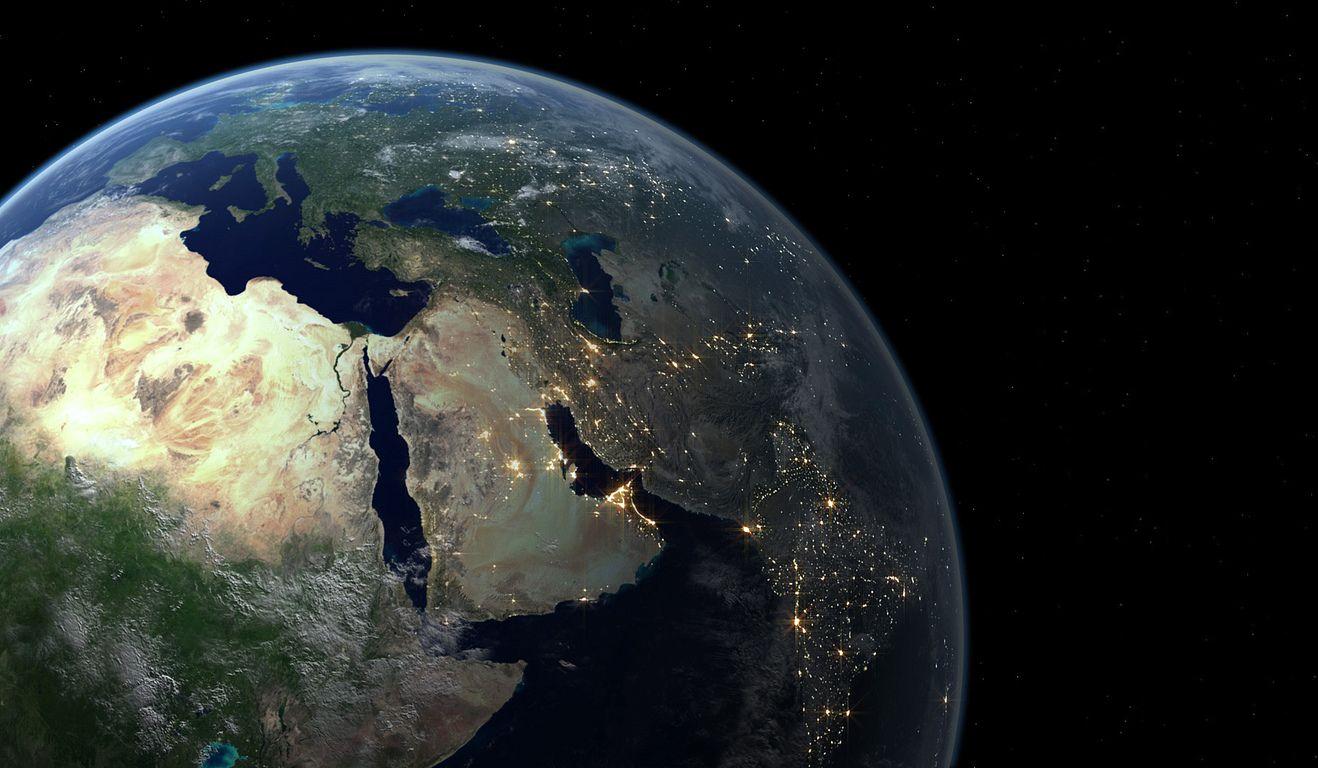
The astronaut spoke of a huge perspective shift that occurred for him as he watched Earth below him. Even though the ISS, moving at a speed of 28000 Km. per hour, circles the mother planet once in one and a half hours, he never tired of seeing the ever-changing hues of blue of the oceans, green of the land and the brown of the desert and mountains on the daylight side and the twinkling lights of human habitation on the night side. But what he really saw was the connectedness of everything – the water, the land and the atmosphere. What he also saw was how human activity was creating pollution and shrinking the natural habitats. In that moment he saw the sheer artificiality and futility of borders, nations and differing ethnicities.

Earth from space

***

The Paris Climate deal is being hailed as a major leap for Mankind. What is it that differentiated this Paris negotiation from the earlier failed one in Copenhagen six years back? To me this success has been all about leadership.

In the words of Stern, a participating climate economist, “Openness and mutual respect were the hallmark of the Paris talks. Great care was taken to ensure that every country, however small or poor was an equal knight on the climate deal round table, was listened to and consulted.”

Paris also saw some very innovative processes being employed.

The Confessionals – As the name suggests, these were confidential spaces, assuring complete privacy, where delegates could speak from the heart with nothing held back.
The Informal-informals – These were small group huddles in the corridors or even on the floor in which delegates were tasked to discuss and remove the “square brackets” of disagreements in the agreement text being drafted.
The Indabas – A Zulu tradition in which large groups of senior delegates, sometimes eighty in number, would gather to thrash out the final remaining disagreements.
The Coalition of high ambition – With the deadline drawing near and the final agreement not yet in sight, the key figure of Tony De Brum of Marshall islands became an unexpected rallying point of more than one hundred nations including the US, EU, Canada and Australia.

As I said earlier, the success of the Paris Climate deal was really about Leadership.

A Leadership of listening to the concerns of every stake-holder nation, big or small, rich or poor. The Confessionals and the Informal-informals allowed this very well.

A Leadership about envisioning and realizing a future that wasn’t going to happen anyway. A future which would restrict the global temperature rise to below 2 deg. C above pre-industrial levels. An alignment of the actions of 200 nations which would steer the world away from a default future of a 5 deg. C temperature rise based on current carbon emission trends. A default future of catastrophic droughts, floods, heat waves and sea level rises rendering large parts of the globe uninhabitable. The Indabas and the Coalition of high ambition supported this aspect.

Climate change 1

CC 2

As President Barack Obama said in a statement post the agreement.

“………………………….A few hours ago, we succeeded. We came together around the strong agreement the world needed. We met the moment.

Because no nation, not even one as powerful as ours, can solve this challenge alone. And no country, no matter how small, can sit on the sidelines. All of us had to solve it together.

The targets we’ve set are bold. And by empowering businesses, scientists, engineers, workers, and the private sector — investors — to work together, this agreement represents the best chance we’ve had to save the one planet that we’ve got.

I imagine taking my grandkids to the park someday, and holding their hands, and hearing their laughter, and watching a quiet sunset, all the while knowing that our work today prevented an alternate future that could have been grim; that our work, here and now, gave future generations cleaner air, and cleaner water, and a more sustainable planet. And what could be more important than that?………………………….”

***

Using the example of the Paris meet, can the world shift away from the power politics of the G7, the G 20 and the OPEC to a more inclusive forum where all the 200 odd nations have a say and agreements become more consensual?

And like that astronaut in the ISS, can each one of us too seize this moment and rise above our unexamined beliefs and perceptions of Humanity’s divisiveness that has created borders, nations and differing ethnicities over all these centuries and millennia?

In Learning……… Shakti Ghosal

The Turn of the Screw


“Change is hard because people overestimate the value of what they have—and underestimate the value of what they may gain by giving that up.”

by James Belasco and Ralph Stayer in Flight of the Buffalo,1994

Turn of the screw

China seems to be more and more in the news of late. Well I suppose with its clout as the second largest economic powerhouse in the world, that is hardly unusual. A couple of months back, the country unilaterally devalued its currency Yuan by about five percent to combat declining exports and economic slowdown. More recently the Chinese communist party at its annual conclave announced the end of the controversial ‘One child’ policy, allowing couples to have two children for the first time in thirty-five years. In an environment of economic slowdown, this underlines a heightened fear of loss of competitiveness to countries with better demography.

China degrowth

The Turn of the Screw…….

As Oil prices drop from above one hundred dollars to around forty dollars per barrel, the oil producing nation states in the Middle East led by Saudi Arabia seem to be stumbling, with fiscal deficit rapidly rising to unsustainable 20% of GDP levels. As these countries frantically dip into their reserves to balance the deficit, they fervently hope for oil prices to start climbing up again.

Oil and Gas

The Turn of the Screw……..

I suppose majority of the world believes, just as China and the Middle East hope for, that the economic and oil prices downturn are temporary and the ‘screw would turn back’. China would continue its rise, oil prices would climb back and all would be well with the world again.

My thoughts go back to that prescient article “Marketing Myopia” written by Professor Theodore Levitt of Harvard Business School more than half a century back. The central argument in that was “the history of every dead and dying ‘growth’ shows a self-deceiving cycle of bountiful expansion and undetected decay.” Professor Levitt goes on to say that with the ‘turn of the screw’ in terms of the environment, market and technology, there is always a small timeframe ‘window’ allowing an optimal match between these and an entity’s intrinsic competences. As the screw turns, that fit between such competences and the environment, market and technology starts getting lost. What is needed then is to rediscover and reinvent oneself in terms of ‘What business we are in?’ While Professor Levitt essentially wrote the article from an organisational and industry perspective, I see his concept much more universal and having relevance to nations and Global trends.

myopia

So how do I see the future trending?

For decades, manufacturing from the developed world has been migrating to China, attracted by low costs and productivity. But rising costs in China and development of sophisticated automation are tipping the scales back. Realizing the need to automate to remain competitive, China is implementing advanced robotics. It is constructing the first “Zero human labour” factory in Guangdong which would use a thousand robots to do the work of two thousand humans! But does this not run contrary to the effort to increase the Chinese work force by allowing a two child policy? And what happens to the Chinese manufacturing competitiveness as and when the US and Europe also employ similar robotics to manufacture? Allowing same costs but less the shipping time and transportation costs. Clearly, manufacturing is headed back to the consuming countries themselves. Once again a manifestation of the turn of the screw.

And what about the Middle East and its oil lifeline? For decades now, this region has been enjoying windfall profits from Oil and Gas and resorting to heavy subsidization of its citizenry. Says Meghan L. O’Sullivan, director of the Geopolitics of Energy project at Harvard Business school, “The expensive social contract existing between the Rulers and citizens in the gulf states will get more difficult, and eventually impossible to sustain if oil prices don’t recover”. (A few years back, during the days of the Arab Spring, I had deliberated on this ‘Social Contract’ aspect in my post, “Childhood’s End?”). The question that brooks an answer is when will the oil prices recover? More and more experts in the Energy sector are of the view that with improved energy efficiencies brought in by new technologies and the fracking industry waiting on the sidelines, there is no way oil prices can go up to earlier levels. This coupled with clean energy technologies like the Solar and Wind advancing exponentially means that the fossil fuel industry is headed the way of the dinosaurs. Yet another manifestation of the turn of the screw!

One might wonder that with such inevitable turn of the screw, what is the kind of leadership that would succeed in the world. As I think of this, I realise that such leadership needs to have the ability to envision and embrace a future unencumbered by the present- be it the technology, the geopolitics or the economics. A future which addresses core concerns rather than transitory symptoms. And a leadership which comes to live into such a future as it empowers others to deal with the socio-economic and other changes needed to realise that envisioned future. A future that was not going to happen anyways……….

In learning………….. Shakti Ghosal

Reference: Marketing Myopia by Theodore Levitt, HBR July-Aug 1960.

Robben Island and a perspective shift


“I was made, by the law, a criminal, not because of what I had done, but because of what I stood for, because of what I thought, because of my conscience.”

Nelson Mandela, 1962

We embarked on our tour to Robben Island from the V & A waterfront in Capetown.

The ferry starts from the Nelson Mandela museum and one gets the opportunity to see a range of photographs about the early settlements and the apartheid era of South Africa before one embarks on the ten odd kilometer boat ride.

Nelson Mandela Gateway museum on the V & A Waterfront, Capetown

For me the trip attraction lay in getting a glimpse of the apartheid days and how Nelson Mandela lived eighteen of his twenty-seven years of imprisonment in that place. Interestingly, something I had not been aware of earlier but came to know during the visit was that apart from Mandela, two other post apartheid South African presidents, including the present one, were imprisoned there.

Robben Island
Robben Island

The island trip consists of a guided bus tour of the infamous lime quarry where Nelson Mandela did hard labour and progressively lost his vision, a leper colony which had existed on the island more than a century back and the military fortifications made during the Second World War. The highlight however was clearly the tour of the maximum security prison for which our guide was Henry, an ex-political prisoner who had spent six years in the island prison during the time Mandela was incarcerated there.

The lime quarry where Mandela did hard labour

An interesting insight which Henry offered was about the elaborate cover up the apartheid government resorted to in front of international media and United Nations in those days. To the outside world, the prison administration declared that political prisoners like Nelson Mandela, keeping in mind their educated background, were only assigned ‘skilled’ activities inside the prison complex like construction work etc. While the hard labour of working in the limestone quarry, cutting stones etc. were reserved for prisoners who had been sentenced for criminal charges like murder, robbery etc. While in actual practice it was the other way round! The apartheid thinking was that while there was a chance to teach skills to criminals to enable them get absorbed back into the South African society, there was no such possibility for the political prisoners.

The Prison
The Prison
Maximum security zone of the apartheid era

The cell which was home to Mandela

As the tour ended and as we walked back to the quayside to board our ferry, I overheard a conversation between Henry and a tourist.

‘So Henry, as you look back to your days in this prison, what kind of anger or regret do you feel?’

‘Well, when I was first brought here forty years back, I did feel anger and frustration at the sheer injustice of it all. But interestingly, after a while that went away and I became more calm and accepting. This is something which most political prisoners learnt to do when here. This was important for our own well being.’

‘That’s interesting. And what did you learn to be able to do that?’

‘Well what I learnt was to shift my perspective about the situation. My perspective about what made the Government and the administration do what they were doing.’

‘And what perspective was that?’

‘Well I realised that the reason for my being imprisoned on an island like this was not because I had done anything wrong as the authorities would have me believe. Rather they were afraid and insecure about me and the ideas I stood for. So why I was being tormented physically was because I and what I stood for were tormenting them much more mentally. So it was really a quid pro quo and I had nothing to feel angry or upset about.’

Boarding the ferry I looked around to see Henry walking back slowly towards the prison. I understood how that four decade old perspective has allowed him to make peace with his own self and the world. How it keeps pulling him back to Robben Island, the place of his earlier torment, year after year and speak about it to countless visitors like me.

With the ferry speeding back towards the mainland and the Table Mountain visible on the horizon, a thought kept coming back to me.
table-mountain-cape-town

What stops Henry’s perspective from being created in so many places in the world where anger, torment and fear continue to create violence and unhappiness?

What could each one of us do to spread that perspective?

In Learning…….. Shakti Ghosal

Air to the bird, water to the fish……


‘The three great mysteries: Air to a bird, water to a fish, Man to himself.’
– A Hindu proverb

What are the kind of situations which bring out the worst of reactive thoughts in us? I offer a few personal examples here.

**

I am driving back from office. Mind laden with the ‘To do’ stuff for tomorrow, interspersed with unrelated thoughts from the past. I get yanked back to the ‘now and here’ by a black SUV suddenly crossing the lane from the wrong side. Slamming the brakes, I curse.
Drivers Beware!

**

In a hurry to get back home, I rush into the Al Fair supermarket to pick up a few items which my wife had asked me to. Though the place seems fairly crowded with folks like me trying to squeeze in some grocery shopping, my check-out queue moves briskly till I reach second spot. It is then that the guy in front of me gets into a long drawn discussion with the counter lady on the intricacies of some redeemable voucher. Impatiently standing there, I see rage and anger building up inside me.
Supermarket queue
**

I notice an office colleague not complying with my instructions. When asked, he voices disagreement. I see this as trying to undermine me, or worse, an attempt to derail what I propose to do. I react by knit picking on the guy, by micro-managing at the activity level and in my anxiety to enforce, I end up hurting and demeaning. In all this, both of us have lost the big picture of what we had set out to achieve.
Office disagreement
**

Now these are my examples but I can wager you would have seen one or more of these playing out in your own lives. So what is it really that brings up these reactions in us?

As I ponder over this question, I start seeing aspects of my own self-centeredness. A ‘Self centering’ that I am at the center of the world for myself and somehow my immediate needs and feelings should determine how things should operate in the world. A ‘Self centering’ which then becomes a slew of learned reactive thoughts and behaviours to make that happen. Reactive thoughts and behaviours which have got hard-wired within to the extent that it is now a default setting, a who I am wound up being.

So the guy who I am wound up being is now conditioned to curse when someone drives wrongly on the road. Or to get into a rage when someone delays completing some work. Or to hurt and demean when the other guy does not do things ‘my way’.

Chris Argyris, Professor Emeritus at Harvard Business School, and a Thought Leader at Monitor Group, after four decades of studying individuals and organisations, concluded that, ‘… people consistently act inconsistently, unaware of the contradiction between their espoused theory and their theory-in-use, between the way they think they are acting and the way they really act.’

In real life, we might be completely aware of the right and wrong way of speaking, dealing with people and behaving. But come a situation or someone else’s behaviour that triggers our inner hard wiring, our reactive self takes over, ready to protect our turf at any cost. The interesting thing is that post the event, we remain hardly aware of how our reactive behaviour and actions were so much in variance to what we generally believe our actions and behaviour to be. A veritable Dr. Jekyll and Mr. Hyde manifestation within us!

Have you ever wondered what makes it so hard for us to stop that reactive “Dr. Jekyll” self from taking over? This is because we mistake ‘Who we have wound up being’ as ‘Who we are’. This prevents us from seeing, as Chris Argyris surmised, the gap between the way we think we are acting and the way we really act. What is undistinguished begins to control us. Just like Air to the bird and Water to the fish!

So how could we start seeing the air and the water? What could we do to distinguish and remove all that acquired fluff of how we have wound up being to get down to the essence of who we are?

I believe we can make a start by holding the consciousness that we have a choice when confronted with a reaction generating situation or person. For example, what if I chose to think that the guy in that SUV who crossed the lane wrongly was rushing to the hospital where his wife was critically ill? What if I chose to believe that the guy trying to redeem those Al Fair vouchers was doing it to buy provisions for an orphanage? What if I chose to believe that the office colleague is as dedicated as me to achieve the overall objective?

The next step is to distinguish those aspects which have become part of ‘Who we have wound up being’. Read the language constructs below:

“ I Am….”

I am intelligent and smart.
I am disciplined and orderly.
I am competitive.
I am impatient with others.
I am a perfectionist and do not suffer fools.

“The way I wound up being….”

The way I wound up being is believing I am intelligent and smart.
The way I wound up being is disciplined and orderly.
The way I wound up being is competitive.
The way I wound up being is being impatient with others.
The way I wound up being is a perfectionist and who does not suffer fools.

What do you notice?

Do you notice that as the language construct shifts away from “I Am……” you gain the ability to distinguish the several traits you have acquired from who you intrinsically are?

Do you see that unlike the birds and the fishes, you are now able to discern the air and water around you?

Do you realise that you now have a choice?

***

There are these two young fish swimming along, and they happen to meet an older fish swimming the other way, who nods at them and says,” Morning, boys, how’s the water?” And the two young fish swim on for a bit, and then eventually one of them looks over at the other and goes,” What the hell is water?”

David Foster Wallace in ‘This is Water’, commencement speech, 2005

Acknowledgement:
“Being A Leader And The Effective Exercise Of Leadership: An Ontological / Phenomenological Model” by Werner Erhard, Independent & Michael Jensen, Jesse Isidor Straus Professor of Business Administration Emeritus, Harvard Business School.