My flight over Greenland


In mythology, Niflheim was a land of primordial ice and cold, with  Élivágar and Hvergelmir, the frozen rivers from which arose all other rivers of the world.

According to legends, Niflheim was the primordial region that was born out of two realms. The Ginnungagap, the home of ice and the Muspelheim, the home of fire. Between these two realms of cold and heat, the world got created as ice mixed with fire. Niflheim became the abode of Hel, the goddess daughter of Loki (remember the estranged brother of Thor from the Avengers!), and her subjects.

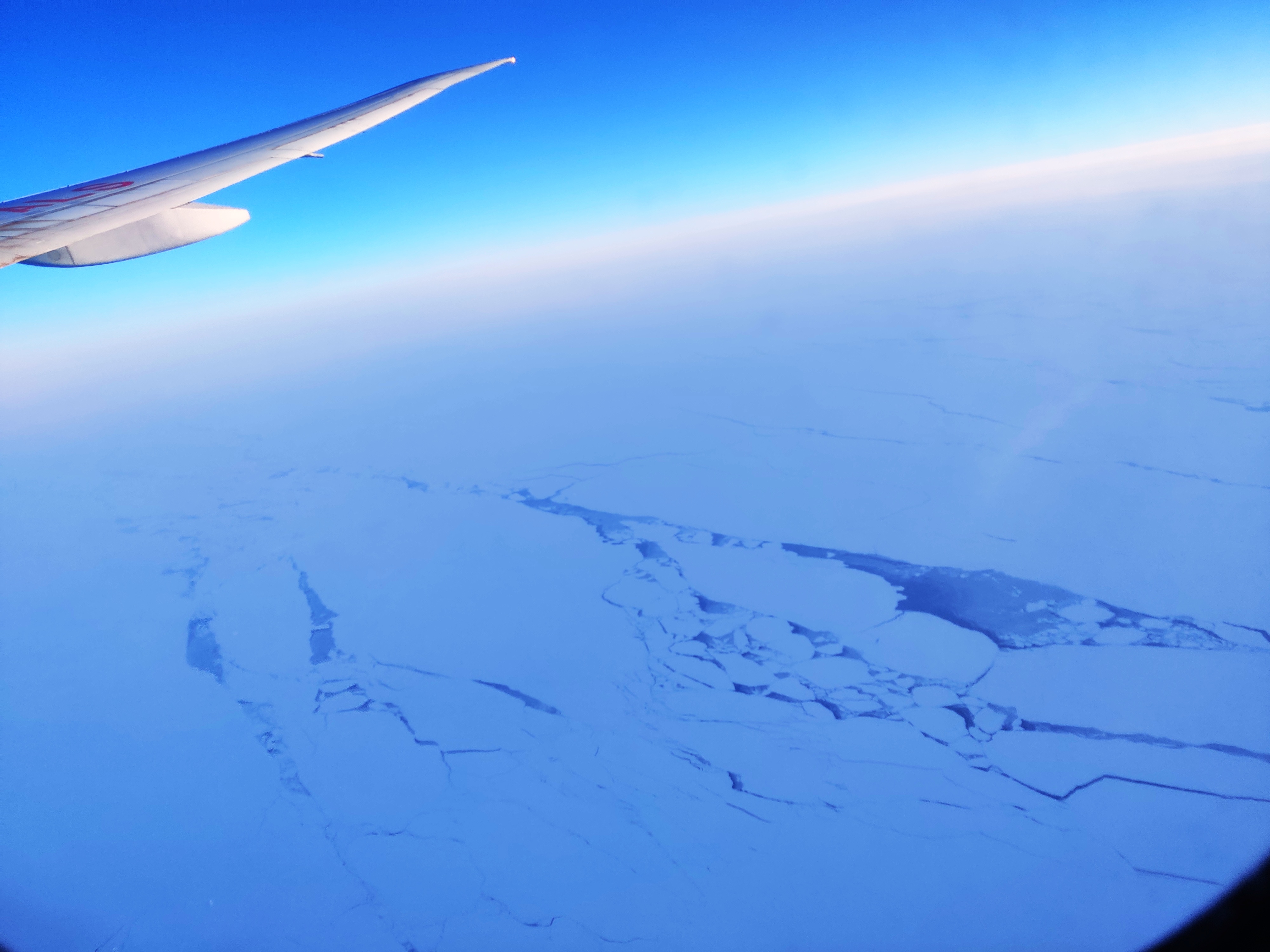
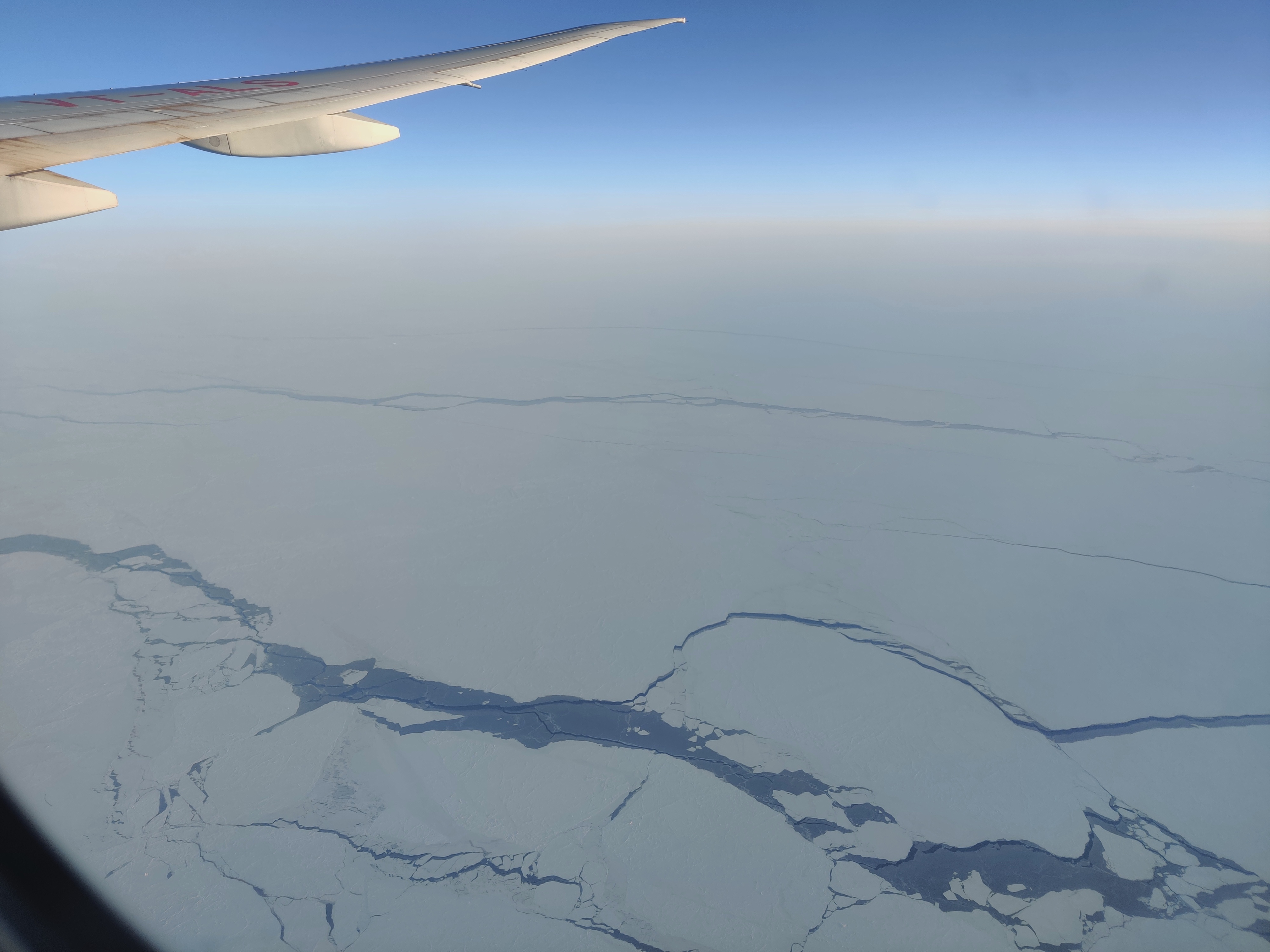
As my flight cruised over Greenland, I watched the morning rays streaming, glistening and bouncing off the frozen land. A quote of  Albert Schweitzer came to mind.

 “As the sun makes ice melt, kindness causes misunderstanding, mistrust, and hostility to evaporate.”

But is the melting ice really improving understanding and trust in the world I mused.

From my aircraft window, I could spot the rivers formed by the melting Greenland Ice Sheet.  

Greenland’s glaciers, in existence for millions of years, have now suddenly begun to rapidly retreat and thin. Scientists have concluded that the Greenland ice sheet is in the throes of irreversible ice loss. Paleoclimatic evidence indicates that even a mere 2 °C of global warming could endanger the Greenland glaciers leading to a sea-level rise of six meters. Large swathes of inhabited coasts and islands in the United States, Europe as well as densely populated regions of Bangla Desh and India would go underwater.

My thoughts about Greenland, its melting glaciers and the impact on Humanity were interrupted by the flight steward politely asking me about my choice of breakfast. Looking up at him and then around me, I seemed to be in a cocoon far removed from the impact of global warming playing out below. But were I and my co travellers really in a cocoon or were we shutting our minds to the inevitable? I was left wondering.

In musing……..                                   

Shakti Ghosal

Mahalaya


It was a few days back.

Just before five in the morning. I put on the FM channel and the so very familiar words wafted around the room, quickly overpowering the low hum of the air conditioner sound.

That ethereal sound of the conch shell interspersed with the chorus.

Ayi Giri-Nandini Nandita-Medini Vishva-Vinodini Nandi-Nute
Giri-Vara-Vindhya-Shiro-[A]dhi-Nivaasini Vissnnu-Vilaasini Jissnnu-Nute

(Salutations to You O Divine Mother, I Invoke You; Who is the daughter of the Mountain; By Whose presence the whole World is filled with Joy; For Whom the whole World is a Divine Play and Who is Praised by Nandi,
I Invoke You O Devi Who Dwell on the Summit of the Vindhyas, the Best of the Mountains; Who give Joy to Lord Vishnu as His sister ….)

That once a year rendition in the voice of Biren Krishna Bhadra.

Aswiner sarada prate beje utheche alokomonjir,

Dharanir bohirakashi ontorhito meghomala

(In the month of Aswin, amidst the meanderings of autumn, resounds the light of the sun like anklets

As the clouds disappear from the skies above the world)

Listening to that Chandi path chants and the music in a half asleep, half wakeful state, has always been an intensely personal and endearing experience since my childhood.

I recall my father putting on the All India Radio station at dawn all those decades back, as we all huddled back under the blankets to sleep-awake through Mahishasur Mardini during those wonderful autumn laced mornings with that slight nip in the air. I have tried to continue that tradition.

This year as I lay on my bed listening to Mahishasur Mardini, I saw in my mind’s eye folks who had been part of me since childhood. My father, my father-in-law, other family members, friends. They were standing in two rows and smiling at me. I could sense the love and the warmth seep towards me through the smiles. I luxuriated in the enveloping feeling and closed my eyes. I woke up to find that it was but a dream. Al those who I saw looking and smiling at me were no longer part of my life today, having left for their heavenly abode.

Mahalaya is the day of making offerings to our departed forefathers. According to the Puranas, our patriarchal generations come closer to the living world at this time and this is when they need to be remembered and thanked in our prayers.

Did my dream have anything to do about my remembrance of all the departed souls and them reciprocating back?

In musing……

Shakti Ghosal

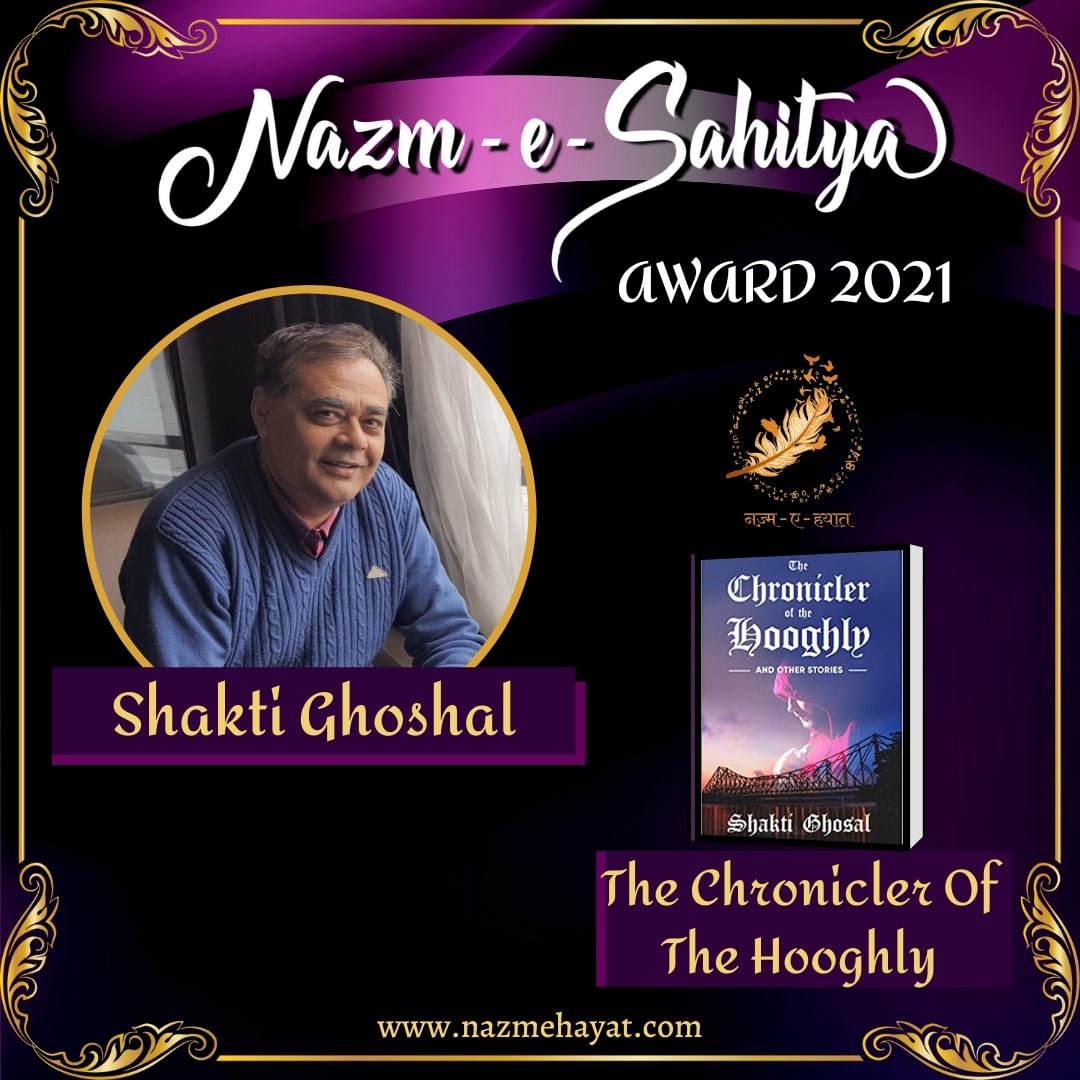
Nazm-e-Sahitya Award 2021


Nazmehayat was conceived as a platform for worthy writers. Curated by its two founders Swapnil Singh and Anushree Goswami, Nazmehayat offers book recommendations, contests as also a blogging platform for writers. It has a significant presence on social media platforms.

Nazmehayat has the vision to become a leading Literature platform in the world.

www.nazmehayat.com

Today morning, I woke up to the pleasurable news that Nazmehayat has awarded me the Nazme Sahitya award 2021 for the Chronicler of the Hooghly and other stories.

Thank you Nazmehayat for the recognition.

Musings on a Father’s Day….


My Dad and me

Yesterday, my daughters arranged for an all-Italian supper of pasta and Pizza with garlic bread for their Baba. As I was washing down all that great food with a glass of coke I felt so blessed.

In my younger days, we neither had the awareness nor the luxury of such DAYS to acknowledge our loved ones. The only days I recall celebrating were Birthdays and the occasional special anniversary (the tenth, the twenty fifth etc.). Those were simpler times……

Times change. The bond, the love, that heavenly security in one’s father’s arms remain. This is how the feelings, the thoughts, the conviction to take one’s rightful place on the world stage flow down from one generation to the next.

My father Late Debabrata Ghosal gave wings to my creative imagination since childhood. He inculcated the ‘can do’ mindset in me. Decades after he has left my side, I continue to sense his guiding compass when confronted by life’s situations.

Though I too held my daughters in the same manner that Bapi held me decades earlier, have I been able to pass on the right values and mindset onto them? I suppose only time will remain a witness to that ……

Riya and me

Piya and me

In Learning………..

http://www.shaktighosal.com

Those Raga Varsha days…….


With Pandit Shiv Kumar Sharma

Those RAGA VARSHA Days…..

It was another time, another place.

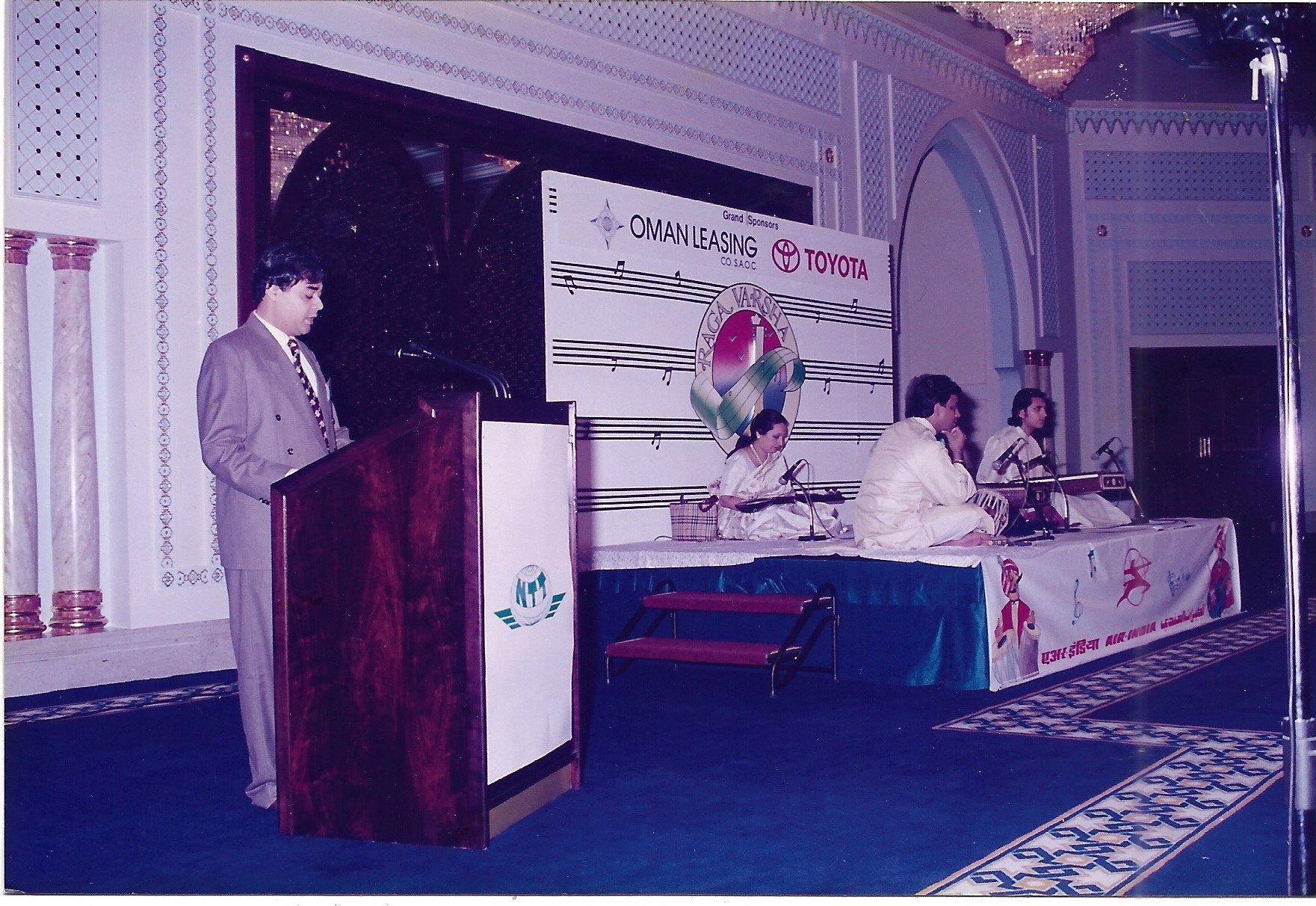
It was near the end of last century in 1998. As part of the Raga Varsha initiative, we had invited Santoor Maestro, the legendary Pandit Shiv Kumar Sharma and his immensely talented son Rahul Sharma to perform at the iconic Al Bustan Palace in Muscat.

Pt. Shiv Kumar Sharma during his lifetime has elevated the humble ‘Santoor’ to classical heights by modifying certain key elements. A chromatic arrangement of notes, increasing the range to three octaves and creating a new playing technique. To understand the stature of Pt. Shiv Kumar Sharma, he was the recipient of the Indian Classical music’s first platinum disc for the ‘Call of the Valley’ album. He went onto win further platinum discs for the music compositions of films Silsila and Chandni.

When he accompanied his dad to Muscat in 1998, Rahul Sharma was already a hugely talented and handsome young man of 26. Today, Rahul is a music director and classical santoor player in his own right. He has collaborated with international musicians to produce chart busting fusion music.

With Rahul Sharma

The mellifluous music strands created by the father son duo at the Al Bustan Palace auditorium  that day nearly a quarter of a century ago continues to be part of my album of wonderful memories.

#shaktighosal#panditshivkumarsharma#rahulsharma#santoor#classicalmusician#ragavarsha#chandni#silsila#callofthevalley

A Virtual Convocation @ IIM Udaipur


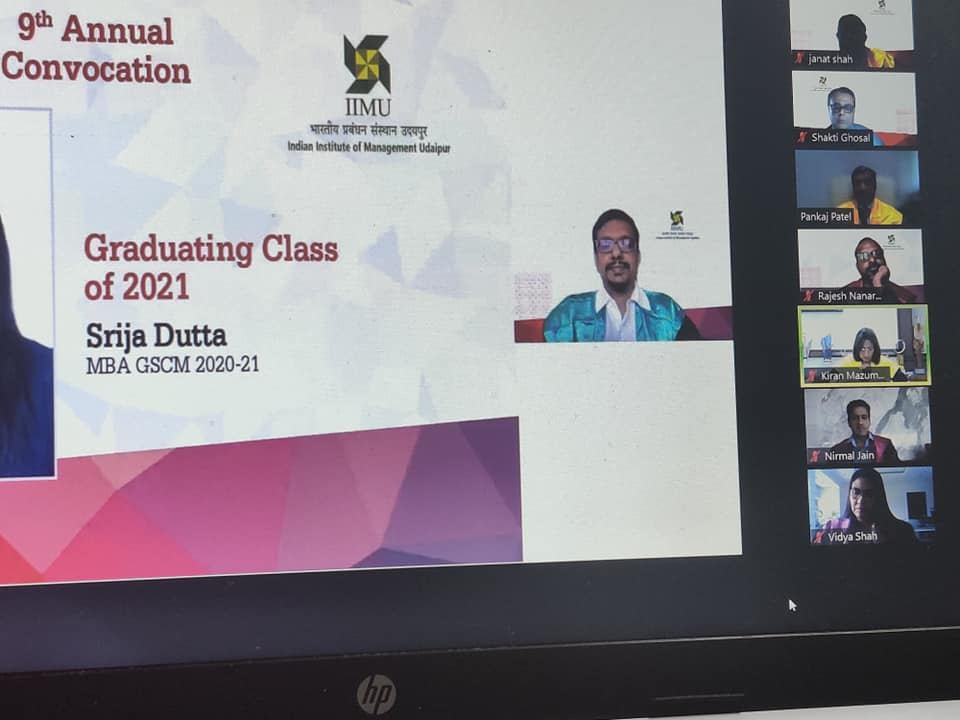
As a visiting Professor, I was invited to the Ninth Convocation ceremony of IIM Udaipur yesterday.

While I have attended convocations earlier, this was the first time I was attending one on a virtual platform.

I was pleasantly surprised by how well and seamlessly the ceremony took place with more than 250 participants.

Mrs. Kiran Mazumdar Shaw, Chairman & Managing Director of Biocon Ltd, as the chief guest, delivered an excellent convocation address on the huge business and start-up opportunities that the current pandemic continues to throw up.

The event reminded be of those immortal lines penned and sung by Bob Dylan, so many years back!

The Times They Are A Changing

Come gather ’round people
Wherever you roam
And admit that the waters
Around you have grown
And accept it that soon
You’ll be drenched to the bone
If your time to you is worth savin’
And you better start swimmin’
Or you’ll sink like a stone
For the times they are a-changin’

In Learning…….

Shakti Ghosal

A Live Event on Instagram… with a surprise at the end.


The Chronicler goes live on Instagram!

I am happy to report that I was recently invited by Vishakha Raghav who runs the Instagram Thread “vishing_sky”.

I loved the Online Event on Instagram and some of the very interesting and fundamental questions posed by Vishakha. Questions relating to the underlying inspiration, current publishing system and tips for bussing authors from one of their own ilk!

Available worldwide on Amazon, Flipkart and select bookstores.

http://www.shaktighosal.com

#chroniclerofthehooghly#shaktighosal#bookofthemonth,#booksinstagramindia,#historical,#historicalfiction,#writersofinstagram,#instaauthor,#authorofinstagram,#readrsofinstagram,#novel,#readersgonnaread,#booklover,#bookworm,#ereader,#kindlebook,#bookrecommendation,#fiction,,#bookloversunite,#booksbooksbooks#booknerd,#bookobsessed,#bookaddict,#booksofig,#bookstherapy,#returntoreading,#rediscovergoodread,#happyreading,#bookishlife,#booksbrat,#bookstaengagement

Would heaven be something like this?


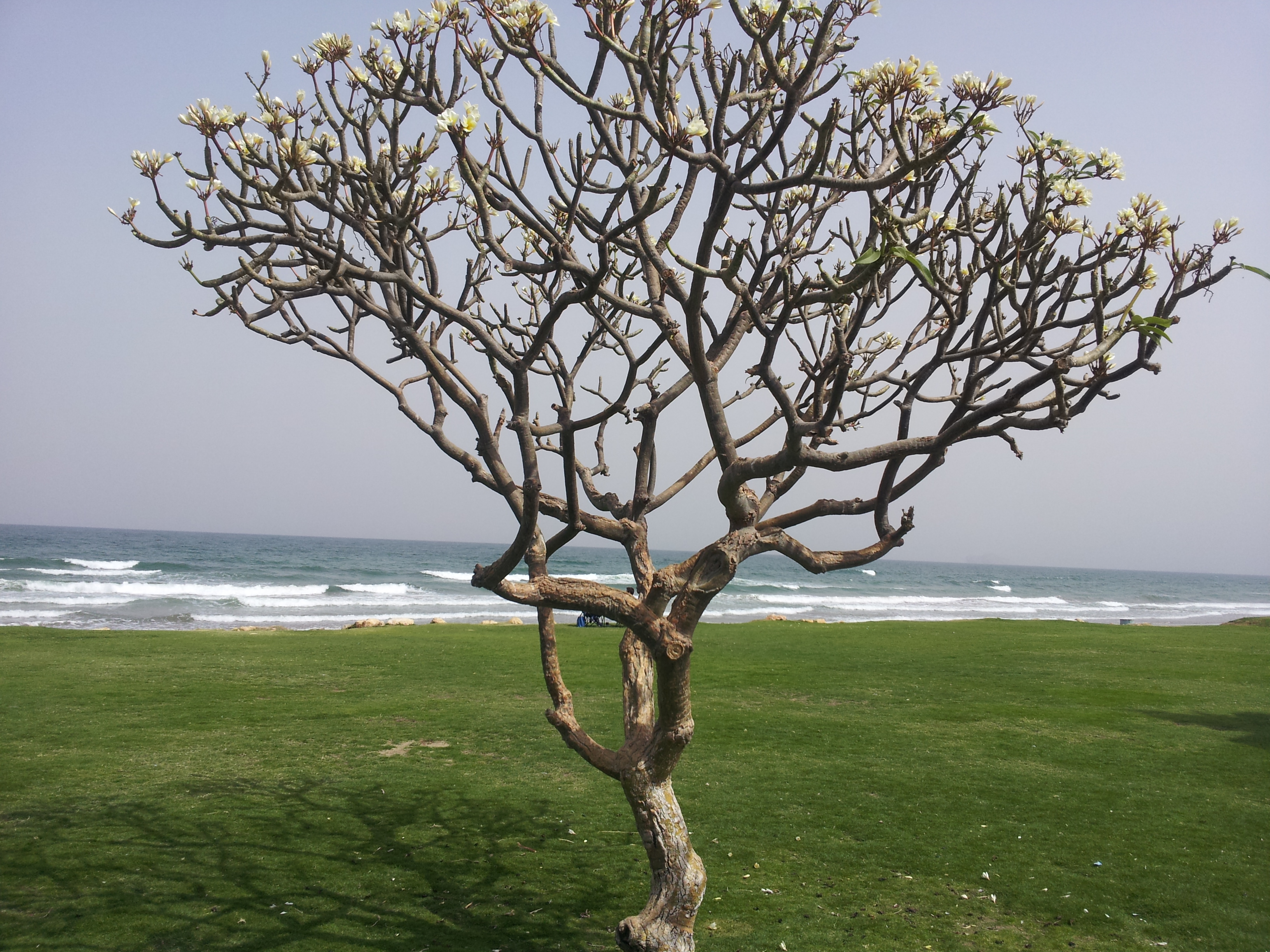
Anjan and Jaya were sitting on one of the lovely grassy visitor areas on the Muscat beachside. A gentle soothing breeze was blowing. Two boys were jumping with joy as the Chinese lantern released by them floated higher. Few families were huddled around portable barbeque stands and the occasional aroma of the grilled meat was overpowering. Ayan was running around with a frisbee. All three of them in fact had just played an invigorating game of frisbee. Now out of breath Anjan and Jaya had begged Ayan for half an hour’s relief to which he had reluctantly agreed.

“Would heaven be something like this Anjan?” mused Jaya. “If only we could be sitting here for ever and ever”.

“Hmm, yes enjoy it while it lasts”, replied Anjan gazing up at the star filled sky. He lowered his eyes towards the darkness of the sea in front. “Look at those bluish phosphorescent patches on the waves breaking on the shore. Did you know that these patches are created by millions of tiny marine creatures?”

Anjan had almost failed to notice a small huddled figure slowly come out of the foaming waves. The figure seemed to be beckoning to him.

Snippet : The public beach close to Al Khuwair and Qurum is beautifully sandy, clean and a beach goer’s paradise. There is a raised continuous walkway parallel to the sea face. One may sit on wooden bemches or plonk down on the grassy atolls wirh a coffee and snacks and watch a beautiful sunset. It remains a preferred place for Barbeque get togethers with family and friends.

The bluish Bioluminescence in the Arabian sea waters is a fairly recent phenomenon and some attribute it to climate change . This is attributed to a plankton like species nicknamed ‘sea sparkle’.

Muscat beach features in the story, ‘Fault Lines’, part of my forthcoming book ‘The Chronicler of the Hooghly and other stories’ which is scheduled to release in February ‘21. For updates, do visit

#pageturner,#thechroniclerofthehooghly,#shaktighosal,#ashtami,

#bookcommunity #bookaholic #bibliophile , #readers# #bookoftheday#bookgeek#readingforfun#ilovebooks#booklife#bookaddiction, #novel, #readersgonnaread, #booklover, #bookworm, #bookrecommendation, #fiction, #booknerd, #bookobsessed, #returntoreading, #rediscovergoodread, #happyreading,#muscatbeach,#bioluminescence

Jagjit Singh Live


It has been ten years since Jagjit Singh, arguably the most successful ghazal singer and composer of our times, passed away.

The other day a two decades old memory of my brief association with Ghazal King Jagjit Singh got jogged.

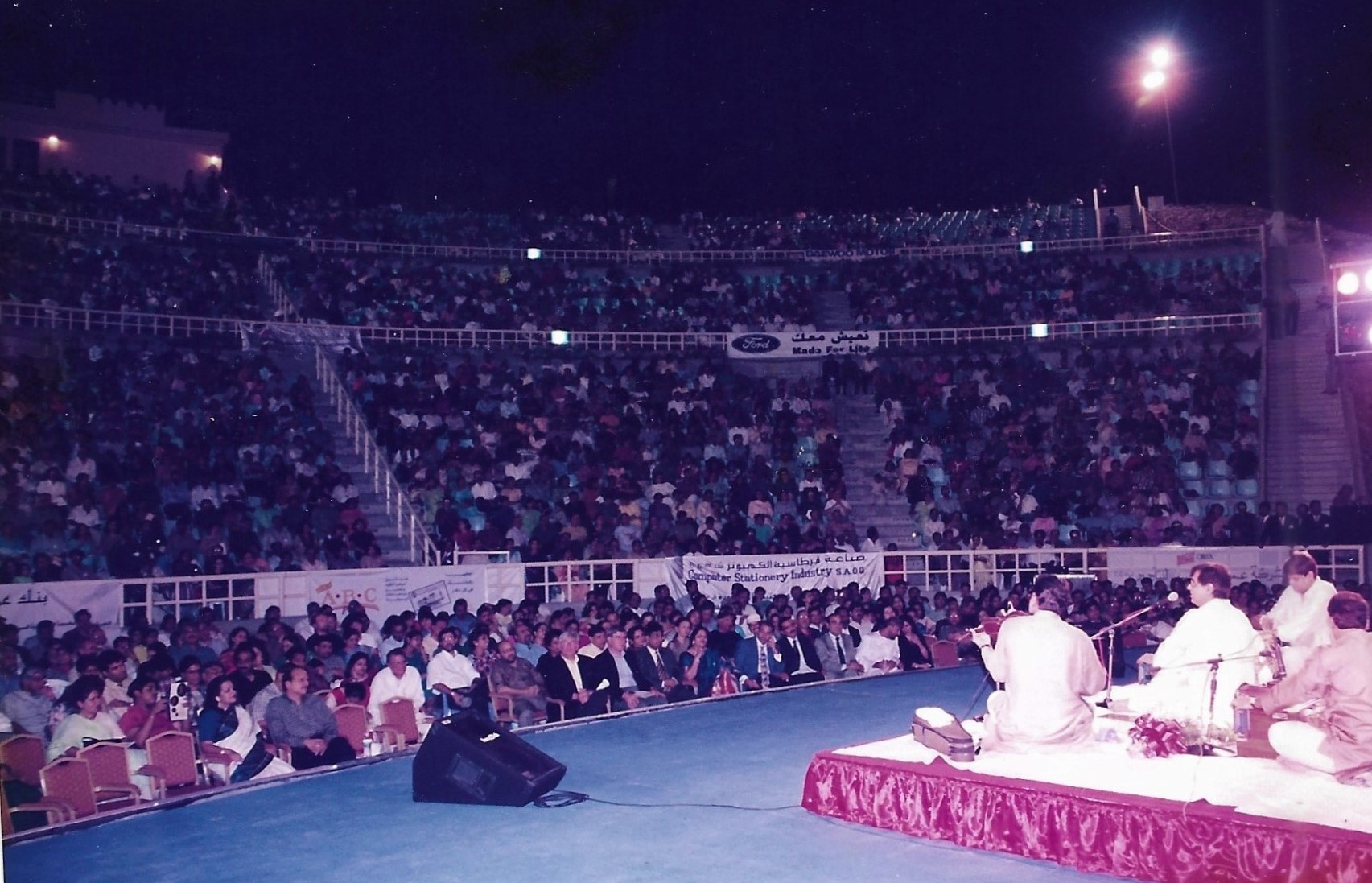
This came from a Facebook post by Jaya Kumar in which she eulogised Jagjit Singh and mentioned her being there for the Jagjit Singh Live Show at the Qurum Amphitheater Muscat in April 1999. We were still in the last century, how time flies!

It had been a privilege for me to be associated with the organising and compering of that memorable night. As maestro Jagjit Singh gave voice to some of his mellifluous offerings, the over fifty thousand strong audiences comprising of the ‘Who’s Who’ of Muscat listened mesmerised.

As I listen to the words today, I am left wondering at the prescient hold they continue to exercise on me.

In Remembrance……

#Jagjitsingh, #jagjitsinghghazals,#shaktighosal,#muscatoman,#muscatlife

The Chronicler of Hoogly


We booked the sunset cruise on the Hoogly recently. With winter on its way, the sun was setting early leaving behind a long balmy evening. Good time to observe the river and the city as it transitioned from day into the night.

20161015_144940

Boarding the boat from the Millennium Park jetty, we soon chugged out in the company of other sight-seekers like us. The itinerary was to cruise up the Hoogly to Belur Math, the much revered global headquarters of the Ramakrishna Mission founded by Swami Vivekananda. We were scheduled to reach in time for the evening Aarati before we returned. Travelling with us was a Study tour group from Germany.

20161015_160253

As I sat on the deck, I was engulfed by a kaleidoscope of sights………….

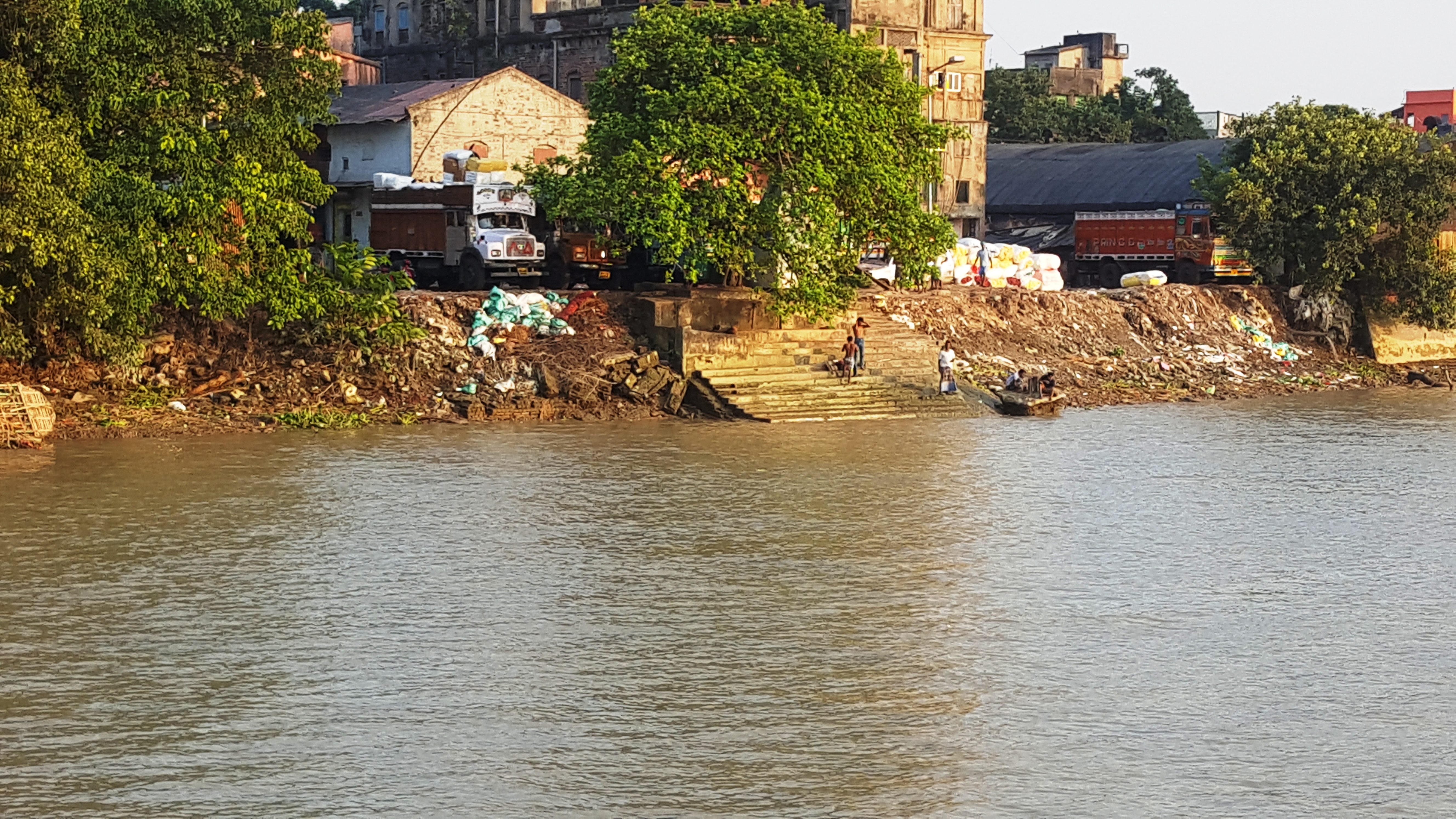
 Of the looming floating bridge of Howrah, still considered a cantilever feat of engineering seventy-five years after it was built. Of decrepit ghats and jetties. Of derelict and abandoned warehouses, shanties and slums. Of colonial architectures separated by grimy and slushy by lanes. Of how Man’s creativity and resolve has sunk under the grime of his daily struggle and existence………….

20161015_160652

20161015_161702

20161015_170530

Of temples and riverside religious rituals coexisting with stinking garbage and defecation grounds. Of the riverside walled up   along long stretches as if to hide its shame from the very people who have sullied it thus. Of how Spirituality jostles with poverty…….

20161015_161712_001

20161015_161836

20161015_162131

My thoughts and emotions get stopped by a flurry of activity on the deck. Probably sensing the approaching sunset, the service staff had got busy offering beverages and ‘muri and aloor chop’ snacks while the German tourists were busy with their telephoto lenses and cameras. I look at the setting sun, the morphing shades of the flowing waters and could not but marvel at how nature yet manages to shine its beauty on an environment gone increasingly awry…………

20161015_165139

With the falling dusk, I notice a lone figure sitting at the rear side of the deck. Somewhat taken aback for not having noticed this person earlier, I walk across and introduce myself. “You may call me the Chronicler”, he tells me. Intrigued I plonk into a deck chair beside him. “Would you like to hear a tale about all that we are witness to today?”, comes the soft voice. Even before I can respond, the voice continues.

“Great metropolises, they say, grow out of a river. London…. Paris….. Rome…… Moscow…….. Cairo….. Istanbul. In each of these cases, the mighty rivers that flowed, the Thames, the Siene, the Tiber, the Moskva, the Nile and the Bosphorus, provided sustenance and remain the heart and soul of the cities….”

“And so was the symbiotic relationship between Hoogly and what we know as Kolkata. While today we are wont to see the river as some kind of an appendage to the city, what if I told you that it is really the other way around? That Kolkata is really an offshoot of all that the Hoogly has been witness to over the centuries.”

“When we started our cruise, we saw Fairlie Place and its jetty to the right with the Strand running beside it. So what would you say are its important landmarks?”, the Chronicler asks.

“Well I suppose it is the Customs House and the Eastern Railway headquarters. Apart from a few more important office blocks”, I respond.

“But what if I told you that about three hundred years back most of that place including what we know as Dalhousie Square was a large water body called Lal Dighi ? This was the time when the British East India Company was busy consolidating its position and Fort William stood on the banks of Hoogly. That is when the attack happened”

“Attack!”, I exclaim, “By whom and why?”

“The then Nawab of Bengal Siraj-Ud-Daulah attacked, captured Fort William and incarcerated British prisoners in a dungeon which came to be known as the Black Hole of Calcutta. An incident which directly led to the battle of Plassey and the subsequent two hundred years British Rule of the subcontinent.”

“Hang on!”, I interject. “Is not Fort William more in the hinterland, near the Maidan?”

“Indeed”, the Chronicler continues, “but what is less known is that there were two Fort Williams. The present one near Maidan was built by Robert Clive after the attack on the first one.”

“The battle of Plassey, which was to change the history and the shape of things to come for ever for the subcontinent, was also fought on the banks of Hoogly but to the north of where we are. But that is another story.”

“The Fairlie Ghat holds another interesting tale”, the Chronicler continues.” In the mid nineteenth century, Prince Dwarkanath Tagore, while travelling on a train in England, got the brain wave of setting up a rail link to carry coal from his Raniganj colliery to the Calcutta port at Fairlie. On return he invested into setting up the ‘The Great Western Bengal Railway Company’. Unfortunately, his proposal got turned down by the British East India Company bosses on the grounds that ‘it would not be possible to allow a company using such strategic technology under native management….’ His efforts and thoughts however did push the British to set up rail services though the East India Railway Company with its Headquarters at Fairlie Place.”

“Hmm! That name Dwarkanath Tagore sounds familiar. Was he in some way related to Rabindranath Tagore?” I muse.

“Indeed he was!”, the Chronicler quips back, “He was in fact the grandfather of Gurudev Rabindranath Tagore, that venerable Bard of Bengal and the first non-European to win the Nobel Prize in Literature more than a century back”.

“The Hoogly ghats then were a far cry from the crumbling cesspools that we are seeing today. With magnificent facades and European classical architectures, the ghats were witness to impressive steam ships and tall masted  boats sailing out to faraway places in England, Australia and New Zealand as also upstream to ports on the Ganga.”, the Chronicler continues.

“Did you know that there were thriving French, Dutch and Armenian settlements on the Hoogly in the early years of colonisation?” I am asked.

Well I had read about the French settlement and I say so.

“Fascinating is it not that events and rivalries five thousand miles away in Europe would show up in the waxing and waning of the Hoogly ghats! And so it was that as the British colonialism went into ascendancy after winning the Napoleonic Wars in early nineteenth century, the settlements of other nationalities on the Hoogly faded into oblivion.”

20161015_161118

20161015_162631

20161015_165008

“Which brings us to the Shova bazaar Ghat and its fascinating history. The Ghat and the Shova Bazaar Rajbari ( Palace), was built with great pomp and grandeur by Raja ( King) Nabakrishna Deb.The latter famed for organizing the Shovabazaar Rajbari Durga Pujo about two hundred and  fifty years ago ( which continues till today!). What is seldom spoken of is that all of the Raja’s wealth came from the huge bribe money of Rupees eighty million paid to him, Mir Jaffar and a couple of others by the British administration for betraying Nawab Siraj–ud-Daulah on the battlefield of Plassey. A betrayal which led to a small British force of 3000 soldiers winning a decisive victory over a twenty times larger opponent. A betrayal which led to the British becoming the dominant colonial power in the subcontinent for over two centuries. Is it not ironic that one of the greatest betrayals in Indian history is so inexorably linked to one of the biggest religious festivals in the country?”

So engrossed had I become in listening to the Chronicler’s tales that I had scarcely noticed the darkness enveloping the Hoogly and the boat engine slowing down.

My companion on the deck points to a brightly lit temple and ghat complex to the right. “That is the Dhakshineswar Kali temple built in the mid nineteenth century by Rani (Queen) Rashmoni based on a dream in which Goddess Kali exhorted her, ‘There is no need to go to Banaras. Install my statue in a beautiful temple on the banks of the Ganges river and arrange for my worship there. Then I shall manifest myself in the image and accept worship at that place.’ The temple attained fame because of Ramakrishna Paramhansa, the famous mystic and the spiritual guru of Swami Vivekanand.”

20161015_172222

The boat docks on the Belur Math Ghat. I notice the Chronicler making no attempt to get up even as other guests disembark and start walking up the Ghat steps. The tour supervisor advises us on the way to reach the temple premises for the evening Aarati. As we hurry, some of the German tourists stop to look at souvenirs in the roadside shops.The Belur Math design incorporates the different Medieval, Gothic, Renaissance as well as Hindu and Islamic styles that Swami Vivekanand had observed during his travels in India and abroad.

I return back to our moored boat with the intoxicating chants of the Aarati still resonating in my ears. As the boat starts on its return journey downstream, I look around for the Chronicler but he is nowhere to be seen. Dinner is announced and we go down to the dining room in the lower deck. The fascinating vision of the Hoogly  created by the Chronicler’s tales in sharp contrast to the hugely run-down and depressing sights I had been witness to, continues to wrestle in my mind.

What is it that has made the Hoogly hold onto its rusting warehouses, its hideous shanties and walls which no longer serve any purpose? What is it that has made Kolkata turn its back on the river that brought it into existence? What is that which leads us to abuse and neglect that very water that we consider holy and religious? What is that in our societal psyche that fuels such dichotomy?

As we reach back and walk off our cruise, these questions continue to haunt…..


……… In Learning.

Shakti Ghosal