“I don’t understand why I have to deal with him,” Arjun snapped, pacing the room. “He’s impossible. Defensive. Disrespectful. Always pushing back.”
Across the table, Kavya watched quietly. “You seem tired,” she said.
“Tired? I’m exhausted. I try to be fair. Professional. But with people like him, you have to be firm.”
“People like him?” she asked gently.
“You know exactly what I mean.”
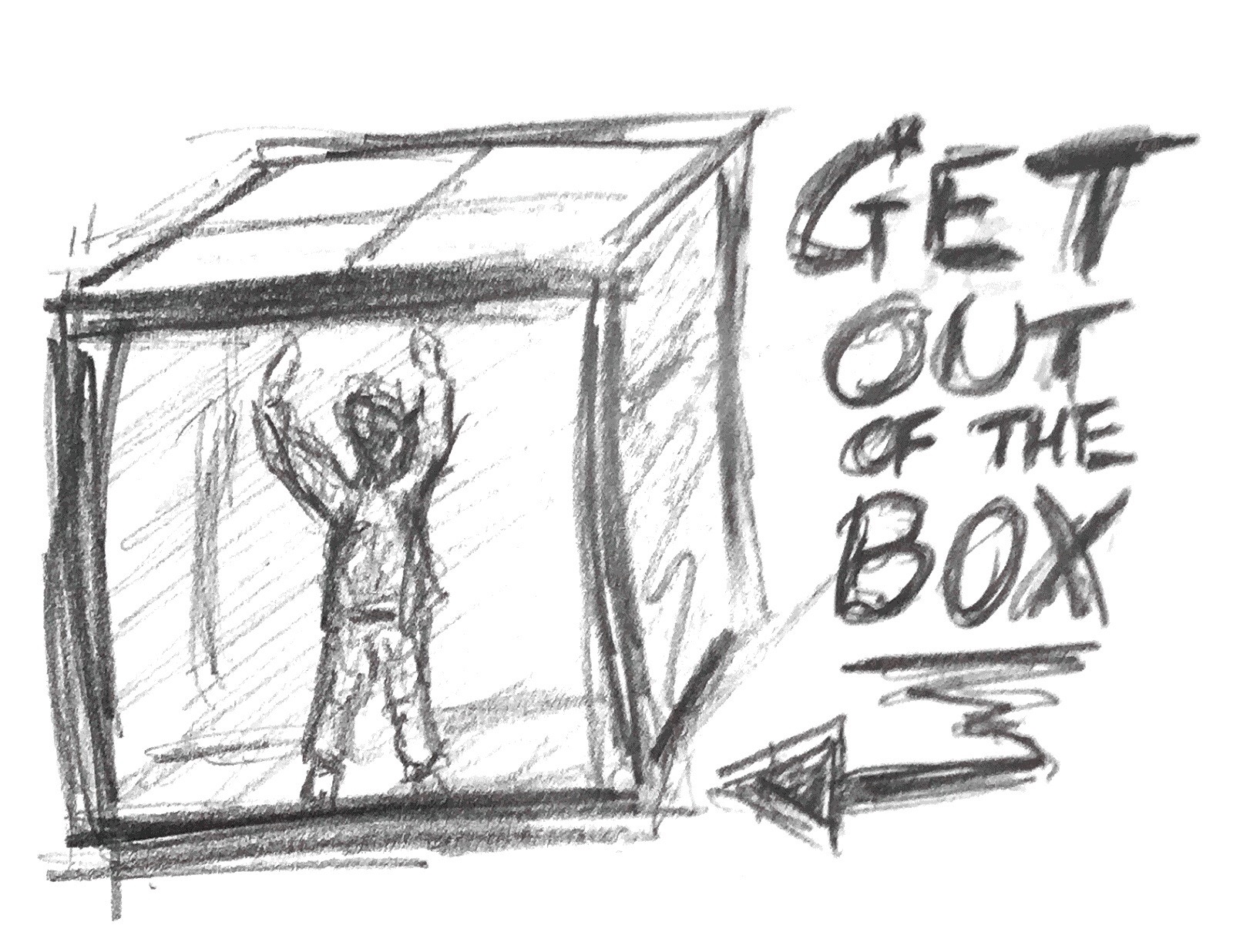
“Maybe,” she said. “Or maybe you’re in the box.”
Arjun stopped pacing. “In the what?”
“The box,” she repeated. “It’s what happens when someone stops being a person and becomes a problem.”
He frowned. “He is a problem.”
Kavya didn’t argue. “Tell me about your last conversation with him.”
“I was clear. Direct. I told him his work wasn’t up to standard. He got defensive immediately.”
“How was your tone?”
“Professional.”
“How did you feel?”
Arjun hesitated. “…Annoyed. Honestly, I was already fed up before the meeting even began.”
Kavya nodded. “That’s the box.”
He looked at her, irritated now. “So this is my fault?”
“No,” she said softly. “That’s the tricky part. When we’re in the box, we’re not trying to be wrong. We feel justified. Righteous, even. But we stop seeing the other person’s humanity.”
“He still behaved badly.”
“Maybe. But inside the box, something subtle changes in us. Our voice hardens. Curiosity disappears. We listen to reply, not to understand. The other person feels it — even if we say all the ‘right’ words.”
Arjun looked away.
“And then,” she continued, “they react to our coldness. They defend. They resist. They shut down. And we walk away saying, See? I knew he was difficult.”
The room fell silent.
“So it’s a loop,” Arjun said quietly.
“Yes. A self-fulfilling one.”
He sank into a chair. “I didn’t even consider what he might be dealing with. I just saw poor performance.”
“That’s the box,” Kavya said again. “He became an obstacle to your goals. Not a person with pressures, fears, or a story you don’t know.”
Arjun’s voice was softer now. “So getting out means… what? Being nice?”
“No. It means seeing clearly. You can still disagree. Still hold standards. But you do it while remembering — this is a human being, not a hurdle in my way.”
He exhaled slowly. “And if he’s in the box about me too?”
She smiled faintly. “Then someone has to step out first.”
Arjun sat with that. The anger that had filled the room felt smaller now — replaced by something heavier, but cleaner.
“Maybe,” he said at last, “I’ve been fighting a problem… instead of talking to a person.”
Kavya nodded. “That realization is the door out.”
In musing……. Shakti Ghosal
**
Acknowledgement: ‘Leadership & Self Deception: Getting out of the box’ – The Arbinger Institute
So we compress people into labels—rude, careless, incompetent.
And we expand ourselves into explanations—pressure, timing, constraints, intent.
This is the Perspective & Motivation Attribution Model.
From the outside, a person looks like a trait.
From the inside, a person feels like a situation.
Their one act becomes their identity.
Our one act becomes an exception.
Their failure becomes “who they are.”
Our failure becomes “what happened to us.”
And here’s the uncomfortable truth:
our reasoning is often not a search for what is true—
it is a search for what is forgivable.
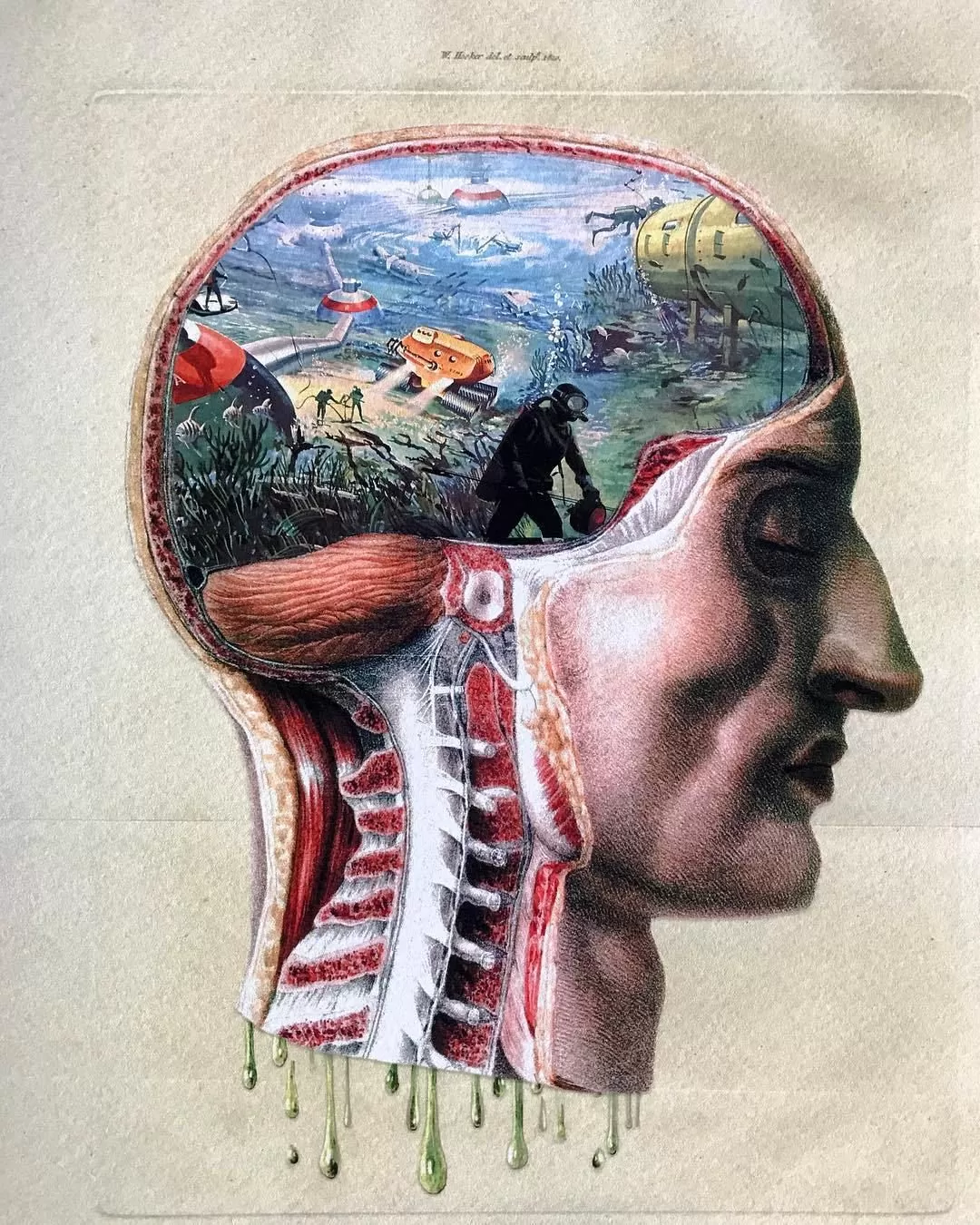
The mind is not just a storyteller.
It is also a lawyer.
Wisdom begins when we offer others the same context, we demand for ourselves—
and hold ourselves to the same standards we casually apply to others.
So, what could be the road map forward?
Awareness is the start of moving forward. We start by noticing Perspective & Motivation in folks around us- through their articulations and behaviour. We then turn the searchlight onto our own selves. And we become observers of our own Perspective & Motivation afflictions…….
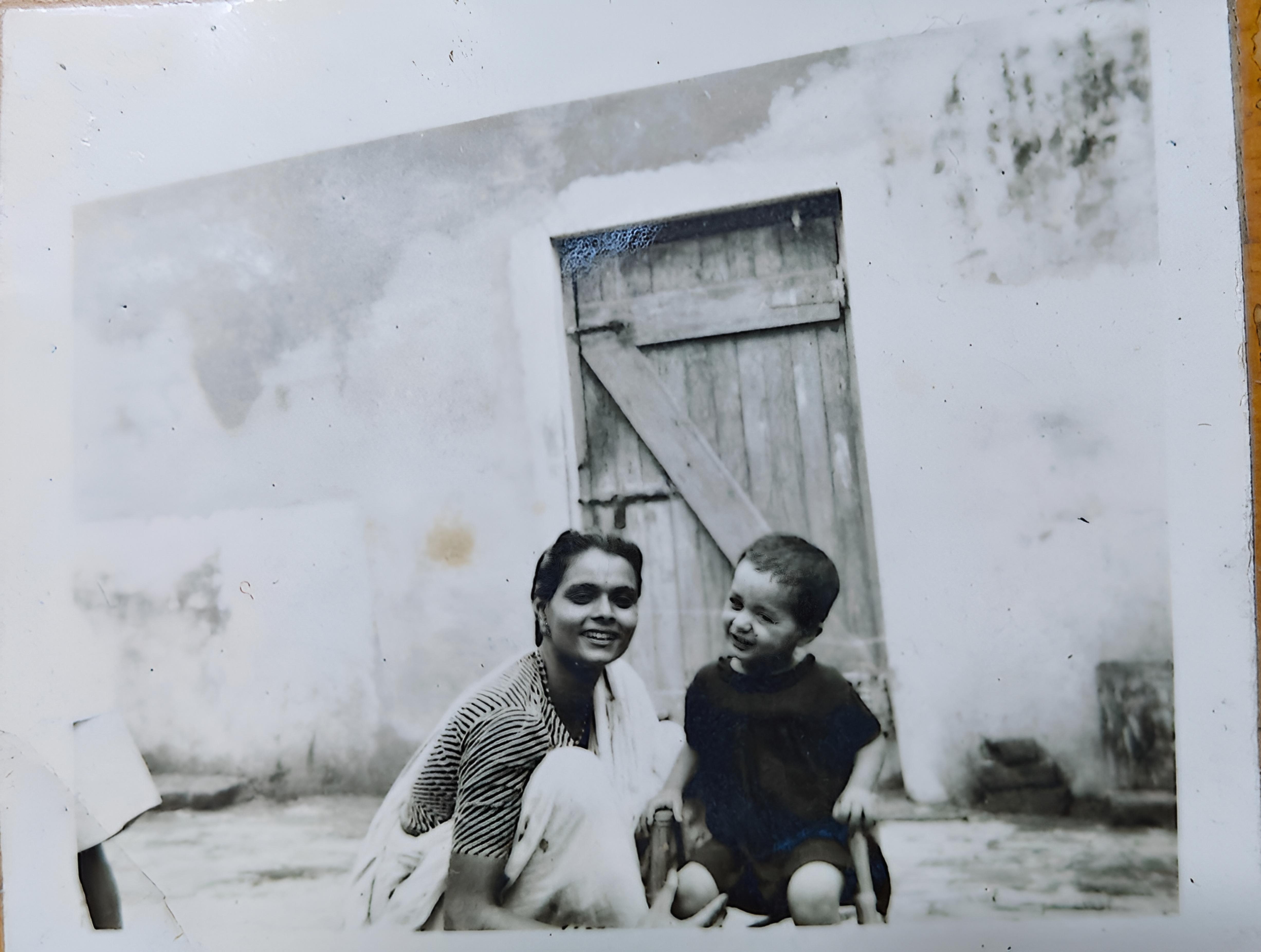
Ma passed away a few days ago. In her 93rd year, the end came quietly, almost imperceptibly—an erratic pulse, two deep breaths, and then a stillness that felt like both departure and arrival. As I sat with the silence that followed, I realised that Ma, my mother, had been throughout her life a bridge—between worlds, between the slow rhythm of yesterday and the unrelenting urgency of today.
She was born into a Bengal still rooted in an older order, one among eight siblings, the third successive daughter in a family that longed for sons. Her given name, “China,” carried within it a wound of social prejudice. In colloquial Bengali, it implied “not wanted,” a stark reminder of how deeply patriarchal values once diminished the worth of a girl child. Yet, rather than allowing that name to define her, she infused it with dignity through the life she lived.
Her childhood belonged to a world we can barely imagine today—a house with a cowshed, a manual hand pump for water, and a pukur, a pond at the back where the family bathed. Dirt roads wound between houses, lanterns cast the evening glow, and chalk on slate was the beginning of literacy. But this simplicity was not untouched by history’s turbulence. Ma was a child when Japanese planes dropped bombs over Kolkata during the Second World War. She saw emaciated villagers streaming into the city during the Bengal famine of 1943, begging for fyan, the water from boiled rice, which households discarded. She was there when the horror of the Calcutta killings unfolded in 1946, a prelude to the traumatic Partition that would tear the subcontinent apart.
At nineteen, she married my father, more than a decade older, in the manner common to her time, seeing him for the first time on her wedding day, then journeying more than a thousand kilometers away to Delhi. Communication with her family in Calcutta became an exercise in patience: hand-written postcards, inland letters slipped into red post boxes, and the long wait for the postman that brought replies.
Her early years as a young bride unfolded in a government quarter on Punch Quin Road. Delhi summers were hot and dry, cooled only by the hum of ceiling fans and open windows. Even though she had to pick up the new language of Hindi, she formed easy friendships with neighbours, women bound together by proximity and mutual reliance. If she ran out of salt or turmeric while cooking, she would simply knock on a door and borrow. Life was slow, and its pace cultivated the virtue of patience. Waiting was not an inconvenience—it was a way of life. Waiting for letters, waiting for the dairy gate to open, waiting for a favourite song to emerge from the crackling radio.
As the years passed, her single-minded focus of her family became what defined her. She bore two sons and lived for her husband, her children, and later, grandchildren. Days blended into one another, but in that blending was the rhythm that gave her life meaning.
Meanwhile, the world outside was changing with increased speed. She saw the milk delivered warm from a cow at the dairy replaced by cold cartons stacked on supermarket shelves. She watched neighbourhood grocers, who once weighed vegetables on balance scales, give way to supermarkets where barcodes replaced conversation. She moved from the clunky rotary-dial telephone, whose every call was deliberate, to the age of the smartphone, where continents could collapse into a single video call. She saw handwriting, once a vital art, yield to text typed on computers and phones.
But what stands out most is how Ma absorbed these changes, without losing herself. She adapted, yet never forgot the cadence of the world she came from. She could marvel at a video call and also leaf through old preserved letters kept between the pages of the Panjika, the Bangla almanac that dictated her daily rituals. She delighted at the convenience and taste of instant noodles yet remained a reference point of how meals could be cooked slowly and better over coal or wood-based fire. In her, two worlds seemed to coexist, not in conflict, but in harmony. She was a living reminder that adaptation need not mean erasure, that continuity and change can inhabit the same soul.
Ma bore witness to the eradication of dreaded diseases like smallpox and polio, but also endured the arrival of Covid-19. She celebrated the births of grandchildren and great-grandchildren, while also grieving the loss of friends and siblings.
Four generations
Over the years, her own family shrank, with the passing of my father and brother. She increasingly withdrew into a world of her own inhabited by Jap, piety and meditation. During the last couple of years, she would hold my hand in silence, after blowing her shank, conch shell every evening. A mute reminder that I was the only one left of the family she had been devoted to.
Now, as I try to understand what she has left behind, I realise she was more than a mother; she was the bridge between what was and what will be. She connected the slow, earthy world of ponds, lanterns, and letters to the digital age of instant gratification and restless speed. She stood between fading traditions and emerging futures, carrying forward love, devotion, and humanity as constants amidst change. In her, I saw that resilience is not loud or forceful but quiet, steady, and accepting.
To live ninety-two years is to live many lives within one. As I look back at her long journey, I feel gratitude more than grief. For in her passing, she has not left me empty-handed. She has given me the assurance that change can be embraced without losing one’s essence. And she has shown me that love, patience, and quiet resilience are the true bridges between the worlds we inherit and the worlds we leave behind.
This article explores the social behavior commonly referred to as “Puppy Dog Wag Tail Syndrome”—where older individuals attempt to gain acceptance from younger social groups through excessive compliance, self-effacement, or mimicry, wagging one’s tail so to say! While this behavior stems from a natural human desire for belonging, it often compromises one’s authenticity and self-respect. Drawing from research in social psychology, this piece delves into the emotional drivers behind such behavior and advocates for embracing authenticity across generational lines.
Have you ever witnessed an elderly individual awkwardly trying to “blend in” with a younger group? Perhaps they crack out-of-place jokes, adopt unfamiliar slang, or seem constantly eager to please — laughing too hard, offering unsolicited help, or nervously seeking approval. This performative effort to fit in, often at the cost of dignity and self-awareness, is what might be called Puppy Dog Syndrome. Much like an over-eager pet desperate for affection, the individual’s behavior becomes centered around pleasing others, often sacrificing self-expression and confidence in the process.
While it may appear superficial on the surface, this behavior is rooted in something deeply human: the need to belong. Social psychologists Roy Baumeister and Mark Leary (1995) identified belongingness as a fundamental human motivation. Regardless of age, people crave connection, approval, and inclusion. Yet, when belonging feels uncertain — especially in cross-generational settings where values, cultural references, and energy levels diverge — the fear of exclusion can drive compensatory behaviors.
Older individuals, particularly in youth-dominated spaces like workplaces, social media platforms, or casual gatherings, may feel a loss of relevance or influence. In such settings, some try to gain favor by imitating youth or subordinating themselves — often unconsciously — in exchange for social acceptance. But the cost of such behavior can be significant. Carl Rogers, the humanistic psychologist, referred to this pattern as living according to “conditions of worth” — behaving in ways that earn external validation rather than expressing one’s true self.
This misalignment can take a psychological toll. A 2006 study by Kernis and Goldman found that chronic inauthenticity is associated with lower self-esteem, increased anxiety, and reduced life satisfaction. It’s a hollow kind of belonging that demands constant performance, rather than one built on mutual respect and individuality.
What’s most tragic about Puppy Dog Syndrome is that it often masks the rich experience, insight, and stability that older individuals have to offer. Rather than chasing youth, they might be better served — and more appreciated — by showing up as their authentic selves, offering perspective rather than parody.
Intergenerational engagement works best not through mimicry but through mutual curiosity and honesty. Younger generations often value authenticity more than they let on. There’s strength in standing tall in one’s own identity, wisdom in speaking with one’s own voice, and grace in not needing to follow the crowd.
In a world obsessed with fitting in, perhaps the most radical act is simply being yourself — fully, unapologetically, and without the need for approval.
References
Baumeister, R. F., & Leary, M. R. (1995). The need to belong: Desire for interpersonal attachments as a fundamental human motivation. Psychological Bulletin, 117(3), 497–529.
Kernis, M. H., & Goldman, B. M. (2006). A multicomponent conceptualization of authenticity: Theory and research. Advances in Experimental Social Psychology, 38, 283–357.
Rogers, C. R. (1959). A theory of therapy, personality and interpersonal relationships as developed in the client-centered framework. In S. Koch (Ed.), Psychology: A Study of a Science, Vol. 3. McGraw-Hill.
I had posted on a similar topic a couple of years back, but in a different context. It was based on an interaction I had with a participant in a workshop I had conducted then.
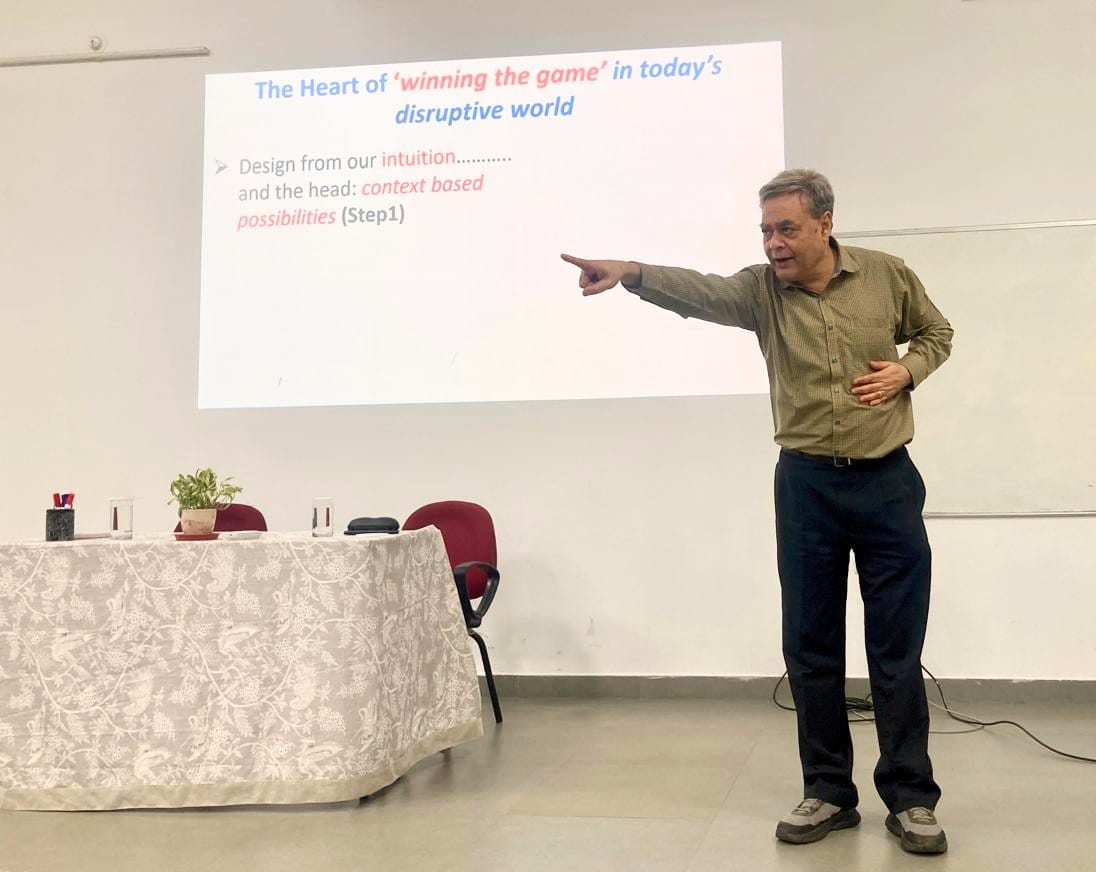
Interestingly, I was recently invited by the Goa Business School, Goa University to speak on the same topic. What we were really looking at is succeeding in an environment that is constantly changing and being disrupted. By new technologies like AI, new competitors, new business processes. The question for us was, ‘So what does one do to win?’
I related a story from my own professional life.
In a past assignment, I was managing a Travel & Destination services t company. One of our major customer accounts was the national petroleum development organisation and because of the large business quantum, we had an implant operation with a dedicated team. Our service and response levels were appreciated by the client.
As our contract period was ending, the company released a tender for a subsequent period. Believing the client was happy with us, we submitted our competitive offer in line with what we had done during our last successful bid. When the tender was finalised, we were shocked to know that we had lost. When we asked the client’s commercial team, we were informed that we had not complied with the technical terms of the bid. Going back to the drawing board, we found that in the tender document, there had been a small section requiring development and implementation of a Travel management Services, TMS in short, software as part of the client’s intranet, which we had not responded to.
Soon, we had the opportunity to bid against a tender released by the National Gas Company. We noticed that in this tender document too, there was a requirement of implementing a TMS software. This time we were careful enough to comply with the requirement by indicating our willingness to develop. But we again lost the tender! The winner was a competitor who already possessed a fully developed TMS module and had provided a live demonstration of the same to the client.
We had been disrupted. By a new technology, a new competitor, which together had disrupted our traditional business mode, a model which had worked well all these years. The world had shifted, the business need in the environment had changed and the earlier alignment which our company’s competence set had with the environment, had been lost.
**
In 1849, French writer Jean-Baptiste Alphonse Karr wrote, “plus ça change, plus c’est la même chose” which in English translates to “the more things change, the more they stay the same.”
The above perspective is possibly at the heart of why we get disrupted. The human mind loves continuity and certainty. These allow us to make sense of what we see as stuff we are familiar with, which our brain does using mind models based on our past experiences. But what happens when we are faced with something we have never encountered before? Our brains somehow try to force fit these unknown inputs into one of our mind models. Even though we remain unaware, this ‘force fit’ sense making process leads to the observed inputs getting distorted, some parts get amplified while others which do not fit, get discarded. Thus, when we probabilistically try to predict, often we fail and get disrupted.
The disruptive world allows us to reside in a narrow band in the present with a hazy and uncertain future in front and the inability to take recourse of the past. Thus to successfully negotiate we need to shift away from our usual probability-based mindset into a mindset of possibilities.
In the session I showcased certain action steps which would support us to do the shift.
I got around to explaining that the first Action step is to create a context for ourselves within our own domain through using hard trends in three areas viz. Demographics, Regulatory and Technology (DRT Context). The hard trends that we uncover become the framework of the context we are creating. Our context would allow us to view every situation in a particular manner.
At this juncture a participant asked for this step to be shown through a case study or live example. I elaborated using the example of the Aviation Industry.
Demographics: Major customer profile shift is occurring viz. growth of young budget traveller and the elderly. Communication technologies is leading to the decline of Business travel. Climate change is shifting the seasonality of leisure travel. Customer behavior is also changing, with short booking windows—often a week or two with fewer travelers making plans far in advance.
Regulatory: Climate change is leading to increased incidences of air borne diseases requiring changes in booking process e.g. Pre-flight testing, need for registration of previous and past travel etc. Technology is allowing airlines to have seamless connectivity within the travel ecosystem to increase demand + assist governments and regulators in creating worldwide / regional standards for hygiene as well as operations.
Technology: Integrated and contact less handling at the airport regarding access viz. boarding pass issual, traveller identification through eye scans, baggage check-in etc. Seat allotment keeping in mind traveler profile, past medical history etc.
Action Step 2 is about using our above created DRT context to make three lists. List of all that we are certain of, list of things we know, and list of things we can do. If we put in the requisite time to make the lists, new possibilities would start showing up for us, a reflection of our improved competence to shift into a possibility mindset.
Action Step 3 is about further sharpening the saw for possibility mindset creation. We do that by unplugging ourself from our present clutter and challenges, then plugging ourself into the future and then use the ‘hard trend’ context created in Step 1, the 3 lists of being certain, knowing and doing ability in Step 2 to do anticipatory & future back thinking through a structured enquiry.
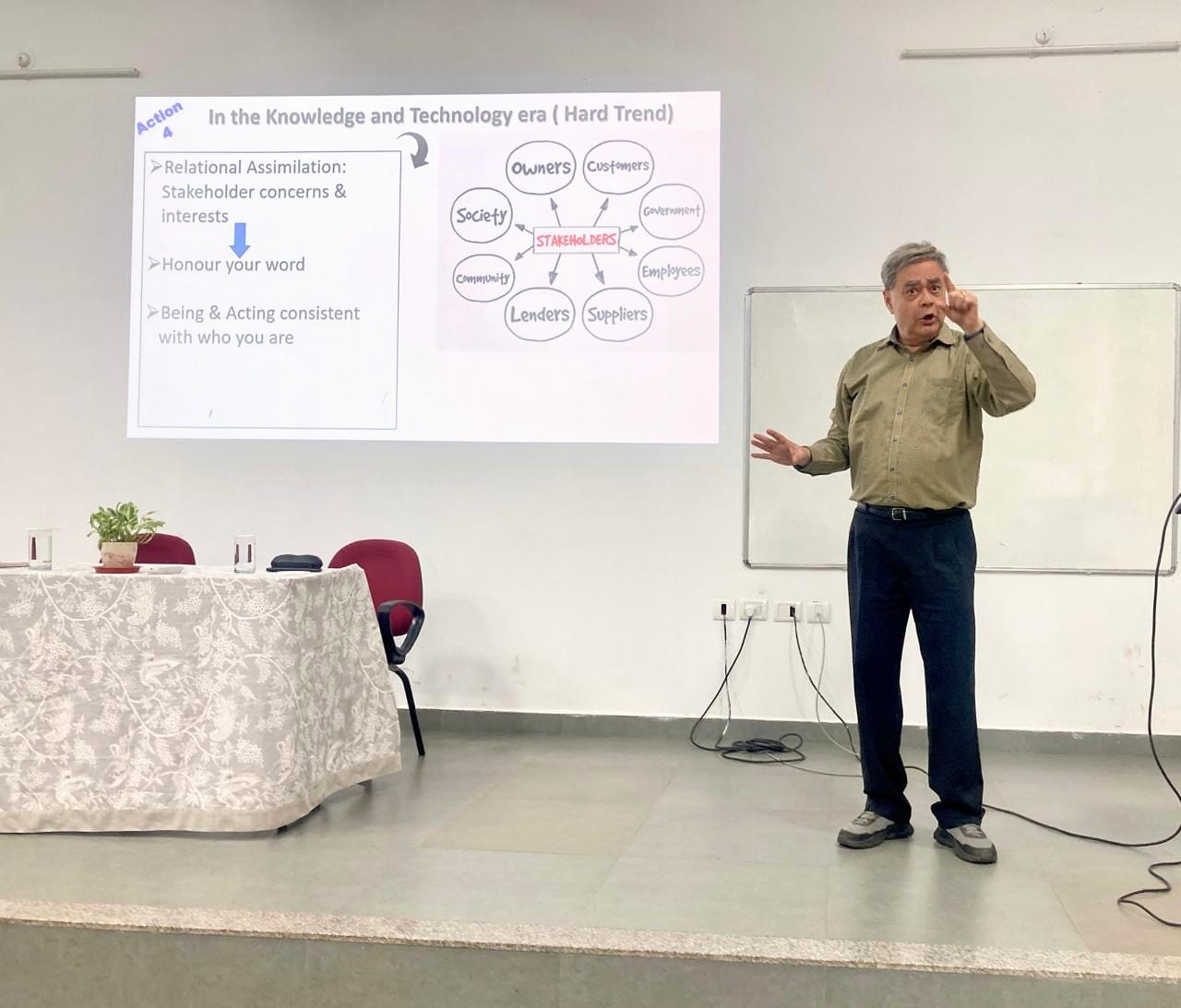
Action Step 4 is about Relational Assimilation which is identifying and defining groups relevant to our business and optimising the group boundary level interactions to advance our own interests. It thus is all about addressing stakeholder concerns. So, who are these stakeholders? They are wide ranging entities. Starting from the company Owners. Employees, who are the internal stakeholders to Customers, suppliers, our banks and financiers- our external stakeholders. But we also have environmental stakeholders viz. local community, society at large and the Government and regulatory authorities. Each of the stakeholders impact the organisation and ourselves in some way, some directly, others indirectly. To ensure effective relational assimilation, we need to exhibit certain qualities in our interactions.
Honouring or Integity of our word. Have we ever considered the fact that we are really equal to your word, nothing more , nothing less? We might see ourself as an individual with certain looks, qualifications, competencies etc. But to the outside world, we are perceived as our word. So, what is ‘Honouring our word’? This means keeping our word and as soon as we realize we are not able to do so, we need to inform all effected parties that we cannot keep our word within the time frame indicated earlier, offer a new time frame to do it and declare that we would take care of the consequences if any, of not keeping our word as per the earlier indicated time frame.
Can you see from what I just said that while it is not possible to keep our word under different situations, we can always ensure that we honour our word?
Being and acting consistent with who you are: This is all about being authentic. Bill George, former CEO, Medtronics and Professor of Leadership at Harvard Business School, concluded, “After years of studying leaders and their traits, I believe that Leadership begins and ends with authenticity.”
So how does one improve one’s own authenticity? Simply put, it is by being authentic about our inauthenticities’. We need to be publicly authentic about our inauthenticity with those around us for whom this inauthenticity matters.
Listening with no intention, no judgment, no Right or Wrong:. This is called Active Listening. A special kind of listening that we use to allow the speaker to articulate his or her own strongly held positions, views, rationalisations, justifications and unexamined beliefs. When we engage in active listening, we do it without colouring our own mind with our own intention, own judgments and our own views about what is being said being right or wrong. You could start with practicing active listening once a day and then slowly increasing the number till the trait becomes part of you.
As you make Integrity, Authenticity and Active Listening part of your repertoire for dealing with your stakeholders, you will see the significant upswing in empathy, respect and trust in your dealings. Action 4 is thus the catalyzing agent to ensure the achievement of the action steps you had created based on the first 3 actions.
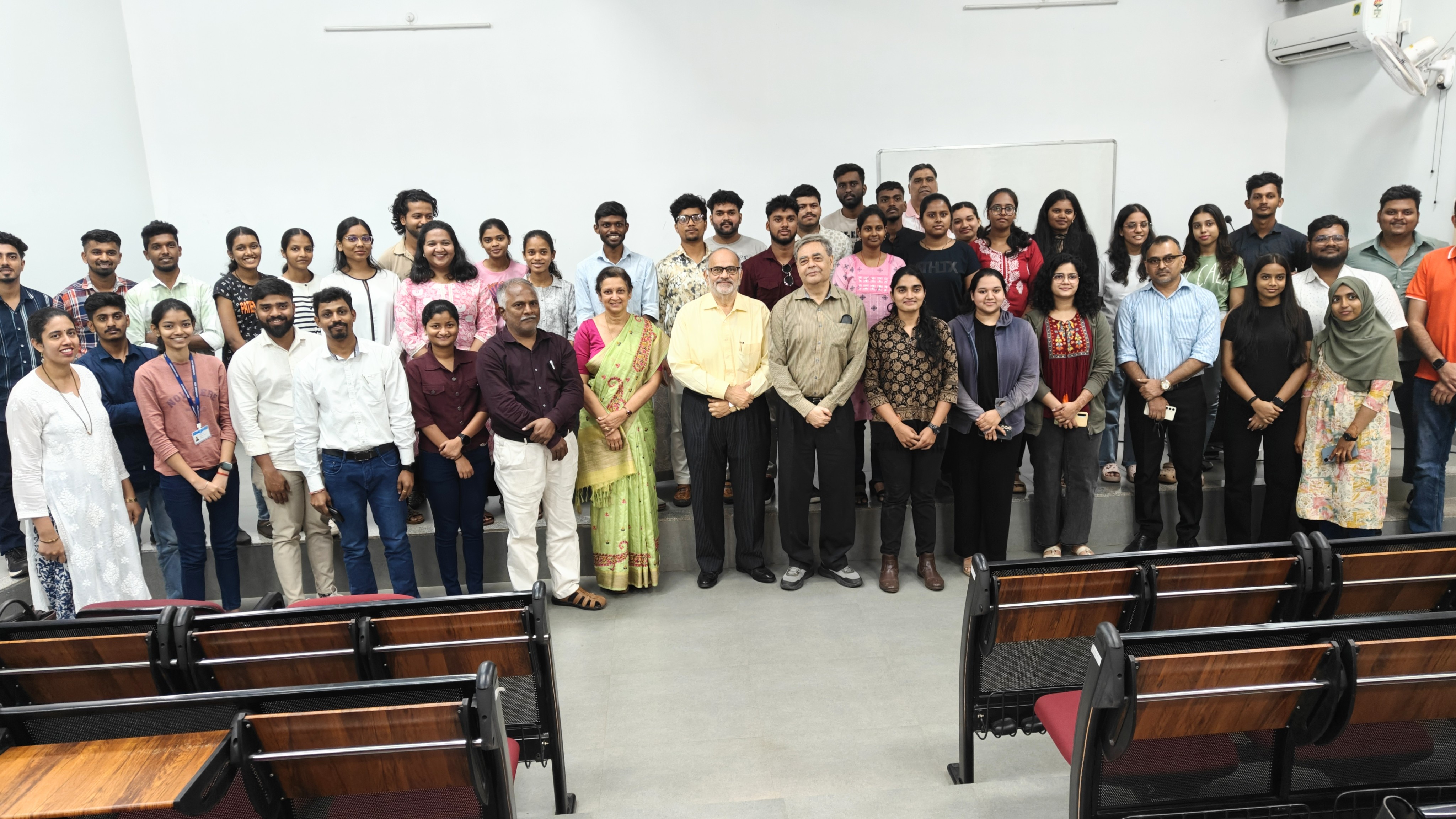
With the participants
**
In the ultimate analysis, Winning in a disruptive world is all about that ability to See, Comprehend & therefore Interact with life (and situation) differently than most people do. ‘Winners of a disruptive worldSEE….and come to live in a different world.
Trust is a foundational element of relationships and interactions. My decades of working in organisations and relating to people have made me realise that Trust flows out from three aspects of how we relate to people and how we interact with team members and others.
First and foremost is the Integrity of our word. We need to be clear to our own selves that the way others see us is how we ‘honour our word.’ Do we keep it and if we cannot, do we inform about that at the earliest opportunity and be willing to clear up any mess caused?
Second is the aspect of accountability. When we can own up to our own errors of judgement and take responsibility, we start creating an environment where others ‘feel safe’ to do the same.
And finally, is the aspect of transparency which builds credibility and shows others that we are willing to share information honestly, even when it is difficult.
What trust leads to is open communication and ‘risk taking’ initiatives with the potential to transform workplaces to becoming more supportive and innovative.
To showcase, how Trust works, I wish to relate the case of Johnson & Johnson and its Tylenol product crisis of 1982. The company faced a severe crisis when people in Chicago died after taking cyanide-laced capsules of Extra-Strength Tylenol, a top-selling, trusted pain reliever.
While Johnson & Johnson was not responsible for the tampering, it faced intense scrutiny and an immediate threat to the overall J & J brand.
The company made a series of bold decisions, guided by its corporate philosophy, which prioritized customers over all else. It immediately recalled over thirty million bottles of the product costing the company over $100 million. The company maintained open and honest communication with the public, issuing warnings and engaging with the media. This transparency helped rebuild public trust and showed they were prioritizing customer well-being.
By placing consumer trust above profit and acting with integrity, Johnson & Johnson was able to rebuild and even strengthen their brand. In a matter of months, Tylenol regained a significant share of the pain-reliever market, and Johnson & Johnson became known as a company that values trust and ethics.
In a recent ‘Mindset Matters’ podcast, Executive Coach Frank Marinko and I deep dived into the fundamentals of what constitutes Trust and how what constitutes our word becomes so crucial in the matter.












 A New Beginning