What to do when the world stinks


Some years back, I had a Divisional head join the team.

The guy had impressed the recruiting board with his talk of ‘track record’ and ‘ideas’ about how he planned to transform the business. When I got around to have a chat with him, he seemed to be all humility and spoke of his own self development through working and learning from me. But several subsequent events seemed to indicate that at the sniff of a challenge, his self-serving shield would go up, a lot of talk about blaming the environment and others in the team would emerge but not much action on the ground. In the meanwhile, the company kept losing competent and productive staff as well as customer accounts; his oft repeated declaration about ‘brickwalling’ them did not seem to be working.

To me it appeared that the Divisional Head did not know what he was working to develop; he was definitely not working on his own leadership. When I again had a chat with him, what came up were several blames. ‘That he had not bargained for the kind of work he was now being expected to do.’ ‘That I was failing to support him adequately.’ ‘That he was stuck with incompetent team members.’

In a nutshell, the job stank, I as the boss stank and the team stank! I did not have the heart to ask the guy that if the world all around stank, could it be that he himself was the problem?

How many of you have faced a similar situation at the workplace? If you have, have you wondered what one might need to do to transform the situation?

The world can shift when one shows up with authenticity and with humility.

Transformation:

  • When we see ourselves as the problem, we can be the solution too. We need to spend more time working on our own selves rather than trying to fix others.
  • Do we have the expectation that our team members should be the harbinger of good news and developments? We need to lower that expectation.
  • Empathy is a strong word; being empathetic is easier said than done. Nonetheless we need to practice putting ourselves in the shoes of others and seeing the world through their lens.
  • Gain the realization that others do not really humble us; we humble ourselves.
  • Show up as a servant leader. A leadership style that enables everyone in the organisation to feel empowered and thrive fearlessly as his / her authentic self.
  • Say ‘Thank you’ to three persons in a day. Look them in the eye and be specific. If someone is not around, send a thank you email or Whatsapp or make a call.

In Learning……                                                                 Shakti Ghosal

A recipe to develop humility in Leadership


It was an economic downturn period with the attendant business concerns. In a management strategy meeting, team members were called upon to offer suggestions about how they would wish to ring fence one’s customer accounts, sustain revenues and margins, bring down expenses and so on. I got the sense that the participants were merely sticking to the safety of what we had been doing in the past; no creative suggestions were forthcoming. It seemed to me that in a perceived environment of insecurity, no one was willing to stick his / her neck out. All were hesitating, waiting to do what they would be told.

This set me thinking. Could it be that my seeking suggestions of what each team member plans to do in an adverse situation was being viewed as appraising and judgmental? Could it be that my stance smacked of arrogance, that I was putting others in a spot but was not willing to commit myself?

In a follow-up meeting, I decided to orient the conversation differently. Prior to the meeting, I sent a note to all participants inviting them to come into the meeting with an answer to a simple statement and a question:

  • You would like to ask me about  _______________
  • What suggestion do you have about what I need to do?

The response was surprisingly overwhelming this time. Everyone chipped in with their frank assessment and the feedback I received were ‘I needed to be more of a team player, needed to be more accountable for team efforts’ and so on. Moreover, one could sense a renewed level of energy and vigour in the team’s declarations.

I thanked all for their frank inputs and avoided giving any explanations.

When later I thought about what had happened, I sensed that it all came down to my practicing humility in the meeting with vulnerability and the willingness to listen and learn. Without knowing it, I had shown up as a ‘Servant Leader’.

In ‘What Is Servant Leadership? A Philosophy for People-First Leadership’, author Sarah K. White, CIO says, Servant leadership is a leadership style that prioritizes the growth, well-being, and empowerment of employees. It aims to foster an inclusive environment that enables everyone in the organization to thrive as their authentic self. it helps create a “psychological ethical climate” that allows employees to be authentic and not fear judgment from leadership for being themselves.’

Humility begins with authenticity. And the pathway to the practice of authenticity begins with ‘being authentic to your own self about your own inauthenticities’. This pathway has no end, it is the journey that we need to enjoy.

If we are not careful, a leadership role has this nasty tendency of making us arrogant. “I am a leader because I am better. I know what is good for the team, so it needs to be my way or highway” is the kind of thought that can sometimes circle inside us. And such thoughts manifest in our conversations and actions.

Arrogance blocks growth, humility drives growth. Humble leaders always strive to develop themselves.

What humble practices might you adopt to develop your team?

In Learning…….  Shakti Ghosal

Acknowledgement: ‘What Is Servant Leadership? A Philosophy for People-First Leadership’ by  Sarah K. White, SHRM Labs, Feb. 28th 2022

That Disempowering edge of Commitment


To get commitment from one’s team towards achieving a common objective is a Leadership fundamental.

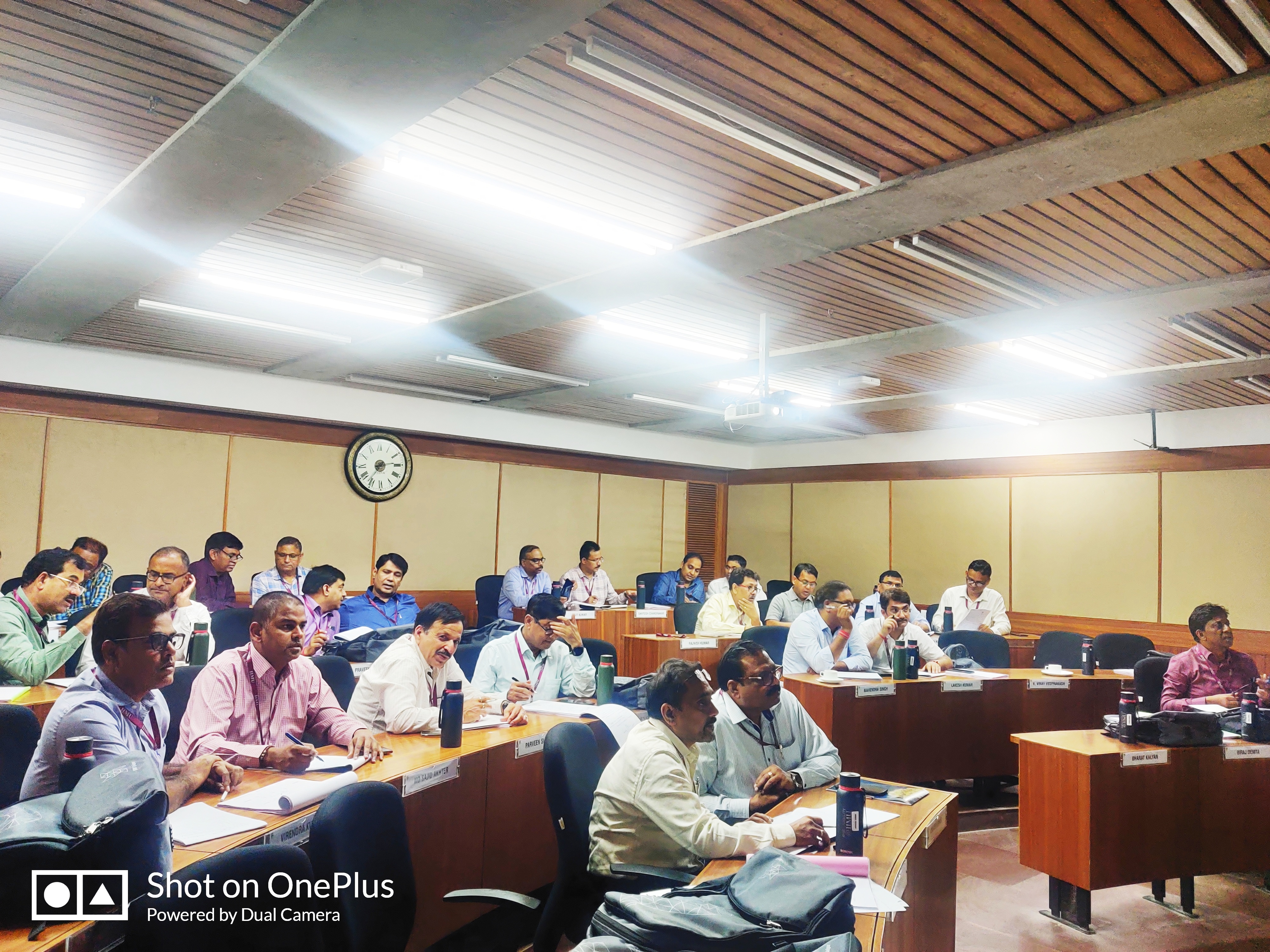
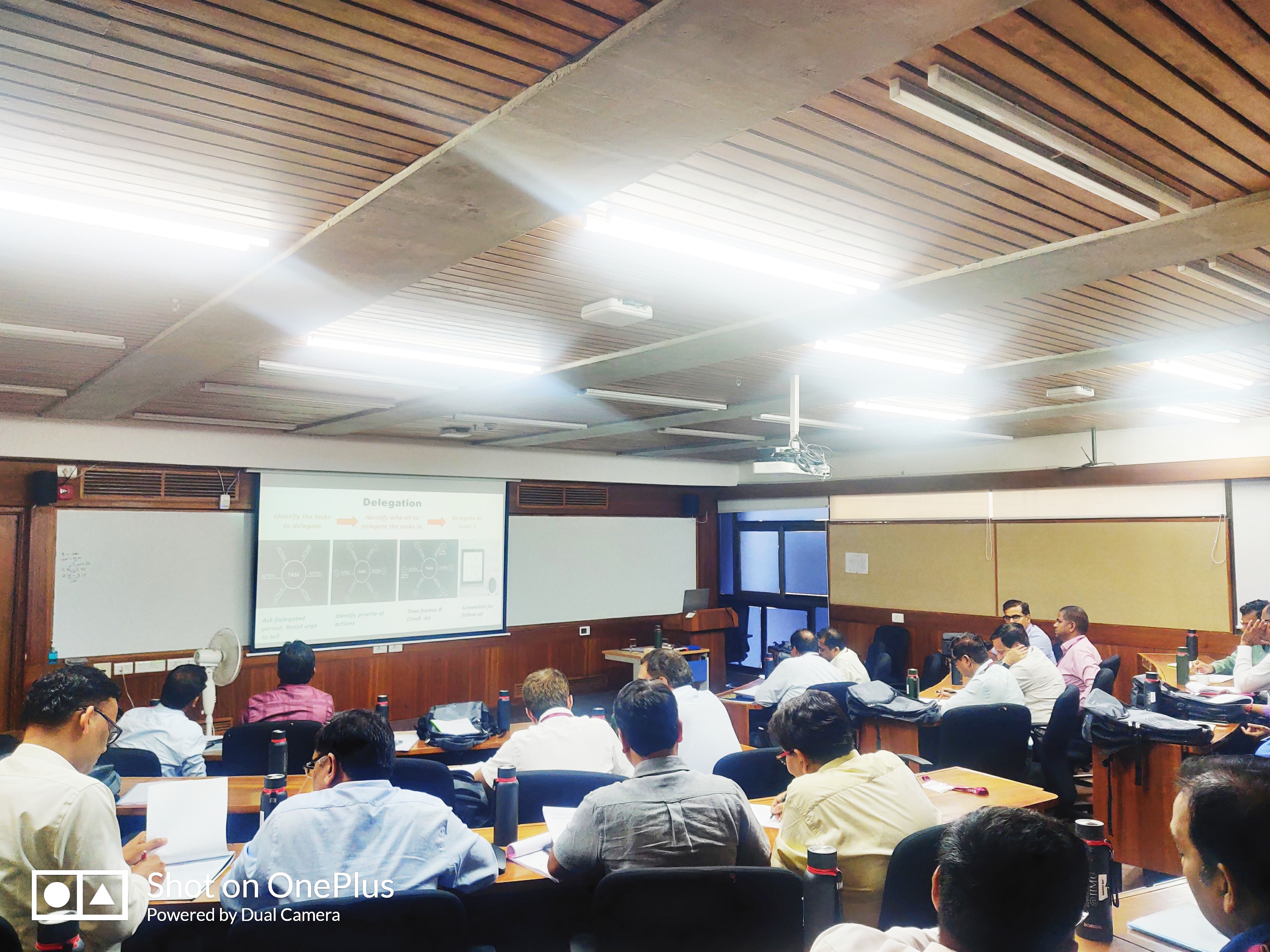
Recently, I was anchoring a Management Development program (MDP) for Senior Managers of National Hydroelectric Power Corporation. The program was designed to endow the participants with Leadership and Performance skills. An experiential aspect of the program required each participant to articulate a Leadership and / or Performance challenge which he is presently facing at the workplace.  This challenge would then become the central aspect of learning and application as the participant would be required to apply the various Leadership contextual elements to discover a ‘move forward’ pathway for resolving the challenge.

All the participants could identify such a challenge except one individual. Noticing that the person was looking lost, I asked him as to what the issue was. The response was surprising; the participant after some probing said that he could not think of any challenge at his workplace!

I though persevered and asked, “You surely would have faced some challenge at your workplace in the past, have you not?”

The participant still hesitated and with some reluctance started writing about a past challenge. To me it seemed the gentleman was fearful of recognizing and then committing about the situation at his workplace.

What is that which blocks many of us from recognizing an issue and then making a commitment to resolve it? Even when we might realize that the said commitment is something which works in our favour.

Commitment for many of us is like walking a tightrope. It carries with it the fear of failing, being ridiculed, getting our vulnerabilities exposed. Some of our past life experiences lead us to instinctively ‘avoid’ when it comes to making a commitment; we get conditioned to equate the latter to a danger of failing and losing our ‘status’.

When I think back about the participant and his reluctance to even identify a challenge, I can sense his avoidance mindset. In his mind, he would have been linking recognition of a workplace challenge to a commitment that he might need to make to resolve. If one avoids looking at an issue, one avoids getting involved. Like the protagonist Neo in the movie Matrix, one can cozily sleep walk in one’s make-believe world without the need to accept the harsh realities that exist.

So, what else could I have done to make it easy for that reluctant participant to identify and commit?

 I could have tried to empathise about the stress he might have been feeling. I could have said, “Confronting your challenge must be stressful for you”. I could have made a commitment to him that I would work with him to ensure that his challenge is resolved.

***

At the work place, we often wonder, “How can I get my team to do what I want them to do?”  Commitment cannot be force fitted and that paradoxically remains a leadership tool which can disempower. The answer is people do what THEY want to do. This remains at the core of how we could Invite effective commitment.

At the core of effective commitment:

  • Leadership which is unselfish; one which is willing to make unsolicited commitment to and investments in people.
  • Working from a perspective that commitment is a two-sided street.
  • Information sharing with all team members who have committed. Keeping information away weakens commitment.
  • Transparent and open-hearted conversations build connections which empowers two way commitments.
  • Moving on the commitment pathway addresses a deep-seated concern of each team member

Lasting goal achievement success requires commitment, not coercion.

As a leader, how might you establish shared commitments?

In Learning……..                                                                                                      Shakti Ghosal

All the things we do not want…..


Have you ever wondered about all the things you do not want, all the things you avoid? These may be at your workplace. Or they may be in your personal life or relationships. Do you realise that all the things you do not want can actually support you to move forward in life?

In the second year of my post graduation, we had to choose elective courses to achieve a minimum number of credits. I remained in my comfort zone by choosing electives which I had the ability to do with minimum effort. I avoided taking on courses in the Computer Science domain (then in its infancy and consequently a ‘black box’ to me) which I figured would require a lot of learning and effort. Was it a mere avoidance mindset or a deeper fear of failure? Most of my batchmates who ‘took the jump’ and majored in Computer Science subsequently did very well in their careers. Fear of failure can help us succeed.

Fear of failure can help us succeed

An aspect we do not want is frustration. Frustration is really our reaction to stuff we do not like or cannot control. The ugly underbelly of frustration is that we tend to vent it on folks who may have nothing to do with it. These folks may be our spouse, family members or colleagues at work place. Frustration shows up as anger, impatience or both. I can recall a particularly difficult meeting with a client about a service failure in which they threatened to cancel our contract. It was a situation outside our control but my reaction had been to call the service team and vent my frustration on them. What I had done was to further spread the cycle of exhausting negativity without finding a solution. The section head though was a guy with a cool temperament; leaving the meeting he did what was needed to be done to retrieve the situation. Frustration can be a good thing if we channel it to move towards solution finding.

Frustration can be a good thing……

We do not want to do ‘heavy lifting’, we succumb to the temptation of doing theoretical stuff. In a previous project assignment, I interacted with two kinds of people.  The first set were those who were smart, articulate, detested leaving office and had theoretical solutions for all operational issues. The second set were those who were low profile, operated in the field and were hands-on with the project. I found it comforting to hang out with the first set and opinionate about what was needed to be done or not done; true to the perception I held I avoided going out into the field. However, I soon found that  grit, resilience and character developed only when I got down to ‘digging ditches’ in the field to circumvent failures, prevent time over-runs and ensure project completion. Resilience and Character wait on the other side of our disappointment and failure ditch.

Resilience & Character wait on the other side of our failure & disappointment ditch

In the hurry-scurry of our work life, we tend to develop revolving -door relationships. Relationships that we create to achieve quick business objectives and which tend to get jettisoned soon after. Such relationships may seem energizing, even meaningful in the moment, but really build a shallow work life. How many of these questions can you answer in the affirmative?

  • Do you take genuine care of the people who pull alongside you?
  • Do you invest time with your team and other stakeholders beyond work related stuff?
  • Do you serve those who serve you?

The deeper we nurture relationships, the more valuable they become.

The deeper we nurture relationships, the more valuable they become.

In Learning………… Shakti Ghosal

Home

Leadership and Introspection


A way to grow one’s Leadership is through introspection. One needs to look back into one’s past and identify all that which contributed to one’s Leadership and performance development.

This may sound easy but it is not. As we move through work responsibilities and the corporate hierarchy, we tend to develop our own plethora of ‘what we believe made us succeed’ mechanisms consisting of inauthentic facades, assumptions and ‘need to impress the other guy’ behaviours. We also hone our survival instincts. So, when we do get down to ‘looking into our past’ and identifying all that which contributed to our development and growth, we tend to see stuff distorted by our facades, beliefs and impress the-other-guy behaviours.

The way to grow one’s leadership through introspection is to do the following practices.

  • Ask yourself, ‘Who were the people who changed you?’

When I thought about this question, I could identify two individuals.

 The first was a senior colleague at the start of my career as an Assistant Mechanical Engineer in the Indian Railways.  The quality that my colleague brought into our relationship was one of sunny optimism and a natural instinct to mentor without a self-serving mindset.

The second was my boss in Voltas Ltd, where I was handling HVAC projects. The quality that he brought into our relationship was one of down to earth openness and transparency.

I realise today that what allowed me to grow through the above relationships was to try and inculcate a non-self-serving mindset as also authenticity through openness and transparency.

  • Ask yourself, ‘What kind of people did you gravitate towards?’

When I thought about this question, I could again identify two individuals.

In my tenure in the Indian Railways, I had two workshop foremen report to me. The first was a kind of a ‘yes man’ guy. He made me at once comfortable through his unquestioning loyalty; he would do exactly what I asked him to. This was a great relationship for maintaining status quo about situations and other stuff.

The second was a guy who was a ‘shop floor rebel’. He would usually give a counter viewpoint to most stuff I would suggest, and at times speak uncomfortable truths based on his own past experience and arguments. I would often ‘see’ his approach as unwillingness to accept my authority or trying to prove me wrong. I would feel upset.

This did not seem to be the kind of relationship I would be comfortable with or gravitate towards at that point in time. But I realise today that the person who allowed me to grow was this ‘rebel’ guy as he shattered my comfort zone and forced me to look at uncomfortable possibilities.

So how might you grow your leadership in today’s disruptive world? How might you foster such growth in your team members?

Gain mastery about how to succeed in a business environment that is constantly changing and being disrupted. Do this free module:

https://www.learndesk.us/class/6399442649350144/winning-in-a-disruptive-world-module-1

In Learning……… Shakti Ghosal

#leadership, #introspection, #practices, #authenticity, #facades, #assumptions, #survival, #disruptive world, #succeed, #Indian Railways, #Voltas

How could you shift from Influence versus Impact to  influence and impact?


Larsen & Toubro Leadership Workshop

Sometime back, in a Leadership workshop for Larsen & Toubro that I was conducting, one of the participants shared a challenge he was facing.

 “Earlier I had been involved in direct sales of earthmoving equipment to institutional buyers. A year back I got promoted and was moved to product and market development. However even now a few of the clients continue to contact me on even small issues.”

“That only goes to show that they still have a lot of trust in your support to them, is it not?” I commented.

“True,” the participant agreed. “But it often leads to negativity and bad blood with my sales colleagues who think I am trying to throw my weight around and stepping on their toes.”

“So, what is stopping you from letting go and clearly informing your ex-clients suitably?” I asked.

“That is what I am finding difficult to do. I feel I might be letting my clients down” was the response.

“That surely is a good intention. But are you taking accountability of future sales to the client?” I asked.

Looking at me, the participant slowly shook his head to conveying that he was not.

***

Each one of us, in our career, would have faced a similar situation. The problem occurs because of the clash between our stated positive intention and the negative impact we are making. If we are not careful, we can get sucked into a black hole of spiraling negativity which ironically arises from an initial intention to help.

The authority being exercised in some manner (even with good intentions) without being accountable is really abuse. If we expect others to be accountable for the task at hand, and we get sucked in, we need to be equally accountable to them, even if hierarchically they are junior to us.

Simply put our impact and influence may move in contrary direction leading to minimal or nil positive outcome. We thus need to explore how these two may operate together in the same direction to maximise the positivity of the outcome. Think of a train being pulled by a set of double engines.

Jim Dougherty, CEO of a software company, writes in Harvard Business Review ( Dec 12, 2012 issue),  “If you want to get an emotional connect with the  people you are working with or with whom you have business relationships — you need to be willing to commit and be accountable to them , unsolicited and without direct hope of reward.”

Should you wish to move on the road to better influence and impact, I invite you to explore and answer these questions:

  • Are you willing to make personal investments in people?
  • Are you willing to share what you are learning?
  • Are you willing to empathise with the stresses and frustrations others feel?
  • Are you willing to work for a shared purpose, results and consequences?

What could you do to maximise the overall outcome from the influence and impact you make?

In Learning……………..                                             Shakti Ghosal

Control versus letting-go: A Leadership tale


Sometime back, at a two-day Leadership Development program that I was running for Larsen and Toubro Ltd (a heavy engineering and multi-business conglomerate in India), a participant came to me during one of the breaks and said:

“All these techniques which we are learning seem to be of little value to me. I am faced with a different kind of problem. My boss has a strong controlling impulse. It is usually his way or the highway. It seems to me he believes this mindset is what has helped him reach his current position. So even if I try, there is never a win/win situation for my boss vis a vis me. What should I do?”

@ L & T Workshop

As I stood there listening to him, several thoughts came to mind. I asked him whether he was okay to delve into the issue some more.

We need to start exploring. We need to ask, ‘What is that which our ‘controlling boss’ would really like to control and change?’  And even more important, ‘What is that we ourselves are willing to let go?’ For ‘letting go’ could be the start of getting back in control.

Could we try and meet the ‘control freak’ half away down? For instance, certain relationships and one to one interactions could still be kept under our control. This realization itself can give us a sense of empowerment.

Could we ‘let go’ by avoiding reacting when we are being pushed to accept the controller’s point of view? Acknowledge what we have been told and then explain what we plan to do, why we have decided so and that we are willing to take full responsibility of the outcome.

The above exploration would allow us to create our action steps in the matter, thus elevating our own control of the situation.

‘Becoming a leader’ does not arise from knowing techniques or aping what we see great leaders do as they exercise leadership effectively in varied situations. Leadership and Performance is very little about what we know, it is almost all about how we see.  ‘How we see’ comes from our ability to shift our perception through developing a contextual framework for our own selves.

http://www.empathinko.in

The Fault in our times


Do the following look familiar to you? Do they apply to you?

  • Are you living an E- Life, is your life made up of bits and bytes, black and white?
  • Are you perennially rushed, shortchanging your grasp of a situation as you celebrate breadth instead of depth?
  • As you face a situation, do you see yourself reactively ‘firing from the hip’ rather than standing aside and reflecting deeply?
  • In a fast-changing world, are you racing through your days without the clarity of who you really want to be and where you really want to go?
  • With relentless demands at work and home, are you becoming short tempered and easily distracted?
  • Are you so wired up that you are melting down?

Equipped with day planners, to-do lists, smartphones and laptops, we pride ourselves as efficient time managers as we hold the intention to multi-task and optimize our productivity on a 24 X 7 basis. What is that which stops us from bringing sufficient energy into all that we are doing, why is it that we fail in so many of our well-intentioned endeavours?

Have you wished you had more time and the wherewithal to do things better? But is it the paucity of time………. or is it something else?

There is a significantly different element, not time, which is the fundamental currency of performance and effectiveness.

http://www.empathinko.in

Reimagining Leadership in the Digital Era


“Clearly, the thing that’s transforming is not the technology — the technology is transforming you.” Jeanne W. Ross, MIT Sloan’s Center for Information Systems Research

Moolya Foundation is a non-profit organisation that aims to transform public affairs through digital leadership. The mission of Moolya Foundation is to expand the conversation surrounding public affairs and empower every citizen in the digital age.

Moolya Summer School 2021`— 6 weeks internship cum training program — aims to engage with budding policy enthusiasts and familiarise them with the principles of policy research and practical approaches to policymaking and analysis.

I was recently invited to deliver an online address on ‘Reimagining Leadership in the Digital era.’.

The Merriam Webster dictionary defines ‘Reimagining as ‘to form a new conception of, to recreate.  What is Leadership? A great definition is ‘visualization of and moving towards a future that was not going to happen otherwise.

In the digital era, our world is increasingly granular- more number of players are entering every day & increasingly interdependent- more unknowable connections between them. Information availability & sharing is 24 X 7 binding us all together and creating a global awakening of expectations.

http://www.empathinko.in, http://www.shaktigosal.com

#shaktighosal #moolyafoundation #reimaginefuture #leadershiptransformation #coachingmentoring

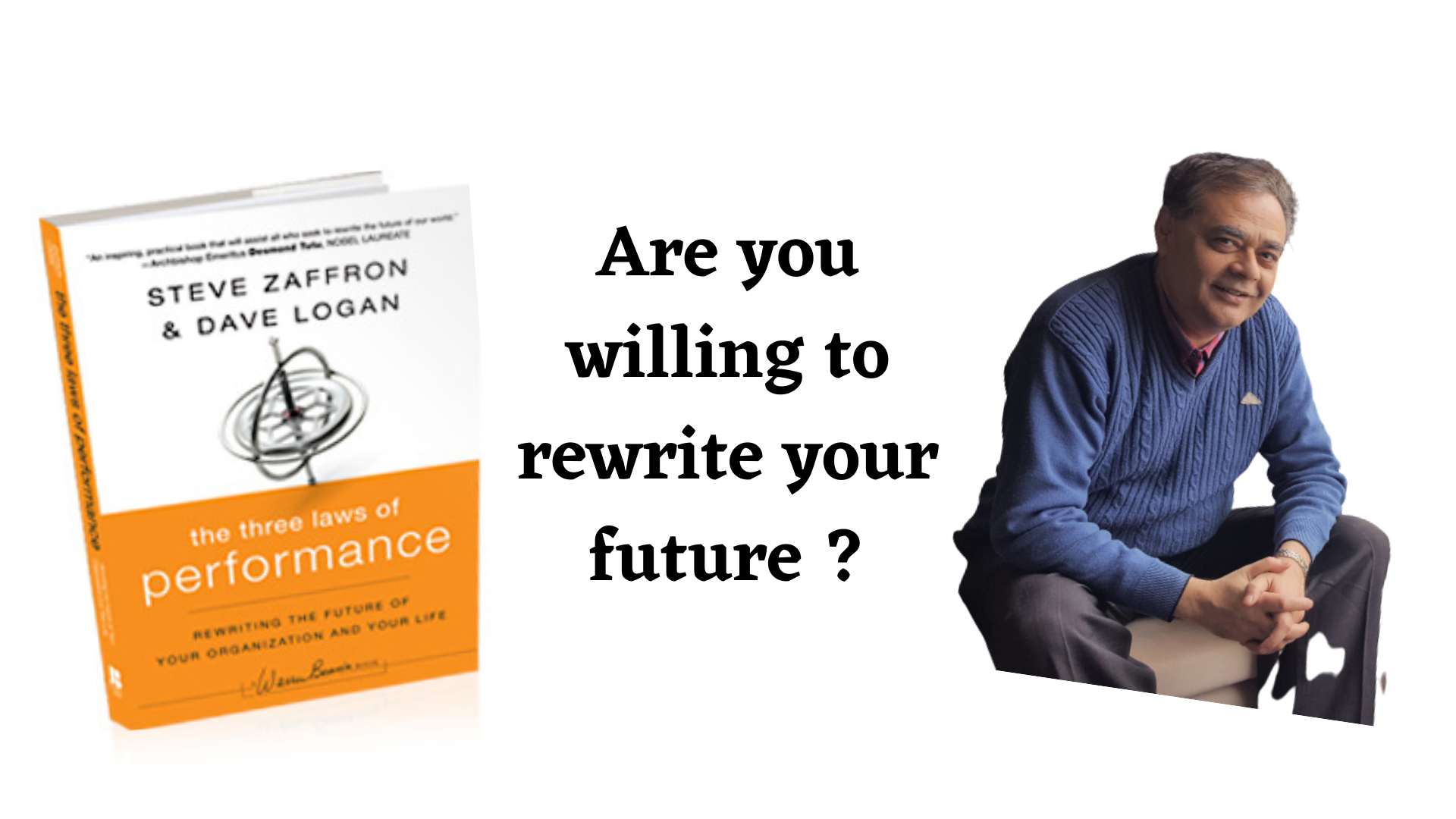
The 3 Laws of Performance


I had recently spoken about the 3 Laws of performance on the E- Bookery platform.

Are you willing to rewrite the future of your organization and Life? Watch this 30 minutes video to get a blueprint for achieving performance breakthroughs.

How can you shift from being disengaged to being proactive, from being resigned to become inspired, from being frustrated to becoming innovative?

http://www.empathinko.in

#shaktighosal #leadershipdevelopment #leadershipandperformance #performancelaws #leadershipcoaching #leadershiptraining #mentoring