My Life Sentence


“Everyone thinks of changing the world, but no one thinks of changing himself’.

Leo Tolstoy, Russian mystic & novelist. 1828-1910

jail_life sentence

At the age of ten, I had the first realization of what a gang was and what it could do to me. I do not recall how it started but one thing led to another and soon all my neighbourhood friends and playmates had ganged up against me. One evening, I had climbed up on the roof of our house with our servant as he was fixing the radio antenna. I saw my ex friends and playmates holding hands, dancing and skipping together and then with a shock, I heard their voices mocking, mimicking and making fun of me. In that moment I heard an inner voice saying, ‘There is something wrong here. There is something wrong with me.’

I remember telling myself, ‘I don’t belong’. I became a loner, did things on my own and showed up with a ‘I do not really care to belong’ persona to my erstwhile friends and the world. Even after a few weeks when all became well again and I was back with my friends, my self imposed life sentence ‘I don’t belong’ continued to reside inside me.

I time travel a few years ahead to when I am in my mid teens. I see myself having a great time with a bunch of friends at school. Sharing books and comics, watching movies and developing views of the world together. Being cool was all about hanging out together; classes and the need to master what was being taught took a back seat. I justified to myself, ‘I am smart and I can always make up my studies before the exams’. So it came as a shock when my final examination grades plummeted. That inner voice returned, ‘There is something wrong here. There is something wrong with me.’

I recall my father telling me, “You have become a mediocre. Mediocre people do not succeed in life”. In that moment of humiliation and self-doubt, I said to myself, ‘Life success depends on scholastic success.’ As this got ingrained in me as a life sentence, I got back to being a loner and focusing on scholastics. Over the years, as I went on to achieve one scholastic peak after another, to the outside world I was smart and successful. But somewhere inside, those vestiges of childhood humiliation and self doubt remained and my view of the world and behaviour towards other people continued to be guided by ‘Life success depends on scholastic success.’

Today as I think of myself, I sense how the life sentences I had imposed on myself during moments of shock and bewilderment those many years back, have so become part of who I am. It is as if there are several ‘me’s enacting different roles here. There is the judge ‘me’ along with the jury ‘me’ who have sentenced the accused ‘me’ to live out my life in a cell. A cell whose walls, ceilings and floor are composed of my own life sentences. Like inmates of an actual prison, I have devised my own winning and self-serving formulas to cope with the constraints of my prison life. Ironically though and unlike the actual prison inmates who try to get out into the free world, I don’t see the need to do so as my life sentence created prison bars have so become part of my persona and who I am.

And so I continue to go through Life carrying my life sentences. In many situations, I cope and come out the winner In others I feel like a ‘thrown dice’, caught up in unfolding events, clinging onto the ways from my past but yet failing to call the shots. I am left wondering who or what is leading my life.

Can I presume you, dear reader, also feel the same?

So how could we build our lives around our ‘real’ self, free of our life sentences and the persona we have created to cope? In their path breaking book, ‘The Three Laws of Performance’, authors Steve Zaffron and Dave Logan deep dive into this aspect. They point to a way of overturning our life sentences to free ourselves of these.

We need to start by showing compassion to that little guy within each of us who has been carrying the burden of the life sentences all these years. That guy who did his best to cope with life and produce results by trying to make up for what we have perceived as wrong with us. By hiding from others, even from our own selves. By conditioning ourselves to be different from who we think we are.

The authors then recommend that we create a crisis of authenticity within ourselves. A crisis of the real ‘we’ against the persona created by our life sentence. To create such a crisis ‘we need to locate where our foot has got nailed to the floor’. We do this by engaging ourselves with the following queries:

•Where in your life is something not working or not working as well as you want?
•In what areas of your life do you feel a loss of power, freedom, fulfillment or self expression?
•In those areas of life you just identified, how are you being inauthentic- what are you pretending, avoiding, not taking responsibility for?
•What can you see has been the impact, the limitations, of your having been inauthentic in those areas?

Dear Reader, are you ready to overturn your life sentence?

***

Two Wolves – A Cherokee Parable

2 wolves
An old Cherokee chief was teaching his grandson about life…

“A fight is going on inside me,” he said to the boy. “It is a terrible fight and it is between two wolves.

“One is evil – he is anger, envy, sorrow, regret, greed, arrogance, self-pity, guilt, resentment, inferiority, lies, false pride, superiority, self-doubt, and ego.

“The other is good – he is joy, peace, love, hope, serenity, humility, kindness,
benevolence, empathy, generosity, truth, compassion, and faith.

“This same fight is going on inside you – and inside every other person, too.”

The grandson thought about it for a minute and then asked his grandfather,
“Which wolf will win?”

The old chief simply replied, “The one you feed…”

***

In Learning…….. Shakti Ghosal

Acknowledgement: The Three Laws of Performance: Rewriting the future of your organisation and your life by Steve Zaffron & Dave Logan, 2011. Chapter 6, Pages 143-168.

I = My Word


You may choose your words like a connoisseur, And polish it up with art, But the word that sways, and stirs, and stays, Is the word that comes from the heart.

Ella Wheeler Wilcox, American author and poetess, 19th century

I recall the 1970s supernatural classic, ‘The Exorcist’ in which the possessed Regan, when asked “Who are you?” replies in a demonic voice, “Nowonmai”. Initially thought to be something in a foreign dialect, the reply is later deciphered to be, ‘I am no one’, when read backwards.

Regan in The Exorcist

What is it that makes us ask the question, “Who are you?” It seems to support us to create a fix about the other person. About his characteristics, about his viewpoint, about his intentions. We try to determine the authentic self in the person which then allows us to engage with him powerfully.

At the other end, the enquiry ‘Who am I’ allows us to present a perspective of ourselves which we feel offers the best chance for engagement and success. Said another way, we show up, not as our authentic self, but in the best manner possible to get the job done. Clearly, over time, our ‘Who am I’ face does become a talent for deception.

It is in the attempted matching between the “Who are you” gained perspective and “Who am I” put on mask that the effectiveness of engagement and relationship between two individuals lies.
untitled
Who am I? I remember those times as a child when having nothing better to do, I would stare into the mirror and wonder, “How is that me?” Am I me because of the name which my parents christened me with? Or because of how I look? Or because of how I think, speak, act? Or because of how I behave with others? After all these decades today, when I think back to those questions, I yet remain uncertain of the answers.

Who am I? Why do I experience this sense of self? Is it a natural function of my mind? Or is it some spiritual awareness that keeps tugging at me? The fact remains that with every passing day, I keep changing. Every day I change into the person I become in the moment. As I sift through photographs and memories, I am confronted with the realisation that I am a person who is significantly different from the person I had been at an earlier time. Both physically and mentally, I see myself changing, adding, subtracting, becoming …..Me.

But if I am always changing, adding, subtracting, becoming, where does the assurance of ‘Who am I’ lie? For is this assurance not critical to my engagement and effectiveness in the world? As I muse on this, my thoughts shift to a webinar series titled ‘Integrity: Without it nothing works’ which I participated in recently. In it, author Mike Jensen concludes that the foundation for being a high performance individual is to declare “Who I am is my word”. He goes on to say that within his own organisation, a perspective shift to ‘I am my word’ amongst employees led to a 300% improvement in performance with no additional inputs.

As per Mike, since I am my word, I become whole and complete only when my word is whole and complete. And how does my word become whole and complete? This happens when I honour my word. I can do this in two ways. First by doing what I said and in case I am unable to do so, I inform about this to all the people counting on me and be willing to clean up any mess that might get created.
Broken_Promises_by_HerrFous

Why does honouring my word become important? Because it makes my word, and thereby me the person, whole and complete. This is what goes a long way to improve the potential of my performance. To understand this some more, let us look at the example of a car. For optimum performance, it needs to have been designed right, all its components need to be in place and functioning and you, the owner, drive it correctly. Should any of these aspects be missing or not right, the car would malfunction, become unreliable and essentially would lack integrity. So it is true with me (or you). When my word and therefore I, am whole and complete and therefore in Integrity, I radiate an empowered and trustworthy persona and my actions get perceived as reliable and consistent. This then becomes the core of ‘Who I am’ which does not change even when I change physically and mentally. The power of “I AM equal to MY WORD” lies in this. As my word gets perceived as that changeless anchor I am to which everyone around me can tie their knots of trust and faith to.
integrity
As I muse of all the difficult-to-handle aspects ranging from self deception about not honouring my word ‘ Do I really need to if no one is looking’ to fear of acknowledging that I would not be able to keep my word ‘How on earth would I clean all the mess that would ensue’, I realise the best place to start is to give my word to myself that I would be my word.

In Learning…….. Shakti Ghosal

Acknowledgement :‘Integrity: Without it nothing works’. Harvard Negotiation, Organisation and Market Research Paper No. 10-042 by Michael C. Jensen,Jessie Isidor Straus Professor Emeritus, Harvard Business School, April 3, 2014.

The Audacity of Who I am


“High above the noise and fear mongering of critics and cynics softly speaks your true self.”
– Mollie Marti, Psychologist, Lawyer & Coach, USA

The other day, I watched the Bollywood movie Queen. In it Rani, a girl from Delhi, travels to Europe after being spurned by her fiancé. The movie then goes on to explore Rani’s ‘World view’ as dictated by her Indian middle class values and how that alters, as her biases and prejudices fall away, as she is confronted by radically different value systems and perspectives. A journey of self discovery in surroundings where she is no longer weighed down by others’ expectations and diktats. As she morphs, she confuses and pisses off many people including herself. Rani emerges from this crucible of experience as a more authentic human being. As she chooses to be ‘who she is for herself and for others’, she symbolises courage as well as resistance. Walking out of the theatre, I could not help but acknowledge how Rani’s awareness and acceptance of ‘who she is for herself and for others’ left her more empowered and in control of her destiny.

Kangana Ranaut in Queen

Who I am for myself and for others? How many of us are willing to make this query a daily practice as we loosen the constraints imposed by our world-view, let go of who we believe we should show up as and embrace who we really are?

What is it that makes me avoid being who I am for myself and for others? I can see this stemming from my desperation to be admired, liked and looking good. My life experiences have conditioned me to avoid being straightforward and veer towards being diplomatic if I perceive it is the latter which makes me look good. I have also been guilty of the corporate lie. On occasions I have stretched the truth about my company and its services, hidden what could have been embarrassing. On other occasions I have manipulated situations and people. All this to succeed, be admired, look good.

I muse. Have my efforts to gain admiration and look good empowered me to greater heights? Have I succeeded in engaging in my life from a place of worthiness? I remain increasingly unsure.

So if avoiding ‘who I am for myself and for others’ has not worked for me, how could I embrace it? As I think of this, I begin to see what being who I am for myself and for others could mean for me.
Who I am 1

It would mean the audacity to show up as the ‘imperfect me’ that I am and the willingness to be vulnerable.

It would mean the audacity to let my hair down and allow myself to truly belong with the folks I choose.

It would mean the audacity to be compassionate and loving even when I hold the fear of not being good enough.

It would mean the audacity to be authentic about my own inauthenticities.

Am I committed to being this audacious?

***

“Real isn’t how you are made,’ said the Skin Horse.’ It’s a thing that happens to you. When a child loves you for a long, long time, not just to play with, but REALLY loves you, then you become Real.’

‘Does it hurt?’ asked the Rabbit.

‘Sometimes,’ said the Skin Horse, for he was always truthful. ‘When you are Real you don’t mind being hurt.’

‘Does it happen all at once, like being wound up,’ he asked, ‘or bit by bit?’

‘It doesn’t happen all at once,’ said the Skin Horse. ‘You become. It takes a long time. That’s why it doesn’t happen often to people who break easily, or have sharp edges, or who have to be carefully kept. Generally, by the time you are Real, most of your hair has been loved off, and your eyes drop out and you get loose in the joints and very shabby. But these things don’t matter at all, because once you are Real you can’t be ugly, except to people who don’t understand.”

Excerpt from ‘The Velveteen Rabbit’ by Margery Williams

In Learning….. Shakti Ghosal

Sagrada Familia and the Power of Intentions


“Inspiration is intention obeyed.” Emily Carr, Canadian artist and writer, early twentieth century

Coming into Barcelona by the high speed AVE train, we disembark at Barcelona Sants and proceed to our hotel. Check-in over, I enquire about how to go to Sagrada Familia and am delighted to learn that it is a mere ten minutes away by walk.

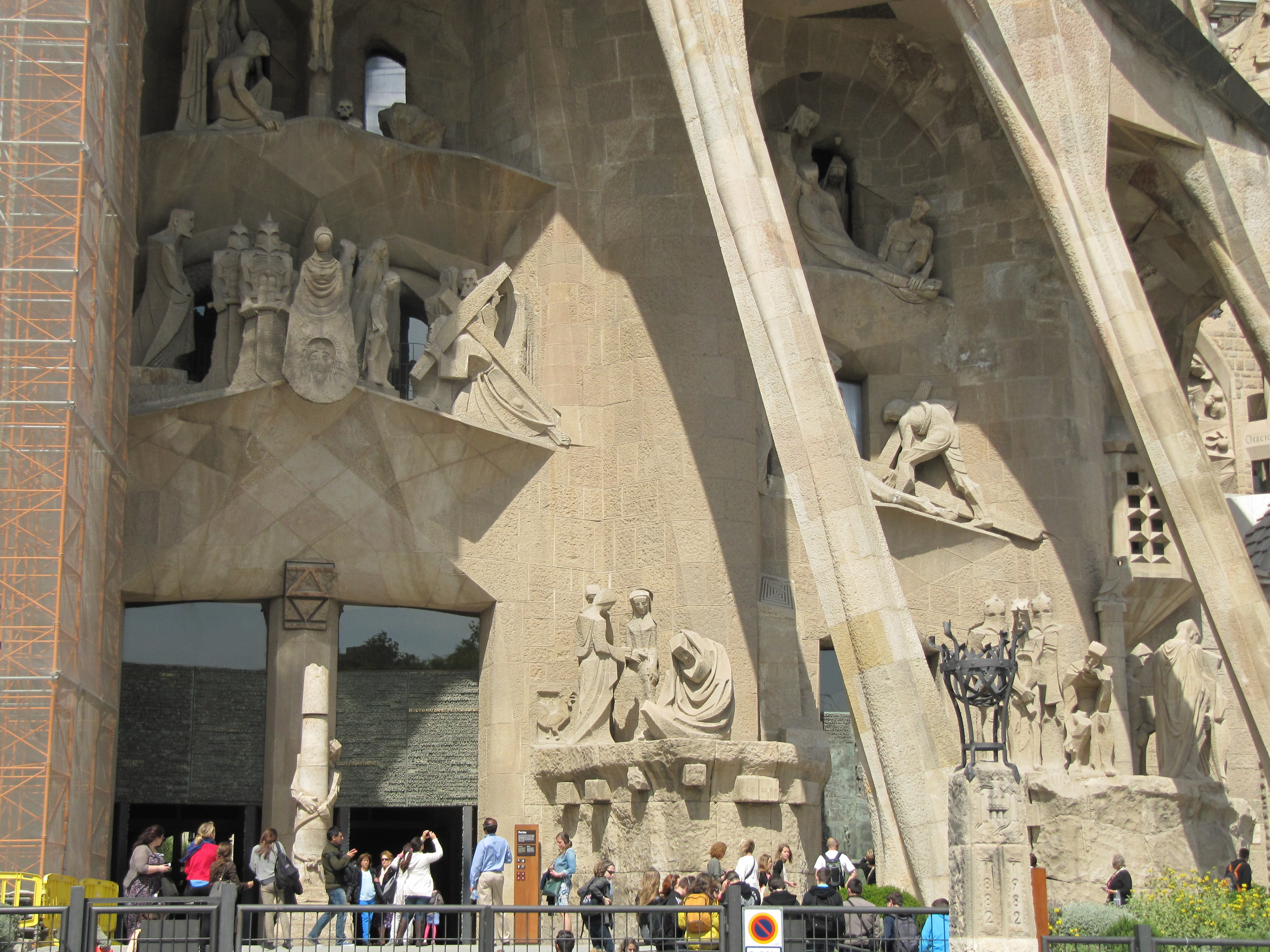
My pre-visit reading up on the Sagrada Familia basilica does not stop me from gasping in wonderment as I first set my eyes on the structure from across the park in front. At once imposing due to an unorthodox modernistic architecture and at the same time incongruous due to the plethora of construction platforms and jib cranes.
IMG_1887
This Antoni Gaudi creation has been a work in process for one hundred and thirty years now, having survived the World Wars and the much more vicious Spanish Civil War. Termed as the most ambitious cathedral in human history and the work completion still uncertain, the gargantuan structure continues to attract generations of architects and sculptors from across the world.
IMG_1890
Stepping inside the interiors of the main tower, I am astounded by the myriad forked columns going up to create a network which resembles a forest cover. Is this how the creator visualised this I wonder? So what was the final image that Gaudi held when he passed away close to a century back leaving behind a fraction of what he had set out to make?
IMG_1910
IMG_1900
Near the rear façade, I overhear a guide telling a bunch of tourists that the reason why Antonio Gaudi had not been able to make progress with the construction over more than four decades of his personal involvement was because he was always improvising and making design changes even when the construction was on. And some of the complex architecture he envisioned required technologies and processes not then conceived.
IMG_1905
IMG_1896
I stroll away musing. What was it that had motivated Gaudi to keep on improvising and changing thus to hamper the progress of what he wanted to create? Strange as it may seem, could it be that Gaudi was not oriented toward a time specific goal? Could he have been following a path that only focussed on ‘how he was being in that moment’? Could he have set his intentions to align away from the actual work completion and more with his inner values?

Contrary to what we generally believe, our intentions can be significantly different from our goals. The whole concept of goal achievement can be seen as a cause and effect relationship. Something like an Action- Reaction with the goal being the final effect; the reason why goal achievements need action plans. With the increasing hype and obsession with goals, we see our actions as the cause that lead us to the goal. But brickwalling our thinking thus prevents us from probing deeper for the real cause and we are frequently frustrated to see set Goals not being achieved. A misalignment of externally motivated goals and our true inner intentions. A century ago, was Gaudi too a victim of such misalignment, I wonder?

So how do we align our goals with our true intentions? How could we simply plant an intention and watch it grow into a desired goal? Dr. Wayne Dyer, the renowned speaker in the field of self-improvement, says, “You have to just be. You have to let go. You have to allow. You have to be free and make this your consciousness.” He continues, “Basically, what you would see is a frequency (of energy) that manifests itself through the process of giving, of allowing, of offering and of serving. It asks nothing back. This is the power of intention.” According to Dr. Dyer, the process of allowing, just being and embracing this heightened level of consciousness, goes back not to attracting what you want, but attracting what you are.

Walking away, I look back one last time at Gaudi’s magnum opus in the fading evening light. I sense the power of intention which allowed Gaudi and the scores of architects and sculptors after him for more than a century, to only “give, allow, serve” asking nothing in return as they continued their journey of “being”.

In learning…….. Shakti Ghosal

Acknowledgement: The Power of Intention- Learning to co-create your World your Way
by Dr. Wayne W. Dyer, 2010. A Hay House Inc. publication.

Segovia and the polarity in my life


‘Have a dialogue between the two opposing parts and you will find that they always start out fighting each other until we come to an appreciation of difference… a oneness and integration of the two opposing forces.’
– Frederick Salomon Perls, German born, Jewish psychotherapist, 1950s.

Segovia- the name itself conjures up visions of victory and beyond.

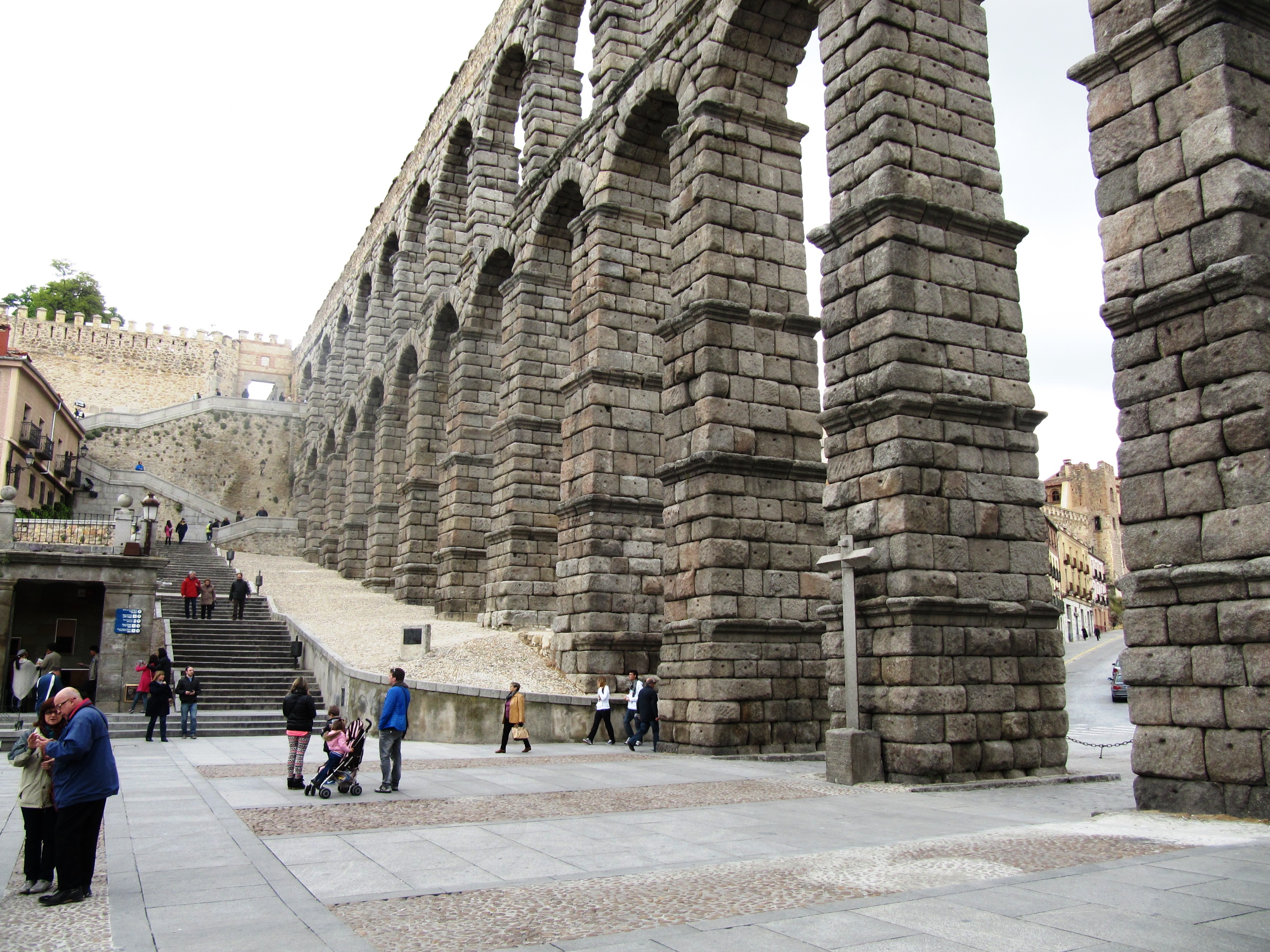
Walking through the Plaza del Azoguejo, I can scarcely fail to sense the ebbs and flows of more than two millennia. As I stroll on the Plaza, myriad visions seem to surround me. Of the Celts declaring this their homestead during the Iron-age and looking down at the small valleys and canyons watered by the River Doraton. Of the Romans who took over as they pushed their empire far and wide, employing cutting edge technologies like the aquaduct. Of this once proud city lying forlorn and abandoned after the Arab invasion. Of its rejuvenation and the Gothic architectural renaissance after the middle ages.

???????????????????????????????
As I walk along the Calle Real towards the Plaza mayor, I am confronted with two distinctive aspects of this quaint World heritage town. Of expansive monuments, castles and cathedrals soaring into the skies, free of all restraint. Standing cheek by jowl with narrow, cobbled alleys, portraying a different world of scarcity and constraint. Interesting, is it not, this variance in the mindset of a society which creates and builds such contrasts? Is this merely a reflection of the socio-economic disparity and exploitation as many might suggest? Or could this be about something deeper within the human psyche?

???????????????????????????????
???????????????????????????????
I muse and look inwards. And I start seeing the polarity of the differing aspects coexisting within me. An Abundance of resolve and the Scarcity of insecurity. An unrestrained Soaring of broadmindedness and the constricted Narrowness of prejudices.

I soar as I become conscious of my unique magnificience, replete with my abilities, experiences and values. As I live in a mindset of abundance, knowing there is plenty of wealth, happiness and fulfillment to go around. A belief which allows me to acknowledge my gratitude for people, situations and circumstances that foster me.

I constrict when I feel the need to protect myself from what I perceive to be a dangerous world.As I get conditioned to focus on what’s wrong with me and my life rather than celebrate what is right. As I see myself in competition for the world’s resources and the love and attention of others.

Looking at these aspects within me, I however see no stretch, no strain. How so, I reflect in wonderment?

But as I reflect, I start seeing the pattern. Of the continuum that exists within me with the ‘soaring magnificence ’ at one end and the ‘constricting narrowness’ at the other. Two poles that define the polarity of my existence. I further see how my coloured perception of different situations make me land at different points on the continuum. Making me soar and constrict at different times.

I am….. Soaring Magnificence ( SM)
I am… Constricting Narrowness ( CN).

I acknowledge both and, for the first time, make them to speak to each other.

twoheatsbeatasone1

SM : “I need to soar. I need to break out of this vicious cycle of competition .and domination.”
CN: “You couldn’t possibly do that, could you? Do you realise what is at the core of these?”
SM: “Not really. What would that be?”
CN: “Well it is your Self doubt and fear. Self doubt that you are not good enough to get your fair share of love, fun, money.. Fear that if you do not resist, you will be dominated and cheated. Can you not see how essential these are for your security?”
SM: “Hmmm! So what could I do to rid me of self doubt and fear?
CN: “Frankly I wouldn’t know. In any case, why would you like to do that, losing your comfort zone and safety?”
SM: “But I wish to soar! That’s what I am here for. Suppose I were to replace self doubt and fear with trust. Trusting myself and others. Trusting my own abilities. Trusting that others are doing the best they know how to.”
CN: “How would you do that? Should you not be judging and be attached to what you would like to achieve?”
SM: “That’s it! You have shown me the way forward. I shall not judge, I shall remain unattached.”

There is no further comeback.

In learning…………………. Shakti Ghosal

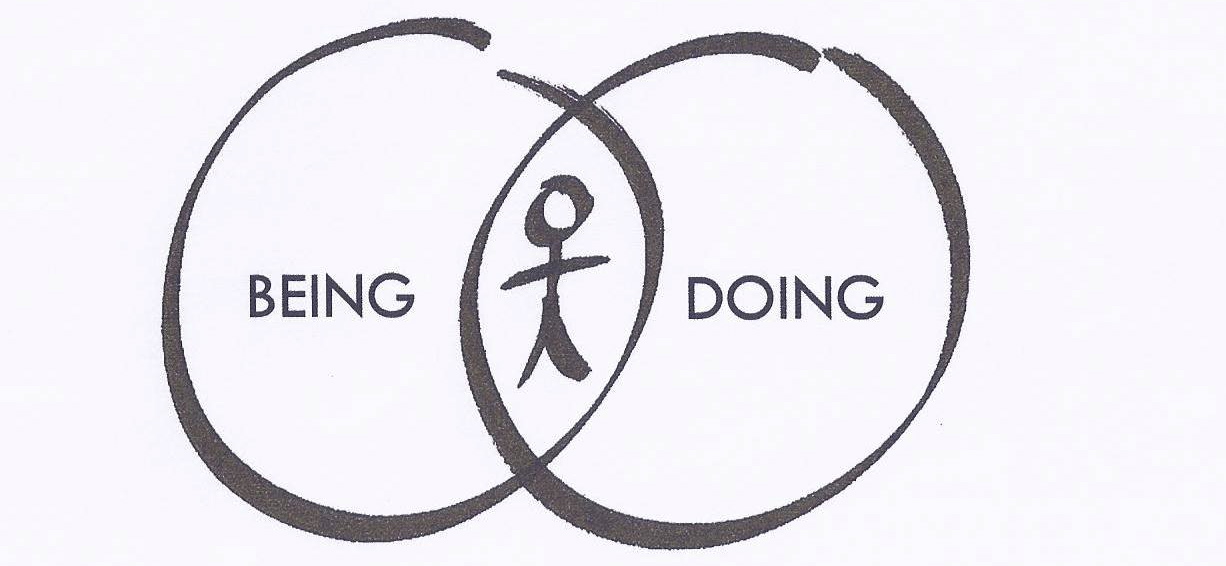
Being versus Doing- A tale of two airlines


“We are human beings, not human doings” – Deepak Chopra,2008.

being-and-doing

Over the last year or so, I have had two markedly different experiences with Airlines on the same issue. Let me not name the airlines here but rather focus on the experiences.

Airline A : I reached Chicago over the airline’s European hub only to find that both my bags had not arrived. It was eighteen hours into the journey and as I stood there clutching the missing baggage report, I was advised by the ground handling staff to call up the airline toll free number for further assistance and updates. Little did I realise that this was the beginning of my ordeal. Countless calls only led me into the votaries of a sophisticated message switch with friendly automated voices always offering a menu of further numbers to be dialed and inviting me to leave a message. I felt like going round and round the mulberry bush! Try as I did, I could never reach a human voice. Several frustrated calls and auto reply emails later, the airline deigned to send a cryptic SMS to the effect that the missing bags were available for collection and for further assistance, could I call them on phone. I shuddered. Visions of me once again failing to negotiate the matrix like maze of the airline communication system haunted me in technicolour.

Airline B : A few months later as I traveled on a lesser known regional airline, my bags once again failed to make it to the conveyor belt. As I was getting the passenger irregularity form filled, hearing running steps, I turned around to see the airline station representative come to me. He hesitated and then apologetically told me that since his airline baggage tracing system was still not automated, he would be the point of contact. I remained skeptical but to my pleasant surprise next morning, not only did I get a call from the guy that my bags had arrived but that he had arranged to send them to me. The bags duly arrived along with a box of chocolates and an apology note.

lost-luggage

What is it that differentiated my service level experiences of these two airlines thus?

My thoughts once again returned to “Leadership and Self Deception” by the Arbinger Institute*. One of the great take-away from this book is that our externally manifested behaviour of how we do what we do is never as important as who we are. We hold the choice of how we wish to see people around us.

We can choose to see people as people. Which leads us to genuinely connect with people and do what is right.

Or we can choose to see people as tasks. Which leads us to see them somehow as obstacles in our scheme of things, stuff which need to be completed and disposed off in the most efficient manner.

Airline A chose to see me and my bags as a task to be done. Being a global brand, it used the latest customer response technology. I and my missing bags were a blip in the statistics and graphs. A blip that goes off with no trace once the problem gets sorted. The airline had chosen to follow the path of ‘how we do what we do’. So in all its affirmations of providing the best in class customer service and experience, technology had taken centre stage, employees relegated to being merely the support cast.

Airline B chose to see me as a person. Someone with feelings and emotion. Someone who was desperate to find a person who would listen and care. It had put its faith in showing up as ‘Who we are’. Lacking great resources, it had to make do with the few employees it had on the ground and trusting and empowering them.

So I come back to why ‘Who we are’ resonated so much more deeply than ‘How we do what we do’ with me. I could intuitively put my trust in the genuineness of ‘Who Airline B was’, complete with its vulnerability and shortcomings. What really mattered to me was that my existence was being acknowledged. Contrast this with the Airline A’s focus on technology and ‘How it does what it does’. For me, this remained what it was, the Airline’s obsession with its own inner process and priorities, not really about me, the client.

What is it then that makes many of us, organisations and individuals alike, take the path of how we do what we do? Is this because of the modern day belief that the more we do, the more we have? A belief reinforced by technology that allows us to ‘do’ 24X7, globally, virtually. Is it because as we ‘do’, we get reassured of the results? But could this be conditioning us into a compulsive ‘doing’ behaviour? A behaviour that stops us from being ‘who we are’, something which would have allowed us to gain greater awareness and become more discerning about what we do.

I come to the realisation that be it as organisations or individuals, it is only when we remain firmly anchored in ‘who we are’, our core values and competences, and allow ‘what we do’ to flow out of that can we hope to be the true leaders and game changers of tomorrow.

In learning………………….. Shakti Ghosal

Footnote: * In an earlier post titled, “ What if……..”, I had taken reference to the book, Leadership and Self Deception, in a somewhat different context.

Acknowledgement: Leadership and Self-Deception: Getting Out of the Box – An Arbinger Institute publication, 2008.

The Mask


I recall that delightful Jim Carrey starrer ‘The Mask’ of almost two decades back. In the movie, merely putting on the magical mask would at once transform the otherwise meek and submissive Stanley Ipkiss (Jim Carrey) into a brash, uninhibited and intractable guy with super-hero powers. Predictably the Mask was able to achieve all that his alter ego Ipkiss could only dream of.

The Mask

What if we could lay our hands on such a magical mask and make all our dreams come true?

As I think of this, I realise that I too have a mask which I wear. Where did this mask come from? I think back into my past to find an answer. Growing up, in school and at home, I was ‘taught’ to smoothen the jagged, impulsive edges of who I was, to conform to all that surrounded me. I quickly ‘learnt’ to keep my jaggedness and impulses under wraps for fear of being branded a rebel. This need to conform, to show up the way others wanted me to, brought the first layers of my mask.

At work, I remain conditioned to use the authority vested in me by my job title. Over the years I have ‘learnt’ to show up in set ways to demand respect and results from others. Day in, day out, this need to show up as someone larger than who I am, a know-all superior guy, seemingly in control, has made up more layers of my mask.

I see that the mask has served me to achieve outcomes. But as it has served, it has also hardened to become an intrinsic part of who I am. So intrinsic that today it is the mask which mostly ‘runs the show’, not the authentic me. I have become the Mask. That imposter strutting on the world stage, relegating the authentic me into the dark recesses.

What is it that compels me to wear the mask? What is it that makes me hide behind it thus? I see this emanating from my need to wield power, control outcomes, what I want to do. So I hide behind my mask, forgetting who I want to be. Yes, my “what I want to do’ has taken precedence over “who I want to be.”

Seeming and being

A voice asks. “You have had your way, done what you wanted to. Have your dreams come true?”
Pondering over this question, I can only whisper, “Not really…… I still search for that elusive pot of happiness and fulfillment.”
“What could be the way forward?” I ask.
‘What if you could redeem your true self from the role you have got conditioned to play? What if you could forget what you want to do? What if you could just be who you want to be?” says the departing voice.

But what would this take?

Am I prepared to embrace openness and be vulnerable?
Can I be non-judgemental?
Am I prepared to let go of my fear of rejection?
Am I willing to surrender?

Like Ipkiss, I decide to let go of the mask. As I negotiate this rarely trodden path to mask-freedom, I luxuriate in the myriad human connections, their love and sharing that approach the authentic me. I see now what a great trade-off this has been.

***

“Chronicler shook his head and Bast gave a frustrated sigh.”How about plays? Have you seen The Ghost and the Goosegirl or The Ha’penny King?

Chronicler frowned. “Is that the one where the king sells his crown to an orphan boy?”

Bast nodded. “And the boy becomes a better king than the original. The goosegirl dresses like a countess and everyone is stunned by her grace and charm.” He hesitated, struggling to find the words he wanted. “You see, there’s a fundamental connection between seeming and being. Every Fae child knows this, but you mortals never seem to see. We understand how dangerous a mask can be. We all become what we pretend to be.”

Extracted from ‘The Name of the Wind” from the Kingkiller Chronicle series by Patrick Rothfuss, 2007

In learning……………… Shakti Ghosal

Who would I be without my story?


“You are what exists before all stories. You are what remains when the story is understood.”
Byron Katie, American speaker & author of “The Work”

I muse about this Coaching question asked me.

So what is my story? As I think of this, I see its tentacles going into the past.

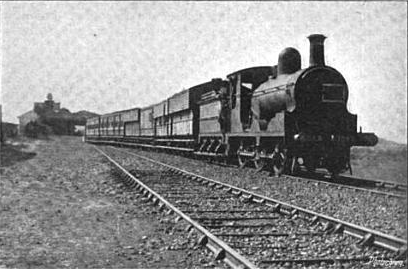
The year is 1911. A lowly placed accounts clerk of the British Accounts Service in India boards the Kalka Mail train from Calcutta with his family. He is shifting home to Delhi in accordance with the British colonial Government’s decision to shift the administrative capital of the Indian subcontinent there. He is following his work, the only thing he knows that sustains him and his family. He is my grandfather.

East_Indian_Railway_Mail

Fast forward fifty years and it is my father in the midst of a career in the Indian Audit and Accounts service. Now settled in Delhi, the capital of independent India. Content with a middle class lifestyle. So grooved in his office work that he feels insecure to take up an exciting consular opportunity in the US. He regrets it citing family constraints.

Fast forward another fifty years and it is I sitting at the desk in my office wondering what next. Having been on a sometimes exciting, sometimes lacklustre roller coaster ride through diverse business areas for three decades, I can claim fair knowledge of the nuts and bolts of corporate working. But like my grandfather and father, I see my work primarily as the means to provide a comfortable life to me and my family.

My story. The story in which working at an office desk equates to life comfort and sustenance. The story which I accept as me. And as I accept, I see it gaining power and dictating what I do. I see it protecting me in a ‘safe box’. As it allows me to peep through my perception coloured lenses and read meaning about the world at large. But as it protects, do I also see it confining and preventing me from setting forth, taking risks and achieving my true potential?

What is it that has embedded this ‘office work’ DNA in me thus? What is it that has made it such an integral part of my story? As I muse, I sense that in my office work DNA resides a gene harking back to the industrial revolution. A gene that through generations has altered my value system. And made me shift towards valuing business growth, productivity and profits over beauty, compassion, love and community ties. Over generations, the gene has also lured me away from simplicity and frugality and towards materialism. An attachment to materialistic possessions which has fuelled insecurity. And has manifested in my life through frantic work schedules, technology tying me down 24X7, scarcely any time to “stop by the woods” or “wander lonely as a cloud”.

So, who would I be without my story? Who would I be if I could shed the above DNA and gene? Would I have that glorious opportunity to start from a place where I am no longer confined and am free to define and implement what I think is important? What do I see?

I see myself slowing down, without the pressures of societal expectations of wealth and ownership. As I take personal responsibility to do that which is meaningful, creative and liberating to me.

I see myself effortlessly crossing those artificial barriers created by economic, social and racial compulsions.

I see in me the birth of a great willingness to learn. From all corners of the world. Unfettered and unhampered by beliefs of my education and experience.

Like the return of the Jedi, I see in me the comeback of the human heart. As I acknowledge intrinsic qualities like Empathy, Faith, Creativity and Interconnectedness and bring them centre stage.

I see how work would look like for me. Passion…. Art…… the pulse of the environment.

photo-0613

Who would I be without my stories?
Like a tree
Without the rustle of the leaves
Winter mind
Kind
Aligned
To the Inside
Inside the inside
A space so wide
It has no centre
Because it is centre

From Caitlin Frost’s Web log

In learning………………… Shakti Ghosal

Winchester and the follies of Leadership


A leader is best when people barely know he exists, when his work is done, his aim fulfilled, they will say: we did it ourselves.

– Lao Tzu , Chinese philosopher, 6th century BC

 Winchester_Model_1873_Short_Rifle_1495

The quiz master asks, “Where did the famous Winchester rifles originate from?”

“Winchester of course!” I quip back.

The Quizmaster gives me a quizzical look.

 ***

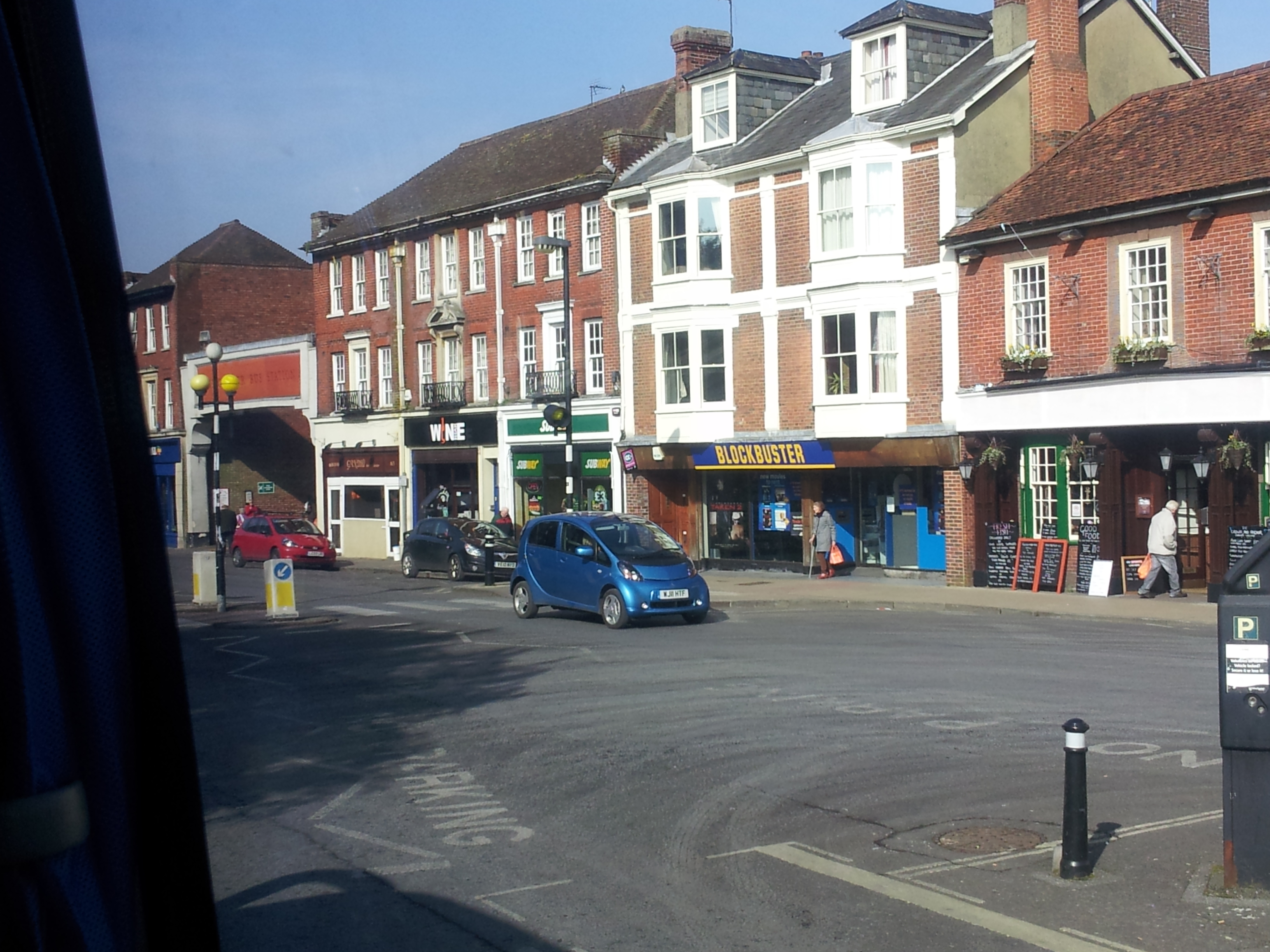
 As I land at London Heathrow and take the coach to Winchester, I recall the above incident. Traveling through the beautiful English countryside of Hampshire, I reach the town.

20130304_112349

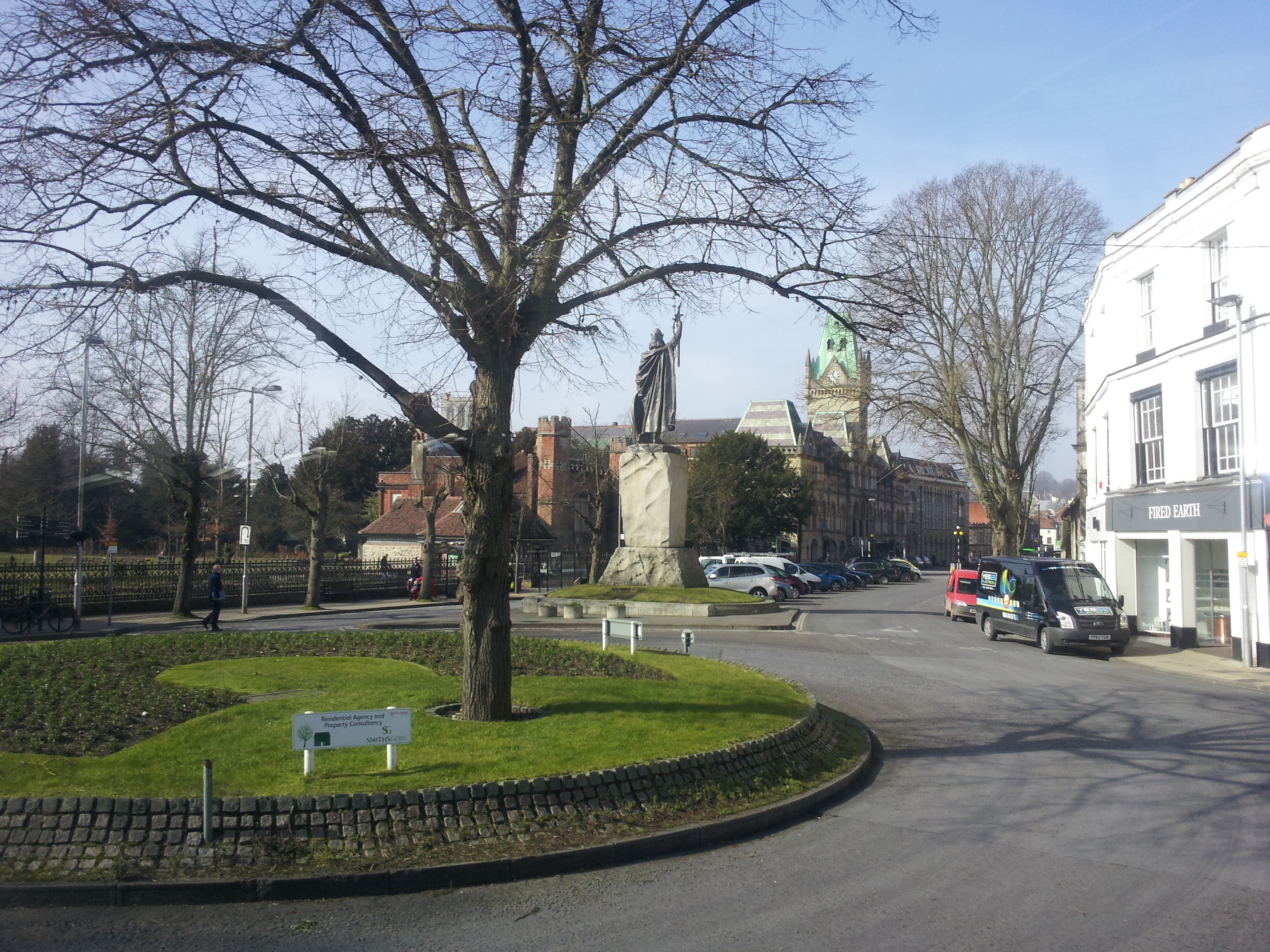
The coach stops in the city centre with the statue of King Alfred the Great visible in the distance. Winchester’s claim to fame began during the Roman times and indeed became a Roman province with defensive walls all around. But it was during the Anglo- Saxon times that it reached its zenith and the cross shaped Saxon street plan as laid out by King Alfred can be seen even today.

20130304_112439

20130304_112406

I was there to meet up with Stanley, the owner of a Management Consulting company. As I stepped into his office, Stan introduced me to Nick, his protégé and the current CEO of the firm. We got down to discussing a joint venture proposal in the UK for which I had sought the services of Stanley’s company. But the discussions never could take off. Every time I would seek advice and Nick would start off on possible options, I found Stan interrupting him.

“That surely could be one of the ways to proceed,” he would say, “but it might work better if you….” and then he would veer off into a rambling story off how it had worked for him many years back in a different context. As Nick, after a while, tried to get back to what he had been saying, he would be interrupted almost immediately by Stan who would again take the discussion into yet another of his personal success stories.

As the outsider, I seemed to be stranded in the middle. As the discussions flowed more around than with me, I quickly realised that we were not going anywhere with our main agenda.

As I walked away from failed negotiations on the JV, scarcely noticing the old medieval city walls, I pondered. Why do Business leaders like Stan have this intrinsic need to win, even against their own? Is it a deep down insecurity about one’s insufficiency to handle a world and environment that has changed? Could such insufficiency be making Stan avoid the right focus and seek refuge and comfort of past glories? Does Stan realise that such frequent “peeping over the shoulder” approach, though well meaning, could in fact be fast reducing Nick’s commitment to the organisation?

 ***

 And so I come back to the question of where the Winchester rifles come from.

Well, the rifles had their origin across the Atlantic when, just before the American civil war, a certain Oliver Winchester had the vision to buy out a bankrupt gun company in New Haven, Connecticut. The repeater rifle he redesigned was a huge success with the Union army and, after the war, the company became renamed as “The Winchester Repeating Arms Company.” So path breaking and visionary was the design that it earned the nickname of “The Gun that won the West.” For almost a century thereafter, the Winchester name remained synonymous with vision and success. It was in the 1960s that the company chose to forget what had made it successful in the first place, refused to embrace technology changes and in fact did faulty redesigning of its firearms. It was downhill thereafter till the company was split up and sold off in 1980.

As I muse over the Rise and Fall of Winchester Guns, I see its parallel in the mindset of Business leaders like Stan. As they build a company through vision and change, somewhere along that long and arduous road, such leaders choose to get stuck to their own perceived ‘success recipe’. This attachment veers them away from all that which made them successful in the past. An attachment which leads to a refusal to acknowledge a changing future and the possibilities it brings. A refusal which pushes business away, as it did my proposal.

In Learning…………………….                                                Shakti Ghosal

Antalya and Mindfulness


“The little things? The little moments? They aren’t little.”

                                                ― Jon Kabat-Zinn, Professor of Medicine Emeritus, Massachusetts Medical School


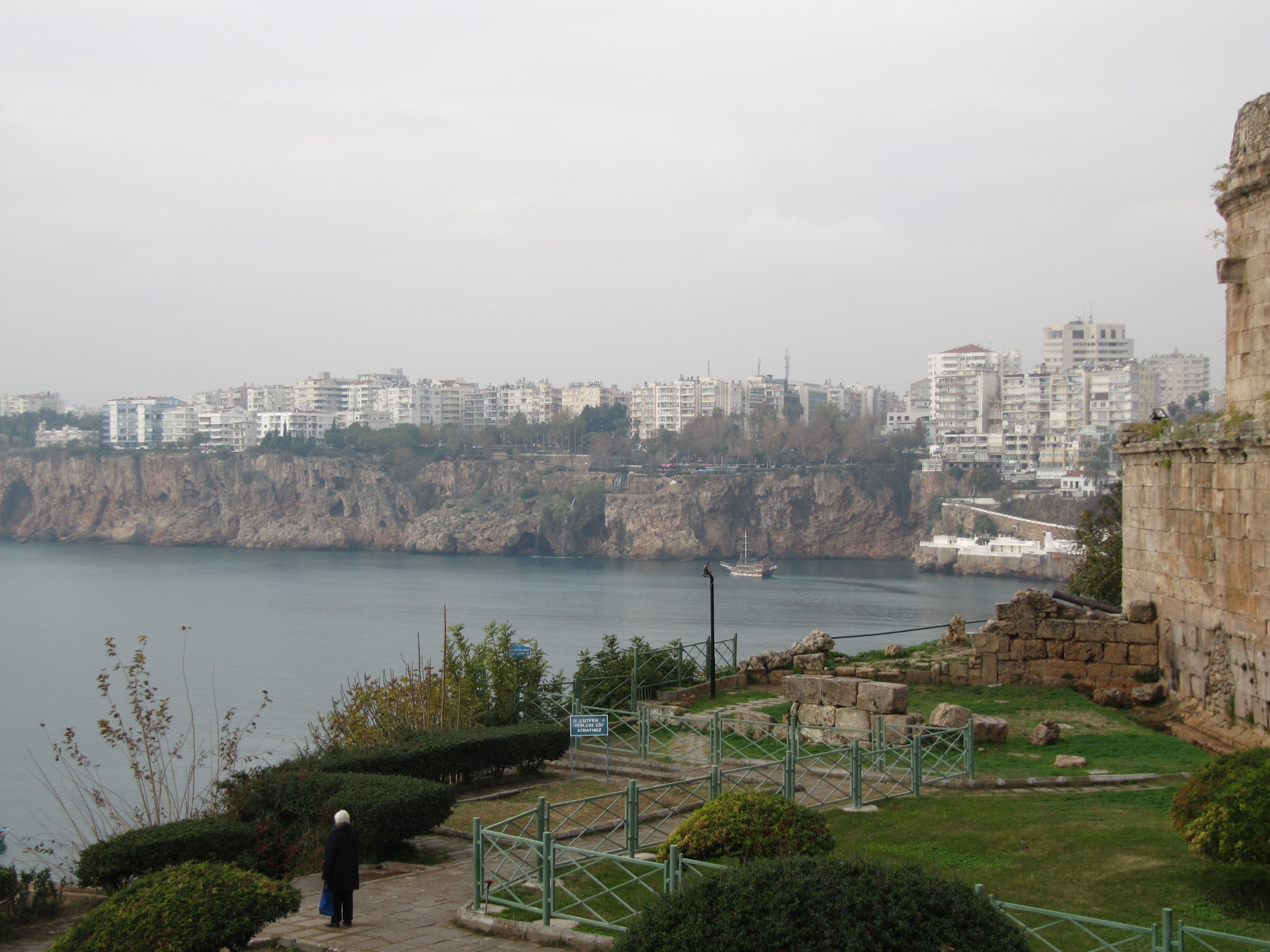
Antalya town sits on top of a rocky outcrop on the Mediterranean coastline.

IMG_1499

Walking in the gardens after breakfast, I spot a wooden dhow sailing out.

IMG_1483

As the wind pushes the dhow, it whispers its secrets of days gone by. Of, Attalos II the  King of Pergamon founding this strategically important port city more than two millennia back. Of pirates seeking refuge in the steep rocks and mountains, biding their time to loot the arriving merchant ships. Of the waxing and waning of Christianity as the Byzantine forces fought and lost naval battles to the Arabs in these waters. I listen entranced as I watch the gardeners lazily tending to the shrubs. Can they not hear these whisperings?

IMG_1492

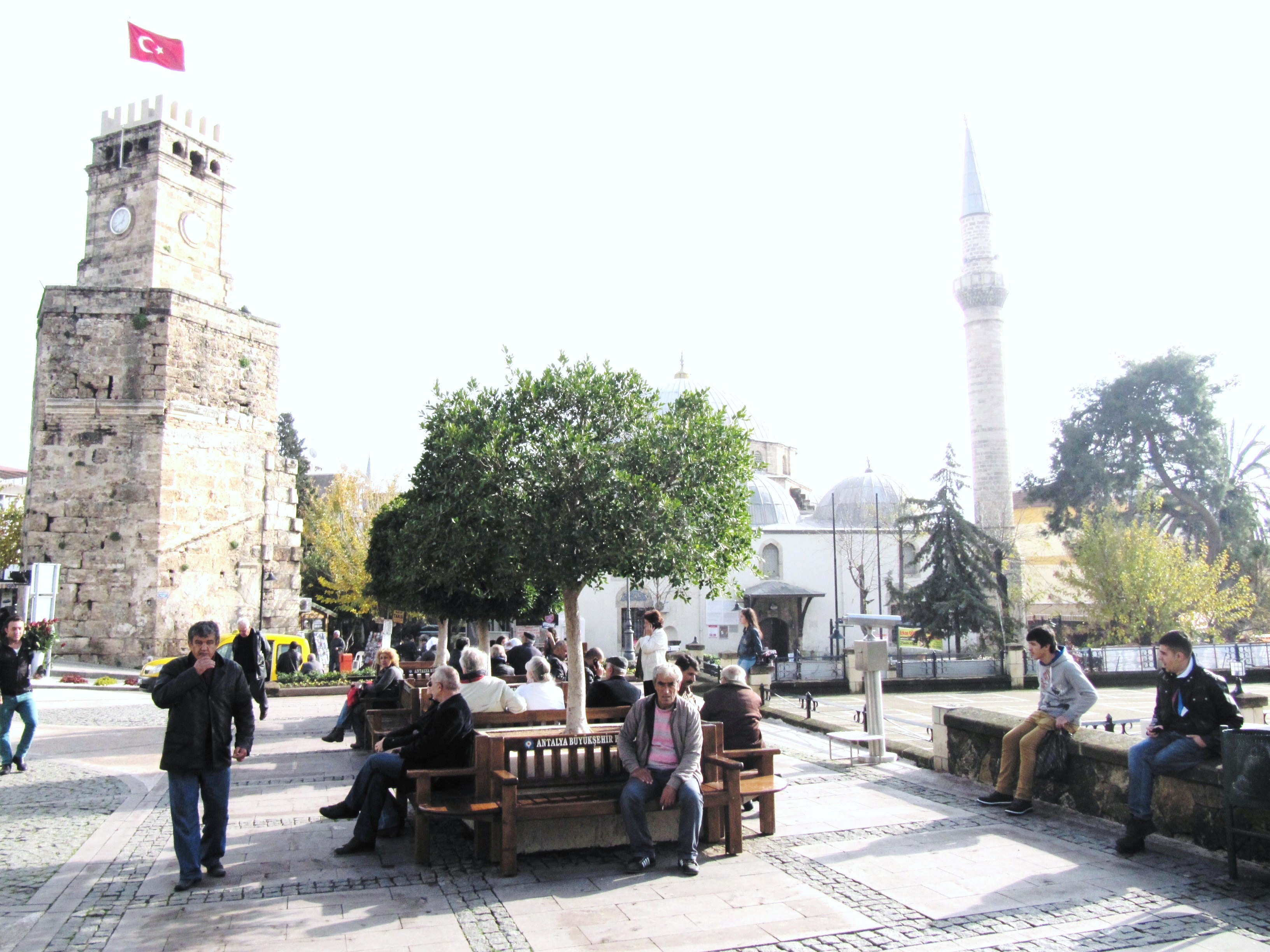
Strolling through Hadrians Gate and into the old historical quarters, I am reminded of  Ibn Battuta, that prolific Arab traveler in the fourteenth century, and his impressions of Anatalya. Of a beautiful town, well laid out and counting amongst its citizenry an impressive social diversity of Christians, Greeks, Jews and Muslims. As I walk the narrow cobbled bylanes, I can almost “see” the comings and goings of these diverse people in the centuries gone by. But do these souvenir shop owners sitting here day in and day out, not share my vision?

IMG_1506

I sit near the clock tower, a nineteenth century stone citadel of the Ottoman times. The Kaleici district, replete with old houses and narrow lanes, slopes down to meet the Mediterranean shores. As if in an effort to balance on the slope the rooftops and terraces point out at awkward angles. Folks sit around peacefully, hardly a word being spoken.

IMG_1502

The stillness gets broken by the tingling laughter of two girls as they come running to the chestnut selling vendor. School over, they speak excitedly about the beautiful weather and their plans to go down to the harbourside. Young open minds, soaking in the sights and sounds, passionately open to possibilities. Scarcely a head turns however to watch the girls excitedly canter down the narrow lane. What stops these good folks from appreciating the beauty around them?

I wonder what is it that stops the gardeners, the souvenir shop owners and those folks near the clock tower from seeing and appreciating the “here” and “now” as I could. Could it be that as a visitor, the newness of the place opens me to receive all that is around me? And could it be that for all these other folks, the familiarity and routineness of their daily lives makes them go on autopilot? A mode allowing them to escape a boring present. As they choose to enjoy the thrill ride negotiating between a “what I could have been” past and “how I would show up” future.

And so as I walk away, I muse on how we could bring that curious visitor mindset in our day to day lives, free of clutter, mindful of the present, open to possibilities. What we  could do to shift ourselves  to live our passion in the moment, make choices free of fear, guilt or societal expectations.

“Don’t wait for the perfect moment. Take the moment and make it perfect.” – Unknown

 In learning…………..                                                                                  Shakti Ghosal