The Old Man and the Lake


The reign of the dinosaurs had long ended. Snuffed out by an unlikely asteroid strike. A fifteen kilometers wide piece of Iridium laced rock had struck near present day Mexico, creating a ten times wide crater and unleashing lava, ashes, smoke and gigantic waves around the world.

Though the mass extinction event exterminated most of the flora and fauna on the planet, the continental drift and shifts continued unhampered for millions of years thereafter. The active planetary crust led to the Indian land mass smashing into the Eurasian land plate. The resulting crumpling and buckling at the collision point led to what came to be known as the Himalayas, a veritable abode of the Gods, the tallest mountain range in the world. An awesome creation standing testimony to Earth’s inner energies.

The permanent glaciers and ice formations led to glacial water bodies being formed. This is how the lake came into being. Situated at a height of 18,000 feet within the mighty Himalayan range, the lake acquired a mystical aura for all men and religions who passed by. The waters remained mostly frozen due to the height and the overwhelming presence of the Dongmar glacier which nestled it. Thirsty men and animals could not quench their thirst. And so it came to pass that a Guru was passing by when he too felt the mystical aura of the lake. He put his hand in the lake and Lo and behold! The water stopped freezing and became available for all to quench their thirst. This subduing of the Dongmar glacier’s frozen might by the Guru gave the lake the name of Gurudongmar. The second highest lake in the world with water that no longer froze.

**

The Man was indeed getting on in years.

 As a child, he had been precocious and so had been nicknamed. ‘Buro’, an old man. He was now precisely that, replete with the mindset of the elderly. Over the years, he had acquired a liking  for travelling and seeing the world. Age had dimmed the eyes somewhat, but not that inner passion to set forth and discover new places.

When the Man first heard about the wondrous lake of Gurudongmar, his heart urged him to travel. His brain though was more circumspect; it counselled, “My dear chap, are you crazy? You suffer from vertigo. What might happen when you go up all those torturously winding roads?” His friends too cautioned; they related dire tales of folks collapsing from lack of oxygen in a no-Man’s land with medical facilities hard to come by.

“But when a Man makes up his mind, he is not made for defeat. He can lose out, even destroyed, but not defeated.”

The tug of war between thoughts continued. But the die had been cast, the travel plans stood finalised. Came the day of travel and the Man set forth armed with some basic medications, a quiet resolve and  some raucous misgivings. A flight, several car rides through mountainous roads into the Himalayan kingdom and the day of reckoning arrived.

“This was not the time to think of what was not there. It was the time to think of what one could do with what was there.”

Six in the morning and after nursing a cup of hot tea, the Man set forth for his rendezvous with the lake.


The slow wafting mist seemed in perfect harmony with the biting chill outside the moving car.

Passing through the last army check post, the vehicle climbed to the Kala Pathar, black stone viewpoint. 

The fresh snow from the previous night lay in gay abandon. The white mist drifted upwards, a curtain rising up from the snow flakes and into the low hanging clouds.

As the old man stood watching the shifting views of the  Kala Pathar  blackness through the whiteness of the entwining  gaps in the mist, it seemed like a ballet being performed. Was it the Universe sending him a message of hope?

“Every day is a new day. It is better to think it would be lucky. So when luck does come, one would be ready.”

The climb towards the lake had begun. It was not on roads cut out on the mountainsides which the man had been used to.  It was on a rising terrain with no roads or markings to provide a direction. It was all down to the driver and the vehicle, their combined experience and strength to negotiate the path.

And then, all of a sudden, the heavens opened up. Sunbeams splayed and sliced all around. The climb had now reached above the level of the clouds and mist, a surreal moment. The old man nibbled on slivers of ginger; he had been advised so by some friends. A final swerving climb over barren rocks and the vehicle stopped on a mound from where the lake could be seen.

The stillness of the blue waters seemed to beckon. ‘Come, partake of my mysticism.’ The sun shone in all its splendour. Was it trying to discover that mystical aura with all those reflections? At the far end of the waters, part shrouded by rising mists, towered the snow laden glacier. As the old man stood transfixed by the wondrous surroundings, the tug of thoughts took over. Was this the place where divinity was born?  What made the pristine barrenness so unworldly? Was it the glacier with its whiteness, or the water with its blueness?

A needle pricked the cheek. Then some more. Shaken out of his stupor, the man looked around. The hitherto gentle breeze had gained in strength. Crested by a whirlwind, tiny pebbles and dust particles chased each other in an ethereal dance. As the needles borne by the  wind swayed through the onlookers, a soft murmur of protest could be heard. The old man slowly turned and moved back towards the waiting vehicle.

In Learning……..                                                                                         Shakti Ghosal

Disclosure: The Old Man in the post is the author himself.

Acknowledgement : ‘The Old Man and the Sea’ by Ernest Hemingway
Extinction


The long orange strip unfurled from the small roll at the end and then snaked across the entire wall. It changed colour from deep to light orange before morphing into a green strip and finally ending with a tiny four-inch blue coloured block at the end.

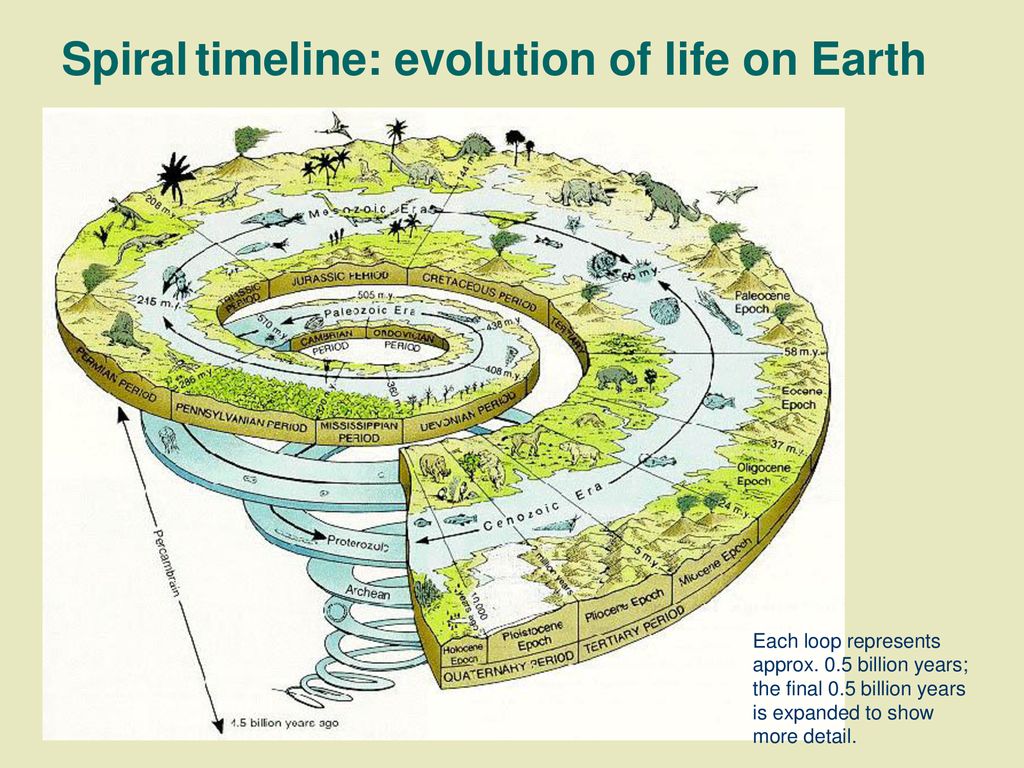
I was looking at a timeline representation of the start of life on earth, about three and a half billion years ago, culminating with the appearance of us humans two hundred thousand years back. That blue-coloured block highlighted the minuscule period ( around 0.006% of total )  that we humans have existed on mother earth as compared to all life.

Each loop represents approx. 0.5 billion years; the final 0.5 billion years is expanded to show more detail.

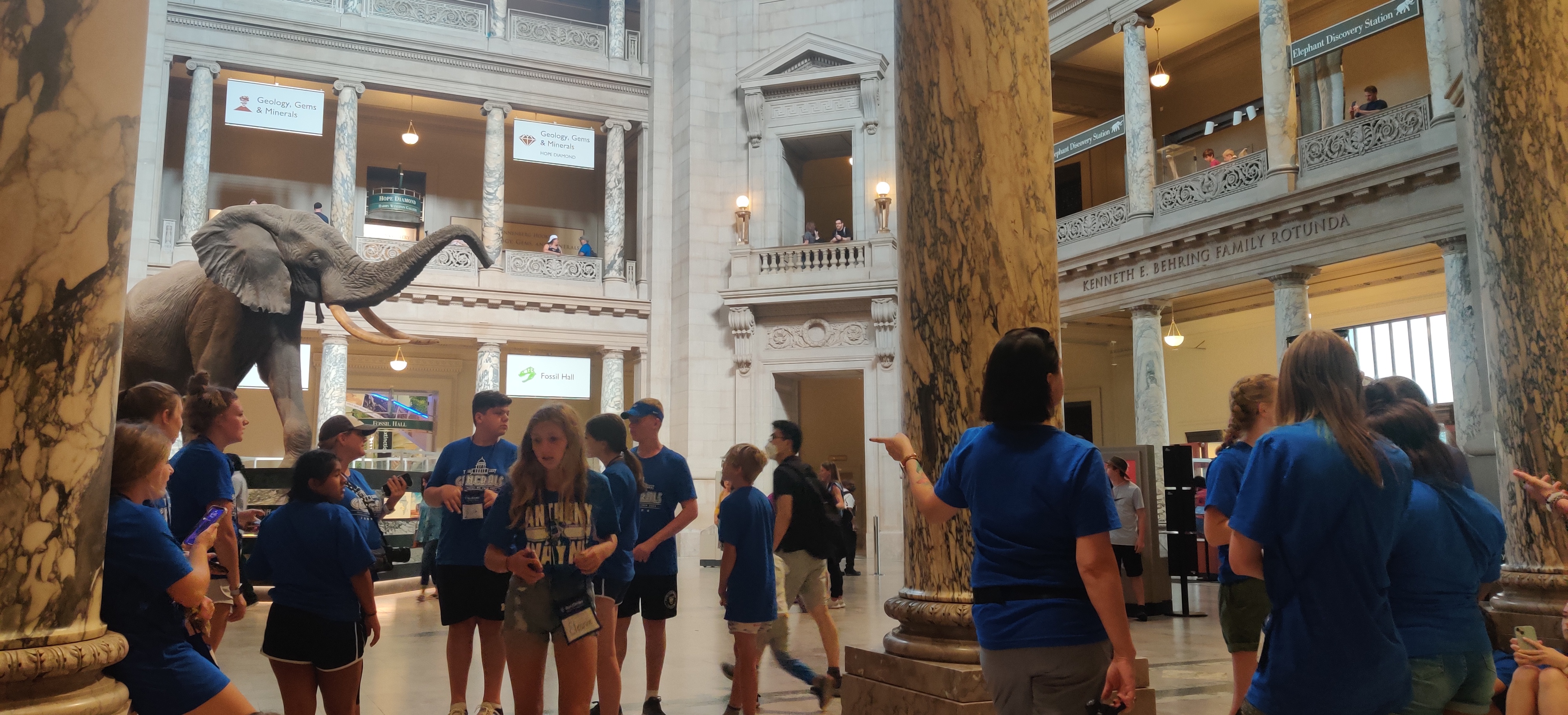
I was at the Smithsonian Museum of Natural History on a recent visit to Washington DC. Though the museum carries the same name as the more well-known American Museum of Natural History in New York, I was finding the format and the presentation refreshingly different.

As I looked at the representation, I was intrigued to see the periods of mass extinction that have taken place in the planet’s living history. There seem to have occurred around five major extinction events since earth cradled life. These were when between fifty to ninety-five percent of all living species died out. I got particularly interested in two such events.

The first was the one that led to the demise of the dinosaurs. I sat watching a video of what might have happened sixty-six million years back when the age of the dinosaurs ended. A large meteor comes hurtling from outer space and hits earth in the Mexican coastal region. The impact kills all life on land and sea for thousands of kilometers all around, its explosive power equivalent to billions of atomic bombs going off at the same time. And as if that is not enough, giant tsunamis and billions of tons of vaporized asteroid and terrestrial debris spew up into the atmosphere, envelop the earth and block out sunlight for years. Photosynthesis all over the world gets seriously impeded and the global climate alters leading to large-scale death of flora and subsequently the herbivores and carnivores going up the food chain.

It is estimated that three-quarters of all life on earth perished during what is today known as the Cretaceous–Paleogene extinction event. But the event also led to an interesting development. The age of the mammals commenced. Being smaller in size and with less need for sustenance, the surviving mammals who had existed on the peripheries during the dinosaur age got the planet to themselves and started flourishing. The evolutionary path over several subsequent million years took the necessary steps toward modern humans with the ability to walk on two legs.

Writes Rick Potts, the Director of Smithsonian Institute’s Human Origins Program, “East Africa was a setting in foment—one conducive to migrations across Africa during the period when Homo sapiens arose. It seems to have been an ideal setting for the mixing of genes from migrating populations widely spread across the continent. The implication is that the human genome arose in Africa. Everyone is African, and yet not from any one part of Africa.”

The second extinction event that intrigued me was the one in which the human species more or less vanished around seventy thousand years ago. Estimates range from a few hundred to a thousand humans who remained to fend for themselves in a dangerous world. The event is generally linked to a super volcanic eruption named Toba which went off in Indonesia and spewed a colossal amount of ash, debris and vapour into the atmosphere. The Sun got dimmed for years disrupting seasons, choking rivers and killing all vegetation in large parts of the planet.

Says Science writer Sam Kean, “There’s in fact evidence that the average temperature dropped 20-plus degrees in some spots,” after which the great grassy plains of Africa may have shrunk way back, keeping the small bands of humans small and hungry for hundreds, if not thousands of more years.So we almost vanished.”

As I continued to look at that unfurling orange strip and read about the extinction events, I found it indeed amazing how the present world stands dwarfed by close to eight billion of us humans. Even though our footprint remains that tiny blue coloured four-inch block on the timeline representation of life. The probability numbers about a meteor hitting or a super volcano erupting remain minuscule and clearly in our favour because of our small timeline footprint. But within that insignificant (fleeting?) footprint, we have managed to subjugate every other species, harnessing both flora and fauna to our needs. We have mastered science and technology in wondrous ways, improving our lot in every way conceivable. Be it food, be it energy, be it resources, be it our understanding of the Universe.  

But could it be that we are willy nilly walking on the extinction pathway of our own making? Stemming from our sheer numbers and our continued actions to reorder and realign nature to our own needs. Vulnerability to increased incidences of diseases and viruses. Vulnerability to our own selves as we fight for scarce resources. Vulnerability from the very technology which we believe we have harnessed.

Scientists and environmentalists are raising the alarm that we may be already at the extinction tipping point arising from global warming and climate change. A tipping point that might lead to the mass extinction of more than half of humanity with the collapse of social, political and economic structures. Once the tipping point is breached, the world could witness accelerating global warming and climate change with no way to control. Simulation studies point to an overall ecological disaster and collapse leading to the mass extinction of a large number of flora and fauna species; more than a million species are on track to go extinct in the coming decades. Would this be Judgment Day for Humanity and its cradle planet?

It seems to me that we have been plain lucky. There really is no certainty of our continuing the domination of the world beyond the so very tiny and fleeting ‘blue block four-inch’ period that we have done so. If our luck was to change, we might just have an epitaph written about us by someone in the distant future. Like the way we have written one about the dinosaurs.

Standing there I was left wondering whether we are creating the right luck for us.

Man who gave you life, man who gave you home
Man who gave you all you desire?
All you do is blight, all you do is waste
Don’t you see the ash of your fire?
Our mother’s crying, our mother’s dying
Our mother’s cancer is true
Mother we belied, mother we defiled
May your human child’s end be good for you

  by Oversense

In Musing………….                   Shakti Ghosal