What lives between Intention and Impact


In today’s fast changing world, we are almost always confronted by situations about which we lack past experience to engage or resolve. We try to force fit some past learning and end up either failing to get an outcome, or if lucky, achieving part success.

In a past assignment, I was managing a Travel & Destination services management company. One of our major customer accounts was the national petroleum development organisation and because of the large business quantum, we had an implant operation with a dedicated team. Our service and response levels were appreciated by the client.

In line with the commercial norms, as our contract period was coming to an end, the company released a tender for a subsequent period. Believing the client was happy with us, we submitted our competitive offer in line with what we had done during our last successful bid. When the tender was finalised, we were shocked to know that we had lost. When we asked the client company’s commercial team, we were informed that we had not complied with the technical terms of the bid. Going back to the drawing board, so to say, our analysis of the tender document revealed that there had been a small section requiring development and implementation of a Travel management Services (TMS in short) software as part of the client’s intranet, which we had not responded to.

Soon, we had the opportunity to bid against a tender released by the National Gas Company. We noticed that in this tender document too, there was a requirement of implementing a TMS software. This time we were careful enough to comply with the requirement by indicating our willingness to develop. But we again lost the tender! The winner was a competitor who already possessed a fully developed TMS module and had provided a live demonstration of the same to the client.

We had been disrupted. By a new technology, a new competitor, which together had disrupted our traditional business model. The world had shifted, the business need in the environment had changed and the earlier alignment of the latter with the competence set of our company had been lost.

A situation like the above can create a quandary for each one of us. Should we stretch our own competence and experience profile to paper over the gaps that exist because of the changed requirement? This usually is the easy and the quickest option, and thus gets chosen by most leaders and Managers. But the more sustainable and resilient pathway, a much tougher and thus rarely taken option, is to continually equip oneself with the needed competences so that the alignment between us and a world that is shifting, is not lost.

What I have frequently noticed is leadership folks, rather than confronting, resort to whining and complaining. Of how no one could have foreseen what happened, how they had planned and were equipped to handle what did not happen, and so on.

If we are not careful, we can end up in a downward spiral of negativity. I have seen leaders ending as black holes. With a huge gap between their original intention and final impact. This is largely because of a human psychology quirk. The more we talk of something we failed to do, the more important it becomes. As Noble Prize winner Daniel Kahneman said, ‘Nothing in life is as important as you think it is, while you are thinking about it’.

Ways to avoid the Black Hole:

  • Ask, “What can we do to resolve?” Wait for a positive response. We are conditioned to put effort once we commit.
  • Envision a future that was not going to happen anyway. Ask, “If things were going flawlessly, what would that look like?”

In Learning……..                                                                  Shakti Ghosal

That Disempowering edge of Commitment


To get commitment from one’s team towards achieving a common objective is a Leadership fundamental.

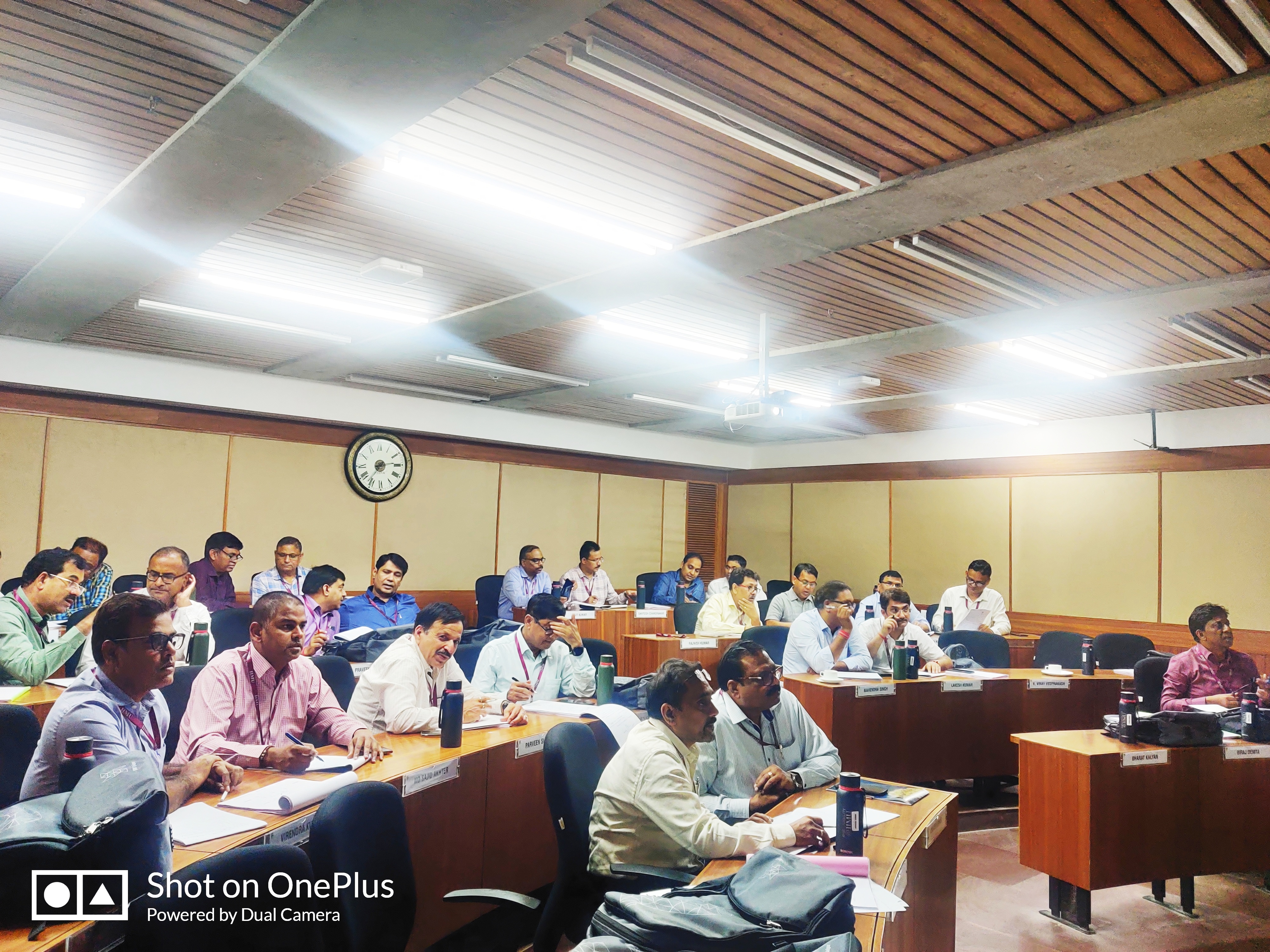
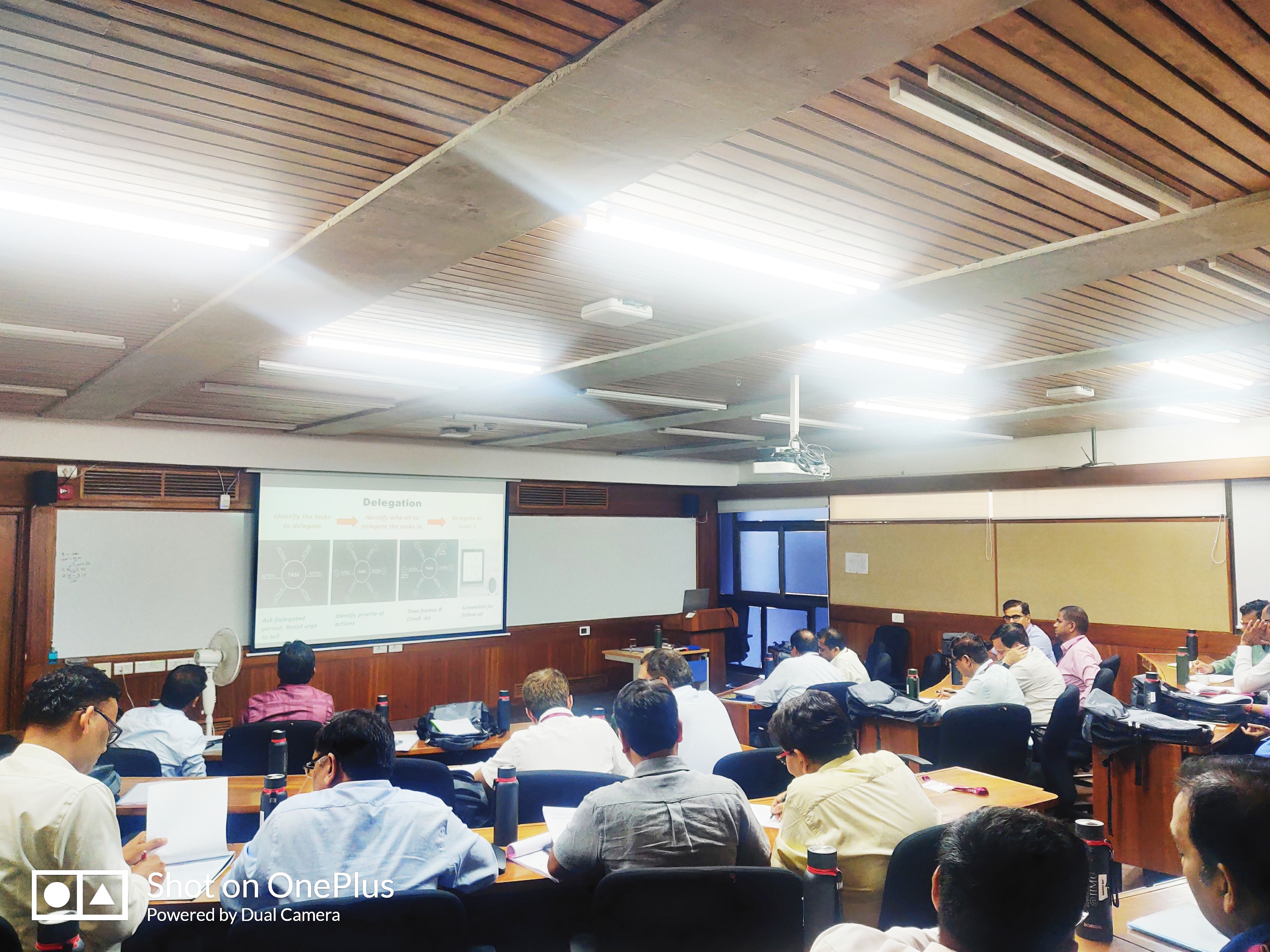
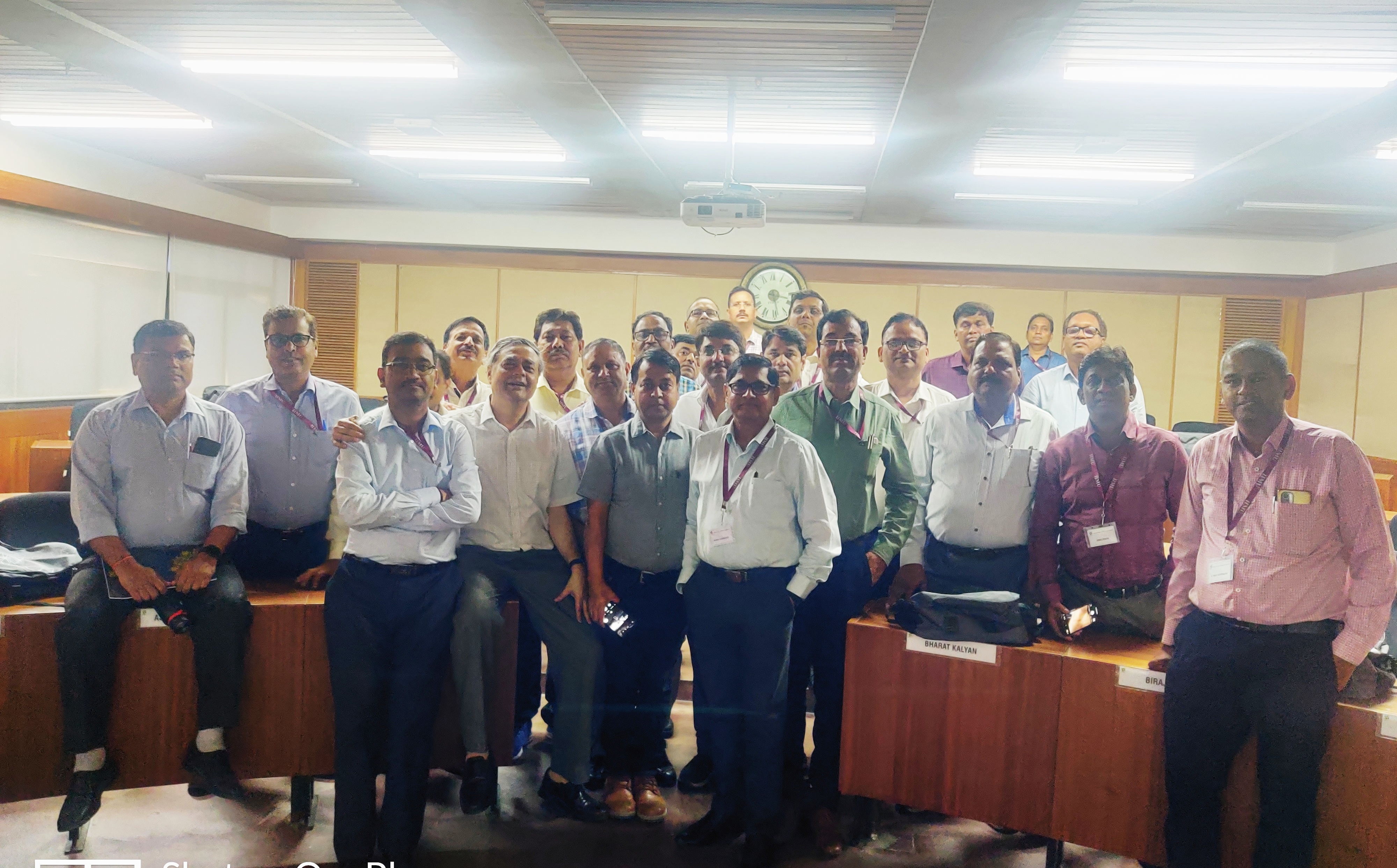
Recently, I was anchoring a Management Development program (MDP) for Senior Managers of National Hydroelectric Power Corporation. The program was designed to endow the participants with Leadership and Performance skills. An experiential aspect of the program required each participant to articulate a Leadership and / or Performance challenge which he is presently facing at the workplace.  This challenge would then become the central aspect of learning and application as the participant would be required to apply the various Leadership contextual elements to discover a ‘move forward’ pathway for resolving the challenge.

All the participants could identify such a challenge except one individual. Noticing that the person was looking lost, I asked him as to what the issue was. The response was surprising; the participant after some probing said that he could not think of any challenge at his workplace!

I though persevered and asked, “You surely would have faced some challenge at your workplace in the past, have you not?”

The participant still hesitated and with some reluctance started writing about a past challenge. To me it seemed the gentleman was fearful of recognizing and then committing about the situation at his workplace.

What is that which blocks many of us from recognizing an issue and then making a commitment to resolve it? Even when we might realize that the said commitment is something which works in our favour.

Commitment for many of us is like walking a tightrope. It carries with it the fear of failing, being ridiculed, getting our vulnerabilities exposed. Some of our past life experiences lead us to instinctively ‘avoid’ when it comes to making a commitment; we get conditioned to equate the latter to a danger of failing and losing our ‘status’.

When I think back about the participant and his reluctance to even identify a challenge, I can sense his avoidance mindset. In his mind, he would have been linking recognition of a workplace challenge to a commitment that he might need to make to resolve. If one avoids looking at an issue, one avoids getting involved. Like the protagonist Neo in the movie Matrix, one can cozily sleep walk in one’s make-believe world without the need to accept the harsh realities that exist.

So, what else could I have done to make it easy for that reluctant participant to identify and commit?

 I could have tried to empathise about the stress he might have been feeling. I could have said, “Confronting your challenge must be stressful for you”. I could have made a commitment to him that I would work with him to ensure that his challenge is resolved.

***

At the work place, we often wonder, “How can I get my team to do what I want them to do?”  Commitment cannot be force fitted and that paradoxically remains a leadership tool which can disempower. The answer is people do what THEY want to do. This remains at the core of how we could Invite effective commitment.

At the core of effective commitment:

  • Leadership which is unselfish; one which is willing to make unsolicited commitment to and investments in people.
  • Working from a perspective that commitment is a two-sided street.
  • Information sharing with all team members who have committed. Keeping information away weakens commitment.
  • Transparent and open-hearted conversations build connections which empowers two way commitments.
  • Moving on the commitment pathway addresses a deep-seated concern of each team member

Lasting goal achievement success requires commitment, not coercion.

As a leader, how might you establish shared commitments?

In Learning……..                                                                                                      Shakti Ghosal

All the things we do not want…..


Have you ever wondered about all the things you do not want, all the things you avoid? These may be at your workplace. Or they may be in your personal life or relationships. Do you realise that all the things you do not want can actually support you to move forward in life?

In the second year of my post graduation, we had to choose elective courses to achieve a minimum number of credits. I remained in my comfort zone by choosing electives which I had the ability to do with minimum effort. I avoided taking on courses in the Computer Science domain (then in its infancy and consequently a ‘black box’ to me) which I figured would require a lot of learning and effort. Was it a mere avoidance mindset or a deeper fear of failure? Most of my batchmates who ‘took the jump’ and majored in Computer Science subsequently did very well in their careers. Fear of failure can help us succeed.

Fear of failure can help us succeed

An aspect we do not want is frustration. Frustration is really our reaction to stuff we do not like or cannot control. The ugly underbelly of frustration is that we tend to vent it on folks who may have nothing to do with it. These folks may be our spouse, family members or colleagues at work place. Frustration shows up as anger, impatience or both. I can recall a particularly difficult meeting with a client about a service failure in which they threatened to cancel our contract. It was a situation outside our control but my reaction had been to call the service team and vent my frustration on them. What I had done was to further spread the cycle of exhausting negativity without finding a solution. The section head though was a guy with a cool temperament; leaving the meeting he did what was needed to be done to retrieve the situation. Frustration can be a good thing if we channel it to move towards solution finding.

Frustration can be a good thing……

We do not want to do ‘heavy lifting’, we succumb to the temptation of doing theoretical stuff. In a previous project assignment, I interacted with two kinds of people.  The first set were those who were smart, articulate, detested leaving office and had theoretical solutions for all operational issues. The second set were those who were low profile, operated in the field and were hands-on with the project. I found it comforting to hang out with the first set and opinionate about what was needed to be done or not done; true to the perception I held I avoided going out into the field. However, I soon found that  grit, resilience and character developed only when I got down to ‘digging ditches’ in the field to circumvent failures, prevent time over-runs and ensure project completion. Resilience and Character wait on the other side of our disappointment and failure ditch.

Resilience & Character wait on the other side of our failure & disappointment ditch

In the hurry-scurry of our work life, we tend to develop revolving -door relationships. Relationships that we create to achieve quick business objectives and which tend to get jettisoned soon after. Such relationships may seem energizing, even meaningful in the moment, but really build a shallow work life. How many of these questions can you answer in the affirmative?

  • Do you take genuine care of the people who pull alongside you?
  • Do you invest time with your team and other stakeholders beyond work related stuff?
  • Do you serve those who serve you?

The deeper we nurture relationships, the more valuable they become.

The deeper we nurture relationships, the more valuable they become.

In Learning………… Shakti Ghosal

Home

Leadership and Introspection


A way to grow one’s Leadership is through introspection. One needs to look back into one’s past and identify all that which contributed to one’s Leadership and performance development.

This may sound easy but it is not. As we move through work responsibilities and the corporate hierarchy, we tend to develop our own plethora of ‘what we believe made us succeed’ mechanisms consisting of inauthentic facades, assumptions and ‘need to impress the other guy’ behaviours. We also hone our survival instincts. So, when we do get down to ‘looking into our past’ and identifying all that which contributed to our development and growth, we tend to see stuff distorted by our facades, beliefs and impress the-other-guy behaviours.

The way to grow one’s leadership through introspection is to do the following practices.

  • Ask yourself, ‘Who were the people who changed you?’

When I thought about this question, I could identify two individuals.

 The first was a senior colleague at the start of my career as an Assistant Mechanical Engineer in the Indian Railways.  The quality that my colleague brought into our relationship was one of sunny optimism and a natural instinct to mentor without a self-serving mindset.

The second was my boss in Voltas Ltd, where I was handling HVAC projects. The quality that he brought into our relationship was one of down to earth openness and transparency.

I realise today that what allowed me to grow through the above relationships was to try and inculcate a non-self-serving mindset as also authenticity through openness and transparency.

  • Ask yourself, ‘What kind of people did you gravitate towards?’

When I thought about this question, I could again identify two individuals.

In my tenure in the Indian Railways, I had two workshop foremen report to me. The first was a kind of a ‘yes man’ guy. He made me at once comfortable through his unquestioning loyalty; he would do exactly what I asked him to. This was a great relationship for maintaining status quo about situations and other stuff.

The second was a guy who was a ‘shop floor rebel’. He would usually give a counter viewpoint to most stuff I would suggest, and at times speak uncomfortable truths based on his own past experience and arguments. I would often ‘see’ his approach as unwillingness to accept my authority or trying to prove me wrong. I would feel upset.

This did not seem to be the kind of relationship I would be comfortable with or gravitate towards at that point in time. But I realise today that the person who allowed me to grow was this ‘rebel’ guy as he shattered my comfort zone and forced me to look at uncomfortable possibilities.

So how might you grow your leadership in today’s disruptive world? How might you foster such growth in your team members?

Gain mastery about how to succeed in a business environment that is constantly changing and being disrupted. Do this free module:

https://www.learndesk.us/class/6399442649350144/winning-in-a-disruptive-world-module-1

In Learning……… Shakti Ghosal

#leadership, #introspection, #practices, #authenticity, #facades, #assumptions, #survival, #disruptive world, #succeed, #Indian Railways, #Voltas

Where does Leadership reside in today’s disruptive world?


We were engaged in a MENA region Business expansion consultancy project for a client organisation (name withheld) in Dubai. Being time bound, our team was depending on the client for getting certain ground assessments and data to do a competitive audit and recommendation set.

Interestingly, the common refrain by the client personnel was that the competitive situation was shifting fast in terms of relative importance and data points. It was thus difficult to provide accurate ground assessments.

One day over coffee, I got to discuss about the Business implementation with Darius, the Business Development Manager responsible for the project.

“In your view, what is the kind of Leadership needed for successful implementation in our kind of fast changing environment?”  Darius asked.

“And where would you like to see Leadership being exercised in your kind of situation?” My response was a return question.

“Well, I suppose leadership needs to ‘lead’ us from where we currently are to where we are proposing to be”, replied Darius.

I could not agree more. Leadership indeed needs to reside in the gap between one’s current state and the state one aspires for.  But then how does Leadership set the organisation on the right pathway? In today’s increasingly disruptive and discontinuous world, the luxury of a fixated, ‘past experience driven’ journey with a visible future at the other end, is no longer available. If at all, present times require the ability and mindset to get off that beaten path and into the unknown forest area, so to say.

I said as much to Darius.

As if reading my thoughts, Darius asked, “So what might be the leadership mindset needed to eke out a new path through the  forest trees you spoke of?”

“That is a great question”, I acknowledged. “I can think of one. Which I would term as ‘your comfort with ignorance’. You need to be comfortable with the knowledge that you ‘do not know’. Only then will you able to unearth and visualize new possibilities. Without this there can be no growth in a disruptive world.”

Somewhat later, when I sat thinking about our conversation, two other aspects came to mind.

First, a mindset to accept failures. We need to accept failure as an intrinsic part of who we are.  In an uncertain world with no past experience to guide us through the discontinuity of the ‘forest trees’, it is only mistakes and failures which become the building blocks of eventual success.

Secondly, a more controversial but nonetheless critical ability to wear a ‘mask of yet to be internalised behaviours’. We need to fake the needed leadership behaviours, if necessary, before they become an intrinsic part of us.

I would like to term the above as the CAM mindset shift, to use an acronym.

  1. Comfort with ignorance
  2. Acceptance of failure
  3. Mask yet-to-be internalised behaviours
  • So how might you grow your leadership in today’s disruptive worl
  • How might you foster such growth in your team

In Learning……. Shakti Ghosal

Control versus letting-go: A Leadership tale


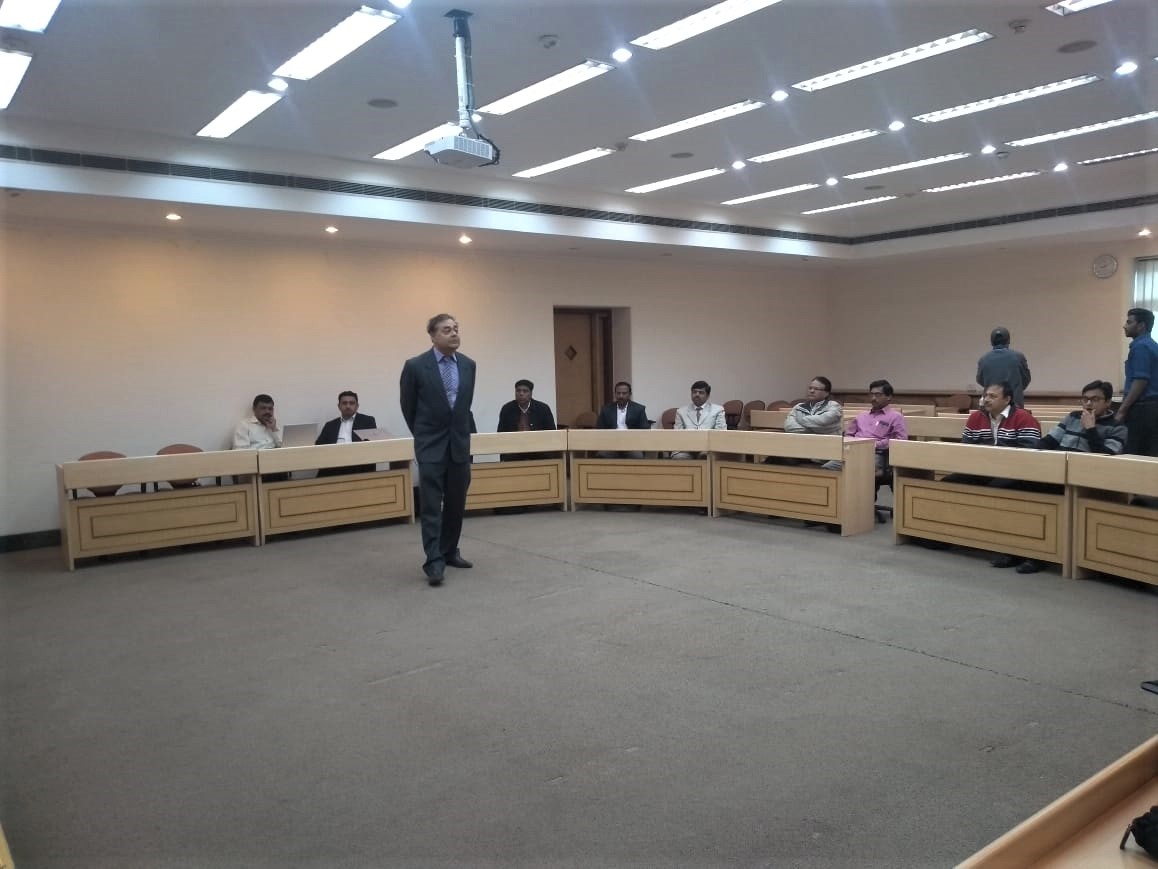
Sometime back, at a two-day Leadership Development program that I was running for Larsen and Toubro Ltd (a heavy engineering and multi-business conglomerate in India), a participant came to me during one of the breaks and said:

“All these techniques which we are learning seem to be of little value to me. I am faced with a different kind of problem. My boss has a strong controlling impulse. It is usually his way or the highway. It seems to me he believes this mindset is what has helped him reach his current position. So even if I try, there is never a win/win situation for my boss vis a vis me. What should I do?”

@ L & T Workshop

As I stood there listening to him, several thoughts came to mind. I asked him whether he was okay to delve into the issue some more.

We need to start exploring. We need to ask, ‘What is that which our ‘controlling boss’ would really like to control and change?’  And even more important, ‘What is that we ourselves are willing to let go?’ For ‘letting go’ could be the start of getting back in control.

Could we try and meet the ‘control freak’ half away down? For instance, certain relationships and one to one interactions could still be kept under our control. This realization itself can give us a sense of empowerment.

Could we ‘let go’ by avoiding reacting when we are being pushed to accept the controller’s point of view? Acknowledge what we have been told and then explain what we plan to do, why we have decided so and that we are willing to take full responsibility of the outcome.

The above exploration would allow us to create our action steps in the matter, thus elevating our own control of the situation.

‘Becoming a leader’ does not arise from knowing techniques or aping what we see great leaders do as they exercise leadership effectively in varied situations. Leadership and Performance is very little about what we know, it is almost all about how we see.  ‘How we see’ comes from our ability to shift our perception through developing a contextual framework for our own selves.

http://www.empathinko.in