We were engaged in a MENA region Business expansion consultancy project for a client organisation (name withheld) in Dubai. Being time bound, our team was depending on the client for getting certain ground assessments and data to do a competitive audit and recommendation set.
Interestingly, the common refrain by the client personnel was that the competitive situation was shifting fast in terms of relative importance and data points. It was thus difficult to provide accurate ground assessments.
One day over coffee, I got to discuss about the Business implementation with Darius, the Business Development Manager responsible for the project.
“In your view, what is the kind of Leadership needed for successful implementation in our kind of fast changing environment?” Darius asked.
“And where would you like to see Leadership being exercised in your kind of situation?” My response was a return question.
“Well, I suppose leadership needs to ‘lead’ us from where we currently are to where we are proposing to be”, replied Darius.
I could not agree more. Leadership indeed needs to reside in the gap between one’s current state and the state one aspires for. But then how does Leadership set the organisation on the right pathway? In today’s increasingly disruptive and discontinuous world, the luxury of a fixated, ‘past experience driven’ journey with a visible future at the other end, is no longer available. If at all, present times require the ability and mindset to get off that beaten path and into the unknown forest area, so to say.
I said as much to Darius.
As if reading my thoughts, Darius asked, “So what might be the leadership mindset needed to eke out a new path through the forest trees you spoke of?”
“That is a great question”, I acknowledged. “I can think of one. Which I would term as ‘your comfort with ignorance’. You need to be comfortable with the knowledge that you ‘do not know’. Only then will you able to unearth and visualize new possibilities. Without this there can be no growth in a disruptive world.”
Somewhat later, when I sat thinking about our conversation, two other aspects came to mind.
First, a mindset to accept failures. We need to accept failure as an intrinsic part of who we are. In an uncertain world with no past experience to guide us through the discontinuity of the ‘forest trees’, it is only mistakes and failures which become the building blocks of eventual success.
Secondly, a more controversial but nonetheless critical ability to wear a ‘mask of yet to be internalised behaviours’. We need to fake the needed leadership behaviours, if necessary, before they become an intrinsic part of us.
I would like to term the above as the CAM mindset shift, to use an acronym.
Comfort with ignorance
Acceptance of failure
Mask yet-to-be internalised behaviours
So how might you grow your leadership in today’s disruptive worl
Do you remain dissatisfied and uncertain about how to face emerging situations and challenges in today’s fast-changing world?
Do you frequently get the sense that however hard you or your team are trying, there seems to be always someone ahead of you and winning?
As you resolve a problem or a challenge, do you get confronted by fresh ones?
Are you frequently unable to prioritize which problem to tackle first?
However much you strive, are you unable to see the big picture and align yourself and your team with that?
….. And on a more personal level:
Do you want to get that job or assignment that you have been trying?
Do you want to get that promotion and recognition you have been aspiring for?
If you have been plagued by one or more of the above questions, the Winning in a Disruptive Worldprogram might just be what you need to improve your winnability quotient in today’s world.
The fact is that our present world is constantly getting disrupted. By new technologies, new competitors, or other factors that can disrupt traditional business models. The disruptive world with its VUCA (Volatile, Uncertain, Complex, Ambiguous) characteristics allows us to reside in a significantly narrow band in the present with a hazy and uncertain future in front and the inability to take recourse of our past experience.
Conceived and developed based on workshops and programs conducted for leading organisations and Business Schools, the course showcases the major types of disruptions that are shaping the world. You, as the participant, would gain an insight into what leads to us getting disrupted. You would review the process followed by a probability-based mindset and the need to shift to a possibility-based mindset to be able to better handle disruptions. You would practice and gain proficiency in the five action steps for the needed shift by conducting in-depth Inquiry through a structured process.
Creation of a context by using hard trends in three areas.
Creation of the three lists.
‘Plug into the future’.
Relational assimilation through a triad of competencies.
Sometime back, in a Leadership workshop for Larsen & Toubro that I was conducting, one of the participants shared a challenge he was facing.
“Earlier I had been involved in direct sales of earthmoving equipment to institutional buyers. A year back I got promoted and was moved to product and market development. However even now a few of the clients continue to contact me on even small issues.”
“That only goes to show that they still have a lot of trust in your support to them, is it not?” I commented.
“True,” the participant agreed. “But it often leads to negativity and bad blood with my sales colleagues who think I am trying to throw my weight around and stepping on their toes.”
“So, what is stopping you from letting go and clearly informing your ex-clients suitably?” I asked.
“That is what I am finding difficult to do. I feel I might be letting my clients down” was the response.
“That surely is a good intention. But are you taking accountability of future sales to the client?” I asked.
Looking at me, the participant slowly shook his head to conveying that he was not.
***
Each one of us, in our career, would have faced a similar situation. The problem occurs because of the clash between our stated positive intention and the negative impact we are making. If we are not careful, we can get sucked into a black hole of spiraling negativity which ironically arises from an initial intention to help.
The authority being exercised in some manner (even with good intentions) without being accountable is really abuse. If we expect others to be accountable for the task at hand, and we get sucked in, we need to be equally accountable to them, even if hierarchically they are junior to us.
Simply put our impact and influence may move in contrary direction leading to minimal or nil positive outcome. We thus need to explore how these two may operate together in the same direction to maximise the positivity of the outcome. Think of a train being pulled by a set of double engines.
Jim Dougherty, CEO of a software company, writes in Harvard Business Review ( Dec 12, 2012 issue), “If you want to get an emotional connect with the people you are working with or with whom you have business relationships — you need to be willing to commit and be accountable to them , unsolicited and without direct hope of reward.”
Should you wish to move on the road to better influence and impact, I invite you to explore and answer these questions:
Are you willing to make personal investments in people?
Are you willing to share what you are learning?
Are you willing to empathise with the stresses and frustrations others feel?
Are you willing to work for a shared purpose, results and consequences?
What could you do to maximise the overall outcome from the influence and impact you make?
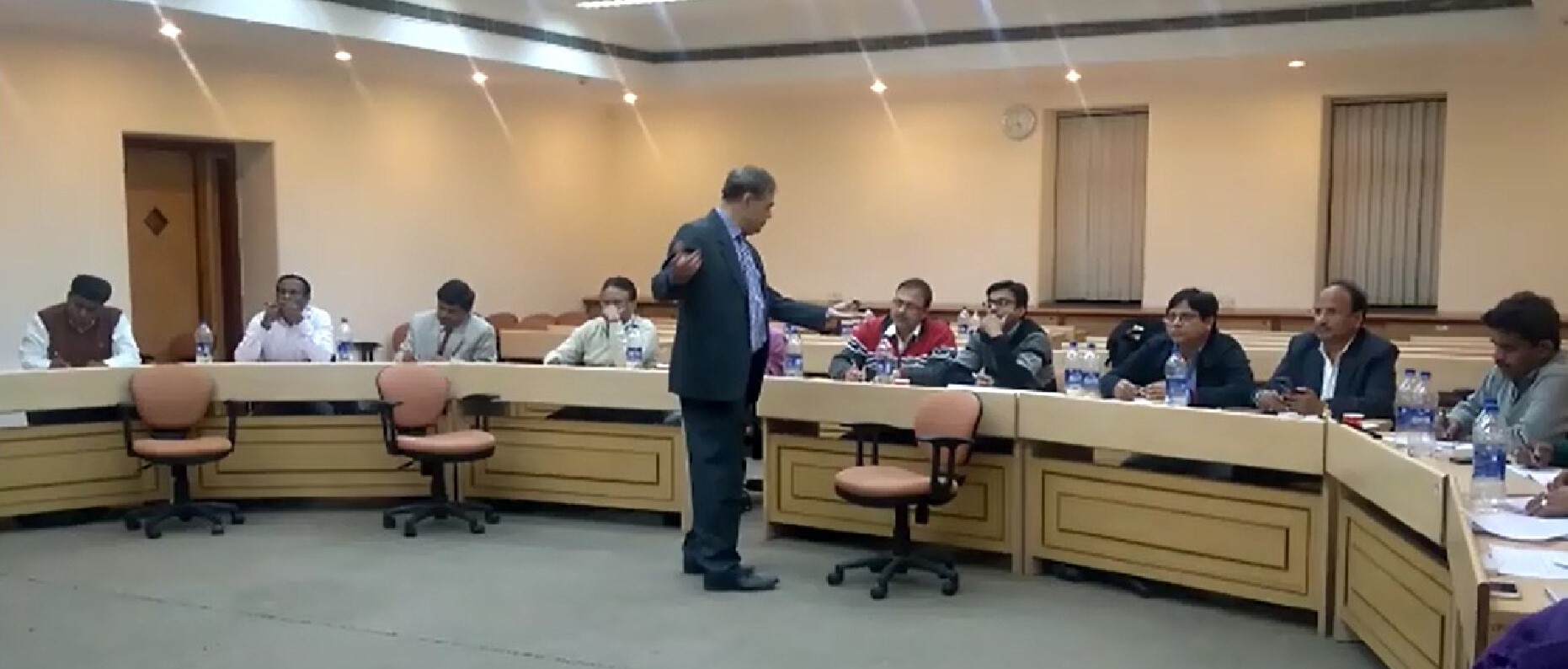
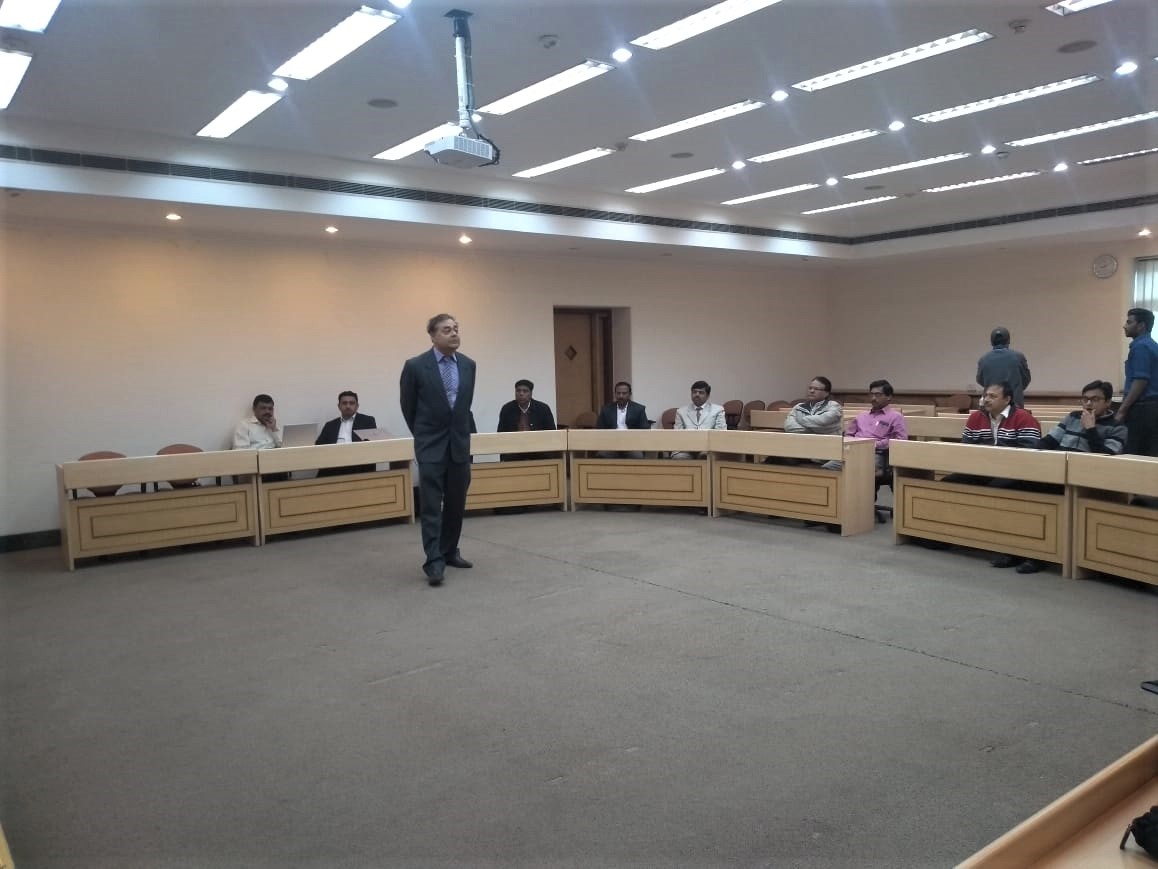
Sometime back, at a two-day Leadership Development program that I was running for Larsen and Toubro Ltd (a heavy engineering and multi-business conglomerate in India), a participant came to me during one of the breaks and said:
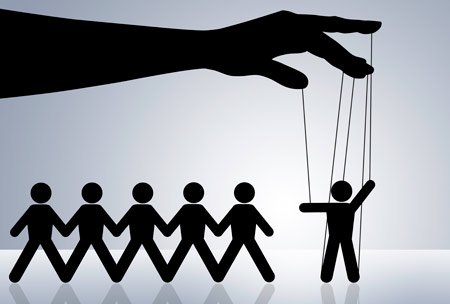
“All these techniques which we are learning seem to be of little value to me. I am faced with a different kind of problem. My boss has a strong controlling impulse. It is usually his way or the highway. It seems to me he believes this mindset is what has helped him reach his current position. So even if I try, there is never a win/win situation for my boss vis a vis me. What should I do?”
@ L & T Workshop
As I stood there listening to him, several thoughts came to mind. I asked him whether he was okay to delve into the issue some more.
We need to start exploring. We need to ask, ‘What is that which our ‘controlling boss’ would really like to control and change?’ And even more important, ‘What is that we ourselves are willing to let go?’ For ‘letting go’ could be the start of getting back in control.
Could we try and meet the ‘control freak’ half away down? For instance, certain relationships and one to one interactions could still be kept under our control. This realization itself can give us a sense of empowerment.
Could we ‘let go’ by avoiding reacting when we are being pushed to accept the controller’s point of view? Acknowledge what we have been told and then explain what we plan to do, why we have decided so and that we are willing to take full responsibility of the outcome.
The above exploration would allow us to create our action steps in the matter, thus elevating our own control of the situation.
‘Becoming a leader’ does not arise from knowing techniques or aping what we see great leaders do as they exercise leadership effectively in varied situations. Leadership and Performance is very little about what we know, it is almost all about how we see. ‘How we see’ comes from our ability to shift our perception through developing a contextual framework for our own selves.
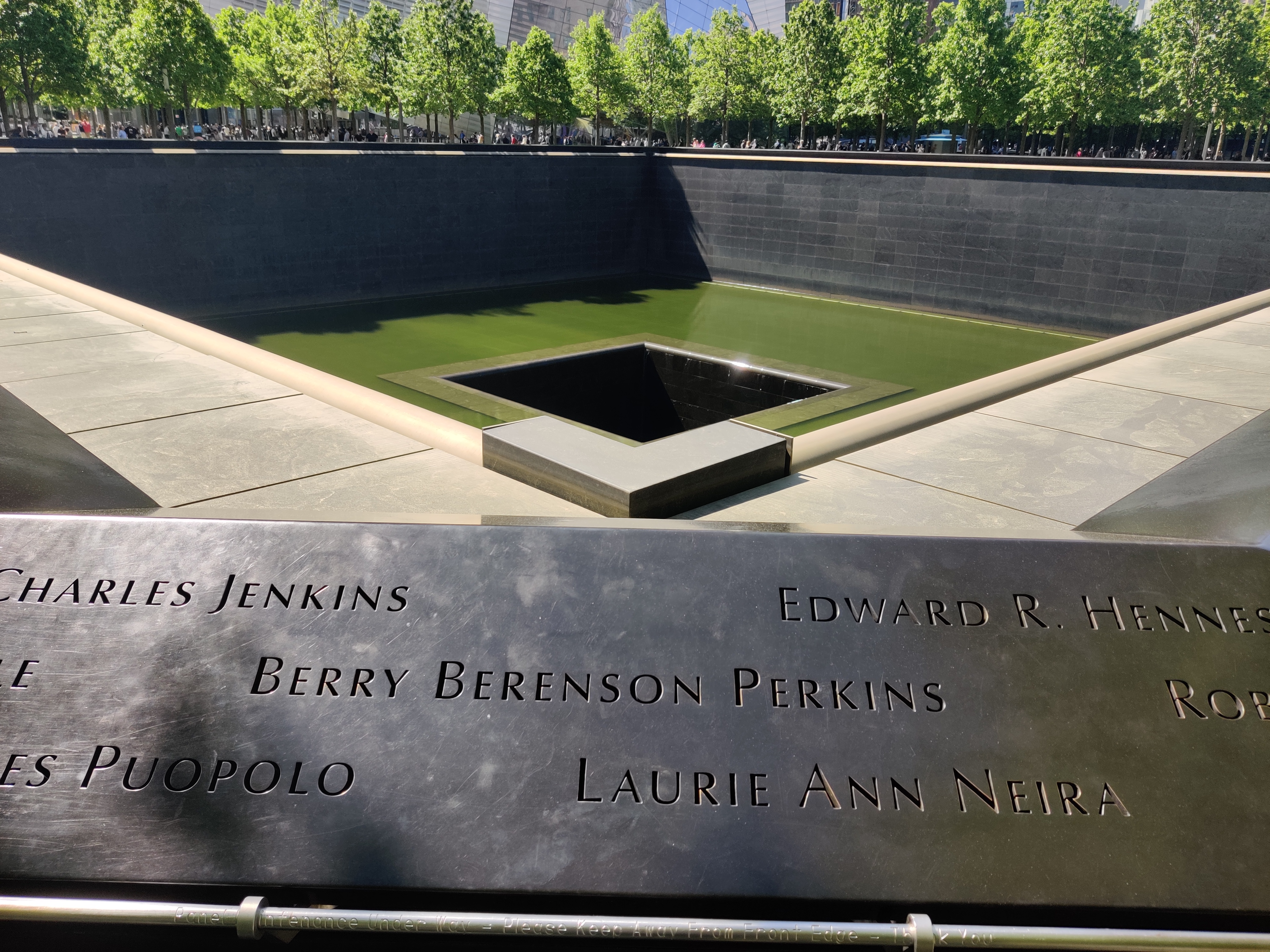
The water cascaded down the black granite sides, flowing as rivulets before disappearing into the small squarish void in the center. As I looked at the flowing water, juxtaposed feelings pulled in different directions. A feeling of melancholy and sadness about the flow of our lives which was perhaps never to return. But also a feeling of peace and acceptance, an emotional cleansing about all that was not right, maybe would never be right.
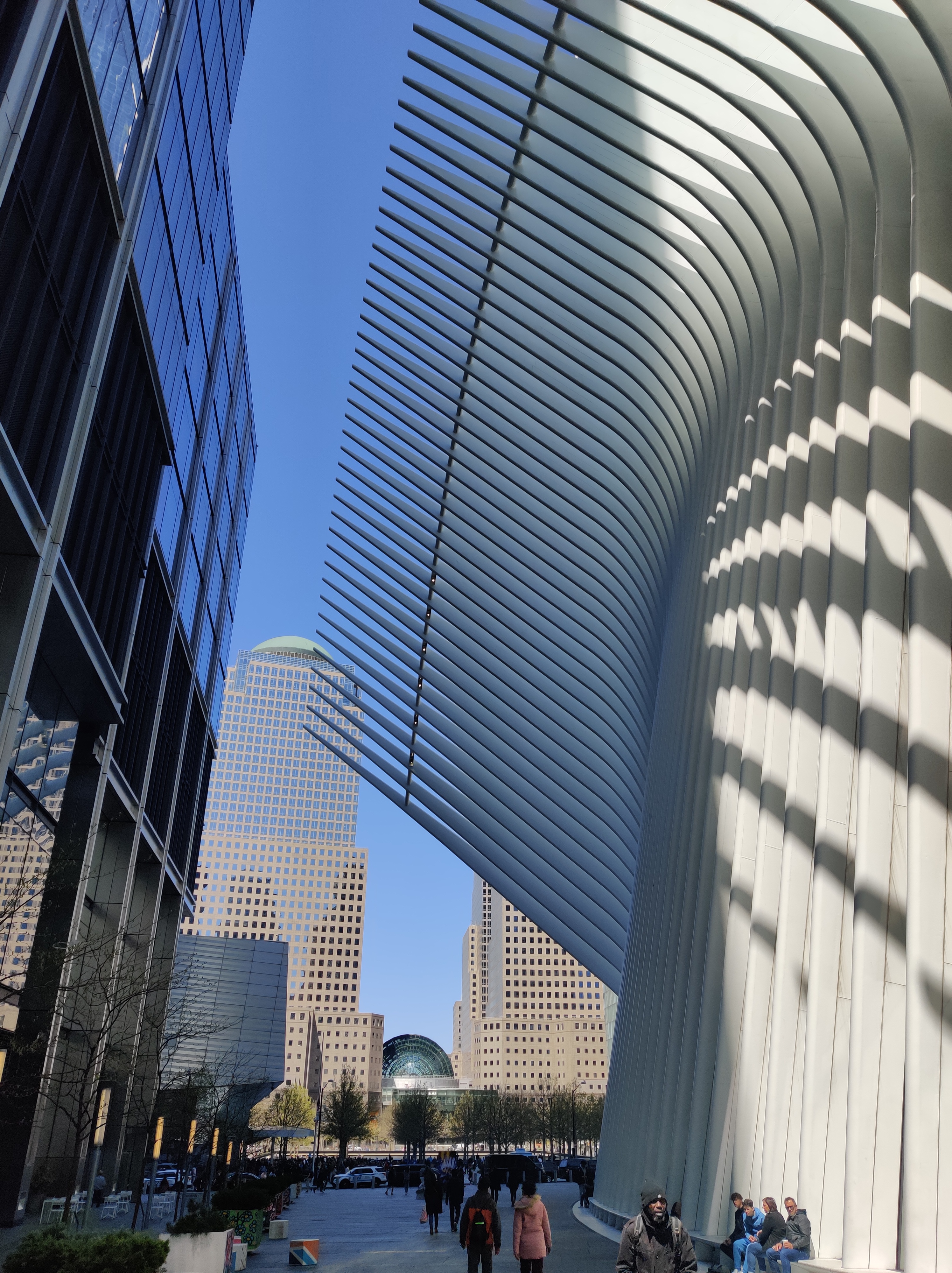
From the corner of my eyes, I could see the Oculus, that majestic steel ribbed white wings about to soar up into the skies. The reflections on the nearby glass towers seemed to be heralding a brighter, more vibrant tomorrow. A tomorrow in which peace and acceptance might run the winning lap.
I was at the site of the two World Trade Center towers in Manhattan which had gone down in the September eleventh attack more than two decades back. The black granite square pools with flowing, falling water had been built as memorials to that event. The Oculus served as the integrated transportation hub built for the Path and Subway trains.
Oculus Transportation hub at the World Trade Center complex
As I stood there in contemplation, the place was a tranquil and serene island in the midst of high energy Manhattan life. Did the flowing water suggest a life force embryo just below the surface? That somehow brought into our thoughts those who had perished in the attack, their names etched on the sides serving as the only reminder? Or was it that the simplicity of the slow cascades into the void which could never be filled (as per the memorial architect Michael Arad) allowed their ‘absence (from our living world) to be made visible’?
**
My memory went back to that day decades ago.
It was evening. I was in the office and had called a colleague to discuss an operational issue when he excitedly mentioned about a disaster in which an aircraft had crashed into one of the World Trade Center (WTC) towers in New York. We spoke about the incident for a couple of minutes and wondered about the low probability of an aircraft crashing into a building.
Returning home after office, I switched on the TV only to see the news headlines flashing all over, ‘AMERICA UNDER ATTACK!’ In the interim, a second aircraft also carrying passengers had slammed into a second WTC tower. Burning from the aviation fuel of the colliding aircrafts, both the towers collapsed. A third aircraft had crashed into Pentagon, the US Defence headquarters in Washington DC. Due to the time zone difference, what was evening for me was really morning hours on the US Eastern seaboard where the attacks were taking place. Close to three thousand people died in the attacks.
What seemed at that point in time a senseless act of violence led to a fundamental shift in the way US saw the world and how its foreign policy would come to be defined. Over the next two decades, US would engage in conflicts aimed at crushing terrorism in various parts of the globe. From demolishing Osama Bin Laden’s Al Qaeda bases in Afghanistan to the Iraq invasion and removal of Saddam Hussein to confronting the self-styled Islamic State in Syria.
I think of our world today. The actors have changed, the issues have shifted but the conflicts remain.
**
A couple of days back, I heard the tragic news of the Texas shooting in which a teenager Salvador Ramos armed with a gun entered an elementary school and senselessly shot and killed nineteen children and two adults. The carnage was a deadly reminder that even the world’s most powerful nation is unable to protect its children in their innocence.
My granddaughter has been going to a play school. She loves going there. For us, the school is a safe haven that nurtures. I agonise when I think of what might be passing through the minds of the parents and grandparents of those children whose lives were so brutally snuffed out even before they got the chance to blossom. Like me they too would have had complete faith in the safety and security of their child in school.
I muse. What is that which leads to some folks inflicting injury and death on others? I sense that this arises from an extreme psychologically aberrant mindset. A mindset which shifts into viciousness from its inability to accept ‘we versus they’ differences. So it was with Osama Bin Laden, so it is with Salvador Ramos.
An all-powerful state like the US does possess the weapons and technology to wage war against the enemy without.
But does it possess the conviction and resolve to change the mindset of the enemy within?
It is fascinating to see how technologies originate in response to unmet needs and then go on to transform and impact the world in unfathomable ways.
In this post, I look at two such technology initiatives and then explore how they might evolve and impact us.
The first technology initiative is Germ Pods.
It was early April 2020 and the Covid had just started making initial inroads into India with recorded infections hovering around a couple of thousand. The Government launched an innovative contact tracing and self-assessment mobile App called Aarogya Setu. It became the fastest growing App in the world with more than fifty million downloads in less than two weeks. The App gathered data from positive infection reports on a real time basis and was designed to identify infection hot spots and alert the user about the number of Covid infected people in the vicinity. Government ministries and Indian Airports made it mandatory for all people to register into the App to ensure low risk. Aarogya Setu was subsequently merged with the COWIN portal which was designed to register and update vaccination status at the individual level.
Countries around the world launched similar contact, movement and vaccination status tracing Apps during the pandemic.
As I muse, the import and the transformative potential of the tracing and status app becomes clear. The future would be about a real need to protect and secure the health of oneself and one’s own community. Increasingly, testing for various transmissible diseases, real time tracing and proximity alerts would form the basis of AI based algorithmic analysis to create hierarchies of health risk statuses. In spite of repeated assurances that individual privacy norms would be protected, geographic and digital clusters of such hierarchies would begin to emerge and, in more ways than one, would trample on individual’s privacy and behaviour. These clusters or “Germ pods” would over time become much more than mere health pods. They would morph as digital identifiers of micro-groups displaying differing economic, demographic and social behaviours. Can you imagine what such identifiers would do in the hands of marketing organisations, Government policy makers and politicians?
What thus started off as mere health protecting ‘Germ Pods’ might become somewhat sinister gatekeeping tools allowing individual entry based on constantly tweaked algorithms; they would actually become functionally invisible to folks who do not qualify. Groups would get shielded from public view as well as from one another, as they get into exclusive symbiotic relationships with marketing organisations and the Government. Overall transparency and accountability in a society relating to spreading of resources would take a hit, further exacerbating the ‘have’ and ‘have not’ divide.
My sense is that in the future, the above transformative technology might usher in a societal problem.
The second technology initiative is Personal Learning Clouds.
For some years, I have been engaged in training the next tier Leadership for a large business group in India. While the need for Leadership development programs is acutely felt in today’s VUCA (Volatile, Uncertain, Complex, Ambiguous) environment, the organisation also senses that traditional class room case study-based programs are no longer working to prepare tomorrow’s leaders for the challenges they would face. The training manager thus finds it hard to justify costs relating to such training programs. Last but not the least, the program does not really get ‘owned’ by the participants’ boss and other team members leading to the program learning not getting the needed support for effective application at the workplace.
The pandemic has fast paced the shift of training programs onto Zoom and other digital platforms. My client organisation has started seeing this as a great alternative, cutting down as it does requirements of logistics and physical infrastructure. The participants are able to virtually join in from their work desks or homes with a much shorter lead time.
As I think of the emerging trend, I visualize the birth of ‘Personal Learning Cloud (PLC)’ in today’s rapidly changing and constrained environment. The PLC would be flexible, allowing 24X7 accessibility to learning modules aligned to the need and behaviour of an individual and his team. Over time the PLC would emerge as a networked learning infrastructure. It would not only allow overall lowering of training costs but would facilitate the organisational leadership to offer ‘just in time’ targeted learning experiences for personnel according to his / her role and immediate organisational needs. Finally, the PLC ‘s real time accessibility, relevance and interactive capability would allow the learner’s immediate superior to become an active stakeholder in the process and provide support and accountability.
I sense that over time the PLC would make learning personalized as well as democratized (in terms of access) and would allow organisations a better gauge to measure return on investment and ensure work place application. Something essential to keep the ‘just in time’ PLC based learning relevant in a fast-changing world.
My hope is that in the future, the above is where significant growth and development opportunity would lie.
In learning………. Shakti Ghosal
Acknowledgement:
‘After the Pandemic: What happens next?’ – Document prepared by Ayca Guralp, Instititue of the Future, CA, US.
‘The future of Leadership Development’ – HBR March-April 2019
While doing a course on, ‘Welcome to our post-pandemic future’, the aspect of economic inequality trend jumped out at me. A trend that seems to have accelerated since the onset of the pandemic.
Statistics show that the eight wealthiest people in the world now have as much wealth as the bottom 3.5 billion people combined! Incredible as it seems, that is correct. The combined wealth of this league of extraordinary gentlemen out weighs that of three and a half billion people! It set me thinking. What is that differentiating proposition that creates such a disparity? Is it the intelligence quotient, is it the emotional quotient, a combination of the two or something else?
As I reviewed the behaviour patterns and articulations of these extraordinarily wealthy gentlemen. I could discern a pattern. A common underlying theme behind such incredible wealth creation seemed to be a knack of envisaging a future that seemed impossible, in fact laughable to most folks around. However, these individuals held the belief to hunker down and live into that future, having the doggedness to hang on till they could make it true.
I discovered something else. As the world shifted in terms of technology and mindset, there came a moment when the window of opportunity aligned with the envisaged future and competence set of the individual. Because of the ability to hunker down and hang on, the individual could recognize that ‘clunk’ of the future as it arrived and take appropriate action. This seemed to be true for Bill Gates, Jeff Bezos and Mark Zuckerberg as well as the others on the list.
In the next three to five years, how could we expect to see the growing economic inequality pan out and its impact on the world? One might envisage depressed ‘across the board’ consumer demand and a drag on the global economy. Most of us can recognize the negative potential of a severe long-term drag.
“…….Our Brave New World too seems to be a story of the blue and red pills allowing us a choice of the path we could take.
One road leads us to a virtual utopia. Inhabited by people fully able to realise their creative and innovative potentials. A world where people are uniquely free to follow their passions and creative urges. Where innovations are exploding every other day and unimaginable wealth is getting created. Where products and services are plentiful and available to all. Where being wealthy or not no longer matters. A world that has finally come to realise the socialistic dreams of Karl Marx and Lenin, but in a warped way.
The other way is to the land of dystopia. Of people lacking meaningful work and condemned to exist on the lower rungs of Maslow’s hierarchy. With not a hope in hell of achieving the higher rungs of potential. Of folks condemned to live on a Universal basic income provided by the Governments of the day. Of large sections of society feeling increasingly dispossessed and spiralling down into drugs, gambling, terrorism and similar madness……….”
As I think of the growing inequality of today, I do spot some of the above-mentioned patterns of change. But I remain unsure of a pre-determined outcome. Would the economic disparity continue to grow? If so, what could each one of us do to support folks to more effectively handle the situation?
I sense that over the next few years, the world would need to go through a period of healing, not only emotional healing from the damage and trauma of the pandemic but a movement to restore overall consensus and a more equitable share for all towards livelihood. All of us would need to get involved and ensure that groups who have been disproportionately affected are at the table for coming up with plans and solutions, including young people, and that they have a chance to really have a say in what happens next to ensure a better and safer future in the coming years.
Moolya Foundation is a global non-profit organisation with an aim to bring greater inclusivity in public affairs through digital leadership.
The mission of Moolya Foundation is to expand the conversation surrounding public affairs and empower every citizen in the digital age where marginalisation of the common people is fast growing.
To abridge the socio-economic, political and information inequalities in digital societies, Moolya Foundation envisions creating future leaders in public affairs who shall be at the forefront to represent the interest of the common people.
Do see this first part of my freewheeling session with Neha Gour of Moolya Foundation in which we discuss ‘Is Digital Leadership a Skill or a Mindset?’ As happens at such times, The Chronicler of the Hooghly also gets discussed!
The Three Horizon methodology was developed by Bill Sharpe to provide a simple framework to envision the future and how to engage in constructive conversations about how to achieve that future, This becomes all the more critical in an environment which is uncertain and complex.
The three Horizons framework, to me, is a powerful reboot tool which we need to keep in our toolbox for an environment that we are currently into.. It allows us to coordinate disruptive innovations and create transformative change which has the best chance to succeed.
As per the methodology, envisioning the future always needs to deal with three horizons at play, which are always there, with the capacity to impact the future.
Y Axis is the dominant thinking or WorldView.
The first horizon ‘H1’ is all about how business is done at present, but there is something in it which is not fit for the future. It thus contains the seed of its own demise over a period of time.
The third horizon ‘H3’ is the future we desire and there do exist green shoots of that today. We would like them to grow and become the predominant way of doing business in future, replacing and improving upon H1.
The second horizon ‘H2’ is the most interesting space as this is where disruptive innovation takes place. Disruption can take many forms. It could be technology fueled like the Electric car, it could be event fueled like the current COVID19 pandemic or it could socially fueled like Occupy. Disruptions usually lead to innovations, new ways of Doing or Being. The opportunity of change actually exists in the space between the crests of H1 and H3.
The key question would be, “How would the disruptive innovation effect the transformation between H1 and H3?” To answer this, we will take the example of the current predominant transportation technology using the Internal Combustion engine. This is a H1 model which has survived over a century with its negative impact of Carbon footprint and Climate Change.
Now let us look at the disruptive innovation of Hybrid Technology. This technology actually is the creation of the old world H1 horizon. The problems of H1 are somewhat reduced in this innovation but remain; they in fact get accentuated by addition of another layer of technology on top of the existing one with suboptimal utilisation of either of them. This is called the “H2-” innovation as it is captured by old dominant structures to extend the life of H1 horizon. Why we are using the word ‘capture’ here is because its innovative energy is not being used to help the H3 horizon to emerge.
In contrast now let us consider the same disruptive innovation technology but now paired with the H3 horizon, to support the emerging future to emerge and help to hasten the decline of H1. It would be the pure Electric car technology of Tesla, which essentially is a transformative exercise of building some kind of a computer on wheels; it is envisaging the future ground up. This is called “H2+”.
For the 3 Horizons Reboot tool to be effective, we need to do an enquiry based on three questions:
What is being born and how could we support it emerge and succeed?
What is dying and how can we help it to let go?
What is being disrupted and how can we harness it as in H2+, not be captured as in H2- ?
Enquiry questions for conversation about how to achieve the future:
H1 Horizon :
What is business as usual, the key characteristics of the prevailing system?
How did we get here, what values, cultures, regulations, events led to this?
Why do we believe it is failing its purpose and no longer a good fit? How fast do we want to see its decline?
Is there anything about the old system that we would wish to retain rather than lose?
H3 Horizon:
What is the future that we would like to bring about, its key characteristics, how it looks like, feels like to be there?
What are the green shoots of that future visible in the present?
Whose ideas and work are the present possibilities built on? What history, values, culture are they embedded upon?
How can the possibilities be scaled and spread?
What are the competing visions of the future being pursued by others? Can we collaborate with them or are these essentially competing visions? If the latter, how do we prevent their vision from derailing ours?
H2 Horizon:
What is being disruptive in terms of technology, social, economic, ecological and cultural aspects? What are the roots of those disruptions? For each of those identified, what would it look like if captured as in H1-? Or harnessed as in H2+? What could be strategically done to ensure it is harnessed?
If you are a disruptive actor viz, Tech. Innovator, social movement etc. what kind of guidance can you set for yourself to ensure that your disruption is harnessed under H3 ( H2+) rather than captured under H1 )H1-)? What allies will you seek, what actions will you take, how will you assess potential offers of collaboration or finance?
As we Reboot and enter a world with a new normal, we need to know that Uncertainty and Unpredictability would be part of that normal.
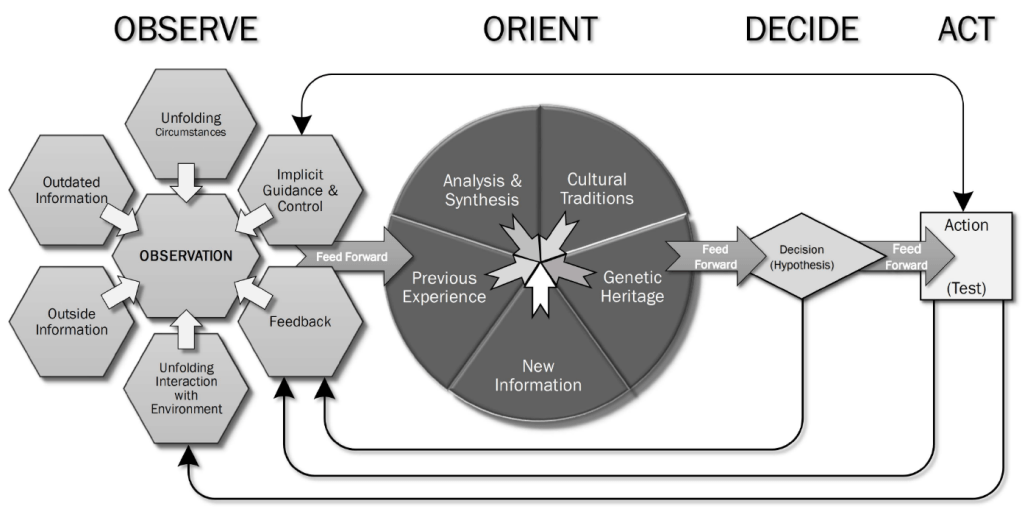
A great tool to use in under Uncertainty and Unpredictability is the OODA Loop, first articulated by US Colonel John Boyd in the context of air combats. In its simplest form it consists of the four stages of OBSERVE, ORIENT, DECIDE and ACT, looped as under.
OODA Premises :
When circumstances change, we often fail to shift our perspective and instead continue to try to see the world as we feel it should be. We need to shift our “mind models” to make sense of the changing world – in order to deal with the new reality.
As we make specific observations about something, we would experience more uncertainty about another; this is the limitation of our ability to observe reality with precision.( Heisenberg’s Uncertainty Principle).
Closed Systems viz. individuals or organizations that are cut off from the outside and new information would experience increasing mental entropy or disorder ( Second Law of Thermodynamics)
I propose to use an Airline, it could be Indigo, Air India or even Emirates, to showcase the OODA tool.
A more detailed model of the OODA Loop is shown below.
Stage -1 Observe :
We must focus on external parameters and quickly filter out what is important. In this data collection stage we seek and absorb and evaluate all manner and forms of data to gain a more accurate insight.
What shifts in demography, buyer behaviour, traveller behaviour, Regulations and Technology are taking place that might directly affect our airline?
What changes in the environment are taking place that might impact our airline and its business? Now or later on?
What information do we have in terms of : (1) Routing options (2) Capacity deployment (3) Alliance opportunities (4) Marketing strategy (5) Gross revenue, costs and profits.
Mechanics of Observe: As we consider new information based on above questions, our minds move from being closed to becoming an open system. We thus start forming new mind models and gain the ability to “see” the emerging situation differently. We overcome confusion inducing mental entropy of closed systems.
Stage- 2 Orient :
Orient is the heart of the OODA Loop because that’s where our mental models exist, our mental models shape how everything in the OODA Loop works.
So how does one orient oneself in a rapidly changing environment?
We constantly have to do “destructive deduction” i.e. break apart our old paradigms and then do “Creative Induction” by using these old fragments to form new mental concepts that more closely align with what is really happening around us.
In the context of shifting customer profile, buying and travelling behaviours, how do we :
3. In view of shifting customer mindset relating to travel, how do we :
(a) Optimise route network?
(b) Deploy Capacity on routes?
(c) Enter into alliances with other airlines and associated service providers?
(d) Marketing partnerships with hotels, ground transportation, destination services?
4. In view of emergence of new regulatory frameworks,how do we:
(a) Engage with and support Governments and Regulatory authorities for creating worldwide / regional standards for hygiene and operations?
(b) Ensure an overall smooth and consistent customer experience?
Mechanics of Orient: We formulate new approaches using refreshed mental models and paradigms. As we analyze the data collected in the Observe stage, we deep dive into our business’ internal capabilities to assess our current reality.
Stage-3 Decide :
We choose among the various alternatives generated in the Orient stage to move forward with our best hypothesis viz. “possibility” about which mental model(s) will work.
What booking process will we roll out to inspire customer confidence in terms of fairness and transparency in pricing, adherence to regulations and ease of use and refunds?
What Airport Check-in process should we implement which will ensure ease of passenger handling, customer comfort, adherence to safety protocols, improved operational efficiency and aircraft turnaround time?
What routes, frequency and aircraft capacities should we deploy?
What internal resource group do we need to create to work with Governments and Regulators to ensure smooth, consistent and safe customer experience?
What Alliances and Marketing partnerships have we shortlisted?
Mechanics of Decide : As we start deciding on the courses of action, we need to be aware that Success or failure will be based on our competences, our practised experience and the quality of our observations and orientation. For every trip around the OODA loop, new data will be transformed into new information, driving new suggestions, giving us opportunities to modify our decisions and drive subsequent actions.
Stage – 4 Act (Test) :
Why “Test” has been put next to “Act,” is to emphasise that the OODA Loop is not only an execution decision process, but also a learning system; we get to perpetually test our new hypotheses in a shifting world. Action stage is where we find out if our mental models are correct. If they are, we achieve the objective; if they aren’t, then we start the OODA Loop again using our newly observed data and modified models.
Evaluation and reporting of the following parameters:
Revenue and Expense accounting
Interline billing of alliance partner airlines
Proration and fare audit
Loyalty and marketing program effectiveness
Mechanics of Act: . Making a decision and taking action will have an impact on the data you have observed, which drives the information you’ve created and influences the decisions you have made.The loop perpetuates until the opportunity is fully resolved by either completion or disengagement.
How we could use OODA Looping speed ( tempo) to gain competitive advantage:
In an uncertain and volatile environment, mission does not solely end with deploying the OODA loop effectively. It is also about how relevant our organisation ( airline) can remain in comparison to other airlines under constantly shifting parameters.
An organisation should operate at a faster tempo or rhythm than its competitors or, preferably, get inside the competitor’s decision time cycle ( OODA Loop) to gain an advantage.
Analytics: Our Airline system generates a large volume of data at a very high velocity. How could we use Analytics to collate and analyse this data in the subsequent looped Observe (1) and Orient (2) stages ?
How could we synchronise our pre-departure processes like Check-in, flight operations, airport operations, transit services, post travel issues etc.with real time shifts in market conditions and own performance?
How could we do inventory based dynamic pricing upto flight departure to force competitors review their pricing strategy ( Observe & Orient stages)?
Mechanics of Looping Speed ( Tempo)
By continuously collecting, connecting and testing data that is generated the airline would create a data repository for use in any phase of its decision process (Strategic or Tactical). This would also enable an upstream and downstream impact analysis of all decisions.
How can you apply the OODA Loop to your own domain and business? Feel free to reach out to me.
In Learning…….
Shakti Ghosal
Acknowledgement: The Tao of Boyd: How to Master the OODA LoopByBrett & Kate McKay, May, 2019














 A New Beginning