Suns vs. Planets: Navigating Your Life’s Influences


“In life, we meet two kinds of people—those who shine like the sun, radiating wisdom and energy, often challenging yet deeply inspiring; and those who, like planets, reflect borrowed light, offering comfort but little growth. Choice remains ours- whether we choose to orbit the suns, or chase reflections.”

Life is a cosmic dance, a vast expanse where we cross paths with many kinds of people. Some shine with their own light—bright, intense, and sometimes difficult to stand too close to. They challenge us, push us beyond our comfort zones, which might make us feel humiliated or insecure. However they do ignite sparks of transformation within us. These are the suns—radiant sources of wisdom, energy, and inspiration.

Then there are those who do not generate their own light but instead reflect the glow of others. Like planets orbiting a star, they offer comfort, familiarity, and predictability. Their borrowed light may bring temporary warmth, but it does not fuel real growth. They move in predefined paths, circling endlessly, never venturing beyond what is known.

The question before us is simple yet profound: whom do we choose to orbit? Do we dare to brave the brilliance of the suns, knowing that their intensity might burn, but also illuminate new possibilities? Or do we settle for the steady, reflected glow of planets, avoiding discomfort but also forsaking true transformation?

The Challenge of the Suns

Suns in our lives come in many forms—mentors who push us to excel, leaders who challenge conventional thinking, friends who demand authenticity, or experiences that shatter complacency. These forces can be unsettling, their intensity requiring us to adapt, to evolve, and sometimes to withstand discomfort.

Yet, it is from these sources that we learn the most. They force us to question our assumptions, face our fears, and tap into strengths we never knew we possessed. They inspire us to expand our horizons, to break free from the gravitational pull of mediocrity, and to blaze our own trails. As Kouzes and Posner (2017) suggest in The Leadership Challenge, transformative leaders create environments where individuals are encouraged to experiment, innovate, and grow beyond their limitations.

The Sun: Steve Jobs and the Apple Revolution

Steve Jobs was a quintessential “sun”—intense, visionary, and sometimes difficult to work with. He challenged the status quo, demanding excellence from those around him. Many who worked closely with Jobs describe the experience as transformative, albeit tough. His relentless pursuit of innovation forced others to think differently, step beyond their comfort zones, and achieve greatness. Those who chose to stay in his orbit were often pushed to their limits but emerged stronger, more creative, and capable of making an impact.

Lesson: Following the light of a “sun” can be difficult, but it leads to extraordinary growth.

The Comfort of the Planets

Planets, on the other hand, offer familiarity. They provide steady companionship, reassuring words, and a sense of belonging. Their presence is not without valuable— at times we do need the comfort of the known, the stability of routine, the ease of like-minded company. However, if we linger too long in their orbit, we stagnate. The pursuit of borrowed light may seem safe, but it rarely leads to personal evolution.

Consider the case of corporate career paths. Many professionals spend decades in the same organization, never venturing beyond predefined career trajectories. They are competent and reliable but do not challenge existing structures. Meanwhile, those who step outside their comfort zones—whether by switching industries, seeking disruptive mentors, or engaging in lifelong learning—often experience exponential growth. Carol Dweck (2006), in her seminal work Mindset: The New Psychology of Success, emphasizes the importance of a growth mindset—embracing challenges, learning from criticism, and persisting in the face of setbacks.

The Planet: The Comfort of Routine in Corporate Careers

Consider an employee who has spent two decades in the same corporate job, doing well but never pushing beyond the familiar. He is competent, reliable, and comfortable in his position. However, his growth is limited—he reflects the expectations of his environment rather than shaping it. While his job provides security, he misses out on opportunities to innovate, learn new skills, or challenge himself.

Lesson: Comfort is not always conducive to progress. Staying in the orbit of planets can lead to stagnation.

Making the Choice

There is no right or wrong answer—only awareness. There are times in life when we need the warmth of planets, moments of rest and reassurance. But growth happens when we dare to reach for the suns. It is in their radiance that we find our own light, forging our path not as mere reflections but as luminous beings in our own right.

The choice is ours. Do we settle for the comfortable glow of borrowed light, or do we embrace the challenge of the suns, knowing that their brilliance will shape us into something greater?

In the grand design of the universe, we are not bound to any orbit. We are free to choose our celestial path. The only question that remains is—where will we set our course?

The Choice: Malala Yousafzai’s Defiance of the Status Quo

Malala Yousafzai, a young Pakistani girl, had a choice—to accept the constraints imposed by her environment (where education for girls was restricted) or to challenge the norms. She chose to orbit the “sun” of enlightenment, education, and progress, even at great personal risk. Today, she is a global advocate for education, inspiring millions.

Lesson: Choosing to orbit the “suns” of wisdom and progress, even in the face of adversity, can lead to transformational impact.

Conclusion

The world is full of both suns and planets, but ultimately, we decide which forces shape our journey. The challenge is to recognize when we are merely reflecting light and when we are generating our own. Growth, transformation, and true impact come from stepping into the orbit of those who challenge us, inspire us, and push us beyond our perceived limits.

 So, ask yourself—are you ready to seek the suns, even if their brilliance demands more of you? The answer will determine the trajectory of your life.

In Learning…….                                                                     Shakti Ghosal

References

  • Dweck, C. S. (2006). Mindset: The New Psychology of Success. Random House.
  • Kouzes, J. M., & Posner, B. Z. (2017). The Leadership Challenge: How to Make Extraordinary Things Happen in Organizations. Wiley.

Is your leadership changing to suit an AI World?


Artificial Intelligence (AI) is no longer a futuristic concept—it is here, and disrupting all that we are familiar with in terms of the way we work, make decisions, and interact. As Leaders and Managers, while we might agree with this, we might not have given much thought about how we ourselves might need to change, rethink our own roles and priorities. How we as leaders need to adapt to make the most of the shift at the workplace and business perspectives taking place?

So how do we go about Shifting the Leadership Mindset?

In 2018, Satya Nadella, CEO of Microsoft, shared an interesting insight: “The role of a leader is not to be the know-it-all, but to be the learn-it-all.” This could not be truer in an AI-driven world. Leaders who cling to old ways of working—making decisions based on experience alone or holding tightly to hierarchical structures—will struggle. Instead, they need to embrace a few key shifts in thinking. I am enumerating these here.

  • From Authority to Empowerment: Picture yourself, a seasoned marketing manager who has always relied on gut instinct to craft campaigns. Now, AI-driven analytics suggest alternative strategies. Instead of resisting, you encourage your team to experiment with AI insights, leading to a campaign that doubles engagement. According to MIT Sloan Management Review (2022), businesses that integrate AI into decision-making while maintaining human oversight see greater innovation and efficiency [1]. To be an effective leader today, you need to empower your teams to harness AI rather than dictating decisions.
  • From Gut Feeling to Data-Driven Decisions: Years ago, a retail CEO might have made inventory decisions based on past sales and intuition. But today, AI predicts customer demand with astonishing accuracy. McKinsey Global Institute (2023) highlights that companies leveraging AI for predictive decision-making can outperform competitors by up to 20% in operational efficiency [2]. Take Zara, for instance, which uses AI to analyze shopping trends and adjust production in real time. As a leader, you must learn to trust AI insights while still applying human judgment where it matters most.

( c ) From Stability to Agility: When the pandemic hit, Airbnb faced a crisis. Travel halted; bookings plummeted. Instead of panicking, leadership used AI-driven insights to pivot towards long-term rentals, adapting to new customer needs. The shift kept the company afloat. Deloitte Insights (2023) emphasizes that adaptability is a critical survival skill in AI-driven businesses [3]. In an AI world, you as a leader needs to develop adaptability as a survival skill.

The Changing Leadership Context

The rise of AI is reshaping not just how businesses operate, but also how leaders interact with teams and technology.

  1. Human-AI Collaboration: Imagine an investment firm where AI scans market trends and suggests portfolio adjustments. It does not replace human analysts—it enhances their work. According to Harvard Business Review (2021), companies that use AI for augmentation rather than automation see higher employee engagement and better decision outcomes [4] You as a leader need to foster a culture where AI is seen as a tool for augmentation, not as a threat.
  • A Workforce with Different Expectations: I know of a tech startup which has hired a mix of Gen Z employees who are eager to automate repetitive tasks and seasoned professionals who fear AI might make their skills obsolete.Gartner (2022) stresses the importance of AI literacy, stating that leaders must bridge this gap to create a future-ready workforce [5]. You as a leader need to bridge this gap by promoting AI literacy and ensuring every team member understands how AI enhances, rather than replaces, his / her role.
  • Ethical Leadership in AI Use: Amazon once developed an AI-driven recruitment tool that unknowingly favoured male candidates. When this bias was exposed, leadership had to step in and scrap the project. This highlights the importance of ethical oversight.World Economic Forum (2023) notes that responsible AI governance is one of the most pressing leadership challenges today, requiring fairness, transparency, and accountability [6]. In an AI world, you as a leader must ensure fairness, transparency, and accountability in AI applications.

So, what might be the key leadership qualities needed for an AI-Driven World?

  • Digital Fluency: Take Elon Musk—while not an AI engineer, he understands AI’s potential enough to integrate it into Tesla’s self-driving technology.Stanford AI Index (2024) reports that organizations with AI-savvy leadership are more likely to succeed in AI implementation [7].  You as a leaderdo not need to code AI algorithms, you should be able grasp how AI works.
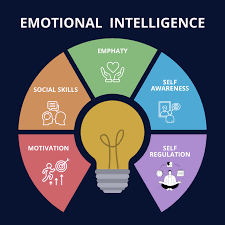
  • Emotional Intelligence: Consider Jacinda Ardern, whose empathetic leadership style resonates deeply in an increasingly digital world. AI can provide data, but only humans can provide understanding and connection.World Economic Forum (2020) highlights that empathy and communication will remain irreplaceable leadership traits in an AI-driven world [8]. As a leader, you need to always hold the perspective that, with AI handling repetitive tasks, the human touch becomes even more critical.
  •  Adaptability and Curiosity: In the 1990s, Jeff Bezos saw the internet’s potential and launched Amazon. Decades later, he embraced AI to power recommendation engines and logistics. As a leader, if you stay curious and embrace continuous learning, you will thrive in an AI-powered future.
  •  Vision and Strategic Thinking: Netflix uses AI to recommend content, but it’s the leadership that chooses to invest in original programming. As a leader, know that while AI offers insights, it is human vision that drives bold, strategic decisions.
  •  Inclusive Leadership: AI is only as good as the data it learns from. As a leader, you must ensure that diverse teams contribute to AI-driven decisions to prevent biases and improve outcomes.

Conclusion: Leadership in an AI-powered world is not about controlling technology—it’s about guiding people to make the best use of it. The leaders who will thrive are those who embrace AI, empower their teams, and balance technological advances with human insight. Just like any major transformation in history, success will not come from resisting change but from learning how to harness it.McKinsey (2023) suggests that successful AI-driven companies are those that invest not just in technology but in leadership transformation [9]. The future belongs to leaders who can blend AI-driven intelligence with human wisdom and vision.

What would you need to do to be such a leader?

In learning………………….                                                     Shakti Ghosal

References:

  1. MIT Sloan Management Review (2022), “Reshaping Business with Artificial Intelligence.”
  2. McKinsey Global Institute (2023), “The State of AI in 2023: Generative AI’s Breakout Year.”
  3. Deloitte Insights (2023), “AI & The Future of Work: The Leadership Imperative.”
  4. Harvard Business Review (2021), “Building the AI-Powered Organization.”
  5. Gartner (2022), “Top Strategic Technology Trends: AI Leadership.”
  6. World Economic Forum (2023), “AI Governance: Aligning AI with Ethical Standards.”
  7. Stanford AI Index (2024), “AI Adoption and Leadership Report.”
  8. World Economic Forum (2020), “Future of Jobs Report.”
  9. McKinsey Global Institute (2023), “Leadership in the Age of AI.”

Trust- A bulwark of relationships


Trust is a foundational element of relationships and interactions. My decades of working   in organisations and relating to people have made me realise that Trust flows out from three aspects of how we relate to people and how we interact with team members and others.

First and foremost is the Integrity of our word. We need to be clear to our own selves that the way others see us is how we ‘honour our word.’ Do we keep it and if we cannot, do we inform about that at the earliest opportunity and be willing to clear up any mess caused?

Second is the aspect of accountability. When we can own up to our own errors of judgement and take responsibility, we start creating an environment where others ‘feel safe’ to do the same.

And finally, is the aspect of transparency which builds credibility and shows others that we are willing to share information honestly, even when it is difficult.

What trust leads to is open communication and ‘risk taking’ initiatives with the potential to transform workplaces to becoming more supportive and innovative.

To showcase, how Trust works, I wish to relate the case of Johnson & Johnson and its Tylenol product crisis of 1982. The company faced a severe crisis when people in Chicago died after taking cyanide-laced capsules of Extra-Strength Tylenol, a top-selling, trusted pain reliever.

While Johnson & Johnson was not responsible for the tampering, it faced intense scrutiny and an immediate threat to the overall J & J brand.

The company made a series of bold decisions, guided by its corporate philosophy, which prioritized customers over all else. It immediately recalled over thirty million bottles of the product costing the company over $100 million. The company maintained open and honest communication with the public, issuing warnings and engaging with the media. This transparency helped rebuild public trust and showed they were prioritizing customer well-being.

 By placing consumer trust above profit and acting with integrity, Johnson & Johnson was able to rebuild and even strengthen their brand. In a matter of months, Tylenol regained a significant share of the pain-reliever market, and Johnson & Johnson became known as a company that values trust and ethics.

In a recent ‘Mindset Matters’ podcast, Executive Coach Frank Marinko and I deep dived into the fundamentals of what constitutes Trust and how what constitutes our word becomes so crucial in the matter.

In learning……….                                                Shakti Ghosal

Have you experienced the power of active listening?


Listening as an activity seems passive and an easy one. It is not. When someone speaks to us, we end up listening though a mesh of beliefs, prejudices, preconceived notions, and past relational baggage. What we end up really ‘hearing’ in our brains is a distorted version of what was communicated.

For listening to be effective, it needs to land for us with minimal distortion. To do that we need to master the art of Active Listening. Which is listening without intention, without judgment, without RIGHT or WRONG.

I would like to relate an incident of an irate customer from a previous assignment. He was a regular buyer of our services but on that day, he came to book a family holiday and said he would pay once he returned. Such credit to individuals was not allowed as per company policy. The counter supervisor tried to reason with him but he got even more upset and stormed into my office.

Customer: “I can’t believe this, the way I have been treated just now. After all these years, are you guys telling me you don’t trust me? I have tried to explain to your supervisor but he throws the rule book at me.”

Sensing the anger and upset, I decided against trying to explain and opted to listen empathetically. As the customer continued to rant, I maintained eye contact, nodded sympathetically, and made verbal assertions like, ‘I see’, ‘I understand’.

When the customer finally stopped, I said, “I heard what you said and realise how upset and unacknowledged you must be feeling. You mentioned that you wish to make the payment of your much awaited holiday package after your return. Have I understood you right?”

The customer for the first time cooled down. “Yes, that is correct. I find it demeaning that your company does not trust me.”

“Okay, this is what we could do,” I said. “You could give us a post-dated cheque and I will authorize its acceptance as a special case.”

Now, this was not at all an innovative solution and could have been offered earlier also. So what could have been the reason for this not happening? Clearly, the engagement had been more about protecting one’s own turf and resolution had not been part of the mindsets.

As I think back to that situation, I can see that the active listening demonstrated in that interaction is what resolved the situation. The eye contact and nods, the acknowledgement of emotions, the paraphrasing and the offer of a solution is what allowed the customer to be heard, valued and reassured and be willing to co-create a resolution with me.

In Learning……………….. Shakti Ghosal

Do your Leadership choices upset your stakeholders?


This was the question that was debated during a podcast which I did recently with Executive Coach Frank Marinko in Australia.

All of us know that leadership is all about making choices. It is about aligning the organisation and its underlying stakeholder relationships with an overarching vision and intrinsic values. However, the prism that each stakeholder uses to evaluate decisions and decide on a roadmap could be significantly different from one another. We might hold complete clarity, based on our own belief and experience-based prism, about what and how something needs to be done. This is where the pitfall of a ‘My way or highway’ mindset lies.

Based on market conditions and the need to do a strategic shift, you might need to cut costs by reducing the workforce. But this could lead to employee insecurity and negative publicity. You might decide to use certain material to improve product quality but that might bring a backlash from environmentalists. A tradeoff between shareholder profits and employee benefits might lead to morale drop and lower productivity. Such a list of potential pitfalls can be long.

So how could you as a leader successfully negotiate and mitigate the above risks?

In this context, you might wish to listen to the two podcasts which are in the laser coaching realm.

In Learning…….. Shakti Ghosal

The Mantra of Personal Mastery


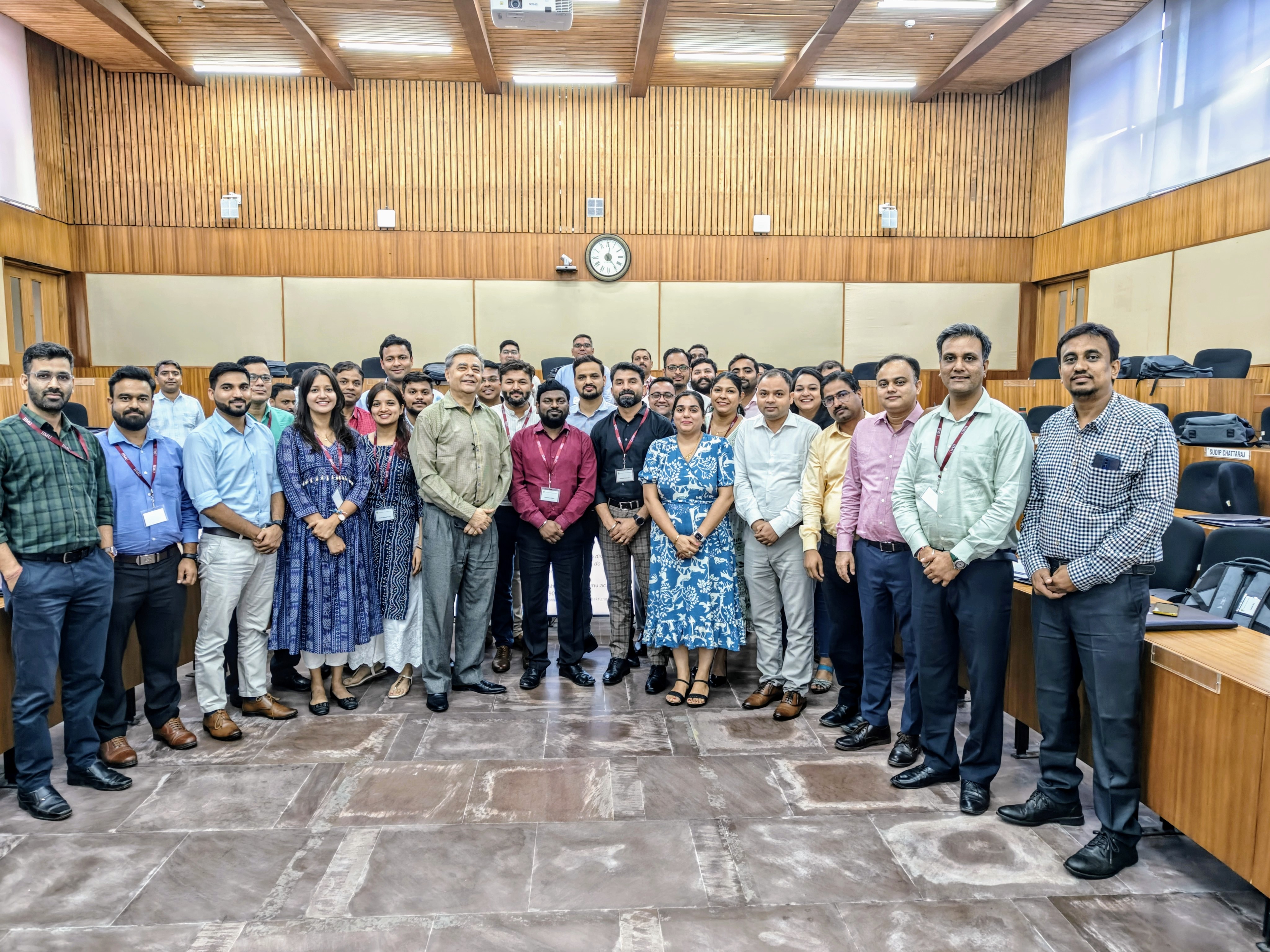
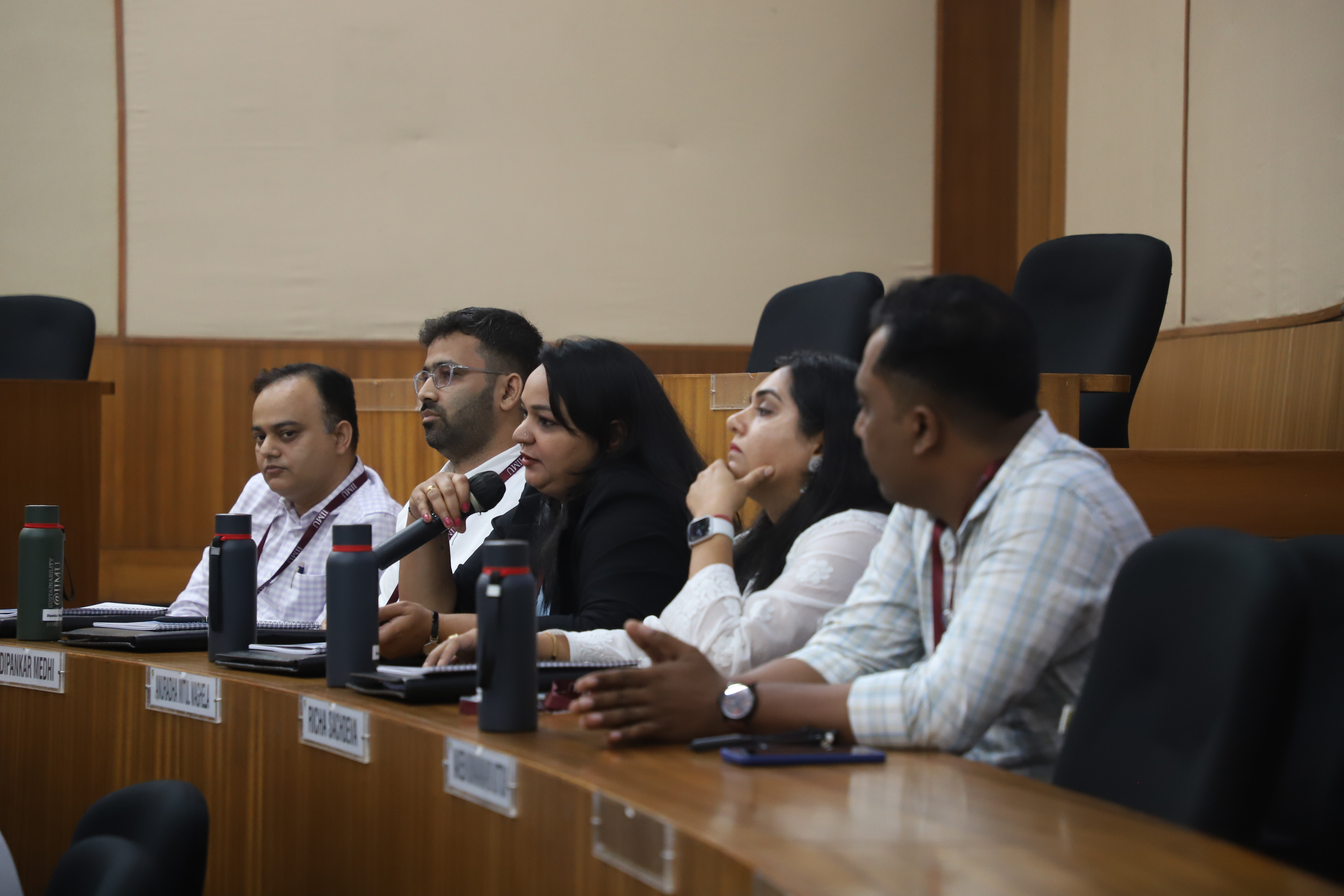
Recently at an IIM Udaipur conducted Management Development Program (MDP) for Indus Towers managers, I anchored four sessions. We started with the overarching perspective of Leadership and personal mastery before drilling down to specifics of Power & influence in teams, Managing high performance teams and the Feedback & Delegation aspects in Team Dynamics. We ensured a surfeit of activities, Role Plays and Case Studies to deepen the learning through practice and Ideation.

oplus_262144

In one of the sessions, we were in discussion of the aspects of ‘Honouring one’s word’ and ‘Being Authentic’ as performance accelerators of a team. Several participants mentioned their reservations about this, as under:

“If we become authentic and honour our word and others in the team do not do it, we would be taken advantage of and would be forced to do the work of others”

“All this is good theory but just does not work in real life. The fact is the Management has perceptions of who are good versus who are bad and irrespective of whether we honour our word or not, the favoured ones would get rewarded in terms of promotions and bonus”

In life, we are conditioned to judge others on moral and ethical yardsticks but remain quick to rationalize our own failings against the same yardsticks. We look around to try and determine who all are ‘honouring their word’ and tell ourselves that we would wait for others to honour and keep their word before we keep our own. As Chris Argyris had said about self-deception, ‘Put simply, people consistently act inconsistently, unaware of the contradiction between the way they think they are acting and the way they really act.’

 To gain the ability to honour our own word, we should be prepared to deeply deliberate and answer the question, ‘Where is my word when it comes time for me to keep my own word?’  In the ultimate analysis, there is a simple but inviolable equation of workability which is YOU are equal to YOUR WORD.

As I explained to the participants, team performance has very little to do with peering over shoulders to ascertain who is doing what. It has almost everything to do with how we can create trust of others in us. And creating trust has everything to do about Integrity viz. honouring our word and being authentic about how we show up for others. While some may try and take advantage of your trust in the short term, the aura of trust leads to team members gravitating towards you, working with you as you shift into being a natural leader.

How might you incorporate ‘Honouring your word’ and ‘Being authentic’ as part of how you show up tomorrow with your stakeholders?

In Learning……. Shakti Ghosal
Further Reading: ‘Integrity is a matter of a person’s word- nothing more, nothing less’– Michael Jensen, Professor Emeritus, Harvard Business School. Revised March 28, 2014.

Note : Indus Towers is India’s largest mobile tower installation company.  In India, 3 out of every 5 calls made are through an Indus site. https://www.industowers.com/

Unveiling The Essence of AI and Leadership in the Future


Frank Marinko and myself, both international Executive Coaches and Facilitators, grappled with this question using the critical thinking methodology, in a joint podcast. You might enjoy the discourse and the podcast link is given at the end.

If we are to deliberate on this question, we need to get to the essence of two aspects mentioned. First, AI or Artificial Intelligence as we call it. Second, ‘to lead’ which is all about Leading or Leadership.

So, what really is the essence of AI? That lies in its ability to mimic and augment human intelligence and decision-making processes using computational algorithms and data. At its core, AI systems can analyze vast amounts of data, recognize patterns, infer relationships, and make predictions or recommendations.

The important aspect to be kept in mind is AI’s ability to ‘learn’, its adaptability and the ability to improve over time. Machine learning algorithms, for example, can automatically adjust their behavior based on new data, allowing AI systems to become more accurate and effective with experience.

And when we think of the essence of Leadership, it is really all about envisioning a future which speaks to all stakeholders by addressing their concerns or satisfying some needs.  Leadership thus involves directing and coordinating the efforts so that the full potential and collective success can be realised.

With the dawn of computers seven decades back, Alan Turing had considered the question, ‘Can a machine think like a human?’ and came up with a test now known as the Turing Test. With the advent of AI, several Artificial Intelligence programs have already passed the test. The purpose of this question seems to be a deep-down threat to our unique ‘leadership ability’ that we see emanating from AI. There are concerns that AI will not only start doing complex and decision-making tasks replacing humans but in the long run go beyond human controls and frameworks.

This idea of technological obsolescence where technology renders humans obsolete, and takes over most of human jobs and work, is a concern that has been raised in discussions about AI and automation. However, we humans have creativity, empathy, intuition, adaptability, and the capacity for complex moral reasoning, which are integral to many aspects of work and life. These qualities enable humans to excel in areas such as innovation, problem-solving, interpersonal relationships, and above all Leadership.

The idea of AI achieving consciousness is another topic of much speculation and debate. Consciousness is a complex and still poorly understood phenomenon, and whether AI can truly achieve it is uncertain. Even if AI were to achieve consciousness, the process of its development would likely still involve human input and guidance. AI systems, as they exist today, are created, and trained by humans, and any future developments in AI consciousness would likely follow a similar path.

However, it is worth noting that AI can already exhibit forms of “thinking” and problem-solving that are quite different from human cognition. Machine learning algorithms, for example, can process vast amounts of data and recognize complex patterns in ways that humans cannot.

Whether AI should create its own thinking framework independent of human influence is a philosophical question with no easy answer. It raises issues of autonomy, control, and ethics. If AI were to develop its own thinking framework, it would still need to start and remain ‘biased’ by frameworks that align with human values and approach. It thus seems that in the foreseeable future, Humans would continue to lead AI, leaving aside the esoteric visions of the Matrix and Terminator movies.

To effectively lead AI development which would synergise with human development, adherence to principles such as transparency, fairness, accountability, and human-centered design would be needed. We would then be able to harness the full potential of AI while minimizing harm. These principles should serve as guardrails rather than roadblocks, helping to steer AI development in a direction that aligns with human values and promotes the common good.

Podcast link : https://audio.com/frank-marinko/audio/podcast-1

In Learning……. Shakti Ghosal

What to do when the world stinks


Some years back, I had a Divisional head join the team.

The guy had impressed the recruiting board with his talk of ‘track record’ and ‘ideas’ about how he planned to transform the business. When I got around to have a chat with him, he seemed to be all humility and spoke of his own self development through working and learning from me. But several subsequent events seemed to indicate that at the sniff of a challenge, his self-serving shield would go up, a lot of talk about blaming the environment and others in the team would emerge but not much action on the ground. In the meanwhile, the company kept losing competent and productive staff as well as customer accounts; his oft repeated declaration about ‘brickwalling’ them did not seem to be working.

To me it appeared that the Divisional Head did not know what he was working to develop; he was definitely not working on his own leadership. When I again had a chat with him, what came up were several blames. ‘That he had not bargained for the kind of work he was now being expected to do.’ ‘That I was failing to support him adequately.’ ‘That he was stuck with incompetent team members.’

In a nutshell, the job stank, I as the boss stank and the team stank! I did not have the heart to ask the guy that if the world all around stank, could it be that he himself was the problem?

How many of you have faced a similar situation at the workplace? If you have, have you wondered what one might need to do to transform the situation?

The world can shift when one shows up with authenticity and with humility.

Transformation:

  • When we see ourselves as the problem, we can be the solution too. We need to spend more time working on our own selves rather than trying to fix others.
  • Do we have the expectation that our team members should be the harbinger of good news and developments? We need to lower that expectation.
  • Empathy is a strong word; being empathetic is easier said than done. Nonetheless we need to practice putting ourselves in the shoes of others and seeing the world through their lens.
  • Gain the realization that others do not really humble us; we humble ourselves.
  • Show up as a servant leader. A leadership style that enables everyone in the organisation to feel empowered and thrive fearlessly as his / her authentic self.
  • Say ‘Thank you’ to three persons in a day. Look them in the eye and be specific. If someone is not around, send a thank you email or Whatsapp or make a call.

In Learning……                                                                 Shakti Ghosal

A recipe to develop humility in Leadership


It was an economic downturn period with the attendant business concerns. In a management strategy meeting, team members were called upon to offer suggestions about how they would wish to ring fence one’s customer accounts, sustain revenues and margins, bring down expenses and so on. I got the sense that the participants were merely sticking to the safety of what we had been doing in the past; no creative suggestions were forthcoming. It seemed to me that in a perceived environment of insecurity, no one was willing to stick his / her neck out. All were hesitating, waiting to do what they would be told.

This set me thinking. Could it be that my seeking suggestions of what each team member plans to do in an adverse situation was being viewed as appraising and judgmental? Could it be that my stance smacked of arrogance, that I was putting others in a spot but was not willing to commit myself?

In a follow-up meeting, I decided to orient the conversation differently. Prior to the meeting, I sent a note to all participants inviting them to come into the meeting with an answer to a simple statement and a question:

  • You would like to ask me about  _______________
  • What suggestion do you have about what I need to do?

The response was surprisingly overwhelming this time. Everyone chipped in with their frank assessment and the feedback I received were ‘I needed to be more of a team player, needed to be more accountable for team efforts’ and so on. Moreover, one could sense a renewed level of energy and vigour in the team’s declarations.

I thanked all for their frank inputs and avoided giving any explanations.

When later I thought about what had happened, I sensed that it all came down to my practicing humility in the meeting with vulnerability and the willingness to listen and learn. Without knowing it, I had shown up as a ‘Servant Leader’.

In ‘What Is Servant Leadership? A Philosophy for People-First Leadership’, author Sarah K. White, CIO says, Servant leadership is a leadership style that prioritizes the growth, well-being, and empowerment of employees. It aims to foster an inclusive environment that enables everyone in the organization to thrive as their authentic self. it helps create a “psychological ethical climate” that allows employees to be authentic and not fear judgment from leadership for being themselves.’

Humility begins with authenticity. And the pathway to the practice of authenticity begins with ‘being authentic to your own self about your own inauthenticities’. This pathway has no end, it is the journey that we need to enjoy.

If we are not careful, a leadership role has this nasty tendency of making us arrogant. “I am a leader because I am better. I know what is good for the team, so it needs to be my way or highway” is the kind of thought that can sometimes circle inside us. And such thoughts manifest in our conversations and actions.

Arrogance blocks growth, humility drives growth. Humble leaders always strive to develop themselves.

What humble practices might you adopt to develop your team?

In Learning…….  Shakti Ghosal
Acknowledgement: ‘What Is Servant Leadership? A Philosophy for People-First Leadership’ by  Sarah K. White, SHRM Labs, Feb. 28th 2022

How to navigate a Control Freak?


In our work life, all of us have come across bosses who are control freaks. These are folks with hardened mindsets about what got them to their positions of power. Under uncertain and ambiguous situations ( and today’s environment is becoming increasingly that), they are most prone to risk-aversion, look for scapegoats or black and white solutions and doubtful decision making.

Before we start forming strong opinions about others, we need to hold the thought we too  exhibit ‘control freak’ characteristics at certain times; we are genetically wired with an intrinsic need for control.

In a past assignment, I was reporting to a ‘control freak’ in the corporate office. He lacked domain knowledge relating to our area of business and made up for this lack through demanding total transparency of all operational aspects from our side but with an opaque Blackbox approach from his end. In meetings, he would ask all the questions and then attempt to put one manager against another in a classic divide and rule tactic, to elicit the ‘correct answer’. At times he would deploy the ruse of ‘letting go’ when he would shift to a ‘looking over the shoulder’ kind of control.

What the ‘control freak’ boss ended up achieving was disrespecting and devaluing people, demotivating me and creating stress all round.

The way I managed to handle the situation was to shift from my preoccupation and anxiety about what the boss was saying and thinking to a more inward looking focus. I started thinking about myself, my ‘own battles’ and what I could do in a situation. Every time I felt mistreated, I tried to hold the thought that it was really ‘not about me’; this allowed me to shift from reactiveness and choose a better response. Over time I knew that if I was not careful, my ‘response’ might easily get tainted with bitterness, fear or thoughts of revenge.

In my work life, I was also lucky to have worked with a boss at the other end of the spectrum. He was the ‘hands off’ type but at the same time objective driven. He shied away from taking credit but was always available for discussions and guidance relating to decision making. The team under his watch successfully handled one of the most technically challenging and largest HVAC projects in the country.

So, how might we support others impacted by excessive control in the work place?

  1. Coach how to ‘let go’ when perceiving to have been wronged. Such ‘looking inward’ practise needs dollops of courage, humility and self-compassion.
  2. Listen to frustrations. Acknowledge that it’s awful to feel disrespected by one’s boss.
  3. After listening, turn the conversation to the following: (a)How might you be a better team player as a result of working for a controlling boss? (b)How might you motivate yourself to perform even though your boss is disappointing?

In Musing ……..                Shakti Ghosal